
A Parent's Guide to Milestones for 13 Month Old Toddlers
Welcome to the wonderfully chaotic world of your 13-month-old! This is such an exciting time. You're watching your baby transform into a proper little toddler right before your eyes, with new skills popping up almost daily. The typical milestones for a 13-month-old are big ones, often including those first wobbly steps, saying a few clear words like "mama" or "dada," and the very beginnings of a feisty, independent spirit.
Your 13-Month-Old's World: A Whirlwind of Discovery
That first year absolutely flew by, didn't it? Now, you officially have a toddler. This stage feels different – it's less about the tiny, subtle changes of babyhood and more about huge leaps in just about every area. Your little one is no longer content to just sit and watch; they're an active, hands-on explorer, driven by a deep need to touch, taste, and test everything they can get their hands on.
It helps to think of this period less like a race and more like the start of a grand adventure. Developmental milestones aren't finish lines; they're just signposts along your child's completely unique journey. One toddler might be charging ahead with walking, while another is pouring all their energy into mastering new words. This variation isn't just normal, it's a fundamental part of development. If you'd like to dive deeper, you can explore the different stages of child development by age in our comprehensive guide.
What to Expect on This Journey
Think of this guide as your trusted map for the next few months, helping you understand and, most importantly, enjoy your toddler's progress. We'll be looking at all the key areas of growth you can expect to see:
- Motor Skills: From those first teetering steps to carefully placing one block on top of another.
- Cognitive Leaps: Suddenly understanding simple requests and copying your actions with surprising accuracy.
- Language and Communication: Babble starts to take shape into their very first real words.
- Social and Emotional Growth: Learning to handle big new feelings, including the classic separation anxiety.
This chart gives you a quick visual of the core developmental areas for your 13-month-old.
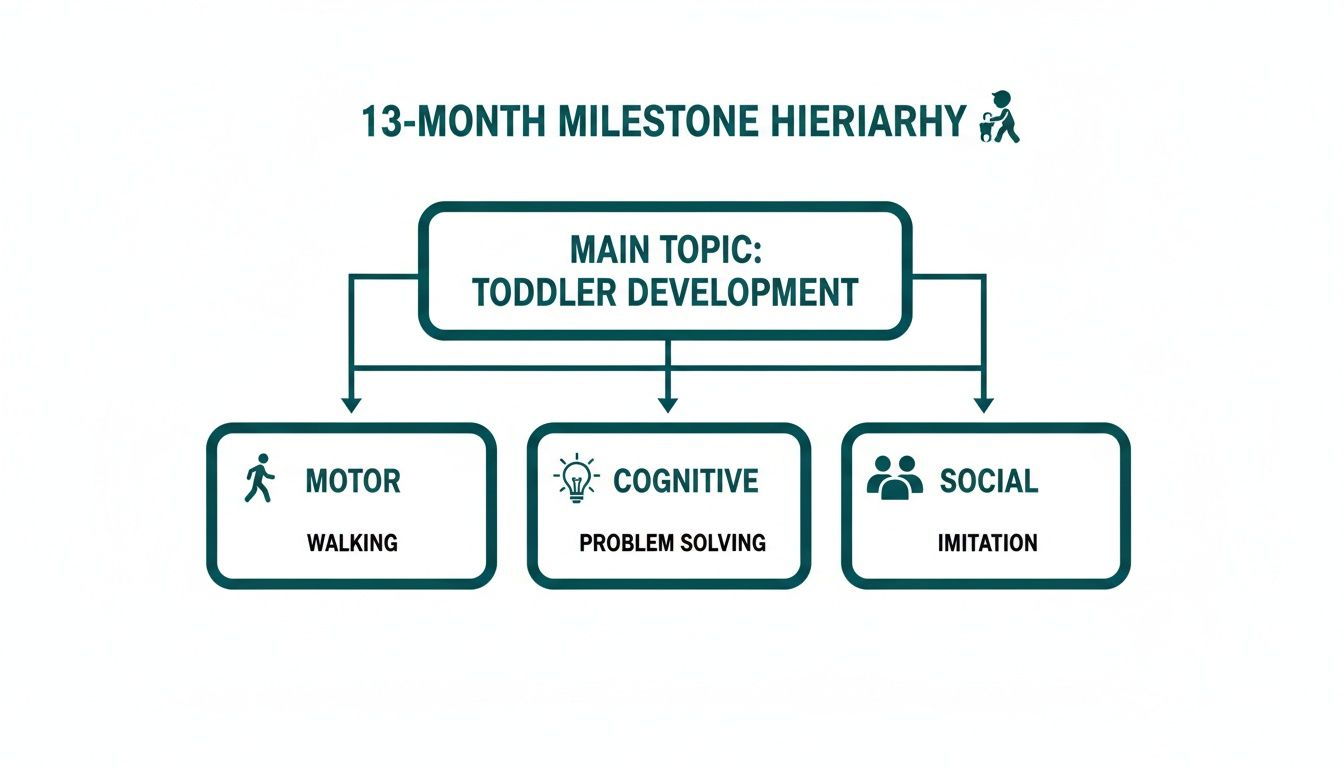
It really shows how motor, cognitive, and social skills are all linked. One skill builds on the next, creating a strong foundation for all future learning. This is why stage-based play is so effective. Purposeful toys, like the ones you'll find in our Grow With Me kits, are specially designed to meet them right where they are, turning simple, everyday play into a powerful learning experience.
To give you a clearer picture, here’s a quick overview of what to look for at this amazing age.
Quick Look At 13-Month Milestones
| Developmental Area | What You Might See | How to Support |
|---|---|---|
| Gross Motor | Taking first independent steps, cruising furniture, pulling up to stand. | Create safe, open spaces for practice; offer a push-walker. |
| Fine Motor | Pincer grasp is getting better; can pick up small objects like raisins. | Offer chunky puzzles, stacking rings, and safe finger foods. |
| Language | Says 1-3 words ("mama," "dada," "uh-oh"), babbles with intonation. | Talk, sing, and read to them constantly; narrate your day. |
| Cognitive | Imitates gestures (waving bye), understands "no," finds hidden objects. | Play peek-a-boo and hide-and-seek with toys. |
| Social/Emotional | Shows separation anxiety, has specific favourite people and toys. | Offer comfort and reassurance; don't sneak away. |
This table is just a guide, of course. Every child's timeline is their own, but it gives you a good sense of the exciting developments happening right now.
Big Moves and Tiny Tweaks: Your 13-Month-Old's Physical World
At 13 months, your toddler’s physical development is happening on two fronts, both equally important. Imagine they’re a little builder. One job is the large-scale construction: getting their whole body balanced and moving. The other is the intricate finishing work: refining the small, precise movements of their hands and fingers.
These two areas are what we call gross motor skills (the big movements) and fine motor skills (the small ones). You're about to witness some incredible progress in both as they hit this exciting milestone.
Big Movements: The Gross Motor Leaps
This is truly the age of mobility! Gross motor skills are all about the large muscle groups in their arms, legs, and torso, forming the foundation for walking, climbing, and eventually, running.
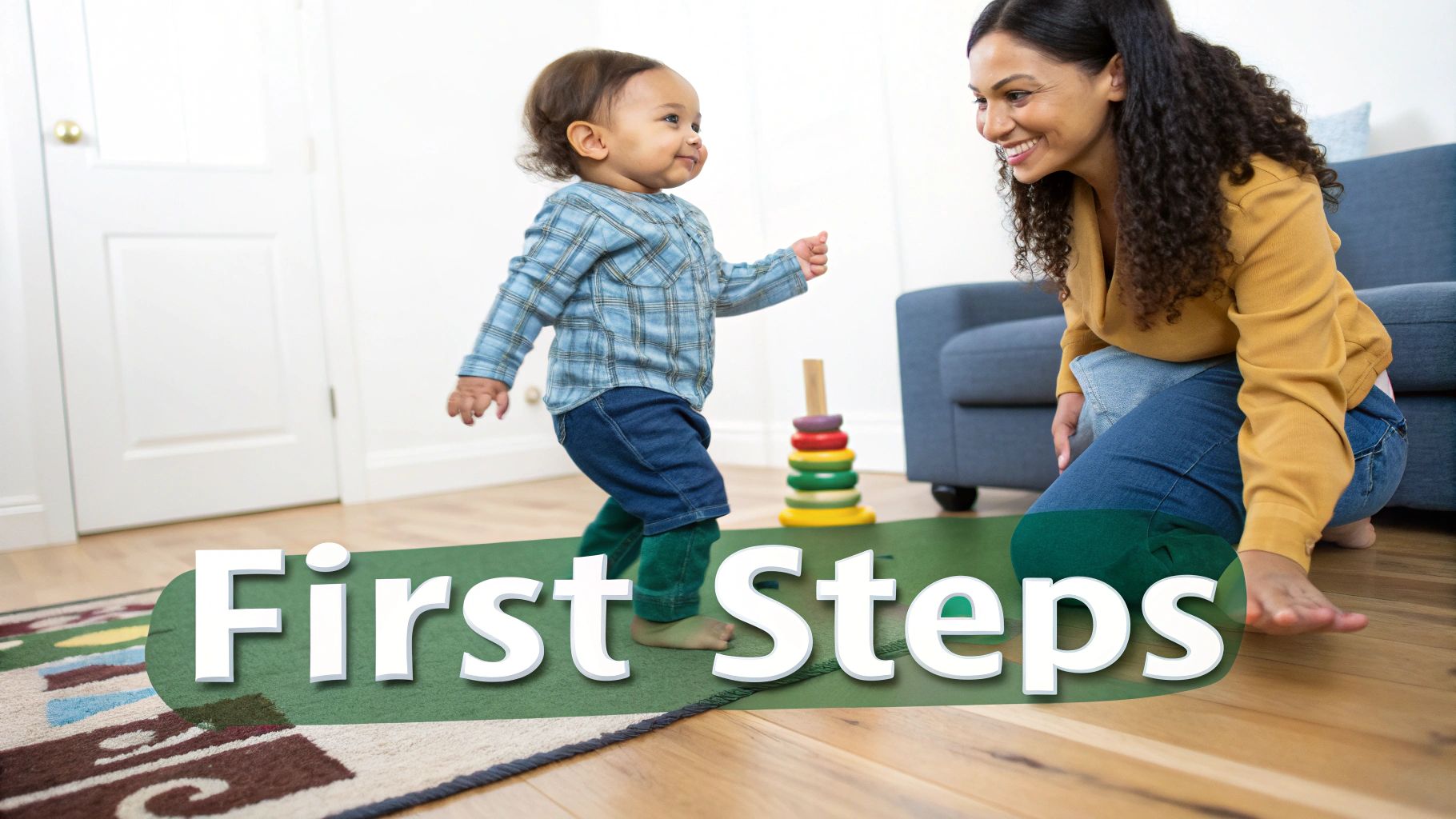
Many toddlers at this age are right on the brink of walking, if they haven't already taken those incredible first steps. You’ll probably see them:
- Standing alone: They might stand unsupported for just a few seconds, looking like a proud little statue before they plonk back down onto their bum.
- Cruising furniture: Your living room has become an obstacle course as they expertly move from sofa to coffee table, holding on for support.
- Taking independent steps: This could be anything from a few wobbly steps between you and the sofa to bravely toddling across the entire room.
Every single step, no matter how shaky, is a huge victory. It's a combination of balance, coordination, and muscle strength all coming together as they literally find their feet in the world.
The best way to support this is to give them plenty of safe, open space to practise. If you're after some more specific ideas, we have a whole guide full of fun and simple gross motor activities for kids.
Small Wonders: Fine Motor Precision
While those first steps often get all the glory, what's happening in your toddler's hands is just as amazing. Fine motor skills involve coordinating the small muscles in their fingers and wrists with their eyes, allowing for much more detailed interaction with the world.
This is where you'll see them really start to manipulate objects with purpose. At 13 months, key milestones include:
- Mastering the pincer grasp: They can now skilfully pick up tiny items, like a puff or a piece of fruit, using just their thumb and forefinger.
- Stacking blocks: They might manage to stack one or two chunky blocks before the tower comes tumbling down with a giggle.
- Turning pages: They can now "help" you turn the thick pages of a board book, showing a whole new level of involvement during story time.
- Self-feeding with fingers: Mealtimes are a full-on sensory experience now, as they expertly grab bits of food and guide them to their mouth.
Toys that encourage these movements are fantastic at this stage. Things like the wooden stacking rings and chunky puzzles included in our Grow With Me kits are designed specifically to challenge their developing dexterity, turning this crucial learning into what feels like just a fun game.
Cognitive and Language Development: A Burst of Understanding
While your little one is busy conquering all those physical skills, their brain is firing on all cylinders behind the scenes. It's an incredible period of cognitive growth, which is why you're suddenly seeing this explosion of new understanding.
They're starting to connect the dots between words, objects, and actions in a really meaningful way. This isn't just aimless babbling or pointing anymore; it’s the very beginning of genuine communication and problem-solving. This is one of the most exciting milestones for a 13-month-old, as you finally get a clearer peek into what’s going on in that developing mind.
From Babble to First Words
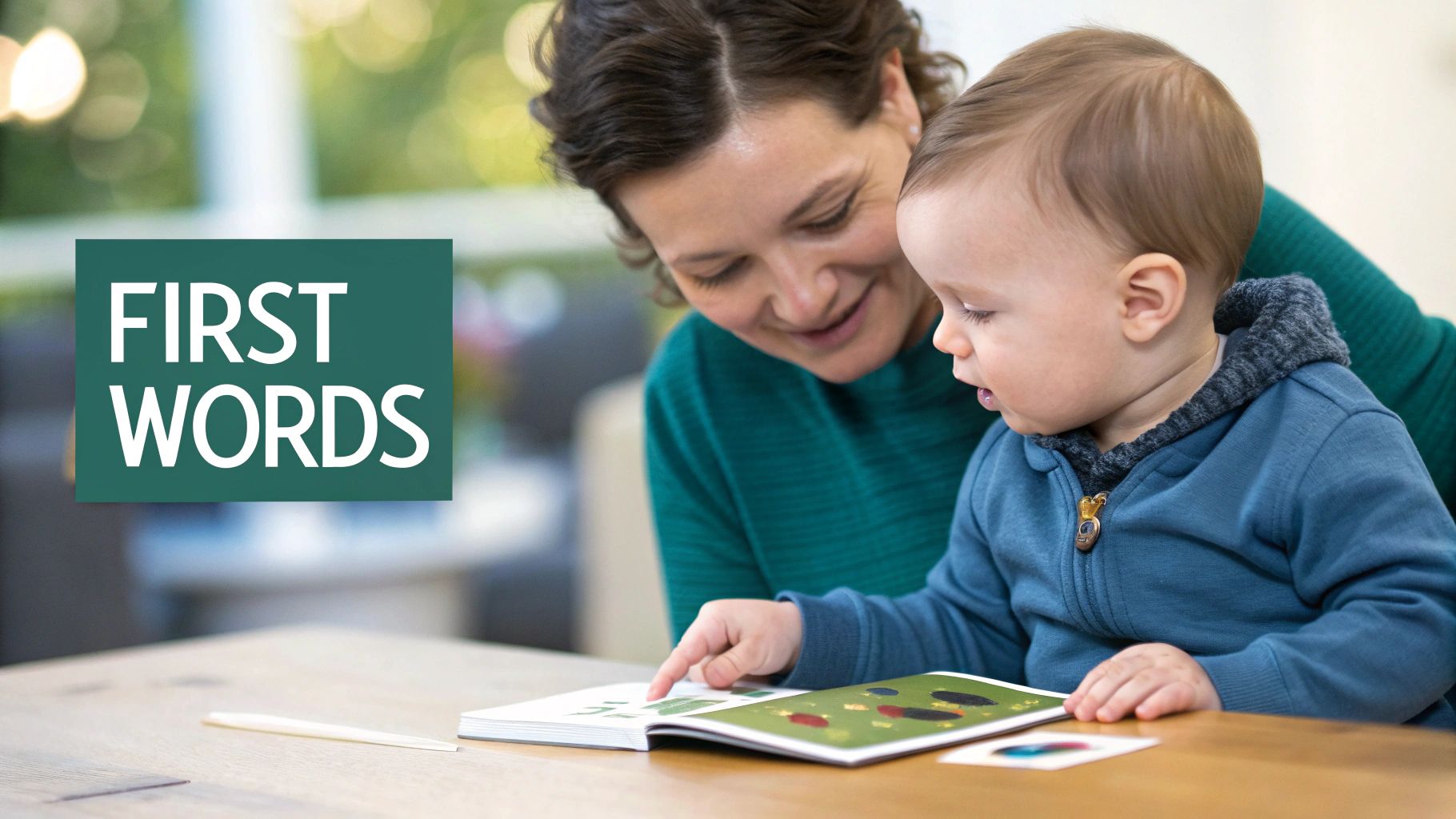
That adorable, nonsensical babble is quickly changing. You’ll probably notice it now has more tone and rhythm, sounding remarkably like a real conversation, even if the actual words aren't quite there yet. This is a massive step towards expressive language—what your child can say.
Around this age, many toddlers will say their first few recognisable words, often "mama" or "dada." But it’s important to remember that what they understand (receptive language) is miles ahead of what they can say out loud.
A few key language milestones to look out for:
- Following simple instructions: They can now follow a basic, one-step command like "pass me your teddy" or "come here."
- Responding to their name: They'll consistently turn their head or look right at you when you call their name.
- Pointing with purpose: They'll point directly at things they want, making their needs known loud and clear without saying a word.
Making Sense of Their World
Cognitively, your 13-month-old is like a tiny scientist, constantly testing out cause and effect. That spoon they keep dropping from the highchair? It's not just to wind you up! It's a genuine experiment to confirm that, yes, it really does fall to the floor every single time. This is how they learn the fundamental rules of their world.
You'll also see them start to imitate your gestures. Waving "bye-bye" or clapping their hands right after you do shows they are watching, learning, and making vital connections. It's a brilliant sign their cognitive wheels are turning.
The best way to support this amazing growth is to simply talk to them all day long and read together whenever you can. Board books and description cards, like the ones you’ll find in our Grow With Me kits, are fantastic tools for this. Naming the animals on a card or pointing to pictures in a book helps build a rich vocabulary and solidifies that all-important link between words and their meanings. It effortlessly turns playtime into a powerful learning experience.
For even more great ideas, have a look at our guide to language development activities for toddlers.
Social and Emotional Milestones: Exploring Big Feelings
Beyond all the walking and talking, your toddler's inner world is exploding with new emotions. The social and emotional milestones for a 13-month-old can be some of the most rewarding—and let's be honest, challenging—parts of this stage. They’re figuring out huge feelings with a very small toolkit.
This is when their unique personality really starts to pop. You might see the first glimmers of empathy one moment, followed by a fierce, stubborn desire to do things their own way the next. It’s a wonderfully confusing mix of needing a cuddle and then pushing you away to explore.
A classic hallmark of this age is separation anxiety, which often hits its peak right about now. Your little one has made a huge mental leap: they now fully grasp that you are a separate person. This means when you leave the room, you are gone, which can be a scary thought for them! This cognitive breakthrough is amazing, but it often leads to tears and clinginess when you head for the door.
Navigating New Social Scenery
As your toddler becomes more aware of the people around them, you’ll start to see brand new ways they interact with you and other children. These early social skills are the very first bricks in the foundation for a lifetime of friendships.
Here are a few key social developments to watch for:
- Showing affection: Get ready for wet, slobbery kisses and surprisingly strong, uncoordinated hugs! They’re now consciously showing their love for their favourite people.
- Testing boundaries: Purposefully dropping their cup from the highchair or throwing a toy, then immediately looking at you for a reaction, is a classic 13-month-old move. This isn't them being naughty; it’s a social experiment to figure out cause, effect, and your rules.
- Beginning parallel play: When you put them next to another toddler, they’ll probably play near them but not actually with them. This is a completely normal and vital stage of play that comes long before they learn how to share and cooperate.
It's so important to remember that these behaviours—from tantrums to clinginess—aren't signs of a "difficult" child. They are the normal, necessary expressions of a little person learning about attachment, independence, and how they fit into the world.
Meeting these big feelings with empathy makes all the difference. When a tantrum hits because you took something away, try naming the emotion for them: "You're feeling so cross that the block is gone." This helps build their emotional vocabulary and, more importantly, makes them feel seen and secure.
Responding with consistent warmth and understanding doesn't just calm a tantrum in the moment; it lays a strong foundation for their emotional resilience for years to come.
Nurturing Your Toddler's Sleep and Feeding Routines
With all the exciting new skills your little one is mastering, it's easy to overlook the foundations: sleeping and eating. But getting these routines right is just as important as those first steps or words. Solid habits around mealtimes and bedtime don't just fuel their physical growth; they also provide the comfort and predictability that toddlers thrive on. Think of these routines as the calm, steady anchors in their whirlwind day of discovery.
Around now, many parents find themselves in the middle of the great nap debate. Your 13-month-old might suddenly start fighting one of their two daily naps, making you wonder if it’s time to switch to just one. While some are ready, many still need both naps to avoid becoming completely overtired by the evening.
The best thing you can do is watch for their cues. Is this consistent resistance for a week or more, or are you just dealing with a few off-days? Before making any drastic changes, try gently stretching their 'wake window' – the time they spend awake between sleeps – to see if that helps them settle more easily.
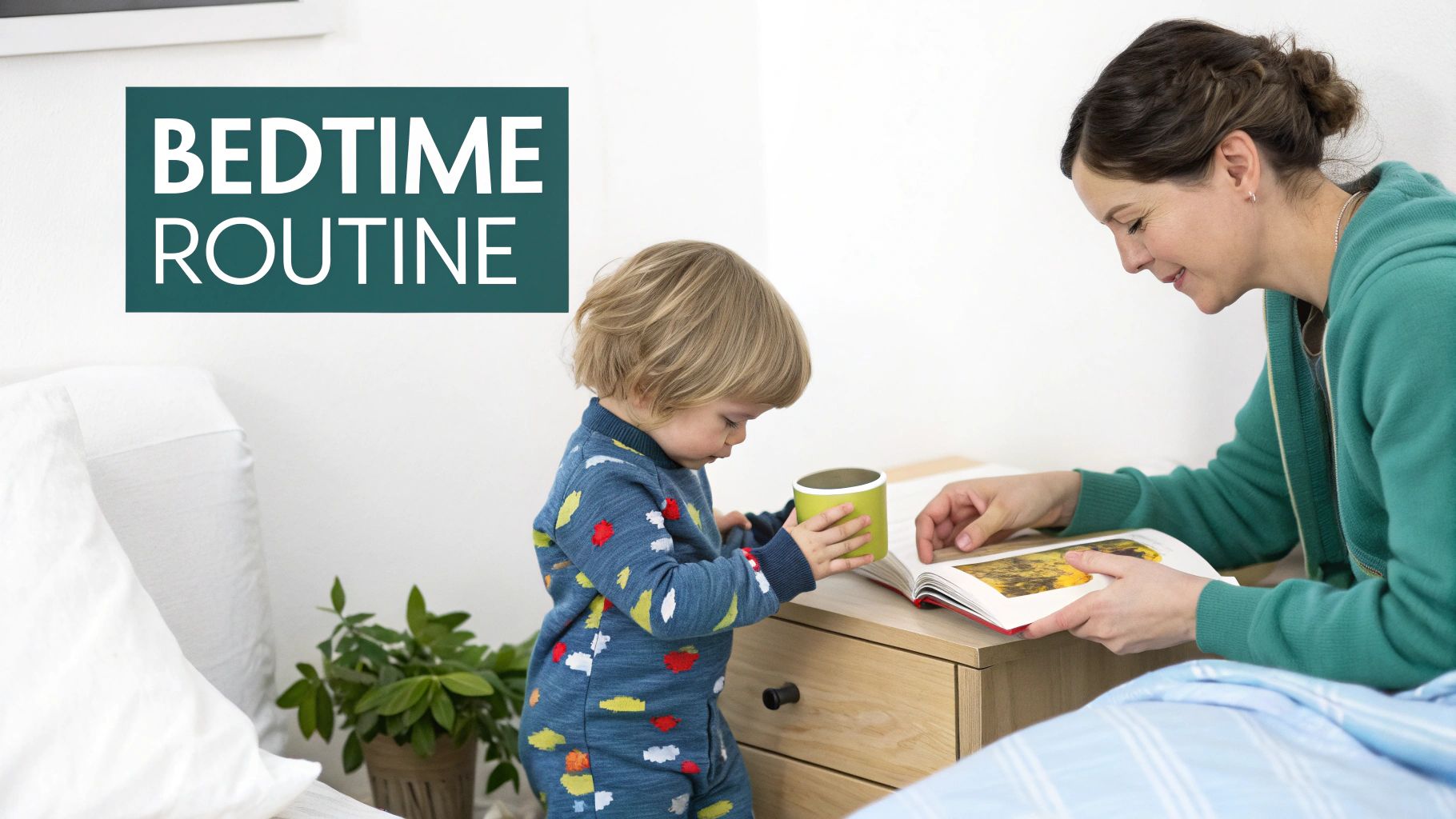
Crafting a Calm Bedtime Ritual
A consistent and calming bedtime routine can be a game-changer. It’s a powerful signal to your toddler's brain and body that it’s time to wind down. If you’re looking for structured guidance, learning how to sleep train your baby can lead to more restful nights for everyone.
A predictable routine transforms bedtime from a potential battle into a special moment of connection. Simple things like a warm bath, a favourite story, a quiet cuddle, and a gentle song can work wonders.
At 13 months, toddlers in the UK generally need between 12 to 15 hours of sleep in a 24-hour period. This usually includes one or two daytime naps totalling about 2 to 2.5 hours. Of course, every child is different, so these are just guidelines. For more great insights, you can explore information about toddler sleep needs on pampers.co.uk.
The Adventure of Food and Independence
Mealtimes are becoming a grand adventure, too. Your 13-month-old is probably a keen self-feeder now, grabbing food with their hands and maybe even giving a spoon a go. This messy stage is a fantastic milestone for their fine motor skills and growing sense of independence.
This is also when you might get your first taste of picky eating. One day they can't get enough of broccoli; the next, they act like you’ve offered them poison. This is perfectly normal and is often more about them testing their boundaries than genuinely disliking the food. The best strategy is to stay calm and continue offering a variety of healthy options without any pressure.
When to Talk to Your Health Visitor About Milestones
It’s completely natural to watch your little one grow and wonder, "Are they on track?". As a parent, you have a powerful intuition, and if something feels a bit off, it’s always worth trusting that instinct and having a chat with a professional.
Think of developmental milestones less as a strict checklist and more as a helpful guide. It’s very common for a toddler to be steaming ahead in one area while taking their sweet time in another. That said, there are a few key signs—often called "red flags"—that might signal it’s a good time for a supportive conversation with your health visitor or GP.
Key Signs to Discuss
While your gut feeling is the most important thing, it can be useful to have a few specific things in mind. Consider booking a check-in if, by around 13-15 months, your toddler isn’t really showing signs of:
- Gross Motor Efforts: Not trying to pull themselves up to stand, not putting any weight on their legs when you hold them, or if they’ve lost a skill they used to have.
- Communication Attempts: Not babbling with different sounds and tones, not using simple gestures like waving or pointing, or not responding when you call their name.
- Social Connection: Consistently avoiding eye contact, not smiling back when you smile at them, or seeming uninterested in simple, interactive games like peek-a-boo.
The point of looking out for these signs isn't to create worry—it's to empower you. Catching things early can make a huge difference, and health visitors are there to offer reassurance and guidance, not judgement.
If you do have concerns, it's also important to know you're far from alone. The latest Scottish child development statistics show that around 14% of children had at least one developmental concern noted at their 13-15 month review. Gross motor skills were the most common area of concern, flagged for about 8% of toddlers. You can read more about this in the 2023-24 report from Public Health Scotland.
Reaching out is a brilliant, proactive step. Your health visitor can carry out a proper assessment, give you advice tailored to your child, or put you in touch with specialist services if needed. It’s all about making sure your little one has the best possible support for their unique journey.
Your Top 13-Month-Old Toddler Questions Answered
When you have a newly-minted toddler, questions can pop up faster than you can google them. Let's tackle three of the most common worries parents have around this fascinating age, giving you the clear, practical answers you need.
Should My 13-Month-Old Be Walking By Now?
This is probably the number one question on every parent's mind, and the answer is: not necessarily! The window for walking is surprisingly wide, with most little ones taking their first independent steps anywhere between 9 and 18 months.
At 13 months, it's completely normal to see a huge range of abilities. Some toddlers are already taking those first wobbly steps across the room, while many others are still happily crawling, or "cruising" along the furniture. All of these are brilliant signs of progress.
If you want to encourage them, try these simple things:
- Keep the floor clear of clutter so they have a safe, open space to practise.
- A sturdy push-along toy can give them just the right amount of support to build confidence.
- Cheer them on! Your encouragement makes a world of difference.
If you notice your child isn't putting any weight on their legs or isn't trying to pull themselves up to stand by around 15 months, it's a good idea to mention it to your health visitor.
How Many Words Should My Toddler Be Saying?
Just like walking, talking happens on its own unique schedule. Most toddlers at this age have between 1 and 3 recognisable words, often "mama" or "dada," but don't be concerned if you haven't heard them yet.
What's often more important right now is their understanding. You might notice they can follow simple instructions or point to things when you name them. This is called receptive language, and it's a massive developmental leap.
Your toddler understanding a phrase like "give me the ball" is a huge milestone, showing their language skills are developing beautifully, even if they aren't talking much yet.
If you’re still not hearing any clear words by the 15-month mark, it's worth a chat with your health visitor, just to be on the safe side. In the meantime, keep modelling language by talking, pointing, and naming things throughout your day.
What Are the Best Activities to Support Their Development?
You don't need complicated toys or rigid schedules. The most powerful learning happens through simple, playful moments you share every day.
Think about activities that engage a few different skills at once:
- Snuggle up with a chunky board book and let them point at the pictures as you read.
- Stack a few soft blocks, counting them as you go up… and knocking them down is part of the fun!
- Sing nursery rhymes with hand actions, like clapping during 'Pat-a-Cake'.
- Let them explore different textures – a soft blanket, a bumpy ball, or splashing in a supervised water tray.
- Build a mini "obstacle course" with cushions to crawl over to challenge their movement and coordination.
These are exactly the kinds of hands-on experiences we build into our Grow With Me kits, where every item is chosen to make learning feel like play.
Remember, every child is on their own path. Think of these milestones as friendly signposts, not strict deadlines. Your intuition as a parent is your best guide, so watch your little one, celebrate their unique progress, and never hesitate to seek support if something feels off.
Ready to take the guesswork out of playtime? Discover how Grow With Me kits can support your toddler’s unique journey: https://shop.growwithmesubscriptionbox.co.uk