
Infant Development Toys That Boost Early Milestones
Infant development toys are far more than just playthings; they are carefully designed tools that awaken a baby’s senses, strengthen their motor skills, and spark their cognitive abilities during those crucial first years. It’s a common misconception that toys are just for entertainment. In reality, they are the very building blocks of brain development, transforming simple playtime into a powerful learning experience.
The right toy at the right time helps forge essential neural pathways, laying the groundwork for a lifetime of growth.
Why The Right Toys Are Tools For Brain Development
As a new parent, it's easy to look at a basket of toys and just see a way to keep your little one occupied for a few minutes. But what's really happening during that playtime is something far more profound.
Think of your baby’s mind like a new garden. Every interaction, every sound, and every texture they experience is like sunlight and water, nurturing new connections and helping existing ones grow stronger. Purposeful play is the joyful process of tending to that garden.
This is exactly why stage-based development toys are so important. They're designed to support the main areas of early growth, turning everyday moments into little windows of discovery. Understanding these key areas helps to see just how play shapes those early milestones.
Key Areas of Infant Growth
- Sensory Development: This is all about engaging the five senses. Toys with different textures to touch, gentle sounds to hear, and bold, high-contrast colours to see help a baby begin to make sense of their brand-new world.
- Motor Skills: From the first time they manage to wrap their tiny fingers around a rattle to eventually pulling themselves up on a play gym, toys are there to encourage both fine motor skills (small, precise hand movements) and gross motor skills (larger movements of the arms, legs, and body).
- Cognitive Function: This covers the brain’s ability to think, learn, and solve problems. Toys that introduce cause-and-effect, like a simple stacking tower, are fundamental for cognitive development in early childhood.
- Social-Emotional Growth: Playing with parents or caregivers is how babies learn to interact, read emotional cues, and form secure bonds. This lays the groundwork for all their future relationships and social skills.
The infant and preschool toys segment claims the largest market share in the overall £13,948 million UK toy industry. This dominance shows just how vital toys promoting cognitive and sensory growth are for the under-5 age group, where a staggering 85% of brain development occurs.
Seeing toys this way changes everything. It shifts the focus from just keeping a baby entertained to actively participating in their growth. It's not about memorising complex child development theories; it's simply about giving them the right tools at the right time.
Beyond interactive toys, even simple visual learning tools like educational animal alphabet prints can play a part in early learning by introducing letters and animals in a fun, engaging way. Each new toy is an invitation to explore a new skill, transforming your living room into a landscape of learning and connection.
Your Stage-By-Stage Guide to Baby's First Year of Play
Watching your baby navigate their first year is like seeing a time-lapse of a flower blooming.## Your Stage-By-Stage Guide to Baby's First Year of Play
Watching your baby navigate their first year is like seeing a time-lapse of a flower blooming. One moment they’re a tiny, sleepy bundle, and seemingly the next, they’re sitting, crawling, and exploring with an unstoppable curiosity. Each of these stages brings a rush of new milestones, and infant development toys are the tools that help your little one master them.
This guide breaks down those crucial first twelve months into the key developmental windows. When you understand what’s happening in your baby’s brain and body, you can choose toys that perfectly match their needs, turning simple playtime into meaningful progress.
0–3 Months: The Sensory Explorer
In the very beginning, your baby’s world is a beautiful, fuzzy blur of new sensations. Their vision is still coming into focus, which is why they are so captivated by high-contrast patterns and faces. At this point, their primary job is simply to take in the world around them through their senses.
Play during this stage is gentle, focusing on quiet sensory stimulation. The goal is to provide simple, engaging experiences that help their brain process new information without feeling overwhelmed.
-
Key Milestones:
- Visual Tracking: Following objects with their eyes.
- Grasping Reflex: Instinctively closing their tiny hand around an object.
- Head Lifting: Building crucial neck strength during tummy time.
Toys That Nurture Newborns
The best infant development toys for this age are wonderfully simple and rich in sensory detail. It’s less about fancy features and more about clear, direct stimulation.
- High-Contrast Flashcards: Bold black-and-white images are one of the first things a newborn's developing eyes can properly focus on. Placing them nearby during tummy time encourages them to look up, strengthening both visual engagement and those all-important neck muscles.
- Soft Rattles or Wrist Rattles: These introduce the concept of cause and effect in its most basic form. When they move their arm, they hear a gentle sound, creating that first magical connection between their actions and a result.
- Lightweight Fabric Books: Crinkle books or soft, textured books offer a feast for the senses. The sound of crinkling pages and the feel of different fabrics provide fantastic auditory and tactile stimulation.
A newborn’s brain is a pattern-seeking machine. High-contrast toys aren’t just interesting; they provide the clear visual input the brain needs to build strong neural connections for sight, focus, and object recognition.
3–6 Months: The Reaching Adventurer
Somewhere between three and six months, your baby starts to transform into a much more active participant in their world. They’re gaining more control over their body, especially their hands and core. This is the stage of reaching, grasping, and, of course, bringing everything straight to their mouth for some serious oral exploration.
Play now becomes about motivating movement and refining those emerging motor skills. Toys should be easy to hold and safe to chew on, encouraging them to reach out, roll over, and discover what their amazing body can do.
Toys for the Active Grasper
This is when toys that encourage interaction truly shine. Your baby is learning that they can purposefully manipulate objects, which is a massive cognitive leap.
- Play Gyms or Mats: These are an absolute must for this age. Dangling toys encourage reaching and batting, strengthening hand-eye coordination. Many also feature mirrors, which are endlessly fascinating for babies as they begin to recognise their own reflection.
- O-Balls and Easy-Grasp Teethers: An O-ball is brilliantly designed—it's lightweight and full of holes, making it incredibly easy for little hands to grab. Teethers made from safe materials like silicone or natural rubber are perfect for soothing sore gums and encouraging that oral motor exploration.
- Wobble Toys: A toy that wobbles back up when pushed is completely captivating. It encourages your baby to reach out and touch it, which helps build core strength and the movements needed for rolling.
This timeline shows how simple play activities build crucial neural pathways, leading to lifelong growth.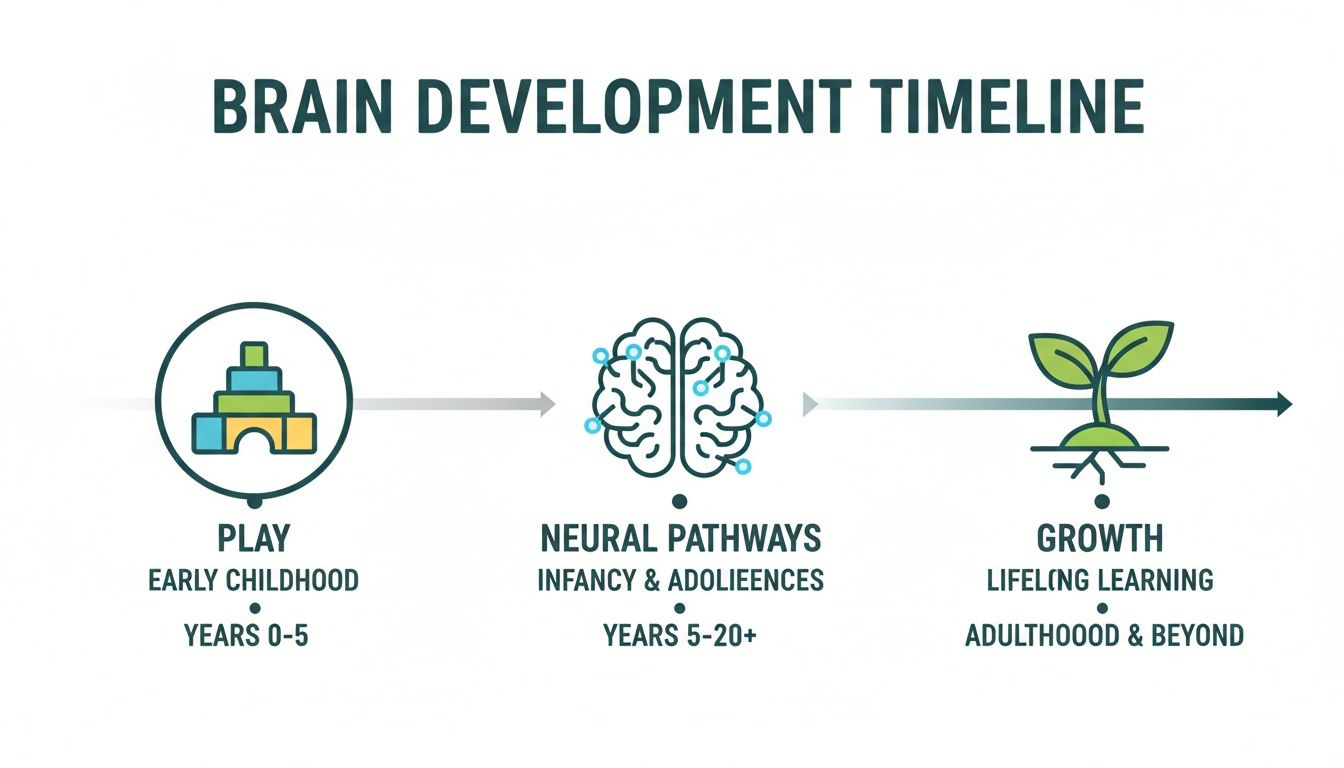
The visual demonstrates that purposeful play in the early years is the foundational step for creating the complex brain architecture needed for future learning.
6–9 Months: The Curious Investigator
Welcome to the age of pure curiosity! Babies in this stage are often sitting up independently, which gives them a brand-new perspective on everything. They’re also starting to grasp object permanence—the incredible idea that something still exists even when they can’t see it.
This cognitive milestone is a real game-changer. Play becomes a scientific experiment for your baby, centred on cause and effect, problem-solving, and figuring out how things work. Expect to see lots of banging, dropping, and shaking just to see what happens.
Toys That Foster Problem-Solving
To support this exciting stage, you’ll want toys that respond to your baby's actions and challenge them to think a little.
- Stacking Rings or Cups: A classic for a reason! Stacking toys teach about size, order, and spatial relationships. The simple act of placing one ring onto a peg is a huge victory in fine motor control.
- Shape Sorters: Early shape sorters with one or two large, simple shapes (like a circle and a square) introduce basic problem-solving. It encourages trial and error as they figure out which shape fits into which hole.
- Sensory Balls: Balls with different textures, bumps, or nubs are fantastic for tactile exploration. Rolling them back and forth with you is also a wonderful way to teach turn-taking and social interaction. For a more detailed look at these progressions, you can explore the different https://shop.growwithmesubscriptionbox.co.uk/blogs/blog/stages-of-child-development-by-age in our dedicated guide.
9–12 Months: The Little Engineer
As your baby approaches their first birthday, their skills start combining in more complex ways. They’re likely crawling, pulling up to stand, and maybe even taking their first wobbly steps. Fine motor skills are also becoming much more refined, allowing for that all-important pincer grasp (using the thumb and forefinger).
Their play is now more purposeful and imitative. They are watching you closely and trying to copy your actions, which is laying the foundation for language and social learning.
Toys for the Budding Builder
The best infant development toys for this age support both their growing physical abilities and their blossoming cognitive skills. Think about items that allow for building, experimenting, and early imaginative play.
- Chunky Wooden Blocks: Simple blocks are an open-ended powerhouse. They can be stacked, knocked down, sorted, and carried, supporting fine motor skills, hand-eye coordination, and an early understanding of physics.
- Simple Push Toys: A small wooden push car or a walker wagon provides stability for early cruisers. It encourages them to practise their walking skills while engaging in imaginative play.
- Board Books with Flaps: "Lift-the-flap" books are perfect for this age. They cleverly reinforce the concept of object permanence and make reading an interactive, engaging activity that helps build vocabulary.
As your baby grows beyond their first year, their play needs will continue to evolve. Exploring resources on age-appropriate play, such as this guide on birthday gifts for toddlers, can help support their development. Choosing the right toys at each stage ensures that playtime is not just fun, but a powerful engine for growth.
Developmental Milestones And Corresponding Toys 0-12+ Months
Here’s a quick-reference guide to help you match key developmental stages with the most effective types of toys to support learning and growth.
| Age Range | Key Developmental Milestones | Recommended Toy Types | Example Play Idea |
|---|---|---|---|
| 0-3 Months | Developing senses, tracking objects with eyes, early reflexes. | High-contrast cards, soft rattles, fabric books. | Hold a black-and-white card about 25-30 cm from their face during tummy time to encourage head lifting. |
| 3-6 Months | Reaching, grasping, bringing objects to mouth, improved head control. | Play gyms, O-balls, teethers, wobble toys. | Dangle a toy from a play gym just within reach to motivate them to bat at it and practise grasping. |
| 6-9 Months | Sitting up, understanding cause and effect, exploring with hands. | Stacking rings/cups, simple shape sorters, sensory balls. | Show them how to drop a stacking ring onto the post, then let them try. Celebrate every attempt! |
| 9-12 Months | Pulling up to stand, crawling, developing pincer grasp, imitating actions. | Chunky blocks, push toys, lift-the-flap books. | Build a small tower of two blocks and let them knock it down. This teaches cause and effect and is so much fun. |
This table serves as a starting point. Remember, every baby develops at their own pace, so the most important thing is to observe their unique interests and abilities. Happy playing
How Your Interaction Unlocks A Toy's True Potential
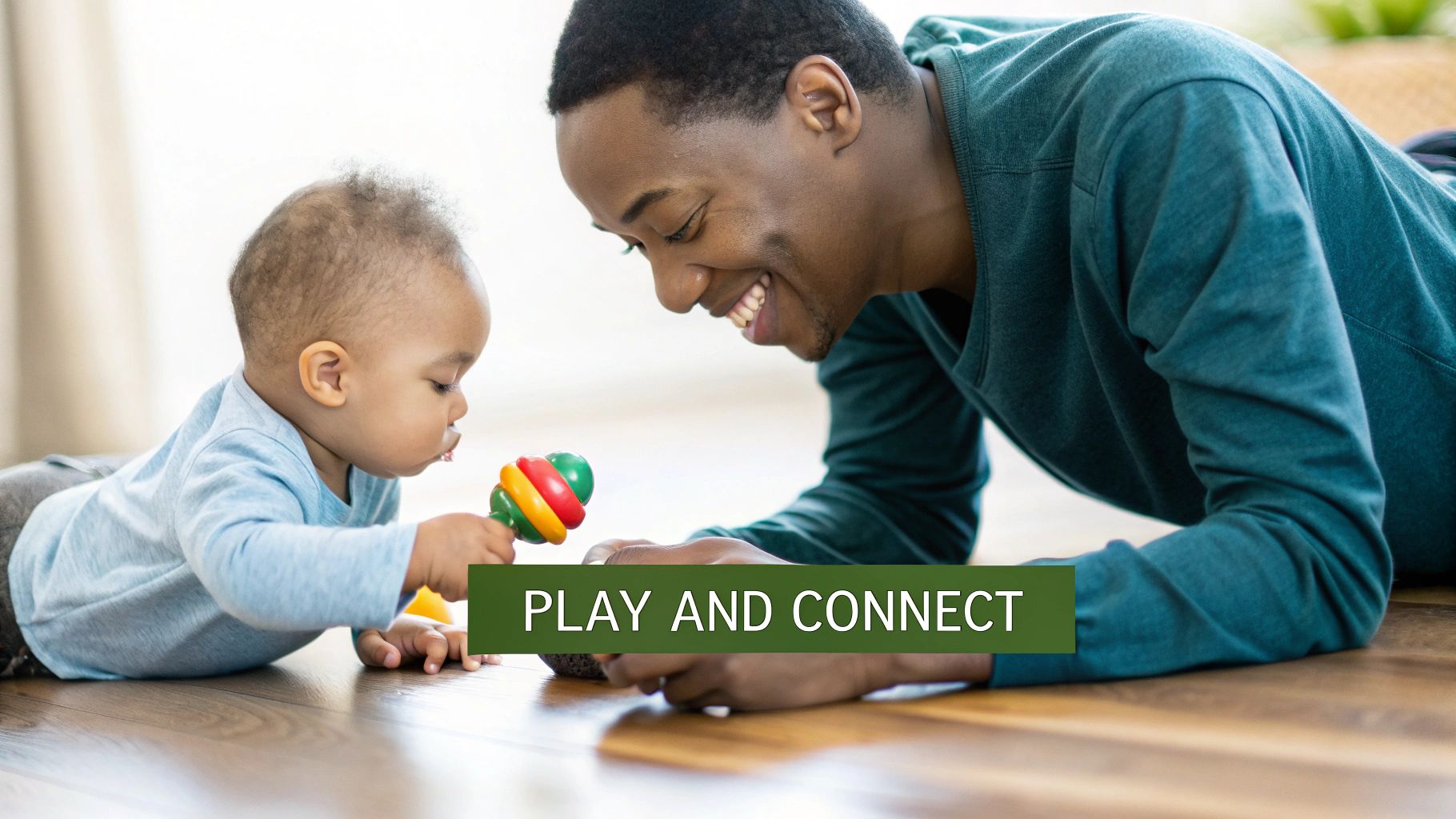
Having a collection of well-chosen infant development toys is a fantastic start, but the toys themselves are only half of the story. The real magic—the kind that sparks deep and lasting learning—happens when you add the most powerful ingredient of all: your engaged, responsive interaction.
A simple wooden block is just a piece of wood until you show your baby how to stack it, suddenly transforming it into a hands-on lesson in cause and effect.
Think of it as a game of conversational tennis. When your baby bats at a rattle and it jingles (that’s their "serve"), you can respond with an enthusiastic smile and say, "Wow, what a great sound you're making!" (that's your "return"). This simple back-and-forth, often called serve and return, is absolutely fundamental to their brain development. It sends a powerful message: "What you're doing matters, and I'm right here with you."
Your engagement is the secret sauce that turns a passive object into an active, enriching experience, building not just cognitive skills but also a profound sense of connection and security.
Making Play Purposeful And Fun
You don't need a degree in child development to make playtime meaningful. It all comes down to being present and intentional. A few simple strategies can amplify the power of any toy, turning everyday play into a brilliant brain-building activity.
The trick is to follow your baby's lead. Pay attention to what catches their eye and build on it. If they’re fascinated by the spinning wheel on a toy, you can spin it with them, talking about how fast it's going, and then slowing it right down. This simple act of sharing their focus is incredibly powerful for their learning.
"Your interaction is what elevates a toy from a simple object to an instrument of learning. When you narrate, encourage, and explore alongside your baby, you are actively wiring their brain for curiosity, communication, and problem-solving."
This approach of tuning into your child's interests and gently extending their thinking is a cornerstone of early learning. To see how this works in practice, you can learn more about what sustained shared thinking is and how it fosters cognitive growth through playful collaboration.
Simple Strategies To Boost Playtime
Weaving these techniques into your day is easier than it sounds. Before you know it, they'll become a natural part of how you play together, strengthening your bond while supporting those crucial developmental milestones.
Here are a few practical ways to unlock the full potential of your baby's toys:
- Narrate Everything: Think of yourself as your baby’s personal sportscaster. As they play, describe what they're doing. "You're shaking that rattle! Listen to that jingle-jangle sound. Oh, now you're putting it in your mouth—is it tasty?" This constant stream of language builds their vocabulary and helps them connect words to actions.
- Rotate the Toys: A mountain of toys can be overwhelming for a tiny person. Try keeping a small selection of 5-7 toys out at a time and storing the rest. Every week or two, swap them out. A toy that's been out of sight for a little while will feel brand new again, sparking fresh interest and exploration.
- Create a 'Yes Space': A 'yes space' is simply a safe, baby-proofed area where your little one is free to explore without you constantly having to say "no." It empowers them to move, touch, and play independently, which is brilliant for building confidence and gross motor skills. It gives them the freedom to learn on their own terms.
Follow Their Lead And Have Fun
Ultimately, the most important rule of play is to have fun with it. Your joy and enthusiasm are contagious. When your baby sees you are engaged and enjoying the moment, they feel safe, loved, and excited to learn.
So, don't get hung up on getting it "perfect." Just being present, responsive, and connected is more than enough. By joining in with their world of play, you’re not just teaching them about colours and shapes; you’re teaching them that they are seen, heard, and cherished. And that is the most profound lesson of all.
Choosing Safe And Sustainable Infant Development Toys
As you start building a collection of infant development toys, safety and quality will naturally be at the front of your mind. It’s easy to feel a bit swamped by all the options out there, but a few core principles can make it much simpler to pick out toys that are both safe for your baby and thoughtfully made.
These days, parents are looking for more than just bright, plastic distractions. There’s a real move towards toys that are gentle on our little ones and kind to the planet. This isn’t just a passing trend; it's a shift towards choosing quality over quantity and investing in things that are built to last.
In fact, recent UK toy market data shows a significant 30% rise in demand for green products. It’s clear that parents are prioritising sustainable and 'smart' toys, changing the whole landscape of playtime. You can learn more about these UK toy market trends here.
Your Practical Safety Checklist
When you're looking at a new toy, it helps to think like a detective. Your main job is to make sure it can handle everything your baby will throw at it—and that usually includes a lot of vigorous shaking, dropping, and mouthing!
Here’s a simple checklist to keep in your back pocket:
- Check for Small Parts: A good rule of thumb is to see if any part of the toy can fit inside a cardboard toilet roll tube. If it can, it's a potential choking hazard.
- Inspect Edges and Surfaces: Run your hands over the toy. Are there any sharp points, splinters, or rough patches? Everything should feel smooth and well-finished.
- Ensure Solid Construction: Give the toy a gentle tug and a shake. It should feel sturdy and durable, with no bits that seem loose or ready to pop off.
- Confirm Age-Appropriateness: Always double-check the manufacturer's age recommendation. A toy made for a three-year-old could have parts that are unsafe for a baby.
The Power Of Natural Materials
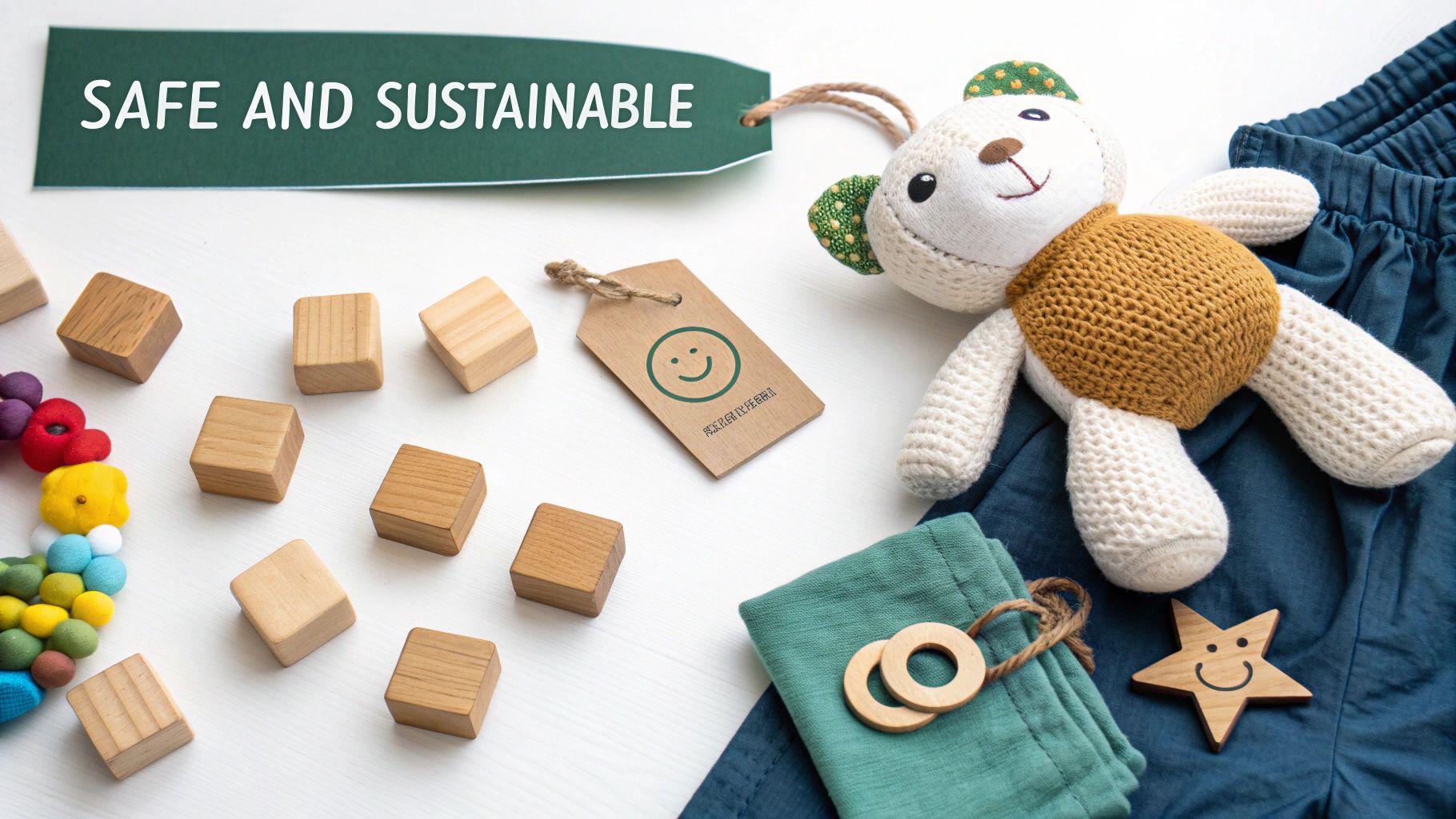
Beyond the physical checks, the materials a toy is made from really matter. Natural options like sustainably sourced wood and organic cotton offer a host of benefits that many plastic toys just can't replicate. They give your baby a much richer and more varied sensory experience.
The varied textures, weights, and even the subtle scents of natural materials provide a deeper level of sensory input. This helps a baby’s brain build a more complex and nuanced understanding of the world around them.
Just think about the difference between holding a smooth, cool wooden block and a lightweight plastic one. The wooden toy has a satisfying heft to it and provides more tactile feedback, which helps your baby develop their sense of touch and proprioception (their awareness of their own body).
Why Thoughtfully Made Toys Are Worth It
Choosing well-crafted, sustainable toys is an investment—not just in your child’s development, but in a healthier planet, too. These toys aren't only safer; they are often far more durable and designed to be cherished for years, not just played with and thrown away.
Here’s what makes them stand out:
- Non-Toxic Finishes: Reputable brands use water-based, non-toxic paints and finishes, so you never have to worry about what’s going in your baby's mouth.
- Durability: High-quality wooden and fabric toys are built to last. They can easily withstand years of enthusiastic play.
- Sensory Richness: The organic textures and weights of natural materials are simply more engaging for a baby’s developing senses.
By putting safety and sustainability first, you’re not just buying another toy. You're choosing a tool that is safe, enriching, and thoughtfully designed to support your baby’s incredible journey of discovery.
Simplifying Play With Stage-Based Toy Kits
Knowing what developmental milestones are coming up is one thing. Actually keeping up with them is a whole different ball game. For busy parents, the constant cycle of researching, buying, and rotating the perfect infant development toys for each new stage can feel like a full-time job. One minute you’ve just mastered tummy time with high-contrast cards, and the next, your baby is sitting up, ready for a set of stacking rings.
This is where stage-based toy kits really come into their own. Picture this: a box arrives on your doorstep, just as your little one is getting ready for their next big leap. Inside, you find the exact tools they need to explore their new skills. It’s a brilliant way to cut through the noise and take the guesswork out of playtime.
Instead of staring down overwhelming toy aisles, you get a thoughtfully chosen collection of high-quality, safe, and genuinely engaging items. This approach just makes life easier. It frees you from the fatigue of endless decision-making and lets you focus on what actually matters: connecting with your baby.
The Convenience Of Expert Curation
One of the biggest reliefs of a subscription kit is knowing that all the developmental research has been done for you by people who live and breathe this stuff. Every single toy is selected not just because it looks nice, but because it’s designed to target a specific emerging skill—whether that’s perfecting the pincer grasp, figuring out cause and effect, or encouraging those first wobbly steps.
This expert-led approach means you’re getting:
- Perfectly Timed Tools: The toys show up right when your baby is developmentally ready for them, which means less frustration and more engaged play.
- High-Quality Materials: These kits almost always feature materials that modern parents care about, like sustainably sourced wood, organic cotton, and non-toxic, baby-safe finishes.
- Reduced Clutter: You receive a small, purposeful set of toys. This encourages your baby to play more deeply with what they have and helps keep your home from being overrun.
The UK baby toys market, valued at a whopping £821.5 million, is heavily influenced by busy working parents looking for exactly these kinds of smart, convenient solutions. With over 75% of UK mums returning to work within a year of giving birth, subscriptions that deliver stage-appropriate kits are becoming a vital support system. You can find out more by exploring the UK baby toys market on Market Research Future.
More Than Just Toys A Guided Play Experience
Perhaps the best part of a curated kit is that it’s so much more than just a box of toys—it’s a guided play experience. Top-tier subscriptions, like Grow With Me, come with play guides that explain the ‘why’ behind each item and are packed with creative ways to play together.
A play guide transforms a simple wooden puzzle from an object into an opportunity. It gives you the language to narrate actions, the inspiration for new games, and the confidence to know you’re supporting your baby’s development in a meaningful way.
This guidance is incredibly empowering. It helps you unlock the full potential of every toy in the box. It’s a bit like having a child development expert whispering in your ear, helping you turn simple playtime into powerful moments of connection and discovery. It bridges that common gap between knowing what toys are good and understanding how to use them to make a real difference.
Ultimately, a stage-based toy kit is an investment. It’s an investment in your child’s development, making sure they have the right tools at precisely the right time. But just as importantly, it’s an investment in your own time and peace of mind, giving you back precious energy to simply enjoy this incredible, fleeting first year.
Your Questions About Baby Toys, Answered
Stepping into the world of baby toys can feel a little overwhelming. You want to give your little one the best start, but with so many options, it's natural to have questions. Am I doing enough? Are these the right toys? Let's clear up some of those common worries with practical, reassuring advice.
Knowing a bit more about the 'why' behind purposeful play can make all the difference. Here are some of the questions that parents often ask as they guide their baby through this incredible journey of discovery.
How Many Toys Does My Baby Actually Need?
Believe it or not, less is almost always more. When it comes to baby toys, the golden rule is quality over quantity. A huge pile of toys can actually be overstimulating, making it hard for a baby to focus on any one thing. A carefully chosen collection of 5-8 high-quality, versatile toys is plenty.
The real secret to keeping playtime exciting? Toy rotation. Simply pack away a few toys for a week or two. When you bring them out again, they’ll feel brand new to your baby, sparking fresh curiosity. This simple trick encourages them to engage more deeply and creatively with each item.
Are Expensive Educational Toys Really Better?
Not at all. A toy’s price tag has very little to do with its developmental value. In fact, some of the most powerful learning happens with the simplest of objects.
It's often the basic, 'open-ended' toys like wooden blocks or a set of nesting cups that deliver the biggest benefits. They can be used in endless ways, which is what truly sparks a child's imagination, problem-solving skills, and creativity.
The magic isn't in the toy itself, but in how you and your baby interact with it. Your engagement is what brings any toy to life.
When Should I Introduce Toys To My Newborn?
You can start introducing simple, sensory playthings right from day one. In those first few weeks, a newborn’s main job is simply to take in the world around them. Play is all about gentle, sensory exploration.
A couple of great places to start:
- High-contrast flashcards with bold black-and-white images are perfect for their developing eyesight, especially during tummy time.
- A soft, lightweight rattle helps them begin to track sounds and make that crucial connection between their own movement and the noise it creates.
But remember, in these early months, you are your baby’s favourite ‘toy’. Your face, your voice, and your touch are the most important tools for their learning and bonding.
My Baby Prefers Household Objects Over Toys. Is That Okay?
Absolutely! This is actually a fantastic sign of a curious and creative little mind. Everyday items like a wooden spoon, a clean cardboard box, or a set of measuring cups offer fascinating new textures, sounds, and weights for them to explore.
This is a brilliant form of hands-on sensory play that teaches your baby about the real world. As long as the object is safe—meaning it's clean, with no small parts to swallow or sharp edges—you should absolutely encourage this natural curiosity. It’s a wonderful sign that they’re actively trying to figure out how everything works.
Ready to take the guesswork out of playtime? Grow With Me delivers expertly curated, stage-based play kits right to your door, filled with beautiful, sustainable toys that match your baby’s developmental needs. Discover your first play kit today!