

Your Guide to the Best Baby Sensory Play Mat
A baby sensory play mat is so much more than just a comfy place to pop your baby down. It's a carefully crafted space designed to kickstart their senses and build those crucial first physical skills. Think of it as your baby's very own mini-gym and classroom, all rolled into one colourful, engaging package.
Your Baby's First Playground for Discovery
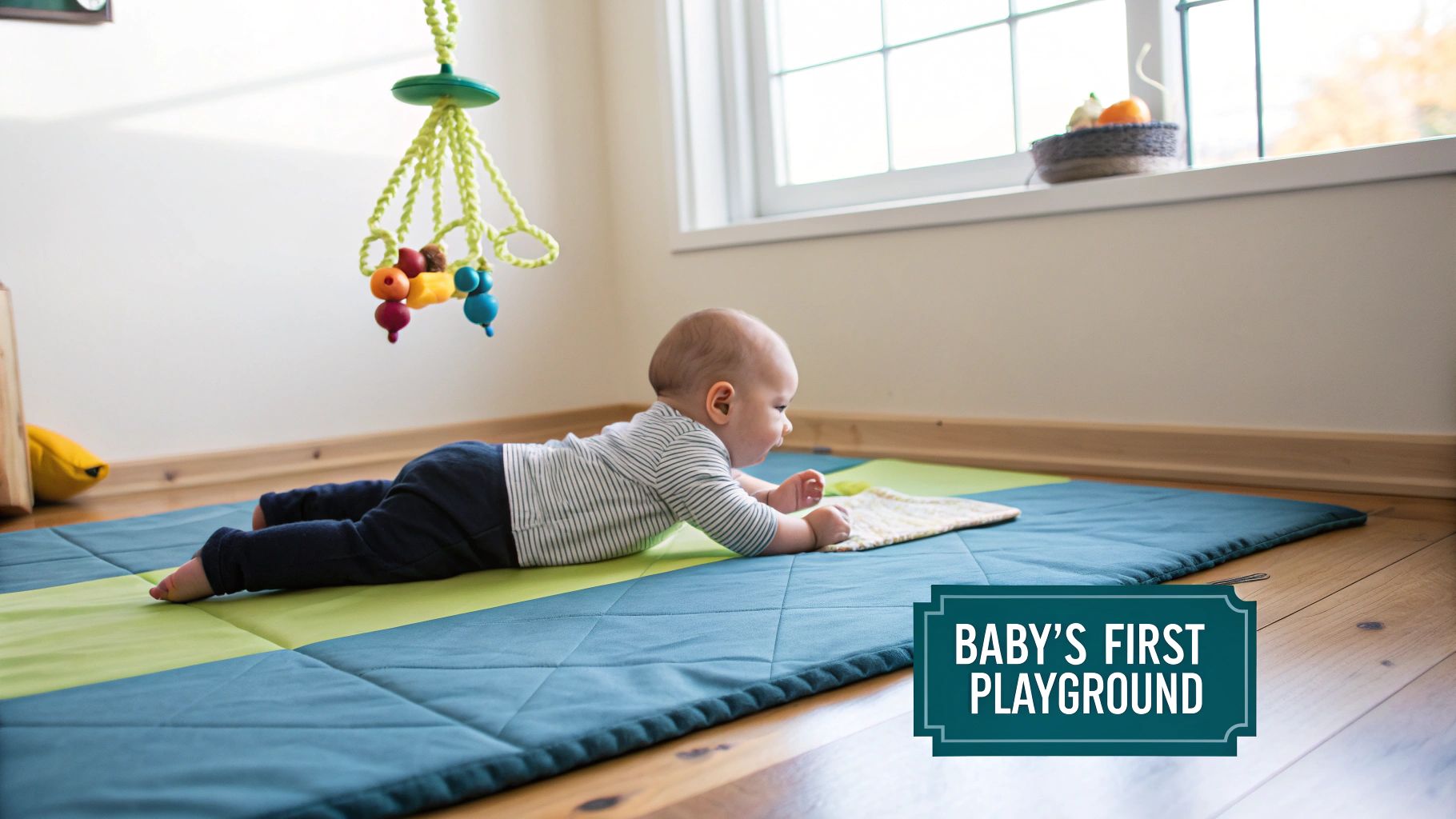
For a baby, the world is a whirlwind of new information. A sensory play mat creates a little hub of exploration where every texture, colour, and sound becomes a brand-new adventure. It’s where your little one starts to piece together the world around them through sight, sound, and touch.
Most importantly, it has the power to transform tummy time from a daily challenge into a fun, positive experience. With so much to see and do, babies are naturally encouraged to lift their heads, push up with their arms, and strengthen the muscles they'll need for sitting, crawling, and eventually, walking.
Laying the Foundations for Growth
Every part of a good sensory mat is there for a reason. Each feature is designed to help your baby hit those early developmental milestones. It’s the stage where they begin to understand cause and effect—one crinkly sound, reflective mirror, or soft texture at a time. This kind of purposeful play builds a solid foundation for more complex skills down the road.
It's no surprise that these mats have become so popular. The baby play mat market is seeing huge growth, projected to climb from USD 6.57 million to a massive USD 326.97 million by 2033. This boom shows a real shift in how parents understand the importance of safe, sensory-rich spaces, with floor play now a cornerstone of early development.
Think of a sensory play mat as the foundation of a house. It provides the stable, supportive, and enriching base upon which all future learning—from motor skills to cognitive understanding—is built.
This guide will break down exactly how these mats support your baby's learning, turning simple playtime into moments of real growth. As we explore the different elements, you’ll see how each one plays a part in your child's journey. You might also find our guide on other engaging baby sensory activities a great way to expand your playtime routine.
How Sensory Play Sparks Crucial Developmental Wins
When your baby delightedly pats a crinkly leaf or stares at their reflection in a tiny mirror, it’s so much more than just simple play. Think of it as a powerful, brain-building workout. Each little interaction on a baby sensory play mat is a tiny spark, forging crucial connections that lay the groundwork for all future learning.
This dedicated space isn’t just about keeping them occupied; it’s an active learning environment. The combination of textures, sounds, and sights all work together to stimulate their developing nervous system, helping their brain make sense of the world.
Building a Stronger Body and Mind
From the very first tummy time session, the physical benefits start kicking in. Reaching for a hanging toy isn't just a cute gesture; it's a complex movement that builds core strength, develops hand-eye coordination, and refines gross motor skills. These are the very first steps towards rolling over, sitting up, and eventually, crawling.
The mat's features are designed to encourage exactly this kind of movement.
- Gross Motor Skills: Pushing up during tummy time strengthens their neck, shoulder, and back muscles.
- Fine Motor Skills: Grasping a soft rattle or pinching a silky tag hones the delicate muscles in their hands, preparing them for holding a spoon or a crayon down the line.
This physical development is tied directly to their mental growth. As they figure out they can interact with their environment and make things happen—like kicking a bar to make a sound—they begin to grasp the concept of cause and effect. This is a massive leap in their cognitive development.
A Feast for the Senses
A sensory play mat is precisely what its name suggests: a playground for all the senses. Each element is carefully chosen to provide specific stimuli that help your baby’s brain to grow and organise information.
A newborn’s vision is still a bit blurry, so the bold, high-contrast black and white patterns you often see on mats are perfect for grabbing their attention and strengthening their eyesight. In the same way, the variety of textures—from smooth satin to bumpy corduroy—refines their sense of touch, which is one of their most important tools for exploration.
When children engage their senses, they are building neural pathways that support everything from language acquisition to problem-solving. It’s the foundational work that makes all other learning possible.
This sensory input doesn't just build intelligence; it also plays a key role in emotional regulation. The soothing sound of a crinkle toy or the repetitive motion of running fingers over a textured patch can be incredibly calming for a baby, helping them process their big feelings in a safe, manageable way.
Fostering Cognitive Leaps and Curiosity
Beyond the immediate physical and sensory benefits, the play mat is a hub for cognitive growth. It's where your baby starts to become a little scientist, constantly experimenting and learning from the results.
That small, baby-safe mirror isn't just for admiring their cute reflection. It's one of their first tools for developing self-awareness as they start to realise the baby staring back is them. This process is a cornerstone of early identity formation. Every giggle at their own image and every pat on the mirror helps them build a sense of self. To dive deeper into this topic, you can learn more about the stages of cognitive development in early childhood in our detailed guide.
Choosing the Right Sensory Mat for Your Family
Walking into the baby aisle can feel like stepping into a whirlwind of choices, can't it? When you're trying to pick a baby sensory play mat, it’s easy to get lost. Let's cut through the noise. This is your straightforward guide to finding a mat that genuinely fits your family, your home, and your baby’s unique stage of discovery.
First things first, let's talk materials. This is the surface your baby will be lying, rolling, and drooling on, so safety is paramount. You'll want to look for materials that are non-toxic and baby-safe. Think organic cotton, natural rubber, or high-quality, BPA-free foam. Peace of mind is priceless.
Understanding what goes into making safe, quality toys can be really helpful. The principles behind creating soft toys, for instance, often apply to the attachments and fabrics on play mats. For a deeper dive into this, an insider's guide to custom stuffed animal manufacturing offers some great insights into material selection and safety standards.
Practicalities and Purpose
Now for the real-world stuff. How much room do you actually have? A huge, colourful mat might look amazing online, but if you're in a smaller flat, a clever, foldable design could be your best friend. Portability is another big win, especially if you visit family often or want to bring a familiar play space on holiday.
And let’s be honest: babies are messy. The ‘cleanability factor’ is a game-changer. A mat that’s machine-washable or has a simple wipe-clean surface will save you so much time and stress. After all, playtime shouldn't end in a frantic scrubbing session.
Your ideal sensory mat should not only support your baby's development but also seamlessly integrate into your home and lifestyle, making playtime easier and more enjoyable for everyone.
This is why choosing well is so important. The right mat acts as a launchpad for so many developmental wins, from strengthening tiny muscles to sparking those first cognitive connections.
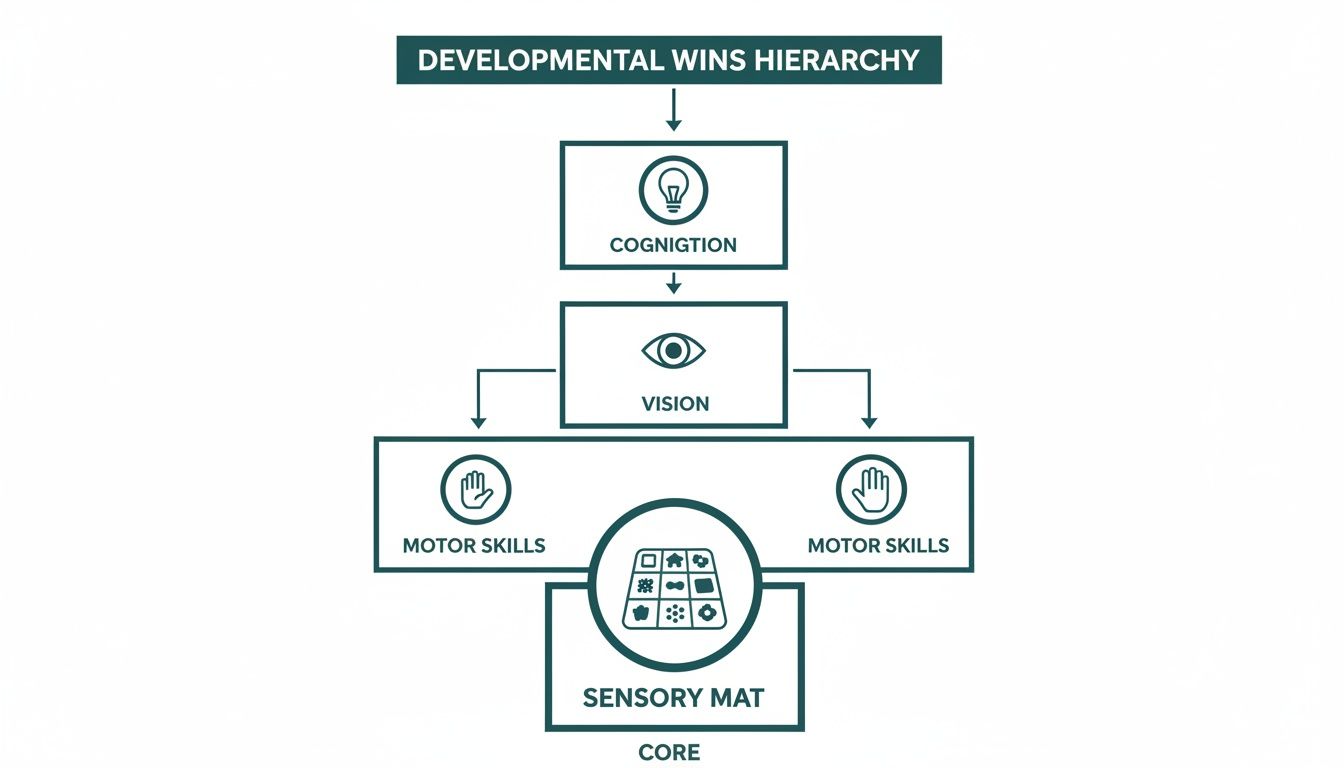
As you can see, a simple mat can be the foundation for stimulating vision, building crucial motor control, and nurturing a curious little mind.
Sensory Play Mat Feature Checklist by Age
To help you match the mat to your little one’s journey, this table breaks down which features are most impactful at each stage, and how you can pair them with toys from your Grow With Me kit for even richer play.
| Age Group | Key Developmental Focus | Essential Mat Features | Grow With Me Toy Pairings |
|---|---|---|---|
| Newborn (0-3 Months) | Vision development, head lifting | High-contrast (black & white) patterns, soft, flat surface for tummy time. | High-contrast cards, soft rattles. |
| Infant (3-6 Months) | Reaching, grasping, core strength | Overhead activity arch with hanging toys, different fabric textures, crinkly sounds. | Dangling sensory toys, graspable rings. |
| Older Baby (6+ Months) | Exploration, crawling, object permanence | Larger surface area, interactive elements like peek-a-boo flaps, unbreakable mirrors, attached teethers. | Texture balls, discovery blocks. |
This checklist makes it easier to see how a mat's features can grow with your baby, ensuring it remains an engaging and valuable part of their playtime for months to come.
By thinking about materials, practicality, and your baby’s current stage, you can confidently choose a sensory play mat that’s more than just a colourful square on the floor. It becomes a dedicated space for growth, fun, and connection.
Keeping Playtime Safe and Stress-Free
When you bring a new baby sensory play mat into your home, you're creating a little world for your baby to explore. But more than anything, you want that world to be safe. Peace of mind is priceless, and it all starts with knowing what to look for—not just the bright colours and fun textures, but the materials and safety standards that really count.
Before you do anything else, flip the mat over or check the packaging for safety certifications. Here in the UK, the CE mark is your first port of call. It’s a simple but crucial sign that the product meets strict health, safety, and environmental standards. Spotting that little mark is a quick check that tells you the manufacturer has put your baby's well-being first.
What to Avoid in Mat Materials
Knowing what to look for is only half the battle; knowing what to avoid is just as important. Some chemicals commonly found in plastics are best kept far away from a developing baby. Try to steer clear of mats made from PVC (polyvinyl chloride), as it can contain nasty additives like phthalates and even lead.
Instead, look for materials that are proudly labelled as BPA-free, phthalate-free, and non-toxic. Many of the best mats on the market today use much safer alternatives like EVA foam, natural rubber, or soft organic cotton. These materials give your baby a comfy, clean surface without any of the chemical worries. It's also worth thinking about what’s underneath the mat; floors like low VOC vinyl flooring can help maintain healthier air quality in your baby's play space.
Creating a Secure Play Zone
Once you’ve chosen a safe mat, the next step is setting up the perfect play zone. You'll want to find a spot on a flat, stable surface, well away from any potential household hazards.
- Avoid draughts: Keep the mat away from open doors or windows so your baby stays cosy and comfortable.
- Clear the area: Create a little buffer zone around the mat, making sure it’s free from sharp furniture corners, trailing electrical cords, or anything heavy they might be tempted to pull down.
- Always supervise: No matter how safe the setup, nothing replaces your watchful eye. Staying close means you can share in their joy and be there in a flash if they need you.
A truly safe play environment rests on three pillars: a certified non-toxic mat, a hazard-free spot, and your loving presence. Get that combination right, and you can both relax and enjoy playtime, completely stress-free.
Keeping It Clean and Hygienic
Let’s be honest, babies explore the world with their hands and their mouths. Spit-up and drool are just part of the sensory experience! That’s why keeping the play mat clean is non-negotiable.
Thankfully, most are designed for easy cleaning. Foam mats can usually be wiped down in seconds with a damp cloth and some mild, baby-friendly soap. If you have a fabric mat, check the care label—many come with machine-washable covers that make life so much easier. A quick, regular clean keeps germs at bay and ensures the mat is always a fresh, inviting space for your little one to play.
Creative Ways to Bring Your Sensory Mat to Life
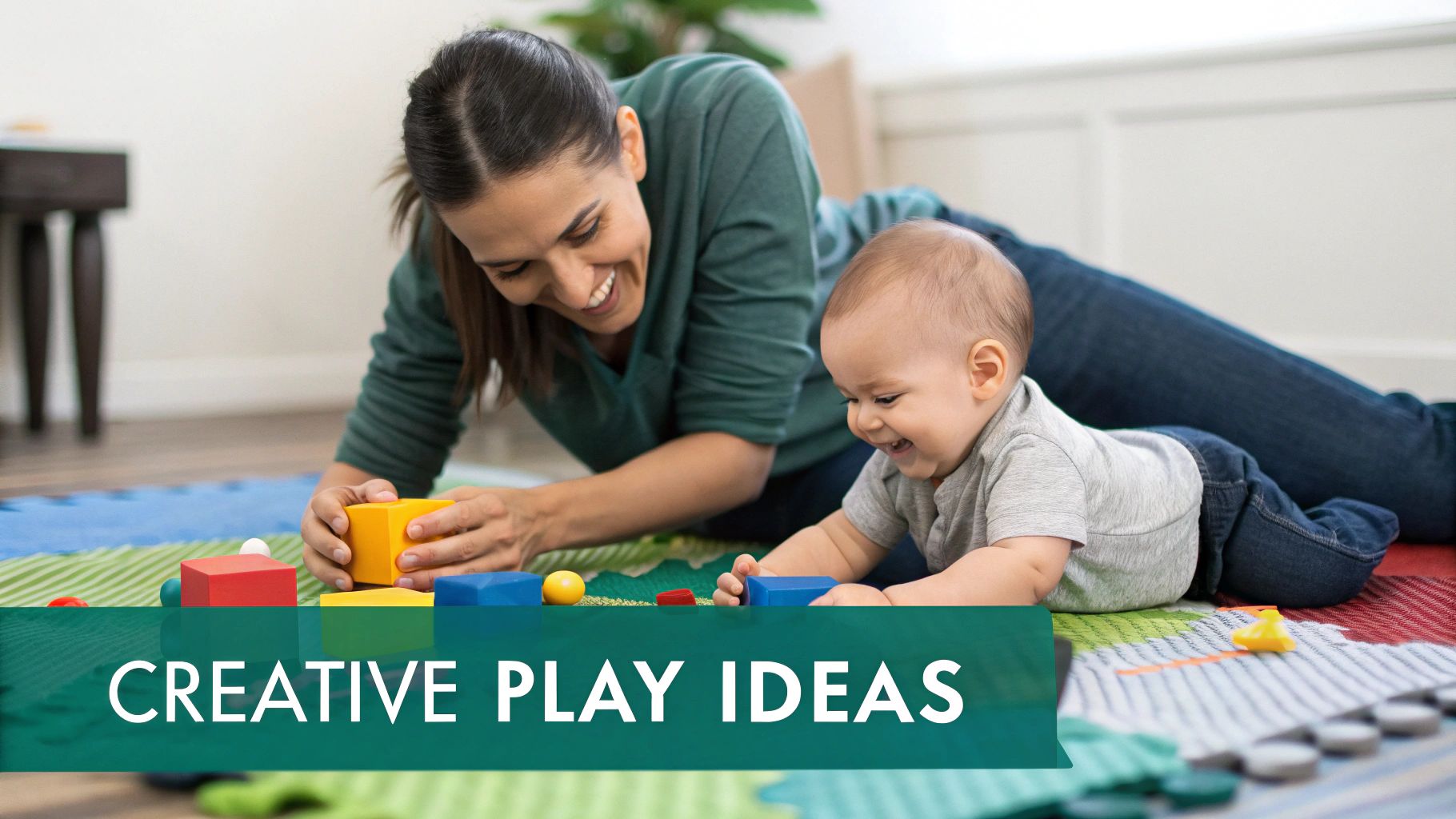
So, you’ve picked out the perfect sensory play mat, and it's all laid out, ready to become the centre of your baby's world. Now for the fun part—bringing it to life! A great play mat is more than just a soft spot for tummy time; it’s a stage for connection, discovery, and countless little adventures that will evolve as your baby grows.
Think of the mat as your baby’s first canvas. By adding a few simple, thoughtful activities, you can turn it into an interactive hub that supports every new milestone. This is your chance to make playtime truly magical, turning everyday moments into powerful learning opportunities. Let’s look at some creative, age-appropriate ways to do just that.
Gentle Games for Newborns (0-3 Months)
For a brand-new baby, the world is a gentle haze of new sensations. Their baby sensory play mat provides a safe, comfortable base for their very first explorations. At this stage, your voice and gentle touch are the most captivating toys you can offer. The goal is calm, gentle stimulation that helps their brain process new information without getting overwhelmed.
Even the simplest activities can have a huge impact:
- Guided Texture Tour: Gently take your baby's hand or foot and brush it against the different textures on the mat. Talk to them in a soft, soothing voice, describing what they’re feeling. "This is the smooth, silky bit," or "Can you feel the bumpy little stars?"
- Follow the Sound: Lie down on the mat next to your baby and shake a soft rattle or a bell from your Grow With Me kit. Move it slowly from one side to the other, encouraging them to turn their head and track the sound with their eyes.
- Singing and Storytelling: Get down to their level so your baby can clearly see your face. Sing familiar nursery rhymes or tell a simple story, using lots of facial expressions. This builds a powerful emotional connection and lays the groundwork for language skills.
Engaging Activities for Growing Infants (4-6+ Months)
Once your baby starts gaining more control over their body, their curiosity will skyrocket. Now they’re ready for more interactive play that encourages reaching, rolling, and even a bit of problem-solving. It's the perfect time to introduce new toys and gentle challenges, turning the mat into a mini-gym for their developing motor skills.
The most effective sensory play doesn’t require complicated setups. It’s about offering simple tools and the freedom to explore, allowing your child to lead the discovery and build confidence in their own abilities.
Try introducing toys that inspire action. Place a favourite teether just out of reach to motivate them to stretch, shuffle, or even attempt a roll to get it. You could also stack a few wooden blocks on a flat part of the mat and let them enjoy the pure satisfaction of knocking them down—a brilliant first lesson in cause and effect.
For more hands-on fun, think about adding other sensory tools to your playtime on the mat. For example, you could learn how to make your own DIY sensory bottles for a safe, mess-free way to explore different sounds and visuals. Simple additions like these keep your baby’s play routine fresh and exciting, inviting them to discover the world one delightful moment at a time.
Your Burning Questions About Baby Play Mats, Answered
Choosing new baby gear always seems to open up a whole can of worms, doesn't it? To help you feel completely sure of your choices, I’ve put together the most common questions I hear about the baby sensory play mat and answered them plainly and simply. Think of this as your no-fuss guide to the practical side of sensory play.
When Can My Baby Start Using a Sensory Play Mat?
Believe it or not, you can introduce a play mat from day one. For a brand new baby, it's a wonderfully clean, soft, and safe spot to just lie on their back and take in the world around them. Many mats feature high-contrast patterns, which are brilliant for a newborn's developing eyesight in those first few weeks.
Of course, you can also start supervised tummy time on the mat within the first week or two. Just a couple of minutes at a time is all it takes to begin building that crucial neck and shoulder strength. As your baby grows, that mat will become the heart of their play and development for their entire first year and, often, well beyond.
What Is the Best Way to Clean a Baby Play Mat?
How you clean your mat really comes down to what it's made of. The first port of call should always be the care label, but here are a few general tips that usually work well:
- Fabric Mats: Lots of these have handy removable covers. You can typically pop them in the washing machine on a gentle, cool cycle with a baby-safe, non-bio detergent.
- Foam Mats: These are usually a doddle to clean. A quick wipe-down with a damp cloth and a mild, non-toxic cleaner or a bit of soapy water is all they need.
Try to steer clear of harsh chemicals or anything too abrasive, as you could damage the surface or leave behind a residue. A regular clean keeps the mat hygienic and ready for your little one's next exploration.
A clean play space is a healthy play space. A simple wipe-down or wash after play sessions keeps the mat fresh and ready for the next adventure, giving you peace of mind.
Should I Get a Play Mat With an Arch or a Flat One?
This is a great question, and honestly, the answer depends on your baby’s age and how much space you have. Mats with arches—often called 'play gyms'—are absolutely fantastic for babies from around two to six months old. The dangling toys are perfectly placed to encourage reaching, batting, and grasping, all of which are vital for building hand-eye coordination.
On the other hand, a simple flat mat is often more versatile and you'll get more use out of it for longer. It offers more freedom for tummy time and gives your baby the clear, open space they need to learn to roll and eventually crawl. Many parents find that a flat baby sensory play mat combined with a few well-chosen toys gives them the most flexibility, letting them create a focused play zone that's just right for their baby's current stage.
How Long Should Tummy Time Last on the Play Mat?
With tummy time, the golden rule is little and often. For a newborn, you’ll want to start with incredibly short sessions—think just 2-3 minutes, a couple of times a day. The real goal here is to make it a positive experience, not something they have to endure.
As your baby's neck and back muscles get stronger, you can start to stretch it out a bit longer. By the time they're a few months old, you can aim for a total of about 15-20 minutes of tummy time spread throughout the day. Always keep a close eye on them and be ready to scoop them up if they seem tired or fussy. The engaging textures and sounds of a sensory mat can really help hold their interest, turning a vital exercise into a fun little game.
Ready to create the perfect play-based learning environment for your little one? The Grow With Me subscription box delivers stage-based, high-quality toys that pair perfectly with any sensory mat, enhancing every moment of discovery. Explore our play kits today and give your child the tools they need to thrive.