

A Practical Guide to Baby Sensory Activities Your Little One Will Love
Baby sensory activities are all about simple, playful moments that light up your baby's senses – their touch, sight, sound, smell, and taste. From the feel of a soft blanket against their cheek to the gentle sound of a rattle, these experiences are doing something incredible: they're building strong neural connections inside their rapidly growing brain.
The Power of Sensory Play in Early Development

When your little one watches a leaf rustle in the breeze or reaches out to grab a textured toy, they're doing so much more than just playing. They are on a mission of discovery, actively learning about and making sense of the world. This is what we call sensory learning, and it’s the very foundation for all the learning that will follow.
Every new texture they feel, every sound they hear, and every sight they see helps to forge vital pathways in their brain. Think of it like building a brand-new road network from scratch; the more connections you create, the more efficiently information can get from A to B. For your baby, this translates into everything from developing motor skills to learning to talk.
Turning Everyday Moments into Learning Opportunities
The brilliant thing is, you don't need fancy toys or complicated setups to create a rich sensory world for your baby. In fact, some of the most powerful sensory activities are woven right into your daily routine.
Simply talking about the soft feel of their pyjamas as you change their nappy or letting them touch a cool, smooth spoon before a meal are wonderfully effective ways to engage their senses.
These little interactions are ticking off some major developmental milestones:
- Cognitive Growth: Sensory play is all about curiosity and investigation. When they work out how to make a rattle shake or how to stack blocks, they’re actually engaging in early scientific thinking.
- Motor Skill Refinement: Simple actions like scooping, pouring, and grasping are fantastic for strengthening hand-eye coordination and the small muscles in their hands. This lays the groundwork for future skills, like holding a crayon.
- Language Development: As you narrate what they're experiencing – "Listen to that crinkly paper!" or "Feel the soft teddy bear" – you're building their vocabulary and communication skills one word at a time.
If you’re keen to understand more about the science behind it all, you can take a deeper dive into what sensory integration is and why it’s so important.
Sensory play isn't just a way to keep your baby entertained. It's providing the essential building blocks for their brain development, helping them learn to manage emotions, develop focus, and build confidence as they start to master their world.
Making Developmental Play Effortless
We all know life with a little one is busy. Finding the time and energy to research the right toys and gather materials can feel like another thing to add to an endless to-do list.
That's where something like a Grow With Me kit can be a game-changer. By delivering high-quality, natural toys in stage-based kits, they take all the guesswork out of it. Each item is thoughtfully chosen to support specific developmental milestones, turning playtime into a seamless and effective learning experience that grows right alongside your child.
Sensory Activities for Newborns to 6 Months
In these precious first few months, your baby's brain is developing at an astonishing pace. The best fuel for that growth comes from simple, everyday sensory activities. You don't need complicated setups or expensive toys; the most powerful learning moments happen with things you likely already have at home. The goal here is gentle, brief, and meaningful connection.
A newborn’s vision is still fuzzy, which is why high-contrast images are so captivating for them. They see black, white, and red most clearly. You can easily support their developing sight by showing them high-contrast flashcards or a toy with a bold, black-and-white pattern. Even a striped t-shirt will do the trick! Slowly move the object from one side to the other and watch as their little eyes learn to follow it.
For something a bit more permanent, crafting a DIY baby mobile is a lovely project that provides engaging visual stimulation right from their cot. These simple actions are so important—they help strengthen their eye muscles and improve focus, laying the groundwork for reading and exploring their world later on.
Gentle Sounds and Soothing Touches
While their sight is still coming into focus, a baby’s hearing is remarkably well-developed from birth. They often find gentle, rhythmic sounds incredibly soothing. A simple shaker, made by popping some rice into a small, securely sealed container, works wonders.
Shake it softly near one ear, then the other, and see if they turn their head towards the sound. This little game not only tunes into their auditory senses but also helps build those tiny neck muscles. You can even switch things up by using dried beans or pasta to create a different sound for a new experience.
It’s no surprise that the demand for baby sensory toys in the UK has skyrocketed as parents have realised these benefits. In fact, sensory toys now rank as the 7th top category in the 2025 UK toy market report, showing an incredible 365% growth trend. This boom shows just how much parents value these simple, sensory-rich items, which are often the stars of play kits like Grow With Me.
The Importance of Tummy Time Textures
We all know tummy time is essential for building strength in the head, neck, and upper body, but it can also be a fantastic sensory experience. Instead of always using the same play mat, try introducing a variety of textures for your baby to feel against their skin.
- Soft and Fluffy: A fleece blanket or a clean sheepskin rug feels wonderfully cosy.
- Smooth and Cool: A silk scarf can be a fascinating new sensation.
- Slightly Bumpy: Try a towel or a piece of corduroy fabric for some gentle texture.
By changing up the surfaces, you’re sending new tactile information to their brain, helping them make sense of the world. This multi-sensory approach can make tummy time far more engaging and stop it from feeling like a chore.
Of course, always supervise tummy time closely. For more ideas on how to make it a positive part of your day, have a look at our guide on when to start tummy time. These small, focused moments of play are so much more than just fun—they are the essential building blocks for your baby’s cognitive and physical development, supporting everything from their grasping reflex to confident head control.
Engaging Sensory Play for Babies 6 to 12 Months
Once your baby masters sitting up and starts making their first shuffles or crawls, their world completely opens up. This 6-to-12-month phase is pure, active discovery. They’re no longer just watching from the sidelines; they are busy little explorers, ready to touch, taste, and test everything they can get their hands on.
This is the perfect time to level up your sensory activities. Their new mobility and improving hand-eye coordination mean they can engage with their environment in brand-new ways. Every day is a thrilling adventure!
Creating a Treasure Basket of Wonders
One of my all-time favourite activities for this age is a treasure basket. And the best part? It’s not about expensive toys. It’s about giving them a rich variety of textures, shapes, and weights to explore all on their own. Just gather a collection of safe, everyday household items and pop them in a low, sturdy basket that they can easily reach into.
The real magic of a treasure basket is in its variety and the freedom it gives your baby. They are in charge of the play, letting their curiosity lead the way.
A great treasure basket could include:
- A large, smooth wooden spoon
- A clean, natural sponge
- A shiny metal whisk
- A piece of bumpy corduroy fabric
- A pinecone (make sure it's clean and has no sharp bits)
Remember, the goal is to stimulate their senses with different materials. The contrast between a cool metal spoon and a warm wooden block is a powerful learning experience, helping their brain categorise and understand the world.
Always supervise this activity closely, and double-check that every item is clean and too large to be a choking hazard. For more ideas, take a look at our guide on the best toys for a 6-month-old baby to see what kinds of items work so well for this.
Exploring Taste-Safe Fun and Motor Skills
This is also a fantastic age to introduce messy play in a controlled, safe way. Taste-safe finger painting is a brilliant sensory activity that always goes down a treat. Simply spoon a dollop of plain, full-fat yoghurt onto their high chair tray and let them smear, squish, and explore. You can even add a drop of natural food colouring to make it more visually exciting.
This simple activity strengthens the small muscles in their hands and fingers, which is crucial for developing the pincer grasp—that clever ability to pick up small objects between their thumb and forefinger. Stacking toys and shape sorters, often found in Grow With Me kits, are also excellent for refining this essential skill. As your baby hits new milestones, incorporating the best 6-9 month toys for baby development can be a wonderful way to foster their growing cognitive and motor skills.
The timeline below illustrates the key sensory milestones your baby has been working towards in their incredible first six months.
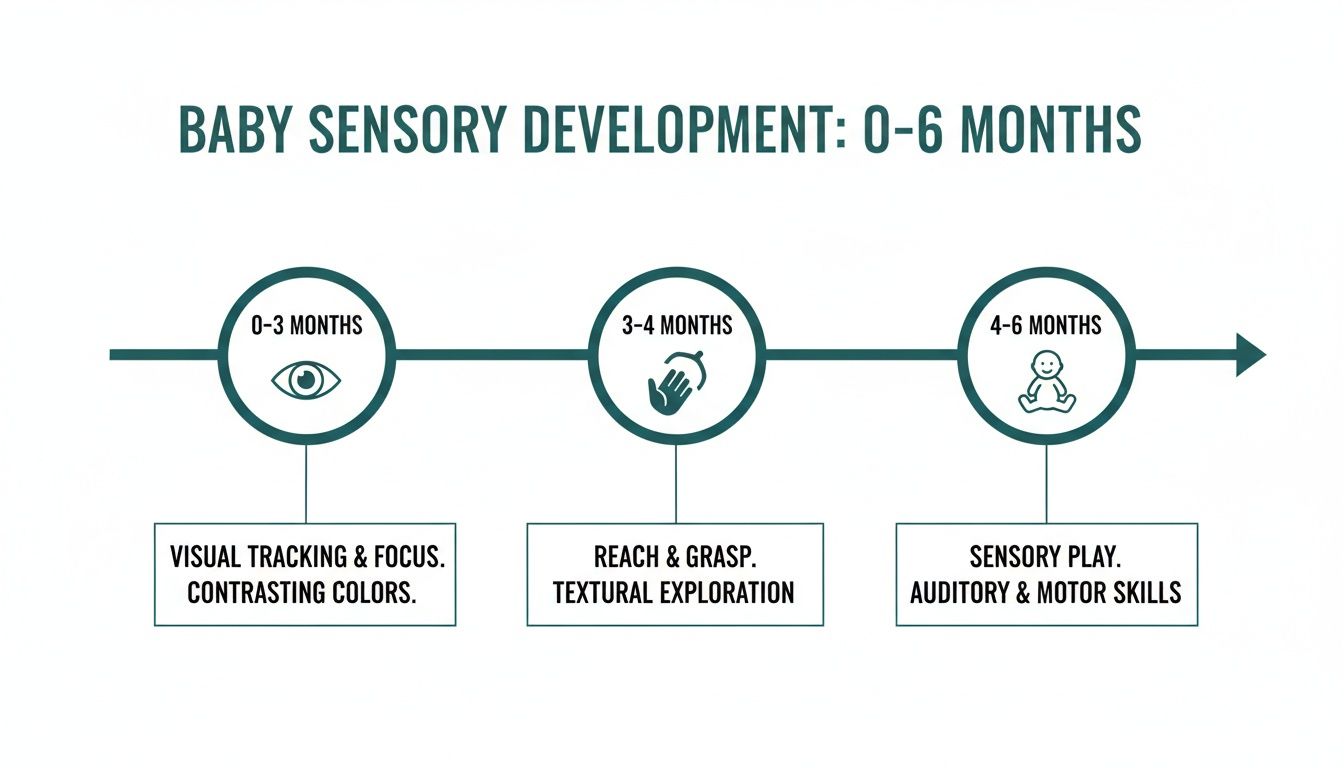
It’s a great visual reminder of their journey from early visual tracking to grasping and sitting, all of which sets the stage for the even more complex explorations ahead.
Sensory Activity Ideas by Developmental Stage
To help you choose the right kind of play at the right time, here’s a quick-reference table matching sensory activities to key developmental milestones for your baby’s first year.
| Age Group (Months) | Key Milestones | Recommended Sensory Activities | Grow With Me Toy Example |
|---|---|---|---|
| 0-3 | Developing vision, tracking objects | High-contrast cards, gentle sounds with a rattle, skin-to-skin | Black & White Sensory Flashcards |
| 3-6 | Grasping, reaching, bringing objects to mouth | Tummy time on a playmat, exploring different textures (soft fabrics, crinkly paper) | Sensory Fabric Book or Crinkle Paper |
| 6-9 | Sitting up, developing pincer grasp, crawling | Treasure baskets, taste-safe messy play, stacking blocks | Wooden Stacking Rings |
| 9-12 | Pulling up to stand, cruising, improved object permanence | Simple puzzles, water play in a shallow tub, ‘posting’ items into a container | Shape Sorter or Posting Box |
This table is just a starting point, of course. The most important thing is to watch your baby, see what they’re interested in, and have fun exploring the world together.
Creative Sensory Adventures for Toddlers
As your baby steps into toddlerhood, their world cracks wide open. They’ve moved past simply exploring textures and are now ready to create, imagine, and ask "why?" about everything. Sensory play grows right along with them, becoming a fantastic way for them to tell stories, solve little problems, and make sense of their bigger world.
This is the perfect age to bring in themed sensory bins. Don't let the name intimidate you; these are just simple containers that hold miniature worlds. The setup can be incredibly easy, but the impact on their creative thinking is huge.
Setting Up a Themed Sensory Bin
A farm-themed bin is always a winner and a great place to start. Just grab a shallow tray and fill it with a base of uncooked oats or cornmeal to look like a field. Pop in a few toy farm animals, a small scoop for "feeding," and maybe some of the wooden blocks from your Grow With Me kit to build little fences or barns.
It might look like they're just scooping oats, but so much more is happening beneath the surface. They’re actually:
- Learning early maths skills: Sorting the animals by type or colour is their first introduction to classification.
- Building their vocabulary: As they play, you’ll hear them narrate what's happening—"The cow is eating!"—which is brilliant for developing their language.
- Diving into imaginative play: Making up stories and scenarios is a cornerstone of how they develop emotionally and cognitively.
A sensory bin gives your toddler a dedicated space for exploration. The clear boundaries make messy play feel much more manageable for you, and it helps your child focus and engage more deeply without feeling overwhelmed.
Feel free to run with different ideas! A "dinosaur dig" using sand and some hidden 'fossils' or a "baker's kitchen" with flour, measuring spoons, and bowls can keep them happily occupied for ages. The trick is to offer open-ended materials and let them take the lead.
Tactile Fun with Homemade Playdough
There's a reason homemade playdough is a classic toddler activity. The simple act of squishing, rolling, and shaping the dough is fantastic for strengthening all those tiny muscles in their hands—the same ones they'll need for writing in a few years. Best of all, you know exactly what’s in it, so you don't have to worry when a little bit inevitably ends up in their mouth.
It’s easy to make the play last longer by adding a few tools. Things like a toy rolling pin, cookie cutters, or even a garlic press can create fascinating new shapes and textures. You could also use puzzle pieces from a Grow With Me kit as stamps to connect a familiar toy with a brand new sensory experience.
Sand and Water Stations for Cognitive Growth
A simple sand and water station is one of the most powerful baby sensory activities for a toddler. You don’t need anything fancy; two separate tubs in the garden or on a splash mat indoors work perfectly. Add some cups, funnels, and spoons, and just watch the learning happen.
As they pour water from one container to another, they start to grasp concepts like "full" and "empty," which lays the foundation for understanding volume. They’re also learning about cause and effect as they see how water makes sand heavier and easier to mould.
This kind of hands-on learning is now a cornerstone of early years education in the UK. Experts have found that activities like playdough and water play directly boost cognitive development, which is critical when you consider that 85% of brain development happens by age three. Toddlers who get to enjoy this kind of rich, textured play often build their vocabularies faster, picking up 15-20% more words as they learn to describe what they see, feel, and do. You can learn more about the growing market for these educational experiences and their profound impact on child development.
Getting the Most from Your Grow With Me Kit
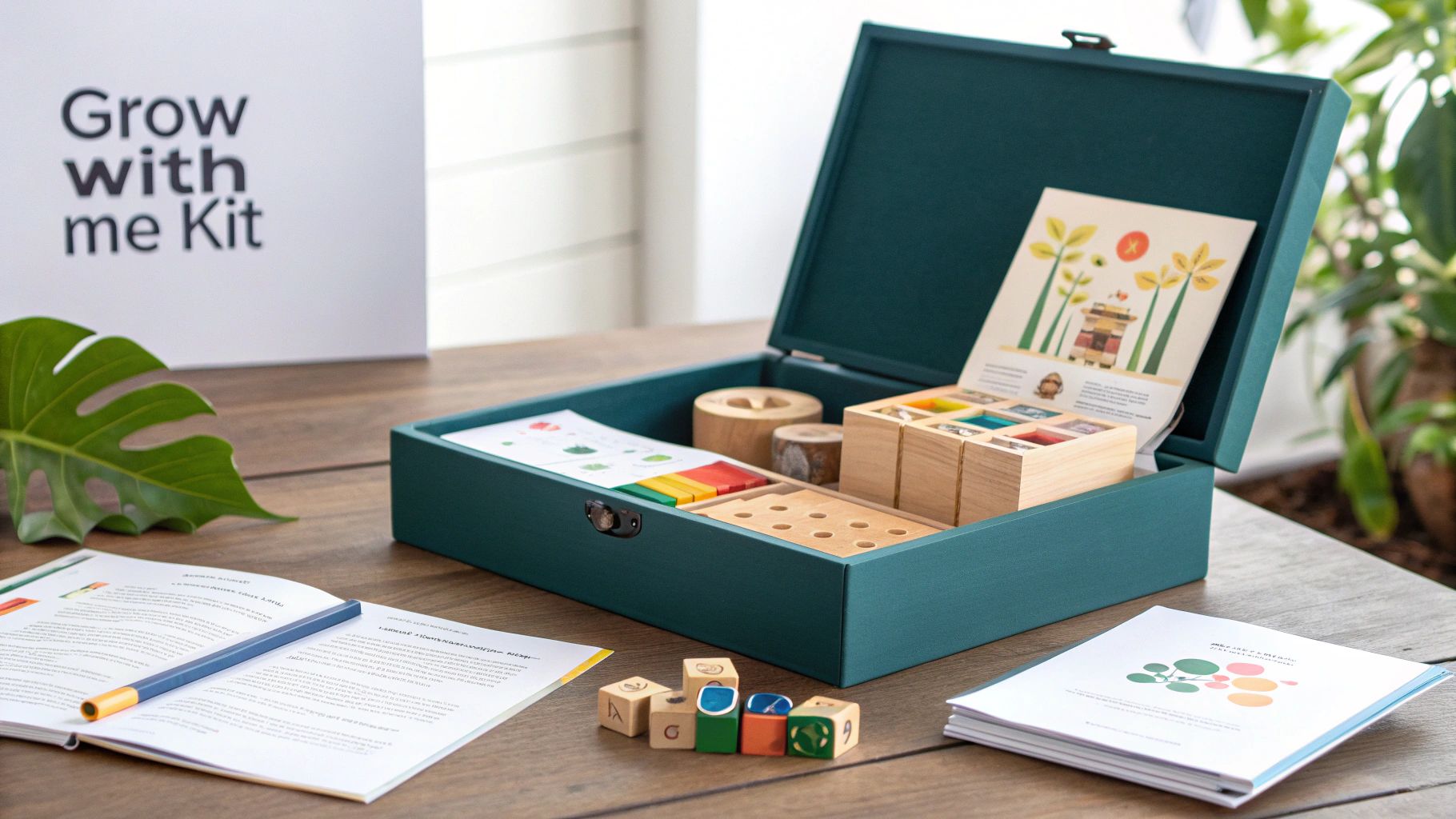
So, your first Grow With Me box has landed on your doorstep. It’s an exciting moment! Inside, you’ll find what looks like a collection of beautiful toys, but it’s actually a carefully curated toolkit for creating wonderful baby sensory activities. The real magic isn't just in what the toys are, but in how you can use them together.
Don't forget to look at the description cards that come with each item. They’re your secret weapon, explaining the ‘why’ behind every toy and how it connects to your baby's development. Think of them as a launchpad for your imagination, not a rigid set of rules.
Thinking Outside the Box
Let’s take a classic wooden stacker. Yes, it’s great for stacking, but its potential goes so much further. Have you tried using the rings as stamps with some taste-safe paint? Or pressing them into playdough to make patterns? You can even tap them on different surfaces—a wooden floor, a soft rug—to explore how the sounds change. Suddenly, one toy opens up a whole world of sensory feedback.
It's the same with the board books. They aren't just for bedtime stories. As you read, point out the bold colours and trace the shapes with your baby’s finger. Let them feel the weight and smoothness of the sturdy pages. This simple interaction turns reading into a rich, tactile experience.
The key is to view each toy as a versatile tool. Just ask yourself, "What else could we do with this?" This simple question will help you adapt the toys as your child grows, making sure every item in the box has real, long-lasting play value.
Combining Kits for New Challenges
As your collection grows with each subscription box, you'll have an amazing library of stage-based toys at your fingertips. This is where the fun really ramps up. By combining items from different kits, you can create more complex, layered activities that are perfectly matched to your child’s developing skills.
Here are a few ideas I've seen work brilliantly:
- A new kind of posting game: Take the wooden rings from an early kit and pair them with the shape-sorter box from a later one. It’s a fantastic way to challenge their fine motor skills in a fresh, new way.
- A mini texture path: Lay out sensory fabric squares from a newborn kit alongside wooden blocks and puzzle pieces from a toddler box. This creates a brilliant little obstacle course for crawling or toddling feet to explore.
- Supercharge your sensory bins: Add scoops, balls, and wooden figures from various kits to a simple sensory bin filled with oats or water. This brings a new layer of complexity and imaginative play to the activity.
This mix-and-match approach is exactly what the stage-based system is designed for—it grows with your child, with each new kit building on the skills they’ve already learned. It’s no wonder this type of play has become so popular. In the UK, which leads Europe in sensory engagement, search interest in the baby and toddler toy market has seen a 403% surge.
Parents are more aware than ever that these activities are vital for helping babies make sense of the world. With sensory integration issues affecting 5-16% of UK children, the demand for supportive play is clear. The Grow With Me model, with its focus on natural materials and EYFS-aligned learning, directly answers this need. You can read more about the rise of sensory learning on DataInsightsMarket.com. By creatively combining items, you’re not just playing—you’re maximising the value of every single toy you receive.
Your Sensory Play Questions, Answered
When you’re just starting out with sensory activities for your baby, it’s only natural to have a few questions. Am I doing enough? Is this safe? Am I creative enough? Let’s tackle some of the most common concerns we hear from parents, so you can feel confident and enjoy these special moments.
How Often Should We Be Doing Sensory Activities?
Forget about rigid schedules or blocking out an hour every day. The best approach is to weave short, frequent moments of sensory exploration into your existing routine. Honestly, even 5-10 minutes a day can make a world of difference.
The key is to follow your baby's lead. If they’re happy, alert, and engaged, that's brilliant – keep going! But if they start getting fussy, turn their head away, or just seem a bit overwhelmed, that’s your signal to wrap it up for now. You’re already doing it without even realising it – just talking about the bumpy texture of a satsuma at snack time counts!
Are Sensory Activities Safe if My Baby Puts Everything in Their Mouth?
This is a big one, and rightly so. Safety is always number one, especially during that "everything goes in the mouth" phase. The golden rule for young babies is to only use items that are too large to be a choking hazard. This is where a curated kit like the ones from Grow With Me really shines, as every single item has been rigorously safety-tested for its specific age group.
If you’re going the DIY route, always use ‘taste-safe’ materials. It’s easier than you think!
- For painting: Plain yoghurt or a simple flour-and-water paste coloured with natural food colouring works wonders.
- For sensory bins: Think rolled oats or cooked (and cooled) pasta shapes.
- For playdough: You can find countless easy, edible recipes online using basic kitchen staples.
No matter what you’re playing with, close and constant supervision is absolutely essential. Keeping a watchful eye ensures that playtime is always a safe, positive, and happy experience for everyone.
What if I’m Just Not a Creative Person?
You absolutely do not need to be a Pinterest-perfect parent to create amazing sensory experiences! In fact, sometimes the simplest things are the most effective. It’s easy for little ones to get overwhelmed by too much noise and colour, so a few carefully chosen items are all you really need.
Ever heard of a "treasure basket"? It's fantastic. Just gather a few safe household objects—a wooden spoon, a new washing-up sponge, a silky scarf, a metal whisk—and let your baby explore. This is exactly why a service like Grow With Me is such a lifeline for busy parents. We don’t just send the perfect toys; we include play guides and developmental information to take all the guesswork out of it.
At Grow With Me, we take the pressure off by delivering stage-based play kits right to your door. Each one is filled with beautiful, safe, and engaging toys that make sensory play simple and joyful. Discover how we can support your little one's journey at https://shop.growwithmesubscriptionbox.co.uk.