
Your Guide to 13 Month Old Baby Milestones
That magical moment has arrived. Your baby is officially a toddler, and life is suddenly a whirlwind of wobbly steps, determined pointing, and boundless energy. The typical 13-month-old baby milestones often feel like watching a sped-up movie—one minute they’re crawling, the next they’re standing on their own, and then they’re uttering those first precious words like "mama" or "dada." Your little one is transforming into a curious, unstoppable explorer right before your eyes.
Your New Toddler: Unlocking the World
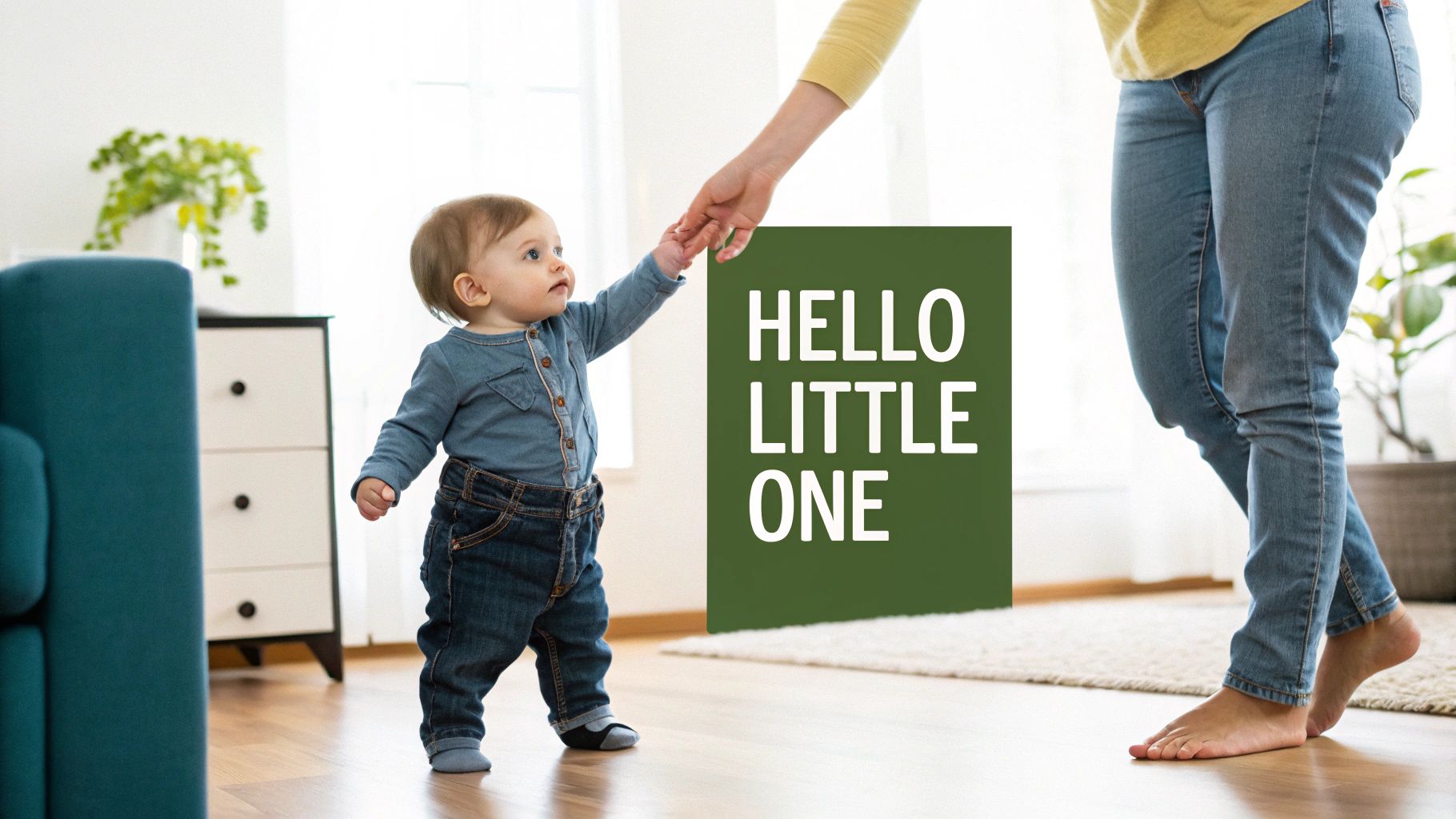
Welcome to month thirteen. This isn't just another month; it's the official gateway to toddlerhood, a time defined by incredible growth and an insatiable curiosity about everything. Every day feels like it brings a new skill, a new sound, or a brand-new way of seeing the world. It’s best to think of this stage less as a rigid checklist and more as a series of amazing developments unfolding in their own time.
This period is absolutely packed with monumental "firsts," from those shaky first steps across the living room to the first time they clearly point to the snack they want. Their little personality is truly starting to blossom, and you’ll notice they understand so much more than they can say. This guide is here to walk you through what you can typically expect during this dynamic and exciting phase.
What's Coming Up in This Guide
We're going to dive into the key advancements happening across all the different developmental areas, giving you a clear picture of your toddler's incredible progress. We'll cover everything from their physical feats to their cognitive leaps and emotional growth. You'll get a much better handle on:
- Movement Milestones: How they master standing, cruising along furniture, and taking those all-important first steps.
- Cognitive Growth: A look into how their little mind is working to solve problems and grasp concepts like object permanence (peek-a-boo is suddenly very serious business!).
- Communication Skills: It’s more than just first words. We'll explore gestures, babbles, and how much they’re really understanding.
- Social and Emotional Development: Navigating those big new feelings, a bit of separation anxiety, and their growing desire for independence.
Remember, every child develops at their own unique pace. Milestones aren't a race but a guide to help you celebrate your child's individual journey.
We’ll also touch on how stage-based play, using activities curated for their specific age, can nurture these emerging skills in a fun and engaging way. When you provide the right tools at the right time—like the age-appropriate toys found in Grow With Me kits—you can beautifully support their journey from baby to confident, curious toddler.
Mastering Movement: From Cruising to First Steps
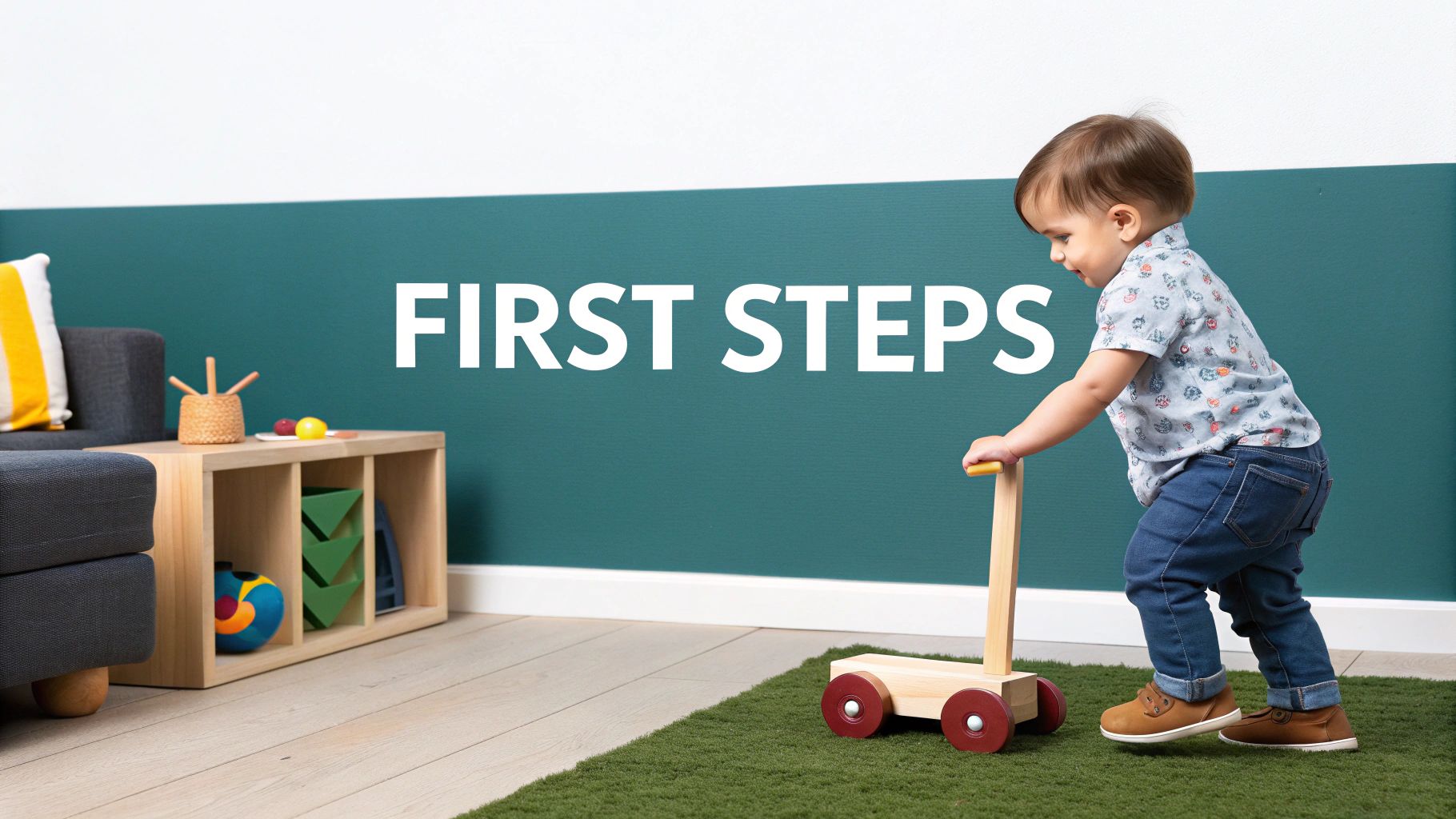
The thirteenth month often feels like a massive shift in your little one's world. Suddenly, your living room has been re-imagined as an adventure park, with every piece of furniture becoming a crucial stepping stone on their journey to true mobility. It’s a thrilling time for gross motor skills, as standing, cruising, and those very first independent steps take centre stage.
Many toddlers at this age are confident "cruisers," pulling themselves up and shuffling along the sofa, coffee table, or even your legs to get around. You'll likely see them standing on their own for a few seconds, their face a picture of intense concentration as they test their balance. It’s so important to remember that walking doesn’t just happen overnight; it’s a process built on every wobbly attempt and triumphant little step.
At 13 months, your toddler needs a surprising amount of physical activity to support this incredible development—around 180 minutes daily, spread throughout the day in active play. While every child gets there at their own pace, these early skills are what pave the way for confident walking.
Nurturing Balance and Coordination
Your main job right now is to create a safe space for them to explore. This means securing heavy furniture to the wall and covering any sharp corners. Letting your toddler go barefoot indoors as much as possible is also fantastic, as it allows them to properly feel and grip the floor, which works wonders for their balance. You can find more tips in our detailed guide on when babies typically start walking.
The right kind of toys can also make a huge difference. A sturdy wooden push-along walker, like the kind you might find in a Grow With Me kit, offers the perfect amount of support. It lets your child practise the motion of walking and build confidence, turning simple playtime into a powerful learning opportunity. To really help them along, try incorporating a few fun toddler movement activities into your day.
Refining Fine Motor Skills
While those big, dramatic movements tend to get all the attention, your toddler's hands are also becoming incredibly clever. You’ll notice their pincer grasp—that delicate use of the thumb and forefinger to pick up tiny objects—getting much more precise. This is a huge leap in fine motor skills, and it’s why mealtimes are suddenly an interactive (and very messy) affair!
Key Takeaway: The pincer grasp is more than just a physical skill; it’s the connection between what their brain wants to do and what their hands can actually achieve. When your toddler meticulously picks up a single pea, they’re showing off amazing hand-eye coordination and problem-solving skills in action.
This growing dexterity unlocks a whole new level of play. Simple activities can have a massive impact:
- Stacking Blocks: Even stacking just two or three blocks is a brilliant achievement that builds coordination and teaches them about cause and effect.
- Turning Pages: They might now be able to turn the thick pages of a board book by themselves, making story time a much more hands-on experience.
- Scribbling: Handing them a chunky crayon and a piece of paper lets them discover the magic of making marks—the very first step towards writing.
These small, focused movements are every bit as important as those first steps, setting the foundation for countless future skills.
How Your Toddler's Mind Is Growing
At 13 months, your toddler’s brain has shifted gears. They’re no longer just a passive observer of the world around them; they’ve become an active investigator, constantly trying to figure it all out. Think of them as a tiny detective, piecing together clues, testing out their hypotheses, and making some truly astounding connections. This cognitive leap is one of the most exciting 13 month old baby milestones because you get a front-row seat to their personality and problem-solving skills starting to sparkle.
One of the biggest mental shifts happening right now is the firm grasp of object permanence. A few months back, the rule was "out of sight, out of mind." If something disappeared, it was gone for good. Now, they get it. Your toddler understands that when you hide their favourite teddy under a blanket, it hasn't simply ceased to exist – it’s just out of view. This is precisely why peek-a-boo is suddenly the best game ever; the thrill comes from knowing you’re still there, waiting to be revealed!
This realisation is a massive stepping stone for more complex thought and memory. It's proof that their brain can now hold onto a mental picture of something, even when they can't see it.
The Budding Problem-Solver
This is also the age where you'll spot your little one's inner engineer starting to emerge. They're not just banging blocks together anymore; they're genuinely trying to understand how things fit and function. Their mind is on a constant loop of, "What happens if I do this?"
You’ll see this curiosity in action when they:
- Use a toy rake to try and pull a ball closer when it’s just beyond their reach.
- Fumble with a shape sorter, turning the pieces over and over until they find the slot that works.
- Concentrate with all their might to stack one block carefully on top of another.
These may look like simple games, but they're actually complex problem-solving exercises in disguise. Your toddler is getting a real-time lesson in cause and effect, spatial awareness, and basic logic. This is where toys like shape-sorters or stacking rings, often found in stage-based play kits like Grow With Me, really come into their own. They offer the perfect amount of challenge to nurture your toddler’s critical thinking and build their confidence.
This blossoming curiosity is a sign of huge cognitive growth. Every time your toddler experiments with a toy or cracks a simple puzzle, they are forging neural connections that lay the groundwork for all future learning.
Master of Imitation
Perhaps the most delightful cognitive milestone at this age is their incredible knack for imitation. Your toddler is watching you like a hawk and attempting to copy everything you do. You’ll catch them babbling into a toy phone, trying to brush their hair with your brush, or "helping" you wipe up a spill with a cloth.
This isn’t just adorable mimicry; it's a fundamental way they learn. Through imitation, they’re figuring out social norms, the purpose of different objects, and how to string together sequences of actions. When you wave goodbye or clap your hands and they copy you, they’re showing you they can observe, process, and then replicate an action—a genuinely amazing mental feat for a 13-month-old. The best way to encourage this is simply to include them in your daily routines; it will do wonders for their growing mind.
The First Steps in Communication
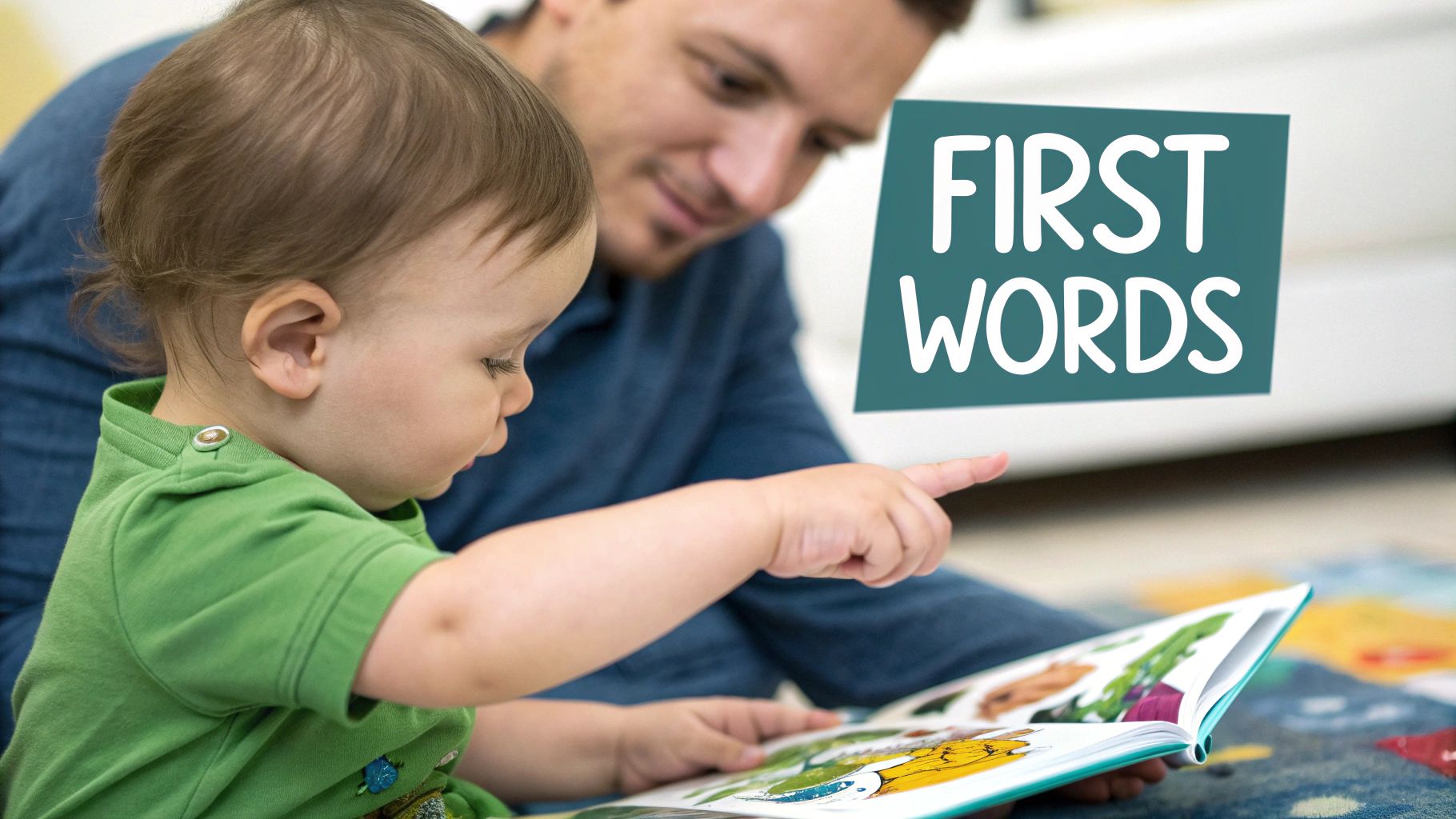
At 13 months, you're seeing the very first sparks of real conversation. It's so much more than just waiting for those first words. Communication is a whole performance, a vibrant mix of sounds, gestures, and surprisingly strong opinions that lets you know exactly what’s going on in that little head.
You’re probably noticing their babbling has a new, more sophisticated sound. It’s starting to have the rhythm and tone of a proper chat, with expressive ups and downs. This is often called “jargon,” and it’s your toddler’s way of practising the music of speech before they know all the lyrics.
Alongside this, their non-verbal cues are getting impossible to ignore. They’re becoming experts at pointing directly at the snack they want, raising their arms high to be lifted up, or giving you a very definite headshake for ‘no’. Each gesture is a clear sign they’re figuring out how to make their needs known.
Understanding Their First Words
When it comes to actual spoken words, there’s a huge range of what’s typical for a 13-month-old. Many will be saying “mama” and “dada” and actually mean you, and they might have one or two other simple words up their sleeve. Try not to worry if their vocabulary seems small; their understanding of what you’re saying is miles ahead of what they can say back.
What you might be hearing:
- Animal Sounds: A classic first is making the sound, like "moo" when they see a cow.
- Simple Nouns: Everyday objects like "ball" or "cup" might start to pop up.
- Exclamations: A delighted "uh-oh!" when something falls is a common and adorable early "word."
It’s crucial to remember that pronunciation will be a work in progress. "Ba" for ball or "du" for duck absolutely counts! Every attempt is a huge step, and celebrating it will give them the confidence to keep trying.
Language at this stage is a two-way street. Responding to their babbles and gestures as if they are part of a real conversation teaches them the power of communication and encourages them to keep trying.
How to Encourage Language Skills
Your everyday chats are the single best tool for helping their language explode. The more words they hear in a natural context, the more they’ll soak up. A simple but brilliant way to do this is by becoming a narrator. Talk them through what you’re doing as you make lunch or fold the laundry, using clear and simple language.
Reading together is also a game-changer. Sturdy board books, like the ones you’ll find in Grow With Me kits, are perfect for little hands. They connect new words to pictures, making story time a fun and interactive lesson. For more ideas, we have a whole guide full of language development activities for toddlers to explore.
Most importantly, always react with enthusiasm when they point or babble at the pages—that’s their way of joining in the story with you.
Getting to Grips with Big Feelings and Social Growth
Beyond all the walking and talking, your 13-month-old is embarking on an equally momentous journey: figuring out their own emotional world. Their unique little personality is really starting to shine through, and with it comes a whole host of big feelings they’re only just learning how to manage. This stage is absolutely packed with social and emotional 13 month old baby milestones that set the scene for all their future relationships.
You’ve probably noticed they have very clear ideas about what they like and don't like now, whether it's a favourite cuddly toy, a specific book, or even a particular person. This is a wonderful sign of their budding sense of self. They're starting to realise they are their own person, separate from you, which is a massive cognitive leap.
This newfound independence often brings with it some wonderfully defiant behaviour, like a vigorous shake of the head ‘no’ or pushing away a toy they've decided they don't want. Try to remember it’s not them being naughty; it’s them testing the waters and discovering they have a will of their own.
Understanding Separation Anxiety
One of the classic challenges around this age is separation anxiety. Your toddler might suddenly seem much clingier or burst into tears the second you leave the room. It can be tough, but it's a completely normal part of development. In fact, it’s a positive sign of the strong, secure bond you’ve built together. They love you and feel safest with you, so of course, your absence feels unsettling.
To help them (and you!) through it:
- Keep your goodbyes short and sweet. A long, drawn-out departure can often make their anxiety worse. A quick, confident "Bye-bye, I'll be back soon!" is best.
- Always say goodbye. It’s tempting to sneak out to avoid tears, but this can actually increase their insecurity when they suddenly realise you’ve vanished.
- Play lots of peek-a-boo and hiding games. These simple games are brilliant for reinforcing the idea that even when you disappear for a second, you always come back.
Nurturing Social Skills Through Play
Your little one is also becoming more aware of other children, but don't expect them to be sharing toys and playing together just yet. At this age, they’re masters of “parallel play,” which means they’ll happily play alongside another child, but not directly with them. Sharing is a concept that's still a long way off, so don't stress about it.
The most important social lesson they can learn right now comes from you. A secure, loving connection teaches them the world is a safe and predictable place. Responding to their needs with patience and affection gives them the confidence they need to explore and, eventually, form other healthy relationships.
Simple, interactive games are fantastic for teaching the very first social skills. Rolling a ball back and forth introduces the idea of taking turns. Giving them a hug while naming the emotion ("Mummy is giving you a big, happy hug!") helps build their emotional vocabulary from the ground up. Every one of these small interactions is a crucial building block for their future wellbeing.
Supporting Development With Play and Routine
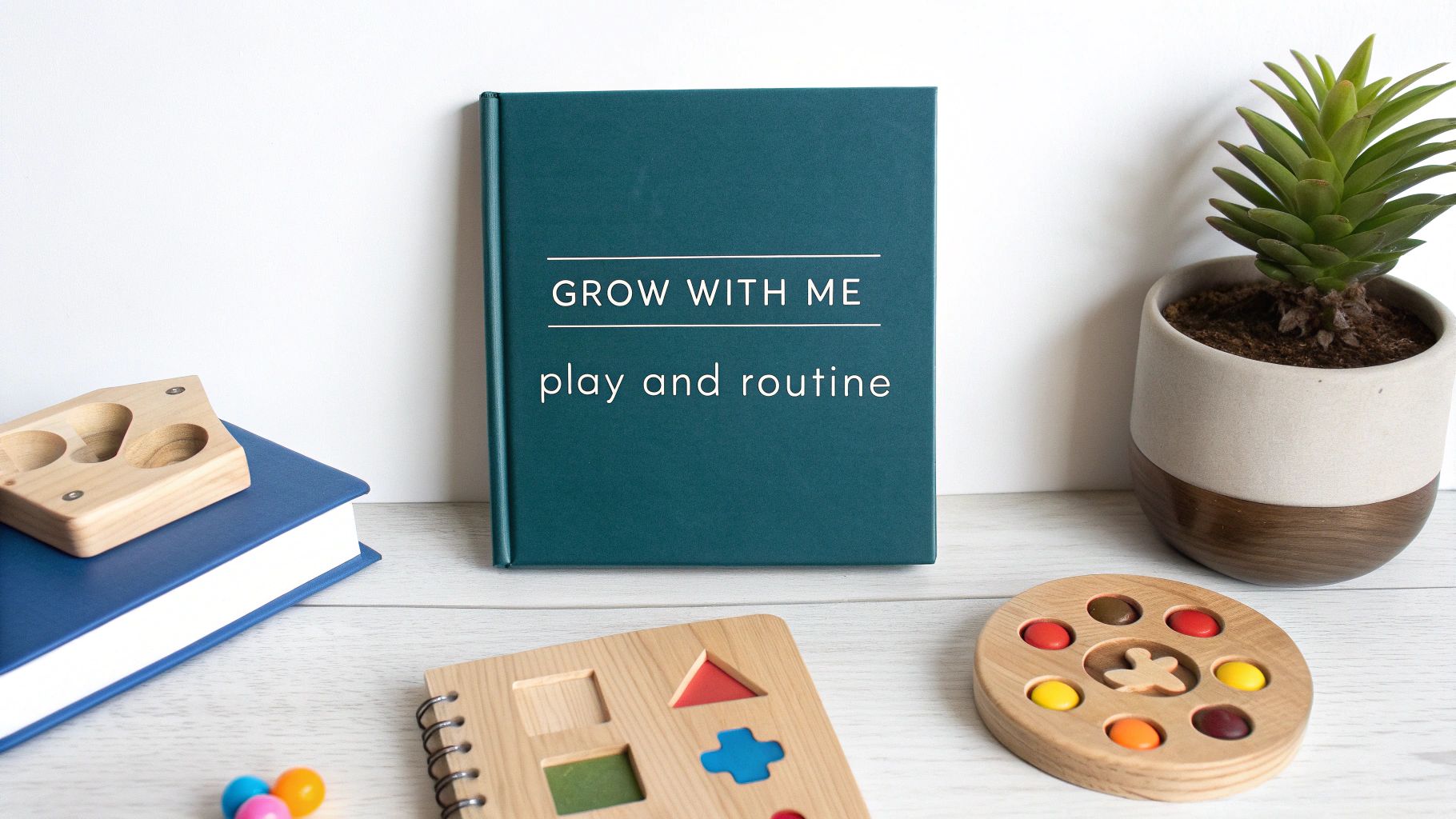
Knowing what all the incredible 13 month old baby milestones are is one thing, but knowing how to actively support them? That’s where the real magic happens. The two most powerful tools you have are a predictable daily routine and purposeful, stage-based play. A consistent rhythm to the day gives your toddler a sense of security, helping their busy little brain make sense of the world.
This structure allows them to anticipate what’s coming next—like naptime after lunch—which calms anxiety and helps them thrive. And within that routine, play isn't just a fun distraction. It’s the main way your toddler learns, experiments, and practises all their brand-new skills.
The Power of Predictable Sleep and Nutrition
A toddler who’s had enough rest is a happy and engaged learner. For a 13-month-old, that usually means getting a total of 12 to 15 hours of sleep per day, which typically includes one or two naps. Consistent nap and bedtime routines are your best friend here, as they help your toddler’s brain consolidate everything they’ve learned during their waking hours.
On a similar note, good nutrition is the fuel for all this growth. At this incredibly active age, offering three solid meals and a couple of healthy snacks will keep their energy levels up for all that exploring.
Think of a predictable routine as the sturdy framework for your toddler's day. It doesn't need to be rigid down to the minute, but the general consistency of meals, naps, and play helps them feel secure. This security makes it much easier for them to tackle developmental challenges with confidence.
Supercharging Growth With Stage-Based Play
The best kind of play for a 13-month-old is the kind that’s designed just for them. It needs to offer the right amount of challenge to keep them interested without making them frustrated. This is exactly where stage-based play kits, like the ones from Grow With Me, come into their own.
- Targeted Development: Every toy is hand-picked to support an emerging milestone. It could be a shape sorter that hones their problem-solving skills or a chunky puzzle that builds up their fine motor control.
- Simplified for Parents: These curated kits take all the guesswork out of choosing the right toys. Expertly selected, age-appropriate items are delivered right to your door.
- Learning Through Fun: With high-quality, engaging toys, you can feel confident that playtime is actively building crucial neural connections. Find out more in our guide to play-based learning activities.
As you think about ways to support their growth, it’s also helpful to understand why sports for toddlers matter, as this can guide your choices for physical and social development. When you combine a reliable routine with purposeful play, you create the perfect environment to nurture every single one of your toddler's amazing new abilities.
Got Questions About Your 13-Month-Old's Milestones? You’re Not Alone.
It’s only natural to have a million questions whirring around your head as you watch your little one navigate this incredible stage. Every toddler truly does dance to the beat of their own drum, but some worries pop up for almost every parent. Let's tackle some of the most common ones with some clear, reassuring answers.
What if My 13-Month-Old Isn’t Walking Yet?
First things first: don't panic! The window for walking is surprisingly wide, stretching anywhere from 9 to 18 months. Right now, many toddlers are still masters of cruising—shuffling along the sofa with surprising speed—or just taking those first wobbly, unassisted steps. Walking is a journey, not a switch that flips overnight.
The best thing you can do is encourage plenty of floor time to build their confidence and leg strength. Simple things like helping them pull up to stand against the furniture make a big difference. That said, if your child isn't putting any weight on their legs by around 15 months, it’s worth having a quick chat with your health visitor, just for your own peace of mind.
How Many Words Should My Toddler Actually Be Saying?
Honestly, language development is all over the map at this age. Many toddlers can say "mama" and "dada" with real meaning and might have one or two other words in their toolkit. Plenty of others won't have any clear words just yet, but they're brilliant communicators in their own right, using a whole orchestra of gestures, pointing, and determined babbling.
Key Insight: At this stage, what your toddler understands is a much better clue to their language progress than how many words they can say. If they can follow a simple request like "pass me your cup," their language skills are coming along beautifully.
Keep creating a world full of words. Reading books together, singing silly songs, and simply chatting about what you're doing during the day are the best ways to nurture their budding vocabulary and coax out those first precious words.
When Should I Genuinely Be Concerned?
While every child's timeline is unique, there are a few things to keep an eye on that might signal it's time for a professional opinion. Always trust your gut—if something feels off to you, it’s always the right decision to ask for advice.
It's a good idea to speak with your GP or health visitor if, by 13-15 months, your child:
- Isn’t crawling or making any attempt to get around on their own.
- Doesn’t make eye contact with you.
- Isn't babbling or trying to copy sounds you make.
- Seems to have lost skills they could do before.
Here at Grow With Me, we know that helping your child thrive is what matters most. Our stage-based play kits are thoughtfully designed to meet your 13-month-old exactly where they are, giving you the perfect tools to support their first steps, first words, and first puzzles. Find the perfect play kit to inspire your little one at https://shop.growwithmesubscriptionbox.co.uk.