

when do babies start walking: key milestones & tips
Let's get straight to the question every parent has on their mind: when will my baby start walking? Here in the UK, the vast majority of babies take their first proper, independent steps sometime between 10 and 18 months old. The average tends to hover around the 14-month mark, but it's so important to remember this is a journey, not a race.
The Journey to Your Baby's First Steps
Walking is a massive achievement, but it doesn’t just happen overnight. It's the grand finale of a whole series of smaller, but no less important, developmental wins. Think of it like building a house – you can't put the roof on without solid foundations. Each skill, from rolling over and sitting up to crawling and pulling themselves up on the furniture, is a crucial building block.
This whole process is a fantastic example of how different developmental milestones are all connected. In this guide, we'll break down each stage so you can cheer on every little victory and see how it all fits into the bigger picture of your baby getting mobile.
A Timeline of Key Milestones
To really get a feel for when babies start walking, it helps to look at all the skills they master along the way. The journey from a bottom-shuffle or a speedy crawl to those first wobbly steps is a real progression of strength, balance, and confidence.
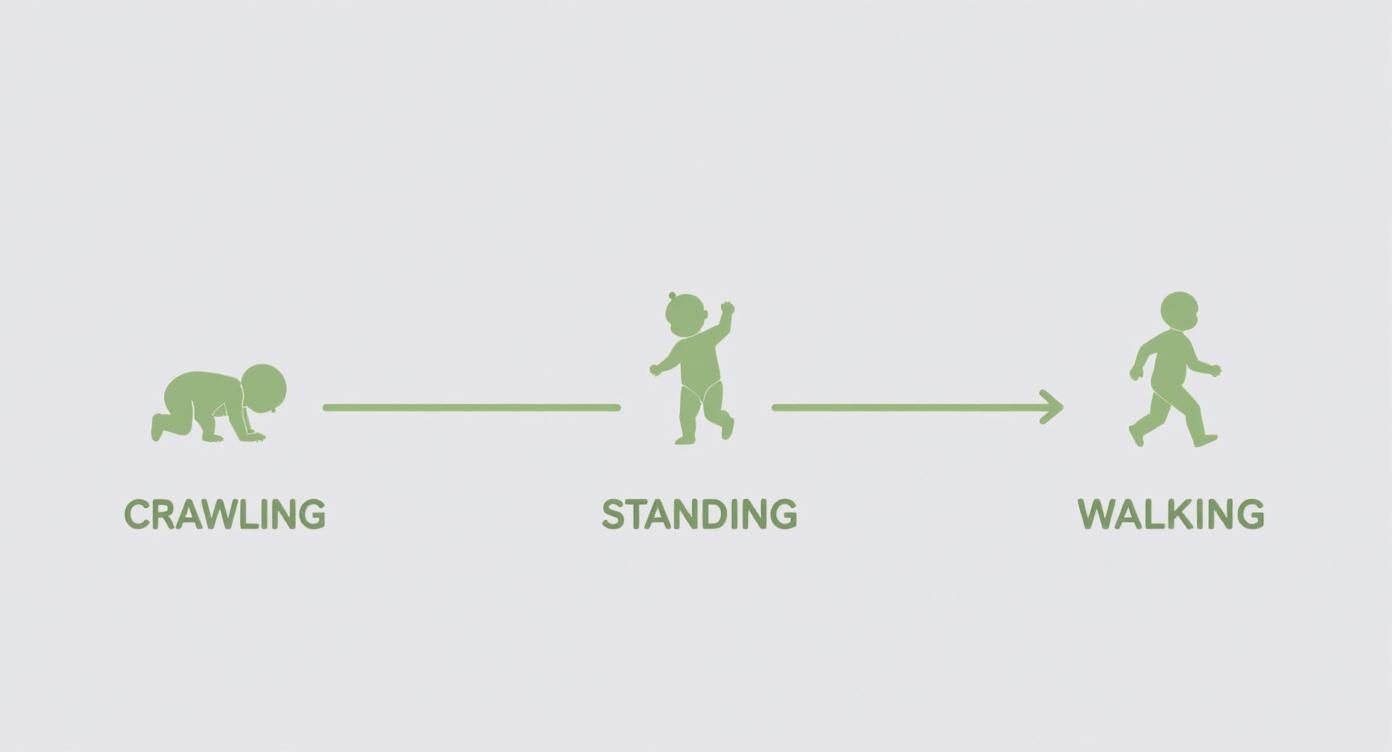
As you can see, walking is the final piece of a pretty complex puzzle. It all has to come together just right.
Official NHS guidance backs this up, placing the average age for walking around 14 months, which fits squarely in that typical 10 to 18-month window. This wide range makes sense when you consider the intricate sequence of motor skills babies need to nail first.
To give you a clearer snapshot of this journey, here’s a table outlining the typical path babies in the UK take towards walking.
Your Baby's Path to Walking: A Milestone Timeline
| Milestone | Average UK Age Range |
|---|---|
| Rolling Over | 2 - 10 Months |
| Sitting Unsupported | 6 - 8 Months |
| Crawling or Shuffling | 7 - 12 Months |
| Pulling to Stand | 8 - 11 Months |
| Cruising (Walking While Holding Furniture) | 9 - 13 Months |
| Taking First Independent Steps | 10 - 18 Months |
Each one of these stages is a huge step forward, building the physical strength and coordination needed for the next.
Walking is so much more than just a physical skill; it represents a huge leap in your baby's independence. Every milestone before it, from that first accidental roll to the determined, wobbly cruise along the sofa, is building the confidence they need to finally let go and take that first brave step.
When you understand this progression, you can see the whole journey for what it is. Instead of just waiting for that final "walking" milestone to be ticked off, you get to celebrate every single part of their incredible development.
Building the Foundation for Walking
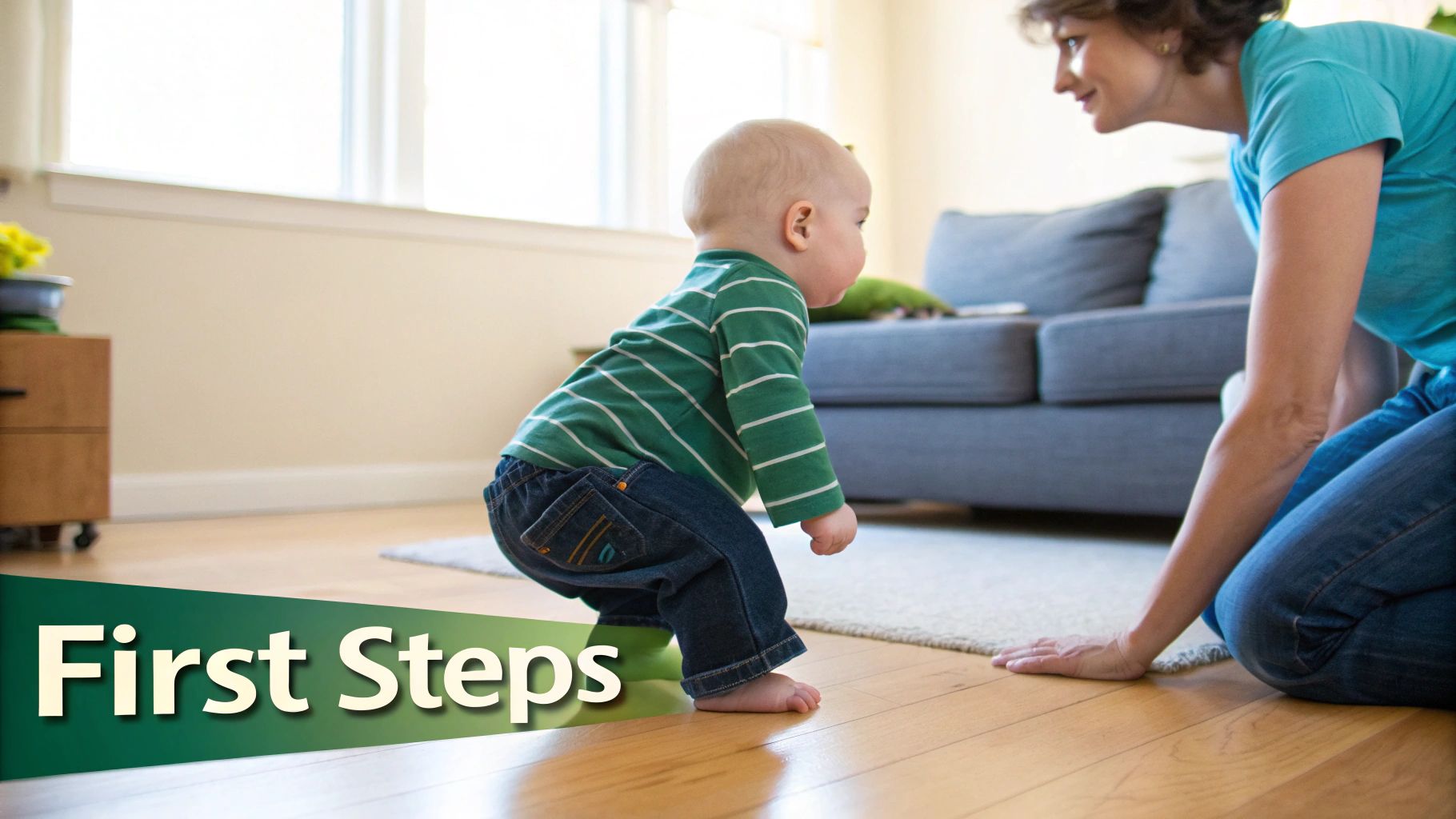
Before your baby takes those first wobbly steps, they’re busy building the physical foundation for walking, one skill at a time. It’s a bit like constructing a house – you can't put the roof on before the walls are up. Each milestone is a crucial brick in the wall, creating the strength, balance, and coordination needed to eventually stand on their own two feet.
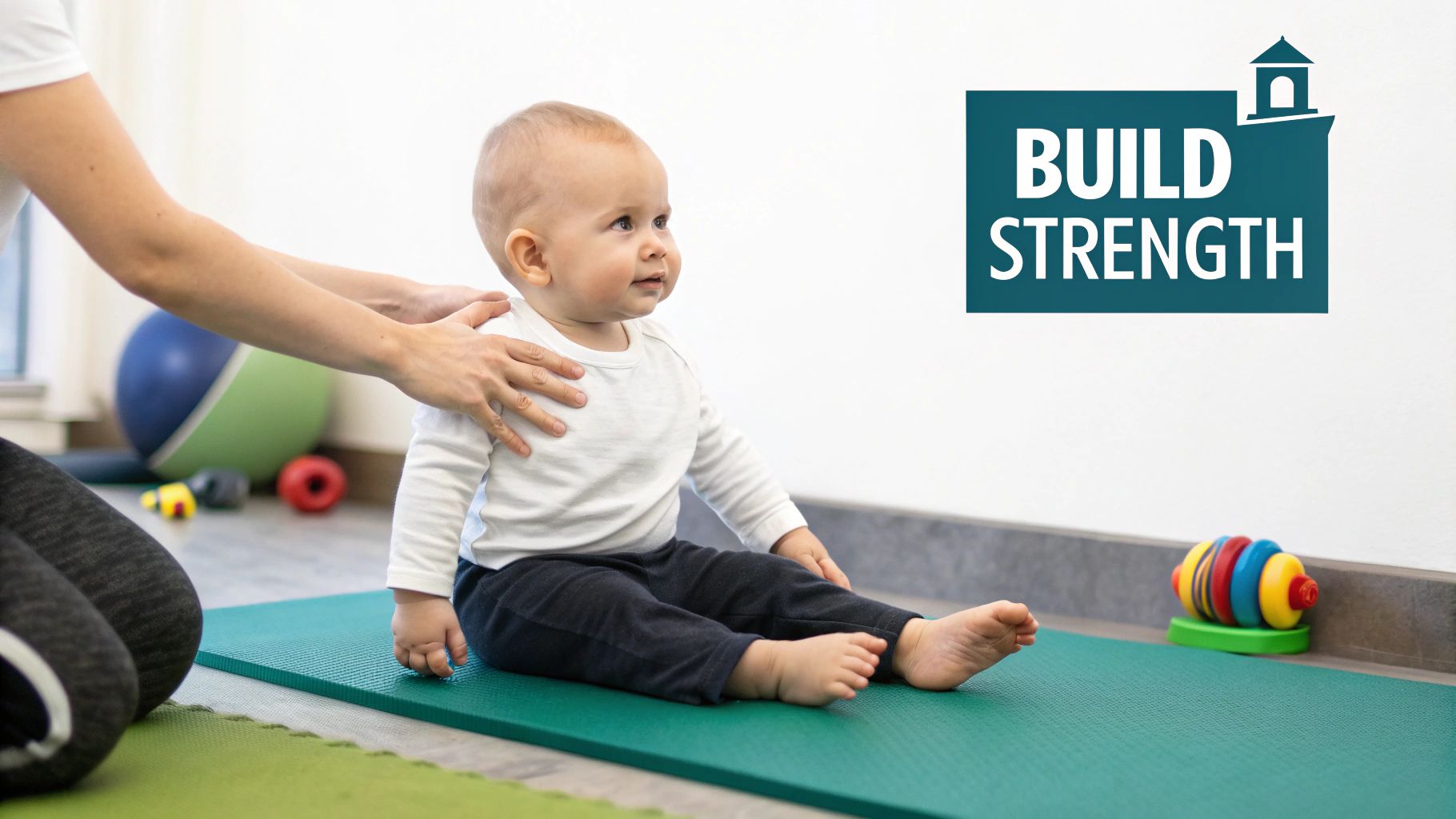
This whole journey begins long before they even dream of standing. Mastering sitting up without support is a huge deal. It’s their first real core workout, strengthening the back, neck, and tummy muscles that are absolutely essential for holding their body steady later on. Without that stability, walking just isn’t on the cards.
Next up for many babies is the grand adventure of crawling.
The Crawling Connection
Crawling, which usually kicks off between 7 and 10 months, is a developmental powerhouse. It's a fantastic full-body exercise that teaches them how to coordinate their arms and legs together—the left arm moves with the right leg, and vice versa. This pattern is the direct blueprint for the rhythm of walking.
While not every baby does a classic hands-and-knees crawl (some bum-shuffle or commando-crawl!), the act of moving themselves forward builds incredible strength and spatial awareness. It’s their first real taste of independence, and it’s what motivates them to reach for the next stage. A solid foundation for crawling starts even earlier, which is why knowing when to start tummy time is so helpful.
Think of these early skills as an apprenticeship for walking. Sitting strengthens the core, crawling builds coordinated strength, and the next steps—pulling up and cruising—are the on-the-job training for balance and leg power.
From Pulling Up to Cruising
The next big leap happens when your baby grabs onto the sofa and pulls themselves up to a standing position, usually around 9 to 10 months. This is a serious strength-training session for their little legs, teaching them how to bear their own weight. That moment of discovery is huge—their entire view of the world changes!
Once they’ve got the hang of pulling up, they start to "cruise." This is when you’ll see them shuffling sideways along the furniture, holding on for support.
Cruising is absolutely vital for a few key reasons:
- Balance Practice: It’s their personal balance beam, teaching them to shift their weight from one foot to the other without toppling over.
- Leg Strengthening: It targets the exact muscles in the legs and hips that they'll need for taking forward steps.
- Confidence Building: Every successful shuffle shows them they can support themselves, making the thought of letting go a little less scary.
The cruising phase is where all the final pieces of the puzzle start clicking into place. They’re fine-tuning their balance and building that last bit of strength needed to finally let go. If you're looking for more guidance, you can find expert advice on healthy foot development to ensure your little one’s feet are well-supported during this critical time.
Spotting the Signs Your Baby Is Ready to Walk
Once your baby masters cruising along the furniture, you’ll start to see little clues that those first solo steps are on the horizon. Spotting these signs is exciting because you get a front-row seat to the incredible effort they're putting in. It’s a bit like being a detective, gathering the evidence that points to the massive milestone of walking.
One of the biggest giveaways is a surge in standing confidence. You might catch your little one letting go of the sofa for a split second, testing their balance with a look of pure concentration. This is a huge deal. It shows their leg muscles are getting stronger and their internal sense of balance is dialling in.
They might even try a brave, wobbly stand in the middle of the room. This is a clear sign they’re getting ready to move without hanging on.
Physical and Behavioural Clues
Beyond just standing, keep an eye out for specific behaviours that act as a final dress rehearsal. Pay close attention to how they’re moving and interacting with the world around them.
You’ll probably start to notice these tell-tale signs:
- Confident Cruising: Their trips along the furniture become faster and more assured. They might even try navigating a corner or letting go with one hand to grab a toy.
- Frequent Standing: It feels like they're pulling themselves up on everything, all the time. This constant practice is their version of strength training for the main event.
- Pivoting and Squatting: You may see them twisting at the hips while standing, or even squatting down to pick something up before pulling themselves back up again. This shows real progress in their balance and leg strength.
- Knee Walking: Some babies "walk" on their knees to get around. This is often just a short phase that helps them build the hip stability they need before getting up on their feet for good.
The journey to walking is as much about emotional readiness as it is about physical strength. Your baby's fierce determination, mixed with moments of frustration when they tumble, is a powerful sign they are mentally gearing up for this huge leap in independence.
The Mindset of a Pre-Walker
Along with all the physical practice, you’ll likely see a change in their attitude. Your baby is becoming more adventurous and curious, desperate to see the world from a new, upright vantage point. They might get really frustrated when they can't quite get where they want to go—a sure sign their ambition is outpacing their current ability.
This combination of determination, endless practice, and the occasional tumble is all part of the process. They're not just learning to walk; they're learning about resilience. When you see your little one eyeing up a toy across the room or attempting a daring step between the sofa and the coffee table, you know the question of "when do babies start walking" is about to be answered in your home.
How to Safely Encourage Your Baby's First Steps
When it comes to your baby learning to walk, think of yourself as their supportive coach and head of security. The aim isn't to fast-track this milestone, but to create a positive and safe space where their confidence can blossom. Your encouragement is the gentle nudge they need to tackle this exciting new challenge.
One of the best things you can do is also one of the simplest: set up a safe practice zone. This means baby-proofing a clear area of the floor, moving any wobbly furniture or tables with sharp corners, and giving them plenty of room to roam without bumping into things. It’s like creating a personal gym for your little one, designed for exploration and the inevitable, soft tumble.
Let Their Feet Be Free
A brilliant tip is to let your baby go barefoot indoors as much as you can. For a new walker, shoes can feel heavy and awkward. Being barefoot lets them really feel the floor, using their toes to grip and find their balance. This direct sensory feedback is so important for building coordination and strengthening all the tiny muscles in their feet and ankles.
Of course, when you're outside or on rougher surfaces, their little feet need protecting. When you do choose shoes, look for pairs that are lightweight with flexible soles, which will mimic that natural barefoot movement as closely as possible.
Turn Practice Into Play
Motivation is the magic ingredient! Instead of trying to formally "teach" them how to walk, you can use playtime to inspire them to take that first step.
- Strategic Toy Placement: Pop a favourite toy on a low, sturdy surface, like a sofa cushion, just a tiny bit out of their reach. This naturally encourages them to pull up, cruise along, and maybe even dare to take a step to get it.
- Be the Destination: Sit on the floor a small distance away with your arms open wide. Your smiling face can be the best reason in the world for them to try and cross the space between you.
- Celebrate the Effort: Cheer for every little attempt, not just the perfect steps. When they stand up, let go for a split second, or take a wobbly step, your excited reaction builds their confidence and makes them want to try again.
For more inspiration, you can find lots of great ideas in these developmental activities for infants.
It's incredibly important to avoid using sit-in baby walkers. Despite being a common sight, paediatric experts strongly advise against them. They can actually hinder natural development by preventing babies from using their hip and leg muscles correctly. Even more concerning, they pose serious safety risks, giving a non-mobile baby the speed to get into dangerous situations near stairs or hot ovens.
By focusing on a safe environment and playful encouragement, you're giving your baby the perfect support system. This approach helps them find their own perfect timing to start walking, filled with confidence and joy.
When to Be Patient and When to Seek Advice
It’s completely natural to watch other babies toddling around the park and feel a little pang of worry. "Is my baby behind?" This is one of the most common anxieties parents have, but it’s so important to remember that the developmental timeline for walking has a very wide and forgiving range.
Sometimes, the best thing you can do is simply be patient. Every baby has their own unique personality and approach to learning new things.
Some little ones are just more cautious by nature. They want to be absolutely sure of their footing before they let go of the coffee table. Others might be so busy mastering another tricky skill, like babbling new words or figuring out how to stack blocks, that walking takes a temporary backseat. These are perfectly normal variations in development.
Even a baby's build can play a part. A little one with adorably chunky legs might need a bit more time to build up the muscle strength required for walking. And if you have an expert bum-shuffler, they might not see any reason to give up their super-efficient (and often very speedy!) way of getting around.
Knowing the Normal Variations
It helps to know that the vast majority of babies get there in their own time. In fact, around 90% of UK babies are walking by the time they reach 18 months. This wide window is backed up by UK child health services, who regularly reassure parents that these variations are common and rarely a sign of an underlying issue. You can find more details on these timelines in this helpful guide on UK baby walking from pampers.co.uk.
Knowing what counts as a typical variation versus a potential concern can really help to ease your mind.
Trust your instincts, but also trust the process. A baby's unique timeline is rarely a cause for alarm. The key is to look at their overall progress and joy in movement, not just a single, specific milestone.
Differentiating Variations from Red Flags
While patience is a virtue, it’s also wise to know which signs might warrant a conversation with your health visitor or GP. The focus should always be less on the exact age and more on the progression of skills. For instance, a 16-month-old who is happily pulling up and cruising along the furniture is on a completely different path from a baby of the same age who shows no interest in putting weight on their legs at all.
To make things clearer, it helps to see the difference between a baby simply taking their own sweet time and a sign that might need a closer look.
Developmental Variations vs Potential Concerns
This table can help you distinguish between a baby's unique developmental pace and something that might be worth a chat with a professional.
| Common Variation (Usually not a concern) | Potential Red Flag (Consider consulting a professional) |
|---|---|
| Taking a long time to move from cruising to independent steps. | Not bearing any weight on their legs by 12 months old. |
| Preferring bottom-shuffling over a traditional crawl. | Seems unusually floppy or stiff in their limbs. |
| Walking later than an older sibling did. | Isn't sitting unsupported by 9 months. |
| Walking after 15 months but showing clear progress in other areas. | Loses skills they once had (e.g., stops pulling up or cruising). |
If you notice anything that falls into the "Potential Red Flag" column, it never hurts to check in. A quick chat with your health visitor or GP can offer peace of mind or, if needed, point you towards the right support.
Right, so your little one has taken those first wobbly steps. Congratulations! That's a huge moment, but believe me, the adventure is just getting started. Now you're entering the utterly charming, and often hilarious, phase where they master this new skill.
You’ll see them adopt what’s known as the classic "toddler gait." Picture it: feet planted wide apart, knees slightly bent, and arms held high and out to the sides like a little aeroplane trying to find its balance. This isn't just for show; it's their body's clever way of creating the most stable base possible as they figure out the incredibly complex mechanics of putting one foot in front of the other.
Over the next few months, you'll witness a fantastic transformation as that unsteady toddle slowly smooths out into a more confident, heel-to-toe stride.
What Exciting Milestones Follow Walking?
Once they’ve got the hang of walking, their world opens up. Mobility explodes, and they'll quickly start stacking new gross motor skills on top of this foundation. Get ready, because this stage of growth is fast-paced and full of action.
Here’s a little preview of what’s just around the corner:
- Tackling Stairs: At first, they'll likely crawl up and shuffle down backwards on their tummy. Before you know it, they'll be walking up and down while holding on to the railing (always with a close eye on them, of course).
- Walking Backwards: This is a surprisingly tricky skill! It requires a whole new level of balance and spatial awareness, and you’ll often see it pop up during playtime.
- The Transition to Running: That confident walk will soon morph into a joyful, if slightly chaotic, run. A whole new world of chasing and being chased is about to begin!
Enjoy every single wobbly moment of this incredible stage. It goes by in a flash.
Got Questions About Your Baby Walking?
Even when you know the typical timeline, it’s completely normal to have questions pop up as you watch your little one get ready to walk. Let's tackle some of the most common queries we hear from parents across the UK.
Is it True That Babies Have to Crawl Before They Can Walk?
Not at all! While crawling is a brilliant way for babies to build up muscle and coordination, it’s not an essential stepping stone to walking.
Plenty of babies skip crawling altogether. Some become expert bottom-shufflers, others roll their way across the room, and many go straight from pulling up on the sofa to taking those first tentative steps. The NHS focuses on the overall picture of motor development, so the main thing is that your baby is finding their own way to get moving and explore.
Should My Baby Wear Shoes While Learning to Walk?
When your little one is learning the ropes indoors, barefoot is definitely best. It helps them to properly feel the ground beneath their feet, which is fantastic for developing balance, posture, and coordination. Think of it as a workout for all the tiny muscles in their feet!
Once you're heading outside or onto surfaces that aren't so smooth, a pair of lightweight shoes with flexible soles is a good idea for protection. Just try to steer clear of anything too rigid or heavy, as it can get in the way of their natural foot movement.
Will My Premature Baby Start Walking Later?
Yes, it's very likely, and that's perfectly normal. For babies born prematurely, developmental milestones like walking often happen a little later. The key is to track their progress using their 'corrected' or 'adjusted' age.
This is their age calculated from their original due date, not the day they were born. For example, a baby who is 14 months old but was born two months early has a corrected age of 12 months. Your health visitor will always use this corrected age, so a later start to walking is generally expected and nothing to worry about.
Support every stage of your little one's development with play essentials from Grow With Me. Discover our developmentally-appropriate play kits designed to make learning fun.