
What Is the EYFS Framework? what is the eyfs framework explained
If you've ever found yourself asking, what is the EYFS framework, you're not alone. The simplest way to think about it is as the official 'recipe for growth' for all children in England from birth right up until they turn five.
It's the shared playbook that every registered nursery, preschool, and childminder uses. This ensures that no matter where your little one spends their day, they're getting consistent, high-quality care and a brilliant start to their education.
A Parents Guide to the EYFS Framework
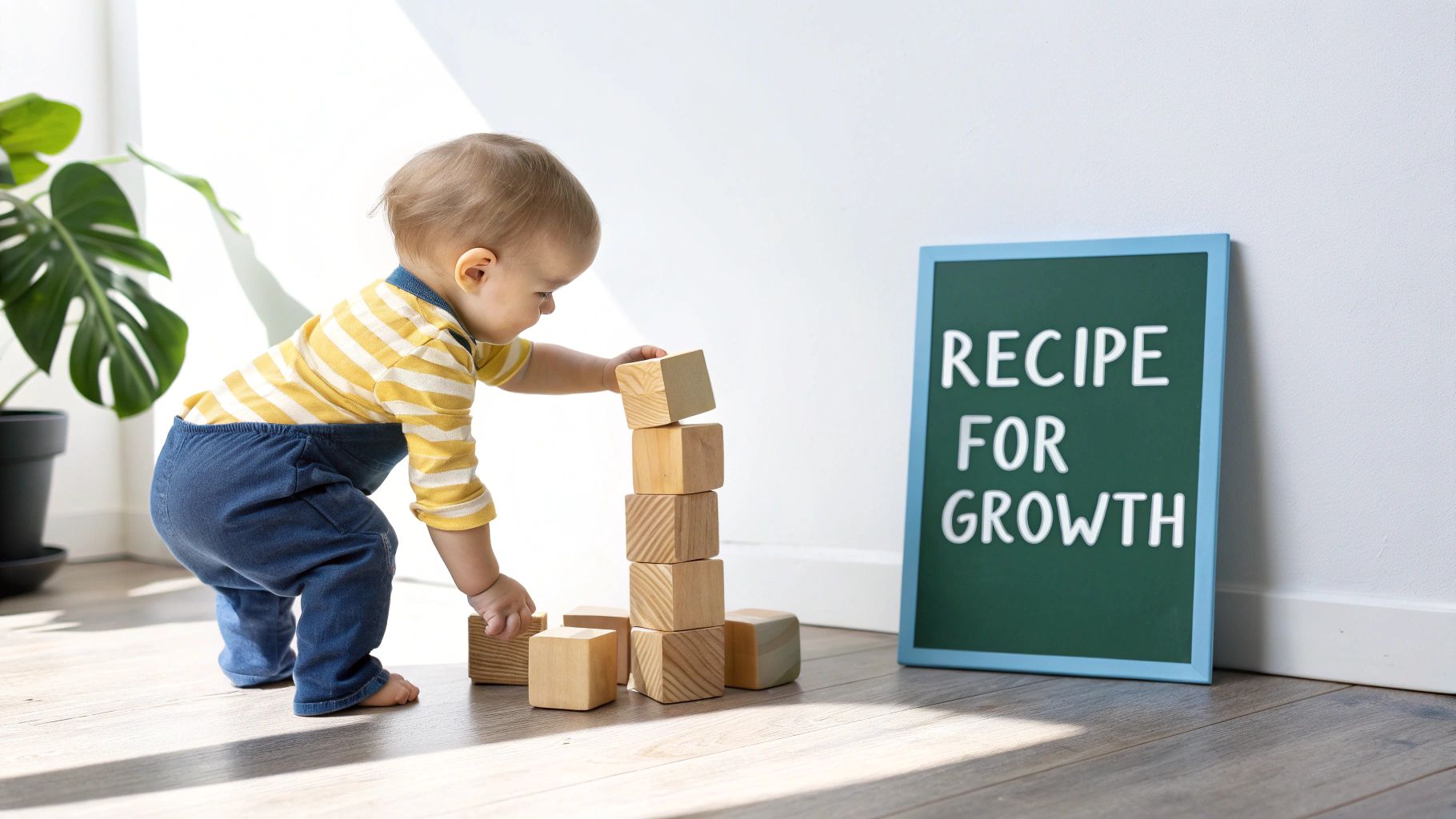
The Early Years Foundation Stage (EYFS) is more than just a document; it's a statutory framework. That's the official way of saying it’s a legal requirement that sets the standards for your child's learning, development, and care. Its main job is to give every child a happy, confident, and school-ready start in life.
But don't mistake it for a strict, academic curriculum filled with tests and targets. It’s quite the opposite. The EYFS champions learning through play, getting curious, and building positive relationships. It’s what guarantees that childcare providers aren't just keeping children safe and sound, but are actively nurturing their development in all the ways that matter.
The EYFS Framework At A Glance
Here’s a quick breakdown of what the framework covers, giving you a snapshot of its core components and what they mean for your child's early years journey.
| Component | What It Means For Your Child |
|---|---|
| Guiding Principles | Four core beliefs shape their experience: every child is unique, they learn through positive relationships, they thrive in enabling environments, and they develop at different rates. |
| 7 Areas of Learning | Their development is supported across seven interconnected areas, covering everything from communication and physical skills to understanding the world and expressing themselves. |
| Assessment | Progress is tracked through observation, not formal tests. This helps their key person understand their individual needs and plan activities that will help them take the next step. |
This holistic approach ensures every aspect of your child's early development is considered, from making their first friends to learning their first letters.
Why a National Standard Matters
It’s hard to imagine now, but before this framework, the quality of early years education could be a real lottery. The introduction of the EYFS as a legal requirement back in September 2008 was a game-changer. It finally put an end to nearly two centuries of debate by establishing a clear, consistent standard for every registered early years provider in England.
For parents, this national standard brings peace of mind. You can feel confident that whether your child is at a local childminder or a large nursery, their care is guided by the same fundamental principles and developmental goals. It creates a shared language and a common set of expectations between you, your child's key person, and eventually, their primary school teachers.
The EYFS ensures that from the moment your child enters an early years setting, their well-being, learning, and individual needs are at the centre of everything. It’s about building a strong foundation for a lifetime of learning.
This shared approach helps create a much smoother transition when your child is ready to move up to 'big school'. And while it provides a clear structure, it’s also wonderfully flexible. It can be woven into different teaching philosophies, which is why you might be interested to see how the EYFS compares with other educational approaches, like the Reggio Emilia approach.
Understanding The Four Guiding Principles
At the heart of the EYFS framework, you’ll find four guiding principles. Think of them less like rigid rules and more like the core beliefs that shape every single day at your child's nursery or childminder's. They're the compass that ensures every interaction and activity is geared towards creating a warm, positive, and supportive space for your little one.
These principles don't work in isolation; they weave together to form a complete picture. They are the 'why' behind the 'what' of the daily routine, guiding early years practitioners to see, understand, and nurture your child as a whole person.
Let's break down what each one really means.
A Unique Child
This is all about celebrating individuality. It’s a powerful acknowledgement that every child is a capable learner right from birth—born resilient, confident, and full of potential. This means your child’s key person will never take a one-size-fits-all approach.
Instead, they'll get to know your child's unique personality, what fascinates them, and how they prefer to learn. Is your little one obsessed with dinosaurs? A great practitioner will run with that passion, using it to introduce new ideas. They might count toy dinosaurs (Mathematics) or share an exciting story about them (Literacy).
Positive Relationships
We all know children thrive when they feel safe and loved. This principle underlines that children build their strength and independence on a foundation of secure, loving relationships—both with you and with their key person at the nursery.
That bond is absolutely crucial for building trust and emotional security. A key person who truly gets your child—knowing their funny little quirks, what soothes them when they're upset, and what makes them belly-laugh—creates a safe haven. It's in that space they feel confident enough to explore, try new things, and really learn. These back-and-forth chats are also perfect for sustained shared thinking, where a child and an adult can puzzle through an idea together.
Enabling Environments
This principle is about the space itself, both physically and emotionally. An ‘enabling environment’ is one that’s buzzing with opportunity. The resources and activities are planned with care, but there's always room for spontaneous, child-led play and discovery.
This means the environment plays a key role in supporting and extending children’s development and learning. It’s not just about what toys are on the shelves; it’s about creating a welcoming atmosphere where children feel valued and have the freedom to follow their curiosity, whether they're indoors or out in the fresh air.
Learning and Development
Finally, this principle recognises a simple truth: children learn and develop in different ways and at their own unique pace. The EYFS framework is designed to support the education and care of all children, including those with special educational needs and disabilities.
It’s about making sure no child gets left behind or pushed along too quickly. The seven areas of learning provide a map, but the journey through it is entirely individual, guided by your child's personal readiness and interests.
Exploring The Seven Areas Of Learning
So, what does the EYFS actually look like in practice? The framework breaks down all the exciting things your child learns through play into seven interconnected areas of learning and development. It’s best not to think of these as separate school subjects. Instead, picture them as different threads woven together to create the rich, colourful tapestry of a child's early years.
These areas are divided into two groups: the Prime Areas and the Specific Areas. The Prime Areas are the absolute bedrock of your child's development—the essential foundation that everything else is built upon.
The Three Prime Areas Of Learning
Think of the prime areas as the roots of a tree; they have to be strong and healthy for the rest of the tree to grow and flourish. These three areas work together to spark a child's natural curiosity, help them build relationships, and give them the confidence to explore the world.
-
Communication and Language: This is so much more than just learning to talk. It’s all about giving children the chance to express their big ideas, listen carefully to others, and build their understanding in a language-rich environment. In a nursery, this looks like animated story times, singing nursery rhymes, and practitioners having genuine conversations with children about their play.
-
Physical Development: This area is all about getting little bodies moving! It provides opportunities for children to be active and interactive, helping them master coordination, control, and movement. It also gently introduces the importance of being active and making healthy food choices. Just picture toddlers scrambling up a climbing frame, carefully stacking big blocks, or concentrating hard while using scissors.
-
Personal, Social and Emotional Development (PSED): You could say this is the very heart of the EYFS. It’s all about helping children develop a positive sense of who they are and how they fit into the world. It’s where they learn to form friendships, respect others, manage their feelings, and understand how to behave in a group. This happens in those small but crucial moments, like learning to share a favourite toy or taking turns in a game.
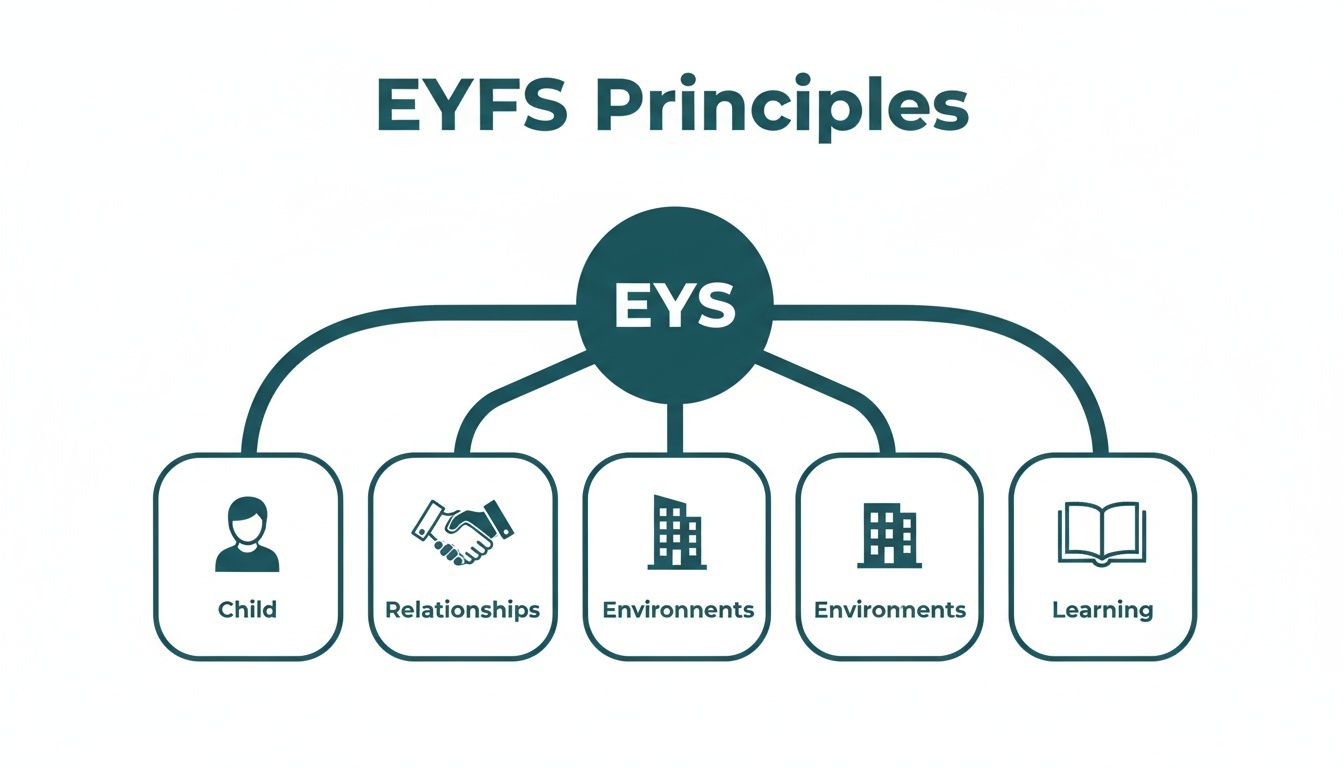
As this shows, the unique child, their relationships, and their environment are the core ingredients that allow these learning areas to truly blossom.
The Four Specific Areas Of Learning
Once those prime areas are taking root, they naturally branch out into four ‘specific’ areas. These might look a bit more like the subjects you remember from school, but in the early years, they are always explored through hands-on, playful experiences.
The specific areas of learning provide the range of experiences and opportunities for children to broaden their knowledge and skills. They include essential skills and knowledge for children to participate successfully in society.
These four areas are:
-
Literacy: This is where the magic of stories begins. It involves encouraging children to link sounds with letters and start their journey into reading and writing. Early years settings are filled with a huge range of books, poems, and other interesting things to read to spark their interest.
-
Mathematics: This isn’t about formal sums. It’s about giving children the chance to develop their skills in counting, understanding numbers, and solving simple problems in a practical way. They'll also explore shapes, space, and measurement through play.
-
Understanding the World: This area helps children make sense of the world right in front of them and the wider community. It’s all about exploring, observing, and asking questions about people, places, technology, and the environment.
-
Expressive Arts and Design: Here, creativity runs free. This enables children to explore and play with a wide range of media and materials. It gives them a powerful way to share their thoughts, ideas, and feelings through art, music, dance, imaginative role-play, and design.
The EYFS is regularly reviewed to ensure it's as effective as possible. Recent updates have helped practitioners focus more clearly on what's most important at each stage. If you're curious about the details, you can read more about the latest EYFS reforms on the government's website.
The real magic of the EYFS is seeing how these areas come to life through everyday play. Both in the nursery and at home, simple activities can support your child's development across all seven areas.
EYFS Learning Areas and Play-Based Activities
Here’s a quick look at how activities in a nursery setting translate into simple, fun things you can do at home to support your child’s learning journey.
| EYFS Area of Learning | Nursery Example | At-Home Play Idea |
|---|---|---|
| Communication & Language | Practitioners engage in back-and-forth conversations during play. | Chat about what you see on a walk, describe the feeling of squishing play-doh, or read a bedtime story together. |
| Physical Development | Outdoor play with climbing frames, bikes, and obstacle courses. | Build a sofa-cushion fort, have a dance party in the living room, or do some gardening together. |
| PSED | Taking turns with a popular toy and sharing snacks at group time. | Play a simple board game that involves taking turns, or give your child a small 'job' like helping to set the table. |
| Literacy | Mark-making with chalk on the pavement or 'writing' a shopping list. | Let them 'help' you write a real shopping list, make signs for their den, or simply have lots of books available to look at. |
| Mathematics | Sorting objects by colour or size, and singing counting songs. | Count the stairs as you go up to bed, sort the laundry into piles of socks and t-shirts, or talk about shapes you see. |
| Understanding the World | Looking at bugs in the garden with a magnifying glass. | Go on a 'listening walk' to identify different sounds, look at old family photos together, or help with some simple cooking. |
| Expressive Arts & Design | Painting at an easel, making models from junk materials, and role-playing. | Put on some music and paint what you hear, use old cardboard boxes to build a rocket, or play dress-up. |
As you can see, you’re probably already doing many of these things without even realising it. Supporting the EYFS at home is less about structured lessons and more about embracing playful, curious, and engaging moments in your everyday life.
How Your Child's Progress is Nurtured and Tracked
One of the first questions I always hear from parents getting to grips with the EYFS is, "But how will I know if my child is on track?" It's a perfectly natural thing to wonder, especially when we're so used to thinking about school in terms of tests and grades.
But you can breathe a sigh of relief. Assessment in the early years is a world away from formal schooling. There are no scary exams or report cards. Instead, imagine your child’s key person—their main carer at nursery or the childminder's—creating a kind of ‘developmental storybook’ just for them.
They build this story through something really simple: observation. By watching your child as they play, chat with friends, and figure things out, practitioners gather a rich, detailed picture of who they are. They see their unique strengths, what truly fascinates them, and spot any areas where they might need a little extra encouragement.
It’s a gentle, ongoing process that’s all about celebrating your child as an individual. It’s about noticing those little ‘wow’ moments—the first time they zip up their own coat, or share a toy without being asked—and using those insights to plan what fun and engaging things they can try next.
Key Check-in Points
While this observation happens every single day, the EYFS framework includes two more formal checkpoints. Think of them not as tests, but as helpful summaries designed to give you a clear update on your child’s journey.
-
The Progress Check at Age 2: Sometime around your child’s second birthday, their key person will share a short written summary of their development. This focuses on the three prime areas of learning and is a fantastic opportunity to have a chat, celebrate all the new things they can do, and discuss any support they might need.
-
The Early Years Foundation Stage Profile (EYFSP): This happens right at the end of the Reception year, which is the final year of the EYFS. The teacher completes a profile that gives a well-rounded picture of your child’s abilities across all seven areas of learning. It simply notes whether they are meeting the expected levels of development, which is incredibly useful for their new Year 1 teacher to ensure a smooth and supportive start to Key Stage 1.
Your insights as a parent are a vital piece of this puzzle. You are your child’s very first teacher, and sharing what they're like at home gives practitioners a much more complete and accurate picture of their development.
This partnership between parents and practitioners is what makes the EYFS so powerful. And the results speak for themselves. Since its introduction, children’s outcomes have improved dramatically. Back in 2013, 51.7% of children were achieving a good level of development. By 2019, that figure had jumped to 71.8%.
If you're interested in the data, you can review the latest early years profile results yourself. It’s a real testament to how thoughtful observation and a strong home-nursery partnership work together to help every child flourish.
Bringing EYFS Learning Into Your Home Through Play
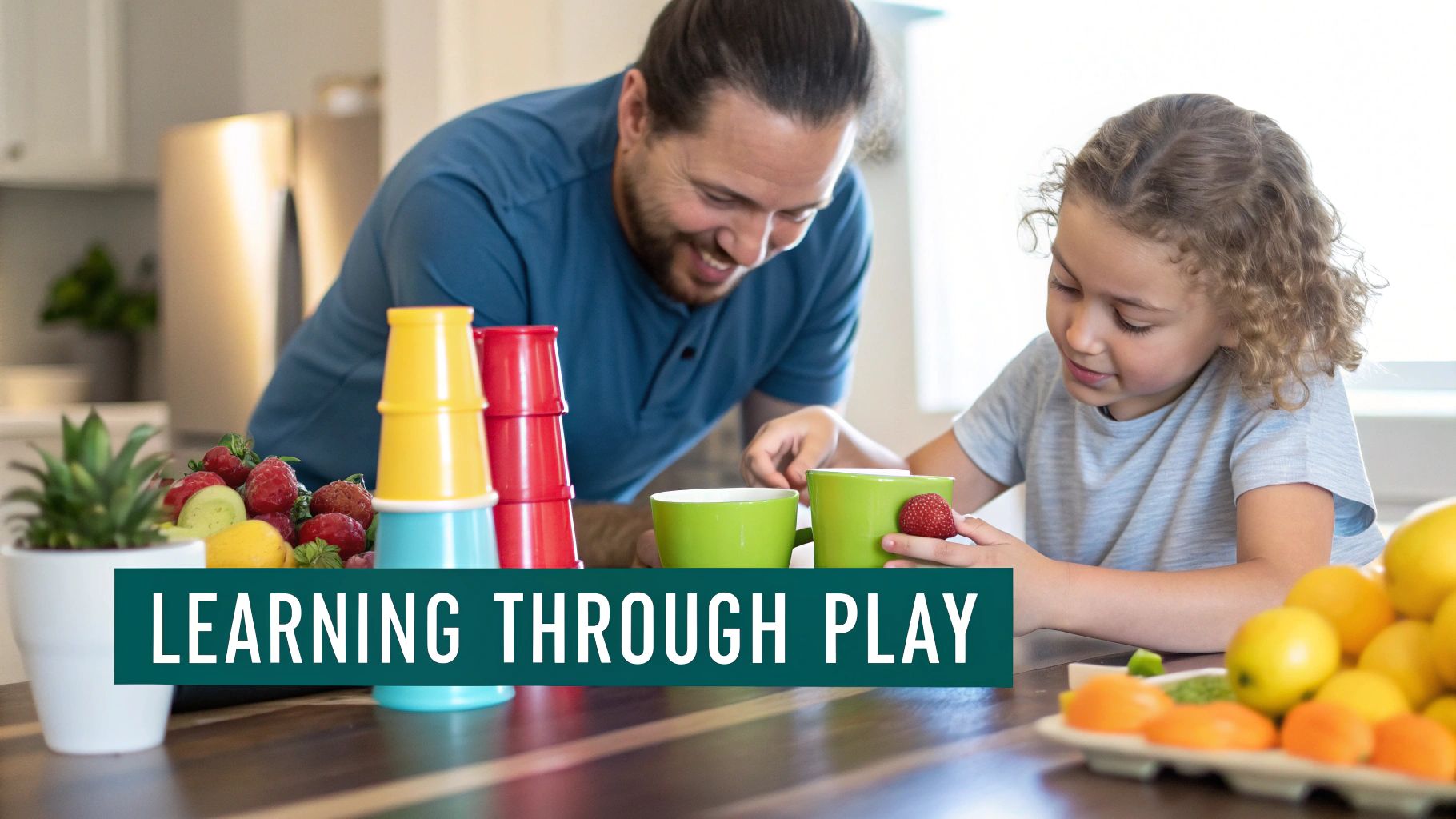
Getting your head around the EYFS framework is one thing, but the real magic happens when you see it come to life. As a parent, you’re already your child’s first and most important teacher—no special qualifications or expensive gear needed to make a massive difference.
The best way to support your child’s development is simply by leaning into play. The wonderful secret of the EYFS is that it’s not about rigid lessons or drilling flashcards. It’s all about weaving learning into the simple, fun moments you already share every single day.
Turning Everyday Moments Into Learning Adventures
Take a moment to think about your daily routine. Every part of it is absolutely brimming with potential for the kind of playful learning the EYFS is built on. It really just comes down to being present and spotting those little opportunities to chat, explore, and get curious together.
Here are a few ideas to show you what I mean:
- During a walk in the park: Pointing out a round, red ladybird on a big green leaf isn't just a sweet conversation. You're touching on Mathematics (shapes, colours) and Understanding the World (nature, insects).
- At bath time: All that splashing, pouring, and watching toys either float or sink? That’s your child’s first science experiment! This fun exploration builds foundations for Physical Development (motor skills) and Mathematics (volume, capacity).
- While tidying up: Turning it into a game to sort toys—all the cars in one box, all the blocks in another—is a brilliant way to practise early categorisation, a key part of Mathematics.
This whole approach takes the pressure off. You're not being asked to become a formal teacher; you're just being encouraged to keep being the wonderfully responsive and engaged parent you already are.
Simple Activities For Specific EYFS Skills
If you want to be a bit more intentional, you can easily set up simple, play-based activities that gently target different areas of learning. These don't need to be complicated or require a ton of prep.
For Communication and Language:
- Sing nursery rhymes and songs together, especially ones with actions. It’s a classic for a reason!
- Share a book every day. Let your little one turn the pages and point to the pictures they find interesting.
- Make a "story box" with a few random toys and see what silly adventure you can make up together.
For Personal, Social and Emotional Development (PSED):
- Play simple turn-taking games, even just rolling a ball back and forth.
- Talk about feelings—yours and theirs. Naming them helps ("You seem so happy today!" or "Is that noise making you feel a bit grumpy?").
- Give them simple choices, like "Do you want the blue cup or the red one?" This helps build their confidence and sense of self.
The most powerful tool for development is play. It’s how children make sense of their world, build relationships, and develop the creative and critical thinking skills they'll need for life.
For parents wanting to bring these EYFS ideas into their home, creating a flexible preschool schedule homeschool routine can add a gentle structure that supports your child’s learning and development.
Ultimately, by understanding what the EYFS framework is all about, you can see how your natural, loving interactions are already laying the perfect foundation. If you're after a bit more inspiration, you can explore a whole host of other fantastic play-based learning activities that bring these principles to life.
Your Top EYFS Questions Answered
Even after getting to grips with the principles and learning areas, it’s totally normal to have a few more questions rattling around. The world of early years education can feel like it has its own language, so let’s clear up some of the most common things parents ask about the EYFS.
Getting straight answers helps you feel more confident and connected to your child's early learning journey. This final section is all about giving you that clarity.
Is The EYFS A Strict Curriculum?
This is a big one, and a very common worry. Parents often imagine the EYFS is a rigid, tick-box curriculum that pushes every child down the same academic conveyor belt. Thankfully, that couldn’t be further from the truth.
Think of it less like a strict lesson plan and more like a flexible, guiding map. The framework sets out the important developmental destinations, but it gives nurseries and childminders the freedom to choose the best route for each individual child.
For example, if a group of children suddenly gets obsessed with building dens, a brilliant educator won’t see it as a distraction. They’ll jump right in, using that spark of interest to weave in learning. They might count the blankets (Mathematics), figure out how to work together to build it (PSED), and then tell stories with torches inside (Literacy). Your child’s passions are the engine, not a roadblock.
What Is My Role As A Parent In The EYFS?
You are absolutely central to it all. The entire EYFS framework is built on the idea of a strong partnership between your child’s nursery or childminder and your home. You are, and always will be, your child’s first and most important teacher.
Practitioners only see one part of your child’s world; you see the rest. When you share little things—what they’re loving at home, a new word they’ve tried out, or something that’s making them anxious—you’re giving their key person the missing pieces of the puzzle.
This teamwork is at the very heart of the EYFS. By working together, you and your child's educator create a consistent, loving, and supportive world that helps your little one truly thrive.
How Do I Know If My Child's Nursery Follows The EYFS?
Here’s a question with a simple, reassuring answer. If your nursery, preschool, or childminder is registered with Ofsted, they are legally required to follow the EYFS framework. It’s a non-negotiable part of being a registered childcare provider in England.
Ofsted is the government body that inspects and regulates settings to make sure they meet all the required standards for care, safety, and learning. This is your guarantee that a consistent, high-quality approach is being used to support your child's development.
Does The EYFS Put Too Much Pressure On Young Children?
It’s completely natural to worry about "too much, too soon." But the EYFS is specifically designed to prevent this by being rooted in play. It champions the idea that children learn best when they’re exploring, experimenting, and having fun—not sitting still for formal lessons.
The whole point is to nurture a lifelong love of learning, not to create stress. Every activity, from splashing in muddy puddles to building a wobbly tower, is about joyful discovery. It’s about building their confidence and curiosity in a happy, pressure-free way, which is the very best preparation for school.
At Grow With Me, we know that play is the most powerful tool for learning. Our stage-based toy kits are designed to perfectly complement the EYFS goals, giving you the right tools for learning adventures at home. Each box is packed with age-appropriate, high-quality toys that support your child’s journey through these crucial early years. Discover how our curated play kits can bring joyful, EYFS-aligned learning into your home by exploring our subscription boxes.