
Educational Toys for Infants: Jumpstart Your Baby's Development
When we talk about educational toys for infants, we’re not talking about complicated gadgets. Really, they’re just simple tools designed to support your baby’s natural curiosity and development through the power of play. Think of them as thoughtfully designed objects that invite your little one to explore their senses, practise new movements, and start making sense of the world.
The True Power of Playful Learning
For a baby, play is serious business. It's their full-time job, and it’s how they build the very foundations of their brain with every new sight, sound, and touch. The term "educational toy" can sound a bit formal, maybe even a little daunting. It often conjures up images of flashy plastic things with lots of buttons and promises of a baby genius.
But the reality is much simpler—and frankly, much more beautiful.
The best educational toys for infants are the ones that spark curiosity, not just provide a pre-programmed response. They're open-ended, which means your baby is in the driver's seat. Picture a set of simple wooden blocks compared to a noisy electronic toy that does the same thing every time a button is pushed. The blocks invite imagination and problem-solving, while the electronic toy offers a more passive experience. The right toys give your baby a chance to figure out cause and effect, work on their hand-eye coordination, and build a rich map of their sensory world.
Fostering Development Through Joyful Interaction
The real magic isn't just in the toy itself; it's in the moments of connection it creates between you and your baby. When you gently shake a rattle for your newborn, you're not just making a noise—you're helping them learn to track sound and movement with their eyes. When you guide their tiny hand to feel a soft, textured sensory ball, you’re laying down the neural pathways for tactile learning.
Play is the native language of an infant’s brain. By providing the right tools, we aren’t drilling them on facts; we are giving them the chance to learn how to learn, explore, and connect with the world and with us.
This isn’t about ticking off developmental milestones on a chart. It’s about finding joyful ways to bond with your baby and turning everyday moments into powerful opportunities for growth. Understanding the core ideas behind play-based learning activities can help you see the incredible value in these shared playtimes.
If you're looking for more guidance, you can find great information on choosing the best infant activity toys that truly spark curiosity. At the end of the day, these toys are simply catalysts for connection and discovery.
Matching Toys to Your Baby's Milestones
That first year with your baby is an absolute whirlwind of growth. One minute they're a sleepy newborn, and the next they're on the move, exploring everything. Choosing the right educational toys for infants is all about timing it perfectly with this incredible journey.
Think of it this way: you wouldn't give a teenager a set of car keys before they've had a single driving lesson. It’s the same with toys. A complex puzzle is useless to a newborn, but a simple high-contrast card can be the most fascinating thing in their world. The secret is to become a sort of personal trainer for your baby's developing brain, offering them the right "equipment" just as they’re ready to build a new skill.
When you understand what's happening at each stage, you can ditch the guesswork in the toy aisle and feel confident you're giving them exactly what they need to thrive.
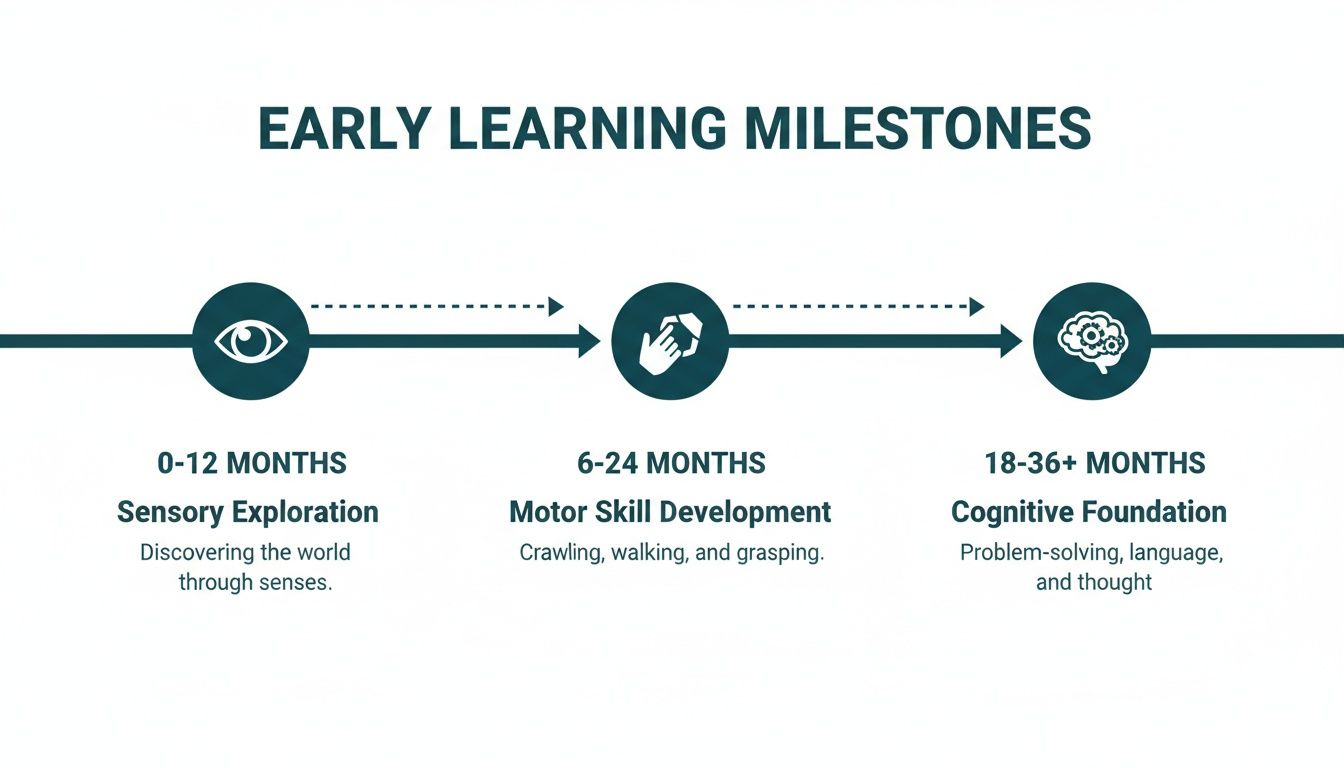
As you can see, development isn't random. It’s a beautiful, logical progression where sensory discoveries lay the groundwork for physical skills, which in turn spark new ways of thinking and understanding.
To make this easier, I've put together a quick guide that breaks down the first year. It maps out the key milestones you'll see and the types of toys that will genuinely support your little one's learning at each step.
Toy Guide for Your Infant's Developmental Milestones
| Age Range | Key Developmental Milestones | Recommended Educational Toys |
|---|---|---|
| 0-3 Months | Vision is developing (blurry, sees high-contrast best). Starts to track objects with eyes. Responds to sounds. Begins to discover their own hands. | High-contrast flashcards, soft rattles, unbreakable baby-safe mirrors, wrist shakers, play mats with simple arches. |
| 4-6 Months | Reaching and grasping with purpose. Brings objects to their mouth. Starts to roll over. Improved head and neck control. | Activity gyms, textured balls, soft teethers, crinkle books, toys that make gentle sounds when batted or shaken. |
| 7-9 Months | Sits up without support. May start to crawl or scoot. Develops pincer grasp (using thumb and forefinger). Understands object permanence. | Stacking rings, soft building blocks, simple shape sorters, pop-up toys, balls to roll back and forth. |
| 10-12 Months | Pulls up to stand, may cruise or take first steps. Becomes a better problem-solver. Imitates actions and sounds. Improved fine motor skills. | Push-along walkers, simple knob puzzles, board books, ride-on toys, beginner musical instruments (e.g., a small drum). |
This table is a great starting point, but let’s dive a bit deeper into what’s really going on during these incredible stages.
0-3 Months: The Sensory Explorer
Right at the beginning, your baby is like a little sponge, purely focused on absorbing the world through their senses. Their vision is still quite blurry, so bold, high-contrast patterns are much easier for them to focus on than soft pastels.
The goal here is gentle, simple stimulation. Everything is about sight, sound, and touch.
- High-Contrast Cards: Black-and-white patterns are utterly mesmerising for newborn eyes. You can prop them up during tummy time to encourage that all-important head-lifting, strengthening their neck muscles.
- Soft Rattles and Wrist Shakers: These provide one of the earliest and most profound lessons in cause and effect. When I move my arm, I make a sound! It's a huge realisation.
- Baby-Safe Mirrors: That fascinating person in the reflection? It's them! An unbreakable mirror placed nearby helps build the very first sparks of self-awareness.
4-6 Months: The Reacher and Grabber
Around the four-month mark, your baby's world opens up. They're gaining real control over their little bodies, especially their arms and hands. Suddenly, they're reaching, grasping, and, of course, bringing absolutely everything to their mouth for a thorough inspection.
Play starts to feel more interactive. You're now focused on helping them build hand-eye coordination and those early fine motor skills.
The act of a baby reaching for and grasping a toy is a monumental achievement. It represents a complex coordination of vision, intention, and motor control—the very building blocks of problem-solving.
This is the perfect time for an activity gym, where dangling toys give them a reason to reach up and bat. Soft, textured balls are also brilliant, as they’re easy to grab and feel interesting in their hands and mouth.
7-9 Months: The Active Investigator
Welcome to the age of movement! Whether they’re sitting up confidently, scooting backwards, or officially crawling, your baby is no longer a passive observer. They are an active participant, on a mission to investigate anything that catches their eye.
They're also starting to grasp object permanence—the mind-blowing concept that things still exist even when hidden from view. This is why a game of peek-a-boo suddenly becomes hilarious.
Toys that get them moving and thinking are ideal:
- Stacking Rings: A classic for good reason. They teach about size, order, and the coordination it takes to get a ring onto a post.
- Soft Blocks: Perfect for building up... and knocking down. That simple action is a powerful and very satisfying lesson in cause and effect.
- Shape Sorters: These introduce the basics of problem-solving as your baby works out which shape fits into which hole through trial and error.
10-12 Months: The Little Problem-Solver
As your baby barrels towards their first birthday, their cognitive skills take a massive leap. They're becoming little scientists, constantly experimenting to see how things work and mimicking the actions they see you do every day.
Their pincer grasp (using their thumb and forefinger) is getting much more refined, allowing for more detailed play. Now is the time for toys that support this growing dexterity and curiosity. Push-along walkers can offer a bit of stability for those wobbly first steps, while simple puzzles with big knobs are fantastic for honing their hand-eye coordination. You’ll also notice the first hints of pretend play, so a toy phone or a simple doll can really spark their imagination.
Choosing Between Wooden and Plastic Toys
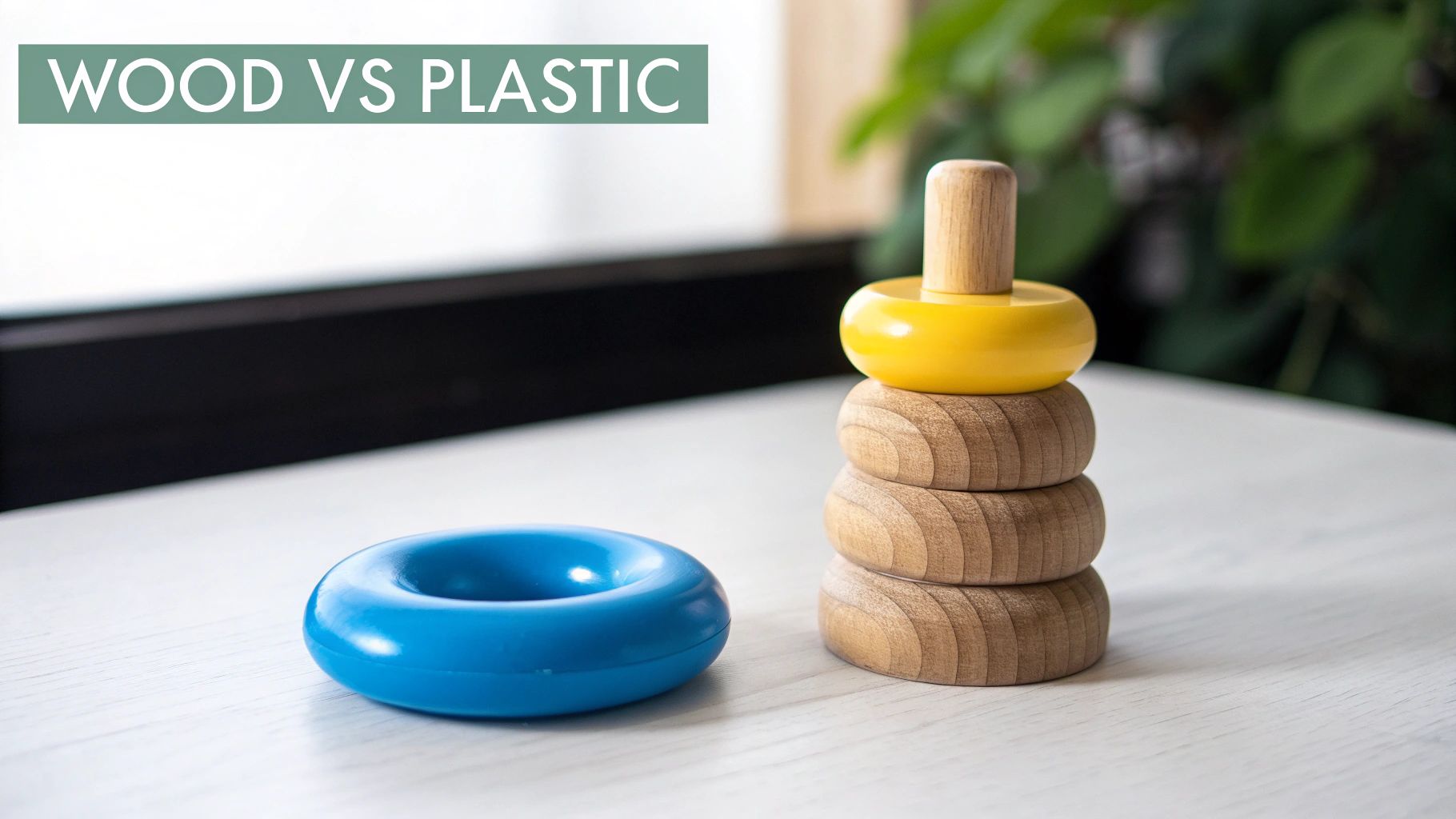
Walk into any toy shop, and you'll likely face the classic dilemma: wood or plastic? It’s a question every parent considers when picking out educational toys for their little one. The truth is, there’s no single “right” answer. Both materials have their place, and what works best really depends on your family's priorities – from your budget and play style to your thoughts on sustainability.
Honestly, a fantastic playroom can easily have a mix of both. The real key is understanding what each material offers and choosing high-quality, safe toys, no matter what they’re made of. This way, you can build a well-rounded collection that truly supports your baby’s development.
The Case for Wooden Toys
There's a reason wooden toys are making such a huge comeback. They just feel timeless, don't they? A beautifully crafted set of wooden blocks isn’t just a toy; it’s something that can be passed down through generations, becoming a treasured family heirloom rather than ending up in a landfill.
That incredible durability is closely linked to sustainability. When sourced from responsibly managed forests, wooden toys are biodegradable and don’t contain the complex chemicals often found in plastics. For parents trying to create a more eco-friendly home, wood is an obvious choice.
But where wooden toys really shine is in fostering open-ended play. A simple wooden rainbow doesn’t have buttons to press or a single way to be used. One day it's a tunnel for a car, the next it's a fence for toy animals, and the day after that it's a colourful sculpture. This beautiful simplicity sparks a child’s imagination and encourages them to solve problems on their own. If you'd like to dive deeper, we explore the many benefits of wooden educational toys in our dedicated guide.
The Appeal of Plastic Toys
On the other hand, let's talk about plastic. Modern plastic toys can offer a completely different sensory world for your baby. Their bright colours, interesting textures, and interactive features are often brilliantly designed to grab an infant's attention and get their developing senses buzzing.
Many plastic educational toys for infants come with lights, sounds, and music that are fantastic for teaching cause and effect. A baby quickly figures out that pressing a button makes a fun song play, which is a powerful and direct way to build those all-important cognitive connections.
And let’s be practical for a moment. Plastic toys are usually lighter on the wallet, easy for little hands to carry, and incredibly simple to wipe clean and sanitise. When you’ve got a toy that’s guaranteed to spend half its life in a baby’s mouth, that’s a pretty big plus!
What matters most isn't the material, but how the toy sparks your child’s interest. A well-designed toy, whether it's wood or plastic, should invite curiosity and empower your baby to explore, discover, and learn at their own pace.
Safety First, Whatever You Choose
No matter which material you lean towards, safety is the one thing you can't compromise on. It's vital to make sure any toy you bring home meets the UK's strict safety standards.
Here's what to keep an eye out for:
- Look for the UKCA Mark: This little symbol is your confirmation that the product meets UK safety regulations.
- Check for Non-Toxic Finishes: Any paints, stains, or glues must be certified as non-toxic and safe for babies.
- Inspect the Construction: Give it a good once-over. Are there any small parts that could break off and become a choking hazard? Check for sharp edges on plastic or the potential for splinters on wood.
Ultimately, choosing between wood and plastic doesn't have to be a battle. By taking a balanced approach, you can give your child the best of both worlds: the timeless, imaginative potential of wood and the vibrant, sensory engagement of modern plastic.
How to Maximise Learning During Playtime
Having a collection of great educational toys for your baby is a fantastic start, but the real magic happens when you get involved. The way you interact and guide playtime can turn a simple object into a powerful learning tool. This isn’t about creating a strict lesson plan; it’s about fostering an environment where curiosity and connection can flourish.
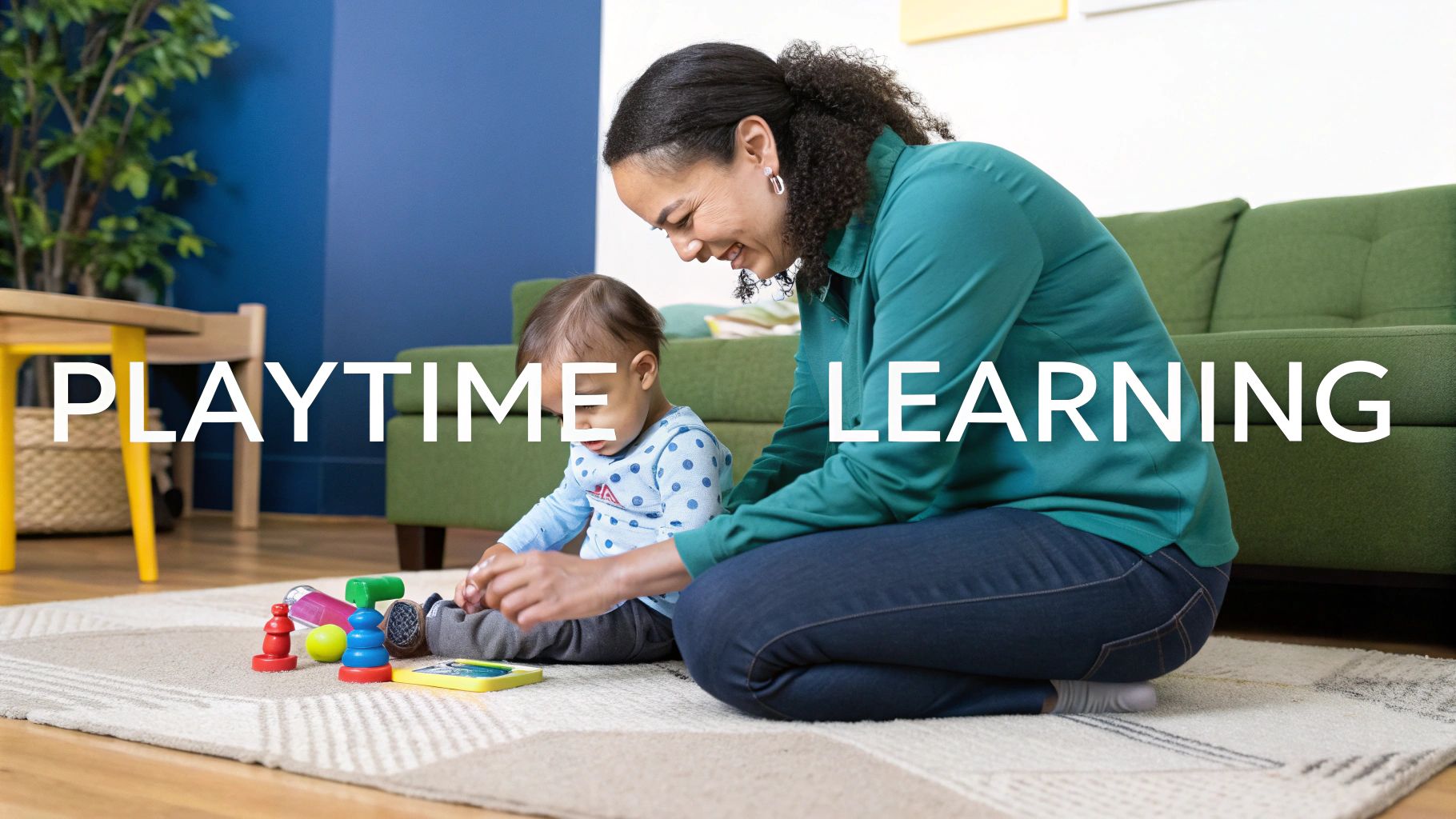
The secret is learning to see playtime through your baby’s eyes. A few simple, consistent strategies can weave rich learning experiences into your daily routine, all while strengthening your bond and building their developing brain.
Create a Safe ‘Yes Space’
A ‘yes space’ is simply a baby-proofed area where your little one is free to explore without constantly hearing “no”. This freedom is absolutely crucial for building their independence and confidence. When they can safely touch, crawl, and investigate, they learn about the world on their own terms.
This space doesn’t have to be massive. A corner of the living room with a soft mat and a few well-chosen, age-appropriate toys is perfect. It gives them a secure home base to start their adventures from.
Master the Art of Toy Rotation
Ever noticed how a once-loved toy suddenly gets ignored? It’s often a classic sign of overstimulation. A huge mountain of toys can be completely overwhelming for a baby, making it tough for them to focus and engage deeply with any one thing.
The goal of playtime isn't to present every possible option at once. It's about encouraging deep, focused exploration. Rotating a small selection of toys keeps their environment feeling fresh and exciting, inviting them to rediscover old favourites with new curiosity.
Try this simple system:
- Select: Choose just 5-8 toys to have out at any one time.
- Store: Put all the rest away, completely out of sight.
- Swap: Every week or so, switch out a few of the current toys with some from storage.
This little trick makes old toys feel brand new again, encouraging your baby to find different ways to play and interact with them.
Use ‘Parentese’ to Build Language
Your voice is one of the most powerful learning tools you possess. When you talk to your baby, try using ‘parentese’—that high-pitched, sing-song tone with exaggerated expressions that we naturally fall into. Research has shown this way of speaking is brilliant at capturing an infant's attention and helping them learn language.
Narrate what’s happening as you play. If they’re shaking a rattle, you could say, "You're shaking the rattle! Listen to that fun sound." This connects words to actions, laying a strong foundation for their vocabulary long before they utter their first word.
Why Are Stage-Based Play Kits So Popular?
If you’ve ever stood in a toy shop aisle feeling completely overwhelmed, you're not alone. Figuring out which toys are right for your baby, especially when they're growing and changing so quickly, is a real challenge. This is exactly why so many modern parents are turning to a much simpler, smarter solution: stage-based play kits.
Think of it as having a child development expert personally select the perfect toys for your little one and deliver them right when they're needed most. Instead of you spending hours scrolling through websites and reading milestone charts, the hard work is already done. Each kit is a thoughtfully curated box, filled with high-quality toys designed to match your baby's specific developmental stage.
This approach takes all the guesswork out of the equation. Just as your baby is mastering their pincer grasp or beginning to understand that things still exist even when they can't see them (hello, object permanence!), the right tools to support that discovery arrive at your door. It's a targeted method, backed by science, that gives parents incredible peace of mind.
The Science of Perfect Timing
The whole idea behind these subscription services hinges on a simple but powerful concept: developmental windows. A toy that fascinates a ten-month-old might just frustrate a seven-month-old, or feel a bit boring to a one-year-old. Stage-based kits solve this problem by delivering precisely what your baby needs, just as their brain becomes wired to learn that particular skill.
These kits are designed to meet your baby exactly where they are, not where a generic age guideline thinks they should be. By introducing the right challenge at the right time, you encourage a wonderful sense of achievement and a genuine love of learning, without the frustration.
This timely approach supports a much more natural learning journey. It helps you feel confident that you’re providing genuinely meaningful play experiences, every single day. It’s a perfect fit for the growing number of parents looking for expert-guided, high-quality, and often sustainable ways to play with their children.
It’s More Than Just a Box of Toys
The appeal of these kits goes far beyond the toys themselves. They represent a fundamental shift in how we think about playtime, moving towards a desire for both quality and simplicity. This isn't just a niche trend; it's a significant market shift. In the UK alone, the baby toys sector was valued at a staggering £821.5 million, and it's projected to climb to £1,576 million by 2035, driven largely by parents' growing awareness of developmental play. You can read more about the UK baby toys market to see just how big this movement is.
Many services, including our Grow With Me kits, also come with play guides for parents. These handy guides explain the 'why' behind each toy and give you creative ideas for how to play together, turning simple moments into rich, bonding experiences. It means you can spend less time researching and more time just enjoying that connection with your baby. If you want to dive deeper into this model, have a look at our guide on the benefits of children's subscription boxes.
In the end, the popularity of stage-based kits boils down to a few key things:
- Convenience: They save you a huge amount of time and mental energy.
- Expert Curation: You get toys chosen by people who live and breathe child development.
- Reduced Clutter: You receive a handful of high-impact toys rather than a mountain of unused plastic.
- Peace of Mind: You can relax, knowing your baby has the best tools for their development.
By offering a streamlined, expert-led path, these play kits empower you to support your infant’s growth with confidence, freeing you up to cherish the playful, fleeting moments that truly matter.
Got Questions About Educational Toys? We’ve Got Answers
Stepping into the world of developmental play for your baby is exciting, but it’s completely normal to have a few questions. To help you feel confident in your choices, here are some straightforward answers to what parents often ask about educational toys for infants.
When Is the Right Time to Start With Educational Toys?
Believe it or not, you can start from day one! For a newborn, "educational" play is all about gentle sensory experiences that help their brain start wiring itself up. We’re not talking about complex lessons, just simple, helpful inputs for their brand-new senses.
Think simple. High-contrast black-and-white cards are fantastic for their blurry, developing vision. A soft rattle isn't just a noisemaker; it’s helping them learn to track sounds with their ears and eyes. At this stage, you’re their gentle guide, introducing them to the world in a safe and engaging way.
How Many Toys Does My Baby Actually Need?
When it comes to baby toys, less is definitely more. It's easy to think a mountain of toys is a good thing, but it can actually be overwhelming for a little one. A big pile makes it hard for them to focus and really explore any single object. A carefully chosen collection of 5 to 8 age-appropriate toys is plenty.
The real secret weapon here is toy rotation.
By swapping a few toys out every week or so, you keep things interesting. An "old" toy can suddenly feel brand new, sparking their curiosity all over again. It’s a simple trick that gets so much more value out of every toy you have.
Do More Expensive Toys Mean They’re Better?
Not at all. A toy's price tag rarely reflects its actual educational value. In fact, some of the best learning tools are the simplest because they leave room for imagination.
Take a classic set of wooden blocks. They offer endless ways to learn about balance, cause and effect, and how things fit together in space. Instead of being wowed by flashy features or a high price, look for toys that are safe, well-made, and can be used in lots of different ways.
What Are the Most Important Toy Safety Marks to Look for in the UK?
Nothing matters more than safety. When you’re buying toys in the UK, the most important thing to look for is the UKCA mark. This is your guarantee that the toy has passed the UK’s strict safety tests.
Beyond the official mark, it’s always a good idea to do your own quick check:
- Check for Small Parts: Could anything break off and become a choking risk?
- Look for Non-Toxic Finishes: Make sure any paints or varnishes are certified as safe for babies.
- Feel for Smooth Edges: Run your hand over the toy to check for sharp points on plastic or splinters on wood.
This kind of careful choosing is more important than ever. It's a fact that UK parents are driving huge growth in the market for high-quality infant and preschool toys, which now makes up the biggest slice of the massive £13,948 million UK toy market. This area is set to grow even more as parents look for sustainable and educational toys for their little ones. You can read more about the growing UK toy market on sphericalinsights.com. By choosing safe, well-designed toys, you're helping create a better play environment for your child.
Ready to take the guesswork out of playtime? The Grow With Me subscription delivers expert-curated, stage-based play kits right to your door, ensuring your baby always has the perfect tools for their development. Explore our play kits today.