

Your Guide to developmental milestones 16 months: Essential tips for parents
At 16 months, your toddler is a whirlwind of curiosity and motion. They're not a baby anymore, but a determined little explorer, constantly testing their abilities and figuring out how the world works.
This stage is packed with exciting progress, from walking more confidently to speaking their first few words and showing off a fiercely independent streak. It’s an amazing time that lays the groundwork for all the complex skills yet to come.
Embracing the Adventures of Your 16-Month-Old
Welcome to the wonderfully chaotic world of raising a 16-month-old! This period is truly an explosion of growth across the board. Understanding the typical developmental milestones for a 16-month-old can help you appreciate just how much is happening inside that busy little mind and body.
Think of these milestones less as a strict checklist and more as a guide to what you might be seeing. Every child moves at their own pace, so don't worry if your little one is ahead in some areas and taking their time in others. The real goal is to enjoy this journey of discovery together.
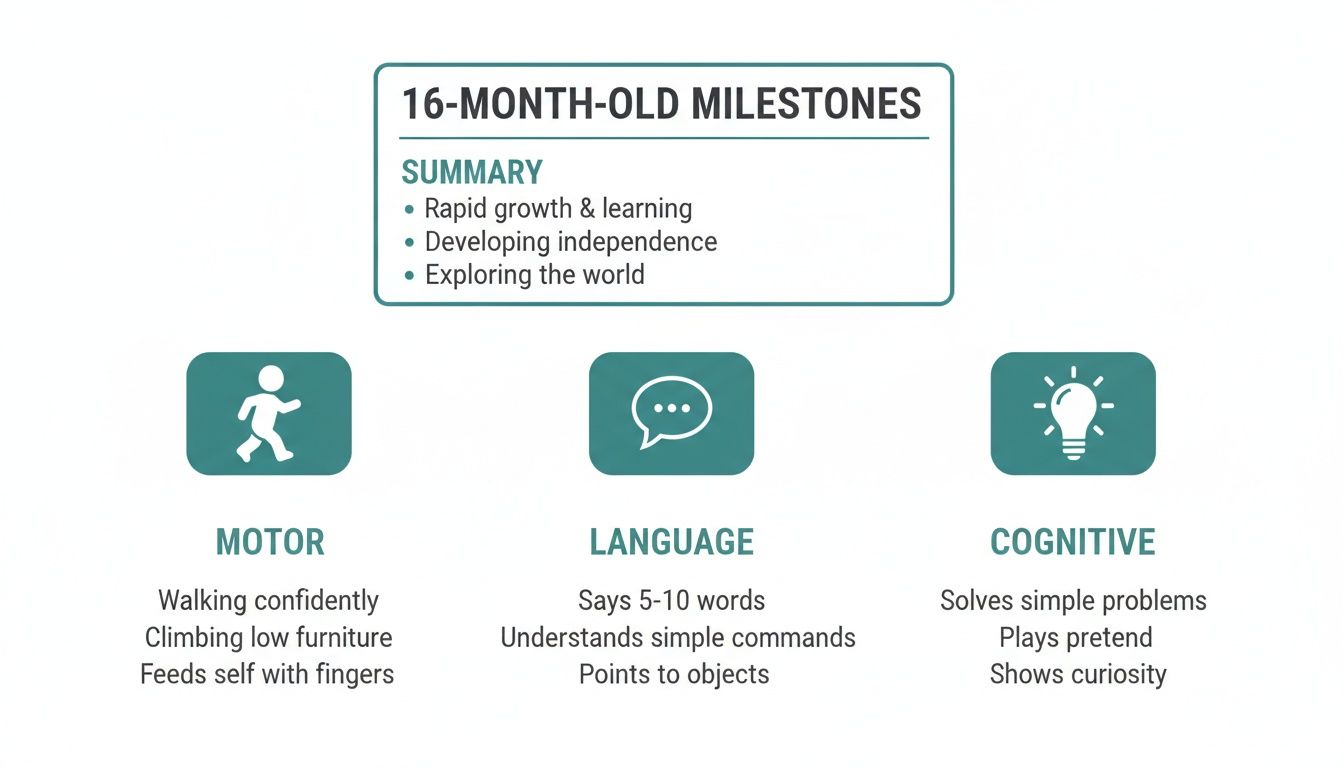
16-Month Milestones At a Glance
Here’s a quick snapshot of what you can expect to see popping up around this age. It's a handy way to get a feel for the key changes happening across different developmental areas.
| Developmental Area | What You Might See at 16 Months |
|---|---|
| Gross Motor Skills | Walking independently, maybe even trying to run. Can stoop and stand back up. |
| Fine Motor Skills | Scribbling with a crayon, stacking 2-3 blocks, attempting to use a spoon. |
| Language & Communication | Says a few single words (like "mama," "dada," "uh-oh"). Shakes head "no." |
| Cognitive Skills | Points to show you something interesting. Imitates gestures and sounds. |
| Social & Emotional | Shows affection with hugs and kisses. May have temper tantrums. |
As you can see, your toddler is working on many new skills all at once! Each area of development influences the others, creating a rich and dynamic learning experience.
Key Areas of Growth and Discovery
Let's break down what's happening in more detail. Watching these specific areas can help you see the full picture of your toddler's incredible progress.
-
Motor Skills: This covers both the big movements (gross motor) like walking and climbing, and the smaller, more precise ones (fine motor) like stacking blocks or trying to feed themselves with a spoon.
-
Language and Communication: You’ll see big leaps in their vocabulary (the words they can say) and, just as importantly, in how much they understand when you speak to them.
-
Cognitive Development: This is all about their thinking and problem-solving. They're learning about cause and effect ("If I push this button, a light turns on!") and their memory is getting stronger.
-
Social and Emotional Growth: Get ready for big feelings! Your toddler is learning how to express emotions, show affection, and test the boundaries of their growing independence.
It's an energetic and exciting phase, but let's be honest—it can also be exhausting. If you're navigating the sleepless nights that often come with this stage, you can find some valuable tips for coping with sleep deprivation to help you and your family.
Ultimately, focusing on connection and turning simple, everyday moments into opportunities for play is the best way to support your toddler. You're helping them thrive during one of the most fast-paced and rewarding ages of their life.
Mastering Movement and Gross Motor Skills
At sixteen months, your toddler's world is expanding at the speed of their own two feet. Those first wobbly, uncertain steps are fast becoming a distant memory. Now, you’re likely watching a confident little explorer who has mastered walking and is eagerly looking for the next physical challenge.
Think of them as a tiny acrobat, constantly learning how to balance and navigate their environment with more purpose and coordination. Even something as simple as squatting down to pick up a favourite toy without tumbling over is a huge achievement, showcasing their developing strength in their legs and core.
This newfound mobility is about so much more than just getting from point A to B; it's the very foundation of their budding independence. Every step, stumble, and successful climb builds their physical confidence and their understanding of what their body can do.
From Walking to Almost Running
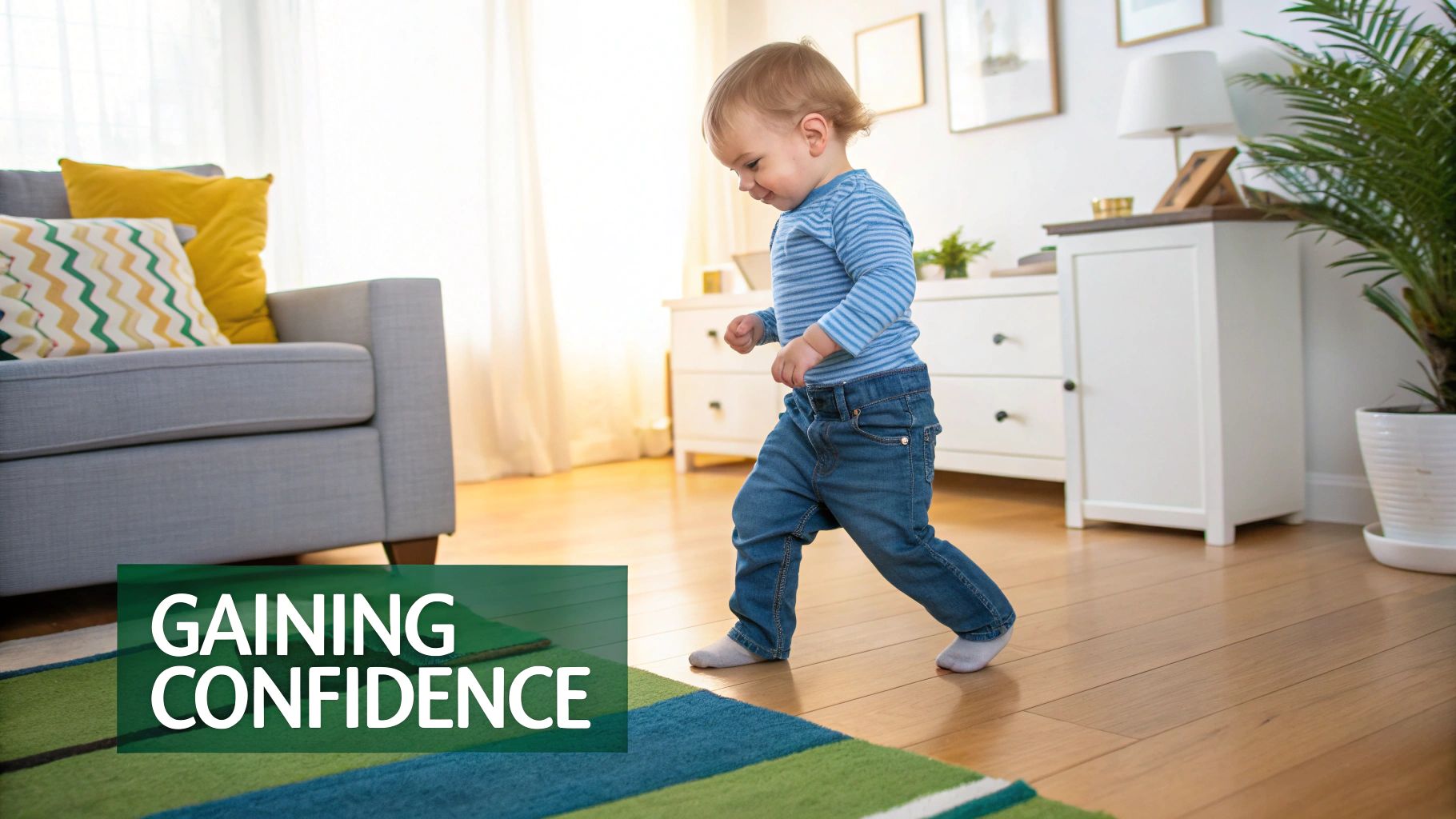
That shift from a cautious toddle to a more stable, confident walk is a massive gross motor milestone. You’ll probably notice their gait is smoother, and they no longer need to hold their arms out wide for balance. It's this newfound stability that opens the door to more complex movements.
Many 16-month-olds are so thrilled with their walking skills that they immediately start experimenting with speed. You might see them attempt a clumsy but utterly determined little run, often with a huge grin plastered across their face. It’s a clear sign that their balance, coordination, and leg strength are all improving in leaps and bounds.
This progression is right on track. In fact, around 90% of UK toddlers are walking independently by 16 months, having moved well past that unsteady toddling phase. This is a huge leap from 12 months, where only about half are pulling themselves up to stand and cruising along furniture.
Conquering New Physical Challenges
With confident walking comes the desire to conquer new heights—quite literally. Your living room furniture has likely been repurposed as a fascinating climbing frame in their eyes. While this definitely requires extra vigilance on your part, it's a brilliant developmental step.
Climbing low objects, like a sofa or a sturdy footstool, helps your toddler build problem-solving skills, spatial awareness, and upper-body strength. They are learning to judge distances and coordinate their arms and legs to achieve a goal.
Another exciting skill starting to emerge is kicking. At first, it might just be an accidental tap while they're walking, but soon it becomes more intentional. Kicking a soft ball requires timing, balance, and the ability to shift weight from one foot to the other—a surprisingly complex sequence of movements for a little one!
- Squatting and Recovering: This is a crucial move for play and independence, allowing them to interact with toys on the floor without losing their balance.
- Climbing: They may start to climb onto low furniture or attempt to go up stairs, usually by crawling at first.
- Kicking: They are beginning to coordinate their leg movements to kick a ball forward, even if it's not very powerful just yet.
Supporting Your Toddler's Movement
Creating a safe, encouraging environment is the best way to support these new skills. You don't need lots of fancy equipment; your home and the local park are the perfect practice grounds. For more ideas on how to turn playtime into a developmental powerhouse, check out our guide on gross motor activities for kids.
Simple toys can make a big difference. Push-along toys offer stability as they practise walking and running, while soft, lightweight balls are perfect for those first attempts at kicking. Our Grow With Me play kits are designed with these exact milestones in mind, featuring toys that encourage movement and exploration.
Most importantly, remember to celebrate their efforts, not just their successes. When they take a tumble, a calm and encouraging response teaches them resilience. Your positive reinforcement builds their confidence to get up and try again, turning every stumble into a learning opportunity on their exciting journey of mastering movement.
Developing Precision with Fine Motor Skills
While your toddler is busy mastering big, impressive movements like running and climbing, an equally incredible transformation is happening on a much smaller scale. Their little hands are becoming remarkably skilful, shifting from clumsy, whole-hand grasps to surprisingly precise actions. These fine motor skills are the absolute bedrock for countless future tasks, from drawing and writing to doing up a coat and tying shoelaces.
Think of it as their brain and hands learning to have a proper conversation, working together in perfect harmony. Every time they pick up a pea or manage to place one block on top of another, they’re strengthening that vital connection. This growing dexterity is a huge part of the developmental milestones for 16-month-olds, turning everyday play into powerful learning.
Building Blocks of Dexterity
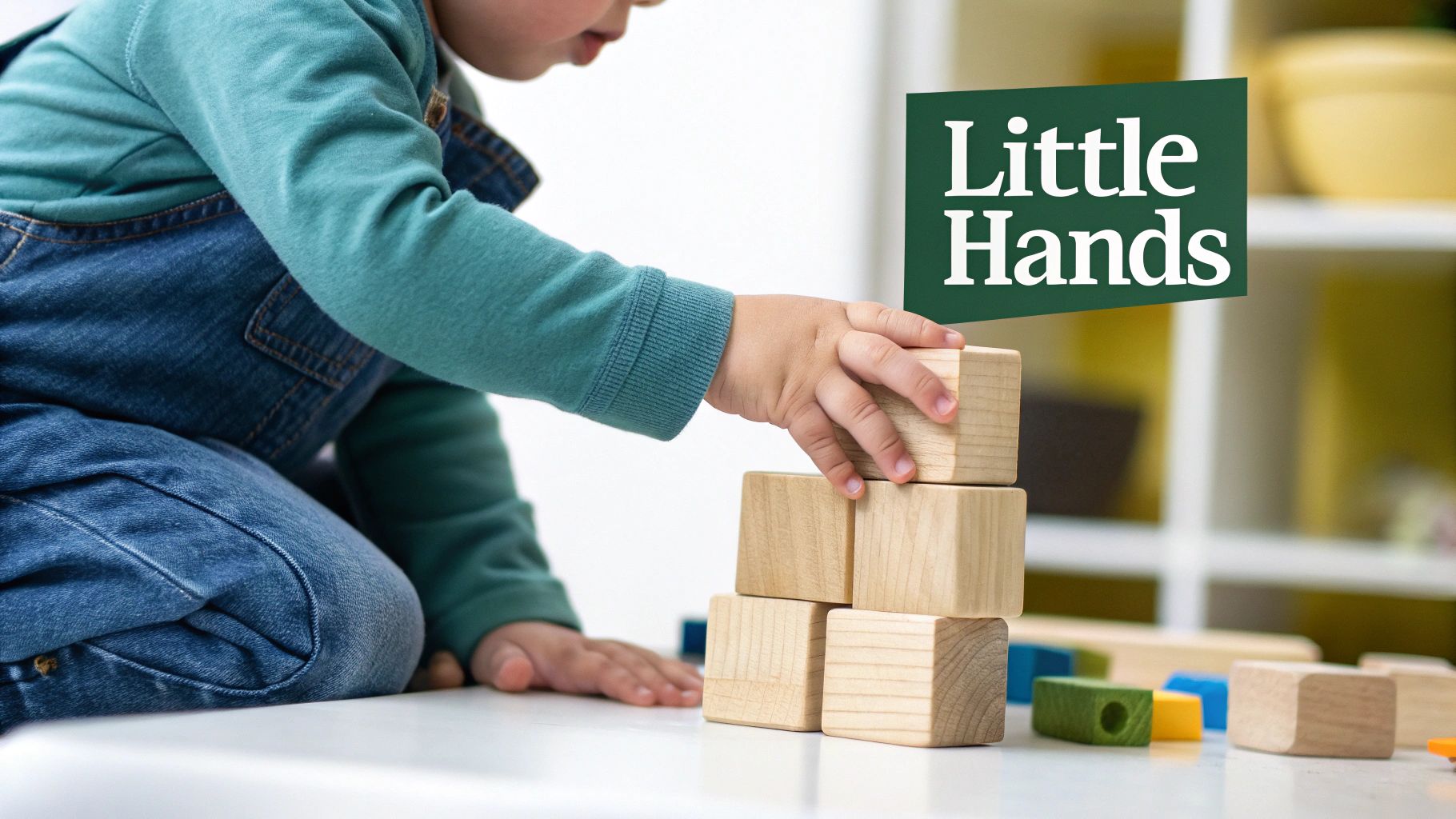
One of the most classic signs of developing fine motor skills is, unsurprisingly, block play. At this age, your toddler might just be able to stack two or three blocks before the whole tower comes tumbling down. It might look simple, but that little act requires immense concentration, hand-eye coordination, and a surprisingly steady hand.
You'll also notice this emerging precision during mealtimes. Yes, it's a messy business, but their determined attempts to use a spoon are a fantastic workout for their wrist and finger muscles. Each scoop, whether it makes it to their mouth or not, is another step towards the independence of self-feeding.
This progress is right on track. Data shows that most UK toddlers hit similar fine motor milestones around this age. Around 75% will be scribbling spontaneously, and many are mastering that two-block tower. Hand-eye coordination also gets a huge boost, which is crucial for tackling tasks like self-feeding, where somewhere between 60-70% are now messily but enthusiastically using a spoon.
From Scribbles to Puzzles
Their artistic journey begins now, too! Hand your 16-month-old a chunky crayon, and they'll likely start making spontaneous marks on paper. These early scribbles aren't just random lines; they are the very first step towards writing and drawing as they figure out how to control a tool in their hand.
At this stage, it’s not about creating a masterpiece. The goal is pure exploration. How they hold the crayon, the pressure they apply, and the movements they make are all building essential pre-writing skills.
Another area where you’ll see these skills shine is with simple puzzles and shape sorters. They are just starting to understand how objects relate to one another in space.
- Pincer Grasp: Picking up puzzle pieces with their thumb and forefinger strengthens the pincer grasp, which is vital for holding a pencil later on.
- Problem-Solving: Figuring out which hole a shape fits into is an early, and often frustrating, form of problem-solving and spatial reasoning.
- Hand-Eye Coordination: Turning and manipulating a shape to make it fit requires their eyes and hands to communicate effectively.
If you're looking for more ideas, you can discover a wide range of fine motor skills development activities that are perfect for this age.
Play That Promotes Precision
Supporting fine motor development is all about giving them plenty of opportunities for hands-on play. You don't need fancy, complicated toys; simple, purposeful items are often the most effective. This is the whole philosophy behind the toys we include in our Grow With Me play kits.
Things like wooden stackers, shape sorters, and large threading beads are chosen specifically because they challenge and strengthen those small hand muscles. Honestly, even turning the thick pages of a board book is a fantastic fine motor activity. By weaving these sorts of tools into your daily routine, you transform simple playtime into a rich learning experience, building a solid foundation for all the skills to come.
How Your Toddler's Mind and Language Are Growing
While it’s easy to see your 16-month-old getting steadier on their feet, there’s an equally incredible burst of activity happening inside their head. Their brain is working overtime to figure out how the world works and, most excitingly, how to communicate with you about it. This stage is a huge leap forward for both their thinking and language skills.
One of the most fascinating parts of the developmental milestones at 16 months is the gap between what your toddler understands and what they can actually say. Think of their brain as a language sponge, soaking up a massive amount of vocabulary long before they can squeeze the words out themselves.
This is why their receptive language (what they understand) is miles ahead of their expressive language (what they say). They might fully grasp a two-part instruction but respond with a single word and a determined point. It’s all a completely normal and thrilling part of their journey to becoming a proper little chatterbox.
The Power of Understanding
You’ve probably already been amazed when you ask, "Can you find your shoes?" and they toddle off to get them. That right there is their receptive language in action. They are connecting your words to an object and an action, building a mental map of their world. They’re no longer just hearing sounds; they’re processing meaning.
It’s an exciting time for UK parents. According to NHS guidelines, most toddlers at this age understand somewhere between 50 to 100 words, even if they’re only saying 5 to 20 of them. You’ll also find that 70-80% of 16-month-olds can point to their ‘tummy’ or ‘eyes’ when you ask them to, or fetch a familiar toy from another room.
First Words and Budding Conversations
While their spoken vocabulary might seem small, the words they do use are incredibly powerful. They’re moving beyond random babbling and are now using specific sounds with real intent. "Mama," "dada," "cup," and the classic "uh-oh!" are all being used to name people, ask for things, or comment on what’s happening around them.
You’ll also see them cleverly combining words with gestures to make sure they’re understood. Pointing at the biscuit tin while saying “Dat!” with absolute conviction is a perfect example of early, effective communication.
Don't get hung up on perfect pronunciation. If "ba" means ball or "wawa" means water, that absolutely counts! The crucial thing is that they're using a consistent sound for a specific item—that’s a massive cognitive win.
This is also where you’ll see the very first flickers of conversational turn-taking. When you respond to their babbles and words, you're teaching them the back-and-forth rhythm of a real chat and showing them that their voice matters.
How to Nurture Their Growing Mind
You are your toddler’s first and most important teacher. The good news is that supporting their brain development is all about simple, everyday interactions. Play is your superpower.
- Talk, Talk, and Talk Some More: Just narrate your day as you go. "I'm putting on your red socks," or "Let's wash the big, yellow banana." This constant stream of language is like planting a garden for their vocabulary to grow in.
- Read Together Every Day: Sturdy board books with bright pictures and simple, repetitive words are perfect. Point to the pictures as you name them ("Look, a dog!") and let them have a go at turning the chunky pages.
- Play Copycat Games: Clap your hands, make a silly face, or pretend to drink from a toy cup and see if they copy you. This is a brilliant way to teach them about cause and effect.
- Sing Songs and Rhymes: You can't go wrong with classics like "The Wheels on the Bus" or "Heads, Shoulders, Knees and Toes." These action songs are fantastic for learning new words and body parts.
Our Grow With Me play kits are designed with these milestones in mind. Simple puzzles and shape sorters get their problem-solving skills going, while our beautifully illustrated books create lovely moments for you to read together. For even more inspiration, check out our guide on language development activities for toddlers. Every little game you play is laying the foundation for a lifetime of learning.
Navigating Social and Emotional Development
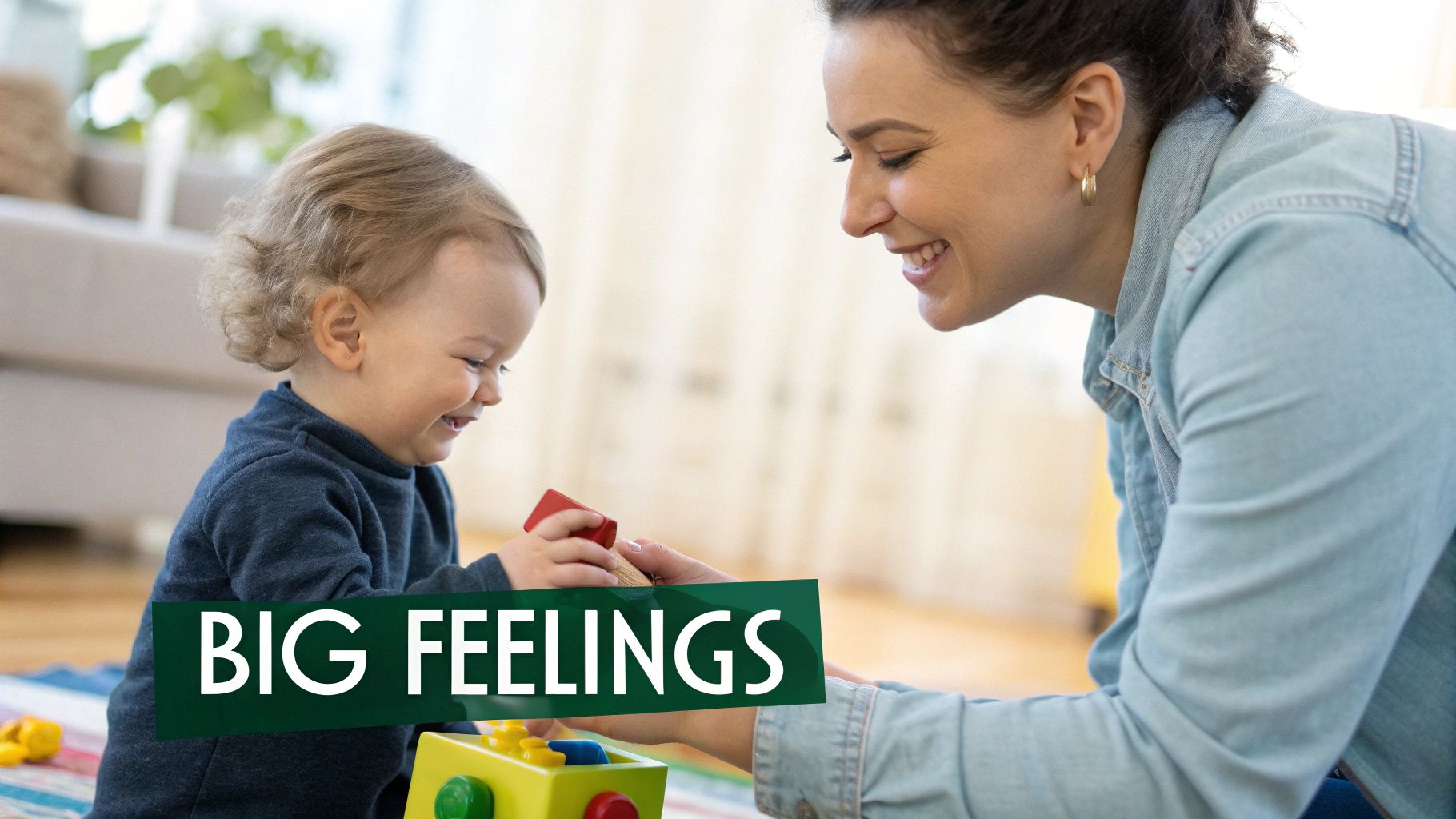
As your toddler’s physical world opens up, their inner emotional world is expanding just as fast. The social and emotional milestones at 16 months can feel like a real rollercoaster. One moment they’re showering you with kisses and cuddles, and the next, they're fiercely pushing your hand away, determined to do it all themselves.
This emotional whirlwind isn’t just normal – it's an essential part of their journey. They’re starting to realise they are their own little person, and that brings a messy, wonderful, and sometimes overwhelming jumble of new feelings. Getting to grips with the 'why' behind their behaviour is the first step in helping them feel secure.
The Push and Pull of Independence
That classic toddler spirit – the stubborn "I do it myself!" attitude – is really starting to blossom at 16 months. They might insist on putting on their own shoes (usually on the wrong feet) or feeding themselves, even if most of it ends up on the floor. This isn't them being defiant; it's a powerful, healthy drive to master their world and test their own growing abilities.
But at the same time, all this newfound independence can feel a bit scary for them. This is often why you’ll see a spike in separation anxiety. They’re desperate to explore, but they also need the constant reassurance that you, their safe base, are nearby. Clinginess, tears when you leave the room, and needing a few extra hugs are all typical as they navigate these big, conflicting feelings.
Think of them as a little explorer tethered to a home base. They venture out to discover new things, but they'll keep looking back and running back to you for a quick "top-up" of security before heading out on their next mini-adventure. This is precisely how they build confidence.
Nurturing this delicate balance is everything. When you give them space to try things on their own while remaining a calm, comforting presence, you're helping them build resilience and a strong, positive sense of self.
Understanding Tantrums and Big Feelings
With a growing desire for control but very few words to express what they want, frustration is pretty much inevitable. This is the perfect recipe for a temper tantrum. It’s so important to remember that tantrums aren't a sign of 'bad' behaviour. They are a sign that your toddler's emotions have completely overwhelmed their ability to cope.
Their brain is still developing the hardware for self-regulation, so they genuinely can't calm themselves down once they're in the thick of it. Your calm, empathetic response makes all the difference.
- Name the feeling: Simply saying, "You are so cross that it's time to leave the park," helps them feel seen and understood.
- Stay close and calm: Your steady presence is a lifeline, even if they're pushing you away. Let them know you’re there for a cuddle when they’re ready.
- Offer simple choices: When possible, giving them a small bit of control can head off frustration. For example, "Shall we have the red cup or the blue cup?"
The First Seeds of Empathy
Amidst the tantrums and the tug-of-war for independence, you'll also see these incredibly beautiful moments of connection. Your 16-month-old is starting to show the very first glimmers of empathy. They might offer you their favourite teddy bear if you look sad, or pat your back in a clumsy attempt to offer comfort.
These sweet gestures show they’re beginning to notice emotions in others and understand that people have feelings separate from their own. Beyond any specific milestone, never underestimate the importance of spending quality time with your children. Every story you read together and every comforting hug strengthens these new connections, building the emotional intelligence they’ll carry with them for life.
When to Check In with Your Health Visitor
It’s one of the best parts of being a parent, watching your little one grow and discover the world. But it’s also completely normal to have a few questions pop up along the way. Every child develops on their own timeline, but never underestimate your own parental intuition. If you have that nagging feeling that something might be a bit off, it’s always a good idea to check in with your health visitor or GP.
Think of these guidelines less as a rigid checklist of ‘red flags’ and more as gentle prompts. They’re here to help you feel confident about reaching out for advice. Getting support early can make a huge difference, and that's exactly what healthcare professionals are there for – to provide reassurance, guidance, or extra resources if needed. Trust your gut.
Signs It Might Be Time for a Chat
Certain patterns might suggest it's a good idea to book a conversation. The goal isn't to create worry, but simply to gather more information and ensure your child has everything they need to thrive. Consider reaching out if you notice your 16-month-old isn’t quite meeting a few of the earlier developmental milestones.
For instance, it might be worth a chat if your toddler:
- Isn't walking yet, particularly as they get closer to 18 months.
- Doesn't use simple gestures like pointing at something they want, waving "bye-bye," or shaking their head for "no."
- Isn't saying any single words with clear meaning, like "mama" or "dada."
- Doesn't seem to understand simple, familiar instructions like "Can you get your cup?"
One of the most important reasons to seek advice is if your child loses skills they once had. This is sometimes called regression, and it could look like they've stopped using words they once said or lost motor skills they'd already mastered.
At the end of the day, you know your child better than anyone. Speaking with a health professional is never an overreaction; it’s simply a proactive, loving part of supporting your little one on their incredible journey.
Got Questions About Your 16-Month-Old? We've Got Answers
Watching your 16-month-old grow is an incredible journey, but it’s one that often comes with a lot of day-to-day questions. Just as you’re celebrating new milestones, you might find yourself navigating fresh challenges with sleep, food, and behaviour. It’s all part of the package!
Let's walk through some of the most common queries parents have at this stage. We're here to offer clear, reassuring advice, grounded in UK health guidance, to help you feel confident as you tackle the everyday adventures of toddlerhood.
Why Has My Toddler's Sleep Suddenly Gone Haywire?
If your previously reliable sleeper is now staging midnight protests or fighting naps, you're not alone. You’ve likely hit the 16-month sleep regression, a notoriously common bump in the road. What’s going on? Their little brain is buzzing with so many new skills—like walking, climbing, and trying out new words—that it can be hard for them to switch off.
Teething is another classic sleep disruptor. Those first molars often start making an appearance around now, and they can be quite uncomfortable. The best thing you can do is stick with your familiar bedtime routine. Consistency is incredibly comforting for them amidst all these big internal changes. A few extra cuddles and a bit of patience will go a long way.
How Do I Deal with My Suddenly Fussy Eater?
Has your toddler gone from happily eating broccoli to throwing it on the floor? Welcome to the wonderful world of picky eating! This is a classic sign of their growing independence. Their growth rate is also slowing down a bit now, so their appetite naturally decreases. They’re simply realising they have a say in what happens, and food is an easy place to test those boundaries.
The trick is to keep mealtimes calm and avoid turning them into a power struggle. Keep offering a variety of healthy foods, but without any pressure to eat.
- Try smaller portions. A big plate can feel overwhelming.
- Eat together whenever you can. They learn so much just by watching you enjoy your food.
- Don't give up on rejected foods. Sometimes it takes ten or even fifteen tries before they’ll even touch something new.
Your job is to provide the nutritious options; it's their job to decide what and how much they eat. Trust me, this phase almost always passes.
Try to trust your toddler's instincts. It’s completely normal for their appetite to be huge one day and tiny the next. As long as they have plenty of energy and are growing well, they’re almost certainly getting everything they need.
Is Screen Time Okay for a 16-Month-Old?
This is a big question on many parents' minds. According to UK health guidance, screen time for children under two should be very limited. At this age, the most valuable learning happens through real-world, hands-on play and interaction with you.
If you do decide to introduce screens, the key is to make it a shared, interactive experience. Video chatting with grandparents is a fantastic way to use screens to connect with loved ones. If you watch a programme, choose something high-quality and educational, and watch it with them, talking about what you see. The goal is for screen time to be an active, shared moment, not a passive distraction that replaces a good storybook or a run around the park.
At Grow With Me, we know that play is the most powerful tool for learning. Our stage-based play kits are designed with experts to give your toddler everything they need to explore their world and master new skills.