
8 Fun Activities for Gross Motor Development in Babies and Toddlers
Welcome to the exciting world of gross motor development! From that first wobbly head lift to a confident, triumphant jump, watching a child master control over their body is one of parenthood's greatest joys. Gross motor skills are the foundation for all big movements, engaging the large muscle groups in the arms, legs, and torso to enable everything from sitting and crawling to running and climbing. Providing the right opportunities to practise these movements is crucial during the formative early years, building not just physical strength but also confidence and coordination.
This guide is designed to be your go-to resource, offering a curated roundup of eight effective, fun, and stage-based activities for gross motor development. We'll break down each activity with simple step-by-step instructions, highlight the key developmental benefits, and provide essential safety tips to ensure playtime is always secure. You'll find easy variations to adapt the challenges for different ages and abilities. For parents seeking more structured approaches to complement home-based play, exploring local options for structured toddler sports programs can also greatly benefit a child's gross motor development. Let’s get your little one moving and exploring their incredible potential
1. Tummy Time Activities
Tummy time is a foundational gross motor activity where a baby is placed on their stomach while awake and supervised. This simple practice is crucial for building the strength required for future movement, strengthening the neck, shoulder, back, and core muscles that are essential for rolling over, sitting up, crawling, and eventually walking.
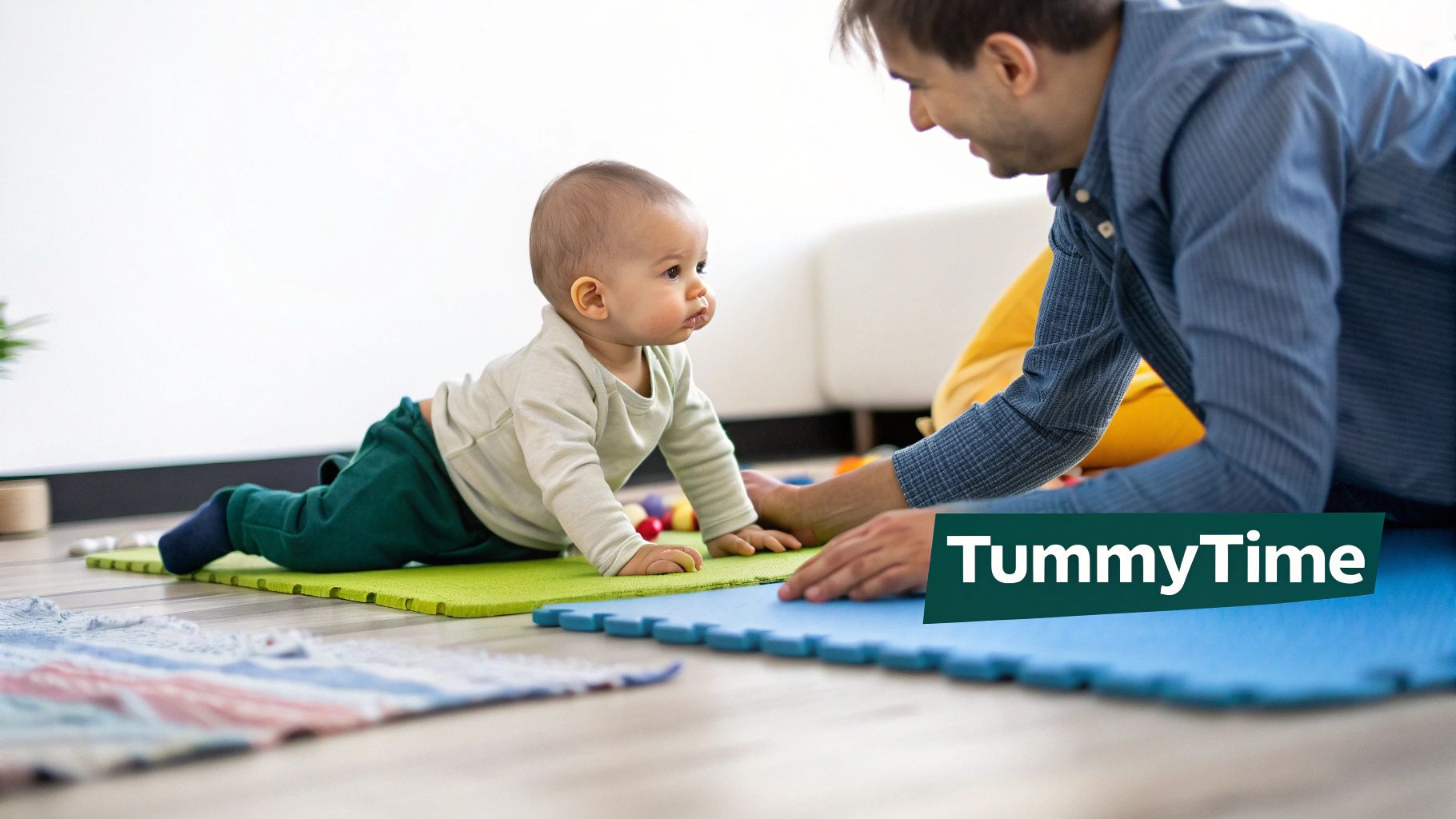
This activity is particularly vital for infants from birth to six months, as it lays the muscular groundwork for all subsequent gross motor skills. It also plays a key role in preventing positional plagiocephaly, or flat spots on the back of the head, and promotes balanced physical development.
How to Implement Tummy Time
Engaging your baby during tummy time can turn a simple exercise into a fun bonding experience. The goal is to encourage them to lift their head and push up with their arms.
- On the Floor: Place a soft play mat on the floor and position your baby on their stomach. Get down to their eye level to talk, sing, or make funny faces.
- Use Engaging Toys: Place high-contrast cards, a baby-safe mirror, or colourful wooden rattles just within their line of sight to motivate head lifting and turning.
- Tummy-to-Tummy: Lie on your back and place your baby on your chest. This gentle introduction allows for close interaction and makes them feel secure.
Actionable Tips for Success
Consistency is key, but it's important to keep sessions positive and brief, especially at the beginning.
Key Insight: Start tummy time from day one with short, frequent sessions. A newborn might only tolerate 1-2 minutes at a time, and that's perfectly fine. Aim for 2-3 sessions daily, gradually increasing the duration as your baby gets stronger and more comfortable.
To make this one of the most effective activities for gross motor development, remember to always supervise your baby. If they become fussy or tired, it's time for a break. For more detailed guidance, you can explore tips on when to start tummy time and how to progress. Learn more about the essentials of tummy time on growwithmesubscriptionbox.co.uk.
2. Ball Play and Rolling Activities
Ball play involves introducing babies and toddlers to soft, lightweight balls that encourage visual tracking, grasping, and eventually rolling and kicking. This activity is a fantastic way to develop hand-eye coordination, core stability, and spatial awareness. It naturally motivates children to reach, crawl towards objects, and use their leg muscles, all of which are critical gross motor milestones.
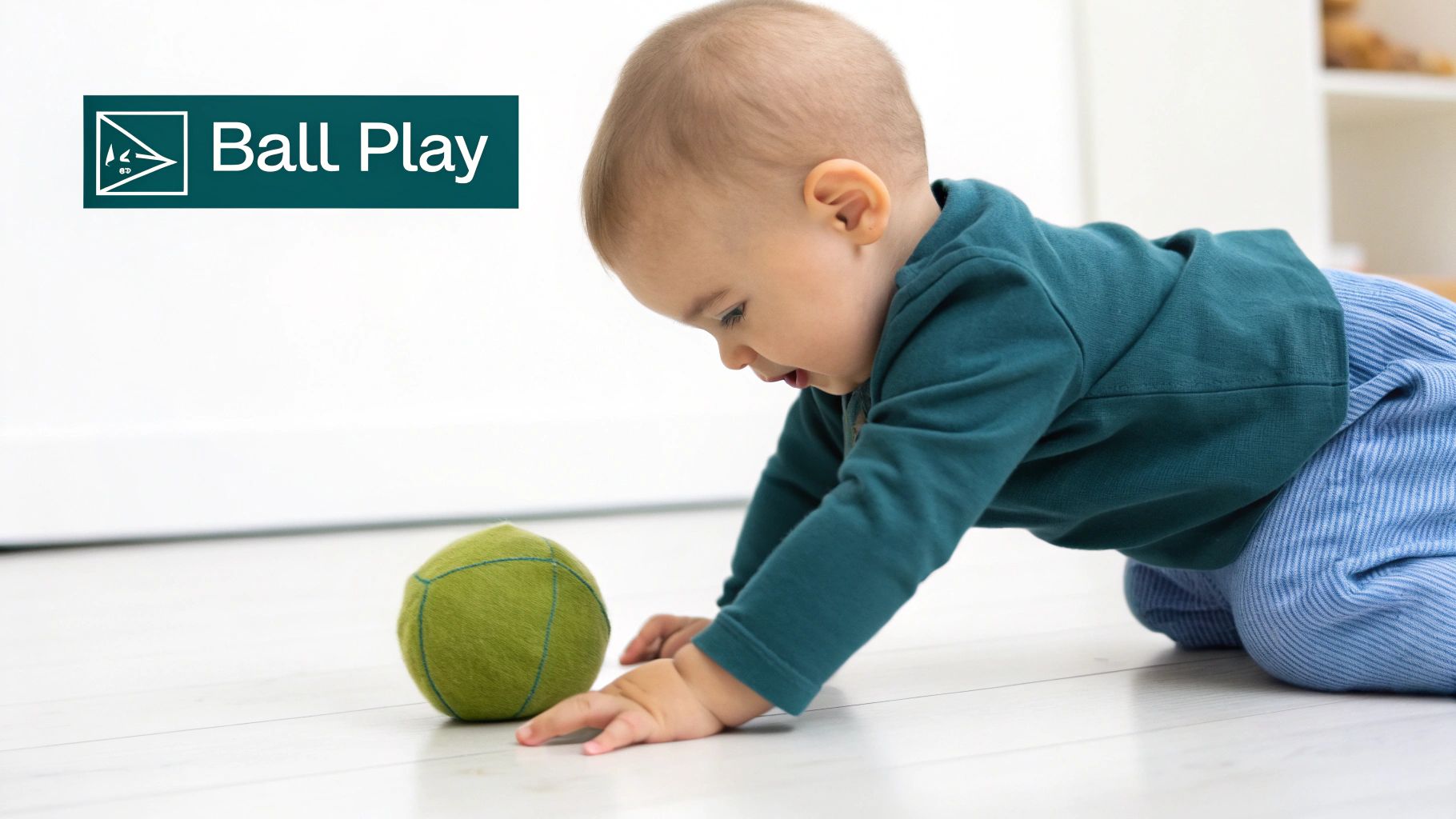
This activity is adaptable for various stages, from infants around three months old who are just learning to grasp, to active toddlers perfecting their kicking and throwing. By introducing different sizes, weights, and textures, ball play supports evolving physical skills and provides valuable sensory input, making it a cornerstone of developmental play.
How to Implement Ball Play
The beauty of ball play is its simplicity. The main goal is to encourage interaction with the ball, which builds foundational motor skills and an understanding of cause and effect.
- Floor Rolling: Sit opposite your baby or toddler on the floor and gently roll a soft ball back and forth. This simple game teaches turn-taking and encourages them to reach and push.
- Encourage Chasing: For mobile babies, roll the ball just out of their reach to motivate them to crawl or shuffle towards it. This builds strength and coordination.
- Kicking Practice: Use a larger, lightweight ball for toddlers to practise kicking. This helps develop balance, leg strength, and body awareness.
Actionable Tips for Success
To get the most out of ball play, focus on engagement and choose age-appropriate equipment. The interaction is just as important as the physical movement.
Key Insight: Start with soft, textured sensory balls for infants. The varied surfaces stimulate their sense of touch, and the lightweight design makes them easy to grasp and mouth safely. As they grow, you can introduce slightly larger and firmer balls.
To ensure this remains one of the most effective activities for gross motor development, always choose balls that are large enough not to be a choking hazard. Combine the activity with songs or simple rhymes to make it even more engaging and multi-sensory.
3. Obstacle Courses and Movement Paths
Obstacle courses are intentionally designed spaces using cushions, soft blocks, tunnels, and low barriers that encourage toddlers to navigate various challenges. This activity is fantastic for developing problem-solving skills, body awareness, balance, and strength as they learn to crawl over, move around, and squeeze through different objects.
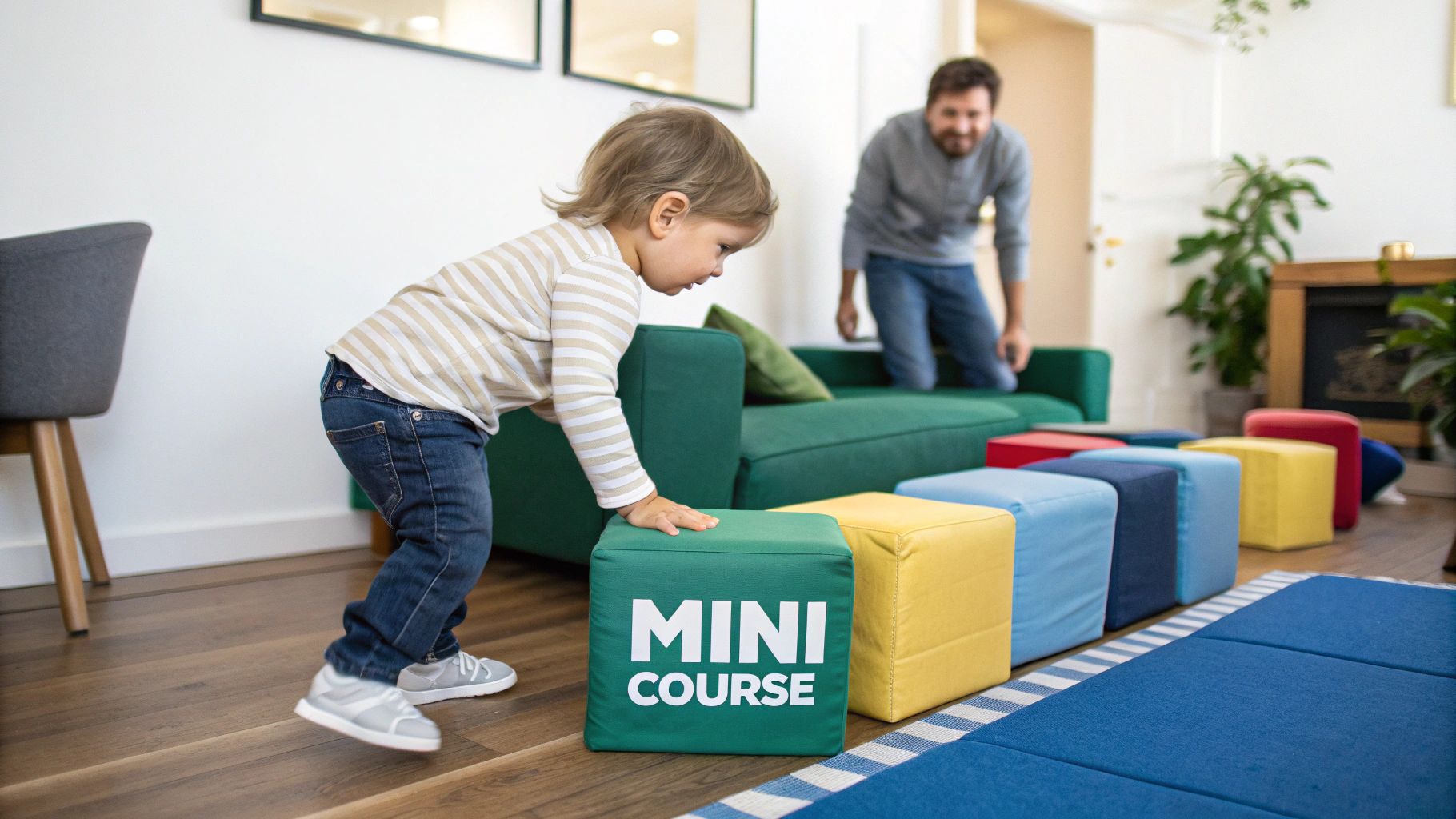
This type of play is ideal for toddlers aged 12 to 36 months, providing structured yet playful opportunities to practise complex gross motor movements in a safe, controlled environment. The ability to continuously modify the course makes it a dynamic and engaging activity that can grow with your child's developing skills.
How to Implement Obstacle Courses
Creating an obstacle course at home is simple and requires items you likely already have. The aim is to create a path that encourages a variety of movements like climbing, crawling, stepping, and balancing.
- Cushion Mountains: Pile sofa cushions or pillows on the floor for your toddler to climb over and carefully descend.
- Stepping Stones: Use foam blocks, small cushions, or even coloured pieces of paper as "stones" to step on without touching the "lava" floor.
- Tunnel Time: Use a play tunnel or create a tunnel by draping a blanket over a couple of chairs for them to crawl through.
- Balancing Beams: Place a line of masking tape on the floor or use a pool noodle as a low-impact beam to walk along.
Actionable Tips for Success
Safety and encouragement are the most important elements. Keep the course low to the ground and celebrate your child’s effort to build their confidence. For structured ways to engage children in movement and coordination, exploring various field day activities can provide excellent inspiration.
Key Insight: Start with a simple 2-3 element course to avoid overwhelming your toddler. As they master the components, you can gradually add more challenges and increase the complexity. Changing the layout weekly helps maintain their interest and excitement.
These setups are one of the most versatile activities for gross motor development because they can be easily adapted. They're also perfect for keeping little ones busy indoors. For more inspiration, you can discover a variety of rainy day activities for toddlers on growwithmesubscriptionbox.co.uk.
4. Climbing and Clambering Activities
Climbing and clambering activities involve toddlers navigating low climbing structures, child-sized stairs, soft play blocks, or even natural slopes. This instinctive practice is essential for developing leg strength, core stability, spatial awareness, and problem-solving skills as they figure out where to place their hands and feet.
This type of play is particularly beneficial for toddlers aged 18 to 36 months, as it satisfies their natural drive for physical challenges and managed risk-taking. Climbing builds profound confidence in their physical capabilities and helps them understand what their bodies can do within safe, supervised boundaries.
How to Implement Climbing Activities
Creating a safe environment for exploration is the key to successful climbing play. The aim is to provide challenges that build strength and coordination without overwhelming your child.
- Indoor Soft Play: Arrange child-sized foam climbing blocks (6-18 inches high) or cushions on a soft rug to create a mini obstacle course they can safely navigate.
- Use Your Stairs: If you have stairs, allow supervised climbing. This is a practical, real-world opportunity to practise coordination, but always ensure safety gates are used when unsupervised.
- Explore Outdoors: Head to a park with a low toddler climbing frame or find a gentle grassy slope for them to clamber up and down. This connects movement with nature.
Actionable Tips for Success
Supervision is crucial, but allowing your toddler the space to try, and even stumble, is part of the learning process.
Key Insight: Stay within arm's reach but resist the urge to help immediately. Allowing them to solve the physical puzzle on their own builds resilience and motor planning skills. Offer verbal encouragement like, "You've got this!" or "Where will your foot go next?"
To make climbing one of the most effective activities for gross motor development, ensure the environment is as safe as possible and dress your child in comfortable clothing that allows for a full range of movement. Celebrate their efforts, not just their successes, to build a lasting love for physical activity.
5. Dancing and Music-Based Movement
Dancing and music-based movement involves encouraging babies and toddlers to move their bodies rhythmically to music. This joyful activity combines gross motor practice with auditory processing and emotional expression, making it a powerful tool for holistic development. It supports skills like balance, coordination, and spatial awareness in an unstructured, fun-filled way.
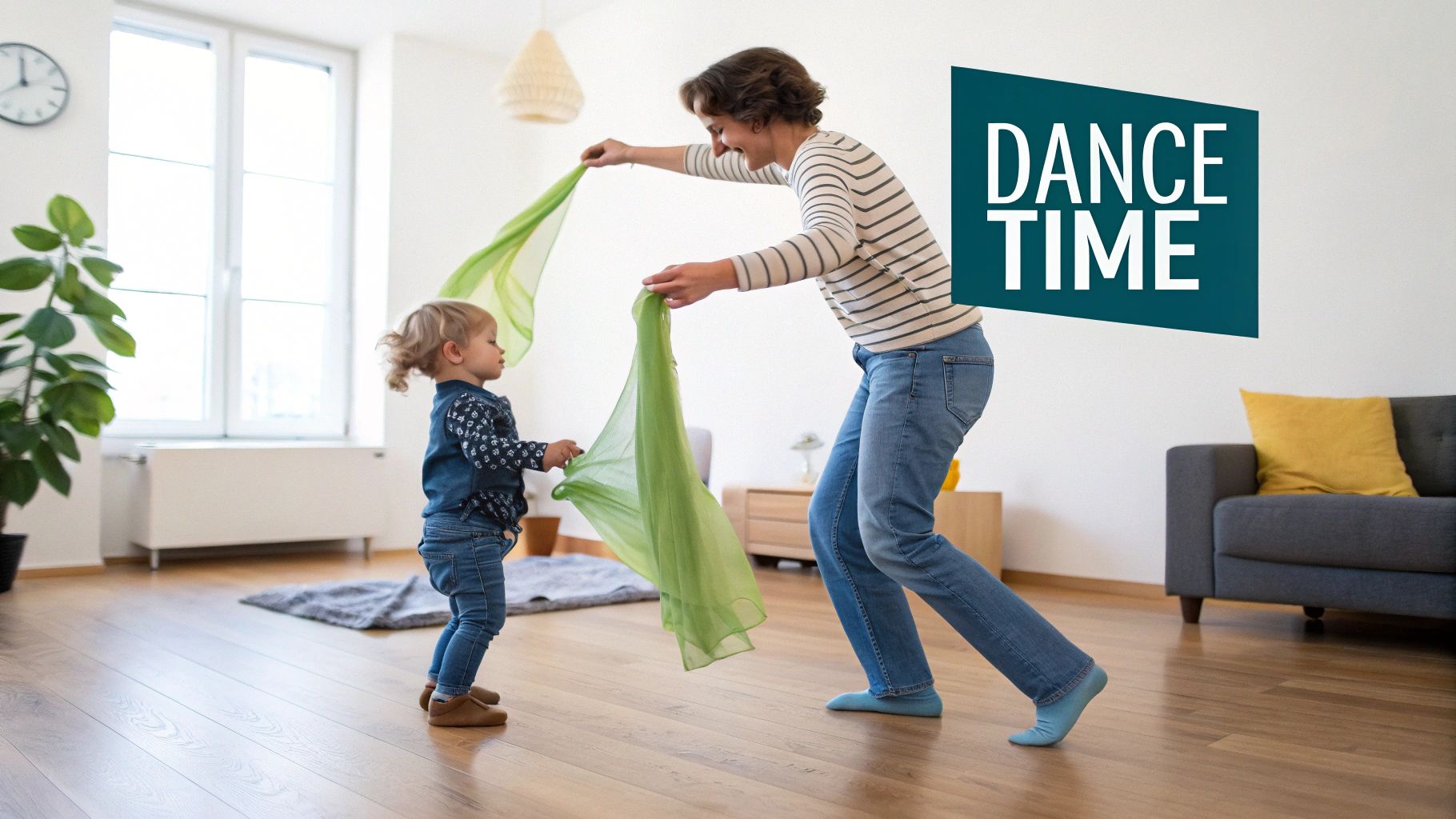
This activity is ideal for infants from six months and toddlers up to three years old. For younger babies, gentle bouncing and swaying helps build core strength and balance. For toddlers, more active dancing like stomping, jumping, and spinning enhances coordination, rhythm, and body control, all while providing a fantastic outlet for energy and creativity.
How to Implement Dancing and Music-Based Movement
The beauty of dancing is its simplicity; all you need is some music and space to move. The focus should be on expression and enjoyment rather than perfect technique.
- Action Songs: Use classic action songs like 'The Wheels on the Bus' or 'Head, Shoulders, Knees, and Toes' to guide movements and teach body part awareness.
- Freeze Dance: Play upbeat music and encourage your toddler to dance wildly. When the music stops, they must freeze in position. This game is excellent for developing listening skills and impulse control.
- Prop Play: Introduce colourful scarves, ribbons, or even soft toys. Waving them around while dancing helps develop hand-eye coordination and adds a new sensory dimension to the movement.
Actionable Tips for Success
Creating a positive and encouraging atmosphere is crucial for making dance a regular part of your routine. Let your child lead the way and celebrate their unique movements.
Key Insight: Vary the music to expose your child to different rhythms, tempos, and moods. A mix of slow classical music for swaying, fast pop songs for energetic jumping, and familiar nursery rhymes creates a rich and stimulating experience.
Remember that there is no 'correct' way for a child to dance. These activities for gross motor development are most effective when they are spontaneous and child-led. Just a few minutes of dancing together each day can strengthen your bond and build a brilliant foundation for physical confidence.
6. Push and Pull Toys with Progressive Resistance
Push and pull toys are classic wheeled companions that babies and toddlers propel forwards or pull from behind. This activity is instrumental in developing leg strength, balance, coordination, and building the confidence required for independent walking. It creates a bridge between cruising along furniture and taking those first unsupported steps.
Typically introduced around 9-12 months when a child begins to pull themselves up, these toys provide just enough support to encourage forward movement. The toy's motion gives instant positive feedback, motivating the child to keep practising. Progressing from lightweight push toys to those with slight resistance helps build stability and control.
How to Implement Push and Pull Toys
The key is to select a toy that matches your child's current developmental stage and provides a safe, encouraging experience for practising walking.
- Start with Stable Push Toys: Introduce a sturdy, wide-based push toy like a wooden baby walker or a small toy pram. These offer the most support for early walkers.
- Introduce Pull-Along Toys: Once your child is walking more confidently, introduce pull-along toys with a string or handle, such as a wooden duck or train. This challenges their coordination and ability to look behind them while moving forward.
- Create an Open Space: Ensure the play area is flat, clear of obstacles, and safe for a wobbly toddler to navigate.
Actionable Tips for Success
Choosing the right toy and environment can significantly enhance the developmental benefits of this gross motor activity.
Key Insight: Select a push toy that offers slight resistance. It should be light enough for your child to move but heavy enough that it won't run away from them or tip over easily, providing the stability they need to build confidence.
To make this one of the most effective activities for gross motor development, always supervise your child to prevent falls. Celebrate their efforts with encouragement and clapping to make the experience positive and rewarding. Rotating between push toys and other walking activities will keep them engaged and support well-rounded skill development.
7. Crawling Challenges and Crawling Spaces
Crawling is a fundamental gross motor milestone where a baby coordinates their arms and legs to move forward. This crucial stage builds whole-body strength, refines balance, and enhances spatial awareness, laying the groundwork for pulling up, cruising, and walking. Creating dedicated crawling spaces with safe obstacles encourages this vital developmental step.
This activity is ideal for babies aged 6-12 months who are showing signs of readiness to move, such as pushing up on their hands and knees or rocking back and forth. Introducing varied textures and gentle challenges supports sensory processing and problem-solving skills, making it a comprehensive developmental exercise.
How to Implement Crawling Challenges
The goal is to create an inviting and safe environment that motivates your baby to explore and move independently. You can easily set up a small obstacle course in your living room.
- Build a Pillow Path: Arrange cushions and pillows on the floor to create an uneven surface for your baby to navigate over, building core and limb strength.
- Create a Tunnel: Use a play tunnel or even a large cardboard box with both ends open to encourage crawling through different spaces.
- Use Varied Surfaces: Place textured mats, a soft blanket, or a patch of rug on a hardwood floor to provide different sensory feedback and levels of resistance.
Actionable Tips for Success
Safety and encouragement are the most important elements when creating a crawling space. Always supervise your baby closely and ensure the area is completely childproofed.
Key Insight: Start with simple setups and gradually introduce more complex obstacles as your baby’s confidence and ability grow. Placing a favourite toy just out of reach at the end of a pillow path can provide the perfect motivation to start moving.
By turning movement into a game, you make these activities for gross motor development both fun and effective. Celebrate every effort to foster a positive attitude towards physical exploration. To understand the typical timeline for this skill, you can learn more about the age babies crawl and developmental signs on growwithmesubscriptionbox.co.uk.
8. Jumping, Hopping, and Bouncing Activities
Jumping, hopping, and bouncing are energetic gross motor skills that typically emerge between 18 and 36 months. These advanced movements require significant leg strength, coordination, and timing, laying the groundwork for more complex physical activities like running, skipping, and sports.
These high-impact activities are fantastic for developing explosive power in the legs, improving balance, and enhancing rhythm. For toddlers, they are also a joyful and powerful form of physical expression, satisfying their need for energetic play while building confidence in their growing physical abilities.
How to Implement Jumping and Hopping
Introduce these movements gradually and with plenty of support to ensure your toddler feels safe and successful. The goal is to build their confidence and strength step-by-step.
- Supported Bouncing: Start by bouncing your toddler on your knees or letting them bounce on a bed while holding their hands for stability.
- Low-Level Jumps: Encourage them to jump off a very low, stable surface, like the bottom step of a staircase (just a few inches high), while you hold their hands.
- Visual Targets: Use masking tape or chalk to create lines on the floor for them to hop over, or place soft cushions as "landing pads" to jump onto.
Actionable Tips for Success
Safety and encouragement are paramount as your child explores these exciting new skills. Focus on the fun and effort, not perfection.
Key Insight: Always begin with two-footed bouncing and jumping before introducing single-leg hopping. This progression ensures they develop the necessary bilateral coordination and core strength first, making the transition to more complex movements safer and easier.
To make these some of the most effective activities for gross motor development, ensure you are using soft surfaces like a carpet, grass, or a play mat to cushion any tumbles. Combining jumping with music can also help develop a sense of rhythm and make the activity even more engaging.
8-Point Gross Motor Activities Comparison
| Activity | 🔄 Implementation Complexity | ⚡ Resource Requirements | ⭐ Expected Outcomes | 📊 Ideal Use Cases | 💡 Key Advantages / Tips |
|---|---|---|---|---|---|
| Tummy Time Activities | Low (🔄) | Minimal (⚡) | ⭐⭐⭐⭐⭐ — Neck, shoulder, core strength; rolling/crawling prep | Newborns 0–6 months; daily routine | No equipment; start 2–3 min sessions; supervise |
| Ball Play and Rolling Activities | Medium (🔄🔄) | Low–Moderate (⚡⚡) | ⭐⭐⭐⭐ — Hand‑eye coordination, tracking, crawling motivation | 3–24 months; reaching, crawling, kicking practice | Use varied textures; roll toward child; avoid small/choking hazards |
| Obstacle Courses & Movement Paths | High (🔄🔄🔄) | Moderate–High (⚡⚡⚡) | ⭐⭐⭐⭐ — Balance, coordination, spatial reasoning, problem‑solving | Toddlers 12–36 months; multi‑skill practice & confidence building | Start simple; use soft materials; customize difficulty |
| Climbing & Clambering Activities | Medium–High (🔄🔄🔄) | Moderate (⚡⚡) | ⭐⭐⭐⭐ — Lower‑body strength, core stability, spatial awareness | Toddlers 12–36 months; controlled risk‑taking and strength work | Supervise closely; pad surfaces; let independence grow |
| Dancing & Music‑Based Movement | Low (🔄) | Low (⚡) | ⭐⭐⭐ — Rhythm, timing, bilateral coordination, emotional expression | 6–36 months; bonding, rhythm and balance practice | Short daily sessions; vary tempos; no special gear needed |
| Push & Pull Toys (Progressive Resistance) | Medium (🔄🔄) | Moderate (⚡⚡) | ⭐⭐⭐⭐ — Walking support, balance, leg strength | 9–24 months; transition from cruising to independent walking | Choose slight resistance; use flat surfaces; supervise use |
| Crawling Challenges & Crawling Spaces | Medium (🔄🔄) | Low–Moderate (⚡⚡) | ⭐⭐⭐⭐⭐ — Bilateral coordination, strength, exploration skills | 6–12 months; crawling milestone practice | Vary textures; place toys just out of reach; remove hazards |
| Jumping, Hopping & Bouncing Activities | Medium (🔄🔄) | Moderate (⚡⚡) | ⭐⭐⭐ — Explosive leg power, timing, advanced coordination | 18–36 months; high‑energy strength and coordination work | Start two‑foot bounce; use soft landing surfaces; supervise closely |
Building a Foundation of Movement Through Play
We’ve journeyed through a variety of engaging activities for gross motor development, from the foundational strength-building of tummy time to the joyous energy of jumping and dancing. Each activity, whether it's navigating a simple cushion obstacle course or rolling a ball back and forth, serves as a crucial building block in your child's physical development. These playful interactions are far more than just ways to pass the time; they are the very work of childhood, meticulously constructing the coordination, balance, and body awareness needed for a lifetime of confident movement.
The common thread woven through all these suggestions is the power of a playful, responsive environment. Your role isn't to be a strict coach, but a supportive play partner. By creating safe spaces for climbing, offering interesting objects to push and pull, and celebrating their wobbly first attempts at new movements, you foster resilience and a love for physical exploration.
Key Takeaways for Fostering Gross Motor Skills
Remember these core principles as you integrate these activities into your daily routine:
- Consistency Over Intensity: Short, regular bursts of active play are more beneficial than infrequent, long sessions. Just a few minutes dedicated to crawling through a tunnel or dancing to a favourite song each day makes a remarkable difference.
- Child-Led Exploration: Observe what captures your child's interest. If they are fascinated by climbing, expand on that with different safe surfaces. If they love rolling, introduce balls of various sizes and textures. Following their lead makes learning natural and joyful.
- Adaptability is Crucial: The variations provided for each activity are key. An activity that challenges a nine-month-old can be adapted to engage an adventurous two-year-old. Always adjust to your child's unique pace and abilities, ensuring they feel successful and motivated.
Ultimately, supporting gross motor development is about nurturing your child's innate drive to move and explore their world. You are not just helping them learn to walk or jump; you are giving them the tools to navigate their environment with confidence, solve physical challenges, and build a healthy, active relationship with their own body. This foundation supports everything from future sporting endeavours to simply being able to run, play, and engage fully with their peers. Embrace the tumbles, celebrate the effort, and enjoy this incredible journey of movement together.
Ready to take the guesswork out of developmental play? The Grow With Me play kits deliver beautiful, age-appropriate wooden and sensory toys to your door, complete with activity guides to inspire meaningful play sessions that support crucial milestones. Discover how our curated boxes can enrich your child's learning and provide you with the perfect tools for every stage.