

8 Fun and Easy Rainy Day Activities for Toddlers (2025 Guide)
A rainy day doesn't have to mean a boring day. For toddlers, being cooped up indoors can be a challenge, but with the right activities, it's a fantastic opportunity for connection, learning, and fun. This guide offers a comprehensive list of engaging, low-cost rainy day activities for toddlers that transform grey skies into a vibrant backdrop for development. Forget cabin fever; these ideas are designed to channel your little one's endless energy into constructive and joyful play, supporting their physical, cognitive, and emotional growth.
We will explore everything from calming sensory play to energetic obstacle courses, complete with simple setup guides, developmental benefits, and crucial safety tips. To further inspire your indoor adventures, you can also explore a wider array of engaging ideas, including many fun rainy day crafts for kids to keep little hands busy.
Each activity in this list is organised with practical, step-by-step instructions. We will also show you how to seamlessly integrate toys from your Grow With Me subscription kit, using the included description cards to enrich playtime and support your toddler's milestones, no matter the weather. Prepare to turn any drizzly afternoon into a memorable adventure.
1. Indoor Sensory Play Bins
A sensory bin is one of the most versatile and engaging rainy day activities for toddlers, offering a self-contained world for tactile exploration. At its core, it’s simply a container filled with carefully chosen materials that stimulate your child's senses. Toddlers can scoop, pour, sort, and dig, turning a simple bin of rice or water into a rich learning environment.
This powerful play concept, popularised by the Montessori educational philosophy and championed by parenting blogs, is a cornerstone in many nurseries and early years settings for its profound developmental benefits.
Setting Up Your Sensory Bin
Getting started is simple and can be tailored to any budget. You'll need a shallow container, a sensory base, and a few simple tools.
- The Container: Use a shallow plastic storage box, a washing-up bowl, or even a deep baking tray.
- The Base: Start with taste-safe, low-cost options like dried pasta, uncooked rice, oats, or even water. As your toddler grows, you can introduce materials like kinetic sand, pom-poms, or water beads with close supervision.
- The Tools: Add scoops, measuring cups, funnels, and small toys to encourage interaction. The Grow With Me Rainbow Nesting Bowls from our kits are perfect for this, allowing for scooping, stacking, and sorting within the bin.
Developmental Benefits
Sensory bins are fantastic for nurturing crucial early skills. They directly support fine motor development as little hands grasp scoops and pinch small objects. They also build cognitive skills like problem-solving ("How can I fill this cup?") and early maths concepts like volume and measurement. For more in-depth guidance, explore these sensory play ideas for toddlers.
Pro Tip: To minimise mess, place a large towel, old tablecloth, or a fitted sheet under the bin. This creates a defined play area and makes clean-up quick and easy. Simply gather the corners and pour any spillage back into the container.
2. Indoor Obstacle Course and Movement Play
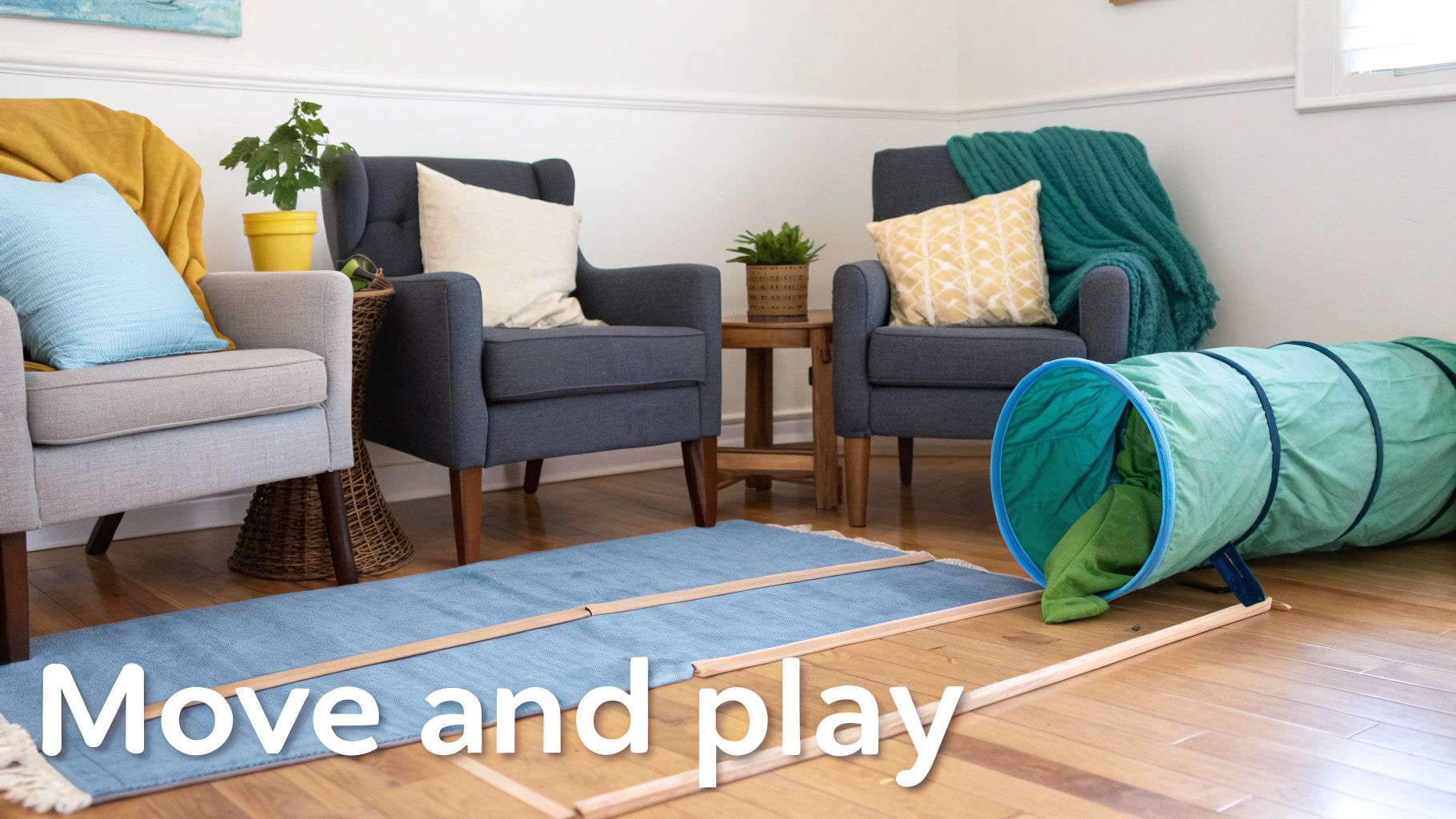
An indoor obstacle course is a fantastic way to channel a toddler’s boundless energy, making it one of the most effective rainy day activities for toddlers. It involves transforming your living room into a safe and exciting challenge zone using everyday household items. Toddlers can crawl, climb, jump, and balance their way through a series of simple tasks, providing a brilliant outlet for physical play when stuck indoors.
This concept is heavily utilised by early childhood educators and physical therapists to support gross motor development, turning a simple play session into a valuable opportunity for physical and cognitive growth.
Setting Up Your Obstacle Course
Creating your course is quick, free, and uses things you already have. The goal is to encourage a variety of movements.
- The Course: Use sofa cushions and pillows for climbing over or jumping onto. Drape a blanket between two chairs to create a tunnel for crawling under.
- The Path: Lay down masking tape or a scarf on the floor to create a "balance beam" for them to walk along. Arrange dining chairs for them to weave through.
- The Challenges: Scatter toys on the floor for them to step over carefully. The Grow With Me wooden stacking rings can be used as targets for a gentle beanbag toss or as markers along the path.
Developmental Benefits
Obstacle courses are powerhouse activities for physical development. They build gross motor skills like balancing, jumping, and climbing, which are crucial for coordination. They also enhance spatial awareness and problem-solving skills as your toddler figures out how to navigate each new challenge. It’s a full-body workout that strengthens muscles and improves cardiovascular health, all while having tremendous fun.
Pro Tip: Keep the course simple and safe. Always supervise your toddler closely, ensuring all items are stable and there are no sharp corners nearby. Demonstrate how to tackle each obstacle first to build their confidence.
3. Painting and Art Projects
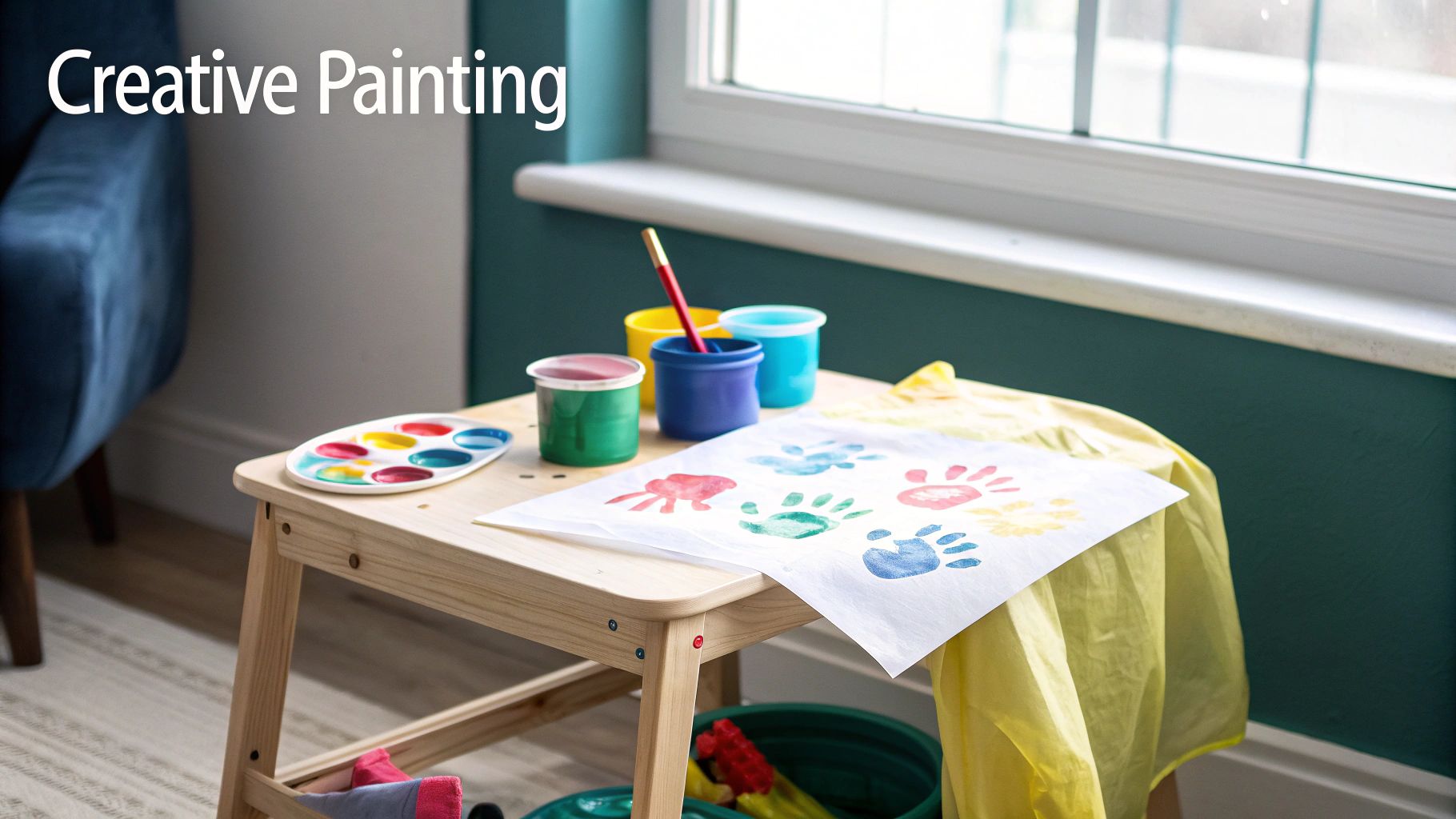
Unleashing your toddler’s inner artist with paint and craft materials is a classic and wonderfully engaging rainy day activity for toddlers. This type of creative play involves more than just making a colourful mess; it's a foundational experience where children can express themselves, explore textures, and make their very first masterpieces.
This approach to learning through art is a key element of the Reggio Emilia philosophy and is widely promoted by brands like Crayola. It is celebrated in early years education for its significant impact on a child's holistic development, turning a simple piece of paper into a canvas for imagination.
Setting Up Your Art Station
Creating a toddler-friendly art space is simple and requires just a few basic, age-appropriate supplies. You can easily adapt the activity based on what you have at home.
- The Mediums: Start with washable, non-toxic finger paints, chunky crayons, or large, easy-to-grip markers. As your child develops more control, you can introduce collage materials like scrap paper, stickers, and child-safe glue.
- The Canvas: Large sheets of paper, cardboard from a delivery box, or even a roll of lining paper taped to the floor provide ample space for big, expressive movements.
- The Tools: Provide chunky brushes that are easy for little hands to hold. For sensory fun, try painting with sponges, cotton balls, or even celery sticks. The Grow With Me Wooden Stacking Rings can be dipped in paint to create colourful circle patterns.
Developmental Benefits
Art projects are a powerhouse for skill development. They are fantastic for strengthening fine motor control as toddlers learn to hold a crayon or guide a paintbrush. This creative process also builds cognitive skills by teaching cause and effect ("If I mix blue and yellow, I get green!") and enhances colour recognition and vocabulary.
Pro Tip: Embrace the mess by preparing in advance. Use an old shirt or apron as a smock and cover your table or floor with a plastic tablecloth or old newspapers. This lets your toddler explore freely without you worrying about stains, making clean-up far less stressful.
4. Building with Blocks and Magnetic Tiles
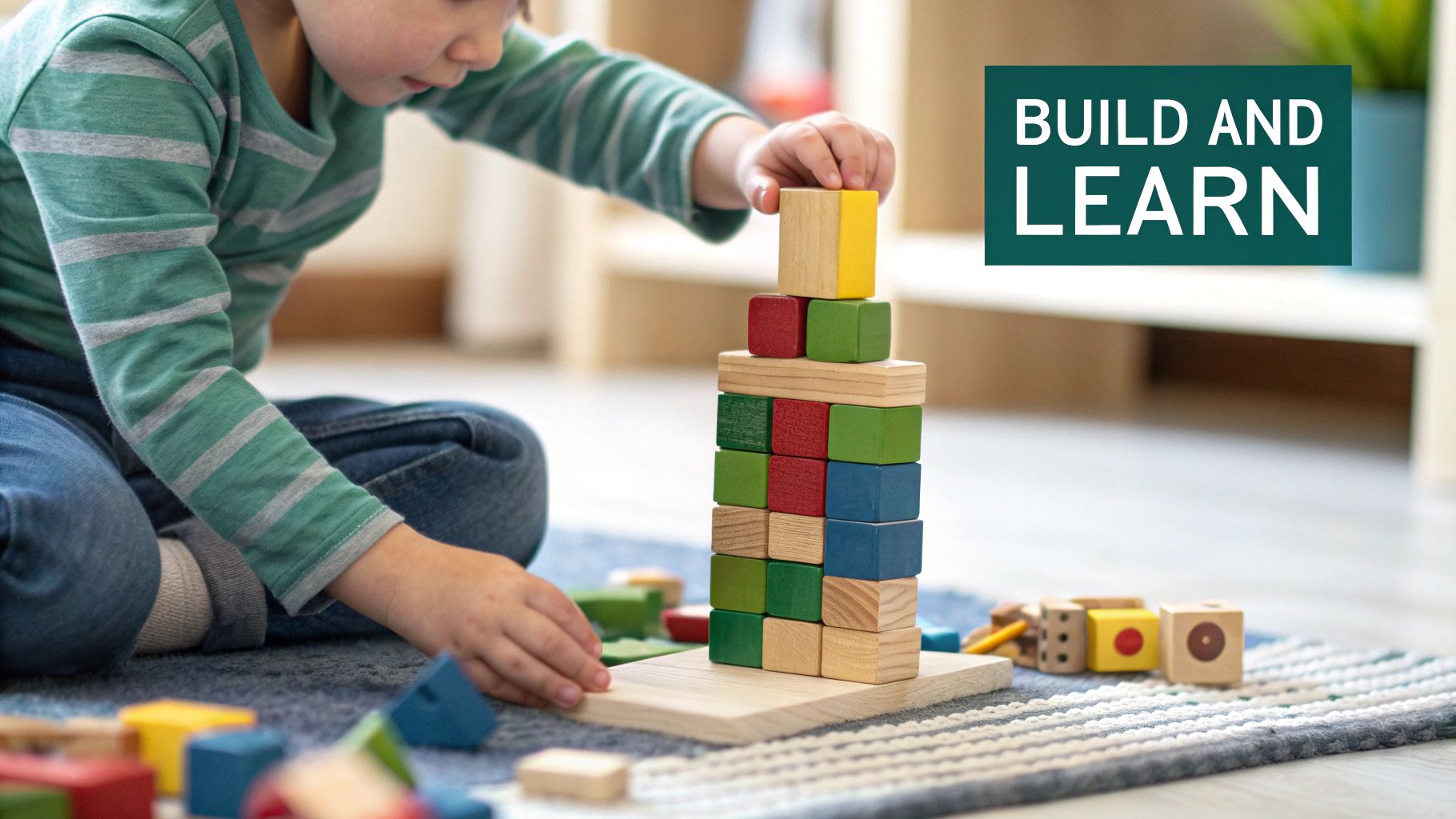
Building with blocks or magnetic tiles is a classic and powerful rainy day activity for toddlers, transforming your living room floor into a hub of engineering and imagination. It’s a hands-on experience where children can stack, connect, and design, exploring spatial relationships and structural concepts. From simple towers to elaborate castles, this open-ended play encourages creativity and sustained focus.
This fundamental play pattern is championed by educational approaches like Waldorf and Montessori, and has been popularised by iconic brands such as LEGO DUPLO and Magna-Tiles, which design products specifically for the dexterity and cognitive stage of young children.
Setting Up Your Building Station
Creating an inviting building area is straightforward and requires minimal materials. The key is to provide accessible, age-appropriate resources that spark curiosity.
- The Materials: For younger toddlers (under 18 months), start with large, soft blocks or chunky wooden blocks. As they develop, introduce interlocking blocks like DUPLO or magnetic tiles, which offer a satisfying click-and-connect experience.
- The Space: Designate a clear, flat area on the floor away from high-traffic zones. A low-pile rug can help prevent plastic blocks from sliding around too much.
- The Invitation: Instead of just tipping the box out, try starting a small structure yourself. This can pique your toddler's interest and give them a starting point for their own creations. The Grow With Me wooden stacking animals from our kits add a lovely imaginative element to block play.
Developmental Benefits
Block play is a developmental powerhouse, supporting a wide range of essential skills. It strengthens fine motor skills and hand-eye coordination as little fingers manipulate and place each piece. It also lays the foundation for early maths and physics concepts, teaching children about balance, gravity, and geometry through hands-on experimentation. For a deeper look, discover more about the benefits of building blocks for toddlers.
Pro Tip: Keep a small, labelled basket or bin for each type of block. This not only makes clean-up a breeze but also turns tidying up into a sorting game, reinforcing organisational skills from an early age.
5. Music and Dance Activities
Turning up the volume for a spontaneous dance party is one of the most joyful and energetic rainy day activities for toddlers. Music and movement are powerful tools for emotional expression and physical development, providing a fantastic outlet for cooped-up energy. It’s about more than just burning off steam; it’s an immersive experience that engages your toddler’s mind, body, and soul.
This approach is championed by early years programmes like Kindermusik and is a core element in many popular children’s entertainment platforms, from Super Simple Songs on YouTube to Disney’s extensive musical library. These activities harness a child’s natural love for rhythm and sound to build foundational developmental skills.
Setting Up Your Dance Party
Creating a musical session is incredibly simple and requires no special equipment. The goal is to create a fun, freeing atmosphere where your toddler feels comfortable moving their body.
- The Music: Create a playlist with a mix of tempos and styles. Include familiar nursery rhymes, upbeat pop songs, and even calming classical music. Don't limit yourself to "children's music" - toddlers love exploring different rhythms.
- The Space: Clear a safe, open space in your living room. Move coffee tables or other potential hazards to the side to give your little one plenty of room to wiggle, jump, and spin.
- The Instruments: Make your own! A plastic bottle filled with rice becomes a shaker, and two wooden spoons make excellent drumsticks for an upturned pot. Our Grow With Me kits often include items like jingle bells that are perfect for adding to your homemade band.
Developmental Benefits
Music and dance activities are a powerhouse for toddler development. Dancing enhances gross motor skills, balance, and coordination. Singing along to songs boosts language development, vocabulary, and memory recall. These activities also support emotional regulation, allowing toddlers to express feelings like happiness or excitement through movement.
Pro Tip: Play "Freeze Dance" to build listening skills and impulse control. Play a song and encourage everyone to dance, then randomly pause the music. Everyone must freeze in their position until the music starts again. It's a simple game that guarantees giggles.
6. Indoor Pretend Play and Dramatic Play Centres
Creating an indoor dramatic play centre is one of the most powerful rainy day activities for toddlers, turning a corner of your home into a vibrant world of imagination. This type of play involves toddlers acting out roles and stories, using props and costumes to explore different scenarios like a doctor's surgery, a bustling café, or a busy shop.
This concept is a cornerstone of early years education, heavily featured in Montessori and Waldorf settings, and celebrated by child development specialists for its incredible impact on social, emotional, and cognitive growth. It allows children to make sense of the world around them in a safe, creative space.
Setting Up Your Dramatic Play Centre
You don't need elaborate sets; a few key items can spark hours of imaginative fun. The goal is to create an inviting space that encourages role-playing.
- The Theme: Start with familiar concepts. A simple "kitchen" can be set up with a small table, toy food, and some pots and pans. A "doctor's surgery" needs only a small bag, a toy stethoscope, and some bandages.
- The Props: Use a mix of toy and real-world items. Old scarves, hats, and adult shirts make wonderful, open-ended costumes. Empty food boxes can stock a shop, while a toy cash register adds to the realism.
- The Tools: Small, purposeful toys enhance the experience. The wooden animals from our Grow With Me kits are perfect for creating a veterinary clinic or a farm, encouraging toddlers to take on caring, nurturing roles.
Developmental Benefits
Pretend play is a developmental powerhouse. It builds crucial language skills as toddlers negotiate roles and create dialogue. It also fosters empathy and social-emotional understanding as they step into someone else's shoes. This form of symbolic thinking is fundamental to cognitive development; for a deeper dive, read our guide on what is symbolic play.
Pro Tip: Rotate your play centre's theme every few weeks to keep it fresh and engaging. After a "café" theme, you could switch to a "post office" with envelopes and stamps, or a "construction site" with building blocks and toy tools.
7. Storytime and Book-Based Activities
Cuddling up with a good book is one of the most classic and comforting rainy day activities for toddlers, creating a wonderful opportunity for connection and learning. More than just reading words on a page, interactive storytime uses voices, puppets, and props to bring tales to life, captivating your toddler’s imagination and building a lifelong love for stories.
This timeless activity, championed by authors like Eric Carle and Sandra Boynton and supported by libraries worldwide, is a cornerstone of early literacy. It transforms reading from a passive activity into an immersive, multi-sensory experience that boosts language development and emotional bonding.
Setting Up Your Storytime Nook
Creating an engaging story session is simple and requires very few materials. The key is to make it interactive and fun.
- The Books: Choose sturdy board books with bright, engaging illustrations. Interactive books like 'Dear Zoo' with its lift-the-flaps, or rhyming stories by Sandra Boynton are perfect for holding a toddler's attention. Repetition is key, so don't be afraid to read their favourites again and again.
- The Props: You don’t need anything fancy. A simple sock can become a hand puppet to narrate the story, or you can cut characters from felt to use on a felt board.
- The Atmosphere: Use animated voices and expressive faces to make the story exciting. Encourage your toddler to point at pictures, make animal sounds, and turn the pages with you.
Developmental Benefits
Storytime is a powerhouse for early development. It directly supports language acquisition by introducing new vocabulary and sentence structures in a meaningful context. Listening to stories also enhances concentration and listening skills. Discussing the characters and pictures helps build emotional literacy and comprehension, laying the foundation for reading and critical thinking.
Pro Tip: Make your local library a regular rainy-day destination. It’s a free way to access an endless supply of new books and many libraries offer dedicated toddler storytime sessions, providing a change of scenery and a chance for social interaction.
8. Baking and Cooking Activities
Inviting your toddler into the kitchen for simple baking is one of the most rewarding rainy day activities for toddlers, transforming a daily chore into a hands-on learning adventure. At its core, it’s about sharing a real-life task, allowing your little one to mix, measure, and create alongside you. The sensory experience of touching flour, smelling spices, and tasting the final product is both memorable and educational.
This classic family activity, embraced by Montessori educators and parenting experts, goes beyond just making food. It’s an opportunity to build practical life skills, foster connection, and create delicious memories, even if the end result is a little messy.
Setting Up Your Cooking Session
Getting your toddler involved is simple with a bit of forward planning. You'll need an easy recipe, accessible tools, and a safe space to work.
- The Recipe: Choose no-bake recipes for younger toddlers, like simple biscuit decorating, fruit parfaits, or a basic salt dough for crafting. Easy fairy cakes or simple biscuits are great for older toddlers.
- The Workspace: Use a toddler-safe learning tower or a sturdy step stool so they can comfortably reach the worktop. Lay down a wipe-clean mat or old tablecloth to catch any spills.
- The Tools: Provide child-safe utensils like plastic measuring cups, silicone spatulas, and blunt-ended cutters. The Grow With Me Rainbow Nesting Bowls are perfect for holding pre-measured ingredients, allowing your toddler to pour them into the main bowl independently.
Developmental Benefits
Kitchen activities are a powerhouse for development. They introduce early maths and science concepts as toddlers help measure ingredients and observe how they change when mixed. The process of stirring, kneading, and sprinkling develops fine motor skills and hand-eye coordination. Following simple steps also builds listening skills and the ability to understand sequences.
Pro Tip: Prepare and measure all your ingredients into small bowls before you invite your toddler to start. This minimises waiting time and keeps their attention focused on the fun parts like pouring, stirring, and decorating. Remember, the goal is the shared process, not a perfect product.
8-Point Comparison: Rainy Day Toddler Activities
| Activity | Implementation Complexity 🔄 | Resource & Setup ⚡ | Expected Outcomes 📊⭐ | Ideal Use Cases 💡 | Key Advantages ⭐ |
|---|---|---|---|---|---|
| Indoor Sensory Play Bins | Low 🔄 — simple assembly, occasional supervision | Low ⚡ — household materials; shallow bin; small play area | 📊 Fine motor, sensory integration, sustained engagement | 💡 Rainy days, independent tactile exploration, Montessori-style sessions | ⭐ High engagement; low cost; easy to rotate materials |
| Indoor Obstacle Course & Movement Play | Moderate 🔄 — layout, safety checks, teardown | Low ⚡ — uses cushions, blankets, furniture; needs clear floor space | 📊 Gross motor, coordination, spatial awareness | 💡 High-energy days, gross-motor practice, group movement breaks | ⭐ Burns energy; adaptable difficulty; encourages creativity |
| Painting & Art Projects | Low 🔄 — prep and cleanup required | Low ⚡ — paints, paper, protective coverings; washable supplies | 📊 Creativity, fine motor control, color recognition | 💡 Calm creative time, fine-motor practice, keepsake creation | ⭐ Encourages self-expression; inexpensive basics |
| Building with Blocks & Magnetic Tiles | Low 🔄 — open-ended play, minimal setup | Medium ⚡ — initial toy investment; storage space needed | 📊 Spatial reasoning, problem-solving, cooperative play | 💡 STEM-oriented play, quiet constructive sessions, collaborative builds | ⭐ Reusable, scalable complexity; strong cognitive benefits |
| Music & Dance Activities | Low 🔄 — minimal prep; easy to start | Low ⚡ — simple instruments or recorded music; open space | 📊 Rhythm, language development, emotional expression | 💡 Energy release, language-building, parent-child interaction | ⭐ Low-cost options; boosts mood and coordination |
| Pretend & Dramatic Play Centers | Moderate 🔄 — themed setup and rotation | Medium ⚡ — props, costumes, dedicated area preferred | 📊 Imagination, social-emotional skills, language development | 💡 Role-play scenarios, social skill practice, thematic learning | ⭐ Fosters empathy, negotiation, and symbolic thinking |
| Storytime & Book-Based Activities | Low 🔄 — minimal prep; relies on reader engagement | Low ⚡ — books or library access; optional puppets/felt board | 📊 Vocabulary, early literacy, attention and bonding | 💡 Quiet time, transitions (nap/bed), language routines | ⭐ Portable, low-cost, strong long-term literacy impact |
| Baking & Cooking Activities | Moderate 🔄 — prep, step supervision, safety measures | Medium ⚡ — kitchen space, ingredients, child-safe tools | 📊 Practical life skills, measurement, sensory learning | 💡 Hands-on learning, family bonding, introducing nutrition | ⭐ Produces edible results; integrates math and sensory learning |
Embrace the Joy of Indoor Play
Rainy days, often seen as a disruption to a toddler's routine, are actually a hidden opportunity. They invite us to slow down, get creative, and connect with our children in truly meaningful ways. The list of rainy day activities for toddlers we've explored is far more than a simple catalogue of distractions; it’s a toolkit for developmental growth, designed to transform a dreary day into an enriching indoor adventure. From the tactile exploration of a sensory bin to the imaginative world-building of a pretend play corner, each activity serves a dual purpose: to entertain and to educate.
By embracing these moments, you're not just passing the time. You are actively building your toddler's foundational skills. The indoor obstacle course strengthens gross motor skills and problem-solving, while simple painting projects refine fine motor control and introduce concepts of colour and texture. Storytime nurtures early literacy and emotional intelligence, and even a shared baking session becomes a hands-on lesson in science and following instructions. The key takeaway is that meaningful play doesn't require elaborate setups or expensive materials; it thrives on presence, creativity, and the resources you already have.
Maximising Your Indoor Play Strategy
To turn these ideas into lasting habits, consider these final tips:
- Prepare a "Rainy Day Box": Keep a designated box filled with a few special materials that only come out on wet days. This could include unique art supplies, a specific puzzle, or a set of story stones. The novelty will add an extra layer of excitement.
- Rotate and Adapt: Remember that repetition is key for toddlers, but so is variety. Rotate through these different types of play, and don't forget to adapt them as your child grows. The 12-month-old who loved splashing in a water bin will soon be the 30-month-old ready to "wash" their toy animals in it.
- Follow Their Lead: The most successful activities are often those your child shows a genuine interest in. If they are in a building mood, lean into block play. If they are full of energy, create a dance party. Your role is to facilitate their natural curiosity.
Ultimately, mastering these indoor play strategies is about building a strong, positive connection with your child. It demonstrates that fun and learning are not confined to sunny days at the park. As you continue to explore ways to make every day special, you might find inspiration in seasonal themes. To keep the fun going with seasonal and screen-free ideas that boost creativity, consider these engaging Christmas Activities for Preschoolers. These moments are the building blocks of a happy, secure, and stimulating childhood, turning the pitter-patter of rain into a soundtrack for precious family memories.
Ready to make every day a discovery? The Grow With Me subscription box delivers stage-based, developmentally appropriate toys and activities right to your door, taking the guesswork out of playtime. Each kit is expertly curated to support your child’s learning journey, providing the perfect tools for rainy days and beyond. Explore Grow With Me today and unlock a world of purposeful play.