

What Age Do Babies Crawl A Parent's Guide to Milestones
Watching your baby start to move on their own is easily one of the most exciting parts of being a parent. It’s a huge sign that they're getting stronger, more curious, and eager to explore the world around them. But that big question—"when do babies crawl?"—can bring a mix of excitement and a little bit of worry.
The truth is, most babies will start crawling somewhere between 6 and 10 months old, but it's crucial to remember this is just an average. Every single baby follows their own unique timeline, so try not to get too hung up on the numbers. This isn't a race; it's just one chapter in their amazing developmental story.
In the UK, this 6 to 10 month window is what you'll typically see referenced by health visitors and parenting resources. The emphasis is always on plenty of floor play right from the early days, as this is what builds the core strength and arm muscles they'll need for their big move.
The Path to Crawling: What to Expect
Before your little one is zooming across the living room floor, they have to tick off a few other key skills first. Think of it like a ladder—they have to climb the first few rungs before they can reach the top. This guide will walk you through everything, from those early foundational movements to creating a safe space for them to explore.
This visual timeline gives you a great overview of where crawling fits into the bigger picture of their motor development.
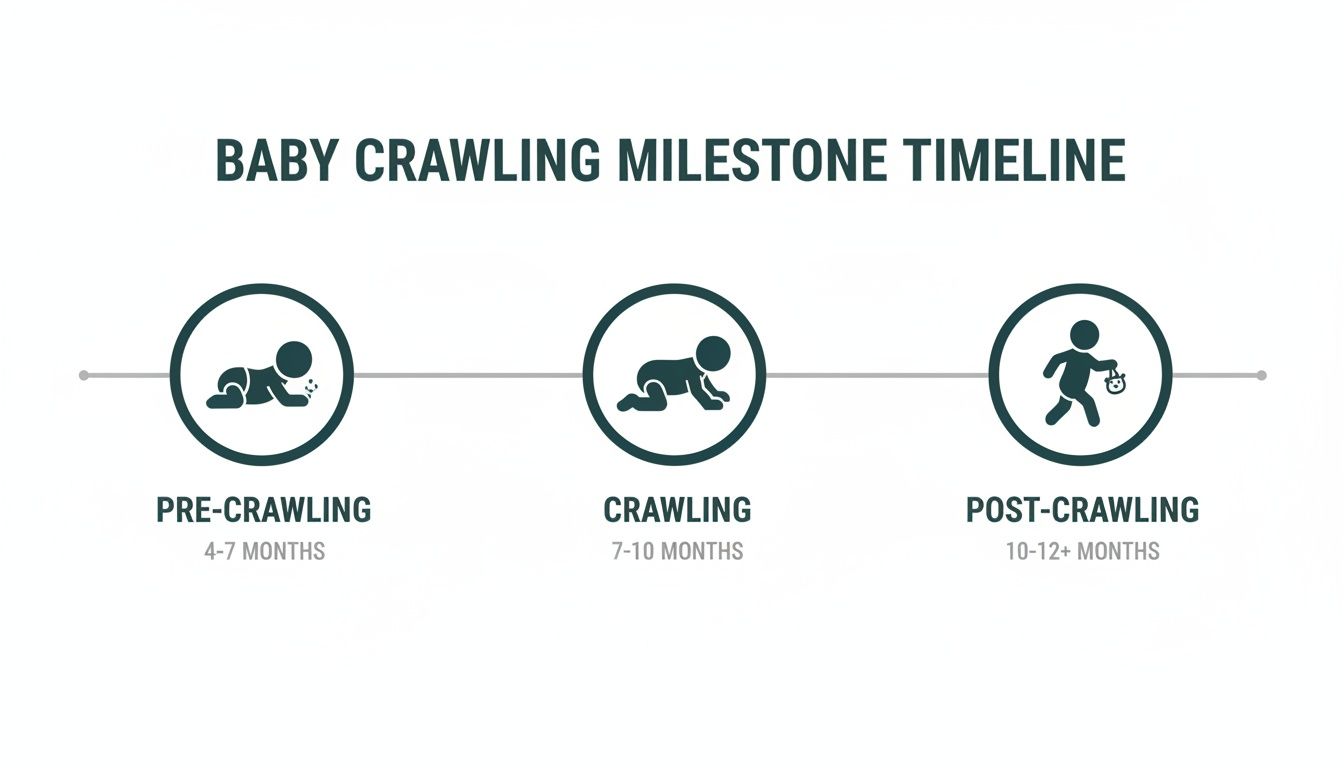
As you can see, crawling is that brilliant milestone that connects the dots between earlier skills like tummy time and the exciting first steps of walking.
To help you feel completely prepared and confident, we'll cover all the key areas:
- The Building Blocks: We’ll look at how sitting up and rolling over are essential practice for crawling.
- Signs They're Ready: You’ll learn the tell-tale clues that your baby is getting ready to go.
- Different Crawling Styles: Not all babies crawl the same way! From the classic crawl to the bum shuffle, we'll explore all the creative ways babies get mobile.
- Safety and Support: We’ll share practical tips for encouraging your baby and making sure your home is a safe playground.
Crawling is so much more than just getting from A to B. It’s your baby’s first real taste of independence and a masterclass in problem-solving. Every push, rock, and scoot is a tiny victory.
Understanding these steps helps you appreciate your child's individual pace. For a closer look at how all these skills connect, it's worth learning more about what developmental milestones are and why they matter so much.
Crawling Milestones At a Glance
The journey to crawling is full of smaller, equally important achievements. This table gives you a quick snapshot of what to look for and when.
| Developmental Sign | Typical Age Range | What It Looks Like |
|---|---|---|
| Pushing up on arms | 3-5 months | During tummy time, they lift their head and chest, supporting their weight on their forearms. |
| Rolling over | 4-7 months | They master rolling from their tummy to their back and then back to their tummy. |
| Sitting without support | 6-8 months | They can sit upright on their own, using their hands for balance, which strengthens their core. |
| The "swimming" motion | 6-8 months | While on their tummy, they might kick their legs and wave their arms, as if swimming on the floor. |
| Getting onto hands and knees | 7-9 months | They start to push up into the classic crawling position, often rocking back and forth. |
| First forward movements | 7-10 months | This could be a "commando" crawl on their belly, a scoot, or the start of a traditional crawl. |
Remember, this table is just a guide! Many babies will skip a stage or combine them in their own unique way, and that's perfectly normal. The important thing is seeing that clear progression in their strength and coordination.
Building the Foundation for Crawling
Crawling doesn't just happen overnight. It's more like the grand finale of a series of smaller, but equally important, achievements. Think of it like this: your baby can't build a magnificent tower without first learning how to stack a few simple blocks. Each milestone they hit lays the groundwork for the next, building the strength and coordination they'll need to get moving.
Before your little one can even dream of moving forward, they have a big opponent to conquer: gravity. It all starts with gaining solid head control. When a baby can confidently lift and turn their head during tummy time, they're building the exact neck and upper back muscles that will support them when they eventually get into a crawling position.
The Power of Tummy Time
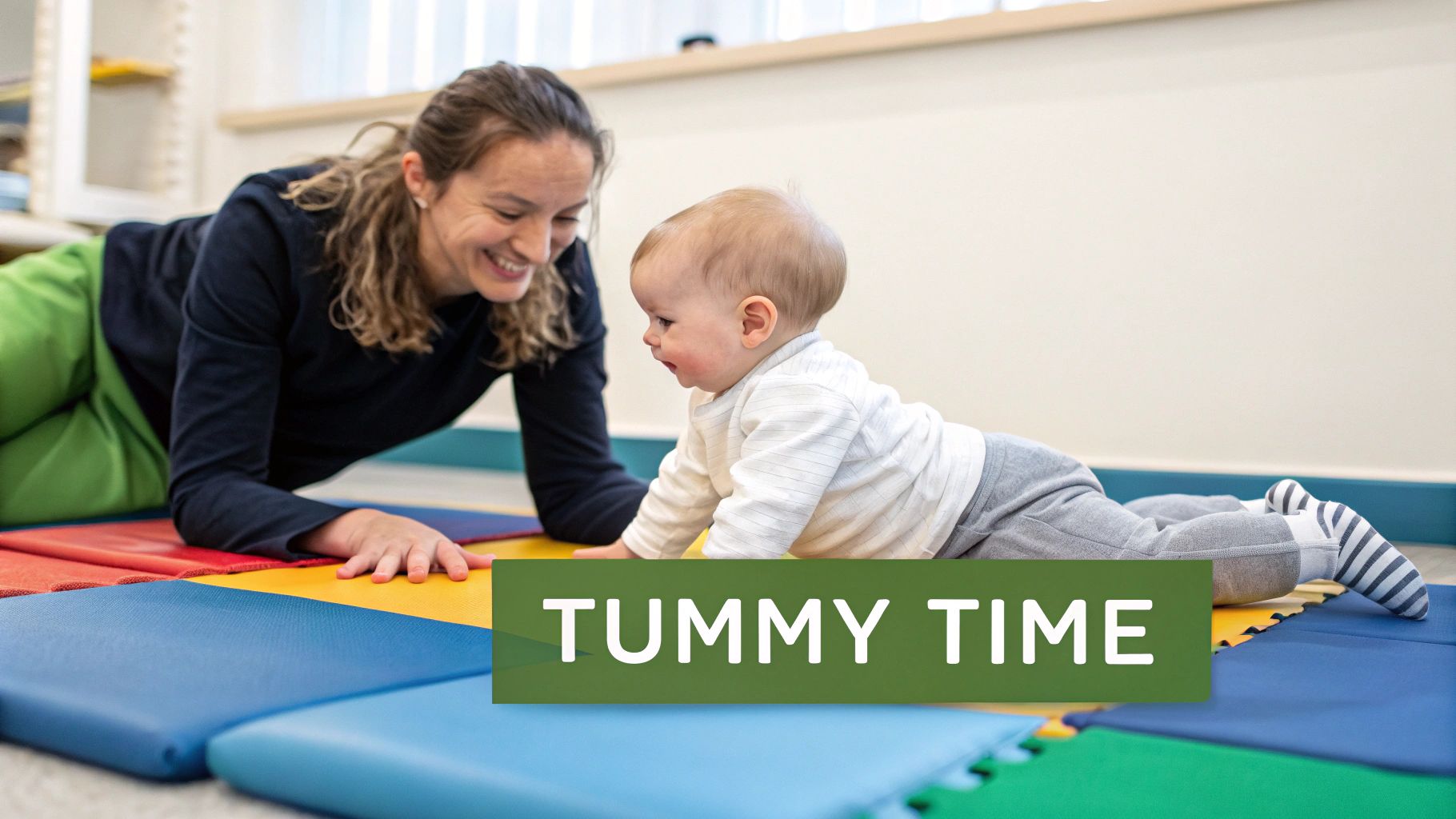
This brings us to what is arguably the single most important activity for preparing a baby to crawl: tummy time. It’s the ultimate baby workout, strengthening their entire upper body for the job ahead. Making supervised tummy time a regular part of their day is absolutely essential for building power in their neck, shoulders, back, and arms.
It’s these very muscles that allow a baby to push themselves up, first onto their forearms and then, eventually, onto their hands. That little "mini push-up" where they lift their chest right off the floor is a massive achievement and a clear signal they're on the right track. For tips on making tummy time a fun and positive experience right from the start, check out our guide on when to start tummy time.
Key Skills Before Crawling
Beyond the strength gained during tummy time, a few other skills act as crucial stepping stones. As your baby grows, keep an eye out for these signs of progress that are paving the way for mobility:
- Rolling Over: This is often a baby's first real taste of independent movement! Rolling from tummy to back (and later, the other way around) is a fantastic lesson in coordinating both sides of the body – a vital skill for crawling.
- Sitting Unassisted: The ability to sit up without support, usually around 6 to 8 months, is a game-changer for core strength. A strong, stable core is what will keep them from toppling over when they try to get onto their hands and knees.
- Pushing Up: You'll see them graduate from propping themselves up on their forearms to pushing right up onto straight arms, lifting their whole chest off the ground with pride.
- Pivoting and "Swimming": Many babies will start to pivot in circles on their tummies or make adorable "swimming" motions with their arms and legs. This isn't just them being cute; it's them actively figuring out how their limbs can create movement.
Every single one of these mini-milestones is like a successful gym session. Your baby isn't just playing on the floor – they're in training for their first big adventure across the living room carpet.
It's important to remember that these stages don't always follow a strict, textbook order. Some babies might become pro sitters before they really get the hang of rolling, and that’s completely normal. The key thing is that they are gradually building up that all-important strength and coordination, creating a solid base to launch their crawling journey from.
Spotting the Signs Your Baby Is Ready to Crawl
So, how can you tell your little one is gearing up for their first big adventure across the living room floor? Long before they take off, babies send out some pretty clear signals that they’re getting ready to move. Think of yourself as a milestone detective—if you know what to look for, you can spot the clues and be ready to cheer them on.
One of the most classic signs is when they get up on their hands and knees and start rocking back and forth. This isn't just a cute little wiggle; it's a pre-crawling workout! They're literally building momentum and figuring out how to shift their weight, which is a massive step.
You might also see them doing a sort of 'swimming' motion on their tummy, kicking their legs and waving their arms with real purpose. Another common, and often hilarious, sign is when they start pushing backwards. Many babies master pushing before pulling, which means they might accidentally reverse across the room for a while. It's a completely normal (and funny) part of the learning curve!
Decoding Your Baby's Pre-Crawling Moves
These early movements are your baby’s way of road-testing their body and solving the complex puzzle of coordination. Every little attempt is a mini-victory on the road to full-blown mobility.
Keep an eye out for these common behaviours:
- The Plank: Your baby might push up onto their hands and toes, holding a tiny plank position for a few seconds. This is a fantastic indicator of their growing core strength.
- Pivoting in Circles: While on their tummy, they might use their arms to push themselves around in a circle. They're starting to realise that their actions can move them through space.
- The Belly Scoot: You might notice them dragging their tummy along the floor using their arms, a bit like a tiny soldier. This is often called the commando crawl and is a very common first step.
Remember, these aren't just random actions. Each rock, push, and pivot is your baby's brain and body working in harmony to solve the puzzle of how to get from point A to point B.
Here’s a fascinating thought for UK parents: the seasons can actually influence the what age do babies crawl timeline. Research has shown that while around 50% of babies start hands-and-knees crawling by 8.3 months, those born in winter often get a head start. Think about it—a baby born in November reaches that prime crawling age during the summer, when lighter clothing and more time on garden mats make practice much easier. You can learn more about these crawling timeline findings and see just how much their environment can play a role.
Celebrating Every Unique Crawling Style
Once your baby finally gets going, don't be surprised if it looks nothing like the 'classic' crawl you see in baby books. Babies are incredibly creative and often invent their own brilliant ways to get around. There’s no single "right" way to crawl, and every quirky style is a valid and effective form of movement.
Here are a few common variations you might see:
- The Commando Crawl: As we mentioned, this is when they pull themselves forward on their belly using their arms.
- The Bottom Shuffle: Some babies prefer to sit up and scoot forward on their bottom, often using one hand to propel themselves along.
- The Crab Crawl: In this style, they use one bent knee and the opposite foot to push themselves sideways or forward, just like a little crab scuttling on the sand.
- The Rolling Crawl: Why crawl when you can roll? Some babies simply become expert log-rollers to get where they want to go!
Understanding these variations is so important. It helps normalise your baby's unique journey and offers reassurance that as long as they are purposefully moving and exploring their world, they are absolutely on the right track.
How to Encourage Crawling in a Safe Environment
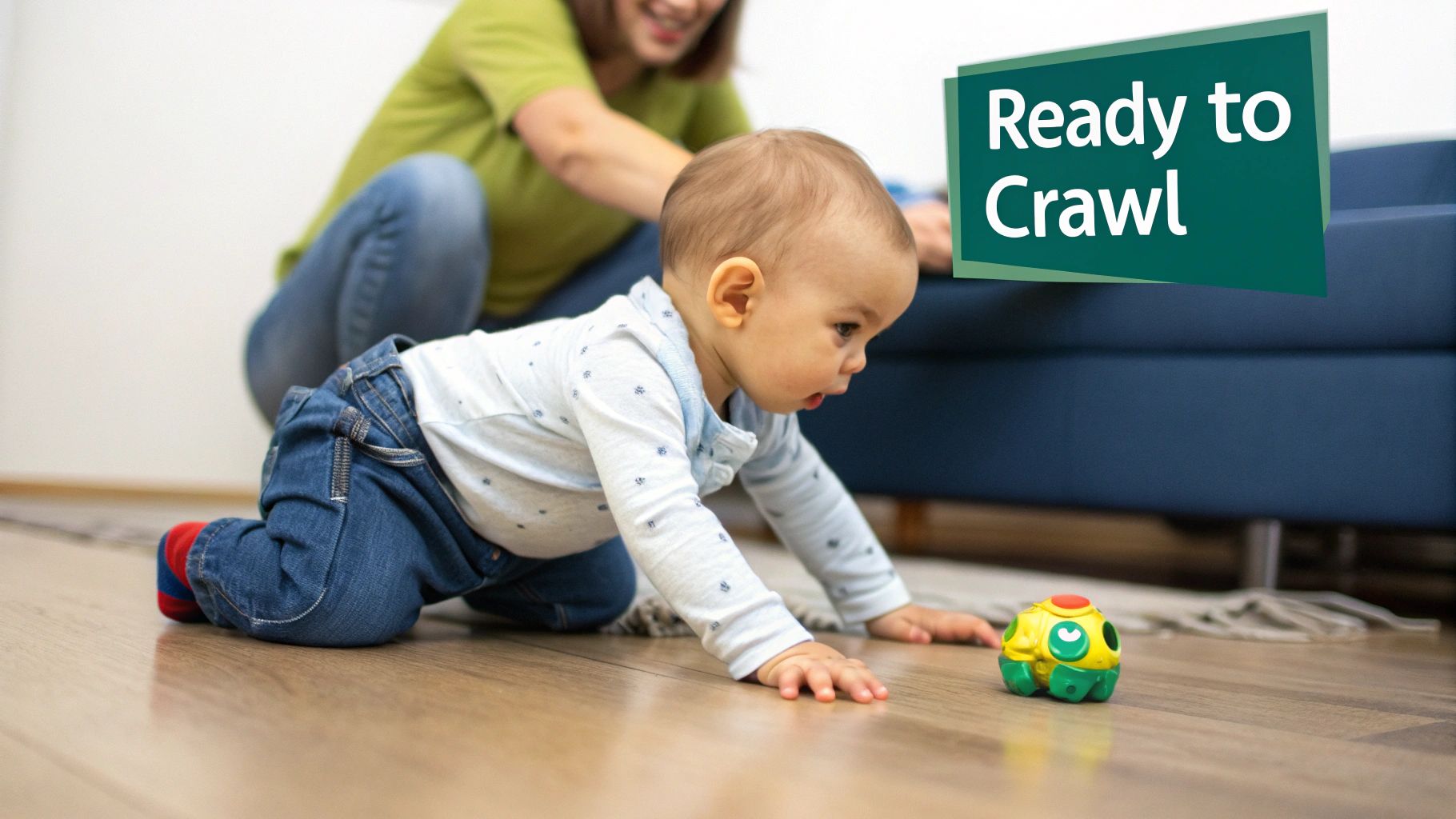
When your little one starts showing signs they're ready to get moving, you can become their biggest cheerleader. The best way to help them along is by creating an environment that's both safe and exciting, turning their natural curiosity into confident movement. It's all about motivation, not pressure.
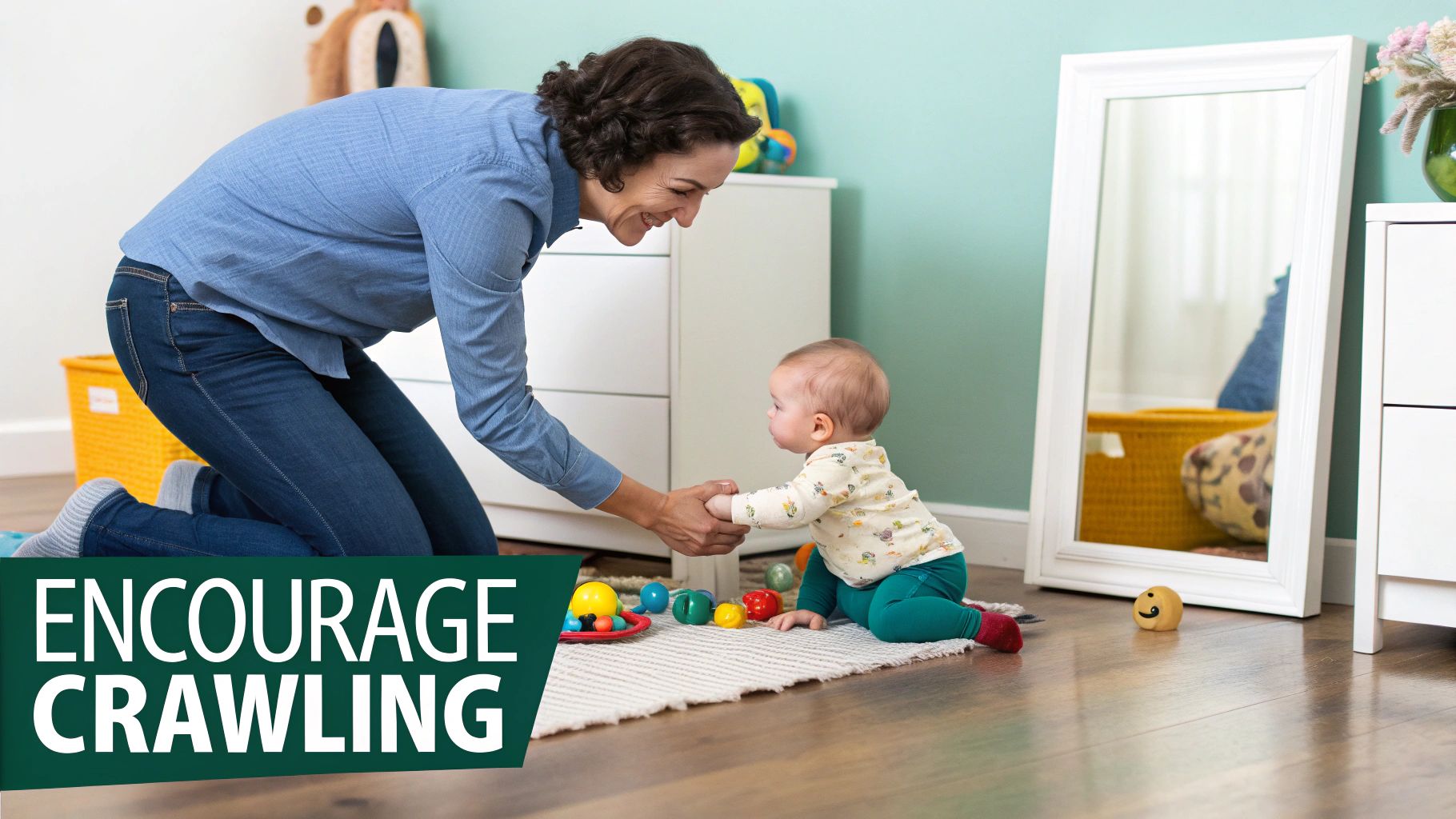
Think of it as creating an enticing 'crawl-scape' that makes them want to explore. A classic trick is to place their favourite toys just out of reach. This small challenge is often the perfect push they need to figure out how to lunge, scoot, or crawl forward to claim their prize.
Mirrors are another brilliant tool. A baby-safe mirror on the floor can be completely captivating, encouraging them to shuffle closer to get a better look at that fascinating 'other baby'. And sometimes, the best motivation is simply you! Get down on the floor with them and crawl around—babies learn so much by watching and mimicking the people they love.
Creating a Fun and Motivating Play Area
Making floor time a fun, playful session can make all the difference. You're essentially setting the stage for their first big adventure, complete with props and activities that strengthen their muscles and spark their interest.
Here are a few practical ideas to get you started:
- Tunnel Time: A soft play tunnel is fantastic for encouraging forward movement in a fun, contained space. Peeking out the other side is a wonderful reward!
- Support Their Core: Try rolling up a small towel or blanket and placing it under your baby's chest during tummy time. This bit of support can help them get more comfortable on their hands and knees.
- Dress for Success: On smooth surfaces like wood or laminate floors, bare knees and feet offer the best grip. Slippery trousers and socks can make it tricky for them to get the traction they need to push off.
Think of yourself as your baby's personal trainer and cheerleader all rolled into one. Your smiles, praise, and playful spirit are powerful tools that help them feel safe and confident as they tackle this tricky new skill.
For even more inspiration, check out our guide to developmental activities for infants.
Your Baby-Proofing Checklist
The moment your baby becomes mobile, your perspective on home safety changes completely. The best way to spot potential dangers is to get right down on their level. You'll be amazed at what you notice from a crawling point of view!
Before your little explorer sets off on their first expedition, run through this checklist to make your home a safe haven.
Essential Safety Steps:
- Cover Electrical Outlets: Pop safety plugs into any unused sockets they can reach.
- Secure Furniture: Anchor heavy furniture like bookcases, chests of drawers, and TVs to the wall to prevent tipping.
- Manage Cords and Wires: Tuck away all electrical cords, phone chargers, and blind cords.
- Install Safety Gates: Block off stairways and any rooms you haven't yet baby-proofed.
- Lock Low Cabinets: Use child-proof locks on any cupboards containing cleaning supplies, medicines, or anything sharp.
- Clear the Floor: Do a regular sweep for small items that could become choking hazards, like coins, buttons, or tiny toy parts.
With a newly mobile baby exploring every nook and cranny, keeping your home clean with non-toxic products is also vital. You can find some great advice on choosing the best baby safe cleaning products to maintain a healthy space. By mixing encouragement with a thoroughly safe environment, you're giving your baby the confidence to embrace their amazing new freedom.
Knowing When to Talk to a Professional
It's completely natural to watch your baby and wonder if they're hitting their milestones at the "right" time. While every little one follows their own unique path, knowing what's a normal variation versus something worth a quick chat with a professional can give you real peace of mind.
Most of the time, a slightly different timeline is absolutely nothing to worry about. It’s worth remembering that some babies skip the traditional hands-and-knees crawl altogether. They might opt for a bum shuffle or even go straight to pulling themselves up and cruising along the furniture, and that's often perfectly fine.
The real key is their overall motivation to move and explore. If your baby is finding some way to get around—whether that’s by rolling, scooting, or shuffling—they are still building that crucial coordination and strength.
Recognising Potential Red Flags
Instead of getting hung up on the specific age your baby starts crawling, it’s far more helpful to look at the bigger picture of their development. It’s always a good idea to speak with your health visitor or GP if you notice any of the following.
- Little Interest in Moving: If your baby shows no real desire to move or explore their surroundings by 12 months, it’s worth bringing up. This includes not attempting to roll, scoot, or pull themselves forward.
- Lopsided Movements: Watch for a consistent pattern of favouring one side of the body. If they only seem to use one arm or leg to move, it’s a sign to get them checked out.
- Unusual Stiffness or Floppiness: Does your baby seem unusually stiff in their limbs, or on the flip side, do they feel very floppy (low muscle tone) when you pick them up? A professional opinion can provide clarity.
- Losing Skills They Once Had: A baby who could previously roll over or sit up but seems to have lost that ability should be seen by a healthcare professional.
Trust your gut. You know your baby better than anyone, and if you have that nagging feeling that something isn’t quite right, there's absolutely no harm in seeking reassurance and guidance from a trusted professional.
When to Seek Advice
Here in the UK, health visitors carry out developmental reviews, usually between 9 and 12 months. This is the perfect opportunity to raise any concerns you have about your baby's mobility. They can assess your little one's overall progress and give you advice tailored to your child.
UK developmental data shows that most babies start crawling around 8 months, and 72% will practise for about three months before they begin walking. If a baby isn't showing signs of crawling by 12 months, a health visitor might suggest a referral to a paediatrician for early support, though it's important to remember that only rare cases point to underlying issues. You can learn more about UK crawling timelines and the typical progression.
The goal is never to cause worry, but to empower you with information. Catching any potential issues early just means your baby gets the right support to help them thrive.
Answering Your Questions About Baby Crawling
Even with all this information, it's completely normal to have more specific questions bubbling up as you watch your baby on their unique path to mobility. Let’s tackle some of the things parents ask most often.
What If My Baby Crawls Backwards First?
Don't worry, this is incredibly common! In fact, it's a classic part of the learning process for many little ones.
Babies often figure out how to push with their strong little arms before they master the coordination needed to pull and move forward. The result? A temporary reverse gear. It's just them working out the mechanics, and before you know it, they'll be heading in the right direction.
Is It Okay If My Baby Skips Crawling Altogether?
Absolutely. While crawling is a fantastic way for babies to build strength and coordination, it's not a mandatory stop on the road to walking. Some babies are just more interested in getting vertical.
They might go straight from sitting to pulling up, cruising along the sofa, and then taking their first independent steps. As long as your baby is finding some way to move and explore their environment, skipping this particular milestone is usually nothing to be concerned about.
How Long Do Babies Usually Crawl Before Walking?
This is one of those "how long is a piece of string?" questions because the timeline varies so much from one child to the next. Some babies will become champion crawlers for several months, happily exploring on all fours before even thinking about walking.
Others might only crawl for a few weeks before their focus shifts to pulling up and trying to walk. Both routes are perfectly normal and right for that individual child.
The real key isn't how long they spend at each stage, but that they are continually progressing in their motor skills. Every baby writes their own developmental story.
Should I Use a Baby Walker to Encourage Movement?
This is a firm "no" from most paediatric experts. Health and safety organisations actually advise against using baby walkers because they can pose serious safety risks from falls.
Beyond the safety aspect, they can also interfere with natural development. Walkers prevent a baby from seeing their own feet and learning how to balance their body weight, which are crucial skills for walking. The best place for your baby to learn to move is always a safe, open space on the floor.
If you're looking for more general advice as you navigate these early stages, you might find some great tips in these essential books for new parents.
At Grow With Me, we're all about supporting these unique developmental journeys. Our stage-based play kits are designed to give your baby the perfect tools to encourage motor skills at their own pace. Discover your first kit today at https://shop.growwithmesubscriptionbox.co.uk.