

8 Fun and Developmental 18 Month Old Activities for 2025
Welcome to the incredible world of an 18-month-old, a magical age where curiosity explodes and every day brings new discoveries. Your toddler is no longer a baby but a budding explorer, eager to understand how everything works. Providing the right 18 month old activities is key to nurturing their rapid development, from those wobbly first runs to their first two-word phrases. This is a crucial window for building foundational skills, and meaningful play is the most effective tool you have to support their amazing growth.
This guide moves beyond generic suggestions to provide a curated collection of simple, effective, and fun activities, organised by developmental area, to help you support your little one's journey. We will show you exactly how to transform everyday moments into powerful learning opportunities, whether through sensory exploration with natural materials, mastering coordination with stacking toys, or expanding vocabulary with interactive board books. Each activity is designed to be easily implemented with items you likely already have around the home.
For parents looking for a more structured approach, these activities also align perfectly with the thoughtfully designed toys found in stage-based play kits. These kits are specifically created to meet these exact developmental milestones, offering a convenient way to ensure your toddler has the ideal tools for each new stage of learning. Let's dive in and unlock your toddler's world through the power of play.
1. Sensory Exploration with Natural Materials
At 18 months, your toddler is a tiny scientist, driven by an innate curiosity to understand the world through touch, sight, and sound. Sensory exploration with natural materials capitalises on this developmental stage, offering a rich, hands-on learning experience that is fundamental for brain development. This approach involves creating curated collections of safe, natural objects for your child to investigate freely.
This type of play is one of the most effective 18 month old activities for building neural pathways. As your toddler grasps a rough pine cone, feels the smooth surface of a wooden spoon, or crinkles a dried leaf, they are making vital connections about texture, weight, and sound. This tactile feedback helps them understand cause and effect while refining their fine motor skills.
How to Set It Up
Getting started is simple and often involves items you already have. The goal is to present a variety of textures and shapes in an inviting way.
- Create a Treasure Basket: Fill a low, shallow basket with safe, natural items. Think large, smooth pebbles (too big to swallow), pine cones, corks, natural sponges, and large seashells.
- Fabric Swatches: Gather scraps of different materials like silk, wool, velvet, and hessian. Your toddler will love exploring the contrasting textures.
- Scooping and Pouring: Offer a tray with large, dried pasta shapes or wooden beads and provide cups and spoons for scooping, which is excellent for developing hand-eye coordination.
Safety First: A crucial rule for selecting items is the "toilet paper roll test." If an object can fit entirely inside an empty toilet paper roll, it presents a potential choking hazard and should be avoided for this unsupervised activity. Always supervise your child closely during sensory play.
Tips for Success
To keep this activity engaging, rotate the materials every week or two. This introduces new sensory information and maintains your toddler's interest. Model gentle exploration by showing them how to touch, tap, and handle the items. You can also craft your own tactile toys. For more inspiration, explore these ideas for DIY sensory bottles from Grow With Me, which offer a safe way to explore smaller objects.
2. Simple Stacking and Nesting Activities
At 18 months, a toddler's world is filled with questions about how things fit together. Simple stacking and nesting activities are foundational for exploring these concepts, directly engaging their developing spatial awareness and problem-solving skills. From building a wobbly tower to fitting a set of cups perfectly inside one another, these actions are profound learning moments.
This hands-on play is one of the most effective 18 month old activities for building an early understanding of physics and logic. When a toddler carefully places one block on top of another, they are experimenting with balance, gravity, and size relationships. The immediate feedback of a tower standing tall or tumbling down provides powerful, concrete lessons in cause and effect, nurturing both resilience and cognitive growth.
How to Set It Up
Setting up these activities is straightforward and focuses on providing toys that encourage exploration of size and order. The key is to offer items that can be organised in a logical sequence.
- Classic Ring Stackers: A wooden ring stacker with graduated, colourful rings is a perfect starting point for learning about size and sequence.
- Nesting Cups or Bowls: A set of nesting cups or simple kitchen bowls that fit inside one another helps toddlers understand spatial relationships and object permanence.
- Building Blocks: Provide a small collection of soft fabric, foam, or wooden blocks of varying sizes for open-ended tower building and creative construction.
Keep it Simple: For an 18-month-old, less is more. Start with just three or four rings or blocks. Introducing too many pieces at once can be overwhelming and may discourage them from engaging with the activity.
Tips for Success
To maximise the developmental benefits, focus on observation and gentle guidance. Begin by demonstrating how to stack or nest the items, then step back and allow your toddler to explore independently. Offer verbal encouragement, like "You put the big one on the bottom!" without correcting their attempts. If they get frustrated, model a solution or simply join in the play. For more ideas on how to use these timeless toys, discover the benefits of stacking toys for toddlers from Grow With Me, a fantastic resource for this developmental stage.
3. Board Books and Interactive Storytelling
At 18 months, your toddler's world is rapidly expanding with new words and concepts. Interactive storytelling with board books capitalises on this language explosion, turning reading from a passive activity into an engaging, two-way conversation. This approach involves using sturdy books with simple narratives and encouraging your child's active participation through pointing, sound-making, and repetition.
This shared experience is one of the most powerful 18 month old activities for fostering early literacy and strengthening your bond. When you point to a picture and say its name, or make the sound of the animal on the page, you are building your toddler's vocabulary and connecting written words to the world around them. This creates positive associations with books that can last a lifetime.
How to Set It Up
Creating a rich reading experience is less about a formal lesson and more about fun, shared discovery. The key is choosing the right books and making reading an inviting part of your daily routine.
- Choose Interactive Books: Opt for books with thick, durable pages that little hands can turn. Look for lift-the-flap features like in Dear Zoo, or books with varied textures for tactile exploration.
- Build a Reading Nook: Designate a comfortable, quiet corner with soft cushions or a small tent. Having a special spot makes reading time feel like a treat.
- Engage the Senses: Go beyond just reading the words. Point to the bright red fire engine, make the "woof" sound of the dog, and encourage your toddler to mimic you. Repetitive texts like Brown Bear, Brown Bear, What Do You See? are perfect for this.
Consistency is Key: Don't worry if reading sessions are short; five to ten minutes is perfect for this age. The goal is to make reading a joyful and consistent part of the day, such as before a nap or after a bath, rather than a lengthy task.
Tips for Success
To make storytelling a highlight of your toddler's day, focus on connection over perfection. It’s okay to skip pages or just talk about the pictures. Model your own enjoyment of the story with an expressive voice. To further encourage a love for reading, you might explore additional tips for celebrating books with children. For a curated selection perfect for this stage, discover some of the best board books for babies from Grow With Me, chosen to support developmental milestones.
4. Water Play and Sensory Bath Activities
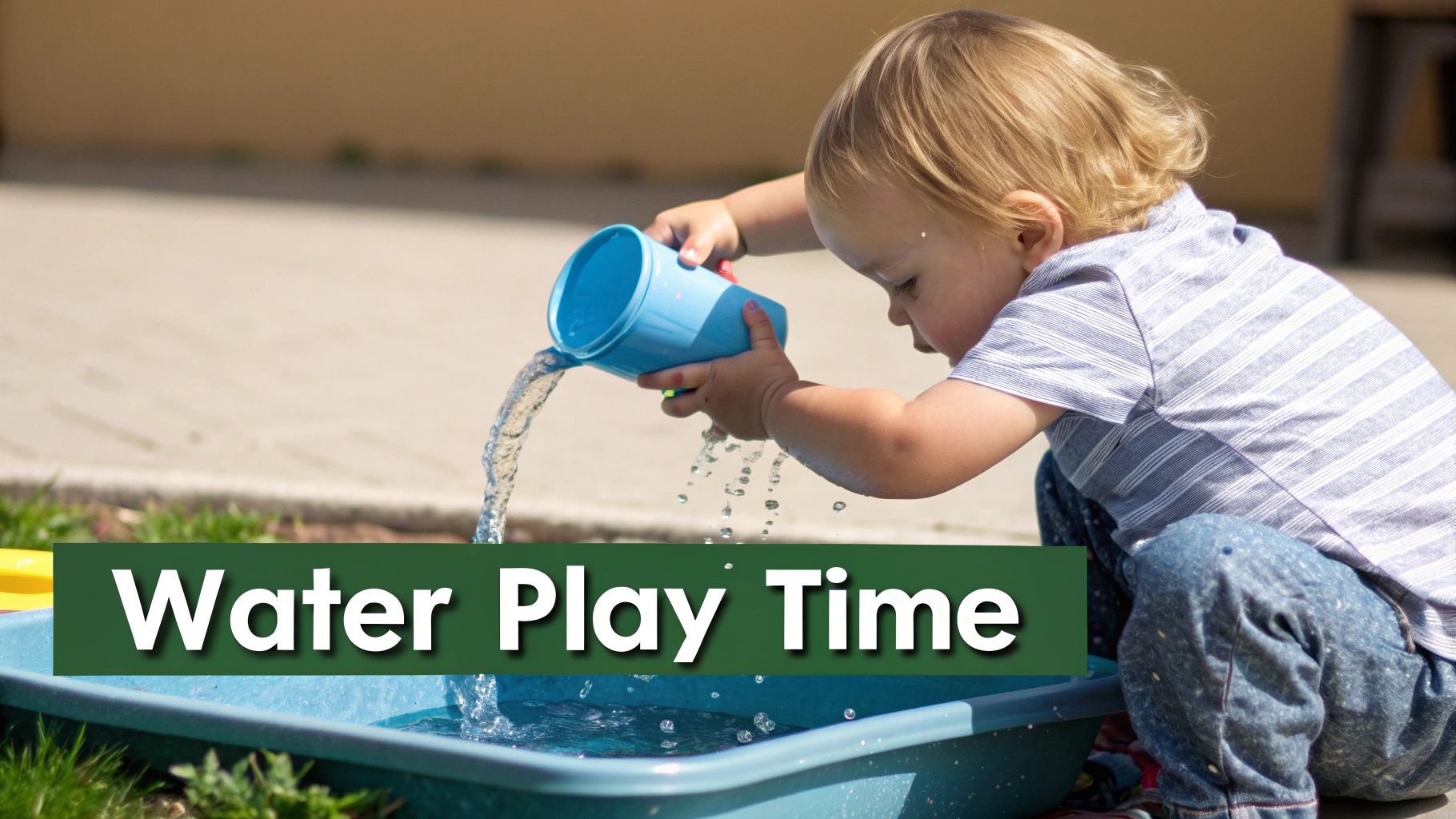
Water is a natural magnet for curious toddlers, and harnessing this attraction offers a wealth of developmental benefits. Water play, whether in a bath, a shallow basin, or an outdoor water table, provides a fantastic sensory experience that supports cognitive growth and motor skill development. It’s a simple yet powerful way for your 18-month-old to learn about the world around them.
This type of play is one of the most engaging 18 month old activities for learning foundational scientific concepts. As your toddler pours, splashes, and scoops, they are intuitively exploring principles like volume, buoyancy (what sinks and what floats), and gravity. This hands-on experimentation helps build problem-solving skills and refines their hand-eye coordination in a fun, low-pressure environment.
How to Set It Up
Creating a stimulating water play station is straightforward and can be adapted for indoors or outdoors. The key is to provide tools that encourage exploration.
- Create a Pouring Station: Use a shallow water table or a large, sturdy basin on the floor. Add various-sized plastic jugs, cups, funnels, and spoons.
- Sensory Bath Time: Enhance bath time with additions like foam letters that stick to the tiles, a water wheel, or natural sponges for squeezing.
- Sink or Float Game: Provide a collection of safe objects, such as a wooden block, a rubber duck, a large plastic lid, and a leaf. Encourage your toddler to drop them in the water and see what happens.
Safety First: Constant and close supervision is non-negotiable during water play. An adult should always be within arm's reach of the child. Use only a few inches of warm water (test the temperature with your elbow first) and empty all containers immediately after play.
Tips for Success
To maximise the benefits and enjoyment, vary the tools and challenges. Introduce a small watering can or a turkey baster to offer new ways to manipulate the water. If you’re playing outdoors, add natural elements like flower petals or mud for a messier sensory experience. For a calmer activity, add a few drops of child-safe soap for bubbles. Keep sessions to around 15-20 minutes to prevent your toddler from getting chilled or overstimulated.
5. Cause-and-Effect Toy Play
At 18 months, toddlers are beginning to grasp that their actions can create reactions, a foundational cognitive milestone. Cause-and-effect toy play directly nurtures this understanding, using toys that provide immediate and predictable feedback. When a toddler pushes a button and a character pops up, they learn a powerful lesson about their ability to influence their environment.
This type of play is one of the most engaging 18 month old activities for strengthening problem-solving skills and sensorimotor intelligence. The satisfying feedback loop of action and reaction encourages repetition, which reinforces neural connections. This simple but profound concept helps toddlers build confidence and a sense of agency as they see the tangible results of their own movements.
How to Set It Up
Introducing cause-and-effect toys is straightforward, as their designs are intuitive for little hands and minds. The key is to provide access to well-designed toys that offer a clear and satisfying outcome.
- Classic Pop-Up Toys: These are perfect for this age. A toddler learns to push, twist, or slide a specific control to make a colourful figure pop up.
- Push-and-Go Vehicles: Toys that light up, make sounds, or move forward when pushed provide instant gratification and teach momentum.
- Musical Instruments: Simple instruments like a toy piano or drum demonstrate a clear "I do this, it makes that sound" relationship, exploring cause and effect through audio feedback.
Safety First: Always check toys for small, detachable parts that could pose a choking risk. Ensure battery compartments are securely screwed shut and inaccessible to your toddler. Opt for toys made from non-toxic, child-safe materials, especially since they are likely to end up in your little one's mouth.
Tips for Success
To maximise the learning potential, demonstrate the toy's function first and then step back to allow for independent discovery. Verbally narrate the action to reinforce the connection: "You pushed the blue button, and the lion popped up!" Rotate a few different cause-and-effect toys to maintain novelty and present new challenges. Brands like Hape and Melissa & Doug specialise in wooden developmental toys that are both durable and effective for this stage of learning.
6. Music, Movement, and Dance Exploration
At 18 months, your toddler's world is bursting with energy and sound. They are developing greater control over their little bodies and find immense joy in moving to a rhythm. Music and movement activities tap directly into this developmental stage, offering a fantastic way to support coordination, gross motor skills, and emotional expression.
This type of play is one of the most joyful 18 month old activities for fostering a love of music and strengthening the parent-child bond. As your toddler shakes a maraca, bangs on a toy drum, or twirls around with you, they are learning about rhythm, cause and effect, and how their body can move in new and exciting ways. This auditory and physical stimulation is brilliant for brain development and pure, simple fun.
How to Set It Up
Creating a musical environment is easy and doesn't require expensive equipment. The goal is to encourage free expression and exploration of sound and movement.
- Simple Instruments: Introduce sturdy, toddler-safe instruments like wooden maracas, a small drum, or a colourful xylophone. Even pots and pans with a wooden spoon make excellent percussion instruments.
- Action Songs: Engage your toddler with classic action songs. "Twinkle, Twinkle, Little Star" with hand motions, "The Wheels on the Bus," or "Head, Shoulders, Knees, and Toes" are perfect for linking words with movements.
- Dance Party: Clear a safe space in your living room and put on different styles of music. Dance freely with your toddler, exploring slow, swaying rhythms and fast, upbeat tempos.
Create a Joyful Atmosphere: Your enthusiasm is the most important ingredient. When your toddler sees you singing, dancing, and having fun, they will feel more confident and eager to join in. Don't worry about being perfectly in tune or having the right moves; your participation is what matters most.
Tips for Success
To get the most out of your musical playtime, keep it simple and follow your child's lead. Start with familiar, repetitive songs they recognise before introducing new ones. It’s also helpful to model the actions and sounds, encouraging your toddler to imitate you. Remember to keep sessions short, around 10-15 minutes, to match their attention span.
7. Pretend Play and Imitation Activities
Around 18 months, your toddler's imagination begins to blossom, and they start to engage in simple pretend play by imitating the world around them. This is a monumental cognitive leap, where a toy telephone becomes a real phone, and a block can stand in for a piece of cake. This type of play is foundational for developing symbolic thinking, language, and social-emotional skills.
Engaging in these imaginative scenarios is one of the most effective 18 month old activities for understanding social roles and routines. When your toddler mimics you cooking, cleaning, or caring for a baby doll, they are processing and making sense of their daily experiences. This imitative play strengthens their understanding of cause and effect and builds crucial connections for more complex, creative play later on.
How to Set It Up
Creating an environment that encourages pretend play is straightforward and relies on providing simple, relatable props. The goal is to offer tools that reflect the everyday activities your toddler sees.
- Miniature Household: Set up a small play kitchen with wooden food, pots, and pans. A miniature broom and dustpan or a toy vacuum cleaner allow them to copy your cleaning routines.
- Nurturing Play: Provide a baby doll with a bottle, a blanket, and a small cot. This encourages empathy as they practise caring for their "baby."
- Pretend Conversations: A simple toy telephone or even a wooden block can inspire endless chats, helping them practise conversational turn-taking and language skills.
Keep It Real: Toddlers at this age learn best by imitating concrete, familiar actions. Using realistic-looking props, like a child-sized wooden spoon or a small tea set, makes the connection to the real world clearer and more meaningful for them.
Tips for Success
To get the most out of this developmental stage, focus on modelling and participating. Gently guide their play by narrating your actions, for example, "I'm stirring the soup. Mmm, it's yummy!" Rotate the available props every few weeks to keep the play fresh and engaging. You can also create a dedicated "pretend play" corner with a small shelf where items are organised and easily accessible, empowering your toddler to choose their own imaginative adventures.
8. Outdoor Exploration and Nature Play
At 18 months, your toddler's world is rapidly expanding, and outdoor exploration is a vital arena for their development. Getting outside provides boundless opportunities for them to strengthen gross motor skills, engage their senses, and foster a lifelong connection with the natural world. This activity involves letting your little one freely explore a safe outdoor environment, like a garden, park, or local woodland.
This type of play is one of the most enriching 18 month old activities for physical and emotional wellbeing. As your toddler navigates uneven ground, picks up a textured leaf, or feels the breeze on their skin, they are building physical coordination, balance, and sensory awareness. Outdoor play supports their growing independence and curiosity, offering endless new sights, sounds, and textures to discover that simply cannot be replicated indoors.

How to Set It Up
Facilitating nature play is more about creating opportunities than setting up specific equipment. The key is to provide a safe space and allow your toddler to lead the way.
- Go on a Nature Walk: Explore your local park or woods. Give your toddler a small bucket to collect "treasures" like fallen leaves, smooth stones (too big to swallow), and interesting twigs.
- Engage in Garden Play: Even a small garden offers rich experiences. Let them pull blades of grass, watch insects, feel different flower petals, or "help" you water the plants.
- Visit a Sandpit or Beach: Digging, pouring, and sifting sand is a fantastic sensory and fine motor activity. Supervise closely near any water.
Safety First: Always choose safe, age-appropriate outdoor spaces with minimal hazards. Check the area for sharp objects or poisonous plants before letting your toddler explore. Close supervision is essential, but allow them the freedom to move and discover within safe boundaries.
Tips for Success
To make outdoor time a regular and enjoyable part of your routine, keep it simple and be prepared. Dress for the weather in comfortable layers and apply sunscreen even on cloudy days. Point out interesting things like a chirping bird or a fuzzy caterpillar to engage their curiosity. For broader outdoor exploration, you might also look into these helpful tips for successful family camping with kids to plan engaging activities for the whole family.
8-Activity Comparison for 18-Month Development
| Activity | 🔄 Implementation / Complexity | ⚡ Resources & Setup | 📊 Expected Outcomes | 💡 Ideal Use Cases | ⭐ Key Advantages |
|---|---|---|---|---|---|
| Sensory Exploration with Natural Materials | Low prep; simple setup but requires close supervision | Low-cost natural items; rotate every 1–2 weeks | Sensory integration, fine motor, early cause-effect (⭐⭐⭐⭐) | Short indoor exploration sessions (10–15 min); treasure baskets | Sustainable, open-ended, easy to source |
| Simple Stacking and Nesting Activities | Low — easy demo; scalable difficulty | Few durable pieces (blocks, rings); minimal space | Hand-eye coordination, spatial reasoning, concentration (⭐⭐⭐⭐) | Floor or table practice; focused skill-building | High engagement; immediate success feedback |
| Board Books and Interactive Storytelling | Very low — caregiver-led, repeatable routines | Sturdy board books; cozy reading nook; moderate cost | Language growth, emergent literacy, attention (⭐⭐⭐⭐) | Quiet times, routines, pre-nap/bed reading (5–10 min) | Boosts vocabulary and caregiver bonding |
| Water Play and Sensory Bath Activities | Low setup but high safety vigilance required | Water table/basin, towels; indoor/outdoor space; cleanup | Fine/gross motor, floating/sinking concepts, calming (⭐⭐⭐⭐) | Bath time or outdoor play; warm weather sessions (15–20 min) | Highly engaging, multisensory, soothing |
| Cause-and-Effect Toy Play | Low — simple demo; maintenance for mechanisms | Ready-made toys, possible batteries; durable pieces preferred | Understanding cause-effect, fine motor precision (⭐⭐⭐) | Independent exploration; short repeatable play bouts | Immediate feedback; sustained repeat play |
| Music, Movement, and Dance Exploration | Low prep; needs clear space and adult participation | Simple instruments or household items; low cost | Gross motor control, rhythm, emotional expression (⭐⭐⭐⭐) | Active indoor/outdoor sessions; group sing-dance time (10–15 min) | Joyful, social bonding, versatile activities |
| Pretend Play and Imitation Activities | Low–moderate; benefits from adult modelling | Props/toys reflecting daily routines; storage needed | Symbolic thinking, language, social-emotional skills (⭐⭐⭐⭐) | Shared caregiver-child play; extended imaginative sessions | Encourages imagination, language, and social learning |
| Outdoor Exploration and Nature Play | Moderate — planning for safety/weather; supervision | Safe outdoor space, weather-appropriate clothing; minimal cost | Gross motor development, sensory awareness, wellbeing (⭐⭐⭐⭐) | Parks, gardens, nature walks (20–30+ min) | Free/low-cost, large play space, fosters nature connection |
Embracing Joyful Learning Through Play
Navigating the whirlwind of toddlerhood is a journey filled with incredible milestones and boundless curiosity. As we've explored, the right 18 month old activities are not about complex setups or expensive gadgets; they are about creating simple, meaningful moments of connection and discovery. From the tactile joy of sensory play with natural materials to the cognitive challenge of stacking blocks, each interaction is a powerful learning opportunity.
The true magic lies in observing and responding to your child's unique interests. You are their first and most important playmate. By embracing their lead, you empower them to build confidence, solve problems, and develop a genuine love for learning. Remember that consistency and repetition are far more valuable than variety at this age. Repeating a favourite story, singing the same song, or returning to a beloved stacking game helps to solidify neural pathways and build a strong sense of security and mastery.
Key Takeaways for Your 18-Month-Old's Playtime
To make the most of this precious developmental stage, keep these core principles in mind:
- Follow Their Cues: Your toddler will show you what they are ready to learn. If they are captivated by pouring and scooping, lean into water play. If they are constantly climbing, focus on safe gross motor challenges.
- Prioritise Connection Over Perfection: The goal isn't to execute an activity perfectly. It’s about the shared smiles, the joint attention, and the supportive encouragement you offer along the way. Your presence is the most valuable material of all.
- Safety is Paramount: Always supervise activities, especially those involving water or small parts. A quick safety check of the play area and materials ensures that exploration remains a positive and secure experience.
- Integrate Play into Daily Routines: Learning doesn’t just happen during designated "playtime". Involve your toddler in simple household tasks, talk to them as you prepare meals, and turn a walk to the park into a nature-spotting adventure.
Ultimately, the activities in this guide serve as a blueprint for fostering holistic development. By engaging your toddler in a balanced diet of play that nourishes their fine and gross motor skills, sensory processing, language abilities, and burgeoning imagination, you are laying a robust foundation for all future learning. Celebrate every small effort and wobbly triumph, as these are the moments that build a curious, resilient, and joyful little human.
Ready to bring expertly designed, stage-based play right to your doorstep? Take the guesswork out of finding the perfect 18 month old activities with a curated play kit from Grow With Me. Discover their beautiful, sustainable wooden toys and books designed to support your toddler's development at exactly the right time. Explore the Grow With Me subscription box today.