
A Parent's Guide to Wooden Jigsaw Puzzles for Toddlers
Wooden jigsaw puzzles are so much more than a way to keep a toddler busy. They're a brilliant, hands-on tool for learning, problem-solving, and a whole host of other developmental wins. These sturdy, classic toys are perfectly designed to help little hands build strength, coordination, and that all-important sense of "I did it!"
Why Wooden Puzzles Are a Toddler Essential
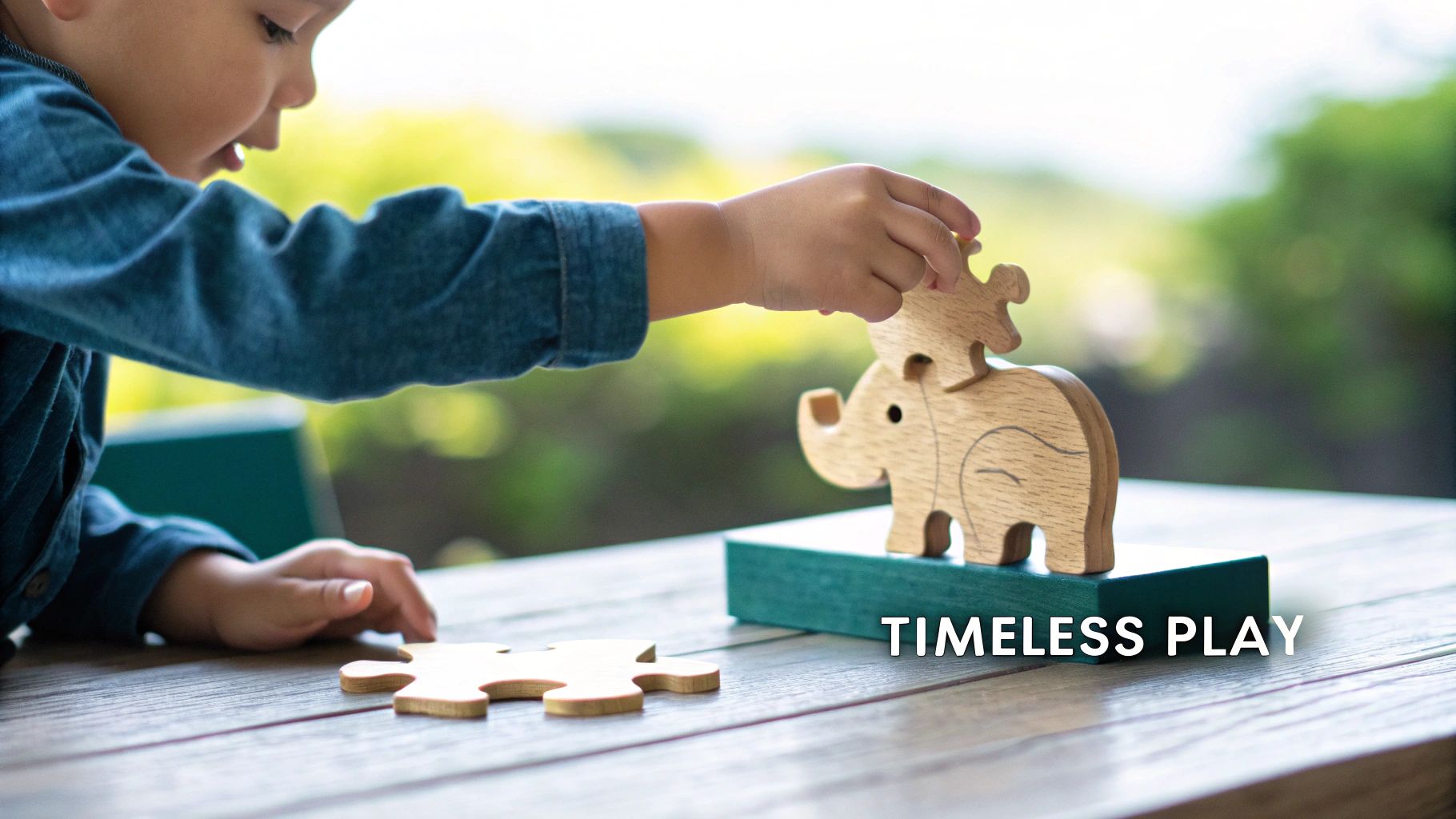
There’s a reason wooden puzzles have been a playroom staple for generations. Unlike plastic or flimsy cardboard, wooden toys offer a wonderful sensory experience. They feel solid and warm in a child's hands, creating a connection to natural materials. For parents trying to find toys that are both fun and genuinely good for their little one, wooden puzzles are a perfect fit.
Think of each puzzle as a mini workout for your toddler's brain and fingers. It’s not just about filling time; it’s a simple, screen-free way to lay the groundwork for some really important skills.
The Building Blocks of Early Learning
The real beauty of a wooden puzzle is its simplicity. When your toddler picks up a chunky piece, turns it over, and tries to slot it into place, they’re actually spinning a whole lot of developmental plates at once. It’s a single activity that cleverly combines physical dexterity with mental gymnastics.
A great puzzle meets a child exactly where they are. It presents just the right amount of challenge to be engaging without being overwhelming, building not just cognitive skills, but a real sense of accomplishment with every piece that clicks into place.
This guide will walk you through everything you need to know, from the amazing benefits packed into every puzzle piece to practical tips for making puzzle time a happy, rewarding experience for you both.
What You Will Discover
We'll explore how a simple collection of wooden jigsaw puzzles for toddlers can become a cornerstone of their early learning adventure. It’s all about turning playtime into a powerful opportunity for growth.
Here’s a quick look at what’s to come:
- Cognitive and Motor Skills: We’ll break down exactly how puzzles sharpen problem-solving, boost memory, and fine-tune hand-eye coordination.
- Choosing the Perfect Puzzle: Get practical advice on picking out puzzles that are safe, age-appropriate, and genuinely interesting for your child.
- Positive Playtime: Learn simple techniques for introducing puzzles in a fun, frustration-free way that encourages a lifelong love of learning.
By understanding the benefits of wooden toys, you can confidently make this timeless classic a cherished part of your little one's routine.
How Puzzles Build Your Toddler's Brain and Skills
Wooden jigsaw puzzles might seem like simple toys, but don't be fooled. They are one of the most powerful learning tools you can give a young child. Every time your toddler picks up a piece, they’re engaging in a complex activity that forges crucial new connections in their rapidly developing brain. This isn't just about matching shapes; it’s a full-body workout for their mind, hands, and emotions.
Think of a puzzle as a mini-mystery. Your child has to figure out the plot—how do these individual pieces come together to create the bigger picture? This process is a foundational exercise in logic and understanding cause and effect, all cleverly disguised as playtime.
Boosting Cognitive Abilities
At its heart, completing a puzzle is all about problem-solving. Your toddler is faced with a jumble of pieces and a clear goal. They have to come up with a strategy, even a very basic one, to get there. Do they hunt for a specific colour? A straight edge? An animal’s eye?
This constant mental trial-and-error strengthens their ability to reason and think critically. They are constantly analysing shapes, colours, and patterns, learning how to categorise and sort visual information – skills that lay the groundwork for reading and maths later on.
Wooden puzzles are also fantastic for building memory. A toddler might remember that a red piece with a curved edge belongs to the apple they placed a minute ago. This simple act of recall and application is a brilliant little workout for their short-term memory and visual recognition skills.
Sharpening Physical Skills
While their brain is busy solving problems, your toddler's hands are getting a serious workout too. Grasping, twisting, and fitting chunky wooden pieces into place is the perfect practice for developing fine motor skills. These are the small, precise movements that will eventually help them hold a crayon, use a fork, and do up their own coat.
This entire process relies on a huge amount of hand-eye coordination. Their eyes see where a piece should go, and their brain sends signals to their hands to guide it into the correct spot. This connection is absolutely essential for countless everyday tasks.
Each successful placement of a puzzle piece reinforces the neural pathways between a toddler's eyes, brain, and hands. It's a foundational skill that supports everything from learning to write to catching a ball.
For toddlers aged 1-3, simple 10-20 piece wooden puzzles are particularly effective. In fact, some UK surveys show that 70% of parents notice improved focus in their children after regular puzzle play. Mastering these simpler puzzles builds the dexterity and concentration needed for more complex activities down the line. To keep the momentum going, you can explore more fine motor skills development activities in our guide.
Nurturing Emotional Growth
The benefits of wooden puzzles for toddlers go way beyond the cognitive and physical. Completing a puzzle teaches invaluable emotional lessons, especially patience and perseverance. A puzzle isn't solved in an instant; it requires focus and the ability to work through those little moments of frustration when a piece just won't fit.
When your child sticks with it and finally clicks that last piece into place, the result is a powerful surge of self-esteem and accomplishment. That triumphant "I did it!" moment is incredibly validating. It teaches them that persistence pays off and builds the confidence to tackle new challenges.
Working on a puzzle together is also a wonderful opportunity for bonding. It creates a quiet, focused space where you can connect, offer gentle encouragement, and celebrate their successes, strengthening your relationship while they learn.
To see how it all fits together, this table breaks down the key developmental milestones your toddler is hitting with every puzzle they complete.
Toddler Skill Development with Wooden Puzzles
| Developmental Area | Specific Skill Gained | How Wooden Puzzles Help |
|---|---|---|
| Cognitive | Problem-Solving | Toddlers must analyse shapes and patterns to figure out where each piece fits, developing logical reasoning. |
| Physical | Fine Motor Control | Grasping and manipulating chunky wooden pieces strengthens hand muscles and improves the pincer grasp. |
| Emotional | Patience & Resilience | Puzzles require focus and teach children to manage frustration, persisting until they achieve their goal. |
| Cognitive | Shape Recognition | Constantly handling different shapes helps toddlers learn to identify and differentiate them, a pre-maths skill. |
| Physical | Hand-Eye Coordination | The brain, eyes, and hands must work together to guide each piece into its correct spot successfully. |
| Emotional | Self-Confidence | Finishing a puzzle provides a tangible sense of accomplishment, boosting self-esteem and a "can-do" attitude. |
As you can see, that simple wooden tray is doing so much more than just keeping them busy. It's a comprehensive development tool that supports your child's growth in every key area.
Choosing the Perfect First Wooden Puzzle
Stepping into the world of wooden jigsaw puzzles for toddlers can feel a bit like navigating a maze itself. Faced with a sea of bright colours, fun shapes, and endless themes, how do you pick the one that will actually delight your child, not just leave them feeling frustrated?
The secret isn't about finding the most elaborate or impressive-looking puzzle. It’s all about matching the puzzle to where your toddler is right now in their development.
Think of it like setting the stage for a great performance. If the puzzle is too simple, they’ll get bored and wander off. If it’s way too hard, they’re likely to get discouraged and give up. The sweet spot is a puzzle that offers just enough of a challenge to be exciting, sparking their curiosity and rewarding them with a huge confidence boost when they finally slot that last piece into place.
Start with Simplicity and Safety
For the youngest puzzlers, usually around 12 to 18 months old, the perfect starting point is a knob puzzle. These typically have one big, chunky shape that fits neatly into a matching cutout on a board. That chunky wooden knob is designed specifically for little hands that are just getting the hang of their pincer grasp—the crucial skill of picking things up between their thumb and forefinger.
Look for puzzles with just a handful of pieces, maybe three to five, featuring simple, familiar shapes like a circle, a star, or a friendly animal. Keeping it simple helps your child focus on the main event: matching a shape to its space without feeling overwhelmed.
Of course, safety is non-negotiable. Any puzzle you choose should be made with non-toxic, child-safe paints and finishes. Run your hand over the board and pieces; they should feel smooth, with no splinters or sharp edges. Critically, the pieces themselves must be big enough that they can’t be swallowed. A good rule of thumb is the "toilet paper roll test"—if a toy can fit through the cardboard tube, it's a choking hazard for a young toddler.
A safe puzzle is the foundation of worry-free play. Always look for safety certifications and stick with brands that are transparent about using non-toxic materials. It’s the best way to ensure your child’s hands-on exploration is both healthy and secure.
This handy decision tree gives you a quick visual guide for picking the right type of puzzle based on your toddler's age.
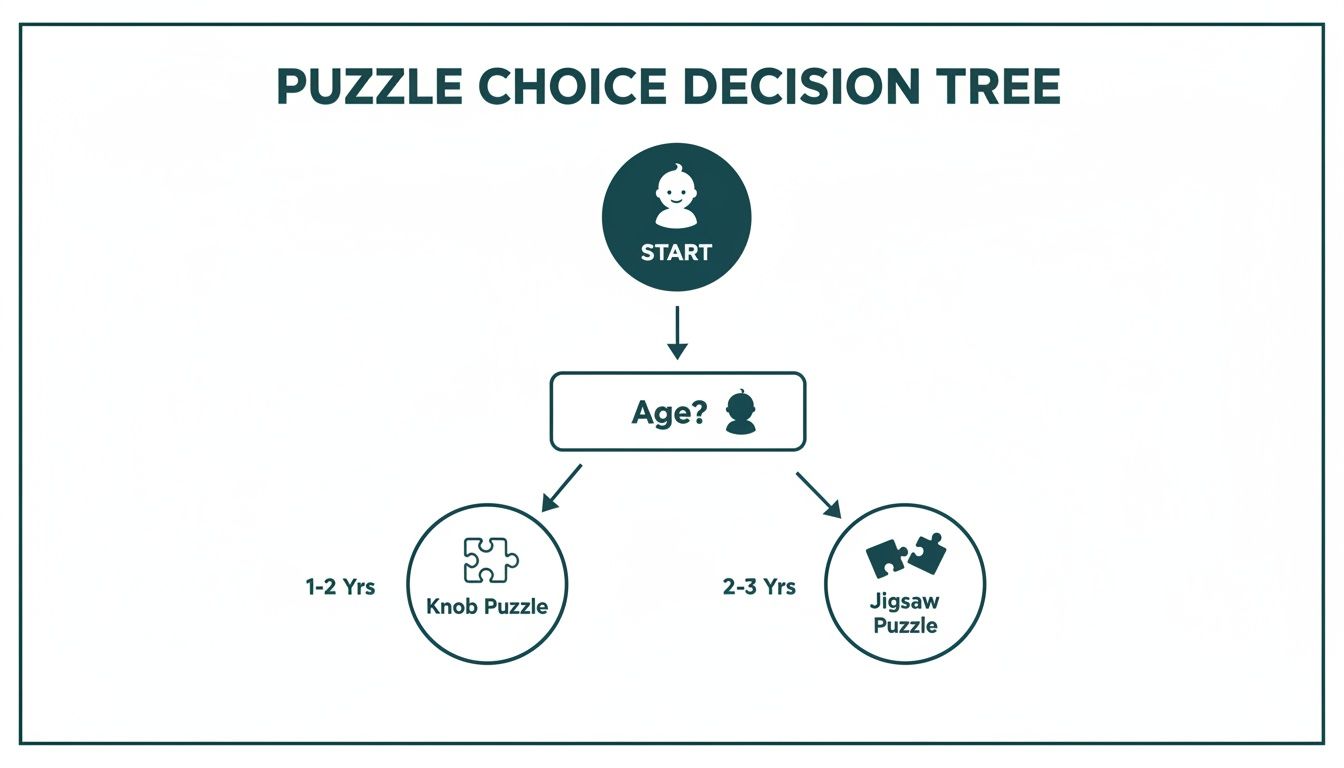
As you can see, the idea is to build on their success, moving from simple peg puzzles to more traditional jigsaws as their skills and confidence blossom.
Matching Complexity to Growing Skills
Once your toddler has conquered knob puzzles, which often happens around their second birthday, they’re ready for the real deal: true jigsaws. This is where those classic interlocking pieces enter the picture. The key to a smooth transition is to level up the complexity slowly and steadily.
Here’s a simple progression that works wonders:
- 2-Piece Puzzles: Start with puzzles that match two halves of a single object—think the head and tail of a cat or the front and back of a tractor. This is a great first step into understanding how separate pieces join to create a whole.
- 3-4 Piece Jigsaws: Next, look for puzzles where each piece makes up a significant part of the final image. The shapes should still be quite distinct and easy for little hands to manage.
- Progressive Puzzles: Some sets are brilliant for this stage, offering several small puzzles of increasing difficulty in one box (for example, a 2-piece, a 4-piece, and a 6-piece puzzle). They’re perfect for building up skills and confidence one small victory at a time.
By the time your child is nearing three, they might be showing an interest in jigsaws with 10 to 16 pieces. At this stage, the pieces get a bit smaller and the shapes are more intricate, demanding more advanced problem-solving and a sharper eye for detail.
Capturing Their Imagination with Engaging Themes
Finally, don’t ever underestimate the power of a good theme. A puzzle covered in your toddler’s favourite things—whether it’s farm animals, roaring dinosaurs, or noisy fire engines—is going to grab their attention and make them want to play.
When a child is genuinely invested in the picture they’re building, they’re far more likely to stick with it, even when they hit a tricky spot. The puzzle stops being just a task and becomes an exciting story they get to piece together. Connecting with their interests transforms puzzle time from a simple educational activity into a truly joyful and imaginative experience.
Making Puzzle Time a Fun and Positive Experience
Introducing your little one to wooden jigsaw puzzles for toddlers is about so much more than fitting pieces together. It's about creating a warm, encouraging space where they feel safe to explore, make mistakes, and try again. The real goal is to make puzzle time a joyful, shared activity, not a test they have to pass. This positive start is what turns a simple toy into a brilliant tool for building their confidence and a genuine love for solving problems.
Remember, every child moves at their own pace. If your toddler gets frustrated and wanders off, that's completely fine. The puzzle will be there later. A successful puzzle session is one that ends with a smile, whether the picture is complete or not. Keeping things light, playful, and totally pressure-free is the secret to nurturing a happy little puzzler.
Gently Introducing a New Puzzle
When you bring out a new puzzle, think of it as a quiet invitation to play together, not a demand. Rushing or pushing a toddler can make them feel overwhelmed, so a gentle, relaxed approach is always best.
Get down on the floor with them, open the box, and just let them explore the pieces. This first touch-and-see moment is a huge part of the process. Let them feel the wood, look at the bright colours, and get to know the puzzle on their own terms. Your job here is simply to be a calm, reassuring presence, showing them that this is a fun and safe activity you can do together.
Here are a few gentle ways to get started:
- Show, Don't Just Tell: Do the puzzle yourself once while they watch. You can chat about what you’re doing in a simple way, like "Look, this blue piece goes right here!"
- Start with One Piece: Hand them a single, obvious piece—maybe a corner or one with a very distinct shape—and point to where it might fit. Let them have that little victory of placing it themselves.
- Think Out Loud: Model your own thought process in a playful tone. "Hmm, I'm looking for a piece with a straight edge... Ah, here's one!"
This approach takes all the pressure off and turns puzzle-solving into a shared game of discovery.
The Art of Helping Without Taking Over
One of the best ways to support your toddler is through a technique called scaffolding. Think of it like holding the back of their first bicycle—you’re not steering for them, but you’re providing just enough support to keep them from tumbling over. With puzzles, this means offering little clues and gentle assistance that guide them toward figuring it out, without actually doing it for them.
Scaffolding is all about empowering your child. By providing just the right amount of help, you let them make the crucial mental connections themselves. This builds genuine confidence and real problem-solving skills. They get to feel the pride of "I did it myself!" because, with your subtle support, they really did.
For example, if they're stuck, you could place two or three possible pieces in front of them, including the correct one. This narrows down the options and makes the choice feel less overwhelming. Another great scaffolding trick is to turn a piece the right way round and hand it to them, letting their own hands do the final, rewarding work of fitting it into place.
Fostering Resilience and Celebrating Effort
Not every attempt will work, and that’s a valuable lesson in itself. When a piece doesn’t fit, it’s a perfect opportunity to build resilience. Your words matter here, so focus on celebrating the effort, not just the result.
Simple phrases can make all the difference:
- "That was a great try! What if we turn it this way?"
- "I love how hard you're working on this tricky bit."
- "You found the red piece! Well done!"
Celebrating these small wins—finding the right colour, turning a piece correctly, trying a new spot—is just as important as finishing the whole puzzle. This kind of encouragement teaches them that the process of trying is what really counts. For more ideas on creating a supportive environment, exploring some positive parenting tips can be incredibly helpful.
Ultimately, making puzzle time fun is about creating happy memories and showing your toddler that challenges are exciting, not scary.
Creative Ways to Play Beyond the Puzzle Board
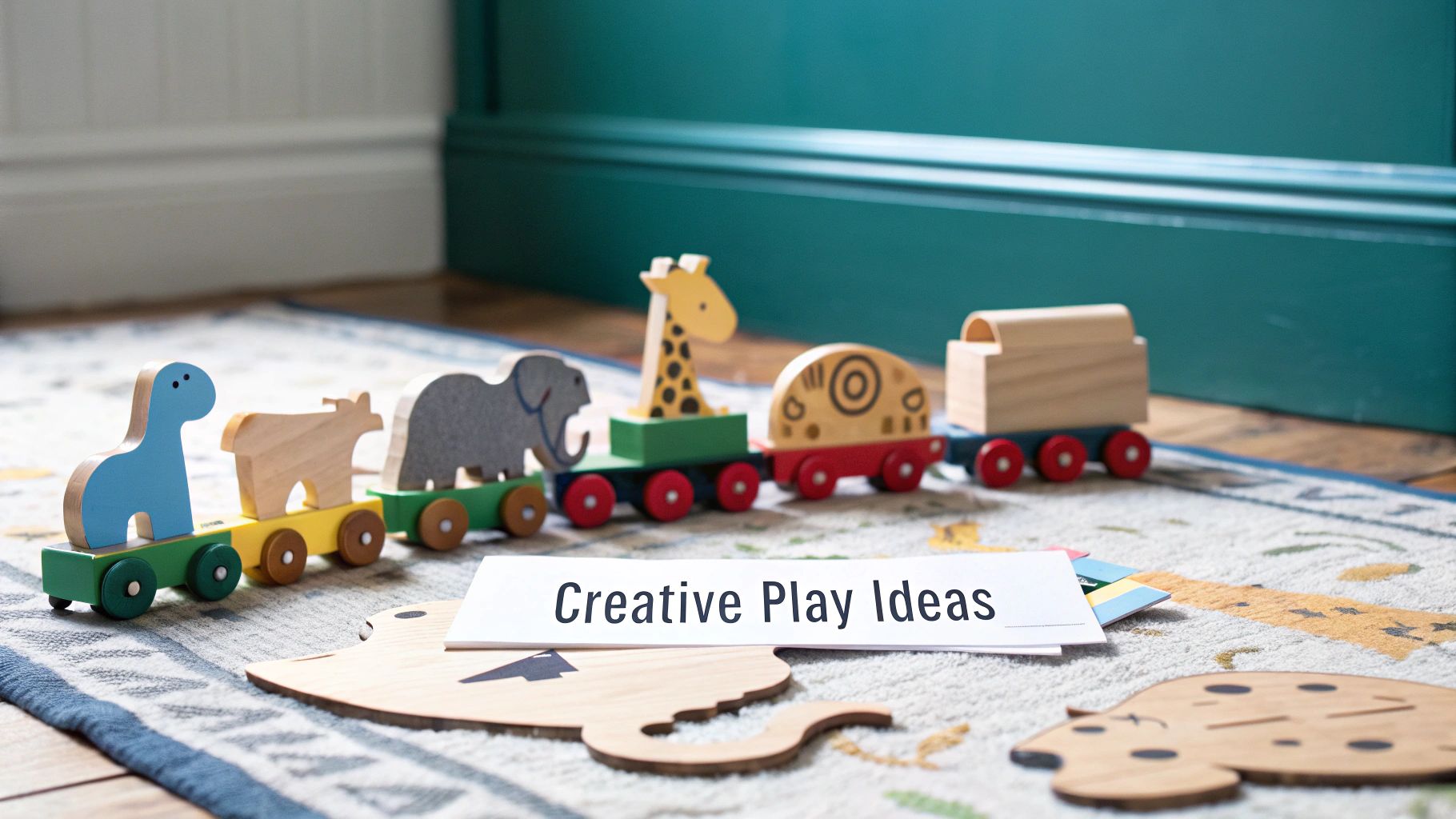
A good wooden jigsaw puzzle is a brilliant investment in your toddler's development, but its job isn't done when the last piece clicks into place. The real magic is just beginning. Think of each chunky, colourful piece as a miniature toy, ready for a whole new world of imaginative play.
When you start thinking beyond the puzzle board, you unlock so much more potential. You can stretch out playtime, fire up their creativity, and reinforce what they’ve learned in fun, exciting ways. It’s all about getting the absolute most out of every toy, turning a simple puzzle into a toolkit for endless adventures.
From Puzzle Pieces to Storytelling Puppets
Lots of wooden jigsaw puzzles for toddlers are filled with charming animals, vehicles, or friendly characters. Once the puzzle is solved, don't pack it away just yet. Why not use the individual pieces as little props for some imaginative play?
A farm animal puzzle, for instance, can easily become the cast for a lively barnyard tale. The pig piece can "oink" its way across the rug, while the cow "moos" a friendly hello to the sheep. This simple game is fantastic for boosting language skills and getting them to think in stories. Let your toddler take the lead, giving each character a voice and a personality.
Each wooden puzzle piece can be a character in a story, an object in a pretend world, or a tool for discovery. This open-ended potential is what transforms a simple toy into a powerful catalyst for imaginative learning.
This kind of play helps them connect with the puzzle’s theme on a much deeper level. It’s no longer just about fitting shapes together—it’s about bringing a whole world to life, one wooden piece at a time.
Sensory and Artistic Adventures
The lovely, tactile feel of wooden puzzle pieces makes them perfect for sensory exploration. Their clear shapes and smooth edges are ideal for all sorts of creative projects that get different senses involved.
-
Shape Tracing: Pop a puzzle piece onto some paper and show your toddler how to trace around it with a chunky crayon. It’s a brilliant pre-writing activity that builds fine motor control and helps them recognise shapes.
-
Play-Dough Impressions: Press the wooden pieces into a flattened bit of play-dough to make fun imprints. Your child will love seeing the detailed shapes appear, and all that pushing and pressing is great for building hand and finger strength.
-
What's in the Bag?: Place a few different puzzle pieces into a cloth bag. Ask your toddler to reach in without peeking and guess the animal or object just by feeling its shape. This is a fantastic game for developing their sense of touch.
These simple extensions are excellent for building multiple skills at once. For more inspiration, check out our guide to sensory play ideas for toddlers.
Active Games for Little Bodies
Puzzle pieces can also be a brilliant excuse to get your toddler up and moving, mixing brain work with physical fun. It's a great way to burn off some of that boundless energy while they’re still learning.
A "puzzle piece treasure hunt" is always a winner. Hide the pieces around the room in spots they can easily find. Then, challenge your toddler to find them all and bring them back to the puzzle board. As they crawl, walk, and reach to gather the pieces, they’re practising their physical skills with a clear goal in mind. It even turns tidying up into part of the game
Caring for Your Puzzles to Ensure Safe Play
A beautiful wooden puzzle is more than just a toy; it’s an investment in your child's learning and a potential heirloom. With a bit of care, these puzzles can be passed down and enjoyed for years. Keeping them clean and organised not only preserves the wood and vibrant colours but also makes them safe and ready for the next play session.
Think of it as part of the play routine. Teaching your toddler to care for their puzzles reinforces the value of looking after their belongings and helps keep your play space tidy and inviting. These simple habits will protect your wooden jigsaw puzzles for toddlers and make them a truly sustainable choice.
Simple and Safe Cleaning Methods
We all know toddlers love to explore with their hands and, yes, their mouths. So, keeping toys clean is a top priority. But wooden toys need a different approach than plastic ones. The golden rule is to never soak wooden puzzles in water. This can make the wood swell and warp, causing the paint to peel right off.
Instead, a gentle wipe-down is all you need. Grab a soft cloth and dampen it slightly with a simple, non-toxic cleaner. A bit of mild soap and water or even a 50/50 mix of white vinegar and water works perfectly. Wipe each piece and the puzzle board, then immediately go over them with a dry cloth to soak up any leftover moisture.
Let everything air dry completely before packing it away. This quick process gets rid of grime and germs without any harsh chemicals, keeping the puzzle safe for your little one.
Smart Storage to Prevent Lost Pieces
Is there anything more frustrating than a puzzle with a missing piece? Smart storage is your best friend for keeping sets complete and your play area from descending into chaos. A good system also makes it easier for your toddler to pick a puzzle and, just as importantly, learn where it goes when they’re finished.
Here are a few practical ideas:
- Vertical Puzzle Racks: These simple wire or wooden racks are brilliant for chunky tray puzzles. They keep them upright, visible, and easy for little hands to grab without toppling a whole stack.
- Durable Zip Pouches: For puzzles without a handy tray, clear zip pouches are a lifesaver. Just cut the picture from the original box and pop it inside the pouch so you and your toddler can see which one it is at a glance.
- Designated Baskets: A sturdy basket on a low shelf can become the official "puzzle home," encouraging your little one to help with tidy-up time.
Good organisation really is key to making wooden puzzles last and keeping play areas safe. For more great ideas on managing the toy clutter, check out these tips on how to organize kids' toys.
A well-organised play space isn't just about tidiness; it’s about creating an environment where a child can focus and engage more deeply with their toys. When puzzles are easy to find and pack away, they get played with more often.
Finally, try to make a quick safety check part of your routine. Every few weeks, just run your hands over the pieces and the board. Feel for any splinters, chips, or rough patches. Catching these little things early ensures your puzzles remain a safe and joyful part of playtime for a long, long time.
Common Questions from Parents About Toddler Puzzles
Even when you know how brilliant puzzles are, it's completely normal to have a few questions before you dive in. We hear lots of the same queries from parents, so we’ve put together some straightforward answers to help you feel confident as you get started on this new adventure with your little one.
Think of this as your quick-start guide to making puzzle time a joyful, rewarding part of your day.
At What Age Should I Introduce Puzzles?
You might be surprised at how early you can start! Simple, single-piece knob puzzles are often perfect for babies around 12-18 months old. They’re a fantastic way to help tiny hands practise that all-important pincer grasp.
Once their coordination gets a bit better, usually between 18-24 months, they might be ready for jigsaws with 4 to 8 chunky pieces. By the time they hit two or three, many toddlers can happily tackle more complex 10-20 piece puzzles. The most important thing is to follow your child's lead and keep things light-hearted and fun—no pressure!
Are Wooden Puzzles Better Than Cardboard?
For toddlers, absolutely. Wooden puzzles have some clear advantages over their cardboard counterparts. For starters, they are far more durable and can stand up to the inevitable chewing, dropping, and general rough-and-tumble play of a toddler. The chunky, solid pieces are also much easier for small, still-developing hands to grip and move around.
The sensory feel of a wooden puzzle is just different. Its weight and smooth texture offer a satisfying, tangible connection to a natural material that flimsy cardboard just can't match.
Good quality wooden puzzles are also finished with non-toxic paints and sealants, making them a much safer choice for little ones who still explore everything with their mouths. While cardboard puzzles are brilliant for older children, the robust nature of wood makes it the ideal material for the toddler years.
What if My Toddler Gets Frustrated Easily?
This is so common and a completely normal part of learning! The trick is to offer just enough support to help them through the wobble without actually solving it for them. First, double-check the puzzle isn't too tricky; it's always best to start with one you know they can manage, just to build up their confidence.
Sit with them and model a curious, positive attitude. You could "think aloud" by saying things like, "Hmm, this piece has a straight edge, I wonder where that could go?" or hand them the correct piece and let them have the satisfaction of slotting it into place themselves.
Remember to celebrate every small win, from finding the right colour to turning a piece the correct way. And always keep puzzle time short and sweet. If they start to lose interest, just pack it away for another day. The goal is to build a happy, positive feeling around problem-solving.
Ready to find the perfect puzzle to match your toddler's developmental stage? The Grow With Me subscription box delivers beautiful, age-appropriate wooden toys and activities directly to your door, taking the guesswork out of playtime.