

What is tummy time? A Quick Guide for New Parents
Think of tummy time as your baby's very first workout. It’s a simple, gentle, yet absolutely essential routine that builds the foundation for every major milestone to come. Put simply, it’s supervised time your baby spends on their stomach while awake and alert.
This straightforward practice is a cornerstone of early development, setting your little one up for a future of movement and discovery.
What Is Tummy Time and Why Does It Matter So Much?
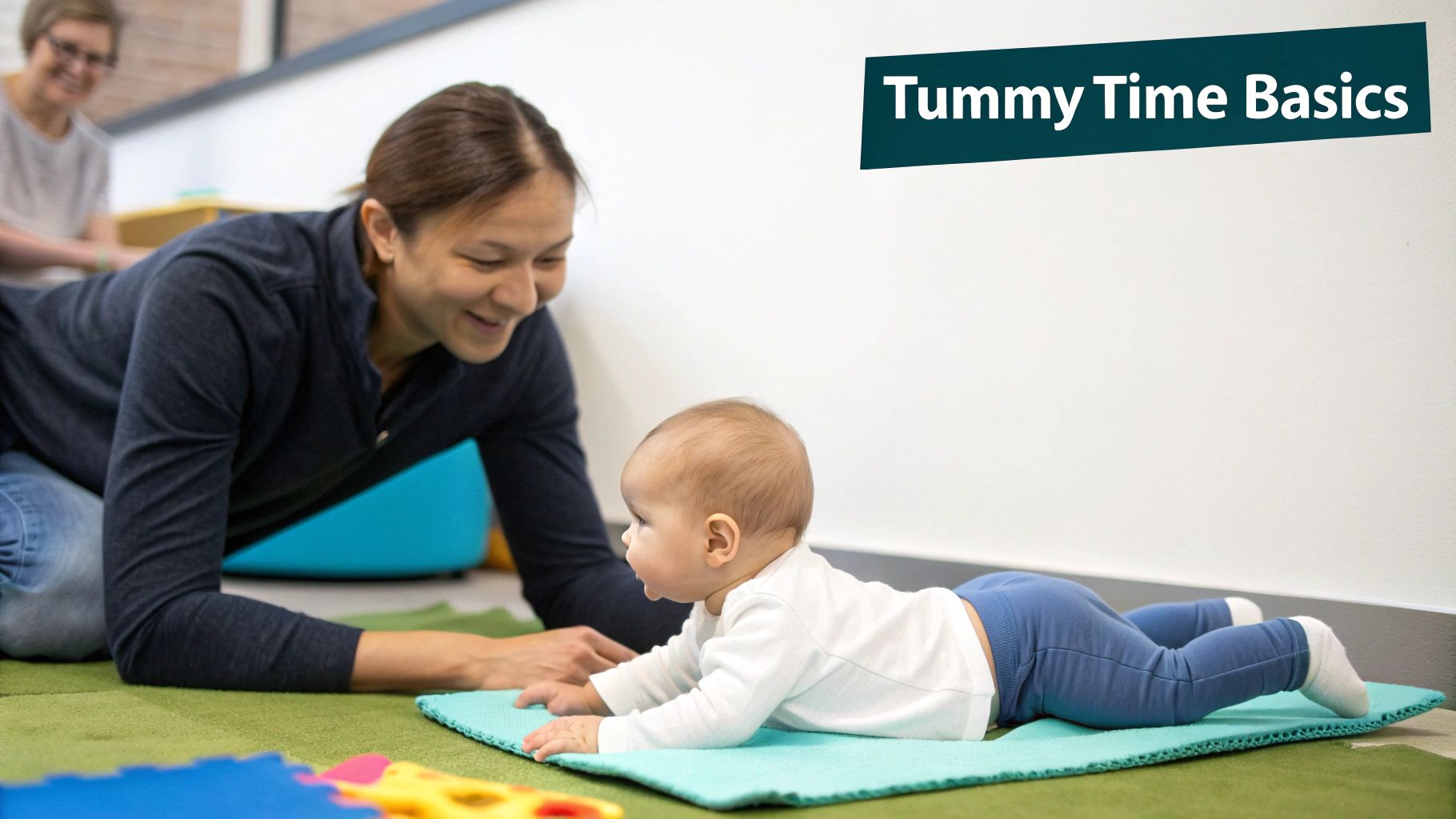
So many parents hear the term "tummy time" but aren't quite sure what it really means or why everyone keeps talking about it. At its heart, it’s just about placing your baby on their tummy so they can play and see the world from a brand new angle. No complicated equipment needed—just a few supervised moments on the floor.
This practice is so crucial because babies naturally spend a lot of time on their backs, whether they're in their cots, car seats, or bouncers. While this is vital for safe sleep, it doesn't give them the chance to work the key muscles in their neck, shoulders, back, and core.
Tummy time is the number one way your baby builds the upper body strength needed for all future gross motor skills. It’s laying the groundwork for rolling over, sitting up, crawling, and eventually walking.
But it’s about more than just a physical workout. When your baby is on their tummy, they are motivated to lift their head to look at your face or reach for a toy. This simple act not only builds strength but also kick-starts their sensory development, helping them learn about their body and where it is in space.
The Foundation for Major Milestones
The benefits of starting this routine early are huge. It directly supports two key areas of your baby's development:
- Muscle Development: Pushing up from the floor strengthens their neck, shoulder, and back muscles. This is the powerhouse that will enable them to lift their head, push up on their arms, and ultimately get moving.
- Preventing Flat Head Syndrome: It helps prevent positional plagiocephaly, often called "flat head syndrome," by giving the back of their skull a break from constant pressure.
Here’s a quick summary for busy parents trying to get to grips with the basics.
Tummy Time At a Glance
| Key Aspect | Simple Explanation |
|---|---|
| What Is It? | Supervised playtime on the stomach while your baby is awake and alert. |
| Why Do It? | To build essential upper body strength and prevent flat head syndrome. |
| When to Start? | From the newborn stage, starting on a parent's chest. |
| How Long? | Start with 1-2 minutes a few times a day and build up gradually. |
| The Goal? | Aim for a total of 20-30 minutes spread throughout the day by 3-4 months. |
This table shows just how simple and manageable it is to fit into your day.
In the UK, healthcare professionals are big advocates for starting this practice right from the very beginning. As Berkshire Healthcare NHS guidance explains, you can begin in the newborn stage, often by just letting your baby lie on your chest. The key is to build up the duration "little and often," moving to a firm, flat surface on the floor as they get stronger.
Remember, starting small is the secret. A minute or two after a nappy change, a few times a day, is a perfect way to begin. It's not about long, difficult sessions, but about making it a regular and positive part of your daily routine together.
The Developmental Benefits of Tummy Time
Tummy time is so much more than just a little workout for your baby. Think of it as the foundation for how they'll learn to move, explore, and understand the world around them. Every session, even the super short ones, is a huge catalyst for their physical and cognitive growth.
When your baby pushes up from the floor, they're not just building up those tiny neck and shoulder muscles. They're actually running their first little experiments with gravity and learning how to control their body in a whole new way.
Building Your Baby’s Inner GPS
This simple act of pushing up is brilliant for their proprioception—which is just a fancy way of saying their internal sense of where their body is in space. It's like a tiny astronaut learning to navigate a brand-new world. Tummy time helps them map out where their arms and legs are and what they can do with them.
At the same time, it’s fine-tuning their vestibular system, the bit responsible for balance and knowing which way is up. As they lift and turn their head, they're calibrating this internal compass, getting it ready for all the big milestones to come, like rolling over, sitting up, and eventually, walking steadily.
Tummy time is where your baby starts to map out their physical self. It connects their brain to their muscles, creating the neural pathways necessary for coordinated movement and balance. Each push-up and head turn is another piece of that map falling into place.
A Fresh Perspective for a Growing Mind
The brain-boosting side of things is just as incredible. When a baby is on their back, their world is mostly the ceiling and the faces peering down at them. Tummy time flips that view entirely.
Suddenly, they see the world from a new, horizontal angle. This encourages them to track things with their eyes, whether it's your face or a colourful toy. This shift in perspective sparks their natural curiosity, motivating them to explore and strengthening the muscles that control their eyes. It’s this drive to see more that pushes them to develop their motor skills.
In fact, a major review in 2020 looked at 16 studies with over 4,200 infants. It found a really strong link between tummy time and overall motor development, including milestones like crawling and rolling. The research also highlighted its crucial role in preventing a flattened head shape. You can read the full findings on tummy time and infant health outcomes for a deeper dive.
Preventing Common Physical Issues
Getting in regular tummy time is also one of the best ways to sidestep a couple of common issues we see in babies:
- Positional Plagiocephaly: You might have heard this called "flat head syndrome." It can happen when a baby’s soft skull develops a flat spot from spending lots of time lying on their back. Tummy time simply gives the back of their head a much-needed break.
- Torticollis: This is when tight neck muscles cause a baby's head to tilt to one side. By encouraging them to look both left and right—perhaps at you or a favourite toy—tummy time helps keep those neck muscles strong, flexible, and even.
Every minute your little one spends on their tummy is a brilliant investment in their future physical and neurological health.
How to Get Started with Tummy Time

The idea of starting tummy time can feel like a big milestone, but the secret is to ease into it. You really can begin right from day one, introducing the feeling gently and making it a positive, bonding experience for both of you.
The loveliest way to begin is with some skin-to-skin contact. Just get comfortable, lie back, and place your newborn on your chest. This isn’t just a cuddle; it's the first step. They feel safe hearing your heartbeat and being close to you, and their neck muscles get a tiny, natural workout as they instinctively try to lift their head to see your face.
Creating a Safe Space
Once your baby seems a bit more comfortable, you can move tummy time to a play mat on the floor. Safety is absolutely everything, so run through a quick mental checklist every time.
- Firm, Flat Surface: A play mat on a carpeted or rugged floor is perfect. Try to avoid soft surfaces like beds or sofas, as your baby needs a stable base to push up against, and these can present a safety risk.
- Constant Supervision: This is non-negotiable. Never, ever leave your baby alone during tummy time, not even for a moment. Get down on the floor with them and be their personal cheerleader.
- Clear the Area: Make sure the space around them is free from loose blankets, pillows, or stray toys that could become a hazard.
Finding the right gear can make all the difference. Many parents find that a good guide to the best baby products for newborns helps them pick out items that make these early activities safe and enjoyable.
Finding the Right Time and Duration
Picking your moment is key. The golden rule is to aim for a time when your baby is happy, awake, and alert. Trying to squeeze in a session when they're hungry or sleepy is usually a one-way ticket to tears.
It’s also a good idea to wait a little while after a feed. Give it at least 30 minutes to let their milk settle. This can help prevent any uncomfortable spit-up and makes the whole experience far more pleasant. Think of it as a fun little activity after a nappy change or a good nap.
The goal isn't an endurance test. Start with very short sessions—just two or three minutes is perfect. Aim for a few of these brief sessions throughout the day, focusing on quality over quantity.
As your baby’s neck and back muscles gradually get stronger, you can slowly start to extend the time. The most important thing is to watch for their cues. If they start to get fussy or seem tired, that’s your sign to stop for a break. Every little effort, no matter how short, is building their strength and confidence.
For a more detailed look at the ideal age and signs of readiness, you can explore our guide on https://shop.growwithmesubscriptionbox.co.uk/blogs/blog/when-to-start-tummy-time. This gentle, progressive approach helps ensure tummy time remains a positive part of your day, setting a brilliant foundation for all the milestones to come.
Making Tummy Time Engaging And Fun
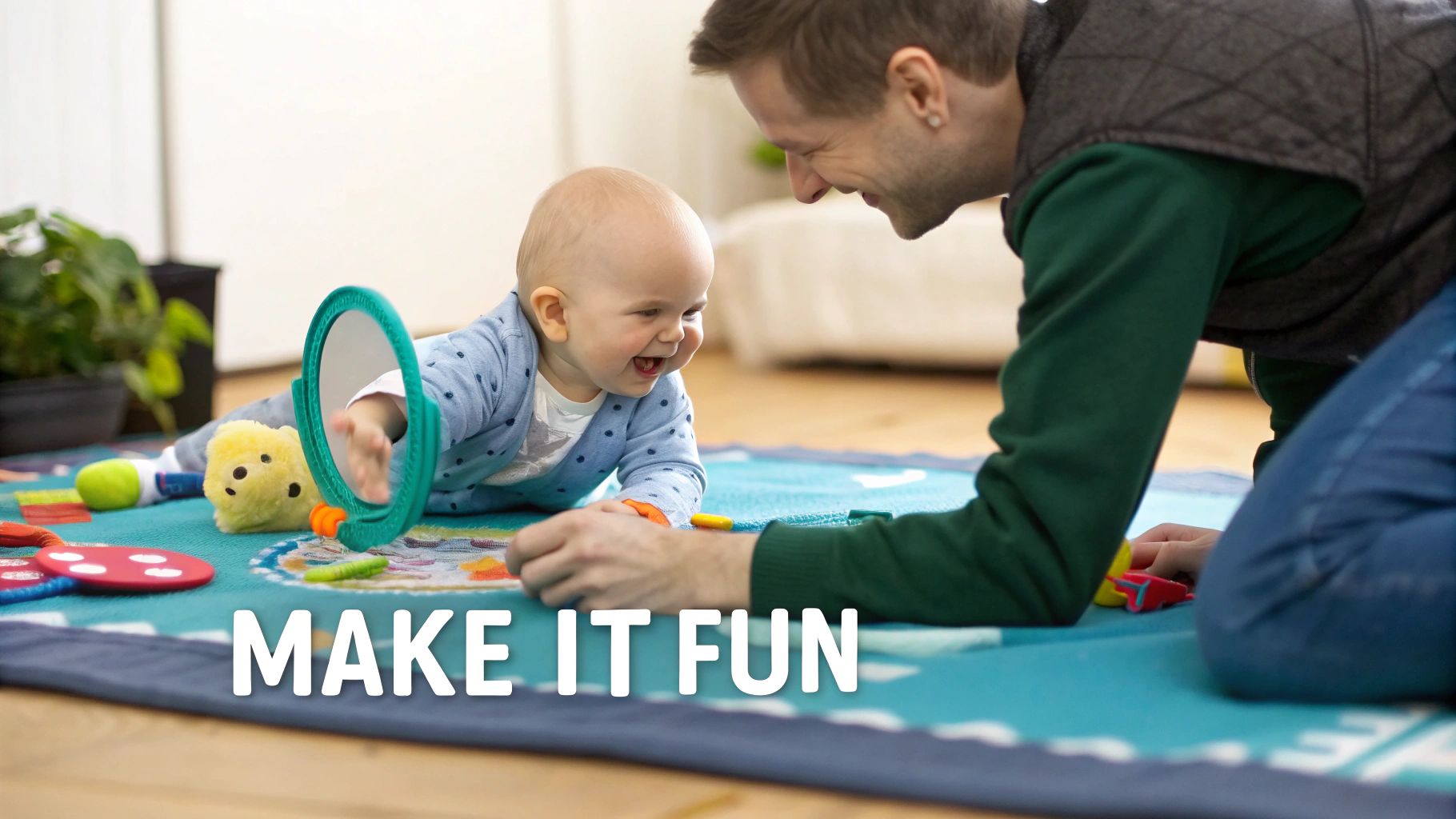
Does your baby start to cry the second their tummy touches the floor? Take a deep breath. You’re definitely not alone. It's a common reaction, but the trick is to reframe tummy time from a chore into a game. And honestly, making it fun and engaging is often much simpler than you might think.
Your greatest asset here is you. Get right down on the floor with them, face-to-face. Make lots of eye contact, sing a silly song, or just chat about your day. Your baby is captivated by your face and voice more than any toy, and having you close offers a huge dose of comfort and encouragement.
Turn Playtime Into a Sensory Adventure
Introducing a few simple, stimulating objects can work wonders to pique your baby’s curiosity and encourage them to lift their head. You don't need anything fancy; everyday items and thoughtfully chosen toys can make all the difference in how long they'll happily stay on their front.
Try creating a little world of discovery right there on the mat:
- Mirrors: A baby-safe, unbreakable mirror is pure magic. Seeing their own reflection is fascinating and provides a great reason to lift their head for a better look.
- High-Contrast Cards: In those early months, a newborn's vision is still getting dialled in. Bold black-and-white patterns or brightly coloured flashcards are visually captivating and give them a clear point of focus.
- Varied Textures: Switch up the surfaces. Lay them on a soft, fluffy rug one day and a cooler, smoother play mat the next. Each new texture is a brand-new sensory experience.
The aim is simply to spark their interest. This small shift turns the whole experience from a workout into a fun period of exploration, helping them build a positive connection with being on their tummy.
Tummy Time Activities By Age
As your baby grows, their abilities and interests will change. Keeping activities fresh and age-appropriate is key to holding their attention. Here are a few simple ideas to get you started, matched with some of our favourite toys from the Grow With Me play kits.
| Age Range | Activity Idea | Grow With Me Toy Suggestion |
|---|---|---|
| 0–2 Months | Place high-contrast cards in their line of sight to encourage head turning. | Black & White Sensory Flashcards |
| 2–4 Months | Prop a baby-safe mirror in front of them so they can see their reflection. | Unbreakable Tummy Time Mirror |
| 4–6 Months | Put a crinkly book or a soft rattle just out of reach to motivate rolling and pivoting. | Soft Sensory Book or Animal Rattle |
These are just starting points, of course. The best activity is whatever captures your little one's imagination on the day!
Using Toys to Motivate Movement
Placing a favourite toy just beyond their grasp is a classic trick for a reason—it works! A colourful rattle or a soft, crinkly toy provides the perfect incentive for your baby to start pushing up on their arms and attempting to move towards it. That tiny bit of motivation is a huge part of building their core strength.
And it’s not just an old wives' tale. Research has found a clear link between engaging toys and how long babies will happily stay on their tummies. One study revealed that infants with age-appropriate toys were 60% more likely to continue with tummy time without getting upset. They also showed a 40% increase in those all-important head-lifting movements.
When you become your baby’s playmate, the whole dynamic changes. Tummy time stops feeling like a task to be endured and becomes a special moment of connection and playful learning.
This is exactly why our Grow With Me play kits are designed the way they are. Each box contains developmentally appropriate toys created to make these moments more joyful and effective. For more inspiration, have a look at our guide to the best tummy time newborn toys. By weaving purposeful play into your routine, you’re not just passing the time—you're actively building a stronger, more curious baby.
Tackling Common Tummy Time Troubles
It’s one of those moments that can really pull at your heartstrings: you gently place your baby on their tummy, and the tears start almost immediately. If that sounds familiar, take a deep breath and know you’re not alone. This is an incredibly common experience for parents.
More often than not, those little cries aren't from pain but from pure effort. Imagine trying to push yourself up with an incredibly heavy head – it's tough work! Think of it as their version of a grunt at the gym. Realising this can help you see tummy time not as something to dread, but as a workout your baby is tackling, and you’re their personal trainer.
Finding What Works: Gentle Starts and Clever Support
If laying your baby flat on the floor is a non-starter, don't push it. The goal is to build strength without the tears, and luckily, there are plenty of other ways to get there.
- The Tummy-Down Carry: You might hear this called the 'football hold'. It’s where you carry your baby face-down along your forearm, supporting their head and tummy. They get all the benefits of working their neck and back muscles while feeling safely snuggled in your arms.
- Lap Time: Simply lay your baby across your lap while you're sitting down. This is a brilliant position for face-to-face interaction, and the gentle pressure on their belly can sometimes ease a bit of trapped wind.
- Chest-to-Chest Cuddles: This is the perfect entry point for newborns. Just recline on the sofa or in bed with some pillows propping you up, and place your baby on your chest. Their natural instinct will be to try and lift their head to see your face.
Another fantastic trick is to give them a little boost.
Try rolling up a small towel or receiving blanket and placing it under your baby's chest, just below their armpits. This small incline takes some of the pressure off and gives them a better view of the world, which can instantly improve their mood and extend how long they’re happy to play.
Tummy Time with a Reflux Baby
For little ones with reflux, timing is absolutely key. Putting them on their stomach right after a feed is a recipe for discomfort and spit-up.
To make things more comfortable, always try to wait at least 30 to 45 minutes after they’ve had milk. Using that rolled-up blanket trick to slightly elevate their upper body can also make a huge difference. With a bit of patience and creativity, you’ll find the approach that clicks for your baby, turning a tricky task into a happy part of your day together.
Tracking Your Baby’s Tummy Time Progress
So, with all these little tummy time sessions peppered throughout your day, how do you know if they're actually working? The trick is to look for small, steady improvements rather than expecting massive leaps overnight. Every tiny bit of progress is a sign that your baby is building crucial strength and coordination, laying the groundwork for bigger things to come.
It's a journey, not a race. Progress won’t always feel like a straight line, but you can usually spot a general pattern as your little one gets stronger, with each new skill building on the last.
A Timeline of Typical Tummy Time Achievements
Every baby is on their own unique schedule, so please don’t treat this as a strict checklist! Think of it more as a gentle guide to the amazing changes you can expect to see over the coming weeks and months.
- Newborn to 2 Months: In the very beginning, it’s all about those tiny, wobbly head lifts. Your baby might only manage to get their chin off the floor for a second or two, or maybe turn their head from one side to the other. That’s a huge achievement!
- 3 to 4 Months: This is where you’ll probably notice a real step-change. Your little one will likely start pushing up on their forearms, lifting their head to a 45-degree angle, and holding it with much more stability.
- 5 to 6 Months: Now we’re getting into proper press-up territory! They’ll start pushing up with straight arms, lifting their whole chest right off the mat. You might also see them reaching for a toy or even beginning to pivot on their tummy to get a better look at something.
These are the exact kinds of developments that experts get excited about. In fact, global health guidelines stress just how important this all is, recommending that babies get at least 30 minutes of tummy time spread throughout the day. They even make a point of saying that 'more is better' when it comes to developmental benefits.
This visual gives a simple idea of how to progress if you hit a stumbling block.
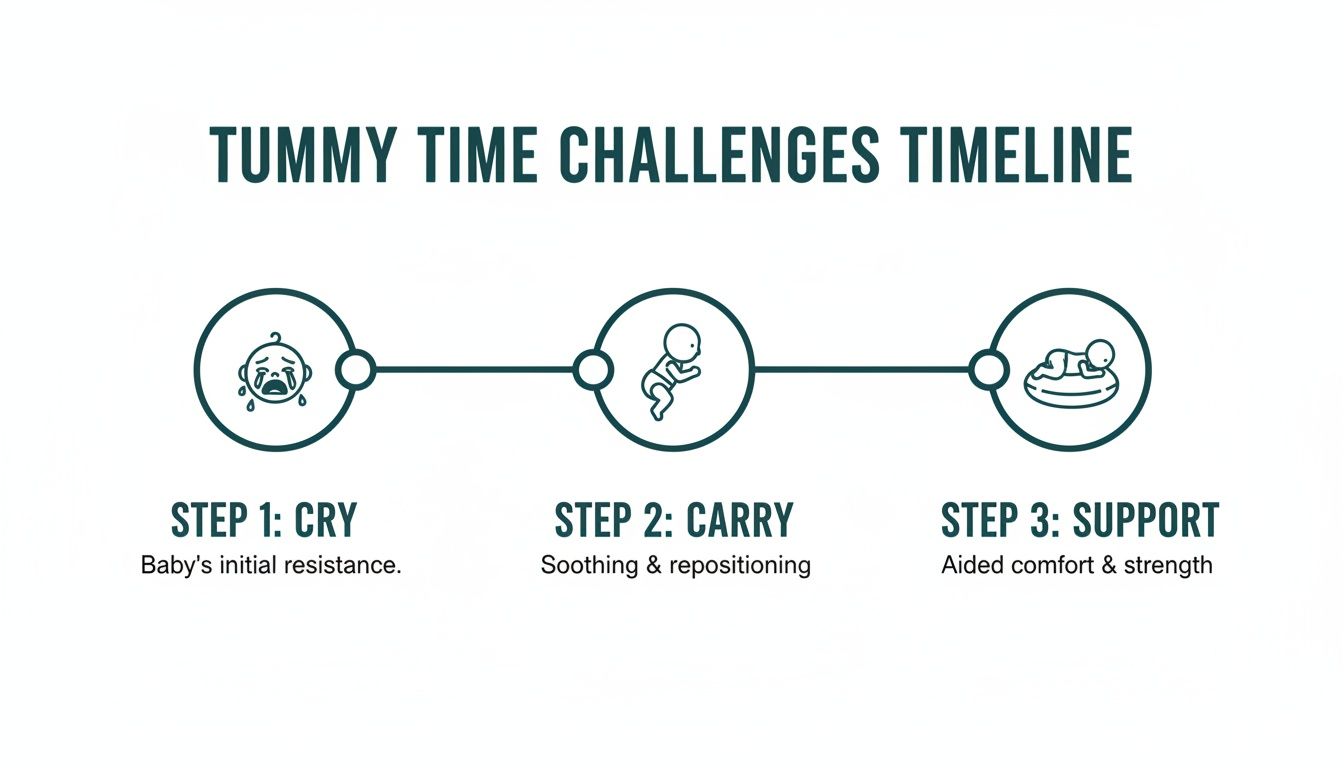
It shows that if your baby protests, you can move to alternative holds like carrying them, or using a support like a rolled-up towel to make things a little easier.
Remember to celebrate every small victory. That wobbly head lift is the first step towards rolling, and that push-up is the foundation for crawling. You are watching your baby build themselves up, one tiny movement at a time.
Each of these small steps is a piece of the much larger puzzle of your baby's physical growth. If you'd like to understand more about this incredible journey, take a look at our guide on what are developmental milestones.
And of course, if you ever feel worried about your baby's progress, never hesitate to have a chat with your health visitor. They’re there to offer reassurance and advice tailored just for you and your little one.
Your Tummy Time Questions, Answered
As a new parent, it feels like you're navigating a whole new world, and tummy time is often a big part of that. It's completely normal to have questions. Here are some straightforward answers to the things UK parents most often ask.
How much tummy time does my baby actually need each day?
With newborns, it's all about starting gently. Aim for just 2-3 minutes at a time, a few times a day. Think of it as a tiny workout.
As your baby builds strength and gets more comfortable, you can slowly increase the duration. By the time they're around 3-4 months old, the goal is to reach a total of about 20-30 minutes spread out over the day. The NHS guidance to do it ‘little and often’ is the perfect way to think about it.
Is it too late to start tummy time if I haven't been doing it?
Not at all! It's never too late to begin. While starting in the early days is ideal, you can introduce tummy time at any point.
If your baby is a bit older, they might be more vocal about their dislike for it initially. The trick is to keep the sessions short, sweet, and full of their favourite toys to make it fun. Even a minute here and there makes a real difference.
Don't feel guilty if you didn't start from day one. Any amount of tummy time is brilliant for building those crucial muscles and helping to prevent flat spots on their head. Just focus on making it a positive, happy experience from now on.
Can my baby do tummy time on my bed?
It's much safer to stick to the floor for this one. The best spot for tummy time is always a firm, flat surface, like a play mat.
Soft surfaces like beds or sofas don't give your baby the stable foundation they need to push up properly. More importantly, they can be a safety risk if your little one suddenly rolls over.
What if my baby has reflux?
Tummy time is still really important for babies with reflux, but the timing is key. Try to wait at least 30-45 minutes after a feed before placing them on their front. This gives their milk a chance to settle and can help reduce spit-up.
You can also try some modified positions. Laying your baby across your lap or placing a small, rolled-up towel under their chest can provide a gentle incline, keeping their head slightly higher than their tummy.
Beyond tummy time, new parents often have questions about various aspects of infant development. For example, you can learn more about understanding other fascinating aspects of infant development, such as why babies smile in their sleep.
Make every moment of play a chance for growth. Grow With Me delivers stage-based play kits, filled with beautiful, developmentally-appropriate toys, right to your door.