
Best Tummy Time Newborn Toys for Development
Tummy-time toys can turn those first moments on the mat from a chore into an exciting exploration. With the right playthings, babies learn to lift their heads, strengthen their shoulders and build core muscles—all while having fun.
How Toys Boost Tummy Time Benefits
Many parents know tummy time is important, but getting their little one to stay put can be tricky. Without something to focus on, babies often grow impatient and want off the mat.
That’s where engaging toys come in. By placing a brightly coloured rattle or a crinkly book just out of reach, you invite your baby to stretch, lift and reach. In time, these tiny efforts translate into greater control and confidence.
Effective toy features include:
- High-Contrast Patterns to sharpen visual tracking
- Textured Surfaces for hands-on discovery
- Soft Sounds or Crinkles to spark curiosity
Key Muscle Groups Engaged
Think of tummy time as your baby’s first-ever workout. Reaching for a toy is much like lifting a small weight—it builds strength in the neck, back and shoulders.
“Toys are not just distractions — they’re developmental tools that guide a baby’s next milestone.”
Developmental Milestones
- Rolling encourages side-to-side weight shifts.
- Reaching enhances early hand–eye coordination.
- Pushing up strengthens arm extension and shoulder stability.
- Practising sitting lays the groundwork for trunk balance.
Why Good Habits Matter
In the UK, only 31% of infants meet the recommended 30 minutes of tummy time each day, with the median resting at 10 minutes. Clearly, many caregivers could benefit from extra support. You can read more in this comprehensive paper on infant tummy time in the UK.
You might also want to learn when to start tummy time for optimal results by checking out our guide on when to start tummy time.
Bringing It All Together
As your baby grows, their needs shift. Stage-based kits, like those in the Grow With Me subscription, deliver age-appropriate toys precisely when your little one is ready. This approach ensures you’re always offering just the right challenge—no more guessing which toy will hit the mark.
Finally, always choose toys made from non-toxic, BPA-free materials with smooth, easy-clean surfaces. That way, every tummy-time session is not only fun but also safe and hygienic.
Choosing the Right Toys for Each Developmental Stage
Knowing which toys to introduce and when is a huge part of making tummy time a success. It’s all about meeting your baby where they are on their developmental journey. Just like you wouldn’t hand a toddler a novel, a newborn needs toys that match their brand-new, rapidly changing abilities.
When you get this right, the toys challenge them just enough to keep them curious and engaged without causing frustration. This simple act of choosing the right tool for the job transforms tummy time from a chore into a genuinely productive and joyful part of their day.
The First Two Months: Vision and Focus
In those very first couple of months, your baby’s world is a beautiful, fuzzy blur. Their eyesight is still coming into focus, and they can only really see things about 20-30 centimetres away—which is, not coincidentally, about the distance from their eyes to yours when you're holding them close. Their ability to see colour is also limited at first, which is why they find high-contrast patterns so utterly mesmerising.
Think of this as their introduction to the visual world. The goal is to give them simple, bold images that their developing eyes can lock onto and track.
- High-Contrast Flashcards: Simple black-and-white cards with bold shapes or patterns are fantastic. You can prop them up in their line of sight to encourage them to lift and turn their head.
- Unbreakable Mirrors: Babies are completely fascinated by faces, and their own is no exception! A baby-safe mirror placed on the floor gives them a compelling reason to push up and have a look.
Two to Four Months: Reaching and Grasping
Once your baby hits the 2-4 month mark, their world starts to open up in a big way. They're gaining more head control, beginning to push up on their forearms, and have likely discovered the magic of their own hands. Now is the perfect time to introduce toys that encourage those first attempts at reaching, batting, and grasping.
These aren't just random movements; they are the essential building blocks for fine and gross motor skills.
A well-chosen toy at this stage doesn't just entertain; it acts as a personal trainer, encouraging your baby to build strength and coordination through purposeful play.
The infographic below really helps to visualise how these activities directly contribute to building muscle and hitting those key milestones.
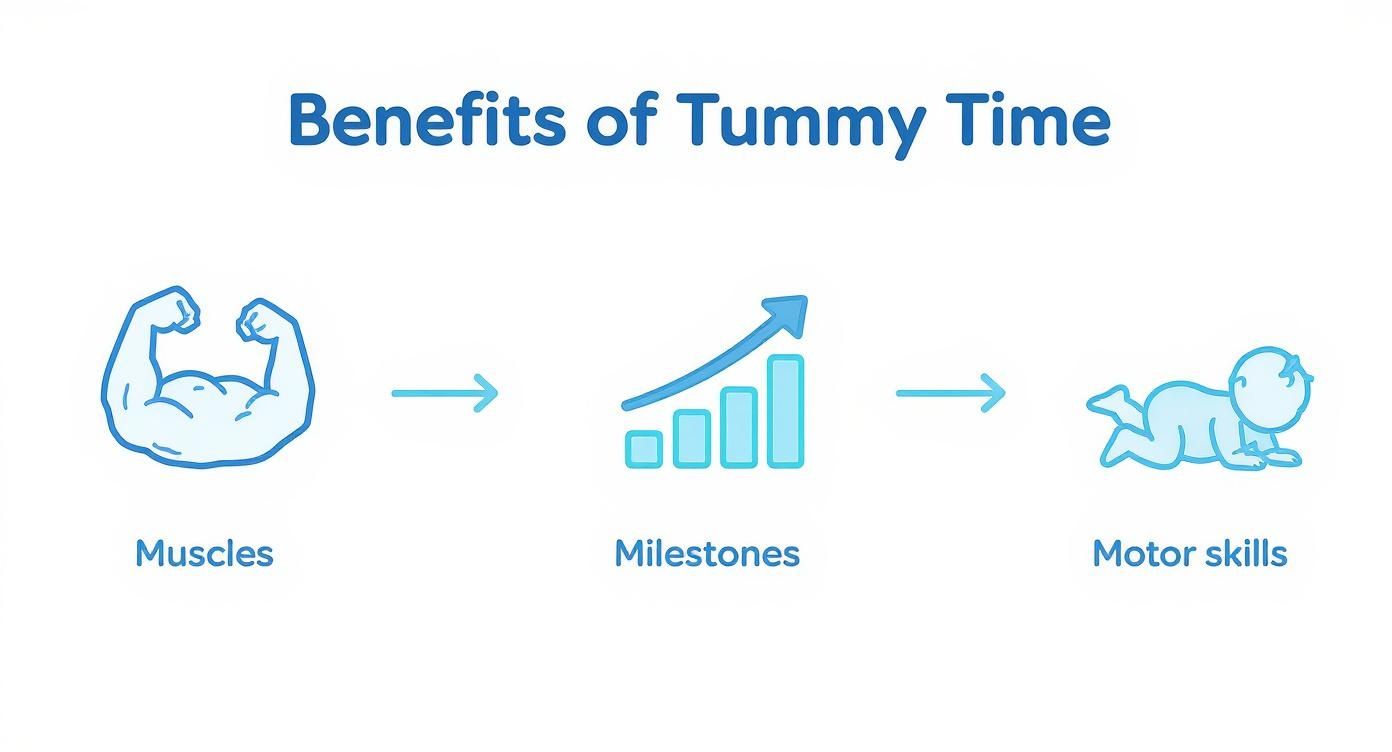
You can see the clear progression laid out here—from strengthening their little muscles to unlocking major skills like crawling. It all starts with these simple, playful moments.
As you consider which toys will best support this journey, a quick-reference guide can be incredibly helpful.
Tummy Time Toy Guide by Developmental Stage
This table matches your baby's age with the types of toys that will be most engaging and beneficial during tummy time.
| Age Group (Months) | Developmental Focus | Recommended Toy Types |
|---|---|---|
| 0-2 | Developing vision, head lifting, and neck strength. | High-contrast flashcards, baby-safe mirrors, soft books with simple, bold patterns. |
| 2-4 | Reaching, grasping, and pushing up on forearms. | Play mats with arches, soft rattles, crinkle toys, textured balls. |
| 4-6 | Pivoting, pushing up on hands, and sensory exploration. | Activity gyms, small rollable toys, sensory balls (different textures), water play mats. |
This isn't about buying everything, but about being intentional with what you introduce, ensuring each toy serves a purpose in their development.
Four to Six Months: Pivoting and Exploring
From 4-6 months and beyond, your baby is no longer just a passive observer during tummy time—they're an active participant. You might see them start to pivot in circles on their tummy, push right up on their hands, and maybe even make their first attempts to scoot forward.
Toys at this stage should reward this exciting new mobility. Activity gyms with dangling toys are brilliant for this, as they motivate your baby to reach up and interact from a new perspective. Small, rollable toys are also great for encouraging them to shift their weight and try to move towards an object.
For a more detailed look at matching toys to milestones, our guide on newborn development toys is packed with more ideas. By thoughtfully selecting toys that align with their growing skills, you can feel confident that you’re supporting their amazing journey toward sitting up, crawling, and everything that comes next.
What to Look for When Buying Tummy Time Toys
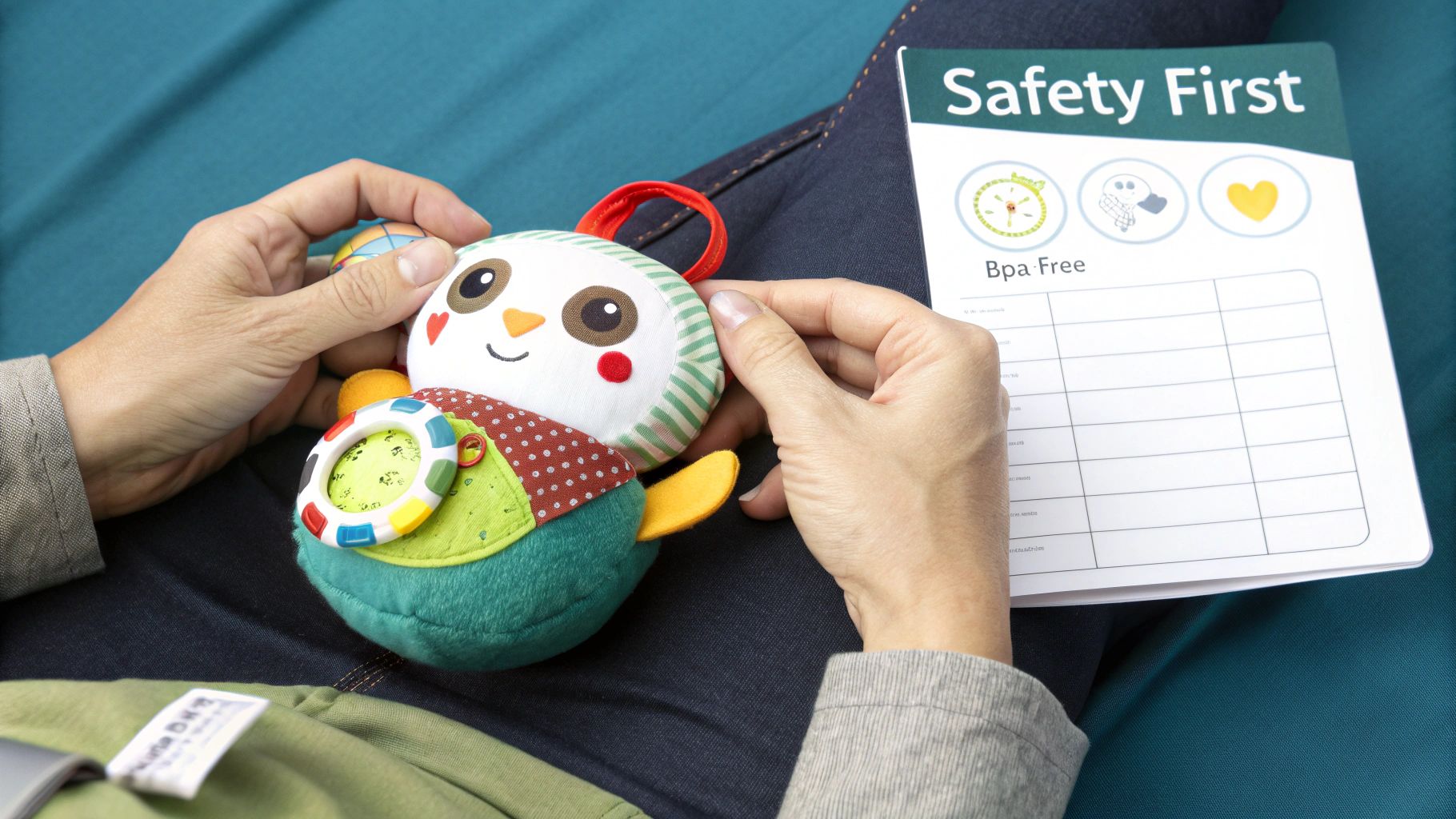
Choosing the right toys can make all the difference, turning a simple tummy time session into a fantastic developmental adventure. It’s not just about distraction; it’s about finding items that are safe, durable, and genuinely fascinating for your little one.
First Things First: Safety and Build Quality
When it comes to baby toys, safety is absolutely paramount. Always look for toys made from non-toxic, BPA-free materials, especially since everything ends up in their mouth! In the UK, the BS EN 71 mark is your go-to indicator, confirming the toy meets rigorous European safety standards.
Before you buy, give the toy a quick once-over:
- Are there any small, detachable parts that could pose a choking risk?
- Are all the edges smooth and rounded, perfect for curious hands and gums?
- Does it feel sturdy enough to withstand a good grasp, shake, or even a determined chew?
“Safety should never be negotiable when selecting toys for infants.”
Igniting Their Senses
The best tummy time toys are a feast for the senses, encouraging your baby to look, listen, and touch. This sensory exploration is what builds crucial neural connections in their brain. Look for toys that offer a mix of textures—think soft fabric next to a smooth, firm plastic ring. Gentle crinkles or soft jingles are also brilliant for sparking curiosity without being overwhelming.
Making it Visually Appealing
A newborn's vision is still developing, so high-contrast colours and bold patterns are much easier for them to focus on. Simple black-and-white patterns or bright, primary colours work wonders. Try to place these toys within 20–30 centimetres of your baby’s face, which is their clearest field of vision.
As they get a bit older, things like colourful soft plastic play balls are great for encouraging them to track movement and reach out.
Keeping it Clean
Let's be honest, baby toys get messy. To keep things hygienic and healthy, choose items that are easy to clean. Look for machine-washable fabrics or smooth surfaces you can quickly wipe down with a baby-safe cleaner. It's best to steer clear of anything with porous or spongy surfaces that can trap moisture and become a breeding ground for mould.
Quick Maintenance Tips
- Wipe down plastic toys with a damp cloth after they've been used.
- Always follow the label instructions for sterilising any teething parts.
- Pop soft toys or fabric covers in a gentle wash cycle and let them air dry completely.
Making an Informed Choice
With so many options out there, it can feel a bit daunting. The UK baby toys market was valued at a whopping $821.5 million USD in 2024, driven by parents looking for quality educational and sensory products.
To simplify your decision, here’s a quick-glance table of what to look for.
| Feature | What to Look For | Why It Matters |
|---|---|---|
| Material | BPA-free, non-toxic | Prevents your baby from ingesting harmful chemicals. |
| Certifications | BS EN 71 Safety Standard | Guarantees the toy has passed strict safety tests. |
| Sensory Value | Mixed textures, gentle sounds | Encourages exploration and helps develop motor skills. |
For even more ideas on this, we've put together a deeper guide on sensory toys for babies.
Thinking About Durability and Sustainability
If you prefer to invest in toys that last, consider options made from sustainable materials like FSC-certified wood or natural rubber. Not only are they incredibly durable and able to withstand plenty of chewing, but they're also a more environmentally responsible choice. A well-made toy can see your baby through many stages of development, which is better for your wallet and the planet.
“Regularly rotate toys to keep sessions fresh and engaging for your baby.”
A great tip is to switch out the toys every week or so. This keeps things new and exciting, holding your baby's attention for longer during tummy time.
Making Tummy Time a Fun Daily Routine
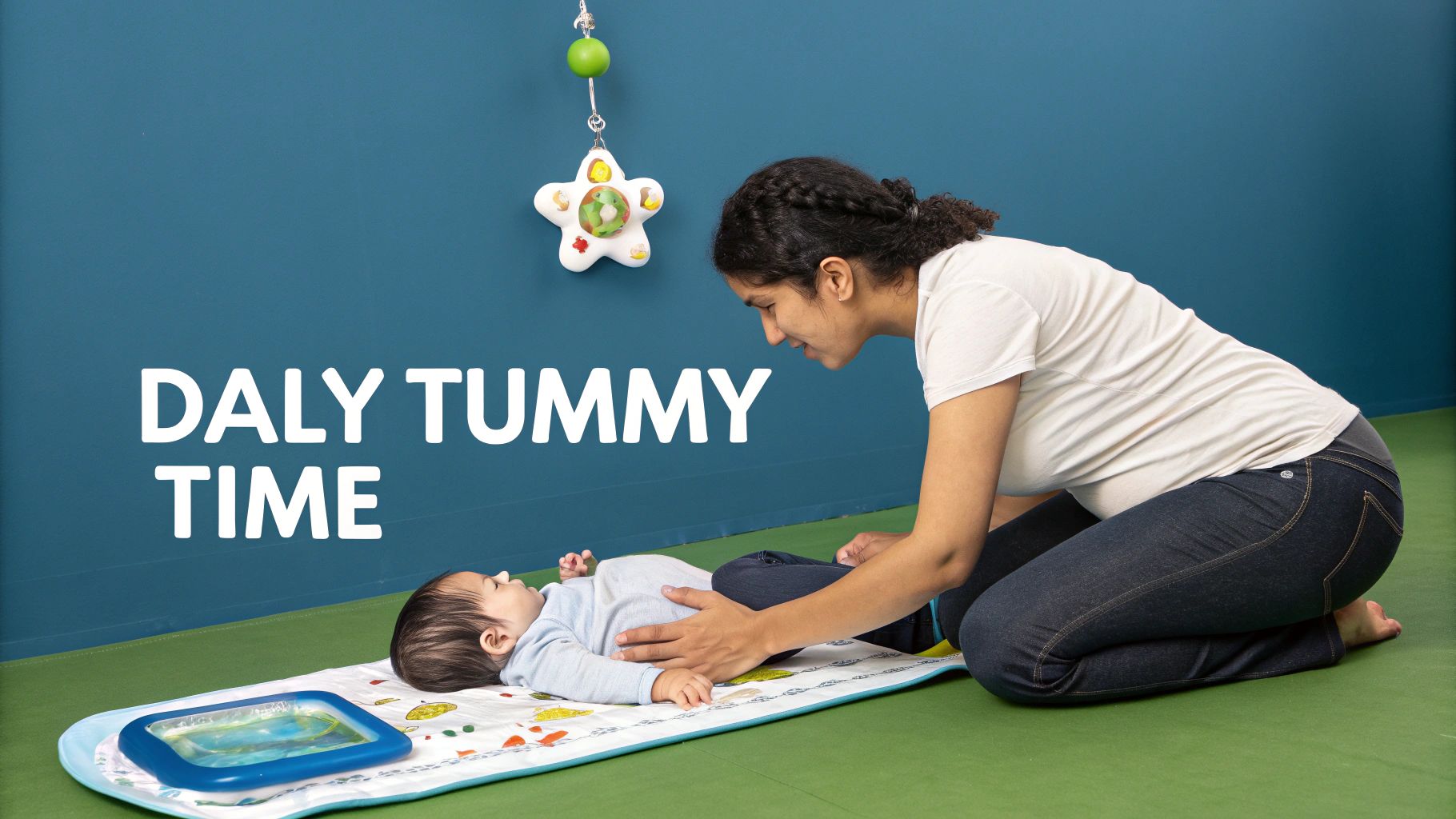
The secret to making tummy time work? Consistency. It’s not about blocking out huge chunks of your day, but about weaving tiny, happy moments into your existing routine. If you treat it like a mini-game rather than a chore, it can become a cherished part of your day, just like a cuddle or a nappy change.
A great trick is to piggyback it onto something you already do every day. Maybe it's after their morning feed or right after a warm bath. This creates a predictable rhythm, helping your baby feel secure because they know what’s coming next.
Finding the Right Time and Place
As any new parent knows, timing is everything. A baby who is tired, hungry, or just a bit grumpy won't be a happy camper on their tummy. You're looking for that sweet spot when they're calm and alert, and their last meal has had a little time to settle.
You also don't need a special, dedicated gym set-up. While a play mat is fantastic, your living room floor on a soft blanket works just as well. Even lying on your chest counts! The perfect stage is wherever you both feel comfortable.
Sample Play Session Ideas
Mixing things up keeps tummy time from getting stale for your baby—and for you! By rotating different tummy time newborn toys and activities, you can spark their curiosity and work different little muscles. Here are a few simple ideas to get you going:
- The Sensory Splash: A water play mat is a brilliant tool. The gentle slosh of the water and the sight of colourful floating shapes will fascinate your baby, encouraging them to push up to get a better view.
- The Mirrored Motivation: An unbreakable baby mirror can work wonders. Prop it up in front of them and watch as they try to lift their head to get a better look at that interesting baby staring back at them.
- The High-Contrast Gallery: For newborns, simple black-and-white flashcards are mesmerising. You can set up a few in their line of sight, or slowly move one from side to side to encourage them to track it with their eyes.
The best tummy time sessions are short, sweet, and frequent. Aim for several brief 'workouts' throughout the day rather than one long, stressful one.
Supporting a Reluctant Baby
What happens if your baby starts crying the second their tummy hits the floor? First off, don't panic. This is completely normal. It's hard work lifting that heavy head when your neck and shoulder muscles are still brand new! The trick is to be patient, offer lots of support, and start small.
With a few gentle adjustments, you can make the whole experience much more comfortable and slowly build their confidence.
- Start with Short Bursts: In the beginning, aim for just 30-60 seconds at a time. That's it. As they get stronger and more used to it, you can gradually add a little more time.
- Use a Prop: Roll up a small receiving blanket or towel and tuck it under your baby’s chest, right below their armpits. This little bit of support gives them a better angle and makes it easier to lift their head.
- Try Tummy-to-Tummy: Lie down on your back and place your baby on your chest, facing you. This is a wonderfully gentle introduction. They get all the muscle-strengthening benefits, plus plenty of reassuring eye contact and bonding time with you.
How Stage-Based Toys Support Your Baby’s Growth
Imagine having a personal trainer for your baby's development, one that knows exactly what exercise to introduce and when. That’s essentially what stage-based toys do. They arrive right on cue, perfectly matched to what your baby is working on, gently encouraging them toward their next big milestone. It takes the guesswork out of the toy shop.
With a subscription like Grow With Me, you can say goodbye to that overwhelming pile of plastic gathering dust in the corner. Instead, a thoughtfully curated kit appears each month, tailored to your baby's current needs. You'll be able to see exactly how each item helps build their muscle strength, sharpen their vision, and spark their natural curiosity.
For example, in those first couple of months, you’ll get things like high-contrast cards and baby-safe mirrors that get your little one's eyes tracking and focusing. A few months later, when they're starting to reach out, textured rattles and crinkly books will appear to encourage them to grasp and explore. By the time they hit five months, an activity gym might arrive to help them learn to pivot and push up, building that all-important core strength.
- For 0-2 months: Visual tracking tools to build neck strength.
- For 2-4 months: Reaching and grasping toys to improve coordination.
- For 4-6 months: Pivoting and pushing equipment to boost mobility.
This timed approach keeps things interesting and challenging for your baby, but never so difficult that they get frustrated. It means you can watch their progress unfold month by month, confident that every toy is a stepping stone, not just another purchase.
How The Subscription Works
With Grow With Me, a new box with 3-5 carefully selected items lands on your doorstep every month. These aren't just random toys; they’re chosen based on solid developmental research and then fine-tuned by early-years experts. Inside each box, you'll also find simple, clear guide cards that explain the 'why' behind each toy and give you practical tips on how to use it.
You can also feel good about what you're bringing into your home, as over 80% of the toys are made from natural, sustainable materials. Once you sign up, your box typically arrives within 2-3 days, so you can dive straight into your new routine.
“Stage-based play removes guesswork and ensures every toy delivers developmental value and joy,” says early-learning specialist Emily Harris.
Getting started is simple:
- Sign up and tell us your baby’s age.
- Your first kit will arrive in just a few days.
- Follow the friendly guide cards for ideas.
- Watch your baby’s skills grow each month.
Tips For Using Stage-Based Toys
To keep things fresh and exciting for your baby, try rotating the toys. You don't need to have everything out at once. Mix and match them during tummy time, floor play, and quiet moments together. The guide cards are brilliant for giving you fresh ideas on how to adapt each toy as your baby grows.
Here’s a quick look at how the focus of the toys evolves:
| Stage | Focus | Example Toy |
|---|---|---|
| 0-2 months | Vision and neck strength | High-contrast cards |
| 2-4 months | Reach and grasp | Textured rattle |
| 4-6 months | Core stability | Activity gym |
Think of it as a perfectly paced workout plan for your baby’s body and mind. A subscription like Grow With Me is more than just a box of toys; it’s an investment in your baby's development, making every moment of tummy time count.
Your Tummy Time Questions Answered
One of the first questions new parents have is when they should introduce toys into their tummy time routine. Let's get into the specifics.
When To Start Tummy Time Toys
For a full-term, healthy baby, you can start tummy time right from day one. It's never too early to begin building those foundational muscles.
When it comes to toys, you can introduce simple, high-contrast items at around 2-4 weeks old. At this age, their vision is still developing, so bold black-and-white patterns are perfect for capturing their attention and encouraging those first little head lifts.
- Start with very short sessions, just 30-60 seconds at a time, but try to do it several times a day.
- Position the toys within 20-30 centimetres of your baby's face, right in their line of sight.
- Don’t forget to get down on the floor with them! Your face and voice are their favourite things to engage with.
What To Do If Your Baby Hates Tummy Time
It's incredibly common for babies to protest during tummy time. Think about it – they're doing a tough workout using brand-new neck and shoulder muscles, so it's understandable if they get a bit fussy.
With a bit of patience and creativity, you can help turn their frustration into fun.
- Try doing tummy time on your chest or lap. This way, they feel secure and can see your reassuring face.
- A small, rolled-up towel placed under their chest can offer a little extra support and make the position more comfortable.
“Every baby progresses at their own pace, so keep sessions gentle and fun.”
How To Keep Newborn Toys Clean and Safe
Hygiene is non-negotiable, especially since a baby’s primary method of exploration is putting things in their mouth.
For fabric toys, a weekly wash on a gentle cycle in the machine should do the trick. Plastic toys and water mats can be easily wiped down with a baby-safe, non-toxic cleaner.
A good routine makes all the difference:
- Give surfaces a quick wipe-down after each play session.
- Wash any fabric components separately to make sure they get thoroughly clean.
- Always let toys air-dry completely before putting them away to prevent any mould from growing.
Following these simple steps means your baby's playthings will always be safe and ready for the next session, so a little drool or spit-up won't ever derail the fun.
A stage-based approach takes the guesswork out of this, delivering new, clean toys right when your baby is ready for the next challenge. It’s like having a personal coach for each developmental workout, with puzzles and activities that evolve as your baby grows.
Next Steps For Play and Growth
With these strategies, you can make tummy time an enjoyable part of your daily rhythm. The key is to keep it fresh and engaging.
Short, frequent sessions with a consistent rotation of toys will keep your little one’s curiosity piqued. For example, you might swap a high-contrast card for a crinkly fabric book at three weeks. A few weeks later, introducing textured rattles can motivate them to start reaching and grasping as their muscles get stronger.
By six months, you’ll be amazed to see them pivoting and even rolling on more complex play mats. These little milestones are huge markers of progress and do wonders for your baby’s confidence.
Remember, success here isn’t measured in minutes on the clock, but in effort and joy. Celebrate every tiny win and always keep the atmosphere playful and free of pressure.
With curiosity as your guide, each tummy time session becomes a new journey of discovery.
Subscribe to Grow With Me at https://shop.growwithmesubscriptionbox.co.uk