
Finding the Perfect Toy for One Year Olds
When you're looking for the best toy for one year olds, it's all about finding something that clicks with where they are right now. The perfect toy should spark their curiosity and bring a smile to their face, not leave them feeling frustrated. It’s about choosing toys that nurture their growing motor, language, and thinking skills, turning a simple play session into a fantastic opportunity for growth.
Understanding Your One Year Olds World
Welcome to the amazing, chaotic, and wonderful world of a one-year-old! This stage, from 12 to 24 months, is absolutely packed with incredible changes as your baby transforms into a determined little toddler. They’re no longer just watching from the sidelines; they are hands-on explorers, driven by a powerful need to figure out how everything works.
In their hands, a toy is so much more than a simple distraction. It’s a vital tool for forging new connections in their brain, building up their muscles, and even getting their first taste of social skills.
Think of their brain as a construction site buzzing with activity, and play is the raw material they use to build. Every single time they stack a block, poke a button, or flip the page of a board book, they're laying down the essential foundations for all the learning that's yet to come.
This is exactly why matching toys to their developmental stage is so important. You wouldn’t hand a first-time builder the blueprints for a skyscraper, right? In the same way, a toy that's too far ahead of their abilities will only lead to frustration. The real goal is to find that perfect balance—a toy that’s just challenging enough to keep them hooked, but not so tricky that they give up. This is how we build their confidence and feed their natural love of learning.
Key Areas of Development
At this age, development isn’t a straight line. It's more like a web of skills that are all connected and grow together. A great toy will often support several of these areas at once.
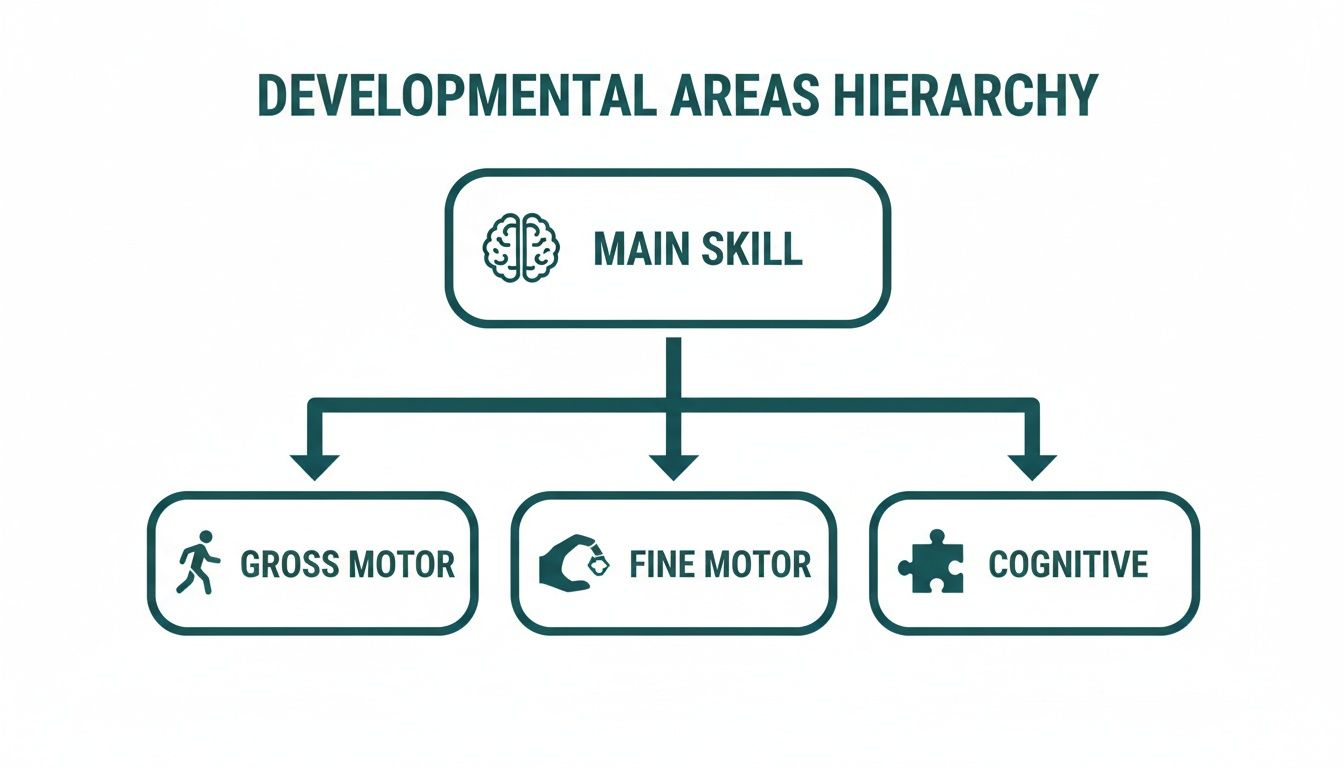
As you can see, physical abilities (motor development) and thinking skills (cognitive development) are two huge branches of their overall growth, and both are equally important. For a deeper look into this, you can learn more about what developmental milestones to expect in our detailed guide.
Why Stage-Based Play Is So Important
A one-year-old’s brain is an absolute powerhouse. It's buzzing with activity, forming more than a million new neural connections every single second. The right toy, introduced at just the right moment, acts as a catalyst for this incredible growth, turning a simple play session into a profound learning experience. This is the whole idea behind stage-based play.
Think of it like being a personal trainer for your toddler's developing mind. You wouldn't hand a beginner the heaviest weights in the gym on their first day. In the same way, the best toy for a one-year-old is one that meets them exactly where they are on their unique developmental journey.
If a toy is too simple, they'll get bored in minutes, and a valuable chance for learning is lost. On the other hand, a toy that’s too complex can quickly lead to frustration, discouraging them from exploring and building that precious confidence. Stage-based play is all about finding that sweet spot—where a toy is engaging, just challenging enough, and perfectly suited to what they can do right now.
Hitting The Developmental Sweet Spot
When you match a toy to your child's specific stage, you ensure that their playtime is supporting growth in four key areas all at once. Take a simple set of stacking rings, for example. It’s so much more than just a colourful decoration for the nursery.
- Motor Skills: As they grasp, hold, and try to place the rings, they’re working on their fine motor skills and crucial hand-eye coordination.
- Cognitive Skills: Figuring out how the rings fit onto the peg—and eventually, in what order—is a fantastic first lesson in problem-solving and understanding size.
- Sensory Skills: The feel of the smooth wood, the sight of the bright colours, and even the clatter the rings make when they fall provides a rich feast for their senses.
- Social-Emotional Skills: When you play with them, offering encouragement like, "Great job putting the blue ring on!", you’re building their self-esteem and making your bond even stronger.
This powerful synergy is what makes stage-based play so effective. It’s not about drilling them with flashcards or forcing learning; it’s about giving them tools that naturally nurture skill development through joyful, curious exploration.
Why This Approach Resonates With Parents
It's clear that parents across the UK are tuning into the importance of toys that support these foundational early years. In fact, infant and preschool toys are the leading segment in the massive £2.0 billion UK toy industry. This category—full of the stackers, shape sorters, and sensory toys perfect for a one-year-old finding their feet—is more popular than ever. The sheer volume of online searches for ‘baby toys’ and ‘toddler toys’ every month points to a real shift towards more intentional, development-focused choices. You can dive deeper into the UK toy market trends on ibisworld.com.
A perfectly matched toy doesn’t just entertain; it empowers. It respects your child's current abilities while gently encouraging them to reach for the next milestone, building a strong foundation for a lifetime of learning.
By choosing toys that align with their stage, you're not just giving them something to pass the time. You’re handing them an invitation to discover, to solve puzzles, and to master new skills at their own pace. This makes playtime more fun for them and incredibly rewarding for you.
The Building Blocks of Brilliant Playtime
Choosing the right toy for a one-year-old can feel like a huge decision, but it gets a lot easier once you know what you’re looking for. Instead of getting distracted by flashy features, let’s get back to basics and look at what turns a simple object into a powerful tool for your child’s development.
Think of a great toy as a key that unlocks a specific new skill. From strengthening those tiny hand muscles to encouraging their first wobbly steps, every feature should have a clear purpose. When you understand how these toys actually help your child, you can make choices that truly matter.
Powering Up Motor Skills
At this age, physical exploration is everything. Your one-year-old is on a mission to master their own body, and the right toys can give them a massive helping hand with both big and small movements.
-
Gross Motor Skills: These are the big, whole-body movements that get them from A to B. A classic push walker is fantastic, offering just enough stability to practise walking. A simple ride-on toy not only builds serious leg strength but also introduces the tricky concepts of balance and coordination.
-
Fine Motor Skills: This is all about the small, precise movements in their hands and fingers. A set of chunky wooden blocks isn’t just for building towers; every single time your child picks one up, they’re practising their grasp. It’s the same foundational skill they’ll one day use to hold a crayon or use a fork.
A simple shape sorter does so much more than teach squares and circles. The act of grasping a piece, turning it, and aligning it with the correct slot is a complex workout for hand-eye coordination and problem-solving, all disguised as a fun game.
Igniting Their Senses and Minds
Playtime for a one-year-old is a full-body experience. They learn by touching, seeing, hearing, and figuring out how things fit together. The best toys for this age will engage their natural curiosity and spark those early "aha!" moments.
Toys with different textures—a bumpy ball or a soft, crinkly book—provide valuable sensory input. This helps their brain learn to process and organise all the information coming in from the world around them. Simple musical instruments, like a little xylophone or some maracas, introduce the concept of cause and effect in the most delightful way: "When I do this, it makes a sound!"
Fostering Language and Creativity
Even though they might only have a few words, your one-year-old’s language skills are developing at lightning speed. Toys can create wonderful little moments for you to talk, share, and build their vocabulary together.
Simple, sturdy board books with clear pictures of familiar objects are perfect for this. As you point and name things—"Look, a yellow duck!"—you are directly building their understanding of language. It’s a shared experience that connects words to the world.
And please, don't underestimate the power of open-ended toys. These are the wonderfully simple toys that don’t have a single, fixed purpose, like a set of wooden blocks.
- Today, they can be stacked into a tower.
- Tomorrow, they might become a fence for a toy animal.
- Next week, they could be "food" in a pretend kitchen.
This flexibility is what sparks real imagination and creativity. An open-ended toy grows with your child, offering new challenges and possibilities as their own skills and ideas become more complex. This adaptability makes them one of the smartest investments you can make for their playroom.
Toy Safety and Materials: What Parents Need to Know
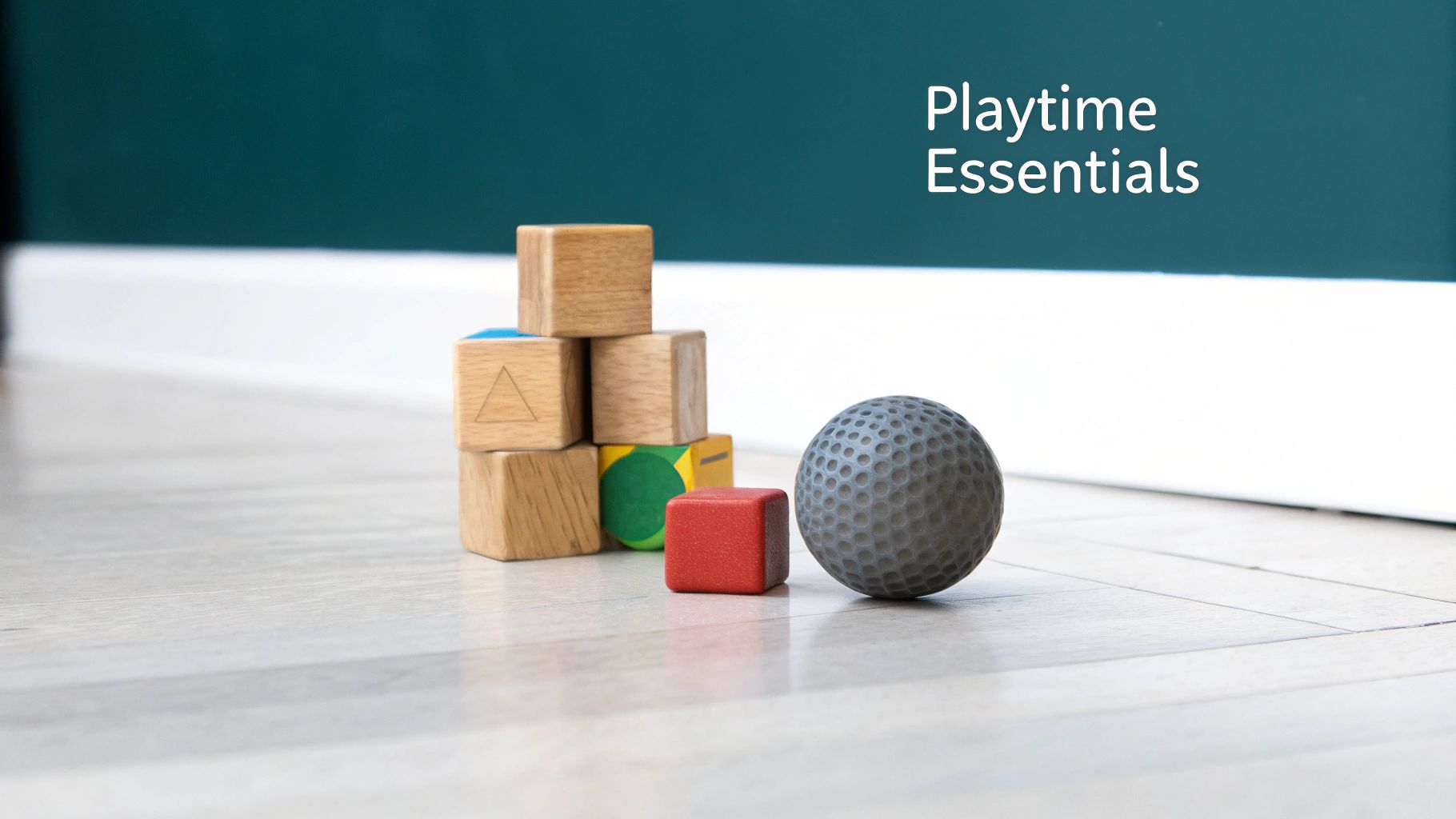
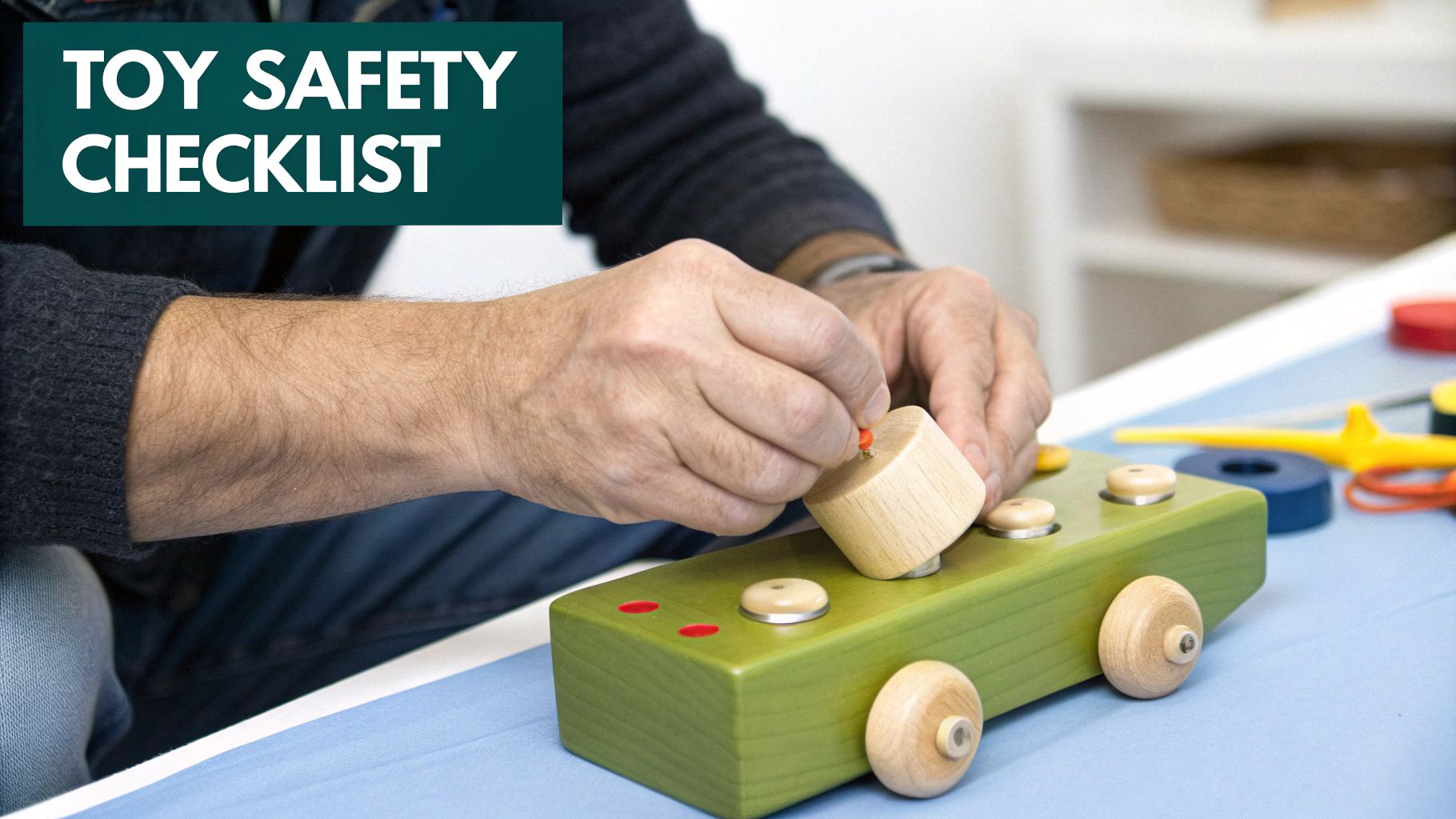
As any parent of a one-year-old knows, everything—and I mean everything—ends up in their mouth. It’s how they explore and make sense of their world, which makes toy safety a top priority. A quick check before playtime begins gives you the peace of mind to let them get stuck in.
Your first line of defence is a simple tool you already have: a toilet paper tube. If any toy or one of its parts can fit completely inside, it's a potential choking hazard for a child under three. This brilliant little hack is the fastest way to vet a new toy.
Next, run your hands over the toy's entire surface. You’re feeling for any sharp edges, points, or splinters that could cause a cut or a scratch. It's also worth checking any strings or cords; anything longer than 22 cm can pose a strangulation risk. And always, always look for the CE or UKCA markings—your guarantee that the toy meets the UK's strict safety standards.
Choosing The Best Materials
The material a toy is made from is just as crucial as its design. While plastic certainly has its place, many parents are rediscovering the benefits of natural materials like wood, and for good reason.
The UK's baby toy market, valued at a hefty £1030.0 million, highlights a shift in what families are looking for. Parents are increasingly seeking out educational, high-quality toys made from sustainable sources over throwaway plastic novelties.
Wooden toys, in particular, offer a sensory experience that plastic just can’t match. The natural weight, subtle grain, and gentle warmth of wood provide a rich tactile feedback that helps your child’s brain build stronger connections as they play.
Wooden toys aren't just durable; they're an investment in grounded, sensory-rich play. Their simplicity sparks imagination, and their sturdiness means they can be passed down, creating a beautiful connection between generations.
The Benefits of Natural Materials
Beyond the lovely sensory feel, choosing toys made from natural and high-quality materials comes with some very practical upsides.
- Durability: Let’s be honest, one-year-olds aren't exactly gentle. A well-made wooden toy can withstand being dropped, thrown, and chewed on, making it a true long-term investment for your playroom.
- Safety: When finished with non-toxic, water-based paints, wooden toys are a much safer bet for little ones who love to mouth everything. You can relax, knowing they aren’t being exposed to nasty chemicals like BPA or phthalates.
- Sustainability: Opting for toys made from sustainably sourced wood is an easy way to make a more environmentally conscious choice, reducing the amount of plastic in your home and, eventually, in landfills.
By running these simple safety checks and choosing high-quality, natural materials, you're doing more than just buying a toy. You’re creating a safe, nurturing, and stimulating environment where your child can truly thrive. If you'd like to dive deeper, have a look at our guide on the benefits of wooden toys.
Making the Most of Playtime Together
Having a fantastic, age-appropriate toy is a great start. But the real magic happens when you join in. Your presence and participation can transform a simple toy into a brilliant tool for learning and, more importantly, for connection.
This isn’t about leading the show or creating a rigid lesson plan. It’s simply about being there with them, fully present and ready to respond. When you’re engaged, you act as a secure base, giving your little one the confidence to explore, experiment, and solve problems on their own terms. And all the while, you’re strengthening that precious bond between you.
How to Be Their Favourite Play Partner
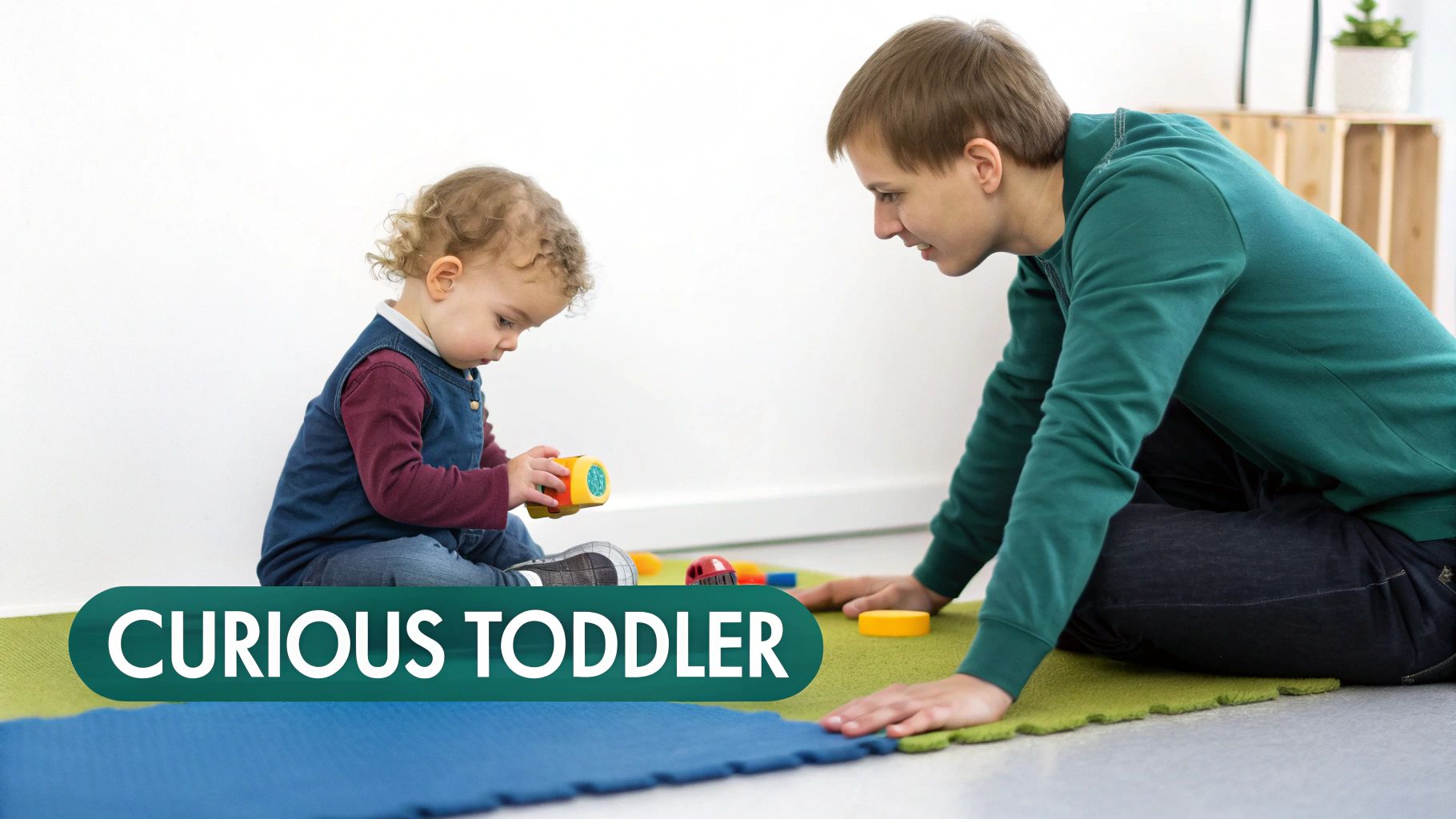
One of the best things you can do is get right down on the floor with them. Being at their level physically brings you into their world, sending a clear message: "Your play is important, and I'm here to share it with you."
Try being their personal 'sportscaster'. As they explore a toy, you can narrate what they’re doing with warmth and encouragement. Simple phrases like, "Wow, you put the blue block on the red one!" or "Look at that! You made the car roll so fast," help build their vocabulary and connect words to actions. It validates their efforts without interrupting their flow.
You can also gently model new ideas. Maybe you show them how a stacking ring can be rolled across the floor like a wheel. Just show them once, then step back and see what they do. The idea is to spark curiosity, not to instruct.
Think of your involvement as a form of scaffolding. You’re providing just enough support to help them reach a new height in their play, building their confidence and problem-solving skills one little interaction at a time.
Simple Ideas for Meaningful Play
You don't need complicated plans to make playtime more interactive. It’s the small, consistent moments that make the biggest difference.
Here are a few easy tips to try during your next play session:
- Take Turns: With a shape sorter, you can place a shape in a slot, then hand a piece to them. This simple back-and-forth is one of their very first lessons in social skills and patience.
- Ask “What If?” Questions: They might not be able to answer with words yet, but asking, "What will happen if we push this button?" encourages them to think about cause and effect. Their curious expression is the only answer you need.
- Embrace the Repeat Button: Toddlers thrive on repetition. It’s how they master skills and build confidence. So, when they want to stack the same blocks for the tenth time, celebrate it! Each time, they are cementing a new connection in their brain.
By becoming an active participant in their playtime, you're doing so much more than just having fun. You’re helping to build a solid foundation for a lifetime of curiosity and learning. For a few more ideas, take a look at our guide to 11 essential play-based learning activities you can start today.
Making Smart Choices for Your Growing Toddler
Walking into a toy shop can feel pretty overwhelming. There’s so much choice, and it’s easy to feel the pressure to buy more and more, leading to a cluttered playroom and a lighter wallet. But here’s the secret: building a fantastic space for your toddler isn't about having a mountain of toys. It’s about making smart, purposeful choices.
By focusing on quality over quantity, you can curate a small but mighty collection of toys. The trick is to prioritise things that are just right for their developmental stage and encourage open-ended play. These are the real gems—the toys that grow with your child, offering new ways to play and sparking their imagination month after month.
This mindset shifts toy buying from a stressful chore into a thoughtful investment in your little one's learning journey. It helps make sure that playtime is always fun, engaging, and perfectly in sync with their amazing new skills.
Investing Wisely in Play
Choosing toys that match your toddler's developmental stage is the best way to avoid frustration (for both of you!) and waste. It's a strategy that's becoming more and more popular. The UK toy market has soared to £3.9 billion, and it's infant and preschool toys that make up the biggest slice of that pie. You can read the full research about the growing UK toy market on licenseglobal.com.
This really shows that parents are looking for more than just stuff; they want meaningful play experiences without all the guesswork. A great way to help family and friends find genuinely useful gifts for your toddler's big day is by setting up a Birthday Registry. It’s a simple way to ensure every new toy is a welcome and valuable addition.
By focusing on durable, open-ended, and stage-based toys, you create a sustainable play environment that nurtures creativity, reduces clutter, and makes every moment of play count.
Ultimately, the goal is to build a collection that supports your child on their incredible journey from wobbly first steps to confident, curious exploration. It’s all about making sure their first experiences with learning are filled with joy, wonder, and that brilliant sense of "I did it!"
Frequently Asked Questions
It’s completely normal to have questions when you're trying to find the perfect toys for your one-year-old. Let's tackle some of the most common ones that pop up for parents.
How Many Toys Does a One-Year-Old Actually Need?
This is a classic case of quality over quantity. It's easy to assume more toys mean more fun, but for a toddler, too many choices can be overwhelming. They often end up flitting from one thing to another without really engaging with anything.
A thoughtfully curated collection of around 8-10 high-quality, open-ended toys is the sweet spot. By rotating a few in and out every couple of weeks, you keep their play space feeling fresh and exciting, encouraging them to dive deeper into play without the clutter.
Are Electronic Toys Bad for My One-Year-Old?
It’s not that they’re “bad,” but they often put the child in a passive role. Think about it: when a toy lights up and makes noise at the push of a button, the toy is doing all the work. The child is just an observer.
The real magic happens when your little one is an active participant. Classic toys like wooden blocks, shape sorters, and stacking rings invite them to problem-solve, experiment, and use their own imagination. That hands-on, "I did it!" experience is where the most powerful learning happens.
The best toys don't perform for your child; they invite your child to perform. Simple, hands-on play is what builds those crucial connections in their developing brain.
When Should I Introduce Puzzles to My Toddler?
Right around their first birthday is a brilliant time to bring in their very first puzzles. The key is to start simple. Look for chunky wooden puzzles with just three or four pieces, each with a large, easy-to-grip knob.
These first puzzles are less about a difficult challenge and more about building foundational skills. They help your toddler develop hand-eye coordination and fine motor control while introducing them to the idea of matching shapes. Most importantly, solving it gives them a huge confidence boost!
Ready to take the guesswork out of playtime? The Grow With Me subscription delivers perfectly matched, stage-based play kits right to your door, filled with beautiful, high-quality toys that support your one-year-old's development every step of the way. Discover your first play kit today.