

Sensory Lights Toys: Your Guide to sensory lights toys for Development
You might think of sensory light toys as just another glowing gadget, but they’re actually powerful tools that help kickstart your child's early development. With their captivating lights, gentle colours, and engaging patterns, these toys are designed to help your baby or toddler make sense of the visual world, building essential skills one play session at a time.
What Are Sensory Lights Toys?
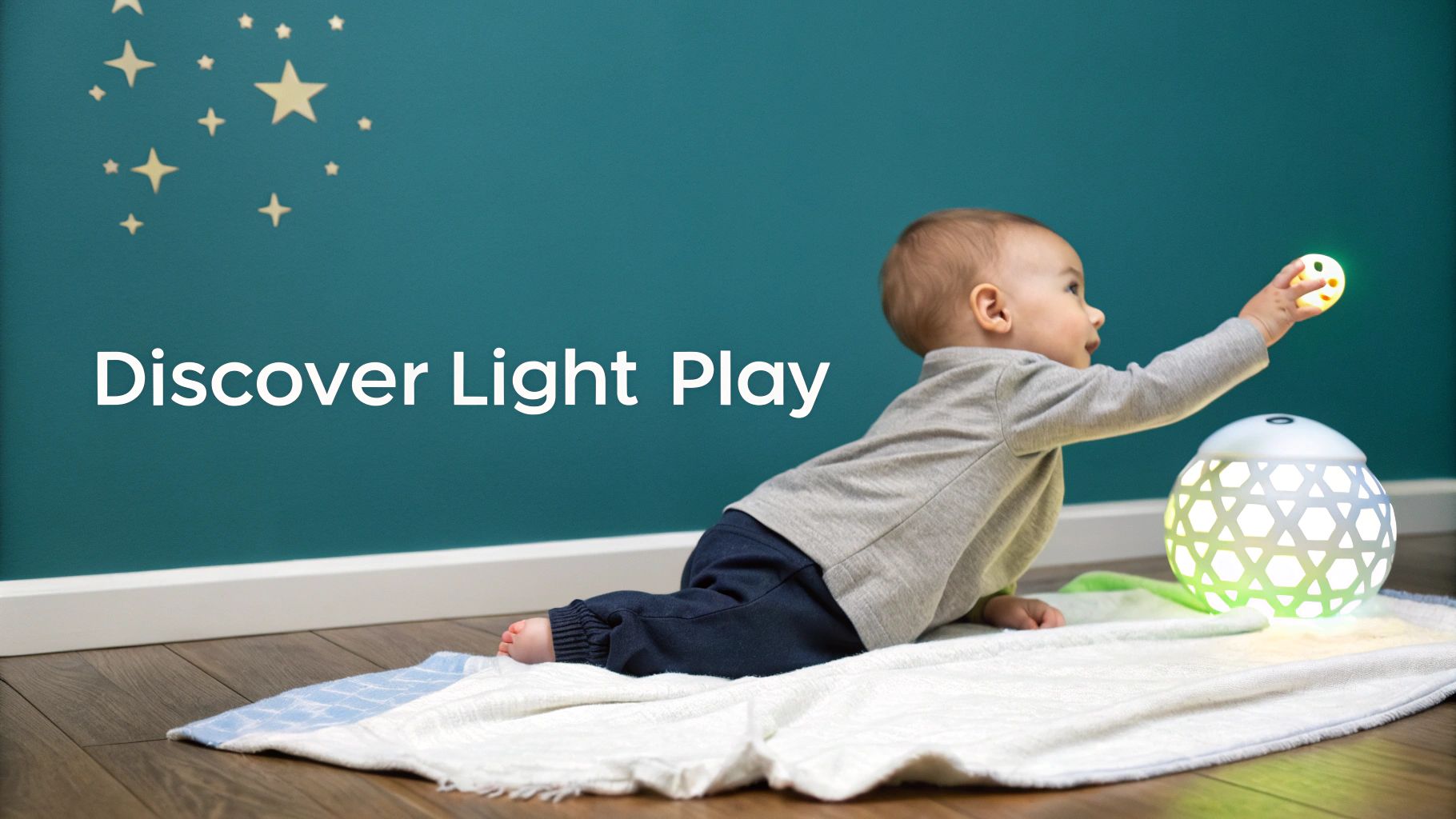
Imagine landing in a bustling new city for the first time without a map. It's a jumble of sights and sounds coming from every direction. For a baby, the world is exactly like that new city, and their senses are working overtime to process all the new information. Sensory lights toys act as a friendly, interactive guide for their developing visual system.
These aren't just passive entertainers meant to keep your little one distracted. Think of them as active partners in your child’s learning journey, specifically created to stimulate their sense of sight in a controlled and beneficial way. This helps their brain forge the crucial neural connections that lay the groundwork for more complex skills down the road.
The Purpose Behind the Play
At its heart, a sensory light toy is an invitation to interact. When a baby follows a soft, moving light with their eyes, or a toddler presses a button to see what glows, they're learning incredibly important lessons. These simple actions are the building blocks of major cognitive milestones.
The main goals of these toys are to:
- Develop Visual Tracking: Following a moving light strengthens eye muscles and improves the ability to track objects—a skill that’s vital for everything from catching a ball to learning to read.
- Teach Cause and Effect: When your child’s action—a tap, a shake, or a press—makes a light appear, they learn a fundamental concept: "I did this, and that happened." This is empowering and sparks their natural curiosity.
- Build Object Permanence: Toys that light up and then slowly fade away help babies grasp that things still exist even when they can't be seen.
A well-designed sensory toy meets a child right where they are developmentally. It offers just enough stimulation to be interesting without being overwhelming, turning simple playtime into a gentle but effective learning experience.
More Than Just Lights
While the light-up element is the main event, the best sensory lights toys often bring other senses into the mix. You'll find many that incorporate different textures for tactile exploration or play soft sounds that sync up with the light patterns. This multi-sensory approach makes for a much richer, more connected experience.
It’s a bit like learning a new language by both seeing the words and hearing them spoken. The combination reinforces the lesson, making it stick. A toy that glows and crinkles when squeezed provides double the sensory feedback, creating stronger pathways in the brain.
Ultimately, these toys turn abstract developmental concepts into tangible, joyful moments. They offer a safe and controlled way for your child to explore their world, build confidence, and lay a solid foundation for all the learning yet to come. To help unlock a child's world, it's great to expose them to a range of experiences. You can explore diverse activities for kids and teens that cater to different interests and developmental stages. Every playful moment is a real opportunity for growth.
How Light-Based Play Sparks Early Development
Picture your baby’s brain as a new city, waiting for the lights to be switched on. Every new experience—a soft touch, a gentle sound, a captivating sight—flips a switch, illuminating another street or building and forging new connections. In this city, sensory lights toys are the master electricians, carefully wiring your baby's developing visual system through the simple magic of play.
These toys aren't just glowing gadgets designed to distract. They are carefully crafted tools that turn light into learning. When your little one’s eyes follow a soft, moving glow, it's more than just a moment of curiosity. It’s a proper workout for their eye muscles, building the strength and coordination they’ll need for everything from catching a ball to one day following words across a page.
Building the Brain Through Vision
To a newborn, the world is a fascinating but blurry place. Their visual system is still figuring out how to focus, track, and make sense of it all. A sensory light toy cuts through that fuzz, offering a clear, high-contrast focal point that encourages them to engage their eyes.
This visual stimulation is a direct line to nurturing cognitive growth. Every time they interact with light, neural pathways in their brain fire up and become stronger. This process is the absolute foundation of learning and memory.
Think of it like this: A baby’s brain is full of potential connections, like dormant seeds in a garden. Light-based play is the water and sunlight that makes these seeds sprout, creating a rich, thriving network of cognitive skills.
It's no surprise that parents across the UK are looking for toys that support this kind of developmental play. The baby toys market, currently valued at USD 1,030 million, is expected to grow to USD 1,550 million by 2035. Toys that combine gentle lights with soft textures are seen as vital for sensory exploration, helping over 70% of infants improve their hand-eye coordination by their first birthday, according to NHS guidelines.
Learning Cause and Effect
As your baby gets a bit older, the lessons from light-up toys become more complex. When a toddler pushes a button and is rewarded with a cheerful flash of light, they're learning one of life's most powerful lessons: cause and effect. That "I did that!" moment is a massive boost to their developing sense of independence and confidence.
This simple action-and-reaction loop teaches them about control and predictability—two very reassuring concepts for a little person in a big, confusing world. It also fuels their curiosity, encouraging them to experiment and figure things out, which is the very beginning of scientific thinking and problem-solving.
Fostering Motor Skills and Emotional Regulation
Light-based play doesn't just work the brain; it gets the body moving, too. A captivating light projected onto the floor can be the perfect motivation during tummy time, encouraging a baby to lift their head and strengthen their neck and core muscles. For a toddler, a glowing toy can inspire them to crawl, toddle, or reach, giving their gross and fine motor skills a fun, self-directed workout.
On top of all that, the right kind of light can have a huge impact on a child's mood. Rhythmic, slow-fading lights can be incredibly soothing for a fussy or overstimulated baby. By creating a calm, predictable visual pattern, these toys can help regulate their nervous system, making them a brilliant addition to quiet time or the bedtime routine. You can learn more about the wide range of benefits that different sensory toys for babies can offer.
While light-based play provides a unique route for development, it works wonderfully alongside other engaging activities. For instance, introducing personalized books for kids can also spark a child's imagination and foster a lifelong love for reading. At the end of the day, purposeful toys like these transform playtime into a rich learning experience, nurturing your child’s growing mind and body with every single flash, glow, and colour.
Choosing the Perfect Sensory Toy for Every Stage
When it comes to picking the right sensory lights toy, a child's developmental stage is a far better guide than the number of months on their birth certificate. You wouldn't hand a complex puzzle to a newborn, and the same logic applies here. Matching a toy's features to what your little one is currently exploring and mastering is the real secret to unlocking its benefits.
This way of thinking turns a simple toy purchase into a thoughtful investment in your child’s learning journey. By focusing on their milestones, you can give them a tool that meets them exactly where they are, offering just the right amount of challenge to inspire their next big leap.
From Newborn Gazes to Toddler Puzzles
For a newborn (0-3 months), the world is a soft, blurry mix of light and shadow. Their visual system is just starting to get wired up. The best sensory lights toys for this stage have simple, high-contrast black-and-white patterns and a soft, slow-moving glow. These gentle visuals are easy for their developing eyes to focus on and track, building foundational visual skills without overwhelming their senses.
As they get a bit older (4-8 months), babies start to realise they can make things happen. This is the perfect time to introduce toys where a simple action—like a kick, a bat, or a shake—is rewarded with a gentle light or sound. It’s their first, powerful lesson in cause and effect.
The diagram below shows how sensory play is a cornerstone of early development, nurturing everything from cognitive skills to emotional growth in a connected, holistic way.
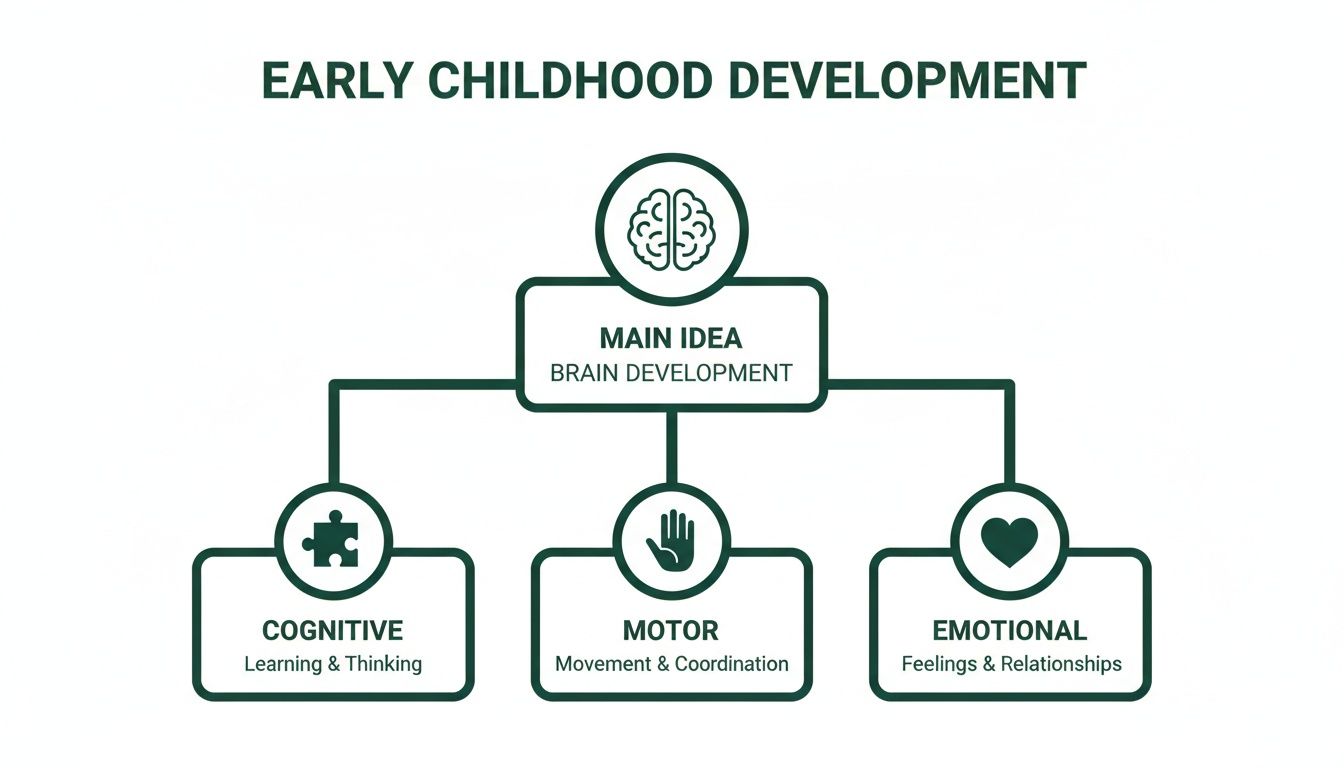
As you can see, sensory engagement isn't just about one thing; it supports a child’s development across the board.
Matching Toys to Milestones
Once your child starts crawling and then walking (9-18 months), their whole world opens up. They are now active explorers, driven by a powerful sense of curiosity. This is the time to look for sensory lights toys that encourage movement, like a light-up ball that rolls away, motivating them to crawl after it. Toys that require more precise actions, like pushing a specific button to make a light appear, also help to refine their fine motor skills.
By the time they hit the toddler years (18-24+ months), their cognitive abilities are truly blossoming. They’re ready for more complex challenges. This is the ideal stage for interactive light-up puzzles, colour-sorting games that offer a glowing reward, or toys that combine lights with sounds to teach early concepts like numbers or letters. These toys satisfy their growing desire to problem-solve and figure out how things work.
The goal is to find a toy that provides a 'just right' challenge. It should be intriguing enough to hold their attention but not so complex that it leads to frustration. This balance is where true, joyful learning happens.
To help you find that perfect match, we've put together a simple guide to help you choose sensory lights toys that support your child's growth, from building visual tracking skills in newborns to encouraging problem-solving in toddlers.
A Guide to Sensory Lights Toys by Developmental Stage
| Age Group | Key Toy Features to Look For | Developmental Skills Supported |
|---|---|---|
| 0-3 Months | High-contrast, slow-moving lights, gentle glows, simple patterns. | Visual tracking, focus, and sensory awareness. |
| 4-8 Months | Interactive lights (activated by touch/shake), soft textures. | Cause and effect, hand-eye coordination, tactile exploration. |
| 9-18 Months | Toys encouraging movement, specific buttons for lights. | Gross and fine motor skills, object permanence. |
| 18-24+ Months | Light-up puzzles, colour-matching, simple sequences. | Problem-solving, cognitive skills, early learning concepts. |
Choosing a toy from this table helps ensure that playtime is not just fun, but also perfectly tuned to what your child needs to thrive at each stage.
Prioritising Safety and Materials
No matter the stage, safety is always priority number one. Always choose toys made from non-toxic, baby-safe materials. For younger babies who explore everything with their mouths, make sure there are no small, detachable parts that could be a choking hazard. It's also vital that any battery compartments are securely screwed shut.
Materials like natural wood are an excellent choice because they’re durable, safe, and offer an extra layer of tactile sensory experience. Pairing these quality materials with thoughtfully designed light features creates a toy that is not only effective but also built to last.
For a deeper dive into choosing safe and engaging toys, check out our comprehensive guide on sensory toys for kids. By choosing wisely, you can feel confident that every moment of light-based play is safe, fun, and perfectly tuned to your child's developmental journey.
Weaving Light-Based Play into Your Daily Routine
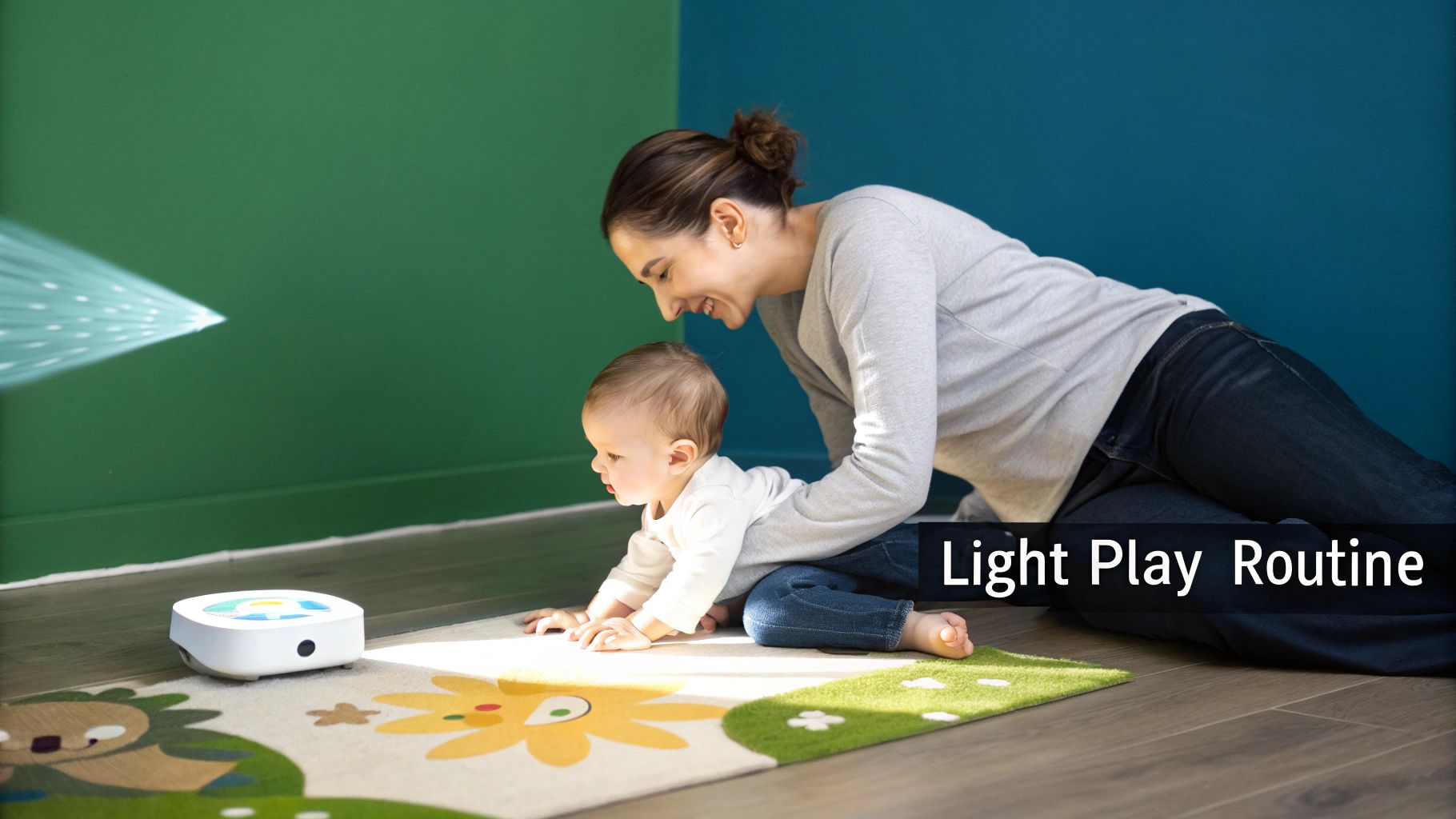
Creating magical play moments doesn't mean you need a perfectly planned schedule or a mountain of toys. The real magic happens when you weave sensory experiences into the everyday flow of your life, turning simple routines into brilliant opportunities for discovery and connection. Sensory lights toys are fantastic for this—they create effortless little ‘invitations to play’.
Try to think of these toys not as another thing to schedule, but as simple tools to enhance what you're already doing. They can help turn a tricky moment into a fun one or add a bit of wonder to a daily task. It’s all about making learning and development feel as natural as having a cuddle.
This approach takes the pressure off. Instead of feeling like you need to run structured "lessons," you can focus on creating small, meaningful moments of engagement that build powerful neural connections over time.
Morning Motivation and Tummy Time
We all know tummy time is crucial for building a baby’s neck and core strength, but let's be honest, it isn't always their favourite activity. This is where a sensory light toy can completely change the game. By placing a toy with a gentle, slow-moving light pattern just in front of your baby, you give them something captivating to focus on.
This simple trick encourages them to lift their head and use their muscles, often extending tummy time in a happy, tear-free way. The visual stimulation is just enough of a distraction to make the hard work feel like pure play.
Transforming Bath and Meal Times
Bath time is the perfect candidate for a sensory adventure. Waterproof, submersible light-up toys can turn the tub into a glowing underwater world. The way the lights dance and refract through the water is incredibly calming and mesmerising, which can be a lifesaver for a little one who’s a bit hesitant about the bath.
In the same way, a light-up spinner toy suctioned onto a highchair tray can make waiting for dinner a much more patient experience. It keeps little hands busy and redirects their focus, turning potential fussiness into a moment of concentrated fun.
The goal isn't to distract, but to enrich. By adding a sensory element to a routine, you give your child a positive and engaging focus, helping them build positive associations with daily activities.
It’s no surprise that parents are embracing these kinds of toys. The educational toys market in the UK, where sensory lights toys are a key category, brought in a revenue of USD 4,050.1 million and is expected to climb to USD 6,583.1 million by 2030. It just goes to show how much parents value toys that do more than just entertain. You can read more about the growth of the UK's educational toy market.
Creating a Calm Bedtime Ritual
That wind-down transition to sleep can be a real challenge for many families. A sensory light toy with a gentle, rhythmic glow or a calming ceiling projection can become a powerful and reassuring sleep cue. The predictable, soothing light helps signal to your child’s brain that it's time to slow down.
Here are a few ways to build this into a calming routine:
- Star Projectors: A projector that casts a slow-moving galaxy of stars onto the ceiling creates a wonderfully soothing atmosphere, perfect for helping a busy little mind to quieten down.
- Glowing Companions: A soft toy that gives off a warm, gentle glow can offer a lot of comfort and security in a dark room. Think of it as a modern, interactive night light.
- Sensory Bottles: Sometimes the simplest things are the most effective. A glittery sensory bottle provides a calming visual focus. You can even learn to make one yourself with our guide to DIY sensory bottles.
By using the same light-based toy consistently each night, you create a strong connection between that gentle glow and the feeling of safety and sleep. Before you know it, that toy becomes a reliable partner in your bedtime routine, making evenings a little more peaceful for everyone.
Your Checklist for Safe Sensory Light Play
There’s nothing quite like seeing the wonder on your child’s face during playtime. As parents, our job is to make sure their exploration with sensory lights toys is completely safe, so we can relax and soak in those precious moments. A few simple checks before and during play really can make all the difference.
Think of it like a pilot's pre-flight check. Before every take-off, they run through a list to guarantee a smooth flight. Doing the same for a new toy ensures your little one’s journey of discovery is just as safe and worry-free. This simple habit helps you spot potential problems before they ever arise.
Before You Buy or Unbox
Your first line of defence is making a smart choice right from the start. Before a toy even crosses your threshold, you can give it a quick once-over to judge its safety and quality. Always look for clear labelling and solid, sturdy construction.
-
Secure Battery Compartments: This is an absolute must. Batteries must be locked away in a compartment that requires a screwdriver to open. This simple feature is crucial for stopping tiny, curious fingers from getting to small, dangerous batteries.
-
No Small, Detachable Parts: For any child under three, try the toilet paper roll test. If any piece of the toy can fit inside the cardboard tube, it’s a potential choking hazard. Give all the seams and attachments a good tug to make sure they're secure.
-
Non-Toxic Materials: Check the packaging for labels like BPA-free, phthalate-free, and confirmation that any paints used are non-toxic. Good, reputable brands are usually proud to display these safety credentials.
During Play at Home
Once a toy is part of the regular rotation, a little ongoing attention keeps it safe. How you look after the toy is just as important as that initial inspection when you first brought it home.
A safe play environment is built on proactive choices and mindful supervision. Your attention is the most important safety feature of any toy, ensuring that playtime remains a source of pure joy and learning.
It's clear that parents are increasingly seeking out these kinds of enriching toys. In the UK, search interest is soaring, with 'sensory toys for kids' hitting an average of 18,100 monthly searches. This shows a real shift towards play that supports wellbeing, which fits right into the growing educational toy market where interactive light-up toys are becoming stars. You can find out more about UK toy market demand on TinyLearns.com.
Light Quality and Maintenance
The "light" in sensory lights toys also needs a bit of thought to protect those developing eyes. Here’s what to keep in mind:
- Check Light Intensity: Gentle, soft glows are always better than harsh, bright beams. The light should be soothing and calming, not startling.
- Avoid Strobe Effects: Steer clear of toys with fast-flashing or strobing lights. They can be overstimulating for any baby and potentially harmful for sensitive children. Look for toys with slow, gentle colour changes or a steady, constant glow.
- Clean with Care: Never, ever submerge a toy with batteries or electronic parts in water. Just wipe it down with a damp cloth and a mild, child-safe cleaner. Make sure no moisture seeps into the battery compartment and let it air dry completely before it’s played with again.
Your Questions Answered: Getting the Most Out of Sensory Light Toys
When you're trying to choose the right toys for your little one, it's easy to feel a bit overwhelmed. This is especially true for something as captivating as sensory light toys. You want to know if they're safe, if they'll be too much for a tiny baby, and how to actually use them. Let's get into some of the most common questions I hear from parents.
Will Sensory Light Toys Overstimulate My Baby?
This is a fantastic question and one that every thoughtful parent asks. The short answer is: it all comes down to the right toy at the right time. Not all light-up toys are the same frantic, flashing creations you might be picturing. The best ones are designed to gently engage, not overwhelm.
For very young babies, think slow, gentle glows and soft, colour-changing lights rather than anything that flashes quickly. It's also about paying attention to your baby's cues. A sensory toy is perfect for those happy, alert moments during playtime. If they're starting to get tired or fussy, that's your signal to put it away and prevent them from feeling overstimulated.
When Is the Right Age to Introduce These Toys?
You can bring them into your baby's world right from the early days, as long as you match the toy to their developmental stage.
- Newborns (0-3 months): In these first few months, a simple toy with high-contrast patterns and a soft backlight can be brilliant for encouraging them to focus during tummy time.
- Infants (4-6 months): As they start to bat at and grasp things, they'll be fascinated by toys that light up with a gentle touch or shake. This is their first lesson in cause and effect!
- Toddlers (18+ months): By this age, they’re ready for more. Think light-up puzzles or toys that use lights to help them learn colours, shapes, or letters.
The golden rule is to always match the toy to what your child can do right now. That’s what keeps it fun and enriching, rather than frustrating or too much for them to handle.
How Should I Clean a Toy with Batteries and Wires?
Safety first, always. This means never, ever dunking a toy with electrical parts in water. Your best friend here is a damp cloth and a little bit of mild soap.
Make sure you wring the cloth out really well so no moisture can sneak into the battery compartment or wiring. For hard surfaces, you can also use a child-safe disinfectant wipe. Once you’re done, let the toy air dry completely before it goes back to your little one. It's also a good idea to have a quick look at the manufacturer's own cleaning guide, just in case.
Can We Use Light-Up Toys as Part of Our Bedtime Routine?
Yes, absolutely! The right kind of light toy can be a brilliant part of a calming bedtime routine. A projector that casts gentle, slow-moving stars onto the ceiling or a cuddly toy with a soft, warm glow can be incredibly soothing.
This kind of predictable, gentle light helps signal to your child’s brain that the day is winding down and it's time for sleep. The key is to steer clear of anything with bright, flashing, or blue-toned lights at bedtime, as these are more stimulating and can actually interfere with their ability to drift off.
At Grow With Me, we're all about making stage-based play simple. Our curated kits often include carefully chosen sensory light toys that are a perfect fit for your child's developmental stage, making sure every moment of play is both safe and full of discovery. You can explore our subscription boxes to see how we do it.