
The Ultimate Guide to Sensory Toys for Kids
Sensory toys are far more than just fun and games; they’re carefully designed tools that help children make sense of the world around them. Think of them as fundamental building blocks for a child's development, supporting everything from their physical coordination to their ability to learn and manage emotions.
What Are Sensory Toys and Why Do They Matter?
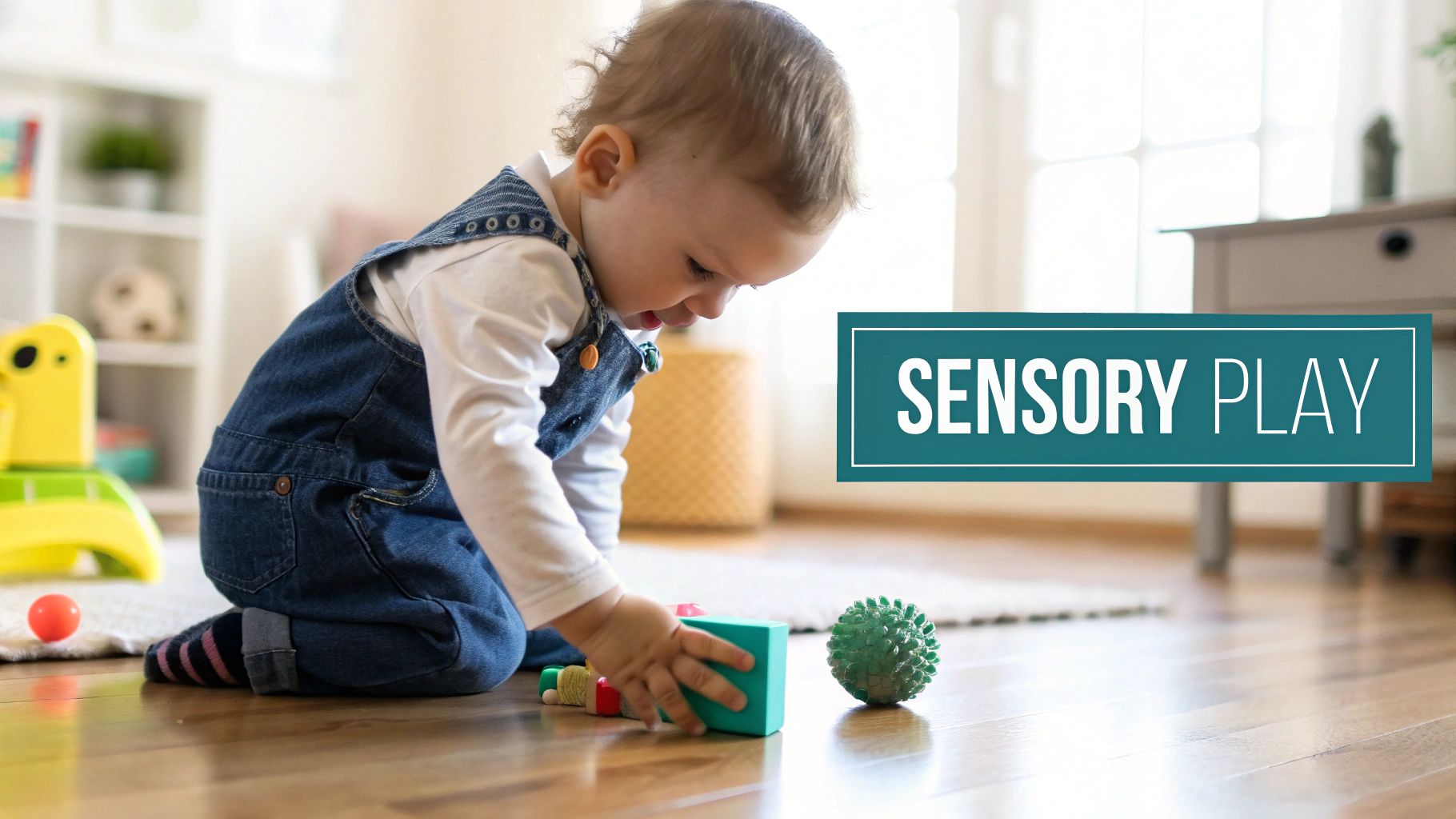
From birth, babies and toddlers are natural explorers, learning about their environment through touch, sight, and sound. Sensory toys are created specifically to engage these developing senses in a focused and enriching way.
But sensory play goes deeper than just the five senses we’re all familiar with. It also nurtures two other incredibly important, though less-known, systems:
- The Vestibular System: This is our internal balance and movement centre, controlled by the inner ear. It's what helps a child understand their body's position in space, whether they're spinning, swinging, or simply sitting upright.
- The Proprioceptive System: This is our body awareness sense, giving us feedback from our muscles and joints. It’s the reason we can clap our hands with our eyes closed or climb stairs without looking at our feet.
Every time a child engages with a sensory toy—squishing playdough, listening to a rainmaker, or rocking on a balance board—they are strengthening vital neural pathways in the brain. These simple actions lay the foundation for more complex skills later on.
Quick Guide to Sensory Systems and Toy Types
To make sense of it all, here's a simple breakdown of the key sensory systems and the types of toys that help stimulate them. This table can be a handy reference when you're trying to choose toys with a specific developmental goal in mind.
| Sensory System | What It Governs | Example Sensory Toys |
|---|---|---|
| Tactile (Touch) | Processing texture, pressure, temperature. | Textured balls, kinetic sand, water tables, finger paints. |
| Visual (Sight) | Tracking objects, recognising colours and patterns. | High-contrast cards, light-up toys, colourful stacking rings. |
| Auditory (Sound) | Differentiating sounds, locating their source. | Rattles, musical instruments, rainmaker toys, crinkly books. |
| Vestibular | Balance, movement, spatial orientation. | Swings, rocking horses, balance boards, spinning toys. |
| Proprioceptive | Body awareness, motor control, pressure. | Weighted blankets, trampolines, playdough, climbing frames. |
These toys aren't just for occupying little hands; they're actively building a child's brain and body from the ground up, one playful interaction at a time.
The Growing Importance of Sensory Play
Parents and educators are increasingly realising the incredible value of developmental toys. In the UK, the toy market, which includes a huge range of sensory and educational items, was valued at USD 13,950.23 million in 2024. It’s expected to climb to USD 19,285.62 million by 2032, a clear sign that toys supporting sensory processing are more in demand than ever.
Sensory play is the work of childhood. It's how children build the cognitive and physical frameworks they need to understand complex information and confidently navigate their environment as they grow.
This shift points towards a more intentional approach to parenting, where play is rightly seen as an essential ingredient for healthy development. And while these toys are particularly helpful for children with conditions like autism or ADHD, the truth is that all children benefit from rich sensory experiences.
More Than Just Toys
Ultimately, sensory learning isn't just about a single object. It’s about creating rich environments for exploration. For instance, an outdoor kids kitchen combines multiple inputs—the feel of mud and water, the smell of fresh herbs, the sound of splashing—into one holistic experience.
At their core, sensory toys give children a safe and engaging way to explore their world, calm their nervous systems, and build confidence. They help little ones manage big feelings, improve their focus, and develop the coordination they need for everyday life, making them a truly indispensable part of growing up.
The Science of Play and How It Builds a Better Brain
Have you ever peeked over at your little one, completely absorbed in stacking rings or squishing a bit of playdough, and wondered what's going on in that busy little head? It’s so much more than just a bit of fun. What you're actually witnessing is a beautiful and complex process of brain construction, happening right before your eyes.
Think of it this way: every single sensory experience is like a tiny spark, igniting new connections in the brain. These sparks build the intricate network that will support your child for the rest of their life.
The science behind this is a concept called neuroplasticity. It sounds a bit technical, but the idea is actually quite simple. Picture your child’s brain as a brand-new field of grass with no paths. Every time they have a new experience—feeling the rough texture of a wooden block, hearing a rattle, or seeing a bright colour—it’s like taking a first step across that field, creating a faint trail.
The more they repeat that action, the clearer and more defined that trail becomes. Sensory toys are brilliant because they provide endless opportunities to walk these paths again and again, turning those faint trails into well-worn, super-efficient motorways. These strengthened neural pathways are the very foundation for everything from memory and learning to complex problem-solving later on.
From Sensory Input to Skill Mastery
This brain-building work isn't just happening on an invisible level; you can see the results in tangible, real-world skills every single day. The line between a simple sensory action and a major developmental milestone is surprisingly direct. Stimulating different senses helps forge the critical neural connections that become the bedrock of future abilities.
Here’s how it works in practice:
- Tactile Play and Writing: When a toddler kneads, rolls, and squishes playdough, they’re doing far more than just making a mess (though there's usually a bit of that too!). They are strengthening the tiny muscles in their hands and fingers, developing the fine motor control they'll need to one day hold a pencil and write their name.
- Auditory Play and Language: A baby shaking a rattle isn't just making a racket. They're learning about cause and effect ("If I shake this, it makes a sound") and practising auditory tracking. This is the skill that helps them find where a sound is coming from and, later, tell the difference between the phonetic sounds that make up language.
- Visual Play and Reading: Those high-contrast cards or colourful stacking toys do more than just catch an infant’s eye. They actively encourage visual tracking and pattern recognition—the earliest building blocks for learning to recognise letters and words when they start to read.
Every squeeze, shake, and focused gaze is a form of practice. Sensory toys aren't just objects; they are tools for rehearsal, allowing a child to master the physical and cognitive skills they'll need for more advanced tasks.
This clear link between play and development shows why sensory toys for kids are not just entertaining but absolutely essential. They provide the right kind of stimulation at the right time to support this incredible period of growth. You can dive deeper into how these activities shape a child's thinking in our detailed guide on cognitive development in early childhood.
Building a Foundation for Emotional Regulation
Beyond the cognitive and physical benefits, sensory play is also a cornerstone of emotional development. It turns out our sensory system is closely linked to the parts of the brain that manage stress and emotions. Calming sensory experiences, like listening to a gentle rainmaker or feeling the soft pressure of a weighted lap pad, can genuinely help to regulate a child’s nervous system.
This is why something as simple as a sensory bin filled with rice or a mesmerising lava lamp can be so effective at soothing an overwhelmed or upset child. These toys give them a safe, predictable way to process sensory input, which helps them learn to self-soothe and manage big feelings.
By engaging with these tools, children are effectively building their own internal toolkit for emotional regulation—a skill that is truly priceless. Play really is the most important work of their young lives.
Exploring the Five Core Categories of Sensory Toys
Diving into the world of sensory toys can feel a bit much at first, but it gets a lot easier when you start to see them for what they are: tools designed to support specific senses. By breaking them down into five core categories, you can zero in on exactly what your child needs to feel calm, focused, and ready to explore.
Each category targets a different sensory system, and they all work together to build a really solid foundation for development. These aren't just toys to keep little ones busy; they're thoughtfully designed to give a child's brain the precise input it's craving at that moment.
This diagram really helps to visualise how sensory play is the starting block for everything else—building those crucial neural pathways that lead to bigger, more complex skills.
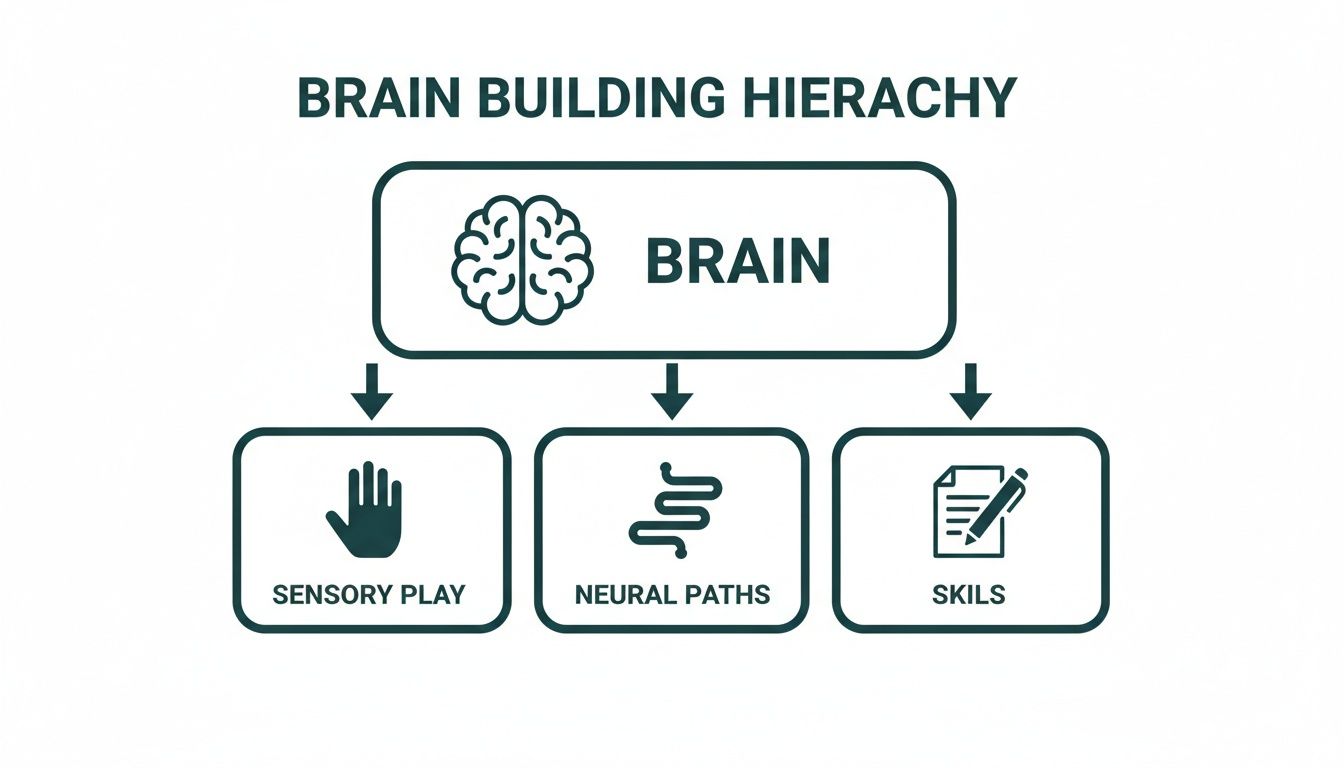
It shows the direct line from simple play activities to the cognitive and motor abilities your child will rely on for the rest of their life.
Tactile Toys for Touch Exploration
Our tactile system is all about how we process information through our skin—things like temperature, pressure, and different textures. For some children, getting messy or touching varied surfaces can be a real challenge, while others are constantly seeking it out.
Tactile sensory toys for kids offer a safe, controlled way to explore the sense of touch. They are fantastic for building fine motor skills and can be incredibly soothing for an overstimulated nervous system.
A few great examples include:
- Kinetic Sand or Playdough: Perfect for squishing, moulding, and squeezing, which strengthens the hand muscles needed for writing.
- Sensory Bins: Fill them with rice, pasta, or water beads. They provide a rich, hands-on experience where children can scoop and pour to their heart's content.
- Textured Balls and Blocks: Anything with bumps, ridges, or soft bristles gives gentle feedback that can help a child get more comfortable with different sensations.
A really interesting offshoot here is fidget toys, which are all about focused tactile input. We’ve seen a huge rise in their popularity, especially in the UK where ADHD affects 3-5% of children and autism diagnoses continue to increase. Globally, the fidget toy market is set to grow from USD 6.08 billion to USD 6.98 billion in 2025, driven by the real benefits these toys offer for focus and stress relief. You can dig deeper into these market trends in the full research on fidget toys.
Visual Toys for Sight Stimulation
A child's visual system helps them do everything from tracking moving objects to recognising patterns and making sense of the world around them. Visual sensory toys are designed to capture their attention and help them process what they see without feeling overwhelmed.
These toys can be either exciting or calming, all depending on their design. They’re especially useful for encouraging focus and helping children learn to filter out distracting visual "noise."
A well-chosen visual toy can act like a focal point for a busy mind, offering a predictable and soothing pattern that helps a child reset and regulate.
Think of things like:
- Lava Lamps or Light Projectors: These create a gentle, calming atmosphere that’s perfect for a quiet corner or winding down before bed.
- High-Contrast Cards: Simple black and white patterns are ideal for babies, as their developing eyes find them much easier to focus on.
- Sensory Bottles: Sometimes called "calm-down jars," these are filled with glitter and water. Watching the glitter slowly settle is mesmerising and deeply relaxing.
Auditory Toys for Sound Processing
Our auditory system governs how we interpret and react to sounds. Some children are highly sensitive to noise, while others might actively seek it out by humming, tapping, or making sounds themselves.
Auditory toys help children explore cause and effect ("If I shake this, it makes a sound!") and learn to tell the difference between various tones and volumes.
- Rainmakers: The gentle, trickling sound is often very soothing because it's so predictable.
- Musical Instruments: Simple shakers, drums, or xylophones let children experiment with creating their own sounds and rhythms.
- Crinkly Books: That soft rustling sound gives just the right amount of auditory feedback to keep a baby engaged.
Vestibular and Proprioceptive Toys for Movement
Finally, we have two senses that are closely linked: the vestibular system (our sense of balance) and the proprioceptive system (our body awareness). Think of these as our "movement senses," telling us where our body is in space and how to move it effectively.
Children who are constantly climbing, spinning, or crashing into things are often looking for input for these systems. Giving them safe ways to get that input is vital for their development and self-regulation.
- Vestibular Toys: These are all about movement and balance. Good examples include swings, rocking horses, and spinning seats. A gentle, back-and-forth swing is usually calming, whereas spinning is more alerting.
- Proprioceptive Toys: These provide deep pressure to the muscles and joints, which feels grounding. Things like weighted blankets, trampolines for jumping, and tunnels to crawl through offer this comforting and organising sensation.
By getting to know these five categories, you can start building a balanced "sensory diet" for your child, giving them the tools they need to navigate their world with confidence.
Choosing The Right Sensory Toys For Every Age
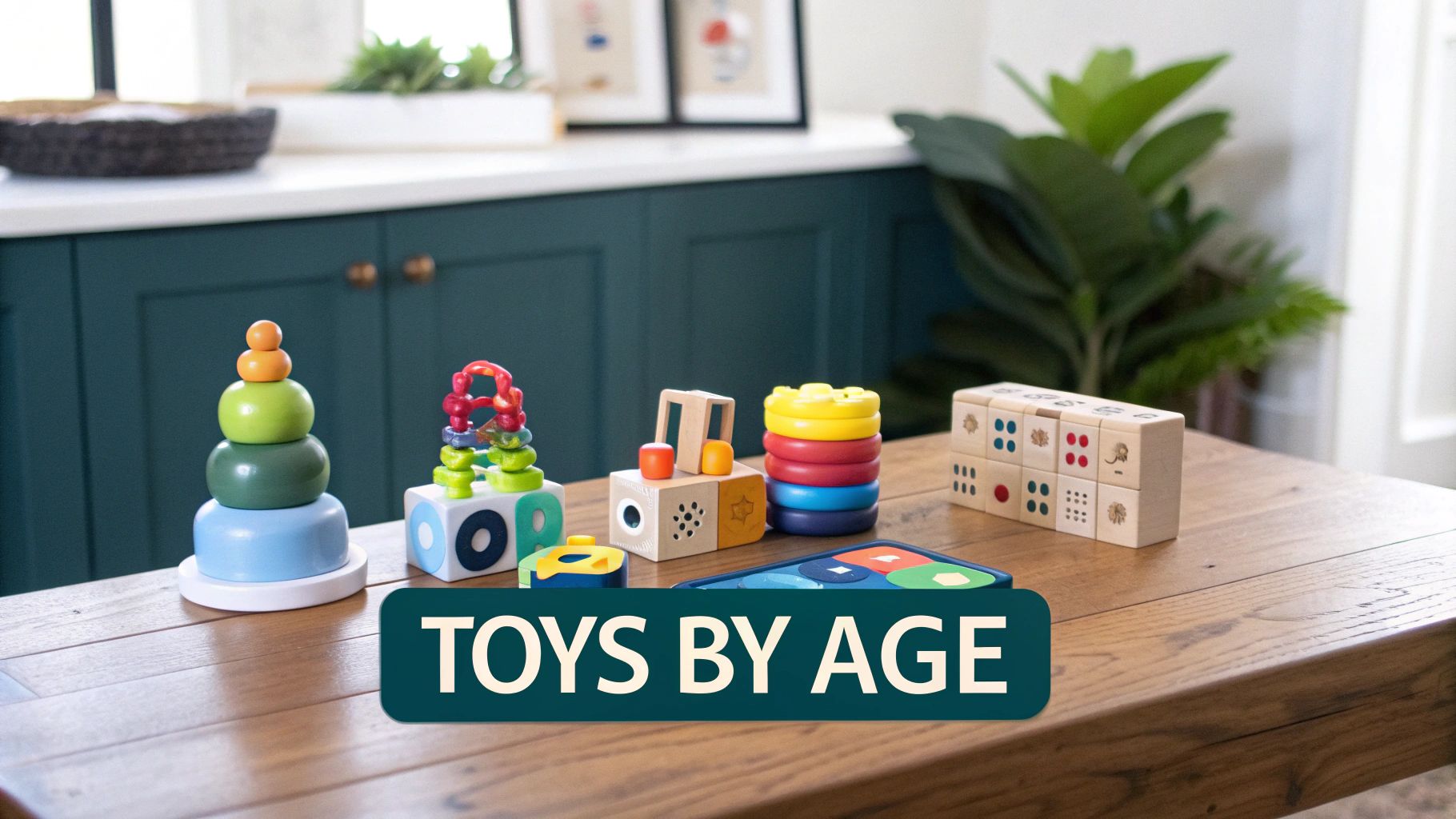
Picking out the perfect sensory toy isn’t just about what looks fun; it’s about matching the toy to where your child is on their unique developmental journey. What captivates a three-month-old will likely be ignored by a two-year-old, and for good reason. Their brains and bodies are changing at an incredible pace, and their play needs to keep up.
This guide will walk you through choosing the best sensory toys for kids at each key milestone, from those first blurry months right through to their preschool adventures. Understanding what’s happening in their world at each stage helps you make choices that are not only engaging but genuinely beneficial for their growth. If you’re looking for more ideas, there are some fantastic tips for choosing the right sensory toys for every age group that dive even deeper.
Sensory Toys For Infants (0 to 12 Months)
The first year of life is a whirlwind of sensory discovery. A newborn’s world starts as a gentle blur of shapes and muted sounds, but their senses sharpen with unbelievable speed. The goal here is to provide gentle, safe, and engaging stimulation without overwhelming their delicate, developing nervous system.
At this age, it’s all about toys that cater to their rapidly improving sight, hearing, and sense of touch. Simplicity is everything.
Top Picks For Infants:
- High-Contrast Cards and Books: In the early months, a baby’s vision is still a work in progress, making it easier for them to focus on simple, bold black-and-white patterns. These cards help stimulate optic nerve development and teach their eye muscles to work together.
- Soft, Textured Rattles: A lightweight rattle that’s easy for tiny hands to grip provides a perfect mix of sound and touch. The gentle noise teaches cause and effect, while different textures encourage them to explore with their hands and mouth.
- Crinkly Play Mats: Tummy time becomes far more exciting on a play mat with different fabrics, crinkly patches, and baby-safe mirrors. This encourages them to push up and look around, building crucial neck and core strength along the way.
For this age group, every single interaction is a form of learning. The feel of a soft fabric or the sound of a gentle crinkle is laying the groundwork for more complex sensory processing down the line. To learn more about this foundational period, explore our in-depth guide to the best sensory toys for babies.
Sensory Toys For Toddlers (1 to 3 Years)
Welcome to the age of exploration! Toddlers are little scientists, driven by an insatiable curiosity to touch, move, and figure out how everything works. They're mastering their motor skills, and their play is becoming much more purposeful. Sensory toys for this age group should encourage problem-solving, physical coordination, and hands-on discovery.
This is the perfect time to introduce toys that challenge them a little more and allow for open-ended, creative play.
Top Picks For Toddlers:
- Shape Sorters and Stacking Puzzles: These classic toys are absolute powerhouses for development. They boost fine motor skills, teach shape and colour recognition, and introduce the very first concepts of problem-solving.
- Water or Sand Tables: Offering unparalleled tactile input, these tables let toddlers scoop, pour, and splash to their heart's content. This kind of messy play is incredibly grounding and helps them understand physical properties like volume and texture.
- Simple Musical Instruments: A small drum, xylophone, or a set of maracas allows toddlers to experiment with rhythm and sound. It's not only fun but also supports auditory processing and sparks creative expression.
Sensory Toys For Preschoolers (3 to 5 Years)
By the preschool years, a child’s play becomes far more imaginative and complex. They're developing social skills, their fine motor control is becoming more refined, and their cognitive abilities are soaring. Sensory toys for this age should support that creativity, encourage cooperative play, and help develop more advanced skills.
The focus shifts from simple sensory exploration to using sensory input to create, build, and tell amazing stories.
Top Picks For Preschoolers:
- Building Blocks and Magnetic Tiles: Whether traditional wooden blocks or colourful magnetic tiles, these toys are brilliant for proprioceptive input (that’s the sense of pressure and body awareness). They also foster spatial reasoning, creativity, and teamwork.
- Playdough and Craft Kits: Activities that involve moulding clay, cutting with safety scissors, or threading beads are excellent for refining fine motor dexterity. These are the very skills they will soon need for writing and other detailed tasks at school.
- Balance Boards and Stepping Stones: These toys are fantastic for vestibular input, helping preschoolers improve their balance, coordination, and body awareness in a safe and playful way.
To make it even clearer, we’ve put together a handy table that breaks down our top recommendations by age.
Age-Appropriate Sensory Toy Selector
This table is designed to give you a quick, at-a-glance guide to the best sensory toy choices for your child's developmental stage, highlighting the key skills each toy helps to build.
| Age Group | Developmental Focus | Recommended Sensory Toys |
|---|---|---|
| Infants (0-12 Months) | Visual tracking, auditory response, tactile exploration, gross motor (tummy time) | High-contrast cards, soft rattles, activity gyms, textured balls, crinkly books |
| Toddlers (1-3 Years) | Fine motor skills, problem-solving, cause and effect, language development | Shape sorters, large puzzles, water/sand tables, stacking rings, ride-on toys |
| Preschoolers (3-5 Years) | Creativity, fine motor refinement, balance, social skills, spatial awareness | Building blocks, playdough, balance boards, craft kits, magnetic tiles |
Remember, this is just a starting point. Every child develops at their own pace, so the most important thing is to observe what captures their interest and provides just the right amount of challenge.
Prioritising Safety: What to Look for in a Toy’s Materials and Design
Let's be honest, a toy is only brilliant if it’s safe. For any parent, this is the absolute top priority. Before a sensory toy can start working its developmental magic, it has to pass the all-important safety check. I know that decoding labels and materials can feel a bit overwhelming, but a few key pointers can help you choose high-quality, secure sensory toys for kids with complete confidence.
Your first line of defence is always the materials. Little ones, especially babies and toddlers, explore the world with their mouths, so it’s crucial to pick toys made from non-toxic, durable stuff that can stand up to a good chew, a few (or many) drops, and endless hours of play.
Keep an eye out for these materials:
- Food-Grade Silicone: This stuff is fantastic. It's soft, flexible, heat-resistant, and totally safe for mouthing. Best of all, it’s free from nasty chemicals and a breeze to clean.
- BPA-Free Plastics: You’ve probably heard of Bisphenol A (BPA), a chemical that has raised health concerns. Any good toy maker will clearly state their plastic toys are BPA-free, which is the reassurance you need.
- Natural Wood: You can't go wrong with solid, sustainably sourced wood finished with non-toxic, water-based paints. It’s built to last, naturally antibacterial, and feels lovely to touch.
Making Sense of Safety Labels
Beyond the materials themselves, official safety certifications are your guarantee that a toy has been put through its paces. In the UK, the label you need to spot is the UKCA (UK Conformity Assessed) mark. This has replaced the old European CE mark for most goods sold in Great Britain.
These aren't just stickers; they're a legal promise that the toy meets strict safety standards. They cover everything from the chemicals used to how flammable it is and whether it will fall apart, confirming the product is safe for a child's hands.
When you see that UKCA or CE mark, you can breathe a little easier knowing the toy has been properly assessed for potential hazards.
A Quick Hands-On Inspection
Even with all the right materials and labels, it never hurts to do a quick physical check yourself. A toy's design is just as important as what it's made from. You’ll want to have a good look for any common hazards that could cause problems during playtime.
A simple hands-on check can reveal a lot. Just ask yourself a few questions:
- Are there any small parts? For children under three, anything that can fit inside an old-school film canister is a potential choking hazard. Make sure all the bits and pieces are firmly attached and bigger than your little one’s mouth.
- Does it have sharp edges or points? Run your fingers along the toy's seams and edges. Everything should feel smooth and well-finished, with no splinters in the wood or sharp bits of plastic.
- How sturdy does it feel? Give the toy a gentle twist and pull. It should feel solid and well-made, not flimsy or like it could easily break and create dangerous small pieces.
Finally, think about how you'll keep it clean. Good sensory toys should be easy to wash to keep them hygienic. Check if they can be wiped down, cleaned with soap and water, or even popped in the dishwasher. Following the cleaning instructions will help the toys stay safe and last for years of happy, healthy play.
Simplifying Sensory Play with a Curated Subscription
Keeping up with your child’s development can feel like you’re trying to hit a moving target. One minute you've found the perfect sensory toys for your six-month-old, and the next, they're a determined toddler with a completely different set of needs. It's a lot to stay on top of, which is why a curated subscription service can be such a game-changer for busy parents.
Imagine having a box of expertly chosen, stage-based sensory toys land on your doorstep, timed perfectly to your child's next developmental leap. It takes all the frantic research and guesswork out of the picture. This isn't just about buying toys; it’s like having a child development expert on your team, guiding you through each stage.
Ultimately, these services offer something incredibly valuable: peace of mind. You can relax, knowing your little one has exactly the right tools to support their learning, right when they need them most.
A Smart Solution for Modern Parents
Think of a curated subscription box as your personal developmental partner. Instead of you losing hours scrolling through websites or feeling overwhelmed in noisy toy shops, specialists do all the legwork. They carefully select innovative and engaging toys from top-tier brands, always with an eye on quality, safety, and real developmental value.
This approach brings some brilliant benefits:
- Effortless Convenience: Forget the endless searching. The perfect toys show up automatically, just as your child is ready for them.
- Expert Curation: Every single item is hand-picked by child development experts to build specific skills, whether it's fine motor control or sensory processing.
- Discover Premium Toys: You’ll get access to unique, high-quality toys you might not find on the high street, often with a focus on beautiful, sustainable materials like wood.
A stage-based subscription takes the pressure off providing enriching play. It guarantees that as your child grows and their needs shift, their toy box evolves right alongside them, offering a continuous stream of appropriate challenges and new discoveries.
It’s no surprise this model is catching on. Parents are looking for more thoughtful ways to support their child's playtime. In fact, the UK smart toys market—which includes many of these advanced sensory toys for kids—is expected to explode from USD 1,253.93 million in 2025 to a massive USD 11,409.9 million by 2035. This huge jump shows a clear shift towards play with a purpose, and e-commerce is making it easier than ever for families to access these specialised toys. You can read more about the rise of smart and sensory toys in the UK market to see just how big this trend is becoming.
More Than Just a Box of Toys
At the end of the day, a subscription service like Grow With Me is about building a connection through play. Each delivery is more than just a collection of items; it’s an invitation to explore and learn together. The included guides explain the ‘why’ behind each toy and give you simple, fun ideas for how to use them.
This transforms playtime from mere entertainment into a wonderful opportunity for bonding and growth. By taking the stress of toy-shopping off your plate, you’re free to focus on what really matters: sharing those precious, joyful moments of discovery with your child. If you're weighing up the different options, our guide on choosing a kids' subscription box has some handy advice for finding the right fit for your family.
Still Have Questions About Sensory Toys?
Even after learning all about sensory toys, it’s completely normal to have a few questions lingering. In fact, it’s a good sign—it means you’re really thinking about how to give your little one the best start.
We’ve pulled together some of the most common questions we hear from parents. Our aim is to give you clear, simple answers so you can feel confident bringing sensory play into your home.
Are Sensory Toys Just For Children With Special Needs?
This is probably the biggest myth out there. While it’s true that sensory toys are fantastic tools for children with autism, ADHD, or sensory processing differences, they are by no means only for them. Every single child benefits from sensory play.
Think of it like this: a healthy diet is good for everyone, but it's especially vital for a professional athlete. In the same way, rich sensory input is essential "food" for every child's developing brain. It helps forge the neural connections they need for learning, movement, and managing their emotions.
How Many Sensory Toys Does My Child Actually Need?
It’s tempting to believe that more toys equal more learning, but that’s rarely the case. When it comes to sensory play, quality always wins over quantity. A room bursting with toys can be overwhelming and actually get in the way of deep, focused play.
Instead of piling up the toys, focus on a small, curated selection that engages different senses.
A handful of versatile, open-ended toys will do more for your child's development than a room full of toys that only do one thing. A simple sensory bin, a good set of building blocks, and some playdough can spark endless hours of imaginative play.
Can I Make My Own Sensory Toys At Home?
Of course! Some of the very best sensory experiences don’t come from a box. Getting creative and making your own sensory activities is a brilliant and budget-friendly way to engage your child.
It's surprisingly easy to set up meaningful sensory play with things you already have around the house.
- DIY Sensory Bin: Grab a storage tub and fill it with dry rice, pasta, or oats. Throw in some scoops, funnels, and little figures, and you’ve got a wonderful tactile playground.
- Homemade Texture Board: Find a sturdy piece of card and glue on different materials—think sandpaper, cotton wool, foil, and corrugated cardboard. It's a fantastic, safe way for little hands to explore new textures.
- Scented Playdough: Add a couple of drops of calming lavender or zesty peppermint oil to homemade or shop-bought playdough for a lovely smelling (olfactory) experience.
These simple, homemade ideas prove you don't need to spend a lot to provide powerful sensory play.
Ready to stop guessing and start playing? Let Grow With Me deliver expertly curated play kits straight to your door, perfectly timed for your child's development. Discover your first play kit today.