

Paint With Water For Kids A Mess-Free Guide To Creative Play
Ready to introduce your little one to the joys of art without dreading the clean-up? Welcome to the wonderful world of painting with water.
For parents, this simple activity is a secret weapon. It’s the perfect blend of creative expression and sensory play, all wrapped up in a wonderfully mess-free package. It's one of those foundational activities that gently prepares them for more complex creative fun down the line.
Why Water Painting Is a Game Changer for Parents
Let’s be honest, the thought of breaking out the poster paints with a baby or toddler can be a bit daunting. The vision of stained clothes, colourful handprints creeping up the walls, and a lengthy scrub-down session is often enough to make you put art time on the back burner.
This is exactly where painting with water saves the day. It offers all the delight of artistic exploration with absolutely none of the mess.
Instead of hovering and worrying about spills, you can relax and share in that magical moment when your child realises they can make marks on a surface. Whether they're using a special "magic" water book that reveals colours or simply a wet brush on dark paper, the experience is completely captivating for them.
A Gentle Introduction to Art
Sometimes, traditional paints can be a bit much for very young children. The textures can feel strange and the smells might be overwhelming. Water, on the other hand, is a familiar, gentle, and calming medium.
This familiarity makes it the perfect first step into the world of art. It’s a calm sensory experience that naturally encourages focus and curiosity.
The real beauty of water painting is its simplicity. It removes the barriers for both you and your child, creating a relaxed space where creativity can blossom without any pressure or expectation.
This gentle approach helps build a positive connection with art from the very beginning. It’s not about making a masterpiece for the fridge; it’s all about the process, the discovery of cause and effect, and pure, simple fun. That early confidence is what encourages them to try other creative things as they grow.
More Than Just Mess-Free Fun
While the lack of mess is a huge win for parents, the developmental benefits are just as brilliant. The simple act of holding a brush or sponge and making deliberate marks on a surface is a powerhouse for learning.
- Develops Fine Motor Skills: Gripping a paintbrush strengthens all those tiny muscles in their hands and fingers—the same ones they'll need for learning to write later on.
- Improves Hand-Eye Coordination: Your child learns to guide their hand to make a mark exactly where they want it, connecting what their eyes see with what their hands do.
- Introduces Cause and Effect: They quickly learn that their action (touching the brush to the paper) causes a reaction (a mark appears!). Watching it slowly evaporate also introduces the concept of impermanence in a very gentle way.
This quiet activity is packed with early learning, cleverly disguised as play.
If you’re keen to explore more sensory activities, checking out a range of messy play ideas can give you even more inspiration. By starting with something as wonderfully straightforward as water painting, you're setting the stage for a lifetime of creative exploration. It just goes to show that the most meaningful play doesn't have to be complicated.
Gathering Your Mess-Free Painting Supplies
One of the best things about painting with water is just how simple and cheap it is to get started. You probably have everything you need lying around the house already, and any special bits you do buy are designed to last through countless creative sessions.
Forget those complicated art kits. All you really need is water and something for your little one to make their mark on. The real magic happens when you start playing around with different tools and surfaces, turning a basic setup into a brilliant sensory experience.
Deciding where to start can feel like choosing between a quiet afternoon activity or a full-on messy play day. This little flowchart can help make the choice easier when you're planning your next art session.
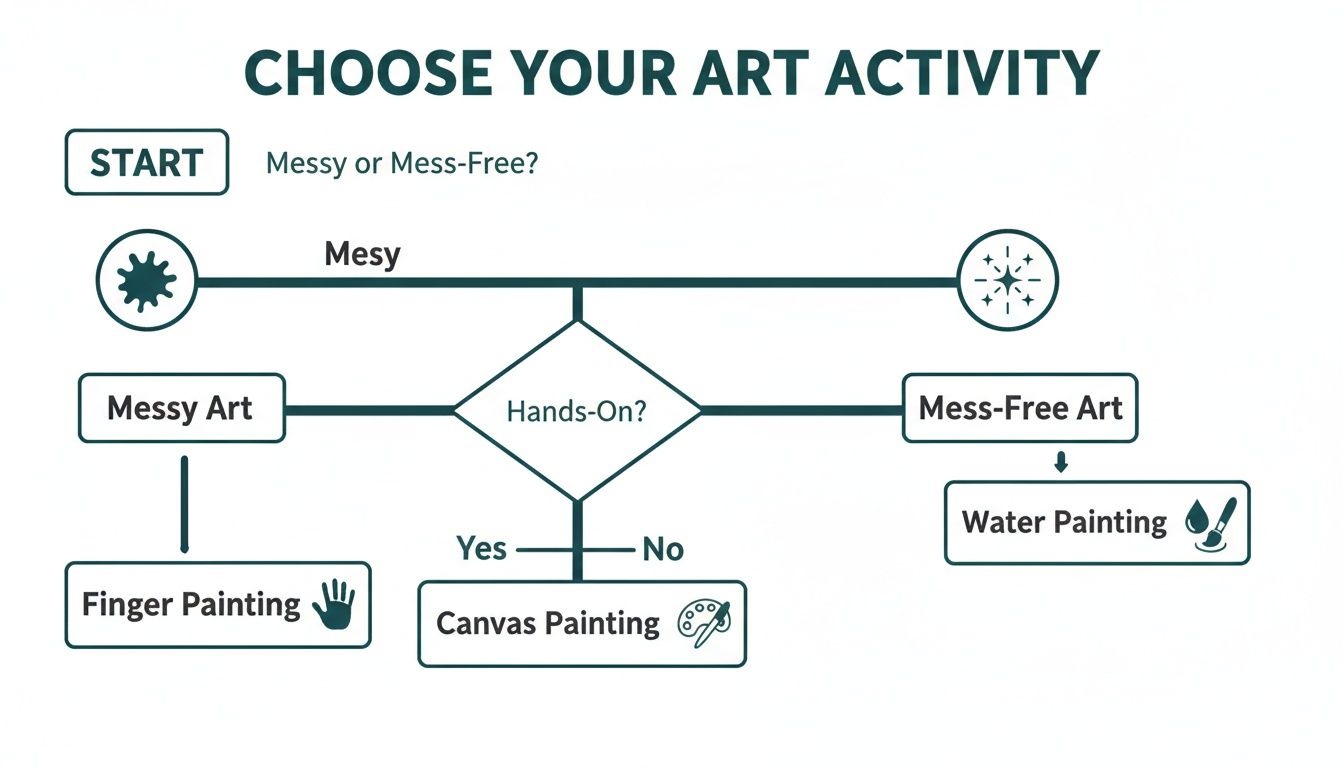
As you can see, when the goal is mess-free creativity, water painting is a clear winner. It’s the perfect gentle introduction to art, without the stress of stubborn stains and endless clean-up.
Essential Tools for Tiny Hands
Your child's "paintbrush" can be almost anything that holds a bit of water. I've found that offering a variety of tools is the secret to keeping them engaged, as each one feels different and works the small muscles in their hands in new ways.
Here are a few options that have always been a hit:
- Chunky Paintbrushes: Toddler-friendly brushes with thick, short handles are perfect for little hands to grip. They’re great for encouraging the palmar grasp, which is a key step in early motor skill development.
- Sponges: Just cut up a clean household sponge into different shapes. They're wonderfully squishy and easy for even the youngest babies to hold and pat onto a surface.
- Cotton Buds and Balls: These are fantastic for more delicate mark-making. As your toddler's coordination improves, using these helps them develop their pincer grasp.
- Pastry Brushes: A silicone pastry brush offers a completely different texture. It’s a safe, durable option that you might already have tucked away in a kitchen drawer.
For the water itself, a small, shallow, and stable bowl is essential for safety and minimising spills. I often recommend a non-slip pet bowl or even a silicone muffin tray with a little water in each section—it works a treat.
Choosing Your Water Painting Canvas
Now for the exciting part—the surface where the magic happens! The canvas you choose can completely change the activity, from revealing hidden colours to simply watching marks darken and then fade away.
Choosing Your Water Painting Tools
The tool or surface you pick can make a big difference to your child's experience. Some are perfect for tiny babies just starting to explore, while others offer a bit more of a challenge for curious toddlers. This table breaks down a few popular choices to help you decide what might work best for your little one's current stage.
| Tool/Surface | Best For Ages | Key Developmental Skill | Mess Factor |
|---|---|---|---|
| Magic Water Mats | 6 months+ | Large motor skills (arm movements), cause and effect | Very Low |
| 'Paint with Water' Books | 12 months+ | Fine motor skills (page-turning), colour recognition | Very Low |
| Construction Paper | 12 months+ | Mark-making, understanding of absorption/evaporation | Low |
| Sponges & Cloths | 6 months+ | Grasping, sensory exploration (squishing, dabbing) | Low-Medium |
| Chalkboards | 18 months+ | Pre-writing strokes, hand-eye coordination | Low |
| Outdoor Surfaces | 12 months+ | Gross motor skills, connecting with nature | None (outdoors!) |
Ultimately, mixing and matching these tools and surfaces is what keeps the activity fresh and exciting. An outdoor painting session on the patio feels completely different from sitting quietly with a water-reveal book.
Ready-Made Solutions
For a truly grab-and-go experience, reusable products are a parent's best friend. These are designed specifically for water painting and are brilliant for travel or those moments when you need a quick, distraction-free activity.
- 'Paint with Water' Books: These books have pages with a special white coating that bursts into vibrant colour when wet. The best part? The colours vanish as the page dries, ready for another go. They’re fantastic for toddlers who are just starting to learn about different colours and objects.
- Magic Water Mats: Products like Aquadoodle mats are large, foldable fabric mats that give kids plenty of space for big, expressive movements. They often come with water-filled pens and stamps, making them an ideal floor-time activity for both babies and toddlers.
The big advantage of these products is their predictability. You know exactly what you're getting every single time, which makes them a reliable, go-to choice for mess-free fun.
DIY Surfaces
If you'd rather take a do-it-yourself approach, your home and garden are full of potential canvases. The beauty of a DIY setup is how versatile it is—you can use almost anything.
- Coloured Construction Paper: A classic for a reason! Darker shades like black, deep blue, or purple show up water marks most vividly. Your child will be fascinated as they watch their wet strokes darken the paper, only to see them lighten and disappear as it dries.
- Chalkboards: A small lap chalkboard or a larger easel makes a wonderful, reusable surface. Water creates clear, dark lines that stand out beautifully against the black background.
- The Great Outdoors: On a sunny day, the best canvas is right outside your door. Let your child "paint" on a patio slab, a wooden fence, or a brick wall. This is a brilliant way to encourage large-scale movements and get some fresh air.
In the end, the best supplies are the ones that suit your child's age and your own comfort level with mess. Whether you choose a magic reusable book or a simple pot of water and some coloured paper, you’re giving your child a fantastic chance to create, explore, and learn.
Getting Your First Water Painting Session Set Up
So you’ve gathered your supplies and you’re ready for the fun part—that very first paint with water for kids session. How you set up the space and introduce the activity can make a world of difference. A little bit of thought here transforms a simple craft into a cherished ritual your little one will start to look forward to.
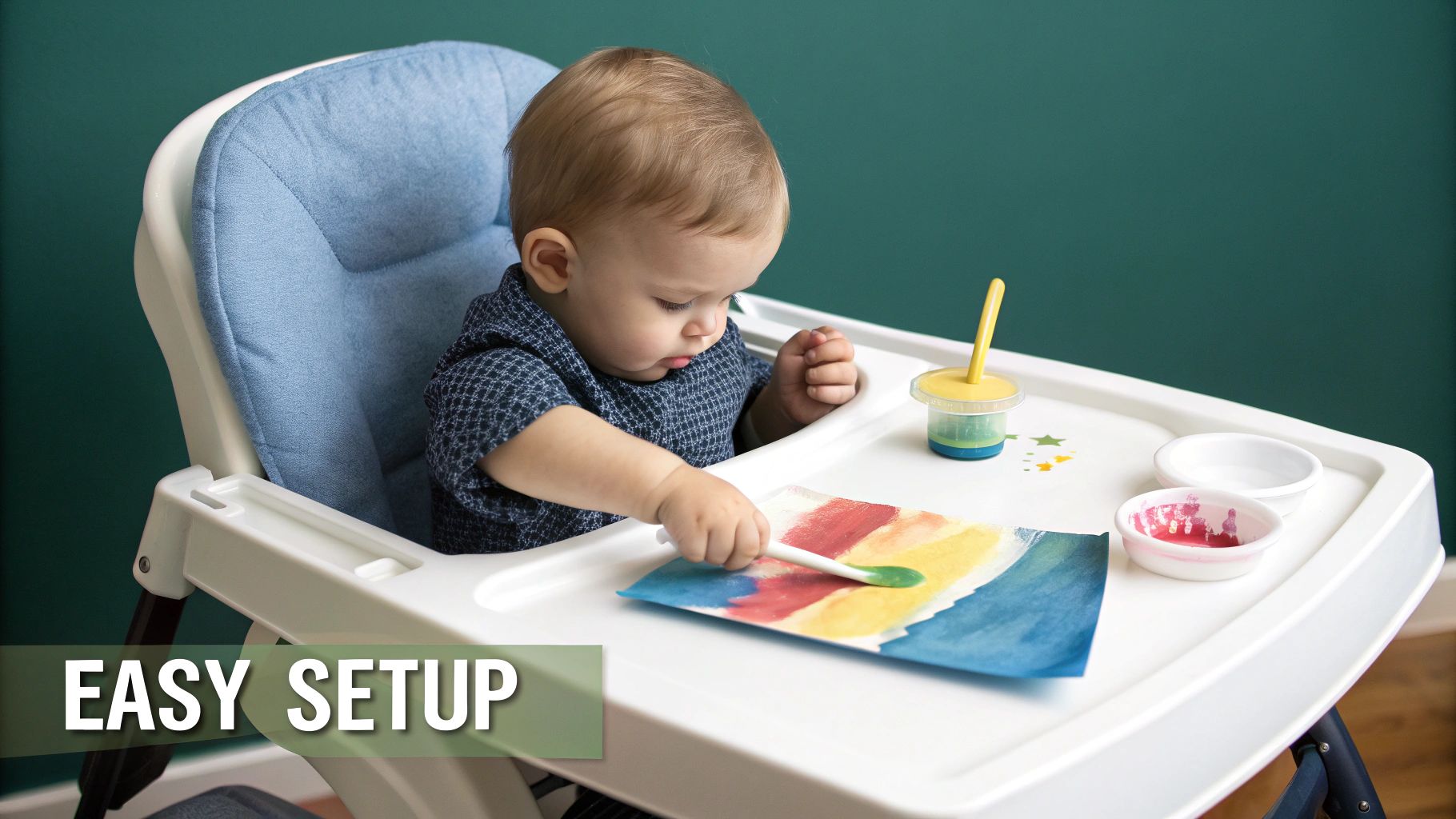
The real key is to match the setup to your child's age and stage. What fascinates a curious six-month-old is totally different from what will keep a whirlwind two-year-old busy. Let's walk through some practical ideas for both age groups, so the whole experience is safe, engaging, and just right for them.
Creating a Calm Space for Babies (6-12 Months)
For a baby, water painting is all about sensory exploration. The aim isn't to create a masterpiece; it’s about enjoying the cool feel of the water and the sheer magic of making a mark appear. Your focus should be on comfort, safety, and being right there with them.
A brilliant way to start is by adding it to tummy time. We all know babies aren’t always huge fans of being on their front, but adding something new and interesting can often extend their patience and help build up those crucial neck and core muscles.
- Tummy Time on a Water Mat: Pop your baby on a 'magic' water mat on the floor. Gently guide their little hands to pat and swipe across the surface, showing them how their touch makes colours appear. It’s a fantastic sensory reward for all their hard work.
- Highchair Tray Painting: For babies who can sit up confidently, the highchair is your best friend. Get them strapped in safely and put a shallow, sturdy dish of water on their tray with a clean sponge. They'll absolutely love squeezing the sponge and dabbing water all over the tray.
At this age, you are the most important piece of the puzzle. Your calm presence and encouraging voice create a secure space for them to explore. Sit with them, chat about what they're doing—"Splash! Look, you're making the tray all wet!"—and just share in their delight.
Remember, the session might only last for a couple of minutes before their attention drifts, and that’s totally fine. The goal is a short, positive interaction that builds a happy feeling about creative play.
Engaging Activities for Toddlers (1-3 Years)
Toddlers are little bundles of energy and curiosity. With better hand-eye coordination and a fierce desire for independence, their water painting sessions can be a bit more structured—though always led by their own creative whims.
You can now graduate from the highchair to a small, child-sized table, or even the kitchen floor (with a protective mat underneath, of course!). This gives them the freedom to stand, sit, and move about as they create.
One of the most captivating things for this age group is watching colours change.
- Dark Paper Magic: Give your toddler a chunky brush and a pot of water and let them "paint" on some dark-coloured construction paper. They’ll be mesmerised as their wet strokes leave dark, bold marks that seem to appear out of nowhere.
- Chalkboard Creations: A small chalkboard is a brilliant reusable canvas. The contrast of the wet marks against the dark board is really satisfying. You could even introduce stencils of simple shapes like stars or circles for them to "paint" inside.
This is also the perfect age to take the fun outside. A sunny patio becomes a giant canvas with absolutely zero worries about spills. Let them use big decorators' brushes to "paint" the fence, the garden wall, or the paving slabs. This encourages those big, sweeping arm movements which are fantastic for developing gross motor skills.
Practical Tips for a Smooth Session
Even though it’s "just water," a little bit of prep work goes a long way to making sure the session is fun for everyone involved. Keeping things organised and anticipating the inevitable bumps in the road means you can relax and focus on enjoying the moment.
Timing is Everything
Try to choose a time when your child is well-rested and has a full tummy. Kicking off a new activity when they're tired or hungry is usually a recipe for frustration. I've found that right after a nap or as a calm-down activity in the late afternoon often works wonders.
Contain The Spills
It may only be water, but toddlers are masters of enthusiastic splashing.
- Put a large, old towel or a waterproof splat mat under their chair or play area.
- Use a heavy, shallow bowl for the water that’s hard to tip over. A non-slip pet bowl is actually a surprisingly great choice!
- Only pour a little bit of water in the bowl at a time. You can always top it up.
Introduce Materials Slowly
Don't overwhelm them by putting everything out at once. Start simple, with just one tool, like a brush, and the paper. Once they've had a good explore, you could bring out a sponge or a cotton bud to keep things fresh and interesting. This slow and steady approach helps hold their focus and keeps them curious for longer.
The Developmental Benefits of Painting With Water
Behind all that quiet concentration and the happy little splashes, painting with water is a powerhouse activity for building your little one's brain and body. It might look like simple, mess-free fun (which it is!), but you're actually watching crucial developmental milestones click into place. This calm, sensory play has a huge impact on their learning journey.
Every gentle, repetitive motion is far more than just play; it's laying the essential groundwork for future academic skills like writing and reading. Each dip of the brush and sweep across the paper is a small but mighty step forward.
Building Strong Foundations in Motor Skills
The most obvious win with water painting is the boost it gives to fine motor skills. When your baby or toddler grips a chunky brush, squeezes a sponge, or dabs with a cotton bud, they're strengthening all those tiny, clever muscles in their hands and fingers.
These are the exact same muscles they’ll need later to hold a pencil, use scissors, and do up their own coat. The activity naturally encourages a whole range of grips, from the whole-hand palmar grasp you see in babies to the more refined pincer grasp toddlers use when picking up smaller tools.
At the same time, it’s a brilliant workout for hand-eye coordination. Your child is learning to connect what their eyes see with what their hands are doing—a skill that's fundamental to almost everything. They watch the brush, guide it to the water, and then aim for a spot on the paper. It's a surprisingly complex sequence of actions that they practise and perfect with every mark they make. Exploring a variety of baby toys for fine motor skills can also be a wonderful way to support this crucial area of development.
Nurturing Cognitive Growth and Concentration
The cognitive perks of this simple activity are just as remarkable. Painting with water creates a perfect, low-stakes environment for children to learn about big scientific concepts without even realising it.
One of the first lessons is cause and effect. A child touches a wet brush to paper, and a mark appears. That immediate feedback is incredibly powerful. They quickly learn, "I did that! My action made something happen." This is a foundational concept that underpins all future learning.
Then, as they watch their beautiful dark marks slowly fade and disappear, they get a gentle introduction to the concepts of impermanence and evaporation. There's no pressure to create a permanent masterpiece, which frees them up to focus entirely on the process.
This temporary nature of water painting is its secret superpower. It encourages children to live in the moment and enjoy the act of creating, rather than worrying about the final product.
This focus on the process is fantastic for building concentration and attention span. In a world full of noisy, flashy toys, the quiet, repetitive nature of painting with water offers a lovely, calming sensory experience. It helps children learn to focus their attention on a single task, a skill that's vital for a classroom setting later on. It gives just enough sensory feedback to be engaging without ever being overstimulating.
Supporting Creativity in Early Years
With creative arts in schools sometimes feeling the squeeze, nurturing this side of your child's development at home is more important than ever. Simple, open-ended activities like this give children a vital outlet for self-expression long before they have the words to tell you how they feel.
Recent reports have highlighted a concerning trend in UK primary schools, where limited resources can curb early creative opportunities. A Department for Education review found that many primary teachers lack specific art training, which can impact the quality of early experiments with colours and tools. By bringing simple, process-focused activities like water painting into your home, you help bridge this gap and foster the creative development that Ofsted values. You can learn more from the government's official review of the findings on art and design education.
This isn't about teaching a child how to paint; it's about giving them the freedom to paint. It builds confidence and shows them that their ideas matter. They are the artists, in complete control of their canvas—and that's a wonderfully empowering feeling for a little person. An early, positive association with art can easily spark a lifelong love of creativity.
Creative Ideas to Keep The Fun Going
After the initial magic of watching watery marks appear and then vanish has been explored, you can start weaving in little twists to keep the activity feeling fresh and exciting. Even simple additions can turn a familiar playtime into a whole new sensory adventure, perfectly matching your child's growing skills. The real beauty of paint with water for kids is just how adaptable it is; it really grows right alongside them.
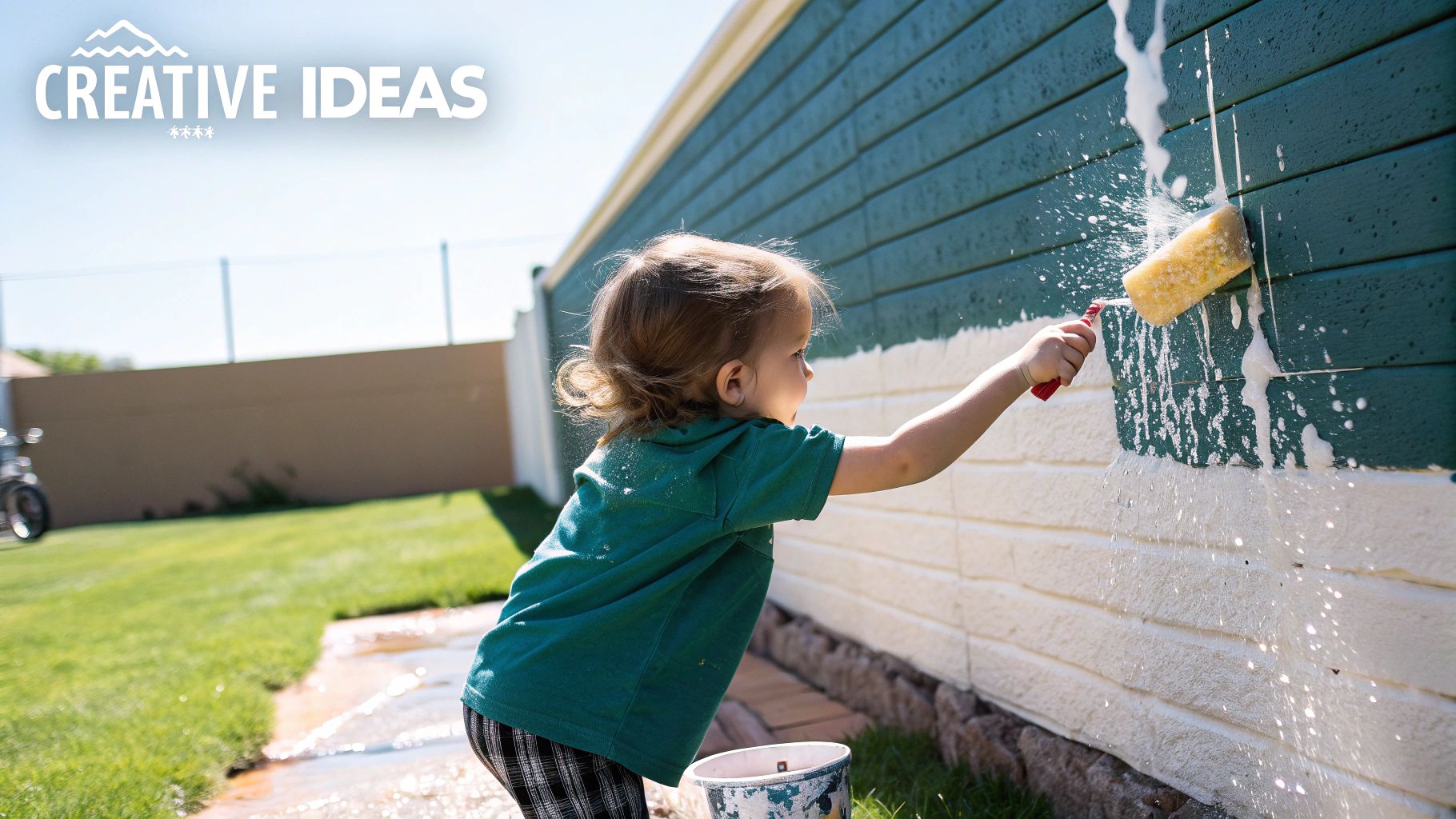
These variations aren't about making things complicated. Far from it. They’re all about layering in new textures, introducing simple concepts, and discovering the creative fun hidden in everyday objects. You'll be surprised how a tiny change can spark a completely new level of focus and joy.
Adding a Splash of Temporary Colour
While plain water is fantastic, toddlers who are just starting to notice and name colours will love a temporary vibrant twist. Try adding a single, tiny drop of food colouring to the water for a lovely, gentle tint.
This is definitely an activity for outside or on a well-protected floor with an old towel down. The highly diluted colour is very unlikely to stain, but it's always better to be safe than sorry. Let your child have a go on some sturdy watercolour paper and watch how the colour pools and bleeds in beautiful, unexpected ways. For more structured fun, you can find heaps of ideas in our guide on learning colours for toddlers.
Introduce Different Textures and Temperatures
Bringing more of your child's senses into the experience can make it so much richer. Why just stick to brushes when you have a world of interesting tools right there in your home?
- Ice Painting: On a warm day, a simple ice cube becomes a magical paintbrush. Let your toddler hold a cube (you can freeze one with a lolly stick in it for a handle) and glide it across a dark paving slab. They’ll be captivated by the cold sensation and the watery trail it leaves behind.
- Textured Rollers: A small, patterned paint roller from a craft set can be dipped in water to make wonderful repeating patterns on paper or an outdoor wall.
- Spray Bottles: For older toddlers with stronger hands, a small spray bottle is a brilliant tool. It’s fantastic for building hand strength and introduces a completely different way of applying water to a surface.
The goal here is to encourage experimentation. By offering different tools, you’re inviting your child to ask "what happens if...?" which is the very heart of both creative and scientific thinking.
Themed Activities and Imaginative Play
Water painting is an amazing launchpad for imaginative play. By giving the activity a simple theme, you can connect it to whatever your child is interested in right now and open up a world of storytelling.
Just think about what your toddler is currently fascinated by. Is it animals? Cars? Dinosaurs? Use that passion as your guide.
Imaginative Scenarios to Try:
- Washing Station Fun: Set up a "car wash" or "animal bath" with a tray of water, a sponge, and some waterproof toys. Your toddler can give their toys a good scrub, "painting" them with water until they’re squeaky clean.
- Construction Site Creations: Got some toy diggers and trucks? Take them outside with a pot of water and some chunky brushes. Your little one can "paint" the patio to make roads, building sites, or muddy puddles for the trucks to splash through.
- Pretend Alphabet Painting: For children showing an interest in letters, an outdoor wall or chalkboard is the perfect canvas. You can "paint" big letters with water and see if they can copy your strokes or guess the letter before it disappears.
These themed activities don’t need any elaborate setup, just a small shift in how you frame the play. And as they grow, you can build on this foundation. For instance, when your child gets a bit older, you can explore other beginner-friendly drawing activities that keep building their confidence and fine motor skills. By keeping the fun going, you're not just filling an afternoon; you're building a joyful, positive foundation for a lifetime of creativity.
Your Water Painting Questions, Answered
Even with an activity this simple, it's completely normal to have a few questions before getting started. A little prep helps you feel ready to make your first session a fantastic one. Here are some of the most common things parents ask when it comes to paint with water for kids.
When Can My Baby Start Painting With Water?
You can introduce water painting as soon as your little one can sit up confidently on their own, usually around the six-month mark. At this early stage, it’s all about sensory exploration, not creating a masterpiece.
Start simple. A clean, damp sponge on a highchair tray is perfect for tiny hands to explore. Supervised tummy time on a 'magic' water mat is another great, safe option for younger babies. The absolute golden rule here is close supervision and making sure everything you use is age-appropriate.
How Do I Clean Up Afterwards?
This is the best bit – the clean-up is an absolute breeze.
If you’re painting indoors, popping an old towel or a splat mat underneath your little artist will catch any stray drips. Special surfaces like water-reveal books just need to be left open to air dry. If you used construction paper, it will dry out too, ready for another round of creativity later.
For outdoor sessions on a patio or fence, the sun handles all the clean-up for you. Just give your brushes a quick rinse under the tap and let them dry completely before packing them away. Easy.
Is It Safe if My Toddler Tries to Drink the Water?
Yes, as long as you're using clean tap water, it's perfectly safe if your child has a little taste. This is one of the biggest wins for water painting over traditional non-toxic paints which, while safe, aren't exactly meant for snack time.
To keep things extra safe, use a shallow container for the water with a wide, heavy bottom that’s difficult to knock over. Most importantly, never, ever leave a baby or toddler unattended with water, no matter how little there is. If you add a drop of food colouring for fun, be aware that it can sometimes stain fabrics and porous surfaces.
How Can I Make Water Painting More Educational?
It's surprisingly easy to sneak in some learning without spoiling the fun. The trick is to simply chat with your child about what they're doing as they play. This is a brilliant, natural way to build their vocabulary and introduce new ideas.
- Talk Through Their Actions: Use simple, descriptive words. "Look, the paper gets dark where the water goes!" or "Wow, your mark is disappearing! Where did it go?"
- Introduce Early Concepts: For toddlers, you can gently encourage them to trace letters, numbers, or shapes on a chalkboard. It’s a lovely, no-pressure introduction to pre-writing skills.
- Build Their Sensory Vocabulary: Ask questions about what they're feeling. "Is the sponge soft and squishy?" or "Does the wet brush feel tickly on your hand?"
The activity itself is a fantastic vehicle for learning through play.
While water painting is wonderfully mess-free, life with little ones means other spills are always a possibility. If you find yourself dealing with a more stubborn mark on your furniture, having a guide on how to remove stains from a sofa can be a real lifesaver.
At Grow With Me, we believe in the power of simple, stage-based play to unlock a child's potential. Our curated play kits are designed to support your little one's development every step of the way, with beautiful, high-quality toys that make learning a joyful discovery.
Explore our subscription boxes and find the perfect kit to inspire your child's next adventure at https://shop.growwithmesubscriptionbox.co.uk.