
12 Fun Messy Play Ideas for Babies & Toddlers in 2025
Welcome to the wonderfully chaotic world of messy play. While the thought of mud, paint, and slime might make you instinctively reach for the wet wipes, these tactile experiences are foundational for your child's development. Messy play is far more than just making a mess; it's a powerful and engaging tool for learning. It stimulates all the senses, helping babies and toddlers understand the world around them through touch, sight, sound, smell, and even taste. From the unique squish of oobleck between their fingers to the vibrant colours of edible paint, these activities build crucial neural pathways in the brain.
Engaging in these sensory explorations helps to enhance both fine and gross motor skills, encourages problem-solving, and fosters uninhibited creativity. This guide is your ultimate resource for fantastic messy play ideas, carefully curated for different developmental stages from infancy to toddlerhood. We'll break down 12 distinct activities, each with simple setup instructions, a clear list of materials, and an explanation of the specific developmental benefits for your little one.
You won't be left to deal with the aftermath alone. We've included practical cleanup tips for every activity to make the process as stress-free as possible. We will also show you how to seamlessly incorporate items from your Grow With Me kits, turning everyday materials into extraordinary learning adventures. Forget the pristine play area for a moment and prepare to embrace the enriching chaos. Let's dive in and get our hands dirty
1. Sensory Bins with Kinetic Sand
Kinetic sand offers a unique sensory experience, combining the granular feel of beach sand with the mouldable, cohesive properties of dough. This non-toxic, mess-friendly material never dries out, making it an ideal choice for hours of contained, creative play. It’s a fantastic introduction to messy play ideas because its unique texture is captivating for little hands, and it sticks to itself rather than surfaces, simplifying cleanup.
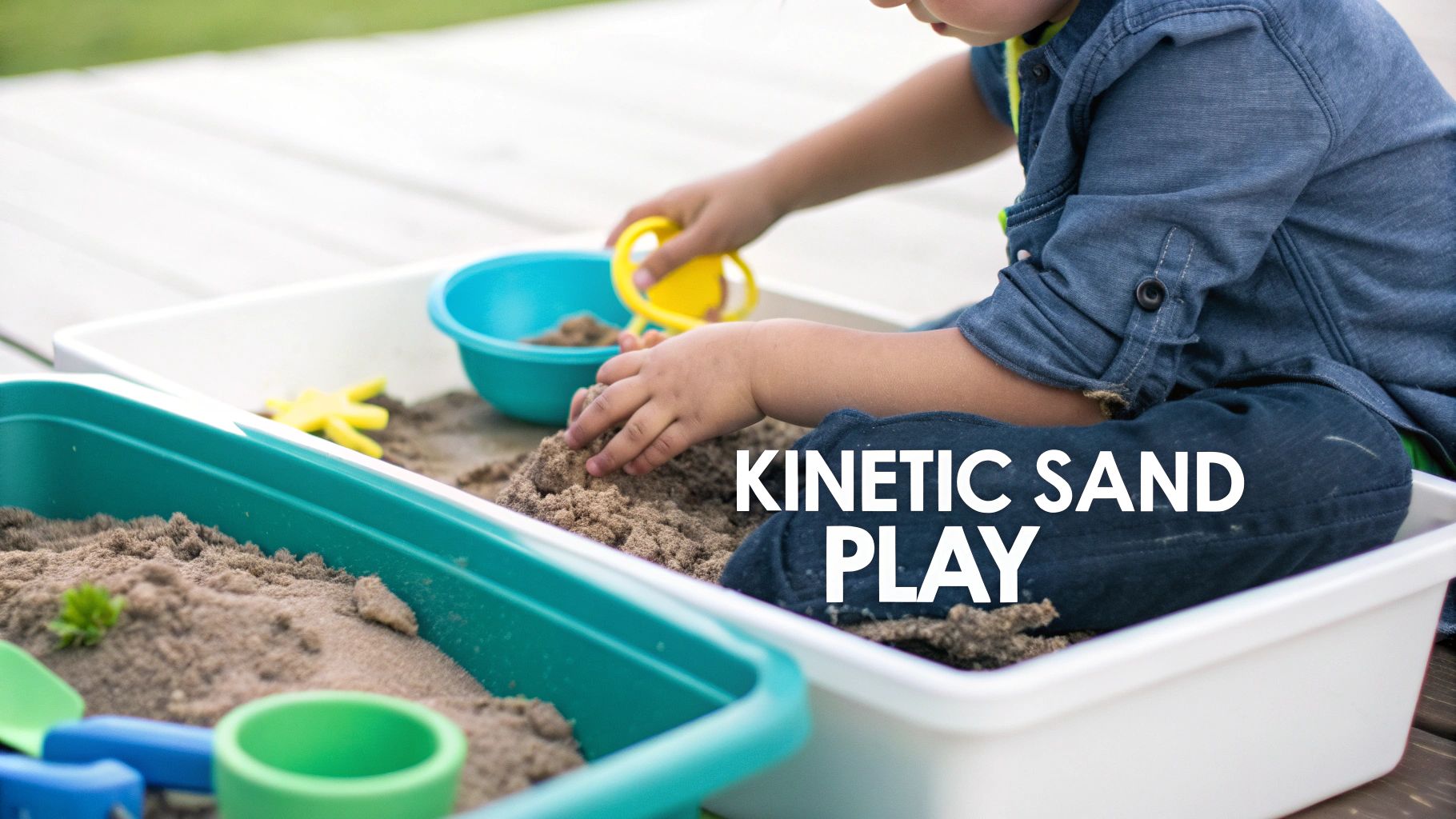
This type of play is excellent for developing fine motor skills as children scoop, pat, and mould the sand. It also encourages creativity and imaginative play, as they can create shapes, hide objects, and build small worlds. Many early years settings and occupational therapists utilise kinetic sand to provide tactile input and promote calm, focused activity.
How to Set It Up
- Contain the Fun: Pour the kinetic sand into a shallow tray, a plastic storage bin, or even a dedicated sand table. Using a container with raised sides helps keep the sand in one place.
- Add Tools for Exploration: Provide a variety of tools like scoops, cookie cutters, small plastic animals, or items from your Grow With Me kit, such as wooden shapes. This encourages different ways of interacting with the material.
- Easy Cleanup Mat: Place the container on a wipeable mat or an old sheet. Any stray sand can be easily gathered and returned to the bin.
Top Tip: For younger babies (6 months+ who can sit unaided), ensure close supervision to prevent them from putting the sand in their mouths. While non-toxic, it is not intended for consumption.
This activity is a staple for good reason; it delivers significant developmental benefits with minimal fuss, making it a perfect starting point for parents new to sensory activities. For more ways to engage your little one, explore these sensory play ideas for toddlers that build on these foundational skills.
2. Edible Paint and Finger Painting
Edible paint offers a wonderfully safe way for babies and toddlers to explore their artistic side, engaging their senses of touch, sight, and even taste. Made from simple, food-safe ingredients like yogurt and food colouring, this activity allows little ones to get creative without parents worrying about them ingesting harmful chemicals. It's one of the most popular messy play ideas for the youngest artists because it turns a classic activity into a multi-sensory, baby-friendly experience.
This type of play is fantastic for colour recognition, hand-eye coordination, and sensory exploration. As children squish, spread, and mix the paints with their fingers, they are developing fine motor skills and learning about cause and effect. Early childhood educators often use edible paints to introduce art in a way that respects a child's natural tendency to explore the world through their mouth.
How to Set It Up
- Mix Your Colours: In separate bowls, mix plain yogurt (or a dairy-free alternative) with a few drops of different food colourings. You can thicken the paint with a little cornflour if desired.
- Prepare the Canvas: Tape a large sheet of paper to a highchair tray, the floor, or an easel. Alternatively, let them paint directly onto a clean, washable surface for easy clean-up.
- Protect the Area: Lay down a splash mat or old sheet and have your child wear an apron or just a nappy. After a vibrant finger painting session, you might need some practical tips for easily removing paint from clothing.
Top Tip: Encourage colour mixing directly on the paper. This is a brilliant, hands-on science lesson in how primary colours can be combined to create secondary colours.
This activity is a joyful and stress-free introduction to painting, allowing for maximum creativity with minimal risk. It’s a perfect way to nurture your little one’s inner artist from a very young age.
3. Mud Kitchens and Outdoor Mud Play
A mud kitchen is a dedicated outdoor space where children can freely mix soil, water, and natural elements like leaves, petals, and twigs. This type of messy play idea mimics real kitchen activities, allowing little ones to create imaginative ‘recipes’ and ‘potions’ while connecting with the natural world. It provides a rich, multi-sensory experience that is foundational to the forest school movement and many nature-based early years programmes.
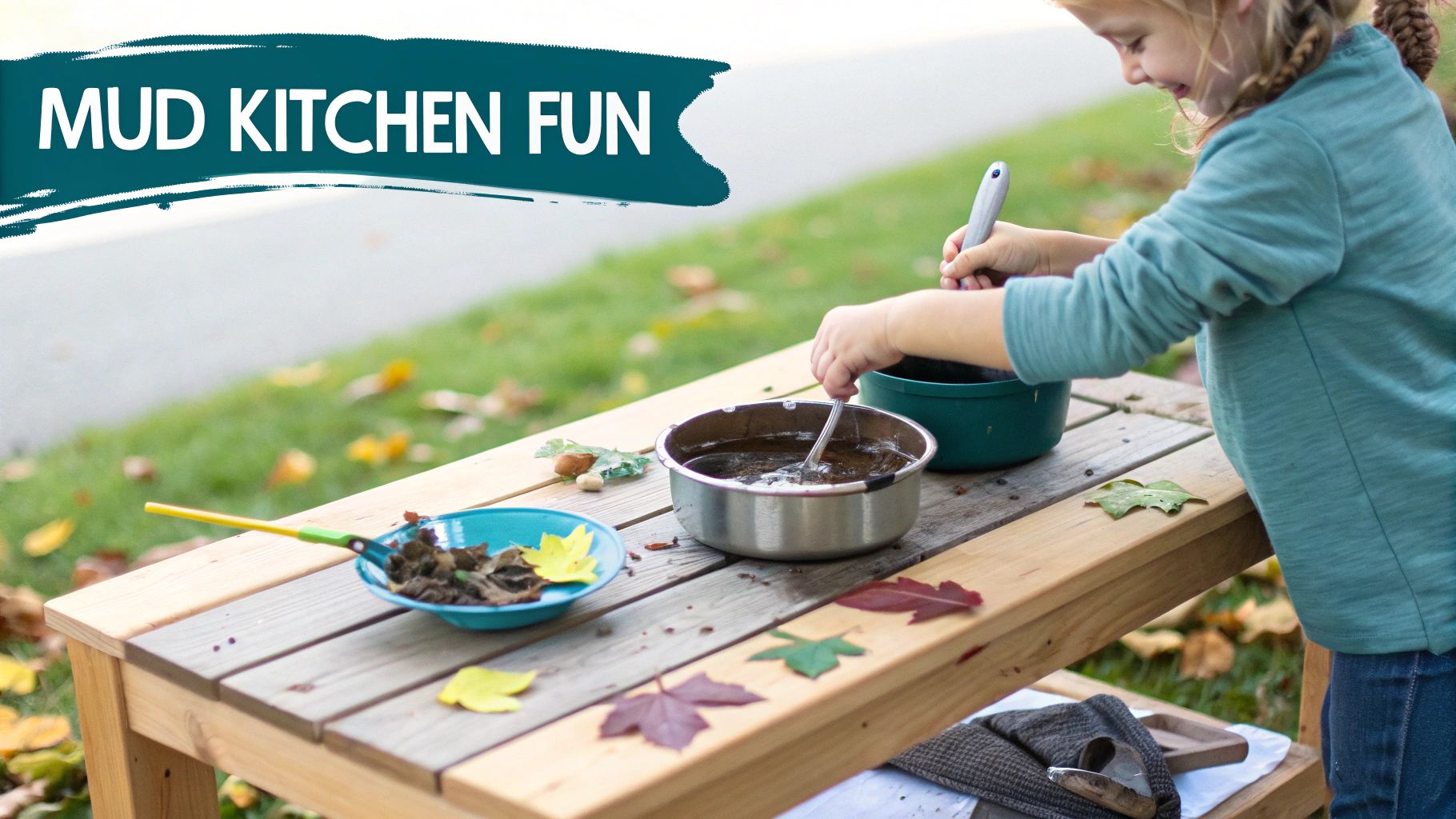
Engaging with mud fosters creativity, problem-solving, and collaboration as children work together to transport materials and bring their ideas to life. The varied textures of soil, water, and plants offer fantastic tactile input, while the act of scooping, pouring, and mixing strengthens fine and gross motor skills. It’s an immersive activity that encourages a sense of wonder and respect for nature.
How to Set It Up
- Designate a Zone: Choose a corner of your garden or outdoor space for your mud kitchen. You can use old pallets, a small table, or a purpose-built setup. Having a dedicated area helps contain the mess.
- Gather Your Utensils: Provide old pots, pans, measuring cups, spoons, and jugs. Durable, plastic kitchenware is ideal. Items from your Grow With Me kit, like wooden rings or scoops, can be used for stamping and measuring.
- Establish Cleanup Routines: Keep a bucket of water and a towel nearby for handwashing. Have wellies and waterproof overalls ready to protect clothing, making the transition back indoors much smoother.
Top Tip: Enhance the play by seasonally rotating natural materials. Offer pinecones and crunchy leaves in autumn, flower petals in spring, and fresh herbs from the garden in summer to enrich the sensory experience.
Mud kitchens provide a fantastic, unstructured play opportunity that supports holistic development. Children are not just making a mess; they are experimenting, learning about cause and effect, and building a meaningful relationship with their environment.
4. Shaving Cream Swirls and Paint Mixing
Shaving cream provides a wonderfully fluffy and voluminous base for sensory exploration and creative art. When mixed with food colouring or child-safe paint, this foamy substance transforms into a vibrant, mouldable medium that engages both tactile and visual senses. It’s a popular choice in early years settings for its unique texture and versatility, allowing children to swirl, mix, and create patterns with their hands or tools.
This activity is brilliant for teaching cause and effect as children see colours blend and mix right before their eyes. Manipulating the foam strengthens hand and finger muscles, which is crucial for developing pre-writing skills. The combination of visual and tactile input makes it a calming yet stimulating experience, ideal for focused, creative expression.
How to Set It Up
- Create the Base: Spray a generous amount of hypoallergenic, non-toxic shaving cream onto a baking tray, a tuff tray, or a plastic mat. Spread it out to create an even canvas.
- Add Splashes of Colour: Drop small amounts of different food colourings or washable paints onto the cream. This allows children to see the colours swirl dramatically as they mix them.
- Introduce Tools and Textures: Provide combs, forks, or even items from your Grow With Me kit like wooden blocks to make patterns. Little hands are often the best tools for this activity.
Top Tip: To create a beautiful piece of art, gently press a piece of paper or card onto the colourful shaving cream. Lift it carefully and scrape off the excess foam with a ruler or piece of cardboard to reveal a marbled print.
Shaving cream is one of the most versatile messy play ideas because it is both a sensory experience and an art project in one. It delivers a high-impact sensory reward with a straightforward setup and a fun, creative outcome.
5. Water Bead Sensory Play
Water beads are super-absorbent polymer balls that transform from tiny hard specks into vibrant, squishy, and cool-to-the-touch orbs when soaked in water. This unique tactile experience makes them a popular choice for sensory bins, providing a visually stunning and engaging material that fascinates children. Their slippery, smooth texture offers a fantastic opportunity for sensory exploration and is a brilliant, contained messy play idea.
Playing with water beads is excellent for strengthening hand muscles as children scoop, squeeze, and transfer them. This activity also supports the development of fine motor skills, hand-eye coordination, and even early science concepts like volume and absorption. They are frequently used in early years settings and occupational therapy to provide calming tactile input and encourage focused, investigative play.
How to Set It Up
- Prepare in Advance: Place the dehydrated beads in a large container and add water, following the package instructions. They will need several hours, often 24-48, to fully expand.
- Create an Invitation to Play: Pour the hydrated beads into a shallow sensory bin or water table. Add tools like scoops, funnels, cups, or even the wooden animals from your Grow With Me kit for a 'find and rescue' game.
- Establish a Play Zone: Set the bin on a waterproof mat or towel to catch any stray beads that bounce out, making cleanup simpler and preventing slips.
Top Tip: Due to their size and shape, water beads are a potential choking hazard and are only recommended for children aged 3 and older under strict, constant supervision. They should never be ingested. Always dispose of them in the rubbish bin, not down the drain.
Water beads offer a multisensory experience that is both calming and stimulating, making them a memorable addition to your sensory play routine. For more ideas on how to foster these skills, check out these engaging activities for 2 year olds that promote learning through play.
6. Oobleck (Cornstarch and Water Mixture)
Oobleck is a fascinating non-Newtonian fluid made from just cornstarch and water. It behaves like a liquid when poured but magically turns solid when pressure is applied. This unique substance offers an incredible sensory experience, introducing little ones to basic scientific principles in a fun, hands-on way. It’s one of the most intriguing messy play ideas because it defies expectations, encouraging curiosity and exploration.
Playing with Oobleck helps children understand cause and effect as they experiment with different forces. Squeezing it into a solid ball and watching it melt back into a liquid enhances sensory processing and fine motor skills. This activity is a favourite in early years settings and science centres for its ability to combine tactile exploration with foundational STEM concepts.
How to Set It Up
- Mix the Magic: In a large bowl or tray, combine two parts cornstarch with one part water. You can add a few drops of food colouring to the water first for a vibrant visual effect.
- Create an Exploration Zone: Pour the mixture into a shallow bin or onto a large, rimmed tray. This helps contain the glorious mess.
- Gather Your Tools: Add scoops, funnels, and small toys. Encourage your child to see what happens when they punch the surface quickly versus letting their hand sink in slowly.
Top Tip: Cleanup requires a specific approach. Scrape excess Oobleck into the rubbish bin rather than pouring it down the sink, as it can clog pipes. The rest can be wiped away with a damp cloth.
This activity is brilliant for toddlers and preschoolers who are beginning to ask "why?". It transforms a simple kitchen staple into a captivating scientific experiment, proving that learning can be wonderfully messy.
7. Rainbow Rice and Sensory Bins
Rainbow rice offers a vibrant, multi-sensory experience that is both visually stimulating and texturally engaging for young children. By simply dyeing plain rice with food colouring and a little vinegar, you can create a colourful, non-toxic material that is perfect for scooping, pouring, and exploring. It’s one of the most versatile messy play ideas because it can be adapted for countless themes and learning objectives, from colour sorting to pre-writing skills.
This type of play is fantastic for developing fine motor control as children use their pincer grasp to pick up individual grains or use tools to transfer the rice. It also supports cognitive development by introducing concepts like measurement, volume, and cause and effect. The gentle sound of the rice pouring and the bright colours provide a rich sensory input that can be both calming and exciting for little ones.
How to Set It Up
- Create the Rainbow: In a sealable bag, mix one cup of uncooked rice with half a teaspoon of vinegar and a few drops of food colouring. Shake well until the colour is evenly distributed, then spread the rice on a baking tray lined with paper to dry completely.
- Prepare the Play Space: Pour your dried rainbow rice into a shallow bin or tray. Using a container with deep sides will help keep the colourful grains contained.
- Introduce Tools for Learning: Add scoops, funnels, small pots, and spoons to encourage pouring and measuring. You can also hide items from your Grow With Me kit, like wooden letters or numbers, to create a fun treasure hunt.
- Contain the Mess: Lay a large sheet or a wipe-clean mat under the sensory bin to catch any spills. This makes tidying up as simple as gathering the corners and pouring the stray rice back in.
Top Tip: Ensure the rice is thoroughly dry before playtime to prevent any colour transfer. Store it in an airtight container between uses, and it will last for months of colourful, educational fun.
Rainbow rice is a classic in early years education for good reason. It’s an inexpensive yet incredibly effective way to support a wide range of developmental skills, making it a must-try activity for any parent exploring the world of sensory play.
8. Slime Making and Sensory Exploration
Slime offers a mesmerising sensory experience, combining gooey, stretchy, and mouldable properties that fascinate children. This simple science experiment turned global phenomenon involves mixing glue with an activator to create a unique polymer. As one of the most popular messy play ideas, slime making introduces basic chemistry concepts in a fun, hands-on way that engages kids’ curiosity and creativity.
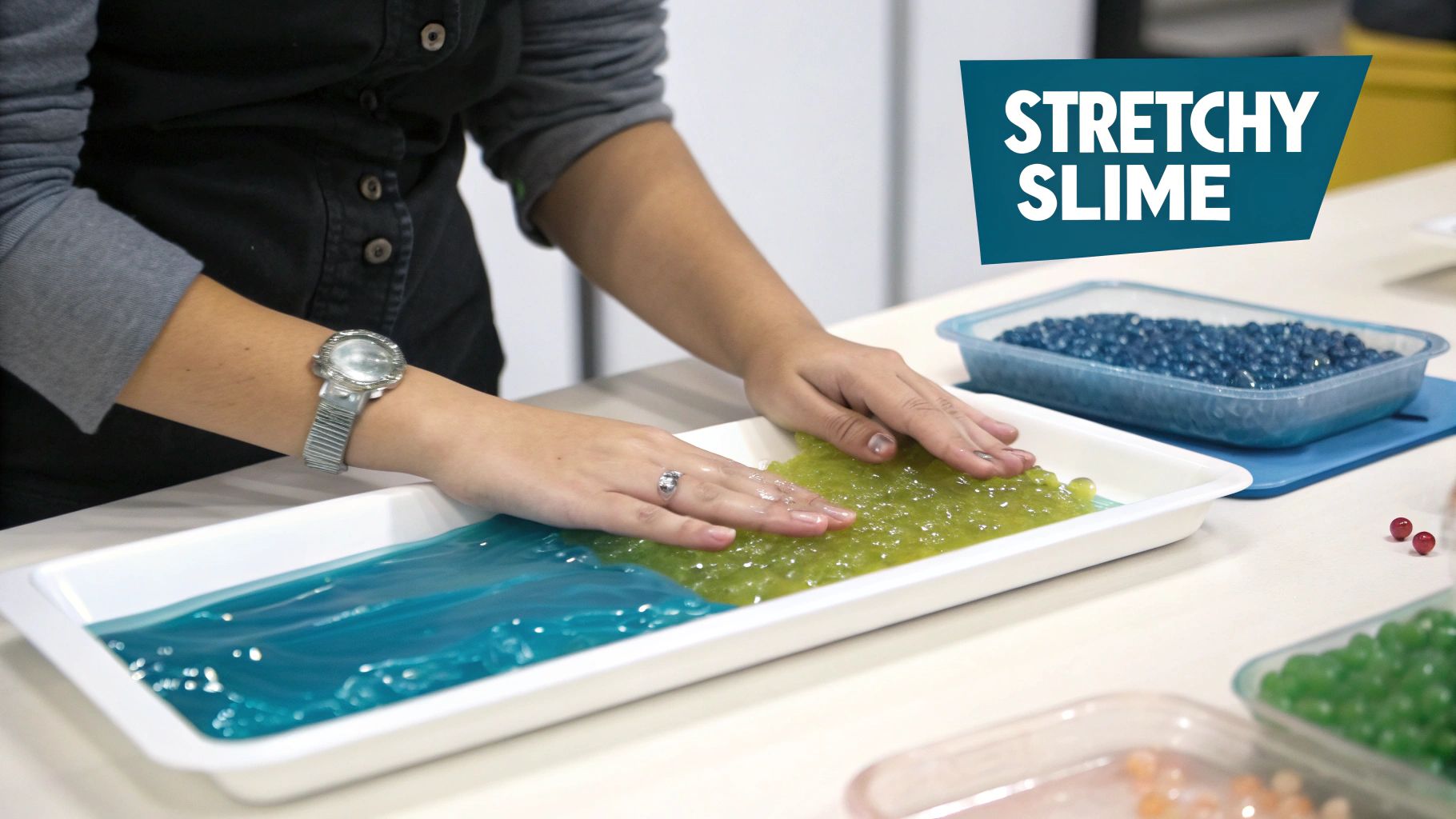
This activity is brilliant for developing fine motor skills as children mix, knead, stretch, and poke the slime. It also serves as a fantastic calming tool, providing tactile sensory input that can help with focus and stress relief. From STEM classrooms exploring polymerisation to occupational therapists using it for sensory integration, slime is a versatile and engaging material.
How to Set It Up
- Gather Your Ingredients: You will need washable PVA glue, an activator (contact lens solution with boric acid is a safer alternative to borax), and a bit of bicarbonate of soda. Add food colouring or glitter for extra fun.
- Create Your Slime Station: Mix the ingredients in a large bowl. Once it starts coming together, transfer it to a wipeable mat or tray for kneading. Provide add-ins like beads or small toys.
- Designate a Play Zone: Slime is best kept on hard, non-porous surfaces. Use a tuff tray or a plastic tablecloth to define the play area and make cleanup more manageable.
Top Tip: Always supervise slime play, especially with younger children, to ensure it doesn't end up in mouths, hair, or on carpets. Use washable glue to make removing it from clothes and surfaces much easier.
This activity beautifully blends science with sensory play, creating a memorable experience that empowers children to create their own unique toy.
9. Sensory Bottles and Discovery Jars
Sensory bottles offer a captivating and mess-free way to engage a child's visual and auditory senses. These clear containers are filled with various items like water, oil, glitter, beads, or rice, creating a mesmerising miniature world for children to observe. They are an excellent mess-free alternative within a list of messy play ideas, providing sensory stimulation without the cleanup, making them perfect for on-the-go entertainment or quiet time.
This activity encourages focus, observation, and curiosity as children watch materials swirl, float, and settle. Shaking a bottle filled with dried beans develops auditory processing, while watching glitter slowly descend in an oil-and-water mixture can have a calming, regulating effect. Used widely by Montessori educators and occupational therapists, discovery jars help children learn about cause and effect, properties of materials, and gravity in a safe, hands-on manner.
How to Set It Up
- Choose Your Container: Use clear plastic bottles with secure lids, especially for younger children, to prevent breakage. Ensure the bottle is clean and dry before starting.
- Fill with Wonders: Get creative with your fillings. For a visual "calm-down" bottle, combine water, clear glue, and glitter. For sound, use dried pasta, rice, or jingle bells. You can also add small toys or items from your Grow With Me kit, like colourful pom-poms.
- Seal for Safety: This is the most crucial step. Once filled, apply a strong adhesive like a hot glue gun or superglue to the inside of the lid before screwing it on tightly to create a permanent seal.
Top Tip: Create themed bottles to introduce new concepts. An "ocean" bottle could have blue-coloured water, small sea creature toys, and shells, while a "nature" bottle might contain tiny pinecones, leaves, and twigs.
These bottles are a fantastic tool for sensory exploration at any age and can be easily customised to match your child's interests. For more inspiration, check out this guide on how to make sensory bottles for endless creative possibilities.
10. Playdough and Homemade Modelling Compounds
A classic for a reason, playdough is a soft, wonderfully malleable material that offers endless opportunities for tactile exploration. Whether using a shop-bought variety or a simple homemade recipe (typically flour, salt, water, and oil), this modelling compound is perfect for squishing, rolling, and sculpting. It is one of the most accessible messy play ideas, providing a rich sensory experience that is both calming and engaging for young children.
This type of play is foundational for developing hand-eye coordination and strengthening the small muscles in the hands and fingers, which is crucial for later skills like writing. Used frequently in early years settings and occupational therapy, playdough encourages creativity as children transform a simple lump of dough into anything they can imagine, from animals to pretend food.
How to Set It Up
- Create a Play Zone: Designate a specific area for playdough activities, such as a highchair tray for a baby or a small table with a wipeable mat for a toddler.
- Introduce Simple Tools: Provide age-appropriate tools like plastic cookie cutters, a small rolling pin, or even items from your Grow With Me kit like wooden blocks for making imprints. This encourages problem-solving and experimentation.
- Make Your Own: For a fully taste-safe option, mix 1 cup of plain flour, ½ cup of salt, and 2 tablespoons of cream of tartar. Add 1 cup of boiling water with 1 tablespoon of vegetable oil and a few drops of food colouring, then stir until it forms a dough and knead until smooth.
Top Tip: Store your homemade or opened playdough in an airtight container or a zip-lock bag. This keeps it soft and pliable for many more play sessions, preventing it from drying out.
Playdough is an incredibly versatile and low-cost activity that supports a wide range of developmental milestones. Its ability to be both a soothing and a creatively stimulating material makes it an essential part of any messy play toolkit.
11. Pasta Sensory Play and Exploration
Dried pasta, with its myriad shapes, sizes, and textures, offers a wonderfully versatile and budget-friendly medium for sensory play. From smooth penne to ridged fusilli, it provides a rich tactile experience that engages a child's sense of touch, sight, and even sound as it clatters and pours. It’s an excellent choice for a less “wet” messy play idea, focusing on scooping, pouring, and manipulating dry materials which is fantastic for building concentration.
This activity is superb for honing fine motor skills as little ones pick up individual pieces, thread them onto string, or use tongs to transfer them between containers. It also encourages early maths concepts like sorting by shape or colour, counting, and understanding volume. Montessori and early years settings often use pasta play to promote practical life skills and independent, focused work.
How to Set It Up
- Create a Pasta Playground: Fill a shallow bin or tray with a variety of dried pasta shapes. For added visual appeal, you can dye the pasta beforehand by shaking it in a bag with a few drops of food colouring and a splash of vinegar, then letting it dry completely.
- Introduce Tools for Discovery: Add scoops, funnels, bowls, and small pots to encourage pouring and transferring. Items from your Grow With Me kit, like the wooden scoop or stacking rings, can be repurposed for this activity.
- Contain the Crunch: Lay a large sheet or a wipe-clean tablecloth underneath the sensory bin. This makes it easy to gather any stray pieces of pasta and return them to the bin after playtime is over.
Top Tip: For younger toddlers, stick to larger pasta shapes like penne or rigatoni to minimise any choking risk, and always supervise closely. As they get older, you can introduce smaller shapes for a greater fine motor challenge.
Pasta play is a classic for a reason; it's an accessible, low-cost activity that delivers significant developmental rewards. For more ways to support your child's coordination, explore these activities for fine motor skills development that enhance dexterity and control.
12. Bubble Wrap and Texture Exploration Play
Bubble wrap offers a multi-sensory experience that combines satisfying popping sounds with a unique tactile feel. While not traditionally "messy" with substances, it creates a sensory-rich environment perfect for exploration. Children can pop the bubbles with their hands, feet, or even tools, engaging their auditory and tactile senses while developing a clear understanding of cause-and-effect relationships and strengthening fine motor control.
This activity is fantastic for developing hand-eye coordination and gross motor skills, especially when laid out as a sensory pathway. Used extensively by occupational therapists, bubble wrap provides valuable tactile input and can be a calming activity. Combining it with paint turns this into one of the most exciting messy play ideas, as children can create beautiful, textured prints.
How to Set It Up
- Create a Safe Surface: Lay a large sheet of bubble wrap on the floor or tape it to a low table. For a vertical experience, you can even tape it to a wall.
- Encourage Movement: Let your toddler walk, crawl, or jump along a "bubble wrap runway" to engage their gross motor skills. For babies, place it on the floor during tummy time for a new texture to explore.
- Add an Artistic Twist: For a messier version, pour a small amount of non-toxic, child-safe paint onto a plate. Let your child press the bubble wrap into the paint and then onto paper to create unique patterns and prints.
Top Tip: Always supervise closely to ensure children do not chew on or ingest small pieces of the plastic. This activity can be quite noisy, so be mindful of children who are sensitive to loud sounds.
The simplicity of bubble wrap play, combined with its significant developmental benefits, makes it a versatile and engaging activity. It is a brilliant way to explore textures and sounds with minimal preparation and maximum fun.
12 Messy Play Ideas Comparison
| Activity | Implementation Complexity 🔄 | Resource Requirements ⚡ | Expected Outcomes ⭐📊 | Ideal Use Cases 💡 | Key Advantages ⭐ |
|---|---|---|---|---|---|
| Sensory Bins with Kinetic Sand | Low — simple bin setup, supervise 🔄 | Moderate — buy kinetic sand, molds, storage ⚡ | ⭐⭐⭐⭐ — fine motor, creativity, calming 📊 | Indoor sensory stations, OT, preschools 💡 | Reusable, low dust vs regular sand ⭐ |
| Edible Paint and Finger Painting | Low — mix batches, supervise 🔄 | Low — yogurt, food coloring, brushes ⚡ | ⭐⭐⭐⭐ — color exploration, safe ingestion 📊 | Toddlers, Montessori, early art exploration 💡 | Food-safe, easy DIY, safe if mouthed ⭐ |
| Mud Kitchens and Outdoor Mud Play | High — outdoor space, weather-proofing 🔄 | Medium–High — water access, outdoor tools ⚡ | ⭐⭐⭐⭐ — imaginative play, nature connection 📊 | Forest schools, outdoor classrooms, free play 💡 | Rich natural sensory + social/immune benefits ⭐ |
| Shaving Cream Swirls and Paint Mixing | Low — containable trays, quick setup 🔄 | Low — shaving cream, food coloring, trays ⚡ | ⭐⭐⭐⭐ — tactile satisfaction, color mixing 📊 | Art classes, sensory centers, camps 💡 | Low cost, strong visual art outcomes ⭐ |
| Water Bead Sensory Play | Medium — soak time, maintenance, supervise 🔄 | Moderate — beads, large bins, scoops ⚡ | ⭐⭐⭐⭐ — tactile & visual stimulation, hand strength 📊 | Preschools, OT (3+ yrs) with supervision 💡 | Unique squishy texture, visually engaging ⭐ |
| Oobleck (Cornstarch & Water) | Low — simple mixing, remake often 🔄 | Very low — cornstarch, water, optional dye ⚡ | ⭐⭐⭐⭐ — science concepts, surprising tactile effects 📊 | STEM lessons, science demos, sensory tables 💡 | Cheap, teaches non-Newtonian physics ⭐ |
| Rainbow Rice and Sensory Bins | Low — dyeing step, dry & store 🔄 | Low — rice, food dye, vinegar, containers ⚡ | ⭐⭐⭐⭐ — fine motor, sorting, themed learning 📊 | Montessori, literacy/maths stations, home bins 💡 | Inexpensive, long shelf-life, versatile ⭐ |
| Slime Making and Sensory Exploration | Medium — recipes, adult supervision 🔄 | Moderate — glue, activator, add-ins, storage ⚡ | ⭐⭐⭐⭐ — engagement, basic chemistry, stress relief 📊 | Parties, STEM activities, OT sessions with rules 💡 | Highly engaging, customizable textures/colors ⭐ |
| Sensory Bottles and Discovery Jars | Very low — assemble & seal, minimal upkeep 🔄 | Low — clear bottles, filler materials ⚡ | ⭐⭐⭐ — visual calming, observation skills 📊 | Infants, calm-down corners, travel activities 💡 | Mess-free, portable, long-lasting ⭐ |
| Playdough & Homemade Modeling Compounds | Low — make/store, refresh periodically 🔄 | Low — flour/salt/oil or commercial tubs ⚡ | ⭐⭐⭐⭐ — fine motor, creativity, focus 📊 | Preschools, OT, home play tables 💡 | Versatile, safe, supports sculpting skills ⭐ |
| Pasta Sensory Play & Exploration | Low — prepare bins, optional dyeing 🔄 | Low — dried pasta varieties, scoops ⚡ | ⭐⭐⭐ — fine motor, sorting, patterning 📊 | Budget classrooms, fine motor stations, crafts 💡 | Very cheap, many shapes/textures to explore ⭐ |
| Bubble Wrap & Texture Exploration Play | Very low — ready-to-use, minimal setup 🔄 | Very low — repurposed packaging, tape ⚡ | ⭐⭐⭐ — tactile/auditory stimulation, cause-effect 📊 | Sensory rooms, calm corners, stress relief 💡 | Free/low-cost, immediate satisfying feedback ⭐ |
Making Messy Memories: Your Next Steps in Sensory Play
We have journeyed through a vibrant collection of twelve distinct messy play ideas, each one a unique invitation for your child to learn through their senses. From the gritty texture of kinetic sand and rainbow rice to the gloopy, unpredictable nature of oobleck and slime, we've seen how simple household items can transform into powerful tools for development. The core principle remains consistent: messy play is not about creating a masterpiece, but about embracing the process of exploration.
The true value of these activities lies in the moments of discovery. It’s the look of concentration as your toddler carefully pours water in their mud kitchen, the giggle as a baby squishes edible paint between their fingers for the first time, and the problem-solving that happens when they figure out how to mould playdough into a new shape. These are the building blocks of cognitive, motor, and emotional growth. You are providing a safe space for your child to experiment, to be a little scientist testing hypotheses about the world around them.
Key Takeaways for Your Messy Play Journey
Let's distill the most important lessons from our exploration of messy play ideas. Keeping these principles in mind will help you foster a positive and enriching environment every time you break out the splash mat.
- Process Over Product: The learning is in the doing. Focus on your child's engagement with the materials, not the final result. Celebrate the pouring, mixing, and squishing.
- Safety and Supervision are Paramount: Always choose age-appropriate, non-toxic materials, especially for babies and toddlers who explore with their mouths. Active supervision ensures a safe and positive experience for everyone.
- Preparation is Your Best Friend: A few minutes of prep work, like laying down a tuff tray or an old sheet, can save you significant cleanup time and stress. This allows you to relax and be present with your child during the activity.
- Follow Your Child's Lead: Observe what captures your child's interest. Do they love the feel of oobleck or the sound of shaking a sensory bottle? Use their cues to guide your next session and expand on their favourite activities.
Actionable Next Steps: From Ideas to Reality
Feeling inspired? The best way to harness this enthusiasm is to take immediate, simple action. Don't let the sheer number of ideas overwhelm you.
- Choose ONE Activity: Look back at the list and pick just one idea that seems most achievable and fun for you and your child this week. Perhaps it's the simple joy of pasta play or the contained fun of a discovery jar.
- Gather Your Supplies: Check your cupboards. You likely already have the ingredients for oobleck (cornflour and water) or a sensory bin (a tub and some rice). Make a small list of anything you need to pick up.
- Schedule It In: Put "messy play time" in your calendar. Treating it like any other important appointment makes it more likely to happen. Even 15-20 minutes is incredibly beneficial.
- Embrace Eco-Friendly Cleanup: When the fun is over, you don't need harsh chemicals. For many parents, a simple solution of vinegar and bicarbonate of soda is a go-to for cleaning up surfaces safely and effectively. Getting the perfect baking soda to vinegar ratio for cleaning can create a powerful, fizzing reaction that lifts grime without toxic fumes, keeping your play area safe for the next adventure.
By committing to these small steps, you transform the concept of messy play from a nice idea into a regular, cherished part of your family’s routine. You're not just making a mess; you're building neural pathways, fostering creativity, and making memories that will last far longer than any splatters on the floor.
Ready to elevate your sensory adventures? The Grow With Me subscription box delivers high-quality, developmentally appropriate toys and tools directly to your door, perfectly complementing these messy play ideas. Visit Grow With Me to discover how our curated kits can enrich your child's learning journey and make playtime even more magical.