

How to Encourage Baby to Crawl A Practical Guide for Parents
Encouraging your baby to crawl is all about creating a supportive and motivating little world for them. The best way to do this? It's a simple, proven mix: plenty of dedicated tummy time to build up their strength, placing enticing toys just out of their grasp, and making sure they have a safe, open floor to explore.
Understanding Your Baby’s Path to Crawling
Every baby’s journey to moving around is wonderfully unique. While you might be eagerly waiting for those first scoots and shuffles across the floor, it’s important to remember that development is a marathon, not a sprint.
Crawling is a huge milestone that does so much more than just get them from point A to B. It’s a full-body workout that strengthens crucial muscles in their arms, shoulders, back, and core.
This newfound freedom also sparks a massive leap in their cognitive growth. As they start to navigate their surroundings on their own, they learn about cause and effect, problem-solving, and spatial awareness. Your job is to be their biggest cheerleader, creating little opportunities for them to build the strength and confidence they need to get moving.
The Crawling Timeline and Styles
It's completely natural to wonder when this big step will happen. While every baby has their own timeline, there's a general window most fall into. In the UK, insights from NHS guidelines show that most babies begin crawling between 7 and 10 months of age.
About half of babies hit this milestone by 8.3 months, and by 10 months, over 90% of typically developing infants are on the move in one way or another.
But here’s the fun part: not all crawling looks the same! Some babies master the classic hands-and-knees crawl right away. Others get a bit more creative and invent their own unique methods to get around.
You might see:
- The Commando Crawl: Lying on their tummy and pulling forward with their arms, like a little soldier.
- The Bottom Shuffle: Scooting around on their bum, often using their legs to push themselves along.
- The Bear Crawl: Walking on their hands and feet with their bottom in the air, looking like a little bear.
- The Crab Crawl: Pushing themselves backwards or sideways with their hands.
This visual timeline gives you a great idea of what the crawling journey often looks like.
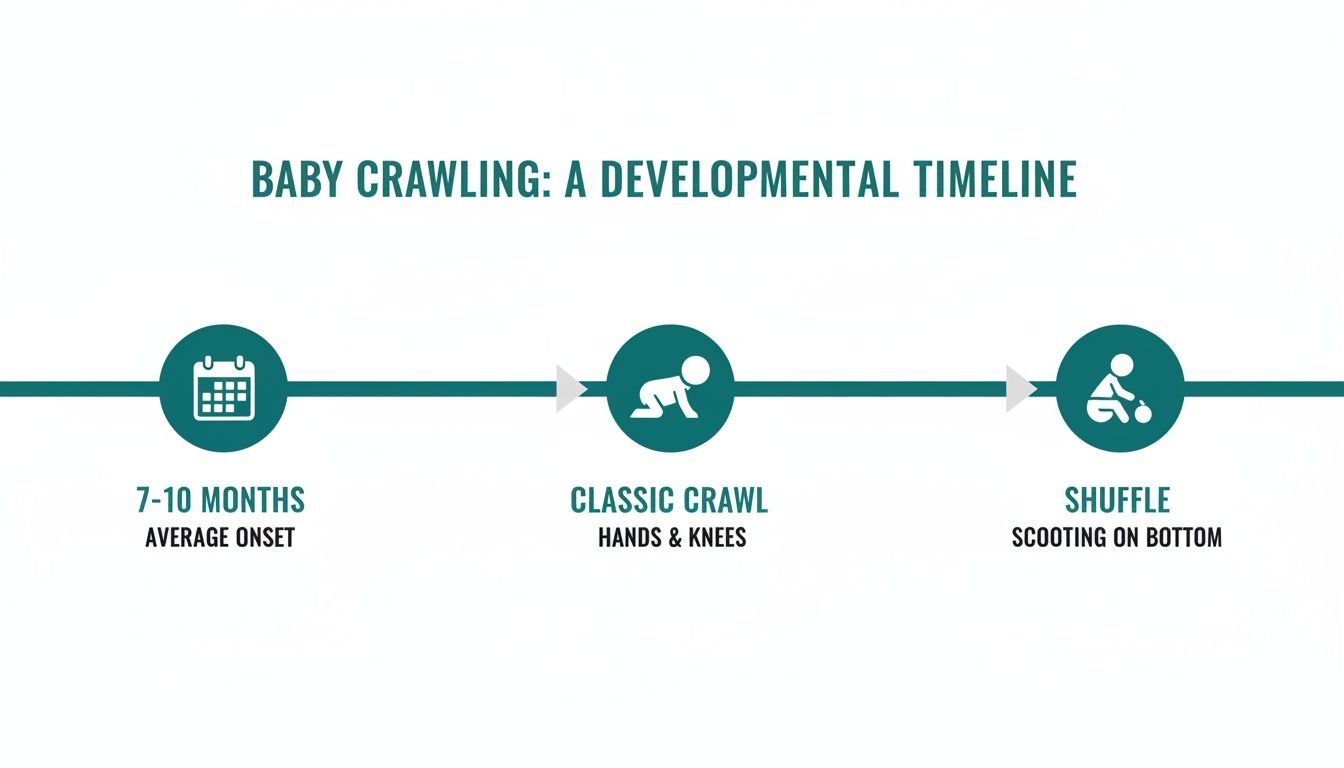
The key thing to remember is that the style is far less important than the movement itself. Any way they figure out how to move independently is a fantastic sign of progress. To get into the nitty-gritty, you can learn more about what age babies crawl in our detailed guide.
A Quick Note: Some babies skip the traditional crawling phase altogether and move straight to pulling up and cruising along furniture. This is also completely normal and not a cause for concern. Focus on progress, not perfection.
Signs Your Baby Is Ready to Crawl
Before the crawling starts, you'll likely notice some key signs that your baby is gearing up to get mobile. These little movements are the building blocks for their first big journey across the room.
Keeping an eye out for these readiness cues can help you understand when your baby might be on the verge of moving. This table gives you a quick, scannable reference for what to look for.
| Readiness Sign | What It Looks Like | Why It Matters |
|---|---|---|
| Pushing Up on Arms | During tummy time, they lift their chest and head high off the floor, straightening their arms. | This builds the arm, shoulder, and back strength needed to support their body weight. |
| Rocking on Hands & Knees | They get into the "all fours" position and rock back and forth. | This is practice! They're learning balance and getting a feel for the crawling motion. |
| "Swimming" on Tummy | They lie on their belly and move their arms and legs in a swimming or flying motion. | This movement strengthens the core and back muscles that are essential for coordinated movement. |
| Pivoting in a Circle | While on their tummy, they use their arms to push themselves around in a circle. | This shows they're figuring out how to use their arms to propel themselves, a key part of crawling. |
| Reaching for Toys | They consistently reach for objects just outside their grasp, sometimes lunging forward. | This demonstrates motivation and the beginning of understanding cause and effect ("If I move, I get the toy"). |
Once you start spotting these signs, it's a great signal that they are building the strength and coordination needed for crawling. It won't be long now
Creating a Safe and Inviting Crawling Space
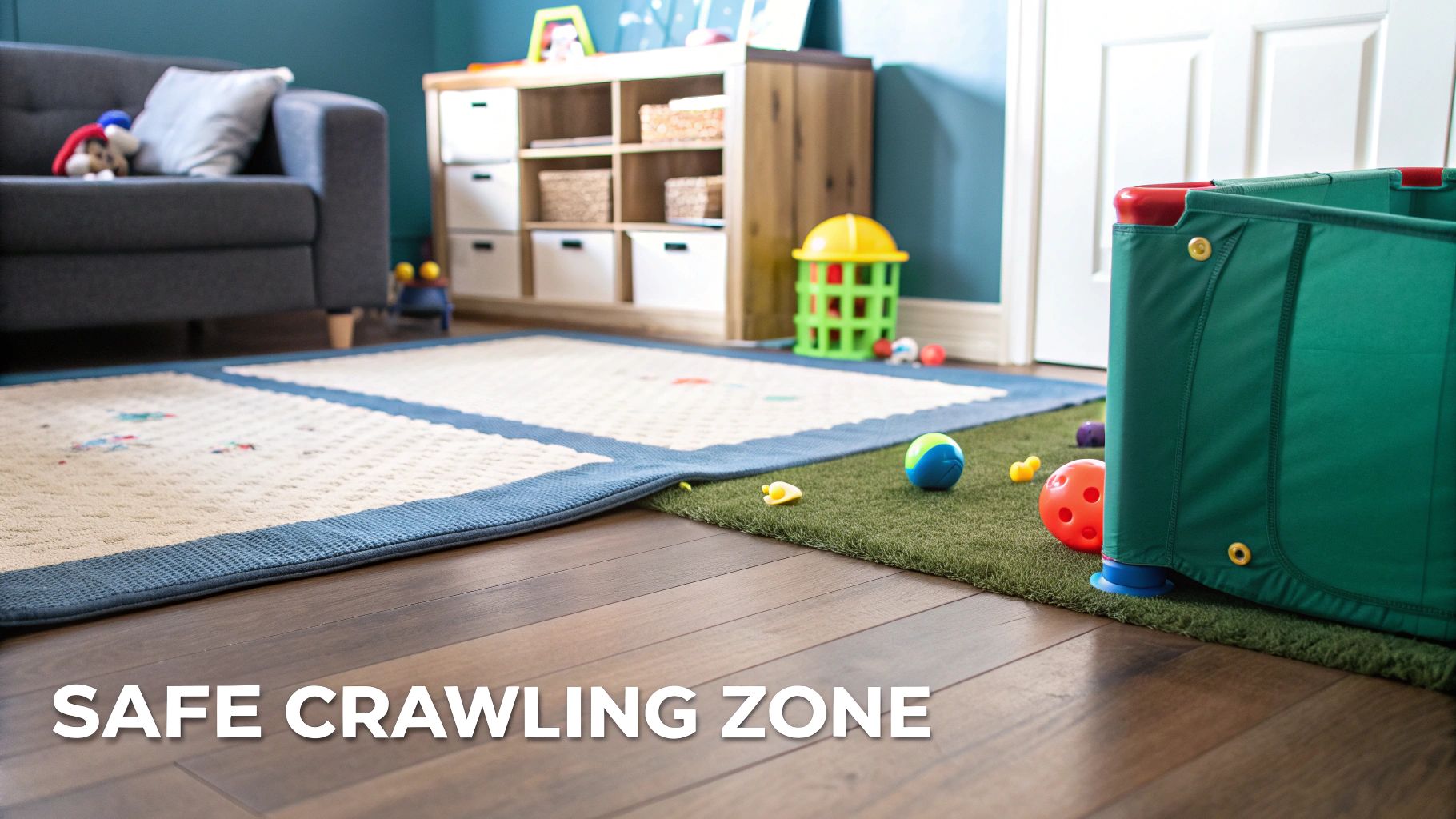
Before your little one can truly explore, they need a safe space to practise. Think of your living room floor as their training ground—the safer and more appealing it is, the more confident they'll feel taking those first tentative movements. Your goal is to create a "yes" space where they can move freely without you constantly having to say "no".
It all starts with a comfortable surface. Hardwood or laminate floors can be slippery and a bit daunting for little hands and knees. A low-pile rug or one of those soft, interlocking foam play mats gives them the perfect mix of cushioning and grip, which can make all the difference to their early efforts.
Baby-Proofing Your Crawling Zone
With the right surface down, it’s time to see the world from their perspective. I mean this literally—get down on your hands and knees! You’ll be genuinely surprised by the potential hazards you spot from a baby’s-eye view.
Before they really get moving, it's essential to understand how to childproof your home properly. This isn't just about ticking boxes; it's about creating a genuinely secure environment for their newfound mobility.
Focus on these key baby-proofing steps first:
- Cover Electrical Sockets: Use tight-fitting socket covers. Curious little fingers have a knack for finding them.
- Secure Furniture: Anchor any heavy or tall items like bookshelves and chests of drawers to the wall. This completely removes the risk of them tipping over.
- Soften Sharp Corners: Pop some corner guards on coffee tables, TV stands, and any other furniture with sharp edges at their height.
- Manage Cords and Wires: Tuck away or cover all electrical cords from lamps, chargers, and electronics. They are a massive trip and pull hazard.
A clear, safe space is so much more than just a precaution. According to UK Child Accident Prevention statistics, simply keeping floors clear of hazards can reduce the risk of injury for mobile babies by as much as 60%.
Encouraging Exploration with Smart Placement
Once you've got safety sorted, you can focus on making the space inviting. This is where the strategic placement of toys becomes your best friend in encouraging them to crawl. Don't just dump all their toys in a pile right in front of them; instead, create a little trail of temptation.
Place a favourite rattle or a colourful book just out of their immediate grasp. This small challenge is often all the motivation they need to stretch, pivot, and eventually push forward. As they get closer, you can nudge the toy a little further away, turning it into a brilliant, rewarding game.
This simple setup transforms your floor into a landscape of discovery. Developmental research shows that daily floor sessions with family can increase a baby’s motivation by 45%. You’re not just clearing a space; you’re building an environment that sparks their natural curiosity and rewards every bit of effort.
Fun Activities to Build Core Strength
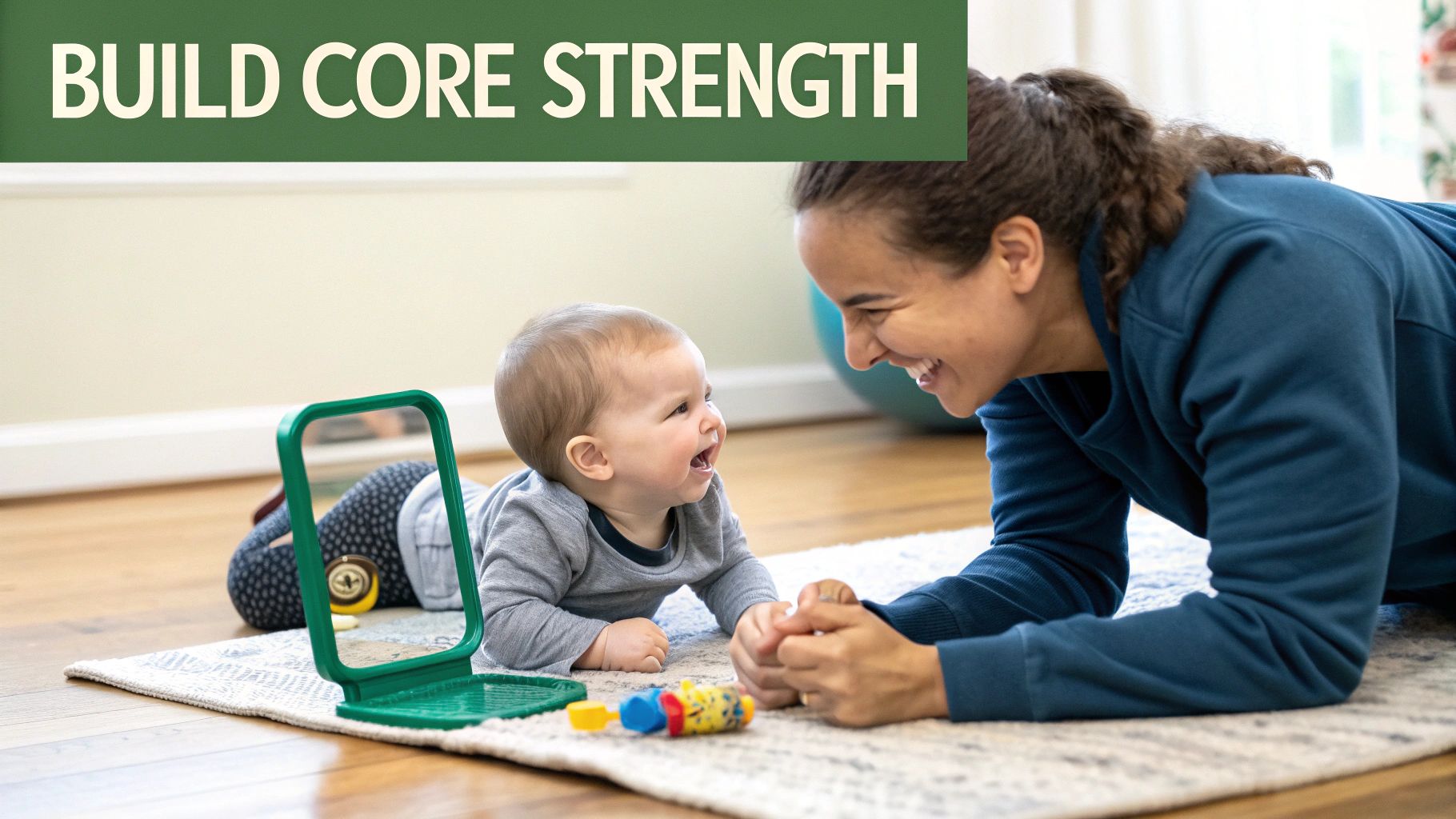
Before a baby can even think about crawling, they need to build up the foundational strength in their core, back, neck, and shoulders. Think of it like a builder laying the foundations for a house—it has to be solid before the walls can go up. These are the very muscles that will eventually let them push up, rock, and finally, propel themselves forward.
The most powerful tool in your toolkit for this is good old tummy time. Regular, supervised tummy time is hands-down the best exercise to get them ready for moving. It's not just about lying on their front; it’s an active workout that encourages them to lift their head, push up on their arms, and look around, strengthening every muscle group they’ll need to get mobile.
Making Tummy Time Engaging
We all know tummy time is important, but let's be honest—not every baby is an immediate fan. The secret is to make it short, sweet, and interesting. Aim for several brief sessions throughout the day, slowly building up the time as your little one gets stronger and more comfortable.
Here are a few creative ways I’ve found to make tummy time more appealing:
- Use a Mirror: Pop a baby-safe mirror in front of them. Babies are absolutely fascinated by faces, especially their own, and seeing their reflection can motivate them to lift their head for a better look.
- Get Down on Their Level: Lie on the floor facing your baby. Your face is their favourite toy! Sing songs, pull silly faces, and chat away to keep them engaged and happy.
- Bring in Sensory Toys: Use toys with different textures, sounds, and colours. A crinkly book, a soft rattle, or a water-filled play mat can turn tummy time into an exciting sensory experience.
For more ideas, you might be interested in our guide on when to start tummy time, which has even more tips for making it a positive part of your routine.
By keeping sessions positive and stopping before your baby gets too frustrated, you help them build a good association with being on their belly. This small change in approach can make a huge difference in their willingness to practise.
Exercises Beyond Basic Tummy Time
While tummy time is king, other activities also play a vital role in building the coordination and strength needed for crawling. These little exercises target different muscle groups and pre-crawling movements.
1. The Baby Aeroplane Lie on your back with your knees bent and place your baby on your shins, tummy-down, holding them securely. Gently lift and lower your legs, making whooshing aeroplane sounds. This fun game is fantastic for their core stability and balance as they adjust to the movement.
2. Encouraging Pivoting Once your baby can comfortably push up on their arms, try placing their favourite toys in a semi-circle around them during tummy time. This encourages them to pivot on their belly to reach for different things, strengthening their side (oblique) muscles and teaching them how to shift their weight—a crucial skill for crawling.
3. Assisted Rocking When you start to see your baby getting up on all fours, you can give them a little help to find their rhythm. Place a rolled-up towel or a soft scarf under their belly and gently lift just enough to take some weight off their tummy. This helps them feel the rocking motion and learn the weight shifts required for moving opposite limbs. Just make sure it’s a fun, supportive game, not a forced exercise.
Using Play to Motivate Your Baby to Move
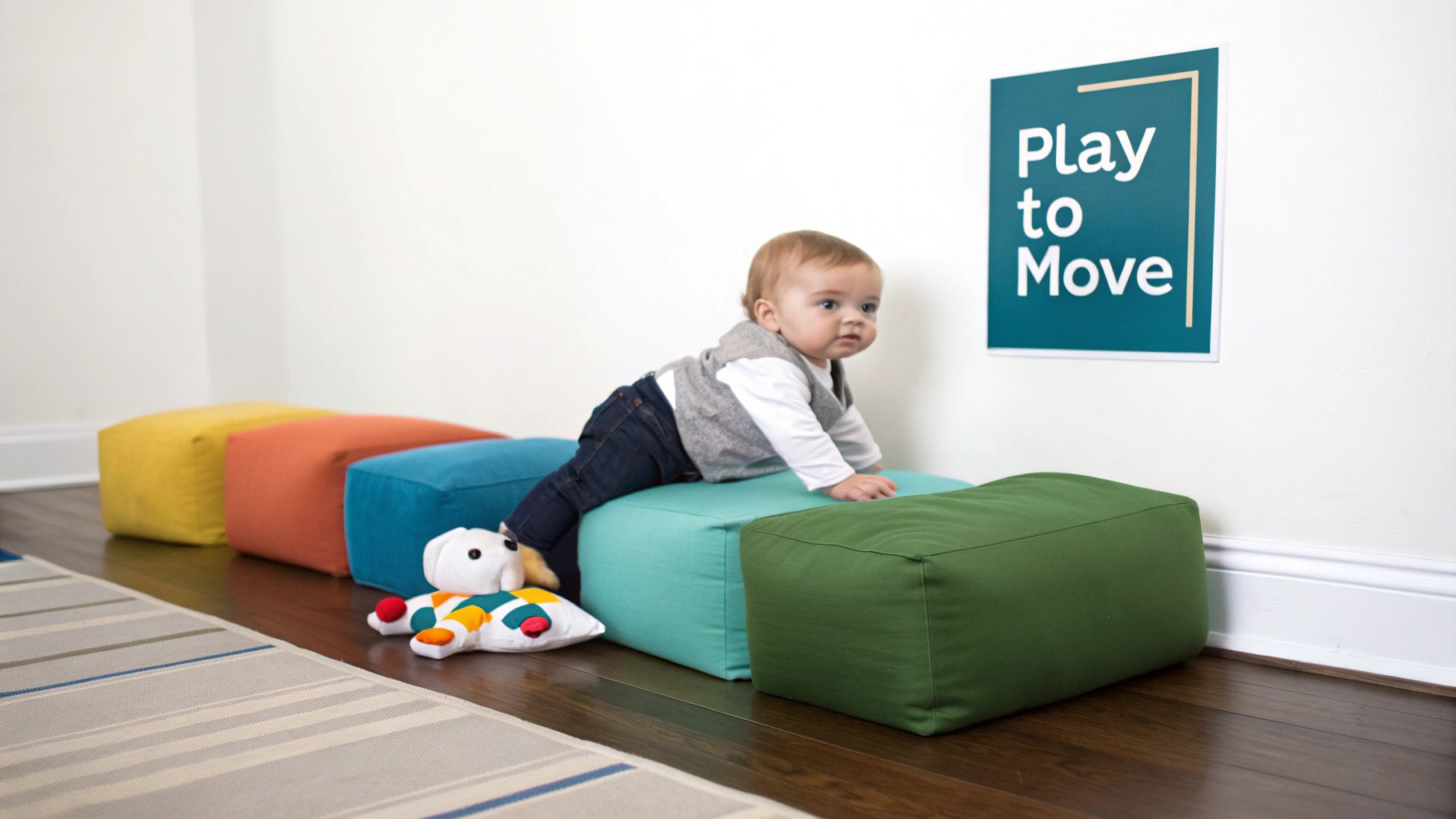
Play is so much more than just a bit of fun—it’s how your baby figures out the world and what their own body can do. When it comes to crawling, play is your absolute best tool. By turning movement into a game, you tap into their natural curiosity and give them a genuinely good reason to start exploring on their own terms.
The secret is to use toys and games as gentle invitations to move, not as frustrating tests they can't pass. You're aiming to create a 'pull' that sparks their desire to reach, pivot, and eventually travel across the floor to get to something they find fascinating. This playful approach makes building a new skill a really joyful experience for both of you.
Toys and Games for Early Movers
For babies who are just on the cusp of moving—maybe they’re pivoting on their tummy or starting to push up on their arms—our goal is simply to encourage that little bit of forward momentum. You really don't need complicated setups; a few of the right toys, placed strategically, can work wonders.
Start by putting a favourite toy, like a high-contrast book or a colourful rattle, just beyond their fingertips. That small gap is often all the motivation they need to stretch, squirm, and make those first little scoots forward. It’s a brilliant way for them to learn that putting in a bit of effort gets them a fun reward.
Here are a few simple but effective ideas to try:
- The Toy Trail: Lay out a short path of interesting objects leading away from your baby. This encourages a series of small, manageable movements instead of one big, intimidating one.
- Cause-and-Effect Toys: Anything that lights up or makes a noise when touched is fantastic. The immediate feedback makes them incredibly motivating for a baby to try and reach.
- The Mirror Game: Pop a baby-safe mirror a little way in front of them. Babies are captivated by their own reflection and will often move closer to get a better look.
When you’re intentional with playtime, every game can have a purpose. Curated selections, like the toys in a Grow With Me box, are specifically designed to support different developmental stages. When you understand why a toy is included, you can use it to its full potential, turning a simple play session into powerful developmental support.
Creating Fun Obstacle Courses
Once your baby is confidently rocking on all fours or has mastered the army crawl, you can bring in some more dynamic play. Setting up a mini-obstacle course is a fantastic way to build their strength, coordination, and, most importantly, their confidence.
Use cushions, pillows, or rolled-up blankets to create small hills and valleys for them to navigate. This challenges them to push up, balance, and use their muscles in new ways. It safely transforms your living room into a landscape of adventure.
It’s amazing how effective a simple 'obstacle course' can be. According to some UK parenting blogs, this single strategy helps motivate around 80% of hesitant crawlers within a month. Even placing a favourite book just out of reach can increase forward reaches by 35%, and parents who spend just 15 minutes a day modelling crawling have seen success rates jump by 50%. You can read more about these fascinating crawling and walking insights from Slumbersac.
As you build these little courses, don't forget to get down on the floor and join in. Your presence and encouragement are the most powerful motivators of all. Cheer them on as they conquer a pillow mountain—it shows them that this new skill is a brilliant and rewarding game. For more ideas, have a look at our guide on other fantastic gross motor activities for kids.
What to Do When Your Baby is a Reluctant Crawler
It’s completely normal to feel a little niggle of worry when you see other babies zipping across the floor while yours seems happy to stay put. If your baby is hesitant to start crawling, rest assured, you're not alone and it’s very rarely a cause for concern. Every baby moves at their own pace, and some just need a bit more encouragement—or have already figured out sneakier ways to get around!
Think about it: some babies are masters of efficiency. Why bother crawling when a well-timed roll or a piercing cry brings that fascinating toy right to them? Others might just find the wobbly transition from a sturdy sitting position to all-fours a bit intimidating. Our role as parents isn’t to push them, but to gently build their confidence and show them how rewarding it can be to explore on their own.
Common Crawling Hurdles and How to Help
Figuring out why your baby isn't crawling is the key to offering the right support. A baby who gets frustrated and cries during tummy time needs a different approach than one who’s a pro at shuffling around on their bottom. Let’s break down a few common scenarios.
A classic one is the baby who loves sitting up but has absolutely no interest in getting onto their tummy. Sitting is a wonderful skill, and it gives them a great new perspective on their world! To coax them into a different position, try placing their favourite toys just to the side and slightly out of reach. This encourages them to twist and reach, which is brilliant for strengthening the core muscles needed to move from sitting to a hands-and-knees position.
The secret is to make movement a natural part of play, not a chore. You want to pique their curiosity so they want to move, rather than feeling like they're being put through a drill.
Gentle Nudges for Hesitant Movers
What about the baby who gets onto all fours and rocks back and forth but just can’t seem to launch forward? They’re so close! This is often just the final piece of the coordination puzzle falling into place.
Here are a few gentle techniques you can try to help them connect the dots:
-
The Scarf Trick: This is a fantastic tip I picked up from a paediatric physio. Slide a light, silky scarf under your baby’s chest and tummy, from their armpits down to their hips. As they rock, gently lift just enough to take a tiny bit of weight off the floor. This added support can give them the stability they need to experiment with moving an arm and the opposite leg forward.
-
The Rolling Rover: If your baby’s preferred mode of transport is rolling, lean into it! Place toys in a line to encourage a log-roll journey across the room. Rolling is fantastic for building core strength and spatial awareness, and you'll often find that all that movement eventually leads to them pushing up onto their hands and knees.
-
The Bottom Shuffler: Did you know that around 10-15% of babies in the UK become expert bottom shufflers and may skip crawling altogether? It's a completely normal developmental variation. If this is your little one, just keep offering plenty of floor time and opportunities to pull up on furniture. This will build the leg strength they need for their next big adventure: walking.
When Should I Talk to a Healthcare Professional?
Watching your baby figure out how to move is an incredible experience, but it’s completely natural to have questions or even a few worries along the way. While there’s a huge range of what’s considered "normal" development, a few signs might suggest it’s time for a chat with your health visitor or GP.
It’s so important to remember that babies have their own timelines and styles. Some are brilliant bottom shufflers, others roll everywhere with surprising speed, and a good number of them skip crawling entirely and head straight for pulling themselves up on the furniture. The real goal isn't ticking the 'crawling' box, but seeing them make steady progress in their overall motor skills.
Key Signs to Look Out For
Don’t panic if your baby is simply taking their time. However, there are a few things to keep an eye on that are less about the timing of a milestone and more about how your baby is moving their body.
It’s probably a good idea to book an appointment if you notice your baby:
- Seems particularly stiff in their arms and legs, or on the flip side, feels very floppy.
- Strongly favours one side of their body, consistently using one arm or leg much more than the other.
- Doesn't bring their hands up to their mouth.
- Isn’t putting any weight on their legs when you hold them in a standing position by about nine months old.
A general lack of interest in getting mobile is also something to note. If your baby reaches 12 months and shows no real desire to move—no scooting, shuffling, crawling, or pulling up—it’s a good time to get things checked out.
Ultimately, you know your baby best. Trust your instincts. If something just doesn’t feel right to you, it is always worth bringing it up with a healthcare professional who understands infant development.
What to Expect at a Developmental Check-Up
If you do decide to seek advice, please know that the process is designed to be supportive, not scary. Your health visitor or GP will start by asking you some questions about what you’ve observed at home and will likely do a gentle physical check.
They’ll want to see how your baby moves, assess their muscle tone, and check their reflexes. This isn’t a test for your little one to pass or fail! Think of it as a collaborative conversation to make sure your baby has everything they need to thrive. Often, you’ll leave with simple reassurance and maybe a few new, specific exercises to try at home. If they feel a little extra support is needed, they can refer you to a wonderful paediatric physiotherapist who can offer more targeted guidance.
At Grow With Me, we're passionate about supporting every tiny step of your child's journey. Our curated play kits are designed to give your baby the perfect, age-appropriate tools to build strength, ignite curiosity, and make learning to move a truly joyful adventure. Explore our subscription boxes at https://shop.growwithmesubscriptionbox.co.uk and give your little one the gift of purposeful play.