

Gross Motor Skills Activity: Ideas for gross motor skills activity in toddlers
A gross motor skills activity is all about using the large muscles in the torso, arms, and legs to create whole-body movements. For babies and toddlers, this means those foundational actions we all recognise: crawling, walking, running, jumping, and throwing. These are the skills that allow them to physically explore and understand their world.
Why Gross Motor Skills are a Big Deal for Little Ones
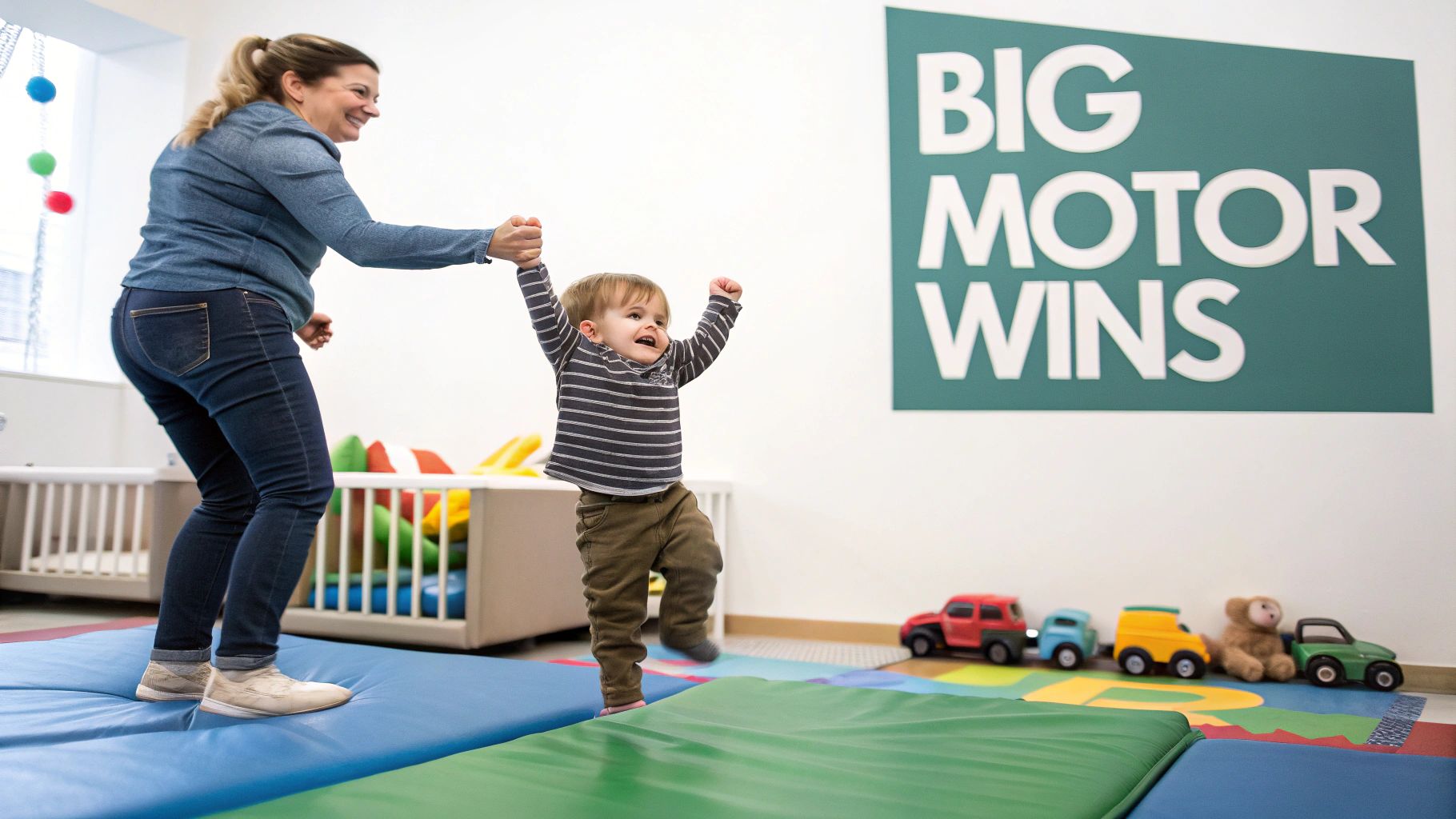
Have you ever watched a toddler determinedly trying to scale the sofa? Or a baby working tirelessly to finally roll over? That isn't just a bit of restless energy. It’s their brain and body working together on a critical mission: mastering movement.
Gross motor skills are the absolute building blocks of physical literacy. They give children the power to navigate their environment with confidence and curiosity. These big movements are so much more than just physical feats, though. They're deeply connected to a child's overall development, influencing everything from their self-esteem to their cognitive abilities. Each successful jump, climb, or balanced step sends a powerful message to their brain: "I can do this."
The Ripple Effect of Movement
Developing strong gross motor skills creates a brilliant positive feedback loop. As children gain better control over their bodies, they feel more empowered to explore, take on new challenges, and interact with friends during playtime. This newfound physical confidence often translates directly into social confidence.
A simple gross motor skills activity can touch on multiple areas of development all at once:
- Cognitive Growth: Navigating an obstacle course made of pillows requires problem-solving and an understanding of where their body is in space.
- Physical Strength: Pushing a toy lawnmower or carrying blocks builds crucial core, arm, and leg muscles.
- Coordination and Balance: Dancing to music or kicking a ball improves the vital connection between their brain and body.
- Emotional Regulation: Physical exertion provides a healthy, much-needed outlet for big feelings and bundles of energy.
Every wiggle, hop, and stumble is a vital step toward a stronger, more capable child. It’s through these movements that they learn to plan, execute, and adapt—skills that extend far beyond the playground.
To really get your head around the profound impact, you can delve into the science of baby motor development, which explains how these early skills lay the groundwork for everything that comes later.
This is exactly why stage-based play, like the activities found in our Grow With Me kits, is so effective. It provides the right challenge at the right time, turning simple fun into powerful developmental support.
First Moves: Fun Activities for Infants 0-12 Months
A baby’s first year is an absolute whirlwind of growth. Every little wiggle and push is a major victory, laying the groundwork for all the movement to come. Supporting these early milestones doesn’t mean you need a room full of complicated gear; it’s all about creating simple, joyful moments for them to explore what their bodies can do. Often, the best gross motor activity is just a focused bit of playtime on the floor.
These first movements are the very first steps on a long developmental journey. It’s amazing to think that the simple act of learning to push up or roll over builds the foundation for crawling, walking, and running later on. In England, this early focus on movement really pays off. Data from 2018/19 showed that 93.5% of children aged 2 to 2½ years met or exceeded expectations for gross motor skills. It just goes to show how crucial these early, playful interactions are for their future physical confidence. You can read more about these early childhood development findings to see the positive trends for yourself.
The First Three Months: Gentle Tummy Time
For your brand-new baby (0-3 months), the world is a strange and wonderful place. Our main goal here is to gently build that crucial neck and upper body strength, and it all starts with tummy time. This simple activity is absolutely fundamental for developing the muscles they'll need for rolling over and crawling down the line.
Instead of just putting them flat on a playmat, try a more personal approach. Lie on your back and let your baby do their tummy time on your chest. They’ll be naturally motivated to lift their head to see your face. Another sweet activity is "bicycle legs"—gently moving their legs in a cycling motion while they're on their back to encourage coordinated movement and body awareness.
A high-contrast ball, like the one in the Grow With Me newborn kit, is perfect for this stage. During tummy time, place it just out of reach to encourage them to look up and shift their weight. If you're wondering about the best way to get started, our guide on when to start tummy time has all the details.
Four to Seven Months: Encouraging Rolling and Sitting
As your baby gets stronger (around 4-7 months), they’ll start using that newfound strength for more dynamic movements. Get ready for rolling and the first wobbly attempts at sitting up! Your role now shifts to being their biggest cheerleader and creating a safe space for them to practise.
To get them rolling, place an engaging toy, like a colourful wooden rattle, just to one side. This will motivate them to reach across their body, which often initiates the little twist that leads to a full roll.
Parenting Tip: When they start trying to sit, surround them with pillows or a nursing cushion. This gives them a bit of support but, more importantly, softens any tumbles. It creates a safe little nest where they feel secure enough to test their balance without being startled by a fall.
Eight to Twelve Months: Getting Mobile!
The final stretch of the first year (8-12 months) is all about locomotion. Babies are mastering crawling, pulling themselves up to stand on anything they can, and "cruising" along the furniture. This is where their world truly opens up, and your living room becomes their new playground.
- Create a Crawling Course: You don't need anything fancy. Use cushions, pillows, or even your own legs to create a mini obstacle course. This encourages them to problem-solve and builds strength as they navigate the lumpy terrain.
- Motivate the Pull-Up: Place a favourite toy from their Grow With Me box on a low, sturdy surface like a coffee table or footstool. This gives them a clear goal and a fantastic reason to work on pulling themselves up to a standing position.
Throughout this incredible year, the most important thing is to simply follow your baby's lead. Celebrate every tiny effort, every wobble, and every successful reach. Creating a positive, encouraging atmosphere makes all the difference, because each new movement is a milestone worth cheering for.
Active Adventures for Energetic Toddlers 1-3 Years
The moment your little one gets steady on their feet, your world—and theirs—completely changes. The toddler years, from one to three, are a beautiful explosion of pure energy and constant motion. Gross motor skill activities now evolve from the foundational work of sitting up and crawling to the much more complex, coordinated chaos of running, jumping, climbing, and throwing. It's all about channelling that incredible enthusiasm into play that builds real strength, coordination, and confidence.
This phase is incredibly dynamic. In fact, UK government figures for 2023/24 show that 93.3% of children aged 2 to 2½ in England are hitting their expected gross motor development milestones. What's fascinating is that the data sometimes shows children in the most deprived areas outperforming the national average in this one area, proving that a rich environment for play can truly be created anywhere. You can dive deeper into these child development outcomes on the official government site.
The secret is simply to create opportunities for movement that feel like nothing but fun.
The infographic below charts the journey through the first year, showing how each skill sets the stage for the big adventures of toddlerhood.
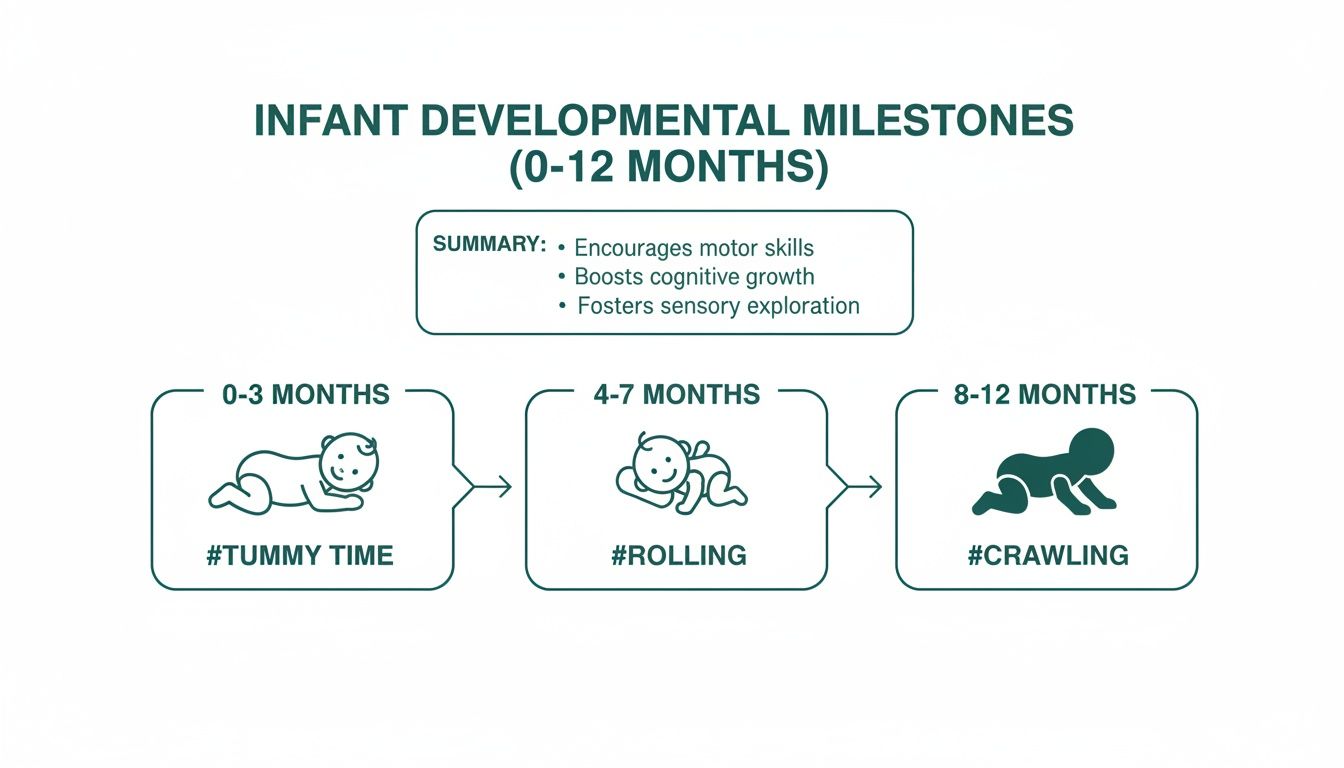
As you can see, the progression from tummy time to crawling is a natural build-up, preparing your child's body and brain for the non-stop action ahead.
Build an Indoor Obstacle Course
You absolutely don't need a garden or fancy play gym to create an amazing gross motor skills activity. With a little imagination, your living room can become the most exciting adventure zone.
The whole point is to encourage different types of movement: crawling under, climbing over, and balancing along a path.
- Pillow Mountains: Scatter cushions and pillows across the floor. Your toddler will instinctively know what to do—climb over them! It’s fantastic for building leg strength and working on their spatial awareness.
- Tunnel Time: Just drape a blanket over two chairs, and you’ve got an instant tunnel to crawl through. Simple, but effective.
- The Living Room Balance Beam: Lay a straight line of masking tape on the floor and challenge your little one to walk along it. This is a brilliant little trick for developing their balance and focus.
Unleash Their Inner Animal
"Animal walks" are one of my favourite ways to get toddlers moving. They’re playful, a bit silly, and work on core strength, balance, and coordination without them even realising it.
You can get creative, but here are a few classics to start with:
- Bear Crawl: Get them to walk on their hands and feet, trying to keep their arms and legs straight.
- Frog Hop: Squat down low to the ground and then leap forward, just like a frog.
- Crab Walk: Sit on the floor, plant hands and feet firmly, then lift their bottom up and scuttle sideways or backwards.
Parenting Tip: The best thing you can do is join in! Your enthusiasm is infectious. When you're both waddling like ducks or hopping like frogs, it stops feeling like a structured "activity" and just becomes a moment of pure, silly, joyful connection.
Power Up Play with Grow With Me Kits
This is where the toys in the Grow With Me toddler kits really shine. They're designed specifically for these kinds of energetic explorations—they’re not just for sitting quietly. Think of them as tools for big movements.
A wooden push walker, for instance, offers that little bit of stability for an early walker. Later on, it becomes a trolley for them to push and pull their favourite treasures around the house.
Another star player is the climbing triangle. It gives toddlers a safe, purpose-built structure to practise climbing up and down, letting them test their limits and build incredible confidence in a controlled way. By weaving these kinds of toys into your obstacle courses or imaginative play, you elevate the fun and target specific developmental needs. It’s how you turn your home into the perfect developmental playground.
To help you connect the dots between your child's stage and the best ways to play, we’ve put together this simple table. It matches key milestones with activities and the specific Grow With Me toys that can help.
Gross Motor Milestones and Supporting Grow With Me Activities
| Age Range | Typical Gross Motor Milestone | Recommended Activity | Grow With Me Toy Support |
|---|---|---|---|
| 0-3 months | Lifts head during tummy time, jerky arm/leg movements | Supervised tummy time, gentle leg cycling | High-Contrast Play Mat, Soft Tummy Time Pillow |
| 4-6 months | Rolls from tummy to back, pushes up on hands | Reaching for toys while on tummy, assisted rolling | Activity Gym with Dangling Toys, Textured Sensory Balls |
| 7-9 months | Sits without support, starts to crawl or scoot | Creating a "yes" space for crawling, placing toys just out of reach | Crawl-Through Tunnel, Stacking Rings |
| 10-12 months | Pulls to stand, cruises along furniture, may take steps | Push-toy walking, standing play at a low table | Wooden Push Walker, Activity Table |
| 1-2 years | Walks independently, starts to run, climbs stairs | Indoor obstacle courses, dancing, kicking a soft ball | Soft Play Blocks, Ride-On Toy |
| 2-3 years | Jumps with both feet, throws a ball overhand | Animal walks (frog hops, bear crawls), throwing beanbags into a basket, tricycle riding | Climbing Triangle, Toddler-Sized Basketball Hoop |
This table is just a guide, of course. Every child develops at their own unique pace, so the most important thing is to watch their cues and offer playful opportunities that match their current abilities and interests.
Creating a Safe Space for Big Movements
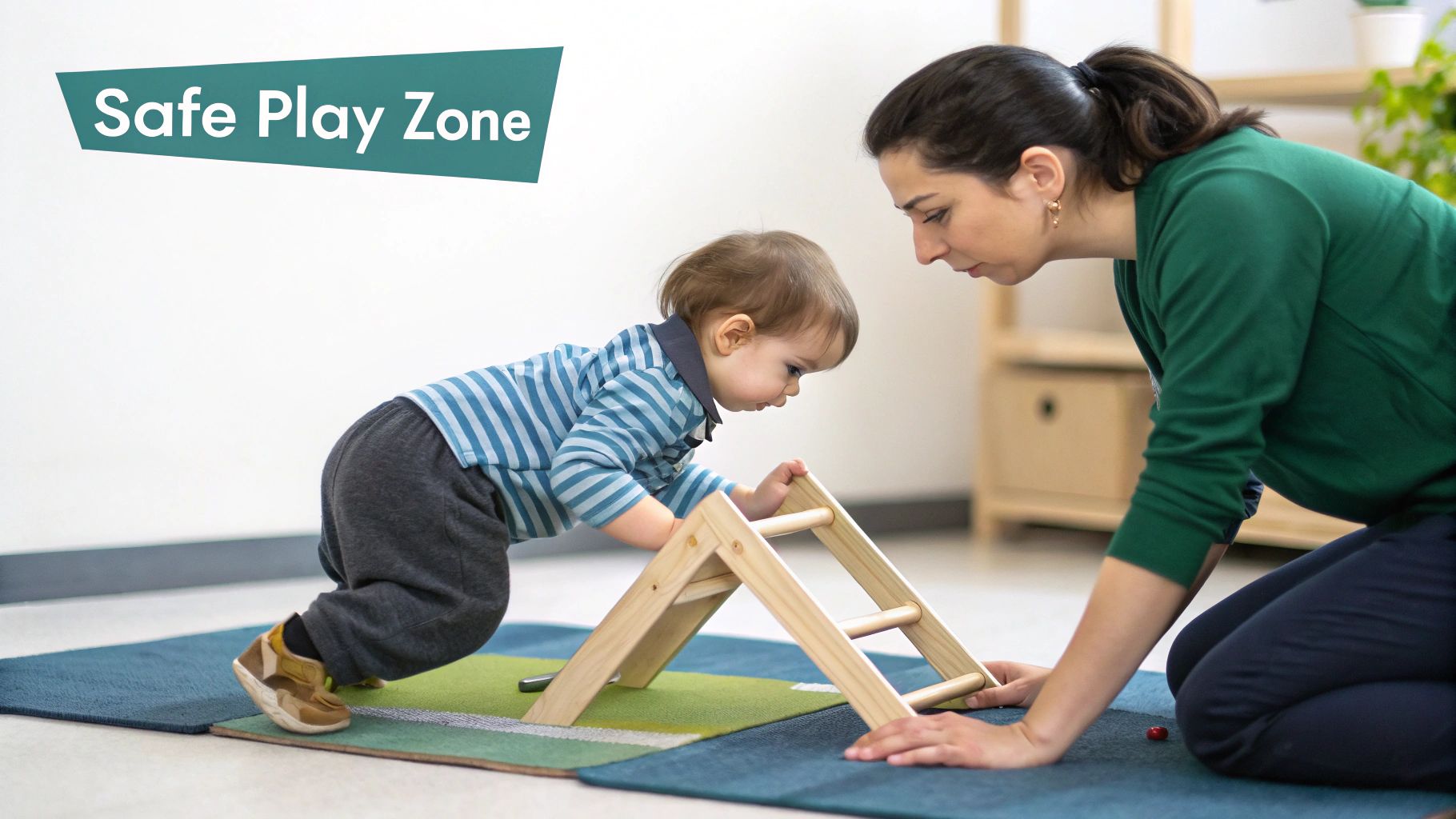
If you want your little one to truly embrace big movements, they need the freedom to explore without a constant stream of "be careful!" or "don't touch that!". This is where creating a ‘yes’ space comes in—an environment where their natural curiosity is met with safety, not obstacles. It’s all about thoughtfully preparing a room so you can relax while they get moving.
Think of it as setting everyone up for success. By arranging the room so that most things are safe to touch and explore, you spend less time redirecting and more time connecting. This simple shift can dramatically reduce frustration for both of you, making playtime feel a lot more joyful.
Crafting Your Indoor Playground
Childproofing a room for active play is about more than just plugging sockets. The best way to start is to get down on your hands and knees and see the world from their perspective. What looks tempting to pull up on? What might be wobbly?
Here are a few practical things I always recommend:
- Anchor Your Furniture: This is a big one. Any heavy or tall items like bookcases, chests of drawers, or TV stands absolutely must be secured to the wall. It’s a non-negotiable step for preventing serious accidents.
- Soften the Edges: Little ones are notoriously wobbly. Use corner guards on sharp-edged coffee tables, media units, and fireplace hearths. A tumble is almost guaranteed at some point, but you can minimise the risk of a nasty bump.
- Clear the Floor: Create a dedicated open area with a soft surface. A large, non-slip rug or a set of interlocking foam tiles can define the play zone beautifully. For more ideas on creating a perfect foundation for play, you can learn about the benefits of a baby sensory mat.
The goal isn’t to create a completely sterile, empty room. It’s to thoughtfully curate a space that invites movement and exploration while removing the most obvious hazards.
The toys you provide make a difference, too. The items in the Grow With Me kits, for example, are fantastic because they're made from natural, durable materials and designed for specific developmental stages. This means they are inherently safer and more appropriate for a toddler who is busy testing their physical limits, which gives you that extra peace of mind.
The Power of Outdoor Play
While a safe indoor space is essential, never underestimate the incredible benefits of getting outside. Nature is the ultimate playground for developing gross motor skills.
Just think about it: an uneven grassy lawn challenges your child's balance in a way a flat floor never could. A tiny slope becomes a mountain to conquer, and a pile of sticks presents endless opportunities for lifting, carrying, and building. The fresh air and sunshine are just the cherry on top.
How to Spot Progress and When to Get Support
It’s completely natural to wonder if your little one is developing "on time". But if there's one thing I’ve learned, it’s that every child has their own unique timeline. The best thing we can do is celebrate their personal progress rather than comparing them against a rigid checklist.
Progress in gross motor skills isn’t always about big, dramatic leaps. More often, it looks like small, gradual improvements. You might suddenly realise your toddler’s running is less wobbly and more purposeful, or that they can now scramble onto the sofa with a newfound confidence that wasn't there last week. These little victories are huge milestones in their physical journey.
Recognising Their Achievements
Knowing what to look for makes it so much easier to be their biggest cheerleader. Instead of getting bogged down by specific ages, try to watch for the evolution of their skills.
Here are a few positive signs to celebrate:
- Increased Stability: Maybe they can stand on one foot for a second longer, or they can navigate the bumpy grass in the garden without tumbling quite as often.
- Better Coordination: Catching a large ball with two hands instead of just trapping it against their body is a fantastic sign of progress.
- More Adventurous Play: Are they trying to climb a little higher at the playground or attempting to jump off a low step? That’s their confidence growing right alongside their muscles!
This is where the guides in your Grow With Me kits come in handy. They explain the "why" behind each activity, making it clear how something as simple as stacking blocks or pushing a walker directly supports their physical growth. This helps you spot those little wins as they happen.
Your child's journey is a marathon, not a sprint. Focus on providing joyful opportunities for movement and cheering on their effort and determination, not just the final outcome. This builds their resilience and a lifelong love for being active.
Knowing When to Seek Advice
While every child truly does develop differently, there are certain signs that might warrant a friendly chat with your GP or health visitor for some extra reassurance. Think of it not as a cause for alarm, but as being proactive.
Recent data has highlighted just how important it is to support these skills. While over nine in ten preschoolers in England meet or exceed expectations, a 2022/23 report noted a slight dip in gross motor skill achievement to 92.8% amid post-pandemic challenges. The good news is that focused interventions make a huge difference, with some programmes yielding significant jumps in motor scores.
Consider reaching out for professional advice if you consistently notice things like:
- Significant asymmetry, like always favouring one side of their body for most tasks.
- Persistent difficulty with age-appropriate skills, for example, not walking by 18 months.
- Unusually stiff or floppy muscle tone that seems to affect how they move.
Ultimately, you should always trust your parental intuition. If something feels off, it is always worth getting a professional opinion. For instances where challenges persist, understanding conditions like Developmental Coordination Disorder can help you seek the right diagnosis and support.
For a broader understanding of what to expect at different ages, our guide on what are developmental milestones is a great place to start.
Your Gross Motor Skills Questions, Answered
As you watch your toddler zoom, climb, and occasionally tumble, it's natural for questions to pop up. Let's dive into some of the most common queries I hear from parents about their little one's physical development.
How Much Physical Activity Does My Toddler Actually Need?
It might seem like a huge number, but the official guidance suggests toddlers should get at least 180 minutes of physical activity every day. That's a full three hours!
But don't panic – this doesn't mean you need to schedule a toddler triathlon. It’s all about weaving movement into your day. A walk to the shops, a dance party in the kitchen, or a bit of rough-and-tumble play on the rug all count towards that total. The real goal is just to keep them moving and avoid long stretches of sitting still.
We Live in a Small Flat – How Can We Practise Big Moves?
You absolutely don't need a sprawling garden to build big skills. Some of the most effective gross motor activities can happen right in your living room. It's all about being a bit creative with the space you have.
Here are a few ideas that work wonders in tighter spaces:
- Try some Animal Walks: Get down on the floor and try bear crawls, frog hops, or even a silly crab walk. These are fantastic for building core strength and coordination without needing much room.
- Master the Squat: Use the blocks from a Grow With Me kit to build a tower. This simple act encourages your child to squat down to pick up a block and then reach up high to place it on top – two brilliant movements for building leg and core strength.
- Throw a Dance Party: Pop on your favourite tunes and just have a boogie together. Dancing is pure joy, and it’s a brilliant way to work on balance and rhythm.
Do I Need to Buy Expensive Toys?
Honestly, no. Some of the best props for active play are things you already have at home. Sofa cushions, cardboard boxes, and blankets can become the most incredible obstacle courses and forts with just a sprinkle of imagination.
That said, stage-based toys, like the ones in our Grow With Me kits, can be a massive help. They're specifically designed to support key developmental milestones safely, taking the guesswork out of it for you. This ensures their playtime is not just fun, but also perfectly pitched to what their growing body needs.
At the end of the day, your encouragement and participation are the most powerful tools you have. The simple games, shared laughter, and celebrating their effort will do more for their development than any toy ever could.
My Toddler Seems Clumsier Than Other Kids. Should I Be Worried?
It’s so easy to fall into the comparison trap, but every single child develops at their own unique pace. Toddlers are, by nature, a bit wobbly! They're still figuring out how their bodies work, so tumbles and bumps are a completely normal, and necessary, part of learning.
Your best bet is to focus on providing lots of chances for them to play and move, celebrating their own personal progress. However, if you have a persistent worry about their coordination, balance, or the way they move, it never hurts to have a chat with your GP or health visitor. They can offer professional advice and give you that all-important peace of mind.
Ready to support your child’s development with stage-based play? Explore the Grow With Me subscription box and discover curated kits that make learning through movement joyful and easy. Visit us at https://shop.growwithmesubscriptionbox.co.uk to start your adventure.