
A Parent's Guide to 13 Month Old Milestones
Welcome to the exciting, and often dizzying, world of your 13-month-old! This is it – the official leap from babyhood into the toddler years. It’s a time filled with wobbly first steps, a fierce desire for independence, and a personality that’s beginning to sparkle and shine in its own unique way.
Your Guide to 13-Month-Old Milestones
Think of your little one as a determined explorer, ready to investigate every nook and cranny of their world. This guide is your map. We'll walk through the major physical, cognitive, and social 13-month-old milestones you might be seeing, but it's so important to remember that development is a journey, not a race. Every toddler carves out their own path.
This new phase brings incredible changes. Suddenly, the baby who was happy to sit and watch is now on the move, figuring things out, and trying their best to tell you exactly what they want and need. It’s a dynamic period of rapid growth that can feel both thrilling and a little overwhelming all at once.
Our goal here is to give you a clear, reassuring picture of what's happening at this age, helping you feel supported and ready to cheer on every small victory. We’ll break down their development into key areas:
- Physical Growth: From cruising along the sofa to taking those triumphant, teetering first steps.
- Cognitive Leaps: Grasping that things still exist even when they can't see them and starting to copy your actions.
- Language and Communication: Using gestures, pointing, and maybe even first words to get their point across.
- Social and Emotional Skills: Navigating new feelings like separation anxiety and learning to show affection.
Developmental milestones are simply skills that most children can do by a certain age. They act as helpful signposts for parents and healthcare professionals to see how a child is progressing, but they aren't a rigid checklist. The key is understanding the typical range for these skills.
As you read about these milestones, you’ll get a real sense of just how hard your toddler is working every single day. To get a better grasp of the basics, you can learn more about what developmental milestones are and why they matter.
We’ll also share practical tips and playful activities to help you support all this amazing learning. By understanding the 'why' behind their behaviour – from launching food off the highchair to pointing at absolutely everything – you'll feel more confident in how you respond, creating a secure and encouraging space for them to truly flourish. This complete look at 13-month-old milestones is here to empower you to enjoy this incredible chapter to the fullest.
The Big Moves: Physical Milestones
At 13 months, your home has probably been turned into an elaborate obstacle course, with your newly crowned toddler as the chief navigator. This is truly the age of motion, where those big physical milestones really start to steal the show.
What you're seeing is a beautiful blend of two key areas coming together. First, there are the gross motor skills – the big, whole-body movements like pulling up, cruising, and walking. Then, you have the fine motor skills, which are all about those small, precise movements of the hands and fingers.
Think of your little one as a tiny construction worker, constantly testing their balance, building their core strength, and figuring out how their body fits into the world. Every wobble, every stumble, and every triumphant first step is a crucial part of this incredible process.
This diagram offers a fantastic visual of how physical development fits into the bigger picture of your toddler's growth right now.
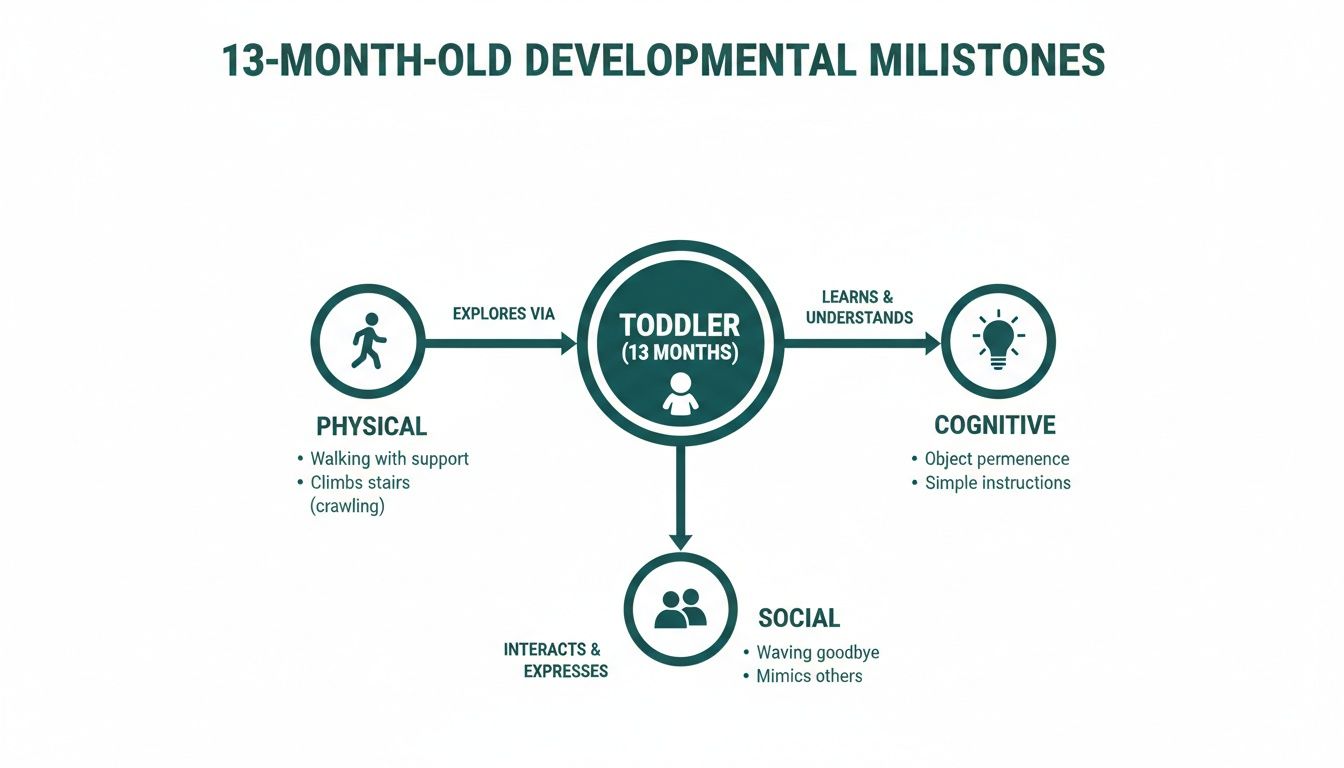
As you can see, physical progress doesn't happen in a vacuum—it’s beautifully woven together with all the cognitive and social leaps they're also making.
Mastering Gross Motor Skills
Of all the 13 month old milestones, the one everyone talks about is walking. While the timeline for this varies hugely from child to child, many toddlers at this age are making some serious strides—literally!
This newfound freedom is an absolute thrill for them. They're moving from being a passenger in life to being the driver. So, what specific skills are you likely seeing?
- Standing independently: You might catch them standing unsupported in the middle of the room for a few seconds, looking very pleased with their wobbly achievement.
- Cruising: This is that classic toddler shuffle, moving along the edge of the sofa or coffee table, using furniture for support as they explore.
- Walking with a helping hand: Many 13-month-olds are confidently walking while holding onto your hands or pushing a sturdy toy in front of them.
- Stooping and recovering: A huge sign of progress is the ability to bend down to pick up a toy and then stand back up again without toppling over.
To give you a clearer picture, here’s a quick summary of what to look for.
At-a-Glance Physical Milestones for Your 13-Month-Old
This table breaks down the typical gross and fine motor skills you can expect to see emerging around this age, along with some simple ways to support your child's journey.
| Developmental Area | Common Milestones | How to Encourage This Skill |
|---|---|---|
| Gross Motor (Large Muscles) | - Standing alone for a few moments - Cruising along furniture - Taking first independent steps - Bending over to pick things up |
- Create safe, open spaces for practice - Place toys on a low sofa to encourage pulling up - Offer a sturdy push-along toy |
| Fine Motor (Small Muscles) | - Using a pincer grasp (thumb & forefinger) - Stacking 2 or 3 blocks - Putting objects into a container - Turning the pages of a board book |
- Offer finger foods like peas or small puffs - Play with chunky blocks or rings - Let them "help" you by putting toys in a basket |
Remember, every single one of these actions, big or small, is strengthening muscles and building coordination for the next big adventure.
If you’re looking for more ways to support these big movements, our guide to fun gross motor activities for kids has tons of great ideas.
Don’t panic if your toddler isn’t walking solo just yet. The normal range for independent walking is wide—anywhere from 9 to 18 months. As long as they're bearing weight on their legs and keen to move, they are right on track.
Refining Fine Motor Skills
While walking and climbing get all the attention, a quiet revolution is happening in your toddler’s hands. Their fine motor skills are becoming so much more sophisticated, opening up a whole new world of detailed, purposeful play.
The clumsy 'palmar grasp' (where they scoop things up with their whole palm) is making way for the much more precise pincer grasp. This is that clever ability to pick up tiny items, like a single blueberry or a breadcrumb, using just their thumb and forefinger. It’s a complete game-changer for self-feeding and exploring smaller toys.
You’ll also start to notice them:
- Stacking blocks: Even a tower of two blocks is a massive achievement in hand-eye coordination and concentration.
- Turning pages: They can now help you turn the thick cardboard pages of their favourite board books, making story time more interactive.
- Putting objects into containers: This simple game of dropping things into a box and tipping them out again is fantastic practice for intentionally releasing objects.
These small, intricate movements are the building blocks for all sorts of future skills, from holding a crayon to using a fork. Every time they stack a block or successfully nab a piece of food from their tray, they're strengthening crucial neural pathways in their brain.
How Your Toddler's Mind Is Growing
While it’s easy to notice all the new ways your toddler is moving, there’s an equally amazing revolution happening inside their head. At 13 months, their brain is firing on all cylinders, constantly sorting through information to figure out how everything works. They’ve graduated from being passive observers to active little scientists, running experiments from the moment they wake up.
One of the biggest mental leaps you’ll see right now is the firm grasp of object permanence. This is the big idea that things still exist even when they’re out of sight. A few months ago, hiding a toy under a blanket meant it was gone forever. Now, your little one knows it’s just hiding and will lift that blanket to find their prize.
This is exactly why peek-a-boo is suddenly the best game ever and why they’ll search for you when you pop out of the room for a second. They’re finally realising you haven’t just vanished into thin air – a massive step forward in their understanding of the world!
Becoming A Little Detective
Your 13-month-old is watching your every move and learning from it. This is the beginning of true imitation, which is one of the most powerful ways children learn. They’re starting to connect the dots and realise your actions have a purpose, and they’re eager to try them out for themselves.
This isn’t just mindless copying; it's a huge sign of their developing problem-solving skills and a desire to be part of the world in the same way you are.
You might see them:
- "Helping" with chores: Grabbing a cloth and swiping at the floor after watching you clean.
- Making "phone calls": Holding a block to their ear and babbling away, just like they’ve seen you do.
- Copying gestures: Waving goodbye or clapping their hands right after you do are classic examples.
This ability to imitate is directly tied to their improving memory and their growing ability to link an action to an outcome. They’re piecing together clues about how things work, just like a tiny detective on a very important case.
A fantastic sign of cognitive growth is when they start following simple, one-step instructions. When you ask them to ‘pass the ball’ and they actually do it, it shows they can understand your words, process the request, and make their body perform the action. It's a surprisingly complex sequence that shows just how much is going on in that little brain.
Understanding Cause and Effect
Another exciting development is their dawning understanding of cause and effect. Your toddler is realising that they can make things happen. This is the magic behind the joy of pushing a button to hear a song or knocking over a tower of blocks seconds after building it.
They are learning, “If I do this, then that happens.” It’s the very foundation of logical thinking and problem-solving, and it’s why certain toys become completely fascinating at this age.
Toys that bring cause and effect to life:
- Shape Sorters: "This block won’t go in the round hole… but it fits in the square one!" This is a masterclass in shapes, spatial awareness, and trial and error.
- Stacking Rings: They learn about size and order as they work out how to get the rings onto the post.
- Simple Puzzles: Chunky puzzles with just a few pieces help them see how different shapes fit together to make a picture.
Our Grow With Me kits for this age are put together specifically to encourage this kind of thinking. We include things like shape sorters and stacking toys that are perfectly matched to their developmental stage, turning playtime into a powerful learning opportunity.
Every time they successfully pop a shape in the right hole or stack another ring, they aren't just playing. They're forging new neural pathways that will support more complex thinking later on. These simple games are actually laying the essential groundwork for how they’ll understand their world for years to come.
Finding Their Voice: Language and Communication
While your toddler is busy conquering new physical feats, their communication skills are quietly gearing up for a huge leap. At 13 months, their understanding of the world is growing far faster than their vocabulary, creating a really interesting dynamic between what they grasp and what they can actually say.
This whole stage is a dance between receptive language (what they understand) and expressive language (what they can say or gesture). Imagine their brain is like a library, with new books (words and concepts) being added to the shelves every single day. Their mouth, however, is still figuring out how to work the checkout desk. The result? They comprehend so much more than they can put into words.
This is exactly why you'll see them relying so heavily on non-verbal cues. All that pointing, grunting, waving, and hand-pulling isn’t random at all; these are powerful, deliberate attempts to tell you what they need and share their amazing discoveries with you.
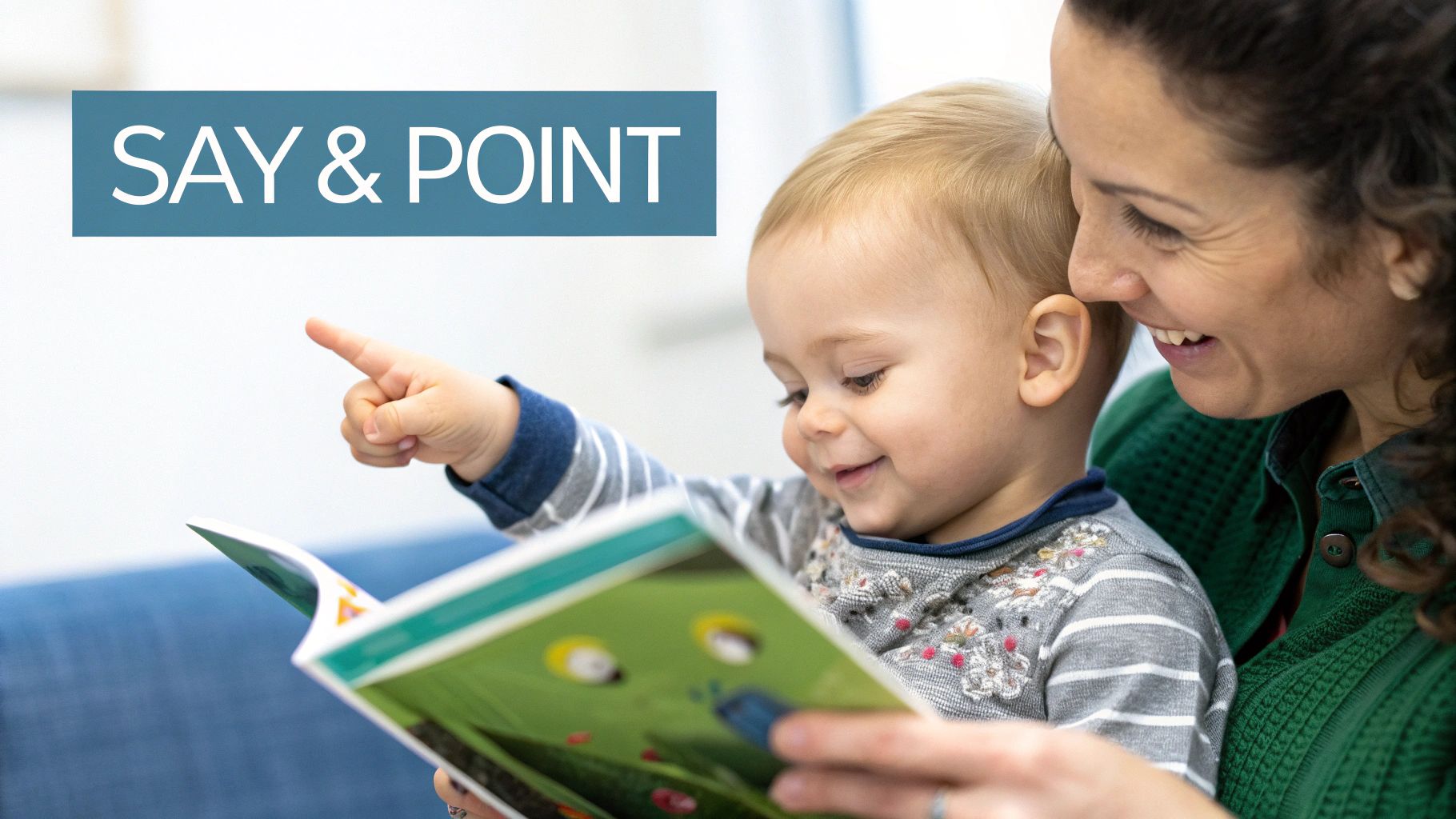
Taking It All In: Receptive Language
Often, the most impressive language gains at this age are the ones you can't even hear. Your 13-month-old is like a little sponge, constantly listening and connecting your words to the people, objects, and actions all around them.
You’ll catch glimpses of this blossoming understanding in your everyday routines. It’s those small, "aha!" moments that reveal just how much is clicking into place for them.
You'll know they're getting it when they start:
- Responding to their name: They’ll pretty consistently turn their head or look your way when you call for them.
- Following simple directions: Ask for a cup or a ball, and they might just follow through, especially if you use a gesture to help them out.
- Understanding "no": You'll see them pause or stop what they're doing when you say "no," even if they decide to test that boundary a moment later!
- Pointing to familiar things: If you ask, "Where's the cat?" they might look or point towards your furry friend.
This growing comprehension is a massive part of the 13 month old milestones journey. UK health sources, like the GOSH NHS speech and language development guidelines, confirm just how rapidly this develops. They note that from 12 months, toddlers can typically understand single words and follow one-step instructions, laying the groundwork for a vocabulary that can explode to 100-200 words by their second birthday.
Making Themselves Heard: Expressive Language
While their internal library is filling up fast, their ability to speak is just getting warmed up. For most 13-month-olds, actual words are still pretty rare. The main event right now is babbling with real intention and using gestures to fill in the communication gaps.
Their babbling is starting to sound much more like a real conversation. It has the rhythm and intonation of actual speech – you’ll hear tones that rise like a question and more forceful babbles that sound like demands.
You might hear one or two recognisable words, usually "mama" or "dada." But it's just as normal for a toddler this age to have no clear words at all. The important thing is that they are trying to communicate with purpose, using a whole mix of sounds, babbles, and gestures.
Their communication toolkit is surprisingly diverse, even without a big vocabulary:
- Waving: A clear social signal for "hello" or "goodbye."
- Pointing: The classic toddler move for saying, "I want that!" or "What's that over there?"
- Shaking their head: The first step towards clearly expressing "no."
The best way to support this is simply to talk, sing, and read together every day. As they begin to babble and recognise sounds, sharing the best picture books for toddlers can give their vocabulary and understanding a real boost. These everyday chats and stories are the most powerful tools you have. For more ideas, check out these fun language development activities for toddlers. Every word you share is a building block for their future voice.
Your Toddler's Developing Personality
Just as your toddler is making huge physical and mental leaps, their unique little personality is starting to bloom in wonderful, and sometimes baffling, new ways. At 13 months, you’ve got a front-row seat to their rich inner world—a place full of big feelings, a fierce desire for independence, and the very first sparks of empathy.
Understanding what’s happening beneath the surface can make all the difference in how you navigate this stage. When your toddler suddenly bursts into tears as you leave the room, it isn't a deliberate attempt to make you feel bad. It’s a sign of their deep attachment to you. This is separation anxiety, and it's a completely normal part of development. They’re just now realising that you’re a separate person, and when they can't see you, they genuinely miss you and feel a bit lost.
In the same way, that new game of gleefully launching food from the highchair isn’t just about making a mess (though it certainly achieves that!). It's a fascinating experiment in cause and effect: “When I throw this, it falls!” It’s also their way of testing boundaries and seeing how you’ll react, learning about their own power to influence the world around them.
Navigating New Emotional Waters
One of the most heartwarming 13 month old milestones is the dawn of real affection. Those clumsy, open-mouthed kisses and tight, uncoordinated hugs are their first real attempts to show you just how much they adore you. At the same time, they're starting to notice and react to the emotions of others.
If you pretend to cry after stubbing your toe, you might see a flicker of concern on their face, or they might even try to pat your arm. This is the very beginning of empathy—the ability to understand and share someone else's feelings.
Here are a few ways you can support their emotional growth during this complex time:
- Create Goodbye Rituals: To make goodbyes a little easier, try creating a quick, loving, and consistent routine. A simple wave from the window or a special kiss followed by a cheerful "see you soon!" provides the security they need to cope with you leaving.
- Acknowledge Their Feelings: When they're upset, use simple words to put a name to their emotions. Saying something like, "You feel sad that Mummy is leaving," helps them feel understood and starts building their emotional vocabulary.
- Stay Calm with Boundaries: When they test limits (like the food-throwing), respond calmly and consistently every time. A simple, firm "Food stays on the tray" is much more effective than a big reaction, which can accidentally turn the behaviour into an entertaining game.
"At this age, toddlers are like little emotional scientists. They are constantly testing hypotheses: 'If I cry, does Mum come back?' or 'If I throw my cup, what happens?' Responding with consistent, loving boundaries is how you help them understand the results of their experiments."
Understanding Early Social Skills
Socially, your toddler is moving into a new phase. While they’re often curious about other children, they aren't quite ready for true cooperative play just yet. Instead, you'll likely see them engaging in something called parallel play—playing alongside another child, but not necessarily with them.
Picture two toddlers in a sandpit. One might be digging with a spade while the other fills a bucket. They’re aware of each other, and might even watch one another for a moment, but they’re mostly absorbed in their own little worlds. This is an absolutely essential step towards more complex social interactions down the road. They're learning how to be comfortable around their peers before they can learn how to play together.
By providing these gentle social opportunities and simply modelling kindness and sharing yourself, you’re laying a strong and steady foundation for all the friendships yet to come.
Fuelling Growth: Sleep and Nutrition Tips
All these incredible 13-month-old milestones take a massive amount of energy, so it’s no surprise that sleep and nutrition are two of the biggest things on any parent's mind. Getting these foundations right is what fuels your little one’s physical growth and their incredibly busy, developing brain. Let's break down what to expect and how to navigate these two crucial areas.
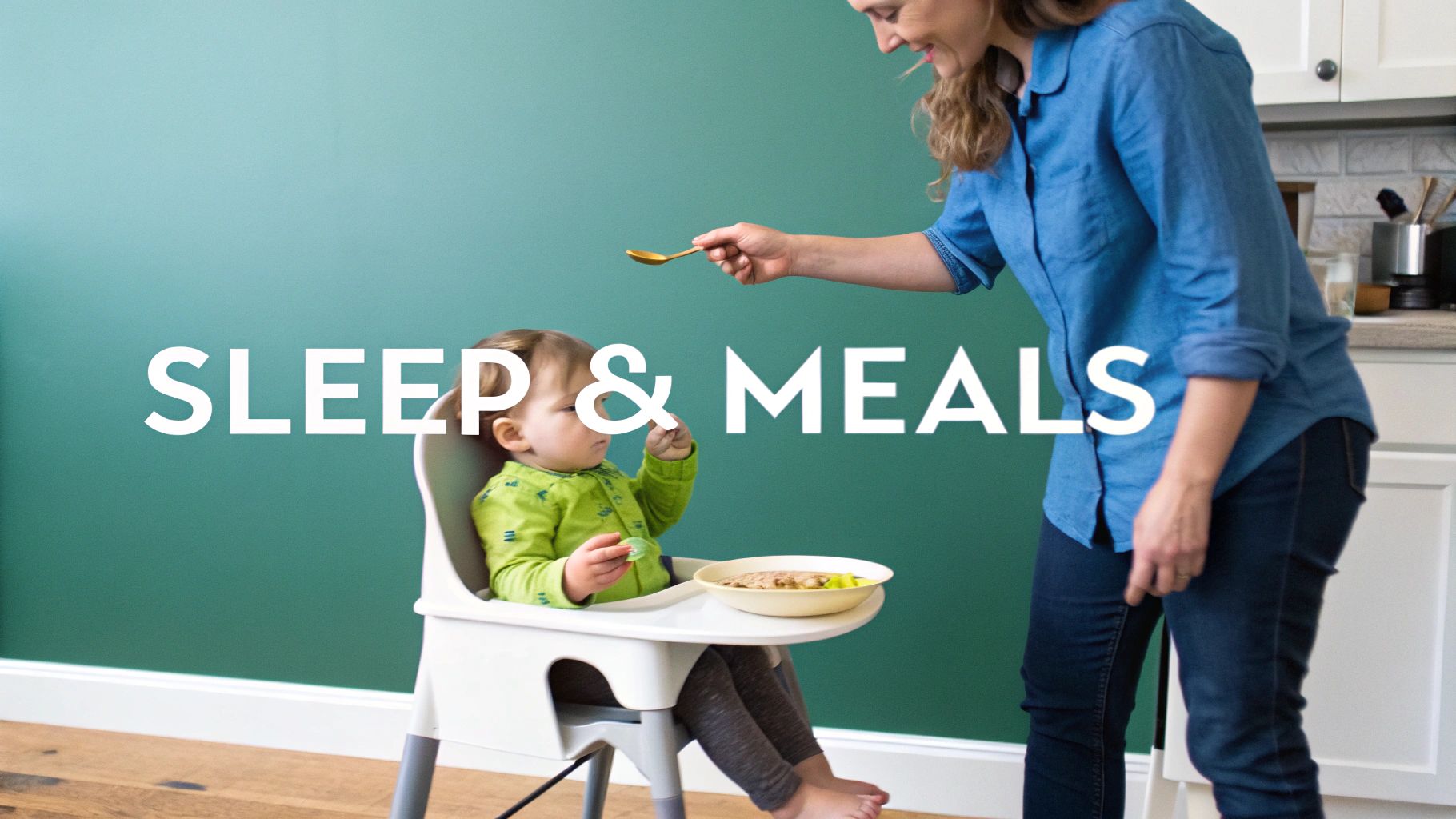
Nailing the Sleep Schedule
Just when you think you’ve finally got a routine sorted, your toddler’s sleep needs shift again. It’s a classic story around this age, as they slowly start the big transition from two naps down to one.
Most 13-month-olds need between 12 to 15 hours of sleep in a full day. This typically breaks down into a long stretch at night and one or two naps that add up to about 2-2.5 hours of daytime rest.
You might be noticing that they’re starting to fight their morning or afternoon nap. While it’s tempting to think it’s time to drop a nap completely, this resistance is often just a sign that their wake windows need a little tweak.
Don't rush to transition to one nap. Most toddlers aren't truly ready until closer to 15-18 months. Pushing it too early can lead to an overtired toddler, which often results in more night wakings and early morning starts.
If you hit a rough patch with sleep due to teething or a regression, consistency is your best friend. A calming bedtime routine—think bath, story, and cuddles—can work wonders. Building healthy sleep habits for your toddler often starts with creating a predictable and soothing wind-down for the whole family.
Tackling Toddler Nutrition
Mealtimes are also going through a major transformation. Your 13-month-old is probably moving away from purées and starting to join in with family meals, which is a fantastic step for both their social and developmental skills.
The aim now is to offer a varied, balanced diet. This is also the time when the first signs of picky eating can emerge. One day they absolutely love broccoli; the next, it’s being launched from the highchair. Don't worry, this is completely normal toddler behaviour as they start to test their independence.
Here are a few toddler-friendly food ideas to keep in rotation:
- Protein: Small bits of cooked chicken, scrambled eggs, lentils, or mild cheese.
- Carbohydrates: Soft-cooked pasta, strips of toast with avocado, or small portions of porridge.
- Fruits and Veggies: Steamed carrot sticks, small pieces of banana, blueberries cut in half, or soft-cooked peas.
Try to offer three main meals and two healthy snacks a day. Remember, toddler portion sizes are much smaller than we often think—a tablespoon or two of each food group is a great place to start.
The key is to keep offering a variety of healthy foods without putting on the pressure. Your job is to provide the nutritious options; their job is to decide what and how much to eat. This simple approach helps them build a positive relationship with food that can last a lifetime.
Got Questions About Your 13-Month-Old? We’ve Got Answers
Watching your little one grow and change is one of the most exciting parts of being a parent, but it can also bring up a lot of questions. Am I doing enough? Are they where they should be? It’s completely natural to wonder, so let’s tackle some of the most common queries we hear from parents about this fascinating age.
First things first, remember that these milestones are just a rough guide, not a strict timetable. Every single child blossoms at their own pace. The best thing you can do is focus on your little one's individual journey and cheer them on every step of the way.
What if My 13-Month-Old Isn’t Walking Yet?
This is easily the question we get asked the most, and for good reason! The answer is simple: it’s totally fine. There’s a huge window for when children take their first steps, typically anywhere between 9 and 18 months. Right now, your little one might be a champion cruiser, shuffling along the furniture, or still building up the confidence to let go.
The key thing to look for is progress. As long as your child is pulling themselves up to stand and can put weight on their legs, they're building the exact muscles and balance they need for walking. It's all part of the process.
How Can I Best Support My Toddler’s Development?
Honestly, the most powerful thing you can do is simply play with them. Your engaged, loving attention is the single best 'developmental tool' you can offer.
- Get down on the floor: Meeting them at their level shows you’re truly in their world.
- Chat, sing, and read every day: You don't need a script! Just narrating what you’re doing or sharing a colourful board book creates a fantastic foundation for language.
- Set up a safe 'yes' space: Give them a baby-proofed area where they have the freedom to move, touch, and explore without you having to say "no" all the time.
It’s not about racing to the next milestone. It’s about creating a warm, nurturing space where your child feels safe enough to try new things and learn at their own speed. Your encouragement is what truly fuels their growth.
When Should I Worry About a Developmental Delay?
While every child has their own timeline, you should always trust your gut. Your parental instincts are powerful, and if something just doesn't feel right, it’s always worth getting a second opinion for your own peace of mind.
A few things to chat about with your health visitor or GP might be if your child consistently:
- Doesn’t make eye contact.
- Doesn't seem to respond when you call their name.
- Isn’t babbling or trying to communicate with gestures like pointing.
- Isn't yet pulling up to a standing position.
- Seems to lose skills they once had.
Reaching out is never a bad thing. It's a proactive and loving way to make sure your child has all the support they need to absolutely thrive.
At Grow With Me, we know that play is the heart of learning. Our stage-based play kits are thoughtfully designed to line up perfectly with your 13-month-old's developmental journey, giving them the right tools at just the right time.
Explore the Grow With Me subscription boxes and find the perfect kit for your little explorer today.