

A Parent's Guide to Tummy Time for Newborns - tummy time newborn tips
Tummy time is one of those things you hear about constantly as a new parent, but what does it actually mean? It’s simply placing your baby on their stomach while they're awake and you're watching them. You can start this right from your first few days home from the hospital.
We're not talking about intense baby workouts here. Think of it as short, frequent, and playful interactions that have a surprisingly big impact on your little one's development.
Building Strength from Day One
It might just look like your baby is wriggling on a mat, but tummy time is genuinely one of the most important things you can do for them. It’s their very first workout, laying the groundwork for all the physical skills to come. Every little wobbly attempt to lift that heavy head is building crucial strength in their neck, back, and shoulders.
These are the exact muscles they'll need for big milestones down the line. Without this early conditioning, things like sitting up, rolling over, and eventually crawling can take a bit longer. It’s the consistent, daily effort—even if it's just for a minute or two at a time—that builds such a powerful foundation.
Preventing Flat Head Syndrome
One of the most immediate benefits of regular tummy time is helping to prevent positional plagiocephaly, which is the clinical term for a flat spot on the back of a baby's head. Since the brilliant "Back to Sleep" campaign, we all know to put our babies to sleep on their backs to reduce the risk of SIDS. The only downside is they spend a lot of time with pressure on that one spot.
Tummy time is the perfect counterbalance. By getting them off their backs for short periods while they're awake, you give their soft skull a chance to develop a nice, round shape.
Your newborn lying on your chest is the most natural form of tummy time! It’s less about being on the floor and more about the position—you’re building their strength and your connection all at once.
It’s Not Just About Muscles
Tummy time is so much more than a physical exercise; it’s a sensory adventure for your baby. Lying on their belly gives them a completely new perspective on the world. Instead of just staring up at the ceiling, they can start to look around, track your face as you talk to them, and see their surroundings from a totally new angle.
This fresh viewpoint is fantastic for their visual and cognitive development. They’re learning to shift their weight, push up with their tiny arms, and feel different textures against their skin. Understanding the broader landscape of early childhood development really shows why activities like tummy time newborn sessions are so foundational. These moments are actually rich learning experiences, helping to foster:
- Better Coordination: They're figuring out how to control their head and neck.
- Sensory Exploration: The feeling of the mat or a soft blanket is a new sensation.
- Body Awareness: They're starting to understand how their own body moves and feels.
Gentle Ways to Introduce Tummy Time
Starting tummy time with a newborn doesn't mean you have to immediately plonk them on a play mat and set a timer. Not at all. In those first few weeks, the best approach is to gently weave it into the cuddles and routines you're already doing. Forget the pressure of long floor sessions; the focus should be on comfort, connection, and very short, sweet bursts of activity.
The whole point is to make this new position feel safe and familiar. Many newborns protest tummy time on a flat surface because, let's face it, it's a strange and demanding new sensation for them. By introducing it through warm, nurturing contact, you help build both their confidence and their strength at the same time.
Tummy to Tummy on Your Chest
One of the most natural and lovely ways to begin is the tummy-to-tummy or tummy-to-chest position. It’s incredibly simple, requires zero special equipment, and is a beautiful way to strengthen your bond.
- Get comfy in a reclined position on a sofa, bed, or the floor. Prop yourself up with pillows so your head and shoulders are supported.
- Gently place your newborn on your chest, with their tummy resting against yours.
- This cosy position instinctively encourages them to try and lift their head to see your face, hear your voice, and feel the comforting rhythm of your heartbeat.
Even just a minute or two here and there really counts. It gently works their neck and back muscles while making them feel completely secure. This is a perfect thing to do after a nap when your baby is feeling calm and alert.
The Supportive Tummy Down Carry
Another brilliant method is the tummy-down carry, which you might also hear called the 'tiger in a tree' or 'colic carry'. This is a fantastic way to sneak in some tummy time while you’re on the move, and many babies actually find it incredibly soothing.
To do it, simply slide one forearm under your baby’s tummy and between their legs, letting their head rest safely in the crook of your elbow. Use your other hand to support their back for extra stability. Just walking around like this gives them a completely new view of the world and works their little core muscles as they subtly adjust to your movement.
Remember, every little bit adds up. A few minutes on your chest here, a walk across the room in a tummy-down carry there—it all contributes to their daily goal without ever feeling like a chore.
Moving to the Floor Mat
When both you and your baby feel ready to try some time on the floor, the key is a little bit of prep. You want to create a space that is both safe and inviting.
A firm, clean play mat or a soft blanket spread on the floor works perfectly. Just be sure to avoid placing them on soft, squishy surfaces like adult beds or sofas, as these can pose a safety risk.
This infographic shows how these short sessions build towards major developmental milestones over time.
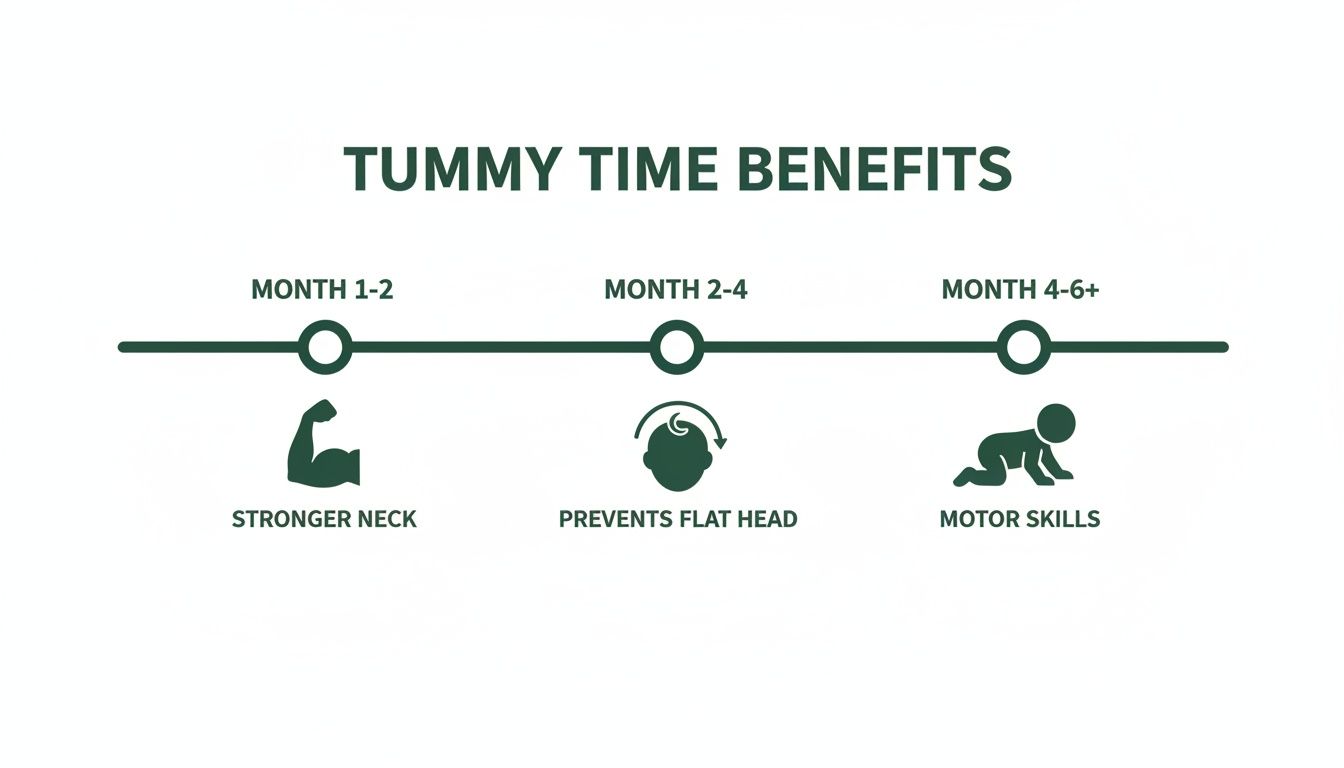 As you can see, starting with simple neck strengthening is the first step towards preventing a flat head and paving the way for more complex motor skills down the line.
How Long Should a Session Last?
For a newborn, the "little and often" approach is definitely king. You can begin with incredibly short stretches of 3-5 minutes, just two or three times a day. Always do this when you and your baby are wide awake and you are supervising them closely.
This early practice is so important because it helps them get used to the position without much fuss, even when the umbilical cord stump is still present. It's about building positive associations.
As they grow, you'll naturally extend these sessions. Here’s a rough guide to give you an idea of how things might progress over the first few months.
Newborn Tummy Time Progression Plan (First 3 Months)
| Age | Session Goal | Daily Frequency | Total Daily Goal |
|---|---|---|---|
| Week 1 | 1-2 minutes | 2-3 times | 5 minutes |
| 1 Month | 3-5 minutes | 3-4 times | 15-20 minutes |
| 2 Months | 5-7 minutes | 4-5 times | 20-30 minutes |
| 3 Months | 10-15 minutes | 4-5 times | 45-60 minutes |
By the time they reach three months old, many babies in the UK are working towards an hour of tummy time a day, spread out over several sessions. This really helps build that crucial neck and upper body strength. For more insights on the timing of these milestones, you can learn more about when you should start tummy time activities in our detailed guide.
And please don't be discouraged if your baby fusses at first—that's completely normal. The trick is to end the session on a positive note before they get too upset, and then just try again later. It's all about making tummy time a happy part of their day.
Making Tummy Time a Fun and Playful Routine
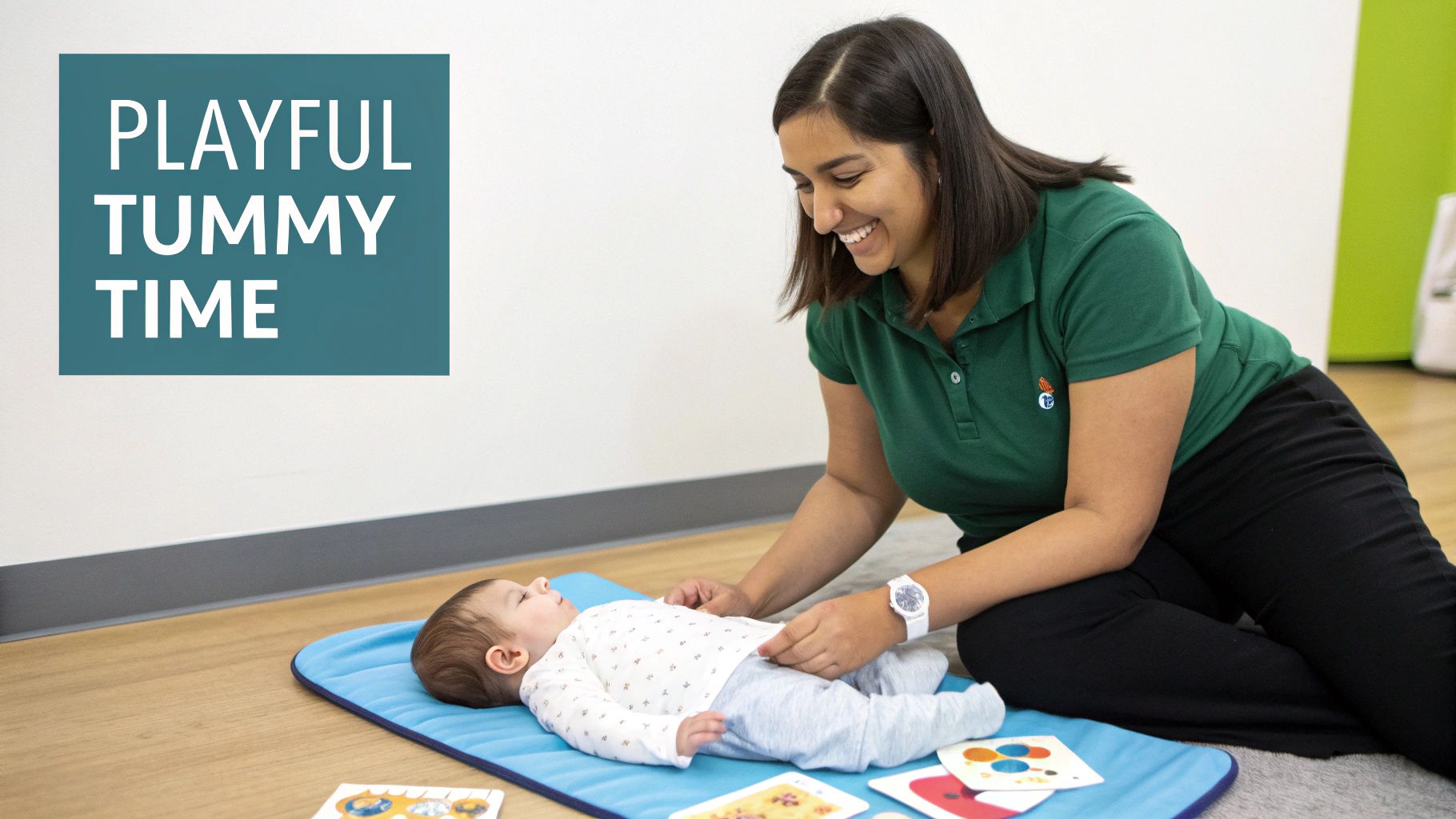 Let's reframe tummy time. Instead of thinking of it as a developmental chore, see it as your baby’s first real playtime. The secret to success is turning what could be a bit of a workout into a genuinely fun part of your daily routine.
When you get down on the floor with them, face-to-face, you instantly become the most fascinating thing in their world. Your voice is just as powerful. Try singing a few soft songs, chatting about your day, or just making some silly cooing sounds. This is what encourages your little one to lift their head and look for you, strengthening those tiny neck muscles while feeling safe and connected.
Spark Their Curiosity with Simple Tools
You really don't need a pile of fancy toys to make tummy time engaging for your newborn. In fact, some of the simplest, highest-contrast items are what truly capture their attention as their eyesight develops.
Here are a few easy and surprisingly effective ideas:
- A Baby-Safe Mirror: Pop a non-breakable mirror on the floor in front of them. Babies are absolutely captivated by faces, especially their own, and they’ll often push themselves up to get a better look.
- High-Contrast Cards: Simple black-and-white flashcards with bold patterns are perfect. A newborn’s eyes can focus on these graphic shapes much more easily than on complex colours, sparking their curiosity.
- A Textured Blanket: Even just placing them on a blanket with a different texture can be a whole new sensory experience. Think of a soft, fluffy rug or a mat with a slightly crinkly surface.
As you explore what works, you can introduce other useful newborn accessories to keep things feeling fresh. Sometimes, a new sound or texture is all it takes to transform a fussy moment into a fun one.
The goal isn't just about building strength; it's about building a positive experience. When these sessions are filled with joy and interaction, your baby learns that being on their tummy is a wonderful time for fun and connection with you.
Getting Creative with Your Interactions
Your involvement is what makes tummy time truly come alive. Don't just be a spectator—get right in there and become part of their world. This shared experience is brilliant for your bond and makes the whole activity far more rewarding for you both.
A fun game I’ve always loved is the "magic carpet ride." Just place your baby on a small, light blanket and gently pull it across a smooth floor. That slow, gliding movement is a completely new sensation and gives them a different view of the room, often distracting them from the effort they're putting in.
Another great trick is to lie on your side, facing your baby at their level. This shifts the dynamic and opens up new ways to play, like a gentle game of peek-a-boo. As they get a bit older, you can even roll a soft ball between you. For more inspiration, have a look at our guide to the best tummy time newborn toys.
Just remember, your playful presence is the secret ingredient.
What to Do When Your Baby Dislikes Tummy Time
It’s a classic parenting conundrum. You place your happy, cooing baby on their tummy, and a moment later, the wailing begins. If that sounds like your house, please know you’re not alone. So many newborns protest at first, and it’s completely normal.
The trick is to stop seeing it as a battle of wills and start seeing it as a conversation. Your baby’s fussing is just their way of telling you something. Are they tired? Is their tummy a bit too full from their last feed? A little bit of detective work goes a long way here. Often, a tiny tweak to your timing or setup can make all the difference.
Adjust Your Approach with Gentle Modifications
If your baby immediately protests to being flat on the floor, it's time to get creative. They don't have to be perfectly horizontal on a play mat to get all the wonderful benefits. In fact, many little ones do much better with a gentler start, which lets them build up strength without feeling so overwhelmed.
Try making one of these small but powerful adjustments:
- Use a Prop: Roll up a small blanket or a towel and tuck it firmly under your baby's chest. This little bit of elevation can give them just enough support to lift their head and see what's going on, which can turn a frustrating struggle into a fun challenge.
- Change the Scenery: Don't feel tied to one spot. Try doing tummy time newborn sessions in a different room, or even on a soft blanket in the garden if the weather is nice. A new view can be a great distraction.
- Try Different Positions: The 'tummy-down carry' is a fantastic alternative. You might have heard it called the 'tiger in a tree' hold. Carrying your baby this way still engages all those important neck and core muscles but feels much more secure and comforting to them.
Remember, the goal is simply to find what works for your baby. Every tiny effort adds up, so celebrate those positive, tear-free moments, no matter how short they are.
Master the Art of Perfect Timing
Honestly, timing can be everything. A baby who is well-rested, has a clean nappy, and is in a generally happy mood is going to be far more open to the idea of tummy time. Trying to force a session when they're already tired or getting hungry is almost guaranteed to end in tears.
Look for those little windows in their day when they're calm and alert. Right after a nappy change or once they've woken up from a nap are often perfect opportunities. Just be sure to wait at least 20-30 minutes after a feed to avoid any pressure on their full tummy, which can cause discomfort and spit-up. Making it part of an existing routine helps it feel like a natural part of the day, not just another thing on your to-do list.
It's about quality over quantity. Two minutes of happy, engaged tummy time is far more beneficial than ten minutes of crying. Listen to your baby's cues and always end on a positive note, even if it’s sooner than you planned.
If you're worried about your baby's comfort, it's reassuring to know that tummy time aids can be really effective. Studies have shown parent satisfaction rates between 81.3-100% with these tools, and 96.9% infant tolerance for supportive devices worn for days. This tells us that creating a comfortable, positive session is very achievable. You can read more about these psychomotor findings from Pampers UK.
By really listening to your baby and being willing to adapt, you can help them move past the protests and start genuinely enjoying this important activity.
Why That Daily Wiggle Is a Game-Changer
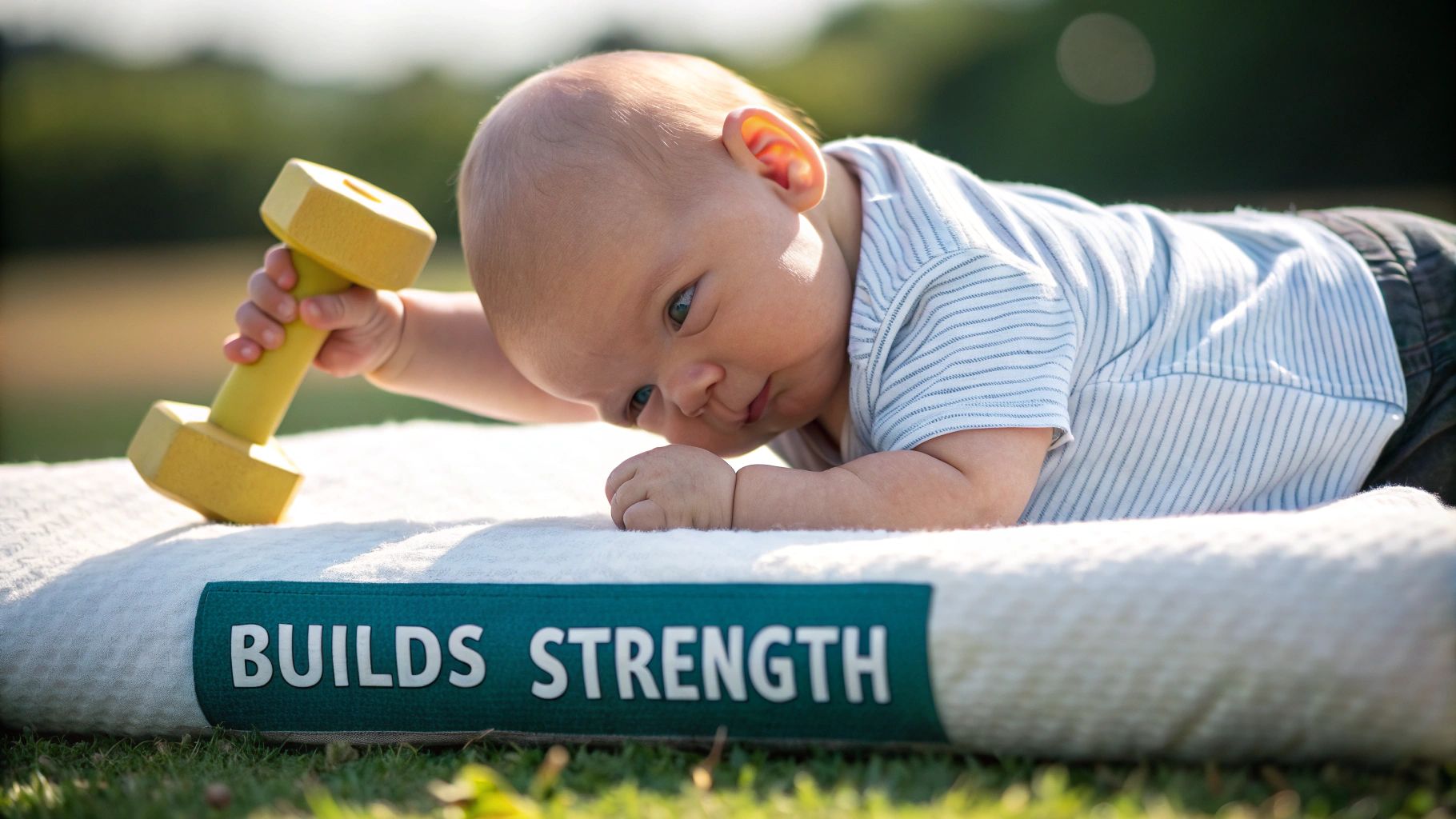
Those few minutes your baby spends on the mat each day might seem small, but they’re actually laying the groundwork for a lifetime of movement. A consistent tummy time newborn routine creates a powerful ripple effect, shaping major developmental milestones in ways you might not expect.
Every wobbly head lift and tiny push-up is your baby's first-ever workout. They're building essential strength in their neck, shoulders, back, and core. This foundational power is exactly what they'll need to master all the bigger skills that are just around the corner.
From Wriggles to Major Moves
All that early muscle building pays off in a big way. It sets the stage for the sequence of gross motor skills that will define your baby's first year of getting around.
- Rolling Over: The strength they gain from pushing up against the floor is the first step towards figuring out how to roll from tummy to back, and eventually, the other way around.
- Sitting Up: A strong core, built little by little during tummy time, is what gives them the stability to sit up on their own and see the world from a whole new perspective.
- Crawling: This is the ultimate payoff. Practising pushing up on their arms and shifting their weight is the perfect training for the coordination needed to start crawling and exploring.
These milestones are all connected. As your little one gets bigger, you can keep supporting them by exploring a range of gross motor activities for kids.
It’s Not Just About Physical Strength
The benefits go way beyond just building muscle. When your baby is on their tummy, they see and experience the world differently. This position encourages them to develop crucial sensory skills and hand-eye coordination as they look around, track objects, and eventually reach for toys.
This active engagement helps their brain forge new connections, supporting their cognitive growth right alongside their physical development. It's a full-body-and-brain workout!
One of the most important long-term benefits is preventing positional plagiocephaly, often called 'flat head syndrome.' Regular, supervised tummy time means your baby isn't always on their back, which helps their skull develop its natural, rounded shape.
Guidance from the World Health Organization, which influences NHS recommendations here in the UK, suggests 30 minutes of tummy time spread throughout the day. A fascinating study showed just how much difference a bit of structured support can make. Babies in a supported programme hit that 30-minute daily average with a 30% adherence rate, while a control group only managed 16.6 minutes with 13% adherence. It's a clear sign that a little guidance for parents goes a long way. You can learn more about these tummy time findings and their impact.
Got Questions About Tummy Time? We've Got Answers
Being a new parent means having a million questions, and that’s completely normal! When it comes to tummy time, it’s easy to get caught up in the little details. Let’s clear up some of the most common worries so you can feel confident and make it a happy part of your routine.
What's the Best Time of Day for Tummy Time?
You'll quickly learn your baby's unique rhythm, and the best time for a tummy time session is when they're awake, content, and alert. That sweet spot right after a nap is often perfect. A happy baby is a much more willing participant!
On the flip side, try to avoid it right after a feed. Give them at least 20-30 minutes to let their milk settle. This little buffer can make a huge difference in preventing spit-up and keeping them comfortable.
Can We Start Before the Umbilical Cord Stump Falls Off?
Absolutely! You don’t need to wait. The trick is to choose positions that keep pressure off that delicate area.
One of the loveliest ways to start is by laying your newborn on your chest or across your lap. This 'tummy-to-tummy' or 'lap-soothe' method is gentle, safe, and a beautiful way to bond. Just remember to keep the stump area clean and dry.
What if My Baby Nods Off During a Session?
It happens! If your little one dozes off, just gently roll them onto their back into a safe sleep spot, like their cot. Tummy time is strictly for when they are awake and you are right there with them.
Remember the golden rule: Tummy time is for play; backs are for sleep. Following the 'Back to Sleep' advice for every nap and night-time sleep is the safest approach.
This clear distinction helps separate active, supervised playtime from safe, independent sleep.
Do I Need to Buy Special Pillows or Props?
It’s best to keep it simple and safe. A firm, flat surface, like a play mat on the floor, is all you really need. Avoid soft surfaces like pillows, cushions, or baby loungers, as they can pose a suffocation risk, especially if you're not right there.
If your baby is struggling to lift their head, a small, tightly rolled-up blanket or towel placed under their chest (with their arms over it) can offer just the right amount of support. This little boost can encourage them without compromising their safety.
At Grow With Me, we're all about making developmental milestones feel less like a chore and more like a joy. Our curated play kits are packed with high-quality, age-appropriate toys designed to make tummy time an engaging adventure. See how our subscription boxes can support your baby's journey at https://shop.growwithmesubscriptionbox.co.uk.