
The Best Toys for 1 1/2 Year Olds Development
The best toys for 1 1/2 year olds are ones that celebrate and challenge their incredible developmental leaps. Think chunky puzzles, stacking rings, push-along toys, and simple shape sorters—things that are engaging, safe, and sturdy enough for some seriously enthusiastic play.
Unlocking Your Toddler's World Through Play
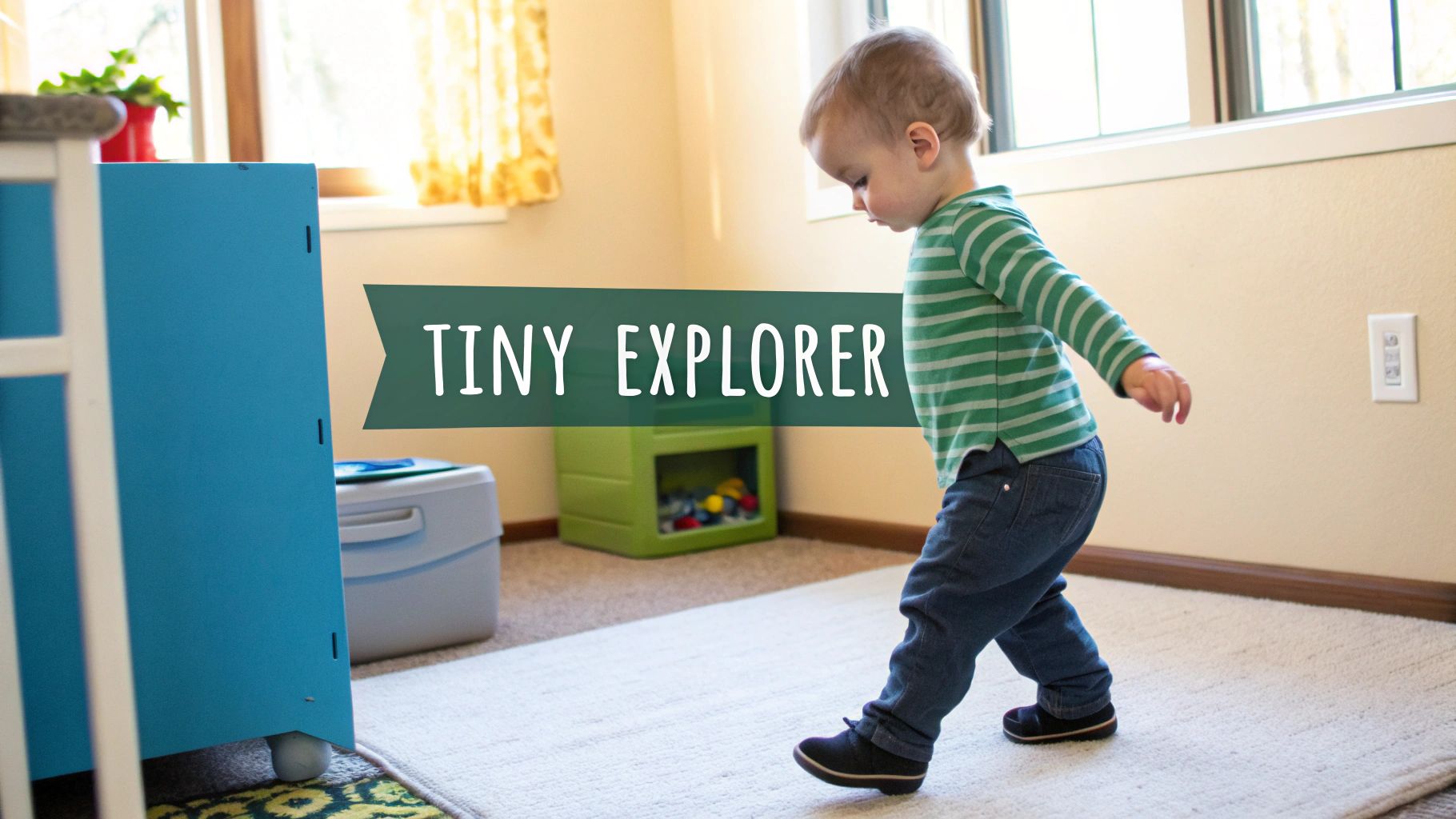
At eighteen months, your little one is officially leaving babyhood behind. They’re a determined explorer on a mission, and their world is getting bigger with every wobbly-yet-confident step. This is a magical time of huge cognitive, physical, and social growth, and play is their most important work.
It helps to picture your toddler as a tiny scientist, constantly running experiments. Every time they stack a block, they’re learning about gravity and balance. When they push a button to hear a sound, they’re figuring out the powerful concept of cause and effect. This is how they build a foundation for all future learning.
The Milestones that Matter Most
To pick the best toys, it’s useful to know what’s happening inside that busy brain and body. Your little one is moving beyond simple movements and into much more complex, purposeful play. We see this progress pop up in a few key areas:
- Gross Motor Skills: They’re mastering walking, starting to climb everything in sight, and can pull or push toys around with growing confidence.
- Fine Motor Skills: That pincer grasp is becoming much more refined. This means they can pick up smaller objects, turn the pages of a board book, and even try to use a spoon (with messy but brilliant results!).
- Problem-Solving: You'll notice they can solve simple puzzles, figure out how to get shapes into the right holes, and copy your actions with surprising accuracy.
- Language and Social Skills: While their vocabulary is still small, their understanding is shooting up. They’ll point to things you name and are just starting to dip their toes into pretend play, like feeding a doll or "talking" on a toy phone.
Why the Right Toy Is a Powerful Tool
Choosing the right toys for a 1 1/2 year old isn't just about keeping them busy; it's about giving them the perfect tools to build these essential skills. A well-chosen toy meets them exactly where they are, offering a challenge that feels exciting but not impossible. This is fantastic for their confidence and nurtures a real love of discovery.
For more inspiration on what to do together, have a look at our guide filled with fun and engaging activities for 18-month-olds.
The importance of this kind of developmental play is something parents are increasingly tuned into. In fact, the UK toys market hit a huge USD 3.76 billion in 2024, with educational toys for toddlers driving a major part of that growth. It’s clear that play is being prioritised now more than ever.
Your Guide to Safe and Durable Toddler Toys
At eighteen months old, your toddler's mission is to explore the world with every sense they have. That means toys are going to be chewed on, dropped, thrown, and generally put through their paces with a surprising amount of gusto. Because of this, safety and durability aren't just nice-to-haves; they are the two most important things to look for in any toy.
A truly great toy has to survive this intense "testing phase." Durability isn’t just about getting your money’s worth—it's a critical safety feature. A toy that cracks can create sharp, dangerous edges, and one that's poorly made might shed small parts, creating a serious choking hazard.
Decoding Safety Labels and Materials
When you're looking at toys for 1 1/2 year olds, you'll see safety marks on the packaging. Here in the UK, the two symbols to keep an eye out for are the CE mark and the UKCA mark. These are the manufacturer's way of saying the toy meets the required safety standards.
But these marks are really just the first step. It pays to become a bit of a material detective, too. Many parents are leaning towards toys made from natural, non-toxic materials to create a healthier space for their little ones to play.
When considering the overall wonderful world of play for 18-month-olds, it is vital to prioritise health, safety, and sustainability, as highlighted by guides on selecting top organic baby toys. Natural materials often provide peace of mind.
Materials like solid, sustainably sourced wood finished with non-toxic paints are a fantastic choice. They're not only safer if they end up in your toddler's mouth, but they are also incredibly hard-wearing. Our guide to the benefits of wooden educational toys dives deeper into why they make such a wonderful, long-lasting investment for any playroom.
Your Practical Toy Safety Checklist
Beyond the official labels and what a toy is made from, a quick hands-on inspection is your best defence. Before you hand any toy over—whether it's fresh out of the box or a pre-loved gem—run through this simple checklist to spot any potential problems.
- The Small Parts Test: Look for any bits and pieces that could fit inside a film canister (which is about 3.2cm wide). If it fits, it’s a choking risk.
- Pull and Twist: Give all the parts of the toy a gentle but firm tug. Think wheels, buttons, or the eyes on a teddy. Nothing should feel loose or like it could come off.
- Examine the Edges: Run your fingers over every surface. You're looking for sharp points, rough patches, or anything that could cause a splinter.
- Check the Finish: Make sure any paint or coating isn't flaking or chipping off. You don't want your little one swallowing tiny bits of paint.
- Inspect for Cords and Strings: Any strings on a toy should be short—less than 22 cm—to avoid any risk of strangulation.
By pairing a knowledge of safety standards with these hands-on checks, you can feel confident that every toy you bring home is ready for safe, enthusiastic, and joyful play.
Top Toy Categories to Foster Key Toddler Skills
Choosing the right toys for a 1 1/2-year-old is a bit like being a personal trainer for their developing brain and body. Each toy category helps them work on a specific set of skills, building a solid foundation for everything that comes next. Let's go beyond a simple list and really get into how different types of toys can support your toddler's incredible growth.
By picking toys that target different developmental areas, you create a balanced playroom that keeps your little one engaged, challenged, and growing in confidence.
Building Fine Motor Precision
Fine motor skills are all about those small, precise movements of the hands and fingers. At this age, your toddler is shifting from clumsy grabs to much more controlled, deliberate actions. Toys that encourage this are vital for future tasks like learning to write or doing up a coat.
- Chunky Puzzles: Single-piece puzzles with big, chunky knobs are perfect. They naturally encourage the pincer grasp—that delicate hold between thumb and forefinger—to lift and place the pieces correctly.
- Stacking Rings and Cups: These classics are brilliant for hand-eye coordination. Your toddler has to figure out how to guide the ring onto the post, which is a simple but powerful exercise in control and concentration.
Developing Gross Motor Strength
Gross motor skills involve the big muscle movements using legs, arms, and the whole body. Your 18-month-old is a bundle of energy, and channelling this into coordinated play is key for their physical confidence and balance.
- Ride-On Toys: Low-to-the-ground ride-ons that they can push along with their feet are fantastic. They strengthen leg muscles and teach the basics of steering and balance in a really safe way.
- Soft Balls: A simple, lightweight ball is a superstar. It encourages kicking, throwing, and chasing, all of which help improve coordination and spatial awareness as they learn to track a moving object.
Nurturing Cognitive Growth
Cognitive skills are the brain's building blocks for thinking, learning, and solving problems. Toys in this category present simple challenges that get your toddler to think logically and understand concepts like cause and effect.
For a closer look at toys that support this kind of learning, you might find our guide on Montessori toys for toddlers helpful, as it centres on hands-on, purposeful play.
A great cognitive toy for a toddler doesn't just entertain; it asks a question. It might be 'Where does this shape fit?' or 'What happens when I stack this here?' Answering these small questions builds the foundation for a lifetime of problem-solving.
This focus on developmental toys is something we're seeing more and more. In the UK, the market for toys aimed at children up to 5 years old is set to grow steadily. It's clear that parents are prioritising playthings like simple puzzles and activity toys that actively stimulate motor skills and sensory development.
Sparking Imagination and Social Skills
Finally, imaginative play is where your toddler starts to make sense of the world around them. By mimicking the everyday actions they see, they are practising social roles and building their very first language skills.
- First Dollhouses or Farms: Simple sets with chunky figures and animals let them act out familiar scenes from their own lives.
- Toy Phones: These are great for encouraging early conversational skills as they copy you chatting on the phone. "Hello? Bye-bye!" It all counts.
To help you connect the dots, here’s a quick guide matching key skills with the best toys to support them.
Matching Toys to Toddler Skills
| Developmental Skill | Toy Category | Examples |
|---|---|---|
| Fine Motor Control | Manipulative Toys | Chunky puzzles, stacking rings, large beads |
| Gross Motor Coordination | Active Play Toys | Ride-on toys, soft balls, push-and-pull walkers |
| Problem-Solving | Cognitive Toys | Shape sorters, simple nesting cups |
| Imagination & Language | Pretend Play Toys | Toy phones, simple dollhouses, play food |
Choosing from these categories ensures you're giving your toddler a well-rounded set of tools to explore, learn, and grow with.
The diagram below shows the careful checks that go into ensuring a toy is safe—from the materials used right through to the final labels.
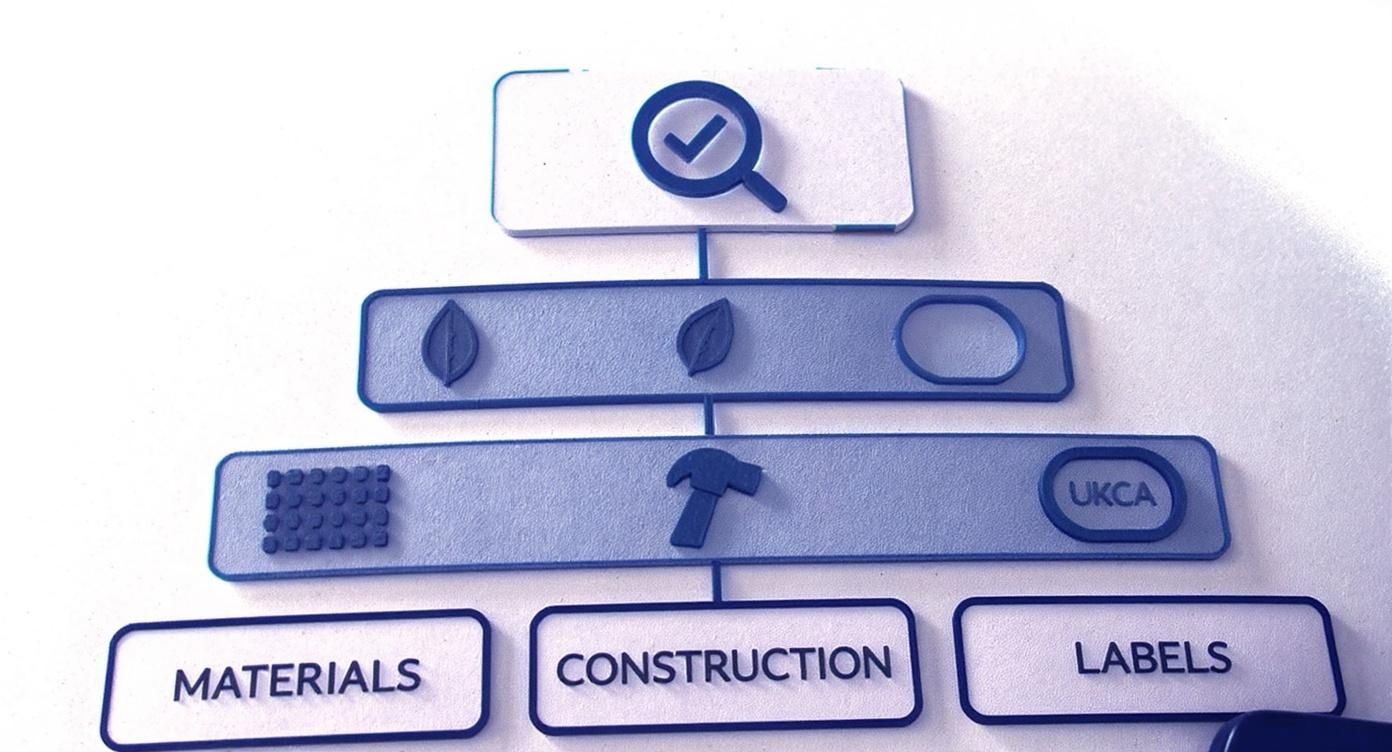
This process shows that a truly safe toy is the result of careful thought at every single stage. By selecting toys from each of these core categories, you ensure your child has the right tools for every kind of developmental "work," which to them, is just good fun.
Bringing Toys to Life with Engaging Activities
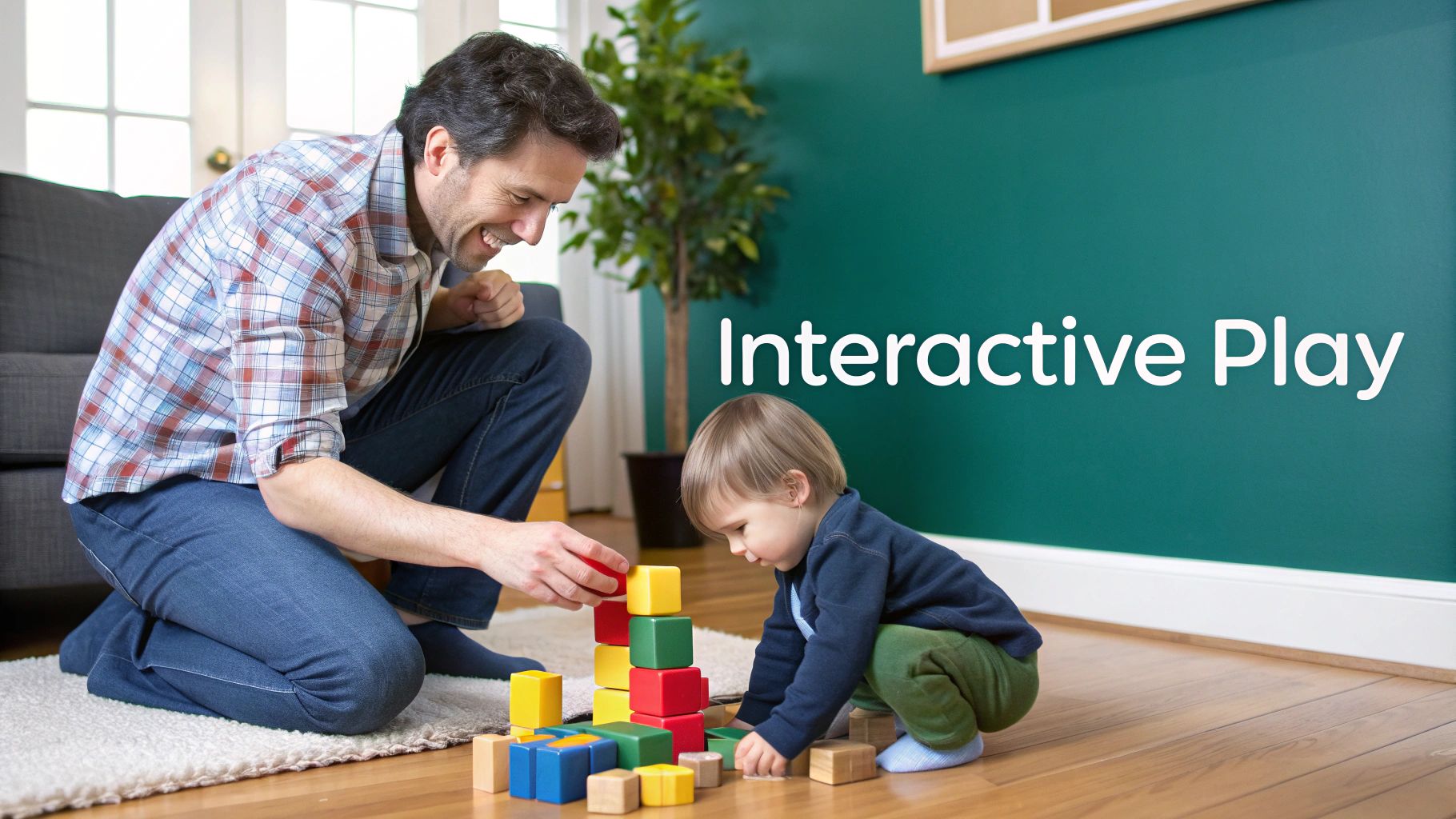
Even the most perfectly chosen toy is just a lump of wood or plastic until you add the magic ingredient: you. Your interaction is what breathes life into their playthings, turning a simple toy into a brilliant learning tool. The best news? It doesn’t take complicated setups, just a willingness to get down on the floor and join their world.
Think of it this way: the toy is the "what," but you are the "how" and the "why." By chatting about what they’re doing, asking simple questions, and showing them new ways to play, you elevate the entire experience. This shared fun does more than just teach them skills; it builds a powerful connection and shows your little one that their discoveries matter to you.
Turning Building Blocks into Learning Tools
Building blocks are a toy box staple for a reason. But they can be so much more than just things to stack. With you as their guide, a simple set of blocks becomes a playground for early maths, science, and language. The trick is to narrate the play.
As you build together, start weaving in descriptive words. Build two towers and ask, "Which one is taller?" Add a few more blocks to their creation and say, "Look, you have more blocks now!" This simple act of labelling what they’re seeing and doing helps their brain forge those crucial connections.
- Try some sorting: Group the blocks by colour. "Let's find all the blue ones and put them here." This is their first lesson in categorisation.
- Explore patterns: Create a simple sequence, like red-blue-red-blue, and see if they can add the next block. Don't worry if they don't get it; just seeing it is a start.
- Count everything: Count each block out loud as you place it. "One... two... three!" Repetition is a fantastic way to build number recognition.
Fostering Imagination and Emotional Growth
At around eighteen months, you’ll start to see the first tiny sparks of pretend play. This is a huge milestone. Imaginative play is absolutely essential for developing empathy, language skills, and understanding the social world around them. Your job is to gently fan those creative flames.
That favourite teddy bear? It’s not just a cuddly toy. It's a character waiting for a story.
Engaging in pretend play is like a rehearsal for real life. When a toddler feeds their teddy, they are practising empathy and caregiving. When they chatter into a toy phone, they are experimenting with the back-and-forth rhythm of conversation.
Here are a few easy ways to get these imaginative scenarios going:
- Pretend to feed: Use toy food or even a couple of blocks to "feed" a doll or stuffed animal. Make lots of "yum yum" noises and say things like, "Teddy is so hungry!"
- Have a "conversation": Pick up a toy phone (or a block that looks a bit like one) and have a chat. Ask them simple questions and leave a long pause for them to babble a reply.
- Act out daily routines: Use their toys to copy bedtime. You could tuck a doll into a small box "bed" or give a toy animal a "bath" with a dry cloth.
By jumping in and getting involved, you make all toys for 1 1/2 year olds ten times more powerful, creating deeper learning and a much stronger bond.
Why Stage-Based Toy Selection Works
A toddler’s brain develops at an incredible pace. A toy that held their complete attention last week can easily end up forgotten at the bottom of the toy box tomorrow. It’s not that the toy is no good; it’s that your child has already conquered the skill it was designed to teach.
This is precisely why thinking in "stages" when you choose toys is so powerful. It’s like being a personal trainer for their development. You wouldn't expect a beginner to run a marathon on their first day. You start with a short jog, building strength and confidence over time. The right toy does the same thing—it presents a challenge that’s just tricky enough to be fun, but not so hard that they give up.
Hitting a Moving Target
Stage-based selection is all about finding that sweet spot. It means matching toys to where your toddler is right now in their developmental journey. This approach takes the guesswork out of what to buy and helps you avoid the clutter of well-intentioned but unsuitable toys.
By curating their playthings, you ensure they always have the right tools for the job. Just as they start to move beyond simply stacking blocks and begin trying to sort them by colour, a new toy can appear that supports that exact skill. This keeps them engaged, confident, and genuinely excited to play.
A stage-based approach ensures that a toy's 'play value' is always high. It meets the child where they are, supports their current developmental task, and provides the gentle push they need to reach the next milestone.
Getting a handle on the specific developmental leaps your child is making is the first step. For a more detailed look, this guide on choosing toys based on your baby's developmental stage is an incredibly helpful resource.
Toy Rotation and Subscriptions: Your Secret Weapons
So, how do you put this into practice? Two of the best methods are toy rotation and subscription services. Both are designed to keep your child’s play environment fresh and stimulating without you having to constantly buy new things.
-
Toy Rotation: This is simple but effective. You keep a small selection of toys out and store the rest away. Every couple of weeks, you swap them. To your toddler, those stored toys feel brand new all over again!
-
Subscription Services: A service like Grow With Me does the curating for you. They send a play kit with toys hand-picked for your child’s exact age and stage, often with a guide to help you get the most out of them.
Ultimately, this strategy means the toys for 1 1/2 year olds in your home are always perfectly matched to their growing abilities, turning playtime into a seamless and joyful journey of discovery.
Common Questions About Toys for Toddlers
Choosing the right toys for 1 1/2 year olds can feel like a huge responsibility, and it's natural to have questions. You're trying to give them the best start, and with so many options out there, it’s easy to feel a bit lost. Let's walk through some of the most common things parents wonder about, giving you some clear, practical answers to help you feel confident.
How Many Toys Does My Toddler Really Need?
It's a classic trap: thinking that more toys must mean more learning. In reality, the opposite is often true. A mountain of toys can overwhelm a toddler, causing them to flit from one thing to the next without ever really getting stuck in.
The golden rule here is quality over quantity. Honestly, a small, well-chosen collection of around 8-10 versatile, open-ended toys is far more powerful than a playroom bursting at the seams. A smaller selection encourages your little one to focus, get creative, and explore things more deeply.
Try to pick toys that cover a few different bases. Aim for a balanced mix that includes:
- Creative Play: Think building blocks or stacking rings.
- Problem-Solving: Simple, chunky puzzles or a classic shape sorter.
- Physical Activity: Soft balls or a low ride-on toy for getting their wiggles out.
One of the best tricks in the book is toy rotation. Pack some toys away and swap them out every couple of weeks. It’s like magic—old toys suddenly feel brand new again, reigniting your toddler's interest without you having to constantly buy more stuff.
Are Electronic Toys with Lights and Sounds a Good Idea?
I get it, the flashing lights and catchy tunes on electronic toys are incredibly captivating—for adults and toddlers alike! The problem is, they often create a passive experience. Many of these toys are designed for a child to simply watch and listen, rather than actively do anything.
At this age, the most valuable play happens when your toddler is in charge. Classic toys like wooden blocks or nesting cups practically demand their input. They have to use their imagination, work on their motor skills, and figure out cause and effect on their own terms. They become the director of the show, not just a member of the audience.
If you do decide to get an electronic toy, go for something with a very clear and simple function. A button that plays a single, predictable farm animal sound, for instance, is great because it helps them make a direct link between their action (pressing the button) and the reaction (hearing "moo!").
Is It Okay to Use Second-Hand Toys?
Absolutely! Second-hand toys are a brilliant way to be sustainable and save a bit of money. But when you’re dealing with pre-loved items, safety has to be your number one priority. Older toys might not have been made to meet the strict UK safety standards we have today.
Before you hand over a used toy, give it a really thorough inspection.
- Check every surface for cracks, sharp edges, or peeling paint.
- Give all the parts a good pull and twist to make sure nothing is loose or about to fall off.
- Keep an eye out for any small parts that could break free and become a choking hazard.
Hard plastic or solid wood toys are usually the safest second-hand bets because you can easily give them a proper clean and disinfect them. When it comes to soft toys like teddy bears, it's often better to buy new unless you're certain they can be machine-washed at a high temperature to get rid of any germs. A little bit of diligence means you can confidently give an old toy a wonderful new life.
At Grow With Me, we take all the guesswork out of finding the perfect toys for each stage. Our curated play kits deliver high-quality, developmentally spot-on toys right to your door, so your little one is always engaged and inspired. Explore our subscription boxes at https://shop.growwithmesubscriptionbox.co.uk.