
Interactive Toy for 2 Year Old: A Practical Guide to Play and Development
When we talk about an interactive toy for a 2-year-old, we're not just talking about something with batteries and flashing lights. It's much simpler, and far more powerful than that. An interactive toy is one that responds to what your child does, creating a tangible cause-and-effect learning loop.
Think of it as a conversation. Your toddler does something, and the toy does something back. This simple back-and-forth is what turns playtime into a powerful learning experience.
What Actually Makes a Toy Interactive for a Toddler?
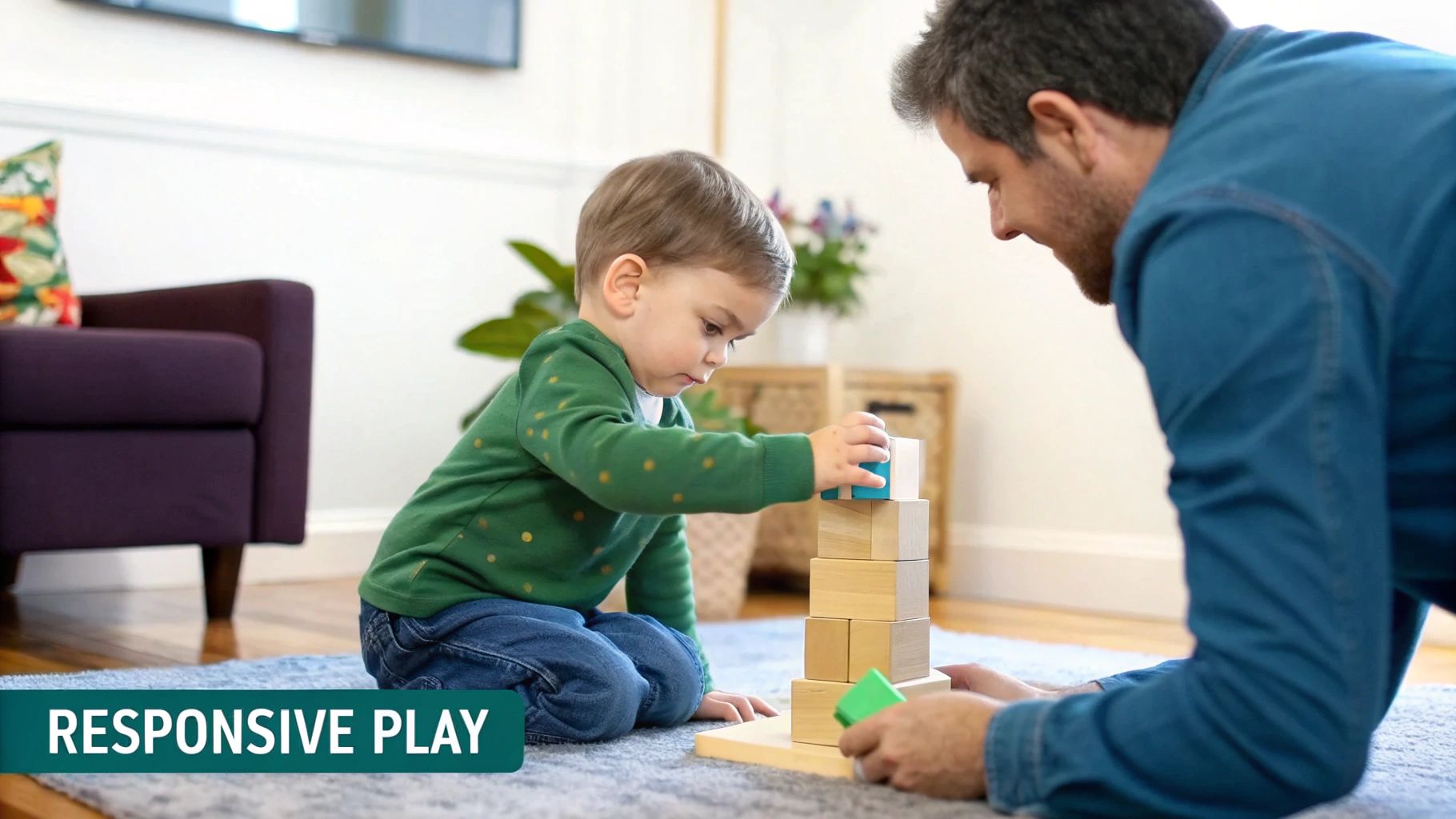
Let’s reframe the word "interactive." For a toddler, it’s all about a simple, powerful exchange. Imagine a game of catch: your child ‘throws’ an action, and the toy ‘throws’ back a rewarding response. This is the secret ingredient for real developmental growth.
When your two-year-old stacks a block and proudly watches their tower grow taller, that’s interaction. When they push a chunky puzzle piece into its spot and feel that satisfying click, that’s interaction, too. The toy is reacting directly to their effort, which naturally encourages them to ask that all-important question: "What happens if I do this?"
This responsive play is absolutely crucial. It's the opposite of a toy that performs for a child. Instead, the toy becomes a partner in discovery, inviting your little one to experiment, explore, and figure things out on their own. This is where the magic happens and where foundational skills really start to take root.
The Power of Responsive Play
A genuinely interactive toy doesn't just keep a 2-year-old busy; it nurtures their development by prompting them to act and giving them immediate, clear feedback. This simple concept has some pretty profound effects on their growth:
- Motor Skill Refinement: Actions like pushing, pulling, stacking, and sorting all demand physical coordination. The toy's response—a piece fitting perfectly, a tower standing tall—reinforces these movements and encourages them to try again.
- Problem-Solving Foundations: When a shape doesn't fit into a hole, your toddler has to turn it and try again. This is one of their very first lessons in trial and error and logical thinking.
- Language Sparks: As you play alongside them, you can introduce simple words like "up," "on," "in," and "out." The toy gives these new words a physical, real-world meaning they can understand.
The best interactive toys don't just entertain; they engage. They create a feedback loop where the child is the one in control, driving the play and, consequently, their own learning. This fosters curiosity and builds confidence.
While this principle is key for toddlers, understanding what makes the best interactive toys for babies helps you appreciate the entire developmental journey. Curated services like Grow With Me take the guesswork out of finding these gems. They select toys precisely designed to spark this brain-building ‘conversation’, ensuring what your child gets is perfectly matched to their stage. It turns every playtime into an opportunity for meaningful, developmental interaction.
Understanding Your 2-Year-Old's Developmental Leaps
At two, your toddler is in the middle of a phenomenal growth spurt, and it’s not just about how quickly they’re outgrowing their clothes. Their brain is a hive of activity, making new connections at an incredible speed. This isn't just a phase; it's a series of major developmental leaps that are turning your wobbly toddler into a determined little person with a real personality.
Getting a handle on these milestones is your secret weapon for picking an interactive toy for a 2 year old that will actually engage and support them. Think of it like building a house – they're laying the foundation, putting up the walls, and wiring the electrics all at once.
The Major Milestones at Two
A two-year-old’s to-do list is packed with new skills. Instead of a dry checklist, let's look at what these breakthroughs really mean when they’re deep in play.
-
Gross Motor Skills: Remember those first tentative steps? They’re a distant memory. Now it’s all about confident running, enthusiastic jumping, and attempting to climb anything and everything. Toys they can push, pull, or balance on aren’t just for fun; they're essential for building up those big muscle groups.
-
Fine Motor Skills: You'll see pure concentration on their face as they meticulously pick up a tiny puzzle piece or use that delicate pincer grip to slot a peg into a board. This newfound hand-eye coordination is a huge deal, laying the groundwork for everything from drawing to doing up their own buttons one day.
-
Language Explosion: Their vocabulary is growing at a fantastic rate. They're moving on from single words and starting to string together two- or three-word sentences. Hearing "more juice" or "daddy go car" is a sign of huge progress. Toys that introduce new words and ideas can really help this along.
-
Problem-Solving Begins: You can practically see the cogs turning as they try to figure out how a toy works. Those stacking rings aren't just plastic circles; they’re a first lesson in size, order, and cause and effect (especially when the whole tower comes crashing down!).
At this age, every single interaction is a chance to learn. The right toy becomes a partner in their discovery, offering just enough of a challenge to keep them trying, but not so much that they give up in frustration. It meets them right where they are.
The UK toy market really tunes into this, with the infant, toddler, and preschool category being the largest in an industry valued at £3.9 billion as of August 2025. It’s clear that parents are invested in finding the best tools for learning through play.
Choosing a great interactive toy for a 2 year old is all about matching its features to these specific developmental jobs. This focused approach makes sure playtime is more than just a way to pass the time—it’s genuinely helping them grow. To see the bigger picture, you can explore the different stages of child development by age in our guide.
Interactive play does more than teach letters and numbers; it can foster deeper skills. For more on this, check out how interactive stories can enhance empathy and critical thinking. When you line up their play with their natural development, you’re giving them the power to build skills, confidence, and curiosity, one happy moment at a time.
The Must-Have Features of a Great Toddler Toy
Walking down the toy aisle can feel like a sensory overload, and not just for your toddler. It’s a blur of bright plastic, loud noises, and big promises. So, how do you cut through the noise and find a toy that will genuinely captivate and support your two-year-old?
The secret is to look beyond the packaging and focus on a few key features that turn a simple plaything into a powerful tool for development. The best toys don’t just entertain; they invite your child to become an active participant in their own learning.
This simple diagram highlights the three core areas where a great toy can make a real difference at this age.
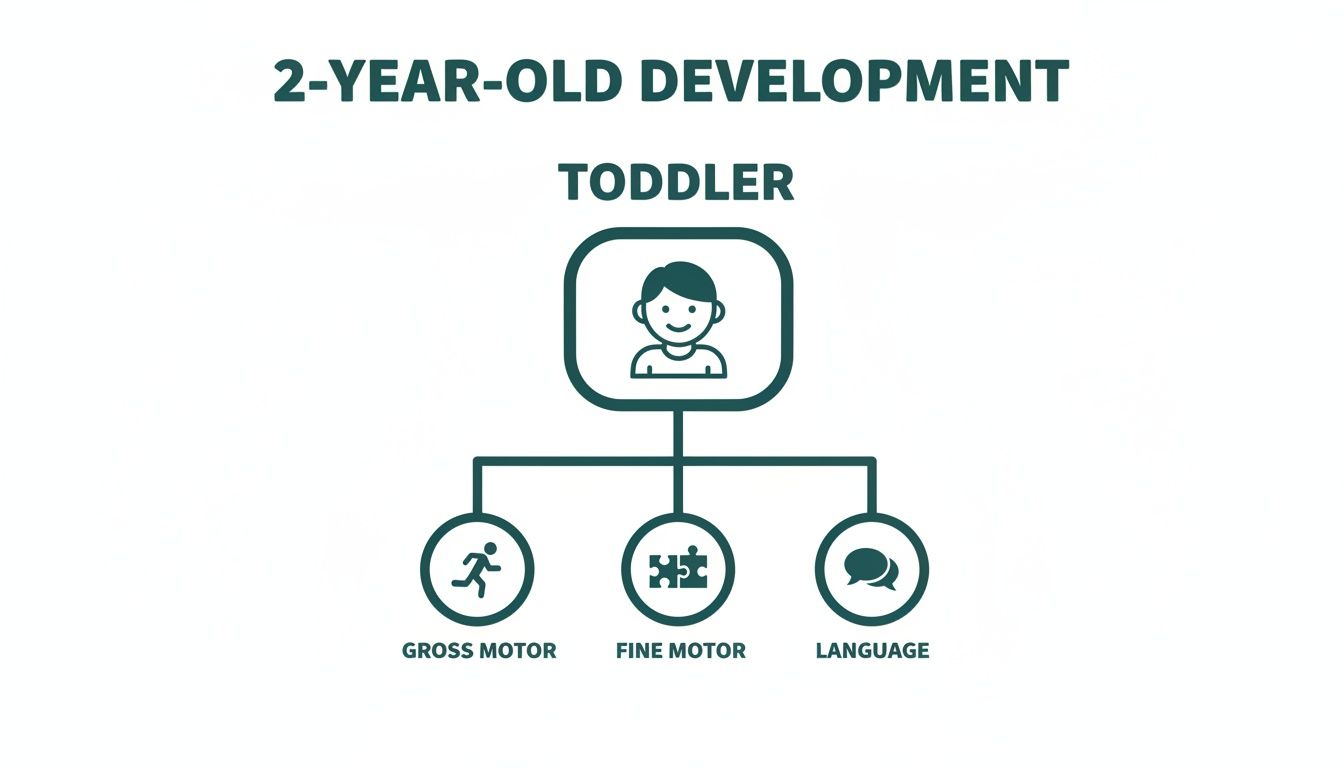
As you can see, everything from running and jumping (gross motor) to picking up a crayon (fine motor) and forming sentences (language) is exploding right now. The right toys are the ones that tap directly into this amazing period of growth.
Sensory Feedback and Motor Challenges
Two-year-olds learn with their whole bodies. They are little scientists, exploring the world through touch, sight, and sound. Look for toys that offer rich sensory feedback—things like varied textures, bright but pleasing colours, and satisfying sounds. The gentle clack of wooden blocks or the rewarding click of a puzzle piece sliding into place are far more meaningful than a pre-recorded electronic sound.
At the same time, their little hands are becoming incredibly capable. A fantastic interactive toy for a two-year-old offers a 'just right' physical challenge to help those fine motor skills flourish.
- Knobs and Dials: Anything that encourages twisting and turning is brilliant for developing wrist rotation and dexterity.
- Stacking and Sorting: Classic blocks, rings, and shape sorters are popular for a reason—they are masters at building hand-eye coordination.
- Chunky Puzzles: Fitting chunky puzzle pieces or pushing pegs into a board helps refine that all-important pincer grasp.
These hands-on activities are incredibly powerful because they empower your child. They are in control, making things happen, which is infinitely more engaging than passively watching a toy perform for them.
Open-Ended Play and Built-to-Last Design
Often, the most valuable toys are the simplest. An open-ended toy is one that doesn't have a single, pre-determined purpose. Think of a set of building blocks. One day they’re a towering skyscraper, the next they’re a fence for farm animals, and the day after that, they’re 'food' in a play kitchen. This kind of toy grows with your child's imagination.
A toy's true value lies not in what it can do, but in what your child can do with it. This is the heart of open-ended play, which sparks creativity, problem-solving, and independence by letting your toddler take the lead.
Finally, let's be practical: safety and durability are absolutely essential. Toddlers are not known for being gentle! Their toys need to be tough enough to survive being dropped, thrown, and chewed on. Always look for sturdy construction and non-toxic, child-safe materials. Solid wood is often a fantastic choice for its natural feel and resilience. If you're looking for inspiration, browsing curated lists of gifts for children under 10 can be a great way to find items that are built with these qualities in mind.
Why ‘Stage-Based’ Play Beats the Generic Age Label on the Box
We’ve all seen it: that vague ‘2-4 years’ label on a toy box. It’s a well-meaning guess, but that’s all it is. Every child moves at their own pace, which is why a toy that fascinates one two-year-old might be completely ignored by another. This is exactly where a smarter approach, called stage-based play, comes in.
Think about it like learning to read. You wouldn't hand a novel to a child who's just getting to grips with their ABCs. In the same way, an interactive toy that’s too simple will be cast aside in minutes out of sheer boredom. One that's too complex just causes frustration, sometimes shutting down the desire to play altogether.
The whole point is to find that developmental sweet spot. You want a toy that meets your toddler exactly where they are, offering just enough of a challenge to keep them hooked, happy, and learning without even realising it.
The Trouble with One-Size-Fits-All Toys
A generic age label just can't capture the huge range of skills you'll find in any group of toddlers. One two-year-old might be concentrating all their effort on stacking blocks, while their friend is already figuring out simple three-piece puzzles. A toy designed for some imaginary 'average' child is bound to miss the mark.
This kind of developmental mismatch usually ends one of two ways:
- Boredom: If a toy offers zero challenge, your toddler will have it figured out in no time and move on, leaving it to gather dust in the corner.
- Frustration: If it's too advanced, they might feel defeated. This can discourage them from trying again and even knock their confidence a little.
Stage-based play cuts through all that guesswork. Instead, it hones in on the specific skills your child is working on right now—whether that’s their pincer grip, early problem-solving, or first words—and gives them the perfect tool for the job.
Stage-based play is all about precision. It swaps out broad age ranges for a sharp focus on specific developmental milestones. This ensures the toy you give your child is always relevant, engaging, and perfectly matched to what they can actually do.
This is the thinking that powers curated services. They take the pressure off you to find the perfect interactive toy for a 2 year old by sending things that are timed precisely to where your child is on their unique journey.
This targeted way of thinking is really catching on, particularly as more parents look for toys that do more than just pass the time. In fact, the UK baby toys market was valued at an estimated £1,030 million in 2024, with educational toys making up the biggest slice of that pie. It shows a real shift towards toys with a purpose. You can read more about the growth of the curated baby toys market here. By lining up playtime with their developmental stage, you make every interaction more meaningful and a lot more fun.
Of course, here is the rewritten section with a more natural, human-written tone.
Turning Playtime into a Powerful Learning Routine
An amazing interactive toy is a brilliant start, but its real magic comes alive when you get involved. Remember, you are your child's favourite playmate. When you turn playtime into a shared experience, you create powerful learning moments and deepen that special bond between you.
This doesn't mean you need to schedule hours of structured activities. Honestly, just a few minutes of focused, fun play together can make a huge difference. It’s all about turning their simple actions into little lightbulb moments.
Making Playtime Matter
Getting stuck in is easier than you might think. It’s really about being present and weaving a little story around their natural curiosity. Simply describing what’s happening helps build a rich vocabulary and gives their actions context and meaning.
Here are a few simple ways to do this today:
- Be Their Personal Commentator: As they play, talk about what they're doing. Simple things like, “You’re putting the blue block on top!” or “Wow, you made the tower so high!” connect words directly to their achievements. You’d be surprised how much this boosts their language skills.
- Fold Play into Daily Routines: Use toys to make less exciting tasks more fun. When it's time to tidy up, a shape sorter can become a game: “Can you find the yellow star? Let’s put it back in its home!” This cleverly links problem-solving with everyday jobs.
- Ask 'What If?' Questions: Get their little cogs turning by asking questions that can't be answered with a simple 'yes' or 'no'. Try something like, “What do you think will happen if we put the big block on the small one?” even if you both know it will wobble and fall.
The Power of Toy Rotation
To keep things fresh and exciting, think about starting a simple toy rotation. This just means putting a few toys out of sight for a week or two and then reintroducing them.
Toy rotation is a fantastic way to prevent play fatigue and overstimulation. When a familiar toy reappears after a little holiday, it feels brand new again, sparking renewed interest and inspiring your child to find completely different ways to play with it.
This simple trick makes a smaller collection of high-quality toys feel huge and endlessly interesting. It guarantees that every interactive toy for a 2 year old gets the attention it deserves, maximising its value while also keeping your play space feeling a lot calmer and more organised.
Prioritising Safety and Sustainability in the Playroom
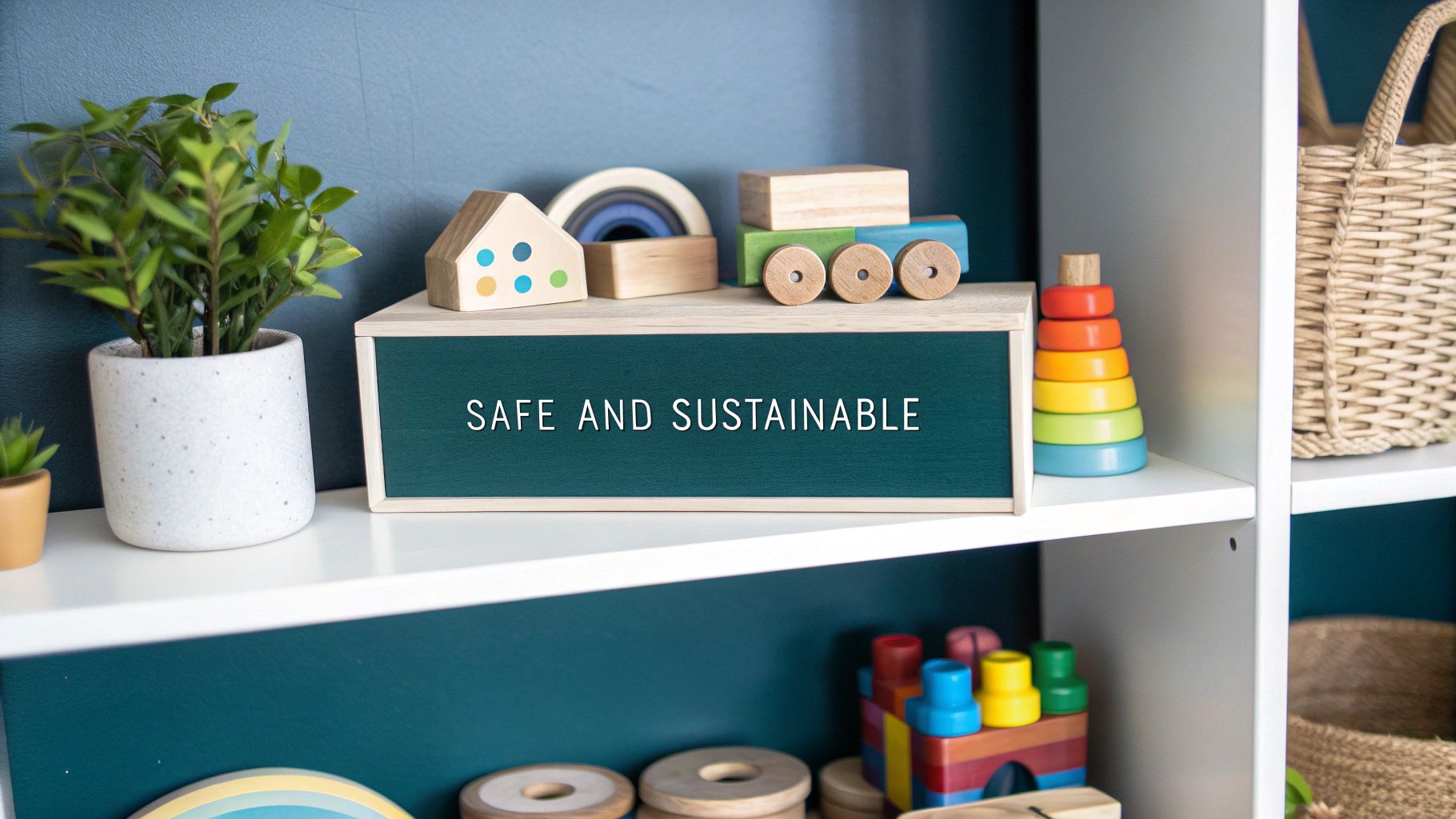
For parents today, a great toy has to do a lot more than just keep a little one busy. It needs to be completely safe for your child and, more and more, kind to our planet. This isn't just a passing trend; it comes from a deeper understanding of what really makes a playroom a healthy, enriching space.
When you're choosing an interactive toy for a two-year-old, safety is non-negotiable. Toddlers at this age are still putting everything in their mouths, so non-toxic materials are an absolute must. Always look for the UKCA marking, which is your assurance that the toy meets strict UK safety standards.
You also need to be on high alert for any small parts. A simple trick is the toilet paper tube test: if a piece of the toy can fit through the cardboard tube, it's a potential choking hazard for a young child.
The Shift to Sustainable Choices
Beyond the immediate safety checks, there’s a real movement towards making the playroom more sustainable. It’s a significant shift. Recent analysis shows that 45% of UK consumers now actively consider sustainability when buying toys, which really highlights a change in family priorities. You can discover more insights about these toy market trends on andfacts.com.
This kind of conscious buying is a big reason why traditional materials, especially wood, are making such a welcome comeback. Wooden toys aren't just about nostalgia; they offer real, tangible benefits that modern parents are looking for.
Investing in high-quality, sustainable toys is an investment in both your child's well-being and the planet's future. It aligns play with core family values, creating a healthier and more meaningful environment for growth and discovery.
Wooden toys are renowned for their incredible durability. They're the kind of toys that get passed down through generations, rather than ending up in a landfill after a few months. They also offer a unique sensory experience—the natural texture and satisfying weight of wood is something plastic simply can't match. To find out more, you can read all about the benefits of wooden toys in our dedicated article.
Ultimately, choosing a well-made, eco-friendly toy is a decision that pays off in so many ways. It ensures a safer playtime for your toddler, contributes to a healthier planet, and provides a beautiful, lasting source of creative play for years to come.
Your Top Questions About Toddler Toys Answered
Stepping into the world of toddler toys can feel a bit overwhelming. Questions always pop up, and when you're trying to choose the right interactive toy for a 2-year-old, it's natural to want to get it right. Let's walk through some of the most common questions we hear from parents, so you can feel confident you're making choices that really count.
How Many Interactive Toys Does My 2 Year Old Need?
Honestly, less is more. The golden rule here is always quality over quantity.
A few well-chosen, open-ended toys will do so much more for your child's creativity than a mountain of gadgets that only do one thing. Too much choice can actually overwhelm a toddler, causing them to jump from one thing to the next without ever really getting stuck in.
A great tip is to try a simple toy rotation. Pack a few toys away for a couple of weeks. When you bring them out again, they’ll feel brand new. This little trick keeps the playroom tidy and encourages your little one to explore the full potential of each toy in front of them.
Are Electronic Toys the Best Interactive Option?
Not always. While some electronic toys have their place, the most valuable interaction happens when your child is in control. Think about classic toys like wooden puzzles, building blocks, and shape sorters—these demand your toddler's active involvement and problem-solving, which is what makes them true interactive powerhouses.
The real magic of an interactive toy isn't what it does for your child, but how it responds to them. The best ones let your toddler's actions create a clear, immediate reaction, empowering them to lead the play.
What you're looking for is a good balance, where the toy feeds your child's curiosity without completely taking over the experience.
How Can I Tell If a Toy Is Genuinely Age Appropriate?
A great age-appropriate toy finds that perfect sweet spot: it’s challenging enough to be interesting, but not so difficult that it becomes frustrating. It should meet your child right where they are on their developmental path.
For a two-year-old, this usually means toys that support core skills like stacking, sorting, matching colours, or dipping their toes into simple pretend play. The goal is to build their confidence and encourage them to keep trying. If a toy is too easy, they'll get bored quickly. If it's too hard, they might just give up. This is exactly why services that curate toys for specific developmental stages—not just broad age ranges—can be such a game-changer.
At Grow With Me, we take the guesswork out of finding the perfect stage-based toys. Our curated play kits are designed to meet your child's developmental needs with high-quality, sustainable toys that inspire learning and discovery. Explore our subscription boxes today.