

What is sensory integration? A Practical Guide for Parents
Ever wonder how your child manages to make sense of the world? It all comes down to a remarkable process called sensory integration. Think of it as your child's brain acting like a busy traffic controller, expertly directing streams of information from all the senses to create smooth, purposeful responses.
This is the foundational process that helps them understand everything, from the feeling of soft grass under their feet to the comforting sound of your voice. It’s a powerful neurological process that turns a jumble of sensory messages into meaningful actions, thoughts, and feelings.
Decoding Your Child’s Sensory World
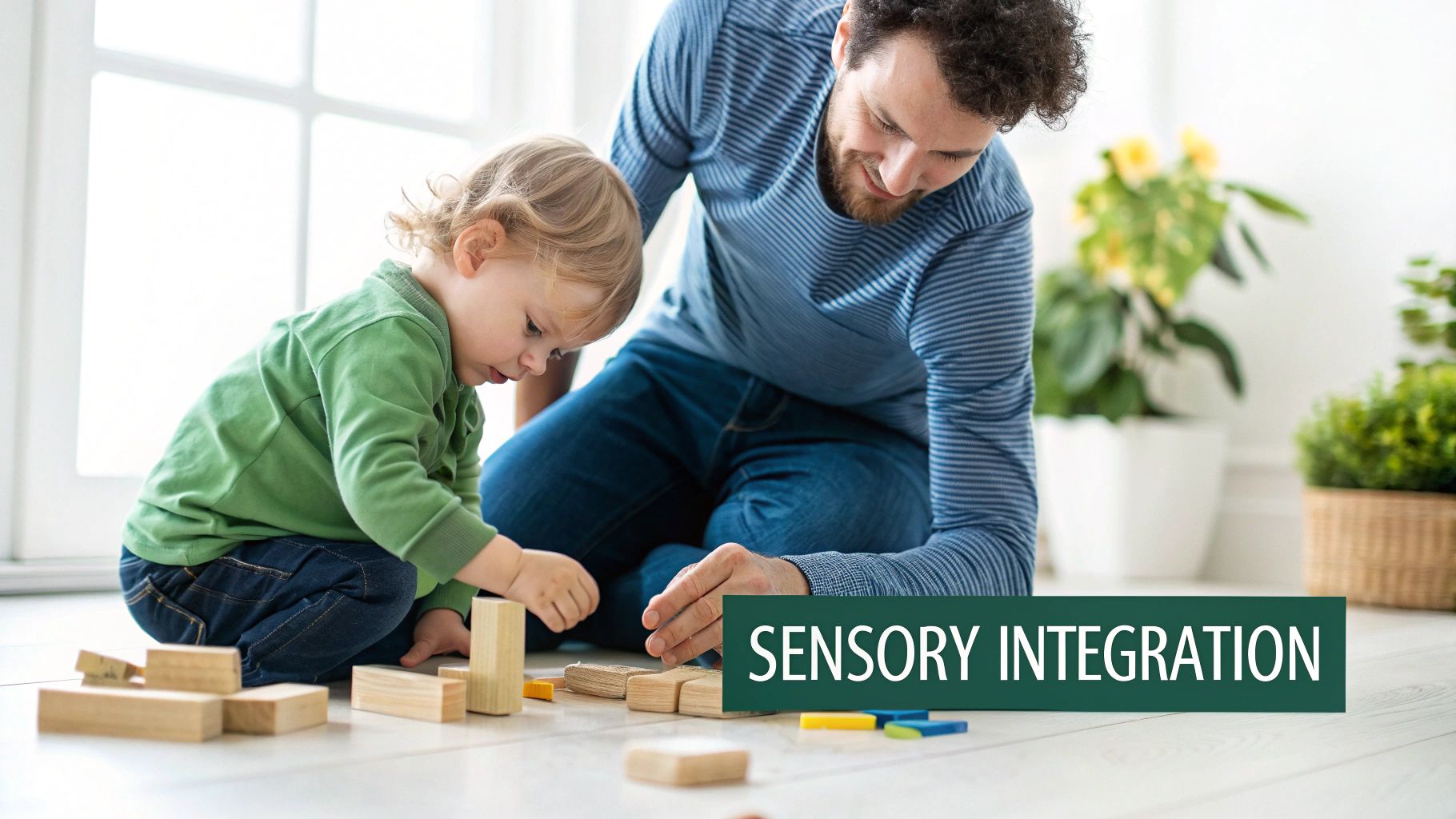
At its core, sensory integration is the brain’s incredible ability to take in, sort, and organise countless pieces of information all at once. It’s an unconscious, background process that's happening constantly. When it’s working well, a child can effortlessly filter out background noise to focus on a toy, or coordinate their hands and eyes to catch a ball.
This process is the bedrock upon which so many other skills are built. Strong sensory integration is directly linked to a child’s ability to regulate their emotions, pay attention, and master motor skills. It’s how they learn about their bodies and the world around them, influencing everything from navigating a busy playground to managing mealtimes. You can see how these abilities connect when you explore the key developmental milestones your child will reach.
More Than Just Five Senses
We all learned about the five basic senses—sight, sound, smell, taste, and touch—but sensory integration actually involves eight distinct sensory systems. Getting to know all eight gives us a much richer picture of what a child is experiencing.
"Sensory integration is not about what a child’s hands, eyes, or ears are doing. It's about how the brain is processing the information that those organs send it. This distinction is crucial for understanding your child's behaviour."
For instance, two of the lesser-known but absolutely critical systems are the vestibular and proprioceptive senses. The vestibular system, located in the inner ear, is our internal sat-nav for balance and movement. The proprioceptive system, on the other hand, gets feedback from our muscles and joints, telling us where our body is in space. These two work in tandem to help a child feel secure and coordinated.
Let’s take a quick look at all eight senses.
The Eight Senses at a Glance
This table breaks down each sensory system, what it does, and how you might see it in action every day.
| Sensory System | What It Does | Example in Daily Life |
|---|---|---|
| Tactile (Touch) | Processes sensations on the skin like pressure, texture, and temperature. | Feeling the difference between a soft blanket and a rough carpet. |
| Visual (Sight) | Interprets what we see, including colours, shapes, and movement. | Tracking a ball as it rolls across the floor. |
| Auditory (Hearing) | Processes sounds, including volume, pitch, and location. | Turning their head toward the sound of a familiar voice. |
| Gustatory (Taste) | Differentiates between flavours like sweet, sour, salty, and bitter. | Deciding they prefer the taste of bananas over lemons. |
| Olfactory (Smell) | Detects and interprets different scents in the environment. | Recognising the smell of their favourite meal cooking. |
| Vestibular | Manages balance, gravity, and movement. | Enjoying a swing at the park without feeling dizzy. |
| Proprioception | Senses body position and movement from muscles and joints. | Climbing stairs without having to look down at their feet. |
| Interoception | Perceives internal body signals like hunger, thirst, or needing the toilet. | Knowing they need a drink of water after playing. |
Understanding these eight senses helps us see that a child’s behaviour is often a response to the world they are experiencing through this complex, integrated system.
How Sensory Integration Develops from Birth
From their very first breath, babies are thrust into a world buzzing with new information. Every cuddle, every coo, every gentle rock is more than just a sweet moment; it's a building block for their brain. This process, sensory integration, is how a child’s brain learns to take in all this information, make sense of it, and use it to interact with the world.
Think of it like building a house from the ground up. Those first few years are all about pouring a solid, wide foundation. Without that strong base, trying to put up the walls and roof—things like walking, talking, and making friends—is a real struggle. This early sensory work is the invisible engine driving your child's growth, turning what starts as sensory chaos into organised, meaningful experiences.
Let's take a look at how this incredible journey unfolds, stage by stage.
The First Six Months: Laying the Foundation
A newborn’s world is a whirlwind of new sensations. In these first six months, their main job is simply to begin processing the most basic information from their own body and their immediate surroundings. The sense of touch is front and centre as they feel the security of being swaddled or the comforting warmth of your skin.
At this age, sensory integration is tied directly to survival and connection. When a baby turns their head towards a parent’s voice, that's their brain processing sound. When they root for milk after their cheek is stroked, that's a tactile response. These early reflexes are the very first signs of the brain organising sensory input to meet a fundamental need.
This period is also a critical time for the vestibular system (balance) and proprioception (body awareness). Simple things, like being rocked gently or having some 'tummy time', provide essential feedback that helps them start to figure out where their body is and how it moves.
Six to Twelve Months: Becoming an Explorer
Once your baby starts moving, their sensory world explodes. Crawling, rolling, and pulling themselves up to stand unleashes a flood of new information for their brain to sort through. They're no longer just passively receiving sensory input; they're actively seeking it out.
During this phase, you'll see some huge leaps forward:
- Motor Planning: Learning to crawl is a big one. It forces the brain to coordinate both sides of the body, integrating feedback from their eyes, inner ear, and muscles all at once.
- Oral Sensory Exploration: Everything goes into the mouth! This is how babies learn about an object's texture, shape, and temperature, building a detailed sensory map of their world.
- Auditory Development: They'll start to babble and imitate sounds, showing their brain is making stronger connections between what they hear and the sounds they can make.
- Developing Vision: Their depth perception sharpens, allowing them to judge distances as they reach for a toy or navigate around the coffee table.
Having the right kinds of toys is a huge help during this stage. You can discover some of the best toys for newborn development that are perfect for supporting these new skills.
One to Three Years: Mastering Complexity
The toddler years are when it all starts to come together. Walking, running, and climbing bring a whole new level of independence and countless opportunities for sensory learning. Their brain is now working overtime to refine its ability to combine information from multiple senses at once, which is what allows for more complex skills.
This is when sensory integration starts to support not just physical skills, but also emotional regulation and social skills. A well-integrated sensory system helps a toddler feel grounded and organised, even when faced with new or overwhelming situations.
Think about navigating a busy playground. It requires a child to process sights, sounds, and the feeling of their own body moving, all at the same time. They learn to modulate their force—pushing a toy car gently versus throwing a ball with all their might—which is a direct result of a well-tuned proprioceptive system.
Milestones like tolerating different food textures, enjoying messy play, or learning to put on their own shoes are all rooted in this more advanced sensory processing. By the time a child turns three, their sensory foundation is largely in place, getting them ready for the more structured world of nursery and school.
Recognising Your Child's Unique Sensory Needs
Every child experiences the world in their own way. Think about a bustling birthday party: one child might dive right into the chaos, absolutely loving the noise and energy, while another might retreat to a quiet corner, feeling completely overwhelmed. These aren't just personality quirks; they're often rooted in how a child’s brain processes sensory information.
Learning to spot your child’s specific sensory needs is like decoding their personal instruction manual. It helps you understand the ‘why’ behind their behaviours, whether they’re constantly climbing the furniture or prefer to snuggle up with a book. This insight is the first, most crucial step toward creating a world where they feel safe, organised, and ready to thrive.
As you can see below, the journey of sensory development is a progressive one, with early physical milestones laying the groundwork for more complex interactions with the world.
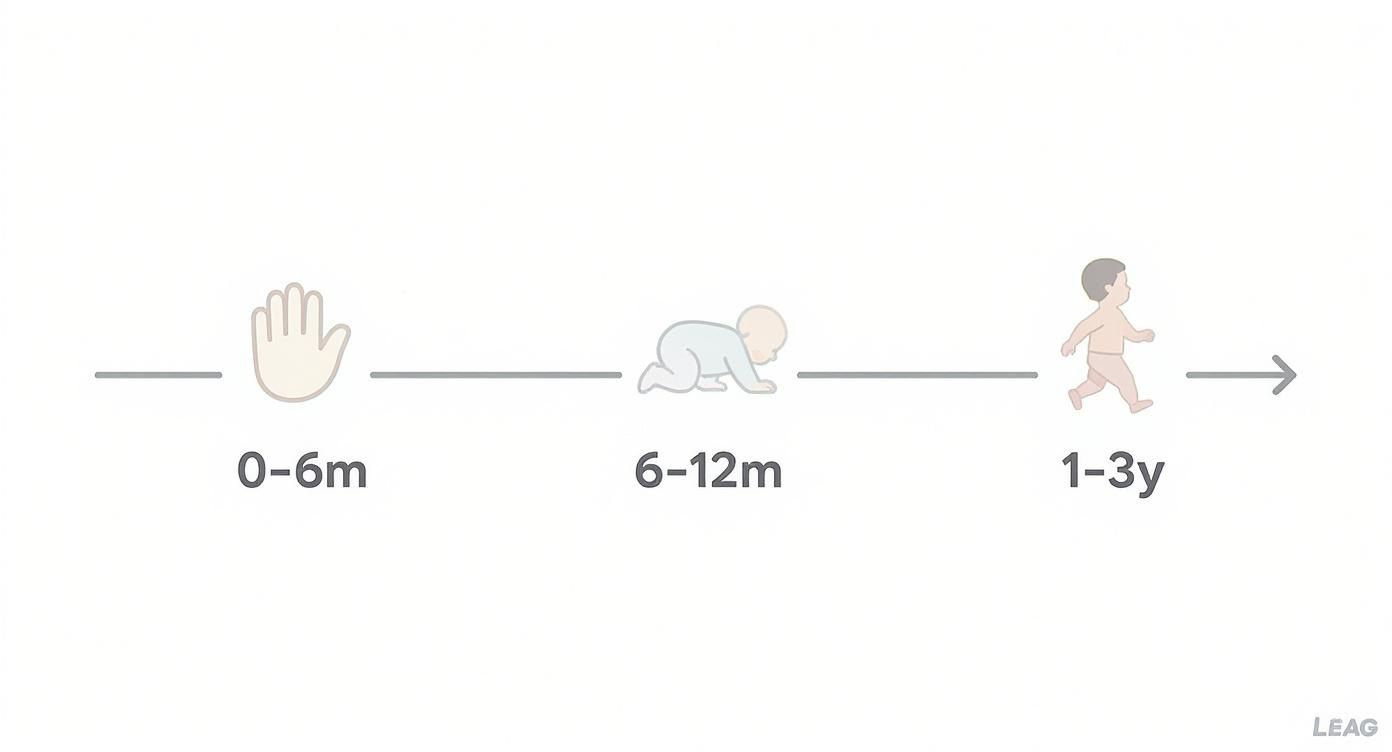
From the simple act of grasping a toy to the coordinated effort of crawling, each stage is deeply connected to the brain's growing ability to make sense of incoming information.
Over-Responsive vs Under-Responsive Children
When we talk about sensory responses, children often fall into two broad categories. Thinking about it this way can be a really helpful lens for understanding your little one's behaviour.
A child who is over-responsive (sometimes called hypersensitive) feels things much more intensely than others. It's as if their sensory microphone is turned up way too high, picking up every little sound, sight, and touch. For them, the world can feel like a very loud, bright, and demanding place.
On the flip side, an under-responsive (or hyposensitive) child needs a lot more sensory input just to notice it. Their internal microphone is turned down low. They might seem to miss cues that are obvious to everyone else and often seek out big, powerful sensations to help them feel organised and grounded.
These differences can play out in all sorts of ways:
-
Signs of an Over-Responsive Child:
- Quick to cover their ears at the sound of a hand dryer or a blender.
- A very picky eater, often because of the texture or feel of food, not just the taste.
- Steers clear of messy play like finger painting, mud kitchens, or sandpits.
- Has a major meltdown over clothes tags or the seam on their socks.
-
Signs of an Under-Responsive Child:
- Needs to touch everything and everyone.
- Loves rough-and-tumble play—crashing, jumping, and spinning are their jam.
- Seems completely unaware they have food all over their face after a meal.
- Has a surprisingly high tolerance for pain, barely flinching at a bump or scrape.
It's also totally normal for a child to be a mix of both. They might be incredibly sensitive to loud noises but constantly crave the deep pressure of a tight hug.
Is It a Quirk or a Challenge?
Let's be clear: all of us have sensory preferences. Some adults love rollercoasters; others feel sick just looking at them. The real difference between a simple preference and a sensory challenge comes down to one thing: its impact on daily life. A preference is a choice; a challenge is a barrier.
If your child's sensory needs are getting in the way of their ability to play, learn, eat, sleep, or connect with others, it might be a sign of something more. For instance, not liking lumpy porridge is a preference. But refusing almost all solid foods to the point where it impacts their nutrition? That's a challenge.
Despite sensory integration difficulties affecting an estimated 5% to 16.5% of the general population in the UK, awareness remains surprisingly low. A recent survey revealed that 36% of UK adults had never even heard of sensory integration—the crucial neurological process of organising sensory information. These challenges are especially common in neurodevelopmental conditions like autism, where they can affect up to 90% of individuals. This lack of public understanding can, unfortunately, get in the way of getting the right support.
For those interested in learning more about supporting diverse neurological profiles, you can find helpful information on neurodiverse counselling support for autistic and neurodivergent minds.
To help you tell the difference between a typical preference and a potential challenge, have a look at the table below. It can offer a bit more clarity.
Sensory Preference vs Sensory Challenge
| Behavioural Trait | Sensory Preference (Typical) | Sensory Challenge (Atypical) |
|---|---|---|
| Picky Eating | Dislikes a few specific food textures, like mushrooms or bananas. | Gags or has meltdowns over many food textures; diet is extremely limited. |
| Activity Level | Enjoys active play but can settle down for quiet activities. | Is constantly in motion; struggles to sit still even for short periods. |
| Social Play | Prefers smaller groups or one-on-one play. | Avoids playgrounds or parties entirely due to sensory overload. |
| Clothing | Prefers soft clothes but can tolerate a school uniform. | Has extreme emotional reactions to seams, tags, or certain fabrics. |
If you find your child's behaviours consistently land in the "challenge" column and are starting to disrupt your family life, it might be a good time to think about seeking professional advice.
Fun Activities to Nurture Sensory Integration at Home
You don’t need a room full of special equipment to support your child’s sensory integration journey. In fact, some of the most powerful and effective sensory work happens right at home, woven beautifully into the simple, joyful moments of everyday play. Once you understand what sensory integration is and how it works, you can start to see countless opportunities to turn ordinary activities into brilliant brain-building experiences.
The idea is to offer a variety of ‘sensory snacks’ throughout the day. These are small, playful activities that feed their brain the right kind of input it needs to feel calm, organised, and ready to learn. It’s all about having fun, connecting with your little one, and feeling empowered as their best play partner.
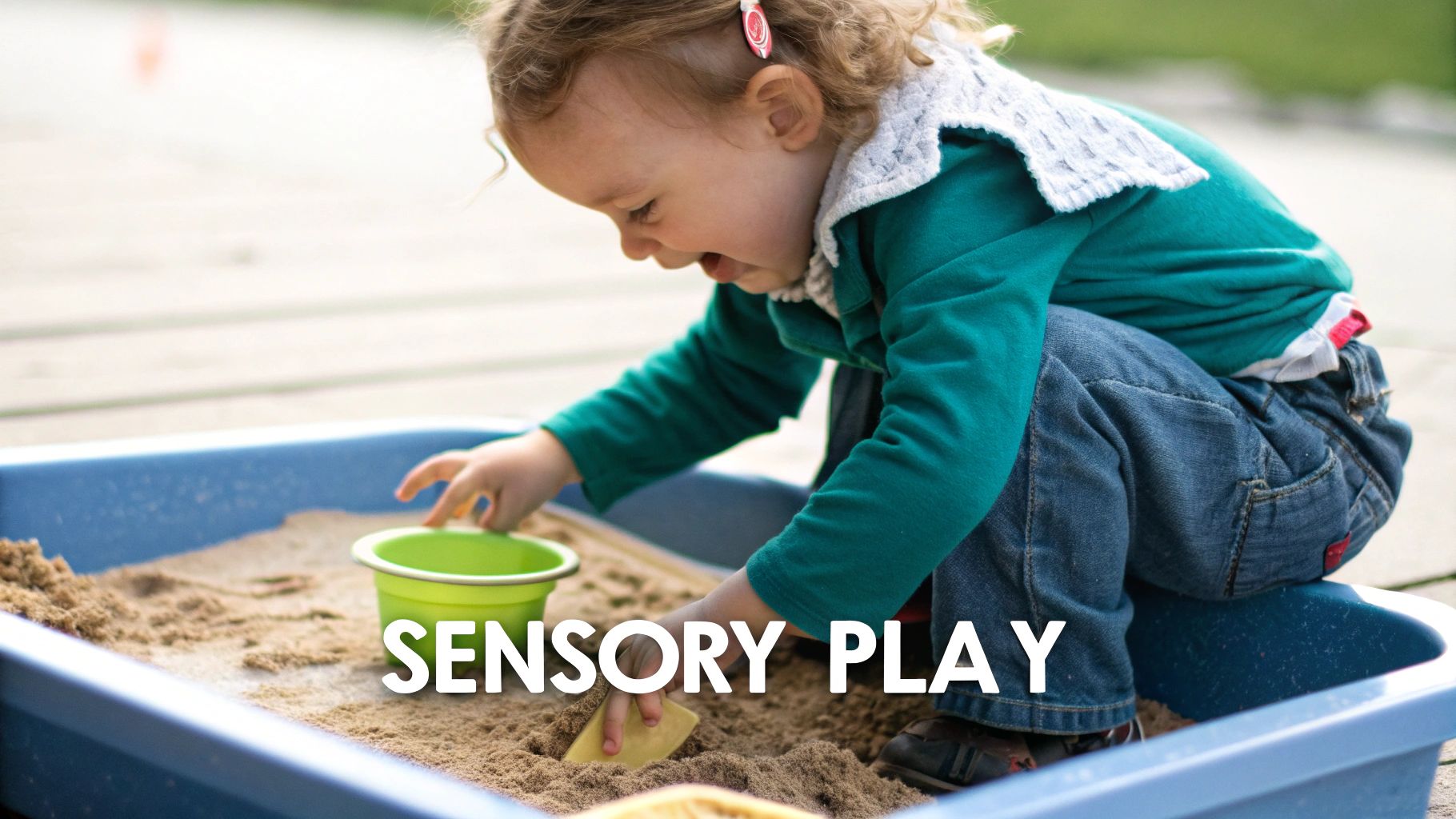
Activities For Tactile Explorers
A baby's first real understanding of the world comes through their skin—the tactile system. For some children, new textures can be daunting, while others seem to have a constant need to touch and feel everything. These activities are fantastic for both.
- Set Up a Sensory Bin: This is a classic for a reason! Just fill a shallow container with things like dry rice, pasta, sand, or even water. Pop in some scoops, cups, and small toys to encourage digging, pouring, and exploring.
- Embrace Messy Play: Don't be afraid to get a little messy. Finger painting (you can use edible yoghurt-based paint for tiny ones), squidging play-doh, or making mud pies in the garden provides rich, valuable tactile feedback.
- Play 'Feely Bags': Pop a few objects with different textures—a soft feather, a rough piece of bark, a smooth stone—into a cloth bag. Ask your child to reach in without looking and describe what their hands are telling them.
If you're looking for more inspiration, you can find a whole host of sensory play ideas for babies that are perfect for getting started.
Movement Activities For Balance And Body Awareness
The vestibular system (our sense of balance) and the proprioceptive system (our awareness of where our body is) are absolutely crucial for helping a child feel grounded and secure. Activities that get the body moving and provide deep pressure are an excellent way to support these systems.
These are often called ‘heavy work’ activities because they involve pushing, pulling, and using the muscles and joints. This kind of input can be incredibly calming and organising for a child's nervous system.
Think of heavy work as a reset button for the brain. It sends clear, strong messages that help a child make sense of where their body is in space, which can dial down feelings of being overwhelmed or out of control.
Simple heavy work tasks you can try right away include:
- Animal Walks: Get your child moving like their favourite animals. A bear crawl (on hands and feet), a crab walk (on hands and feet with tummy facing up), or some big frog jumps are all brilliant.
- Pushing and Pulling: Get them to "help" by pushing the laundry basket, carrying a small shopping bag, or pulling a toy wagon filled with their favourite teddies.
- Jumping and Crashing: Build a safe landing zone with sofa cushions and pillows for them to jump and crash into. A mini-trampoline is another fantastic option if you have one.
And it's not just about active play. Quieter moments, like snuggling up with a good book, also contribute to development. You can explore more about the benefits of children's picture books for both reading and sensory engagement.
Building Sensory Activities Into Daily Routines
The real magic happens when you start spotting opportunities for sensory input within your normal daily routines. You don’t need to carve out a special 'sensory time'—it can simply be part of what you’re already doing.
- During Meal Prep: Let them get hands-on by mashing potatoes, stirring thick cake batter, or kneading dough. These are great proprioceptive tasks.
- At Bathtime: Turn the bath into a multi-sensory experience. Add bubbles, different textured sponges, or even a few drops of a calming essential oil like lavender.
- While Tidying Up: Make a game out of carrying books back to the shelf or pushing their big toy box back into its spot.
By embracing these simple, playful ideas, you're doing so much more than just having fun. You are actively helping to build and strengthen the crucial neural pathways that will support your child’s healthy sensory development for years to come.
When to Seek Professional Support for Your Child
As a parent, you have an instinct. It’s that gut feeling that tells you when something isn't quite right. If you’ve got a nagging concern that your child's sensory responses are causing real, day-to-day struggles, it’s always worth listening to that voice. This isn’t about creating problems where there are none; it's about making sure your child has the right support to flourish.
When sensory difficulties start to consistently disrupt the fundamentals—like eating, sleeping, making friends, or coping at nursery—it might be time to get some advice. The aim is never to change your child, but to equip both of you with the tools to make their world feel a little less overwhelming.
Identifying When to Take the Next Step
So, how do you tell the difference between a typical toddler quirk and a sign that more support is needed? It often comes down to three things: frequency, intensity, and impact. If your child’s sensory needs are causing regular, significant distress for them or the rest of the family, a professional assessment could be a massive help.
You might consider reaching out if you see consistent patterns like these:
- Extreme reactions to everyday things, like meltdowns over the sound of a hand dryer, a label in their shirt, or a light hug.
- Safety concerns because they seem unaware of their body in space, constantly crashing into furniture or not seeming to feel pain from a fall.
- Social withdrawal because they find the buzz of a birthday party or the chaos of a soft play centre simply too much to bear.
- Major battles over daily routines like mealtimes, bathtime, or getting dressed, turning these moments into sources of constant stress.
Who to Talk To and What to Expect
Your first port of call is usually your GP or health visitor. They are there to listen to your worries and can point you in the direction of the right specialists. More often than not, this will be a paediatric occupational therapist (OT) who has specific training in sensory integration.
An OT is an expert at looking at the whole child. Their assessment won't feel like a test; it's usually play-based and fun. They’ll watch how your little one responds to different sensory activities and physical challenges to build a picture of their unique sensory profile.
It’s a great idea to jot down a few notes before your first appointment. Make a list of specific situations you find tricky, what you think the trigger was, and how your child reacted. This gives the therapist a real-world starting point.
This kind of sensory-aware approach is gaining traction. The NHS, for example, is increasingly recognising its importance, particularly in youth mental health services. In 2021/22, NHS England invested £4.1 million across 40 projects aimed at creating better sensory environments for autistic young people in inpatient care, acknowledging just how common sensory challenges are. You can read more about how the NHS is embracing sensory-friendly healthcare practices.
Ultimately, asking for help is a powerful, positive step. It’s about building a supportive team around your child so they can feel understood, regulated, and ready to take on the world.
Your Questions Answered: A Practical Guide to Sensory Integration
It's only natural to have questions as you navigate your child's sensory world. Let's tackle some of the most common ones to help clear things up and build your confidence.
Is Sensory Integration the Same as Sensory Processing Disorder?
This is a really common point of confusion, but the distinction is quite important.
Think of sensory integration as the brain's ongoing, everyday job of sorting through information from the senses. Everyone’s brain does this, all the time. Sensory Processing Disorder (SPD), on the other hand, is the term used when that process consistently goes awry and gets in the way of daily life.
So, while every child is busy with sensory integration, a child with SPD faces a persistent struggle. Their brain has real difficulty making sense of incoming information, which can make everything from playing and learning to managing emotions feel like an uphill battle. One is the process; the other is the disorder.
Can My Child Outgrow Sensory Sensitivities?
Many parents wonder about this, hoping their child will simply grow out of their challenges. The reality is a little more nuanced. While children can become incredibly skilled at managing their sensitivities, the underlying way their brain is wired usually doesn’t change.
The goal of intervention isn't to "fix" them, but to empower them.
We want to give children the self-awareness and practical tools they need to navigate a world that can sometimes feel overwhelming. It’s about building resilience and understanding, not trying to change their fundamental nature.
With the right support, a child learns to adapt their environment and regulate their own responses. This can look a lot like they've 'outgrown' the issue, but it's actually a sign of incredible learning and resilience.
How Can I Make Our Home More Sensory-Friendly?
Creating a supportive space at home can make a massive difference, and it doesn't require a complete renovation. Often, it's the small, thoughtful adjustments that have the biggest impact on creating a sense of calm and reducing sensory overload.
Here are a few simple ideas to get started:
- Create a 'Calm-Down Corner': Set up a cosy, quiet spot with soft blankets, cushions, or even a small pop-up tent. This gives your child a safe space to retreat to when they feel overwhelmed.
- Soften the Lighting: Harsh overhead lights can be jarring. Try using lamps with warm bulbs or installing dimmer switches for a gentler visual environment.
- Have Sensory Tools on Hand: Keep a basket of helpful items accessible, like fidget toys, a weighted lap pad, or noise-reducing headphones for when your child needs that extra bit of support.
- Stick to Predictable Routines: A consistent schedule helps children feel secure because they know what’s coming next. This predictability can significantly reduce anxiety.
Does Diet Affect Sensory Integration?
This is a big topic with a lot of ongoing discussion. While changing a child's diet won't rewire their brain's sensory processing, some families do find that it helps with overall regulation and behaviour.
Things like artificial colourings, preservatives, or certain allergens can sometimes heighten irritability or hyperactivity in sensitive children. This, in turn, can make their existing sensory challenges feel even more difficult to manage. If you're thinking about making any significant dietary changes, it's always best to chat with your GP or a registered dietitian first to make sure your child is still getting all the nutrients they need to grow.
At Grow With Me, we believe that supporting your child's development starts with meaningful play. Our stage-based play kits are thoughtfully designed to provide the perfect sensory experiences at every stage, helping you nurture their growth right from the start. Discover your first play kit today.