

Top 7 Engaging Activities for a 4 Month Old to Try in 2026
Welcome to the exciting world of your 4-month-old, a stage bursting with new skills and adorable discoveries. As your baby becomes more aware and interactive, playtime transforms from simple reflexes to purposeful engagement. They're strengthening their neck, beginning to reach with intention, and babbling with newfound curiosity.
Finding the right activities for a 4 month old is about more than just keeping them busy; it’s about nurturing their rapid brain development, building crucial motor skills, and strengthening your bond. This guide offers seven carefully selected, age-appropriate activities designed to support your baby’s growth journey, from enhancing tummy time to introducing the concept of object permanence. Each suggestion is backed by developmental science and includes practical tips and safety advice.
We will detail specific ways to implement games like peek-a-boo and introduce sensory baskets, making playtime both fun and foundational for learning. These ideas are simple to set up and highly effective for this key developmental window. For even more ideas to keep your little one entertained and aid in their growth, you can also explore collections designed to spark joy and development, helping you find a wider range of engaging activities. Let's dive into creating meaningful moments with your developing baby.
1. Tummy Time with High-Contrast Visual Aids
By four months, tummy time has evolved from a brief, sometimes challenging, exercise into a critical foundation for major motor skills. This activity is vital for building the neck, shoulder, and core strength your baby needs to roll over, sit up, and eventually crawl. To make these sessions more productive and enjoyable, incorporating high-contrast visual aids is a game-changer. At this age, a baby's vision is still developing, and they are naturally drawn to bold, simple patterns, especially black and white.
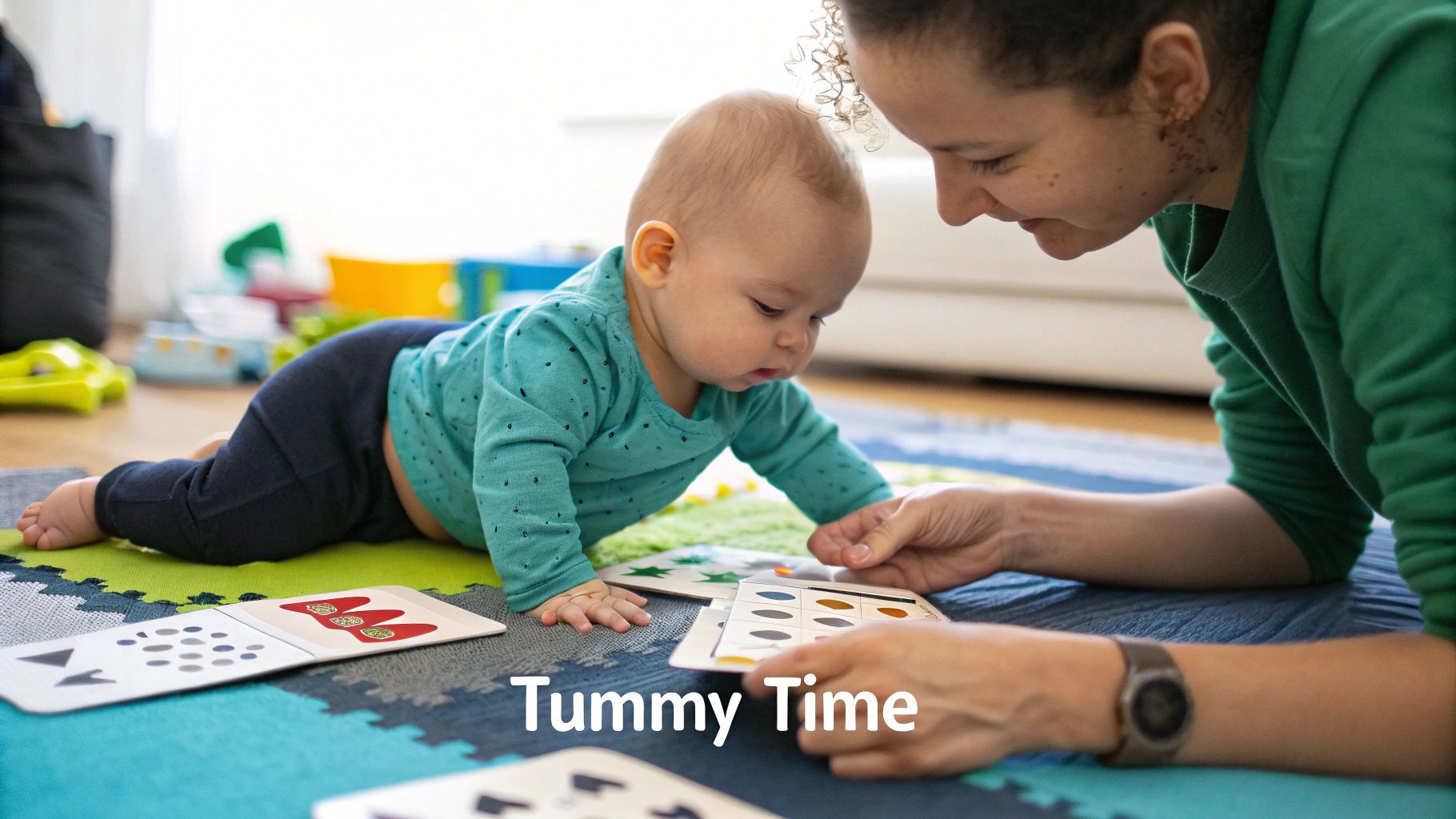
Presenting these striking images during tummy time captures their focus, encouraging them to lift their head and engage their muscles for longer periods. This transforms a purely physical workout into a multi-sensory experience that supports both visual tracking and cognitive development.
How to Implement This Activity
Getting started is simple and can be adapted to what you have on hand. The key is placing the visual aids at your baby’s eye level to motivate them to look up and around.
- Use Specially Designed Cards: Place high-contrast flashcards, like those found in Grow With Me developmental kits, in a semi-circle in front of your baby. This encourages them to shift their gaze and turn their head.
- Create DIY Visuals: You don’t need fancy equipment. Draw bold shapes like circles, stripes, or checkerboard patterns on white cardstock with a black marker.
- Utilise Books and Mats: Many board books and play mats are designed with high-contrast sections specifically for this purpose. Prop a book open in front of them or lay them on a visually stimulating mat.
Tips for Success
To make this one of the most effective activities for a 4 month old, consistency and comfort are essential.
- Timing is Key: Aim for 2-3 short sessions daily, starting with just a few minutes and gradually increasing as your baby's strength grows. Always avoid tummy time for at least 30 minutes after a feed to prevent discomfort.
- Provide Support: If your baby struggles, place a rolled-up towel or small cushion under their chest and armpits for extra support. This slight elevation can make a big difference.
- Get Involved: Lie on the floor facing your baby. Your face is one of their favourite things to look at! Talk to them and point out the patterns to make it an interactive bonding experience.
To enhance these sessions and make them more engaging, it's helpful to choose appropriate supports; discover the best tummy time toys to keep your little one happy and motivated. For a deeper understanding of the visual science behind this activity, you can learn more about the power of high-contrast images for baby development.
2. Grasping and Reaching for Textured Toys
By four months old, your baby's random hand movements are becoming more purposeful, marking the beginning of voluntary grasping and improved hand-eye coordination. Offering a variety of textured toys is one of the most effective activities for a 4 month old, as it encourages them to reach, grasp, and explore objects with their hands and mouth. This sensory exploration is fundamental for building neural pathways and developing both cognitive and fine motor skills.
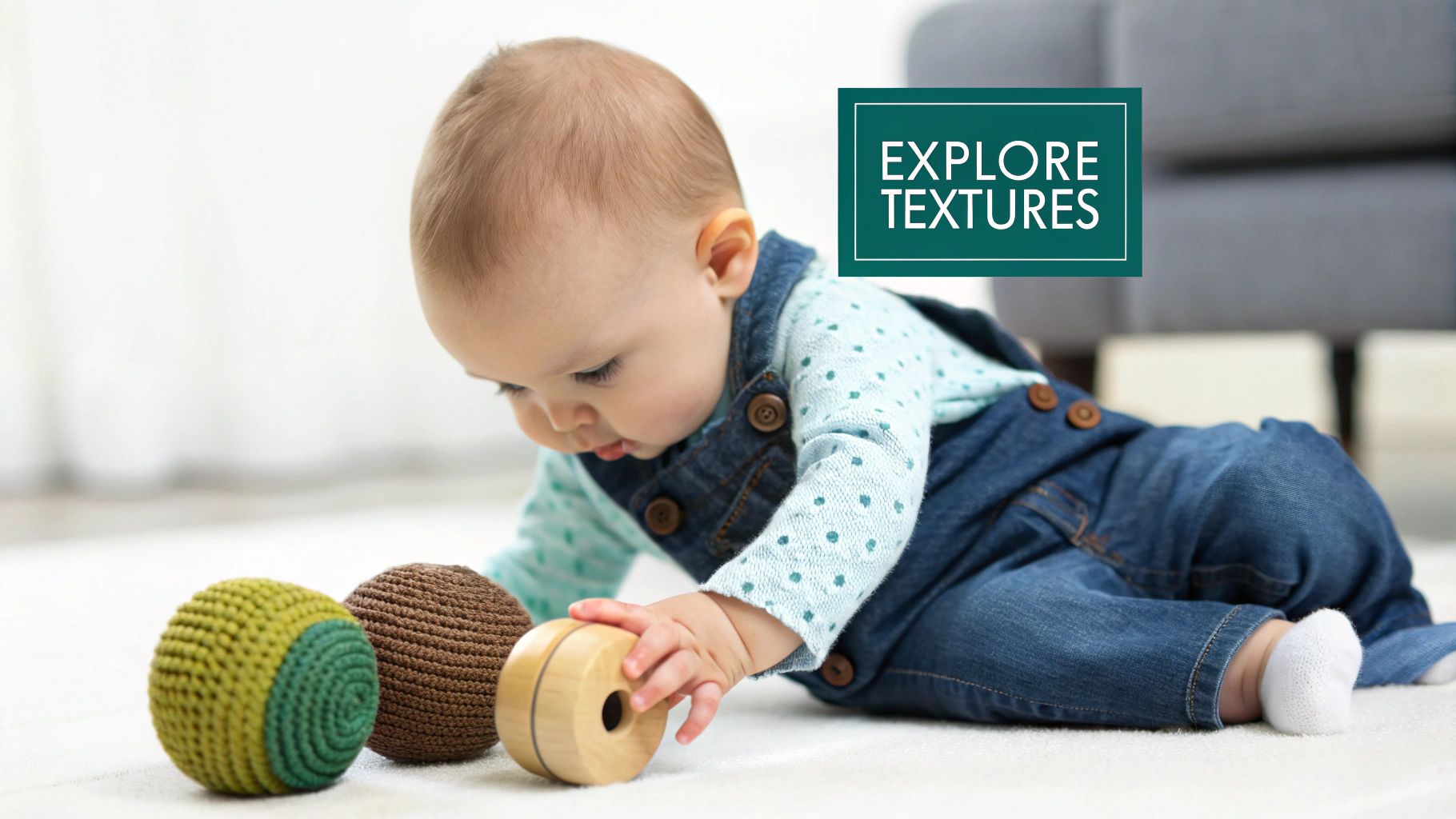
Presenting toys with different surfaces-such as soft fabrics, crinkly materials, bumpy silicone, and smooth wood-stimulates their sense of touch and keeps them engaged. As they manipulate these objects, they learn about cause and effect (e.g., shaking a rattle makes a sound) and refine the small muscle movements necessary for future skills like self-feeding and writing.
How to Implement This Activity
Creating a rich sensory environment for grasping is simple and focuses on variety and accessibility. The goal is to present intriguing objects within your baby's reach to motivate their natural curiosity.
- Offer a Sensory Mix: Provide a small selection of toys with distinct textures. Think about a crinkly fabric toy, a silicone teething ring with different surface patterns, and a smooth wooden rattle.
- Use Themed Kits: Curated sets, like the wooden teething toys found in Grow With Me boxes, are specifically designed to offer varied textures that are safe and engaging for this age.
- DIY Texture Squares: Sew or glue small squares of different fabrics (velvet, corduroy, satin, fleece) onto a larger piece of felt for a homemade sensory blanket.
Tips for Success
To maximise the developmental benefits of this activity, focus on safety, variety, and interaction.
- Rotate Toys: Keep things fresh and interesting by rotating the available toys every few days. Offering just two or three options at a time prevents your baby from feeling overwhelmed.
- Ensure Supported Positioning: Place your baby in a secure, supported position, such as on a play mat or in a bouncer, where their hands are free to explore safely.
- Narrate the Experience: Talk to your baby about what they are feeling. Use simple descriptive words like, "That feels bumpy," or "This one is so smooth," to build their vocabulary and sensory awareness.
- Prioritise Safety: Always ensure toys are made from non-toxic, BPA-free materials. Regularly inspect them for any loose parts, splinters, or damage that could pose a choking hazard.
For more ideas on how to support this crucial developmental stage, you can explore a curated list of the best baby toys for fine motor skills to enhance your little one's learning through play.
3. Mirror Play and Self-Recognition Activities
At four months, your baby is becoming fascinated with faces, and one of the most captivating faces they can discover is their own. Mirror play is a powerful activity that capitalises on this natural curiosity, laying the groundwork for self-awareness and cognitive development. While they won't recognise themselves just yet, interacting with "the other baby" in the mirror helps them explore facial expressions, track movements, and understand cause and effect.
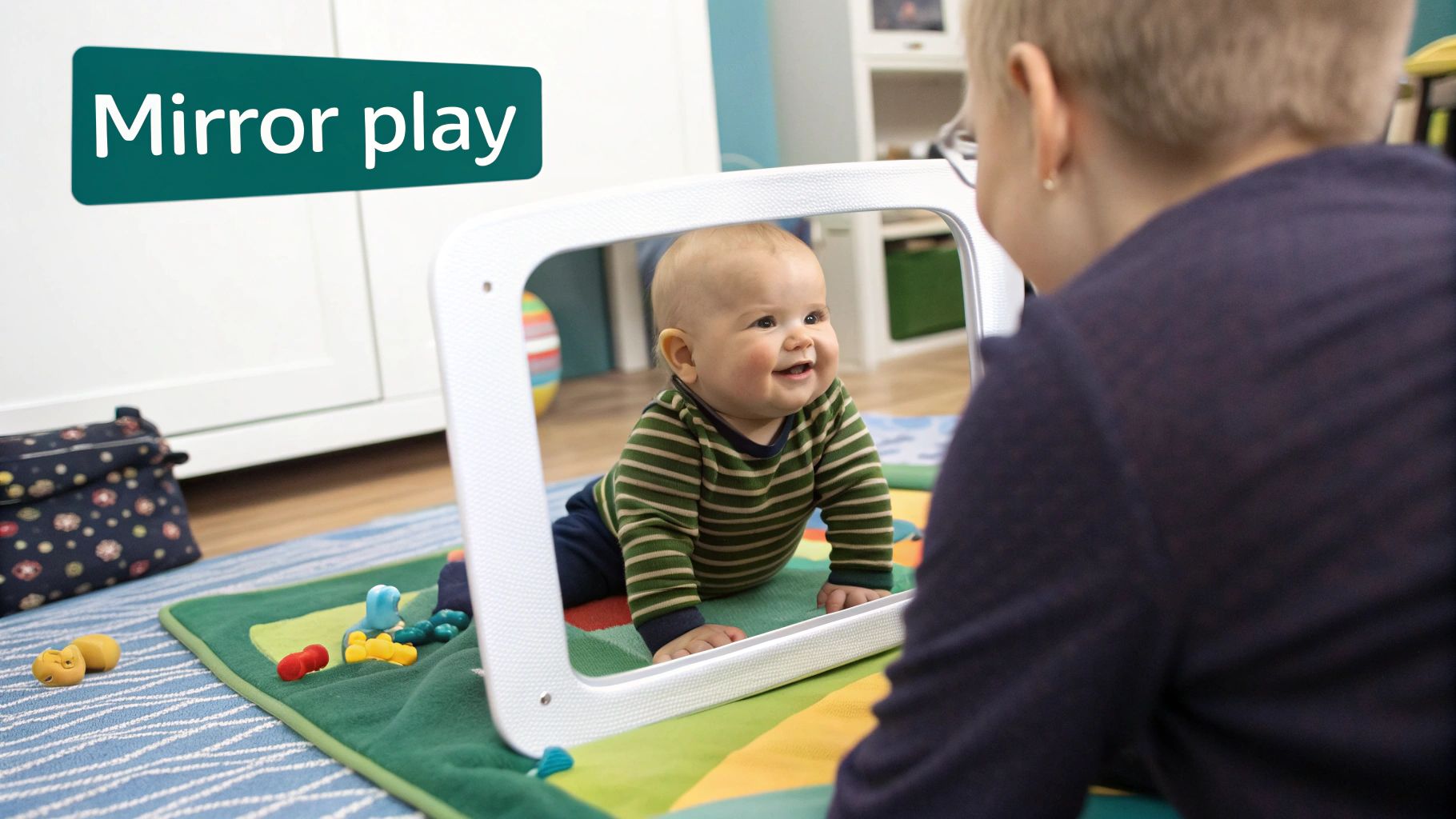
This simple yet profound interaction supports visual tracking as they watch their reflection move. It also enhances social and emotional skills as they smile, coo, and babble at the baby looking back at them. This activity transforms simple floor time into a dynamic and engaging learning experience, making it one of the most enriching activities for a 4 month old.
How to Implement This Activity
Introducing mirror play is straightforward and can be integrated into various parts of your baby's day. The crucial element is using a baby-safe, shatterproof mirror.
- During Tummy Time: Place a baby-safe acrylic mirror, like those included in Grow With Me developmental kits, in front of your baby. This encourages them to lift their head to get a better look at their reflection.
- Incorporate into Play Gyms: Many play mats and activity centres feature reflective mylar surfaces or small, securely attached mirrors for babies to discover.
- Wall-Mounted Mirrors: Securely mount a large, child-safe mirror at floor level in their play area. This allows them to see their whole body move as they kick and wiggle.
- Use Portable Toys: Small, handheld shatterproof mirror toys are perfect for lap play or keeping them engaged while in their bouncer or high chair.
Tips for Success
To maximise the developmental benefits and ensure safety, keep these pointers in mind.
- Safety First: Always use acrylic, shatterproof mirrors designed specifically for babies. Ensure any wall-mounted mirrors are securely fixed to prevent them from tipping over.
- Narrate the Experience: Get down on the floor with them and talk about what you see. Say things like, "Look at that happy baby!" or "You're waving your arms!"
- Combine with Songs: Sing songs with actions, like "If You're Happy and You Know It," while in front of the mirror. This helps connect their movements with the reflection.
- Position for Discovery: Place toys near the mirror so they can see themselves interacting with different objects, adding another layer to their exploration.
4. Sensory Baskets with Natural Materials
Inspired by educational philosophies like Montessori, sensory baskets offer your baby a chance for independent, tactile exploration in a safe and contained way. At four months old, babies are learning about their world primarily through touch and taste. A carefully curated basket filled with natural, safe materials provides a rich tapestry of textures, shapes, and weights for them to discover, encouraging reaching, grasping, and cognitive development.
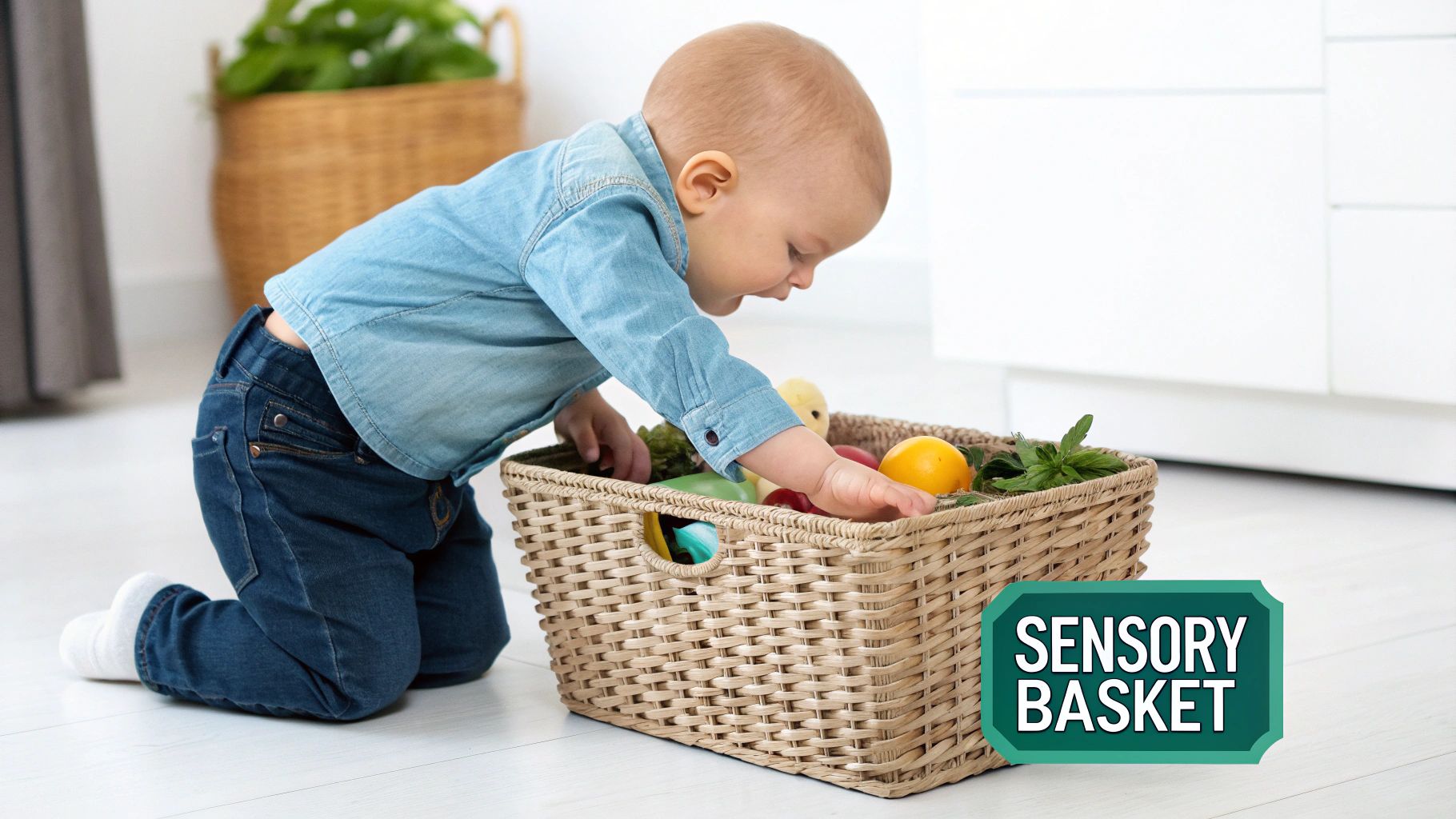
This simple setup fosters your baby's innate curiosity and supports their developing motor skills. The basket itself becomes a focal point, inviting them to engage with diverse objects, which stimulates their senses and builds foundational problem-solving skills as they figure out how to handle each item.
How to Implement This Activity
Creating a sensory basket is straightforward and can be customised with items you find around your home and garden. The goal is to provide a variety of sensory experiences.
- Gather Natural Items: Collect a small assortment of safe, natural objects. Think a smooth wooden spoon, a large, smooth pebble (too big to be a choking hazard), a soft piece of silk or muslin cloth, and a large, clean pinecone.
- Use Themed Baskets: Themed baskets, like those in Grow With Me kits, can offer seasonal items that introduce new smells and textures in a curated way.
- Incorporate Household Objects: Mix in baby-safe kitchen utensils like a metal whisk or silicone spatula with fabric scraps of different textures, such as corduroy or velvet.
- Create 'Sound' Items: Place crinkly paper or dried leaves inside a securely sealed, clear plastic pouch for a satisfying auditory and visual experience.
Tips for Success
Safety and variety are the cornerstones of making this one of the most enriching activities for a 4 month old.
- Supervise Closely: Always stay with your baby during sensory play to ensure they are exploring safely, especially since they will be mouthing the objects.
- Safety First: Choose items larger than 1.25 inches in diameter to prevent choking. Regularly inspect all items for splinters, loose parts, or any signs of wear and tear.
- Keep it Fresh: Rotate the contents of the basket every week or so to maintain your baby's interest and introduce new sensory information. Start with 5-7 items to avoid overstimulation.
- Hygiene is Crucial: Since everything will likely end up in your baby's mouth, be sure to wash and sanitise the items regularly.
5. Interactive Play with Soft Rattles and Sound Toys
At four months old, your baby is beginning to grasp a fundamental cognitive concept: cause and effect. Interactive play with soft rattles and sound toys is one of the best activities for a 4 month old to explore this new understanding. When your little one grasps and shakes a toy, the resulting sound provides immediate, rewarding feedback, reinforcing the powerful connection between their action and the reaction.
This simple interaction is a huge developmental leap. Using toys with varied sounds, like gentle chimes, crinkles, or bells, provides crucial auditory stimulation. Soft rattles are also ideal as they are gentle on emerging teeth and gums, making them safe for the inevitable mouthing and exploration that accompanies this stage.
How to Implement This Activity
Encouraging this type of play is all about providing the right tools and opportunities for discovery. The goal is to let your baby lead the exploration while you facilitate their learning.
- Offer a Variety of Sounds: Introduce toys with different auditory feedback. This could include the Grow With Me organic cotton soft rattles, wooden rattles with gentle chime sounds, or crinkly fabric toys.
- Place Toys Strategically: Position a rattle just within their reach to encourage them to grasp for it. This helps develop hand-eye coordination and fine motor skills.
- Model the Action: Gently take your baby’s hand and help them shake the rattle. They will quickly learn to imitate the movement on their own to produce the sound.
- Narrate the Play: Use simple language to describe what is happening. Saying, "You shook the rattle and it made a noise!" helps build their understanding of cause and effect.
Tips for Success
To maximise the benefits of this activity, focus on interaction, safety, and novelty.
- Choose Appropriate Volumes: Ensure the sounds are not too loud or startling for your baby’s sensitive ears. A gentle, pleasant sound is most effective.
- Rotate the Toys: Keep things interesting by rotating which rattles and sound toys are available. This prevents habituation and encourages renewed curiosity.
- Prioritise Safety and Hygiene: As these toys will spend a lot of time in your baby's mouth, ensure they are made from safe, non-toxic materials. Clean them frequently with warm, soapy water.
- Engage Together: Make this a bonding experience. Show your excitement when they make a sound, which reinforces their efforts and makes playtime more enjoyable for both of you.
6. Responsive Music and Singing Sessions
At four months, your baby's brain is rapidly developing its auditory processing and language centres, making music a powerful tool for growth. Responsive music and singing sessions are more than just a sweet tune; they are a dynamic activity that combines auditory stimulation, physical movement, and deep emotional bonding. By singing familiar songs while gently moving your baby’s arms and legs to the rhythm, you are actively strengthening neural pathways crucial for language acquisition and emotional regulation.
This multi-sensory experience helps your baby connect sounds with movement and emotion. The repetition in nursery rhymes supports early memory skills, while your expressive voice and loving touch provide a sense of security, making it one of the most enriching activities for a 4 month old.
How to Implement This Activity
Creating a musical session is simple and requires nothing more than your voice and enthusiasm. The goal is to make it interactive and responsive to your baby’s cues.
- Classic Nursery Rhymes: Sing songs like 'Twinkle, Twinkle, Little Star' or 'Row, Row, Row Your Boat' while gently swaying your baby or moving their legs in a bicycling motion.
- Interactive Songs: Use action songs like 'If You're Happy and You Know It', clapping your baby’s hands together or tapping their feet on the "clap your hands" part.
- Create Your Own Tunes: Make up simple songs about daily routines, naming body parts ("This is baby's little nose") or describing what you see. The personal touch makes it even more special.
- Calming Lullabies: Incorporate gentle, soothing lullabies into your wind-down routine before naps or bedtime to create a calm and predictable transition to sleep.
Tips for Success
To maximise the benefits and keep your baby engaged, focus on connection and consistency.
- Keep it Simple and Repetitive: Babies thrive on predictability. Repeating the same simple songs helps them learn and anticipate the sounds and movements, which builds cognitive skills.
- Maintain Eye Contact: Your facial expressions are a huge part of the communication. Smile, make eye contact, and use varied, engaging tones to hold their attention.
- Gentle Movements: Always move your baby’s limbs gently and rhythmically, following their lead. If they resist a movement, don't force it.
- Short and Sweet: Keep sessions brief, around 5-10 minutes, to prevent overstimulation. A few songs several times a day is more effective than one long session.
7. Peek-a-Boo and Object Permanence Games
Around four months, your baby begins to grasp a monumental cognitive concept: object permanence. This is the understanding that people and things continue to exist even when they are out of sight. Playing simple hiding games like peek-a-boo is a delightful and powerful way to support this developmental milestone. This classic game is more than just a source of giggles; it's a foundational lesson in memory, anticipation, and problem-solving.
Engaging in these repetitive disappearing and reappearing acts helps your baby build trust and security, as they learn that what disappears will return. This playful interaction strengthens your bond while laying the groundwork for more complex cognitive skills, making it one of the most rewarding activities for a 4 month old.
How to Implement This Activity
The beauty of this activity lies in its simplicity. You can play it anywhere, anytime, with or without props. The goal is to create a fun, predictable pattern of hiding and revealing.
- Classic Peek-a-Boo: The simplest version involves using your hands to cover your face and then revealing it with a cheerful "Peek-a-boo!" or "There you are!"
- Use a Muslin or Scarf: Gently drape a lightweight muslin cloth over your face or a favourite soft toy. Ask, "Where did it go?" before pulling the cloth away with an excited reveal.
- Partial Hiding: Begin by only partially hiding a toy under a blanket, leaving a bit visible. This encourages your baby to reach and uncover it themselves, giving them a sense of control.
Tips for Success
To make these games both fun and developmentally effective, focus on repetition and positive reinforcement.
- Be Expressive: Use an animated tone of voice and exaggerated facial expressions. Your excitement is contagious and makes the game more engaging.
- Start Slowly: In the beginning, make the "hiding" part very brief to avoid causing any anxiety. As they get comfortable, you can extend the time slightly.
- Consistent Language: Use the same simple phrases like, "Where's teddy?" and "There he is!" This helps your baby anticipate the sequence and understand the game.
- Keep it Short and Sweet: Play for just a few minutes at a time, watching for cues that your baby is still engaged and happy. Stop before they become overstimulated or tired.
These games are a cornerstone of early cognitive development. To explore this concept further, you can learn more about what object permanence is and how to nurture it.
Comparison of 7 Activities for 4-Month-Olds
| Activity | Implementation Complexity (🔄) | Resource Requirements (⚡) | Expected Outcomes (📊) | Ideal Use Cases (💡) | Key Advantages (⭐) |
|---|---|---|---|---|---|
| Tummy Time with High-Contrast Visual Aids | 🔄 Low — simple setup, needs supervision | ⚡ Low — cards/mat; inexpensive | 📊 Builds neck/shoulder/core strength; longer engagement | 💡 Short sessions 2–3× daily; 4–6 months optimal | ⭐ Supports motor milestones; prevents plagiocephaly |
| Grasping and Reaching for Textured Toys | 🔄 Low — offer and rotate toys | ⚡ Moderate — variety of safe textures; cleaning | 📊 Fine motor skills; hand‑eye coordination; sensory processing | 💡 Supported sitting or mat play; rotate toys regularly | ⭐ Promotes tactile learning and grasp control |
| Mirror Play and Self-Recognition Activities | 🔄 Low–Moderate — secure mounting/placement | ⚡ Low — shatterproof mirror or reflective toy | 📊 Body awareness; visual tracking; early self‑recognition | 💡 Tummy time or floor play; varied angles for novelty | ⭐ Encourages self‑directed exploration; screen‑free |
| Sensory Baskets with Natural Materials | 🔄 Moderate — curate, size‑check, inspect items | ⚡ Moderate — natural items, regular sanitation | 📊 Sensory processing; independent exploration; fine motor | 💡 Supervised independent play; rotate monthly for novelty | ⭐ Fosters autonomy; sustainable, multi‑sensory play |
| Interactive Play with Soft Rattles and Sound Toys | 🔄 Low — hand toys placed within reach | ⚡ Low — soft rattles; occasional battery/electronic care | 📊 Cause‑and‑effect; auditory processing; grasping skills | 💡 Reaching practice and shared play; avoid loud volumes | ⭐ Immediate feedback; encourages repeated practice |
| Responsive Music and Singing Sessions | 🔄 Low — parent‑led, no special setup | ⚡ Very low — voice; optional simple instruments | 📊 Language exposure; rhythm recognition; emotional bonding | 💡 Integrate into routines; 5–10 min sessions to sustain interest | ⭐ Strong for language & attachment; no materials needed |
| Peek‑a‑Boo and Object Permanence Games | 🔄 Low — simple hiding/revealing actions | ⚡ Minimal — hands or cloths | 📊 Object permanence; memory; anticipation skills | 💡 Short interactive rounds during playtime; repeatable | ⭐ Enhances cognitive development and bonding |
Creating a Foundation of Playful Learning
Navigating the world of infant development can feel like a monumental task, but as we've explored, creating a rich and stimulating environment for your little one is built on simple, joyful interactions. The collection of activities for a 4 month old detailed in this article, from engaging in tummy time with high-contrast cards to the simple delight of a peek-a-boo game, are more than just ways to pass the time. They are the fundamental building blocks for your baby’s cognitive, physical, and emotional growth.
Each activity serves a distinct purpose. Grasping for a textured toy isn’t just about holding an object; it’s a complex exercise in developing fine motor skills and hand-eye coordination. Mirror play goes beyond a cute reflection; it’s your baby's first step towards self-awareness and social recognition. These moments are where crucial neural pathways are formed, laying the groundwork for more complex skills like problem-solving and communication later on.
Key Takeaways for Purposeful Play
Remembering these core principles will help you make the most of your playtime together:
- Consistency Over Duration: Short, frequent bursts of focused play are far more effective than long, overwhelming sessions. A few minutes of dedicated interaction several times a day will yield better results and keep your baby happily engaged.
- Follow Your Baby’s Cues: Your four-month-old is already an expert communicator. Pay close attention to their signs of interest, excitement, or overstimulation. If they turn their head away or become fussy, it’s a clear signal that it’s time for a break or a change of pace.
- Celebrate Small Victories: Every tiny milestone, whether it's the first time they successfully roll from their tummy to their back or purposefully bat at a hanging toy, is a significant achievement. Acknowledging these moments with praise and encouragement reinforces their efforts and builds their confidence.
By integrating these activities for a 4 month old into your daily routine, you are not just entertaining your baby. You are actively shaping their brain, strengthening your bond, and fostering a lifelong love of learning. You are their first and most important teacher, and the simple, purposeful play you share today is the most valuable lesson you can offer. This foundational period is fleeting, and embracing it with intention and joy will create a powerful and positive start to their developmental journey.
Ready to take the guesswork out of playtime? The Grow With Me subscription box delivers expertly curated, stage-appropriate toys directly to your door, perfectly aligning with the developmental milestones and activities for a 4 month old we’ve discussed. Discover how our kits can support your baby's journey and make every moment a learning opportunity at Grow With Me.