
A Guide to Newborn Development Toys
When you think of "toys" for a brand-new baby, you might not picture much. But what we call newborn development toys are actually simple, thoughtfully designed tools that kickstart your baby's journey of discovery. They focus on the essentials: bold, high-contrast images, gentle sounds, and interesting textures that help build the first, most fundamental skills.
Think of them as your baby’s first introduction to the world around them.
The Real Purpose of Newborn Play
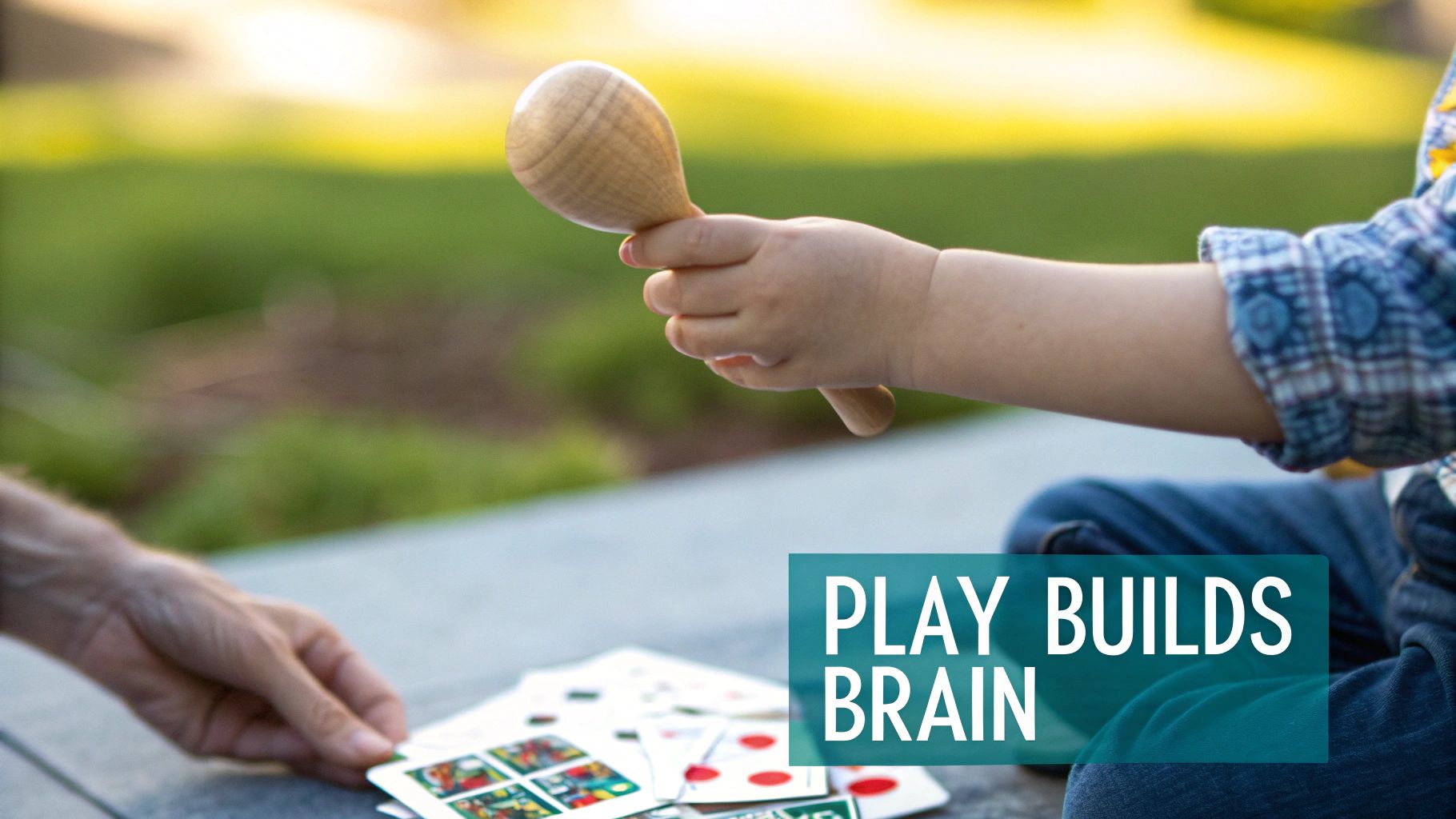
Welcome to the wonderful, and surprisingly busy, world of newborn play. That seemingly simple shake of a rattle or a focused gaze at a black-and-white card is actually your baby’s brain hard at work. For a newborn, ‘play’ isn't just a bit of fun; it’s the essential job of early development.
Every interaction is like a tiny spark, forging crucial new connections in their brain. These neural pathways are the very bedrock for all future learning, perception, and physical coordination. It’s not about finding the flashiest gadget, but about providing the right kind of gentle stimulation at just the right time.
Building a Foundation Through Play
The real magic of newborn toys is in their simplicity. They are carefully designed to match what your baby can actually perceive. A newborn's vision, for instance, is still blurry and developing, which is precisely why bold, black-and-white patterns are so incredibly captivating for them. In the same way, soft, gentle sounds are far more engaging than loud or complex noises.
This deliberate approach supports key areas of growth:
- Visual Development: High-contrast cards and images help strengthen your baby's eye muscles, improving their ability to focus and track objects.
- Auditory Skills: Gentle rattles and soft crinkle sounds teach babies how to locate where a sound is coming from and begin to understand cause and effect.
- Motor Skills: Placing a toy just within their line of sight encourages those first instinctive bats and reaches, which eventually lead to grasping.
- Sensory Exploration: A variety of textures, from smooth, natural wood to soft, crinkly fabric, introduces them to a world of new tactile sensations.
The right toy at the right time meets your baby exactly where they are developmentally. It offers a challenge that is achievable, building their confidence and curiosity without causing them to feel overwhelmed.
Of course, part of understanding the value of play is also recognising when something isn't working. Getting to grips with potential challenges, like understanding why babies might stop playing, can offer important insights into their development. Ultimately, these early, simple play experiences are laying a powerful foundation for a lifetime of learning.
Mapping Your Baby's First Year Milestones
Your baby's first year is a whirlwind of incredible growth. It feels like new skills are popping up almost overnight! Understanding these developmental milestones helps you make sense of everything that’s happening inside that amazing little brain and body.
Think of it less as a strict checklist and more as a gentle roadmap for their journey. By knowing what's coming next, you can choose newborn development toys that meet your baby right where they are, offering the perfect mix of support and a gentle nudge forward. This way, playtime becomes more than just fun—it's foundational.
The First Three Months: Vision and Reflexes
In the very beginning, your baby’s world is a soft, gentle blur. Their vision is still coming into focus, which is why they find high-contrast, black-and-white patterns so captivating. For these first few weeks, their movements are mostly reflexive, like that instinctive, heart-melting grasp you feel when you place a finger in their tiny palm.
Play at this stage is all about simple sensory input. Your role is to be their guide, providing gentle, engaging things to look at and touch that help their brain start wiring itself up.
- Visual Tracking: Hold high-contrast cards about 8-12 inches from their face. This encourages their eyes to focus and follow, strengthening those crucial eye muscles.
- Grasping Reflex: Pop a lightweight, easy-to-hold rattle in their hand to stimulate that natural grip.
- Head Control: During supervised tummy time, place an interesting toy just in front of them. It’s the perfect motivation to try and lift their head, building vital neck and upper body strength.
Four to Six Months: Reaching and Grasping
Now things are getting interesting! As your baby's vision sharpens and their coordination improves, they start moving with real purpose. That reflexive grasp from the newborn days is now turning into a deliberate act of reaching for and holding onto things. They've also discovered their hands and feet, which often end up in their mouth for a bit of extra exploration!
This is also when the magic of cause-and-effect begins to dawn on them. They shake a rattle and it makes a sound—and they start to make the connection.
At this stage, toys that are easy to grasp, safe to mouth, and make gentle sounds are perfect. They empower your baby to interact with their world and learn that their actions can create a reaction.
Seven to Nine Months: Sitting and Exploring
Mobility is taking on a whole new meaning as your baby learns to sit up on their own, giving them a completely new perspective on the world. With their hands now free, they can really get down to the business of exploring toys in greater detail, passing them from one hand to the other and turning them over to inspect every angle.
The famous pincer grasp—using the thumb and forefinger to pick up small objects—starts to emerge around now, which is a huge leap in fine motor skills. At the same time, their brain is getting to grips with concepts like object permanence; they’re starting to understand that something still exists even when they can't see it. For a deeper dive, you can learn more about what developmental milestones are and why they matter in our detailed guide.
Ten to Twelve Months: Problem Solving and Mobility
The final stretch of the first year is full of action. Many babies are now crawling, pulling themselves up to stand, and maybe even taking those first wobbly steps. This amazing new mobility opens up an entire world of exploration and learning.
Their cognitive skills are taking a big leap forward, too. They can now engage in simple problem-solving, like figuring out how to get a toy that’s just out of reach or trying to stack one block on top of another. Their play becomes much more complex and intentional.
This growing awareness is reflected in how parents shop. The global baby learning toys sector was valued at approximately USD 16.7 billion, a figure that shows just how much parents are focusing on early development. This has prompted major UK brands to expand their lines of developmental toys, and you can explore the research on the baby learning toys market to find out more.
To help you visualise this journey, here’s a quick summary of the key milestones in the first year and the kinds of toys that can support your little one at each step.
Developmental Milestones and Supportive Toy Types
| Age Range (Months) | Key Developmental Focus | Examples of Supportive Toys |
|---|---|---|
| 0-3 | Sensory Stimulation, Visual Tracking, Head Control | High-contrast cards, soft rattles, unbreakable mirrors, play gyms |
| 4-6 | Reaching, Grasping, Hand-Eye Coordination, Mouthing | Teething toys, soft blocks, fabric books, toys that make gentle sounds |
| 7-9 | Sitting Up, Fine Motor Skills (Pincer Grasp), Object Permanence | Stacking rings, shape sorters, pop-up toys, balls |
| 10-12 | Mobility (Crawling/Walking), Problem-Solving, Cause-and-Effect | Push walkers, simple puzzles, stacking cups, musical instruments |
This table is just a guide, of course. Every baby develops at their own unique pace, so the most important thing is to observe your child and offer toys that spark their curiosity and match their current abilities.
How to Choose Safe and Effective Baby Toys
Walking into a toy shop, or even just browsing online, can feel a bit much. With a seemingly endless sea of options, how do you pick out newborn development toys that are genuinely safe and actually helpful? The secret isn't to go for the flashiest things on the shelf, but to focus on a few key principles of smart, safe selection.
Let's face it, your baby's main method for exploring the world is with their mouth. This simple fact makes safety your number one job. Every toy you bring home needs to be a trusted friend on their developmental journey, not a hidden hazard. When you're confident in their safety, you can relax and just enjoy the magic of playtime.
Prioritise Safety Above All Else
Before any toy can be a good learning tool, it has to be completely safe for your curious little one. Newborns don't have the coordination to be gentle with their things, so sturdy, well-made toys are an absolute must.
Here’s a quick safety checklist to keep in mind:
- Non-Toxic Materials: Look for toys made from natural materials like wood, organic cotton, or food-grade silicone. Always double-check for labels that say BPA-free, phthalate-free, and confirm any paints used are non-toxic.
- Choking Hazard Check: A classic rule of thumb is the toilet paper roll test. If any part of the toy can fit through the cardboard tube, it's too small for a baby who puts everything in their mouth.
- Secure Construction: Give the toy a good once-over. Make sure there are no loose parts, sharp edges, or tiny pieces that could break off. Seams on soft toys should be stitched tight, and wooden toys should be sanded perfectly smooth.
Remember, simplicity is often a sign of safety. For the youngest babies, toys without batteries, complicated moving parts, or small decorative bits are generally a much safer bet. They minimise the risks while still offering maximum sensory learning.
Focus on Developmental Purpose
Once you're satisfied a toy is safe, you can turn your attention to its developmental value. The best newborn development toys are the ones designed with your baby's current skills in mind. They provide just the right amount of stimulation to encourage growth without becoming overwhelming or frustrating.
This timeline gives you an idea of how quickly a baby's needs change, helping you make the right choices along the way.
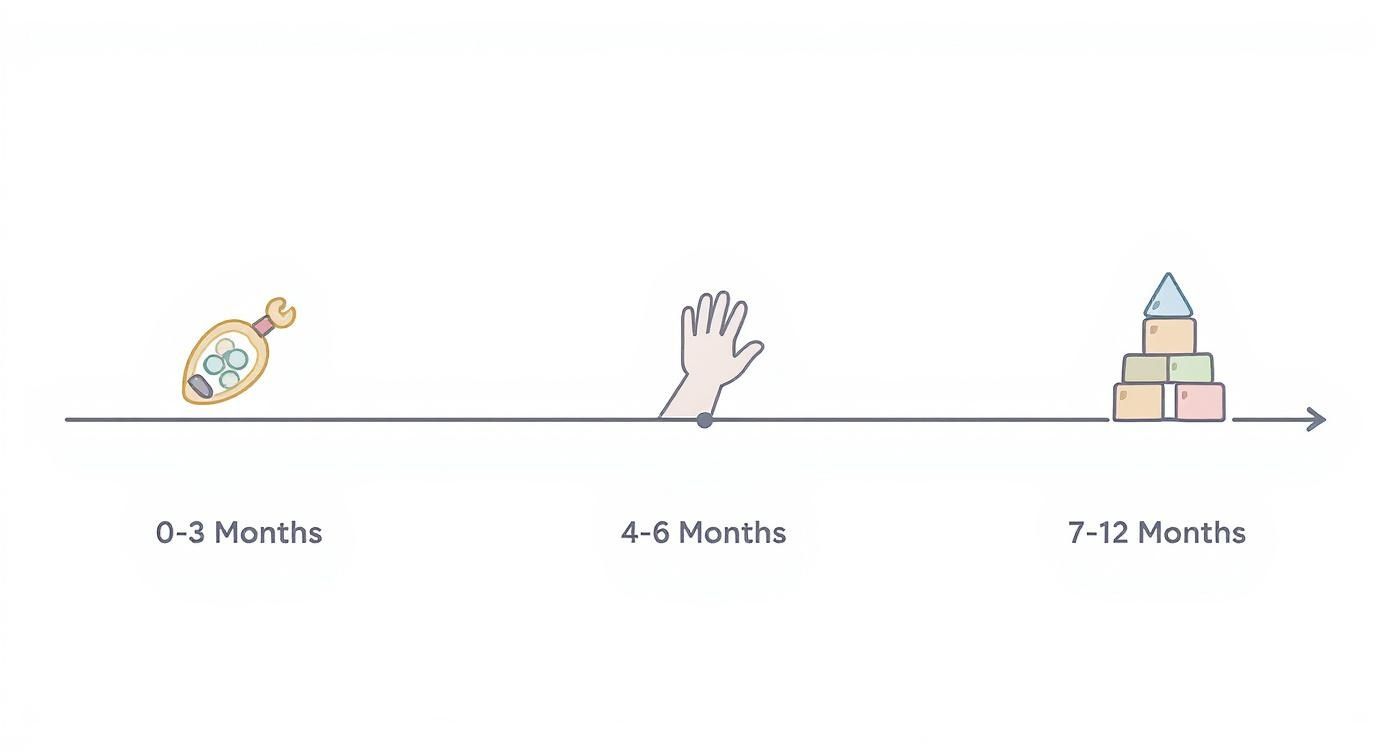
As you can see, the journey from simply staring at a rattle to purposefully stacking blocks is a fast one. Each of these stages needs a different kind of tool for the job.
For a newborn, this means picking toys that appeal to their brand-new senses. High-contrast colours, especially black and white, are vital because their vision is still fuzzy; these bold patterns are simply easier for them to see and track. In the same way, toys with different textures—soft fabrics, smooth wood, bumpy silicone—stimulate their sense of touch, which is one of their most powerful learning tools. A lightweight rattle with a handle that's easy for tiny fingers to grip encourages those first clumsy attempts at reaching and holding, laying the groundwork for motor skills to come.
By choosing toys that match these very early milestones, you're doing more than just keeping them entertained. You're giving them the precise tools they need to start making sense of the world around them.
The Essential Toy Categories for Newborns
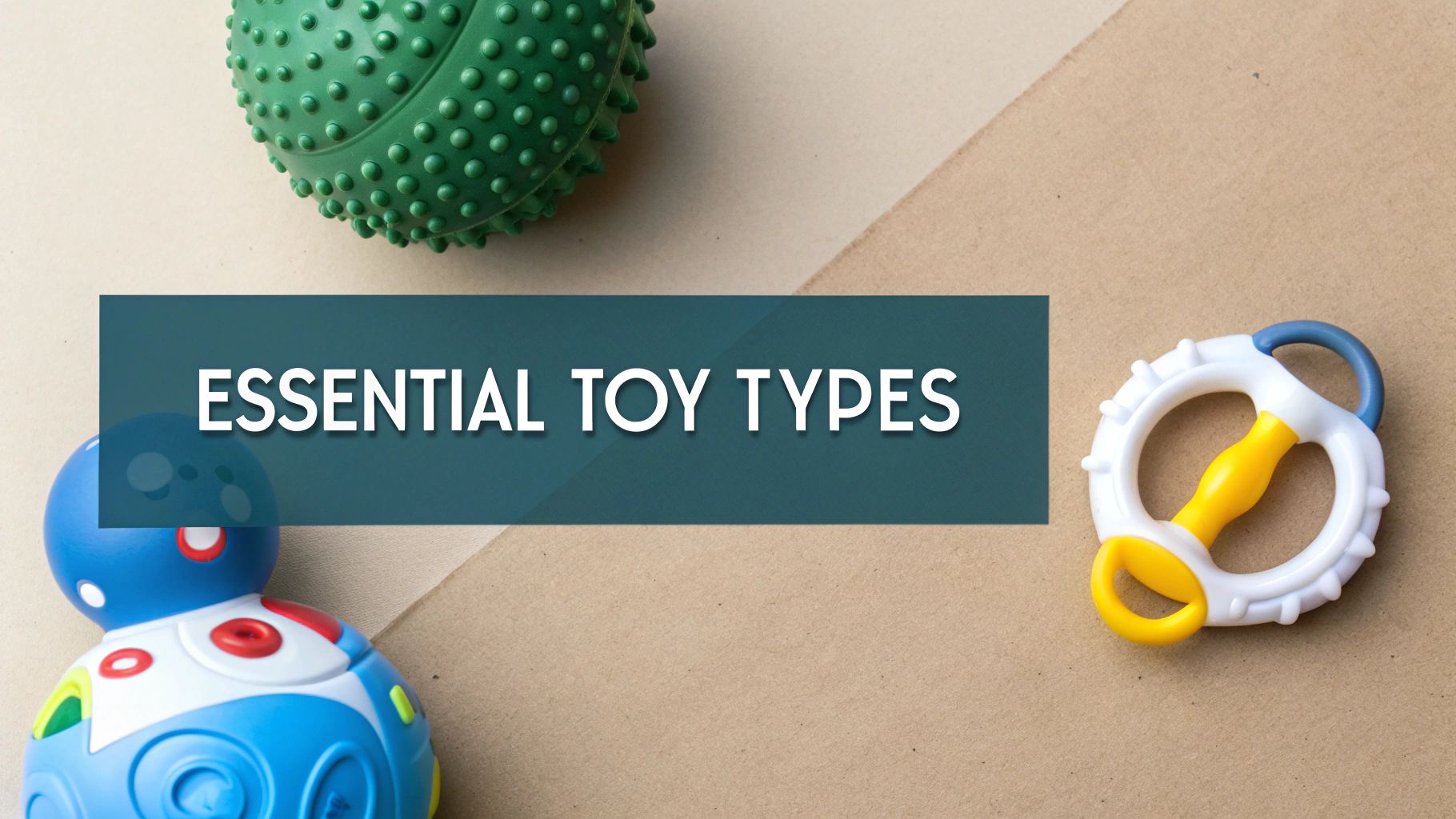
Walking into a baby shop can feel a bit overwhelming. The sheer number of toys is dizzying! But it helps to know they generally fall into a few key categories, each designed to nurture a specific area of your newborn's development.
Thinking about it this way makes it much simpler to choose toys that offer a well-rounded play experience. And remember, the best toys are often multi-talented. A soft crinkle book, for instance, isn't just a sensory toy; it’s also encouraging your baby to grasp (developing motor skills) and follow the pictures as you turn the pages (a cognitive workout!).
Sensory Toys: Lighting Up Their Little World
Right from the start, your baby is a tiny detective, using their senses to piece together what this big, new world is all about. Sensory toys are designed to give them interesting information to process through sight, sound, and touch. They are the tools your baby uses to build their first library of experiences.
The goal here is to find items that offer rich sensory feedback without being over-the-top. These are the toys that help forge those crucial early brain connections.
- High-Contrast Cards: A newborn’s vision is still developing, so the clean, bold lines of black-and-white patterns are incredibly captivating.
- Crinkle Books: That gentle rustling sound and interesting feel are a brilliant combination for stimulating both hearing and touch.
- Textured Balls: Lightweight balls with various bumps, ridges, and fabrics invite your baby to explore with their hands and, inevitably, their mouth!
If you want to dive deeper into this, our guide to sensory toys for babies has loads more information.
Motor Skill Toys: Getting Those Little Limbs Moving
This category is all about encouraging action. Motor skill toys are the personal trainers of the baby world, motivating everything from a reflexive kick to the first purposeful reach. They help your baby build strength, coordination, and control over their own body.
A play gym is a classic example—it’s like a complete workout station for your newborn. As they lie on their back or tummy, the dangling toys encourage them to bat, kick, and reach, strengthening core, neck, and back muscles. Even a simple, lightweight rattle is perfect for tiny hands to eventually learn to grasp, hold, and shake.
Cognitive Toys: Sparking Early Curiosity
It might sound advanced, but cognitive toys are all about laying the groundwork for thinking and learning. They introduce your baby to fundamental concepts like cause and effect (‘when I shake this, it makes a noise!’) and object permanence.
When your baby stares at their reflection in a baby-safe mirror, they're embarking on a journey of self-awareness. It’s a beautifully simple interaction with a surprisingly profound cognitive impact.
This is where things like unbreakable mirrors come in. Babies are fascinated by faces, and their own reflection is endlessly interesting, helping them learn to focus. As mentioned, that rattle does double duty here, teaching a direct lesson in cause and effect every time they shake it.
It's clear that parents are increasingly looking for these kinds of thoughtful playthings. In fact, the UK market for newborn development toys is expected to hit USD 1.576 billion by 2035, partly thanks to a 30% rise in demand for safe, eco-friendly materials. It’s a big shift that shows just how much we value giving our little ones the best possible start.
Simplify Playtime with Curated Toy Kits
Keeping up with your baby’s lightning-fast development can feel like a full-time job. One minute, you're focused on high-contrast cards for their developing eyes, and seemingly the next, they're ready to reach, grasp, and explore everything with their hands. How do you know you've got the right tools at exactly the right time?
This is where curated toy kits, like the ones from Grow With Me, offer a simple, expert-backed solution. They take the guesswork and stress out of choosing the perfect newborn development toys, delivering exactly what your baby needs for each specific stage, right when they need it.
The Philosophy Behind Expert Curation
Imagine having a child development expert hand-pick the perfect set of playthings and pop them on your doorstep just as your baby is ready to tackle a new skill. That's the whole idea behind a curated play kit. It’s not just a random box of toys; it’s a thoughtfully designed learning experience from start to finish.
Every single item is chosen for a specific reason, lining up perfectly with the developmental milestones we've talked about. This makes sure playtime is always purposeful, engaging, and perfectly matched to their growing brain and body.
A curated kit is like a developmental roadmap for playtime. It gently guides you and your baby from one skill to the next, making sure no important milestone is missed and that every interaction has a meaningful impact.
This approach saves you a ton of time and energy, but more importantly, it gives you genuine peace of mind. You can feel confident that you're providing high-quality, safe, and effective tools that support every part of your baby’s growth, from their first sensory explorations to their later problem-solving skills. It turns playtime from a source of parental worry into a joyful journey of discovery, together.
Why Grow With Me Is a Trusted Partner
Our Grow With Me play kits are designed by child development specialists who know the intricate timeline of a baby’s first year inside and out. We do all the research so you can focus on what truly matters: connecting with your little one through the power of play.
The market for baby items has become massive. In fact, consumer spending on toys for newborns and infants in the UK has more than doubled in the last two decades. As the UK toy market continues to grow, parents have more choice than ever before, which is exactly why getting expert guidance is so valuable.
Each kit delivers the right tools for right now, supporting your baby's journey with real precision. From the soft textures that awaken their sense of touch to the smooth wooden rings that encourage that all-important grasp, every toy plays a role in building a strong foundation.
You can explore the Grow With Me play kits to see exactly how we support each unique stage. It’s this thoughtful, expert-led approach that makes Grow With Me a trusted partner in your child's amazing journey of growth.
Your Top Questions About Newborn Toys, Answered
Stepping into the world of newborn development can feel like learning a new language, and it's completely normal to have a lot of questions. You want to do what's best for your little one, but it's easy to get bogged down in the details. Let's clear up some of the most common queries with straightforward, practical advice you can trust.
How Many Toys Does a Newborn Really Need?
When you’re preparing for a new baby, the temptation to buy every cute, colourful toy in sight is real. But honestly, the golden rule here is quality over quantity. Newborns can get overwhelmed very easily, and a mountain of toys is more likely to cause overstimulation than encourage play.
A small, thoughtfully selected collection of four to five purposeful toys is the perfect starting point. The trick is to rotate them. By swapping one or two out each week, you keep their little world feeling fresh and interesting without flooding their developing senses. It’s a classic case of "less is more."
A cluttered play space is a distracted one. A minimalist approach with a few high-quality, developmentally appropriate toys actually helps your newborn concentrate and engage more deeply.
When Should I Start Introducing Toys?
You can bring simple playthings into your baby's life right from the very first few weeks. Of course, they won't be reaching out and grabbing just yet, as their vision is still fuzzy and their movements are reflexive. But their eyes and ears are already taking in the world.
Start with high-contrast items, like black-and-white flashcards. Prop them up about eight to twelve inches from your baby's face during tummy time. Then, around the six-to-eight-week mark, you’ll notice their reflexive grasp kicking in. This is the perfect time to gently place a lightweight rattle in their hand and let them feel it. Introducing toys gradually like this works with their natural development, not against it.
Are Expensive Toys Better for My Baby?
It's a common misconception that a higher price tag equals more developmental benefits, but that’s simply not the case. The most effective newborn development toys are often the most classic and simple ones. A beautiful wooden rattle or a soft, textured fabric ball can do far more for your baby's sensory and motor skills than a flashy electronic gadget with all the bells and whistles.
What makes a toy effective is its ability to meet your baby where they are developmentally—not its price or features. If you're wondering how to get the right things, many parents find that creating a baby shower registry is a great way to help friends and family choose meaningful gifts that will genuinely be used.
How Do I Keep Baby Toys Clean and Safe?
Given that everything will eventually end up in your baby’s mouth, keeping their toys hygienic is a top priority. The good news is you don’t need any harsh, chemical-laden cleaners.
- Wooden and Plastic Toys: A quick wipe-down is all you need. Mix one part white vinegar with two parts water in a spray bottle, spritz the toy, wipe it with a clean cloth, and let it air dry. Simple!
- Fabric Toys: Pop most soft toys into a mesh laundry bag and run them through a gentle, cool wash cycle with a baby-safe detergent.
- Silicone Teethers: These are incredibly easy to clean. You can sterilise them in boiling water for a few minutes or just place them on the top rack of your dishwasher.
Always give the manufacturer's cleaning instructions a quick look, but these methods are generally a safe and effective way to keep your baby's favourite things ready for their next adventure.
Grow With Me makes it simple to have the right toys at the right time. Our expert-curated play kits take all the guesswork out of playtime by delivering high-quality, stage-based toys straight to your door. Explore our play kits today and give your baby the perfect tools to blossom.