
Toys for a 6 month old baby: Safe, Stimulating Picks for Early Milestones
The best toys for a 6 month old baby are the ones that celebrate their huge leap from being a passive observer to an active little explorer. Simple, engaging things like textured balls, soft books, and safe teethers are the perfect tools to help them master their brand-new skills of sitting up, reaching, and grabbing.
The Wonderful World of Play at Six Months
Welcome to the six-month mark! It's a genuinely magical time in your baby's first year. The days of just watching the world go by are over; your little one is now an active participant, ready to get their hands on everything.
Most babies are now sitting up, even if they're still a bit wobbly, which gives them a completely fresh perspective on their surroundings. This new stability frees up their hands to finally reach for, grab, and investigate everything they can get to.
This stage is also a sensory explosion. Your baby is learning about the world mainly through touch and taste, which explains why absolutely everything ends up in their mouth! This is a crucial part of their development, helping them figure out different shapes, textures, and what things are made of.
Play isn't just a fun distraction for your six-month-old; it's their most important job. Every time they shake a rattle or squeeze a textured ball, they're learning a mini-lesson in cause and effect, building vital connections in their rapidly growing brain.
Choosing the right toys for a 6 month old baby isn't just about keeping them busy. It’s about giving them the tools they need to practise and perfect these new skills. The ideal toy for this age doesn't need flashy lights or complicated buttons—it just needs to spark their curiosity and support what they are naturally driven to do.
Building a Foundation for Learning
These simple moments of play build a powerful foundation for all future learning. A visually engaging nursery environment also plays a big part in a baby's early development. For some creative inspiration, you can find great guides on using nursery wall stickers to create a space that’s both calming and stimulating.
In this guide, we'll walk you through:
- The key developmental milestones happening right now.
- How to choose toys that are safe, stimulating, and just right for their abilities.
- Ways to turn everyday playtime into meaningful learning opportunities.
Let’s dive in and find the best things to make playtime both joyful and fantastic for their development.
Your Baby's Key Developmental Leaps at 6 Months
At six months old, your baby's world is bursting open. Forget tiny, gradual shifts; this age is all about incredible leaps forward in how they move, think, and connect with you. Think of their brain like a brand-new library, and every single experience—every touch, sound, and sight—is a new book being added to the shelves. This is the foundation for a lifetime of learning.
This stage is packed with extraordinary growth across a few key areas. Instead of just ticking off a checklist, it helps to understand what these changes actually look like day-to-day. When you can spot these milestones, you can really appreciate how hard your little one is working and see how intentional play with the right toys can supercharge their progress.
Mastering Motor Skills
One of the biggest physical game-changers is newfound stability. Many babies at 6 months are mastering sitting up, first with a bit of help and then, triumphantly, on their own. This is huge! It frees up their hands to explore, letting them finally reach for, grab, and even pass objects from one hand to the other.
You’ll also notice their grasp becoming much more purposeful. They're moving away from that early, reflexive fist-squeeze to a more deliberate "raking" motion, using their whole hand to sweep toys closer. Every time they successfully snatch a toy, they’re wiring their brain for better hand-eye coordination and building crucial fine motor skills.
This newfound physical ability is more than just movement; it’s the dawn of independence. By sitting up and reaching, your baby is discovering they can actively engage with their environment and make things happen.
A Sensory and Cognitive Explosion
Right now, your baby’s mouth is their number one tool for discovery. Mouthing toys isn’t just for teething; it's how they learn about different textures, shapes, and temperatures. At the same time, their hearing and sight are sharpening. They’ll turn their head towards new sounds and will be captivated by toys with bright, contrasting colours.
Cognitively, they're starting to wrap their head around a massive concept: cause and effect. When they shake a rattle and it makes a noise, a little lightbulb goes on—they’re learning their actions create reactions. This is a monumental step in understanding how the world works. Appreciating this type of hands-on discovery, sometimes called kinesthetic learning for babies, really puts their playtime into perspective.
This diagram helps to visualise how these new skills all click together, putting your baby right at the centre of their expanding world.
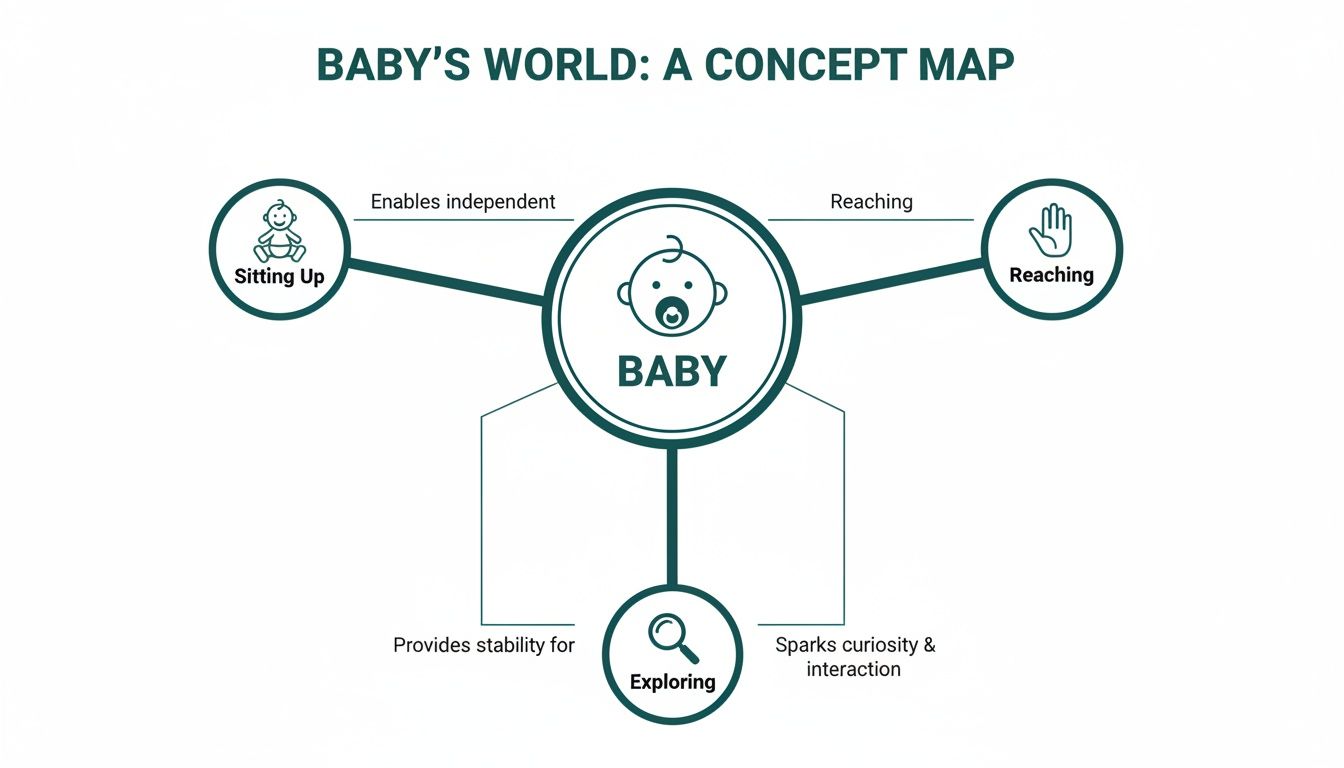
As you can see, sitting, reaching, and exploring are all interconnected, each skill building on the last.
To make it easier to see these connections, here's a quick summary of the key developmental leaps happening now and the kinds of toys that can help support them.
Developmental Milestones at 6 Months and Supporting Toys
| Developmental Area | What Your Baby is Learning | Ideal Toy Category |
|---|---|---|
| Gross Motor Skills | Gaining core strength, sitting unsupported, rolling over. | Floor mats, soft play gyms, tummy time pillows. |
| Fine Motor Skills | Reaching, grasping, passing objects between hands. | Grasping toys, soft blocks, easy-to-hold rattles. |
| Sensory Development | Exploring textures with hands and mouth, tracking sounds. | Teethers, sensory balls, crinkle toys, soft books. |
| Cognitive Growth | Understanding cause and effect, object permanence. | Cause-and-effect toys (rattles, squeakers), peek-a-boo toys. |
| Social & Emotional | Babbling, recognising faces, expressing emotions. | Unbreakable mirrors, puppets, simple picture books. |
Choosing toys that align with these specific learning areas helps make playtime both fun and incredibly productive for your little one's development.
Growing Socially and Emotionally
Your baby's social world is also blooming. You’ll probably hear a lot more babbling as they experiment with sounds like "ba-ba" and "da-da." They’re learning the back-and-forth of conversation just by listening to you, and their personality is shining through with more expressive smiles, giggles, and even tiny frowns.
They are also starting to recognise familiar faces and might show the first signs of separation anxiety, which is a completely normal sign of their growing attachment to you. These leaps are so exciting, and you can dive deeper into what are developmental milestones in our more detailed guide. Remember, every giggle and grasp is a sign of amazing progress.
How to Choose the Best Toys for Your 6 Month Old
Alright, you've got a handle on the incredible developmental leaps happening at the six-month mark. Now comes the fun part: picking the toys that will meet your baby right where they are. The goal isn't to bury them in a mountain of plastic, but to curate a small, meaningful collection of toys that will genuinely support their new skills.
Think of it like building a capsule wardrobe. You don't need dozens of outfits, just a few versatile, high-quality pieces that work together beautifully. In the same way, a handful of well-chosen toys for a 6 month old baby can cover all the key areas of their development.
It's no wonder the infant and preschool toy segment, which includes things like soft books and grasping toys, is a huge part of the UK toy market. Valued at £13,948.24 million and set to grow, it reflects a real shift in what parents are looking for. We’re moving towards playthings that blend fun with learning, especially as our babies start babbling and grabbing for everything in sight. If you're curious, you can find more on UK toy market trends over on Spherical Insights.
Ignite the Senses with Sensory Toys
At six months old, a baby’s brain is like a little sponge, soaking up every sensory experience. Toys designed to engage their sense of touch, sight, and hearing aren’t just for fun; they're powerful tools for building neural pathways. They literally help wire the brain for more complex learning down the road.
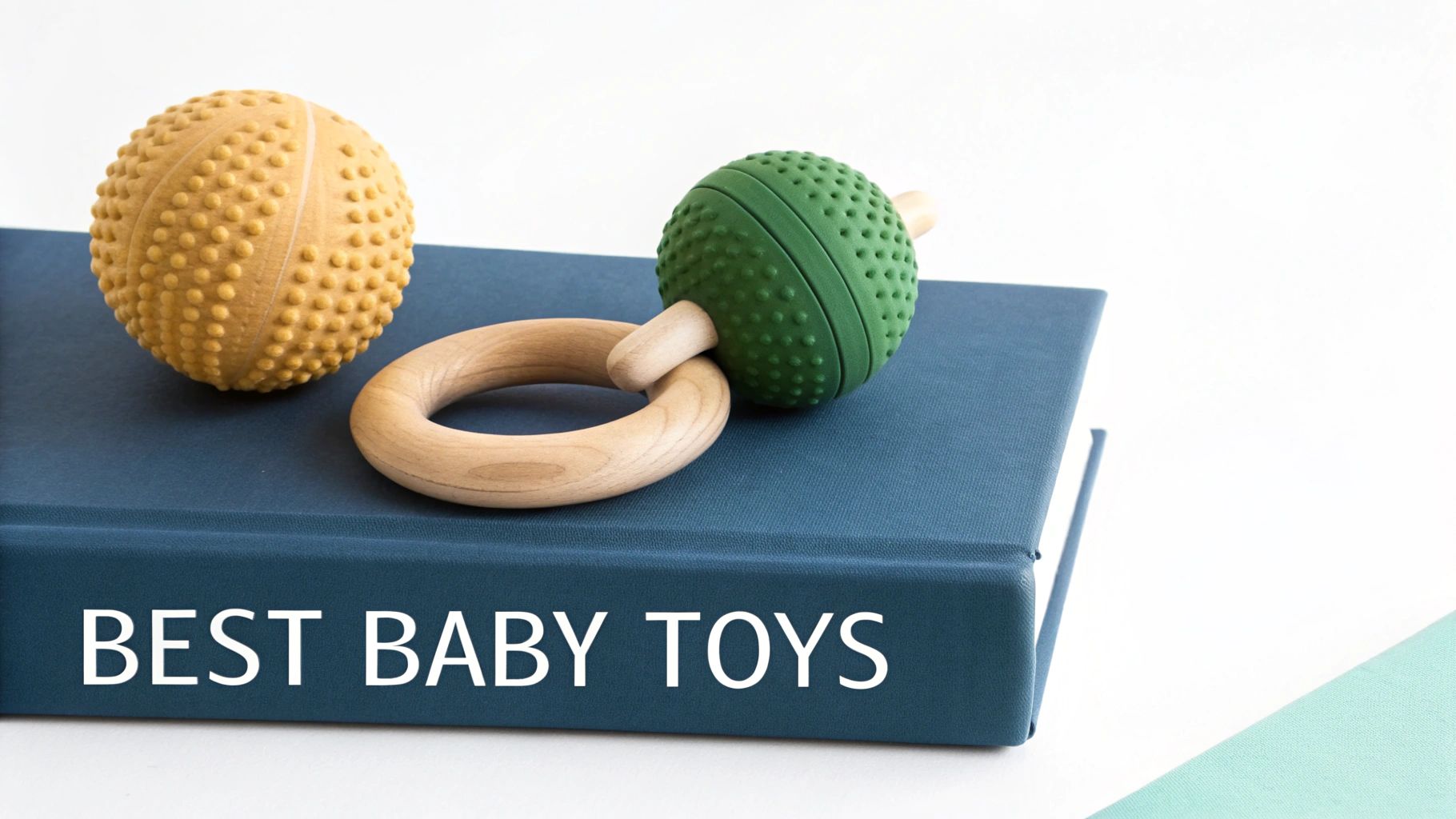
Look for items with a variety of textures—bumpy, smooth, crinkly, or soft. A simple textured ball is a brilliant place to start. As your baby rolls, squeezes, and inevitably mouths it, they are gathering a huge amount of information about the world around them.
- Textured Balls: These are perfect for little hands to grip and provide a rich tactile experience.
- Crinkle Toys or Books: That satisfying sound gives immediate feedback, teaching a very early lesson in cause and effect.
- Sensory Blocks: Soft blocks featuring different fabrics, ribbons, or even a hidden jingle bell can keep a baby completely absorbed.
A great sensory toy doesn't just entertain; it sparks curiosity. A ball with ridges makes a baby’s brain wonder, "What is this feeling?" A crinkly leaf prompts the question, "What happens when I squeeze this?"
Master Grasping with Teethers and Rings
Your baby is working so hard to master their grasp, moving from that clumsy, full-hand rake to a more deliberate grip. Toys that are easy to hold, pass from one hand to the other, and (crucially) safe to chew are absolutely essential right now.
Many grasping toys also pull double duty as teethers, offering sweet relief for sore gums while strengthening hand muscles and honing coordination. Natural materials are a fantastic choice here.
- Wooden Rings: Simple, unfinished wood provides a hard, safe surface for teething and has a lovely natural texture.
- Silicone Teethers: Look for food-grade silicone toys with interesting shapes that are easy for small hands to clutch.
- Easy-Grip Rattles: A rattle with a slim handle helps your baby practise holding on tight, with the sound providing instant, rewarding feedback.
These simple tools are the building blocks for the fine motor skills they’ll one day need for everything from holding a crayon to tying their shoes.
Spark Early Literacy with Soft Books
It is never, ever too early to introduce the magic of books. To a six-month-old, a book is a fascinating sensory object they can hold, mouth, and explore with their hands. Soft fabric or sturdy board books with high-contrast images—like black-and-white patterns or bold, bright colours—are perfect for their developing eyesight.
Cuddling up and reading together, even if you’re just pointing at pictures and naming them, is a wonderful way to build early language skills and deepen your connection.
Uncover Cause and Effect
One of the biggest cognitive milestones at this age is the dawning realisation that actions have consequences. This is a huge deal! Simple toys that react to your baby's movements are the perfect first teachers of this profound concept.
The classic rattle is the prime example. Baby shakes it, it makes a noise. That simple link—"I did this, and that happened"—is a powerful first lesson in how they can influence their environment.
Look for toys that give clear, immediate feedback. Every shake, squeeze, or bat of a toy is a tiny experiment, helping your baby piece together how the world works.
Toy Safety and Materials: What Every Parent Should Know
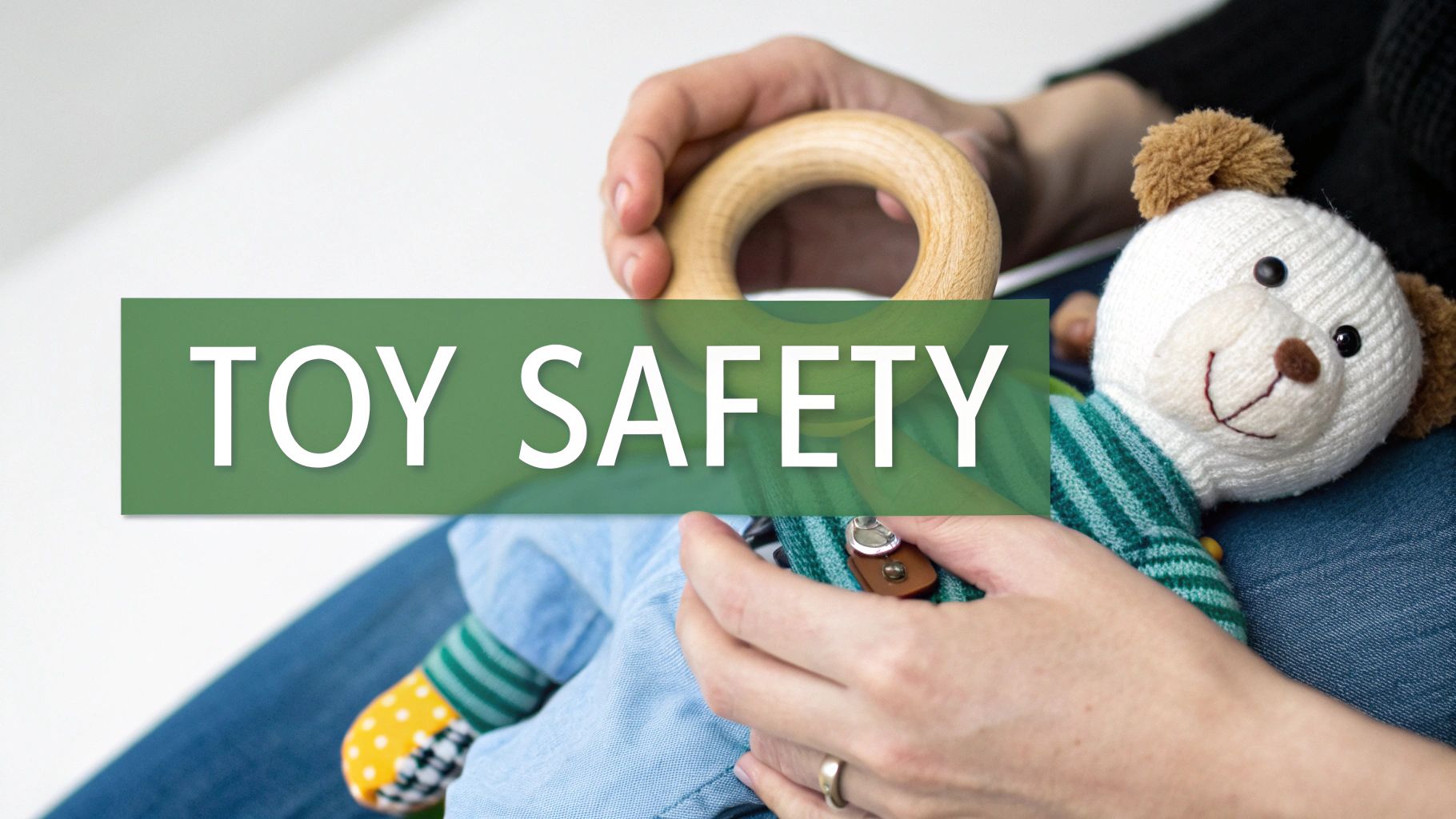
Now that your baby is a pro at grabbing, holding, and tasting absolutely everything, toy safety shoots right to the top of the priority list. This isn't about feeling anxious; it's about giving you the know-how to make confident, safe choices for your little one's playtime.
When you're choosing toys for a 6 month old baby, remember that their mouth is their number one tool for discovery. Because every single toy will be chewed, licked, and gummed, the materials they're made from really matter. Sticking to safe, natural materials gives you complete peace of mind.
Choosing Safe and Natural Materials
Opting for toys made from high-quality, natural materials is one of the easiest ways to create a safer play environment. These materials aren't just durable—they're also free from many of the chemicals found in cheaper plastics.
- Unfinished Wood: Naturally anti-bacterial and wonderful for teething, solid wood toys are a brilliant choice. They offer a firm, satisfying surface for those sore gums to bite down on. You can learn more about the benefits of wooden toys in our dedicated guide.
- Food-Grade Silicone: This material is soft, flexible, and completely safe for mouthing. It’s free from nasties like BPA and phthalates, which makes it perfect for teethers.
- Organic Cotton or Natural Fibres: For any soft toys, dolls, or comforters, look for organic fabrics that haven't been treated with harsh chemicals or dyes.
The UK toy market is huge, with parents spending a significant amount on items for their little ones. It’s a growing market, set to reach US$1.42 billion with steady annual growth, and it increasingly shows a strong preference for sustainable, natural materials. With the average toy price sitting around £13.43, high-quality, safe play is more accessible than ever, highlighting a clear shift away from disposable plastic and towards durable, non-toxic choices. You can explore more UK toy market trends on Statista.
A good rule of thumb is this: if you wouldn't feel comfortable putting the material in your own mouth, it's probably not the best choice for your baby's toys.
Spotting Potential Hazards
Beyond the materials themselves, a few simple checks can help you steer clear of common safety risks. A quick inspection before you buy a toy—or before you hand it over—can make all the difference.
Always, always be mindful of small parts. A great at-home test is the "toilet roll rule." If a toy, or any piece of it, can fit entirely inside a standard toilet paper tube, it's a potential choking hazard for any child under three.
Also, have a quick look for:
- Long Strings or Cords: Anything longer than 22 cm can pose a strangulation risk.
- Sharp Edges: Run your fingers over the entire toy. Are there any sharp points or rough patches that could scratch your baby?
- Loud Noises: Toys that are excessively loud can damage a baby's sensitive hearing. Hold it next to your own ear first to check the volume.
By keeping these simple guidelines in mind, you can confidently build a collection of toys that are not only fun and developmental but, most importantly, completely safe for your curious little explorer.
Simplify Playtime with Stage-Based Play Kits
Let’s be honest, choosing the right toys for a 6 month old baby can feel like a full-time job. You know how important developmental play is, but staring at a wall of toys in a shop or scrolling endlessly online gets overwhelming, fast. This is where a smarter, simpler approach can be a real game-changer.
Imagine if a child development expert could handpick the perfect toys for your baby's exact stage and have them delivered right to your door. That's the simple but brilliant idea behind stage-based play kits. It’s a curated solution designed to take all the guesswork out of playtime, making sure your baby gets precisely what they need, when they need it.
Instead of ending up with a pile of random toys that might be too advanced or not challenging enough, this approach gives you a thoughtful collection targeting specific developmental windows. For a six-month-old, that means toys perfectly suited for grasping, mouthing, and discovering that fascinating new concept of cause and effect.
The Benefits of a Curated Approach
The biggest advantage of a curated play kit is the confidence it gives you. You can relax, knowing every single item has been chosen for a specific developmental purpose—from high-quality wooden toys that encourage sensory exploration to engaging books that plant the seeds of early literacy. It completely removes the stress of research and the risk of buying things that just don’t hold your baby's attention.
This expert-led selection is a huge relief for busy parents. Here in the UK, the baby toy market is absolutely booming—it’s valued at £821.5 million and is expected to nearly double by 2035. This growth is being driven by parents who are more aware than ever of just how crucial early development is. With a huge 80% of modern parents prioritising toys made from natural, sustainable materials, curated services make it easy to find high-quality, stage-specific items that tick all the right boxes. You can read more about the UK baby toys market on Market Research Future.
A stage-based play kit is like having a personal shopper for your baby's brain. Each toy is a handpicked tool designed to build a specific skill, ensuring playtime is always purposeful and enriching.
It’s not just about the toys, either. These services often include brilliant guidance. Many kits come with play guides or description cards that explain the 'why' behind each toy and give you creative ideas for how to use them with your baby. This helps you lead more meaningful interactions and get the absolute most out of every single playtime.
Making Every Moment Count
For parents juggling what feels like a million different things, time is everything. A subscription service like Grow With Me respects that by simplifying one of the most important parts of parenting. It offers a reliable, convenient way to support your baby’s growth without adding another job to your to-do list.
Here’s what you can expect from a curated service:
- Expertly Selected Toys: Items are chosen by specialists to align perfectly with developmental milestones.
- Convenience: The right toys arrive at your home just as your baby is ready for them.
- High-Quality Materials: A real focus on safe, durable, and often natural materials like wood and organic cotton.
- Parental Guidance: Tips and information to help you understand and guide your baby's play.
This approach transforms playtime from something that might cause a bit of anxiety into an effortless, joyful experience. It ensures that the toys for a 6 month old baby in your home aren't just fun, but are actively building a strong foundation for a lifetime of learning. You can explore the play kits to see how each box is thoughtfully designed for every stage.
Your Questions Answered
It's completely normal to have questions when you're trying to figure out the world of baby development. Here are some straightforward answers to the things parents most often ask about toys for their six-month-old.
How Many Toys Should a 6-Month-Old Have?
Honestly, less is more. At this stage, your baby gets so much more out of a few great toys than a room full of clutter. A small, well-chosen collection of around 5-8 toys is perfect.
Think about covering the key developmental bases: a good teether, a sensory ball with interesting textures, a soft book, and a rattle they can easily grab. The real trick is to rotate them. Put a few away each week and bring out others – this keeps things fresh and exciting without overwhelming your little one. This "quality over quantity" approach is exactly what's behind stage-based play kits, which give you just what you need, when you need it.
Are Electronic Toys a Good Idea for a 6-Month-Old?
Flashing lights and catchy tunes definitely grab a baby's attention, but they tend to promote passive watching rather than active play. The best toys for a six-month-old are simple ones that let your baby lead the way.
The best toys are 90% baby and 10% toy. When a baby shakes a rattle, they learn, 'I can make a sound!' When they push a button and a song plays, the toy gets all the credit.
Simple toys that demonstrate cause and effect—like a rattle that makes a noise when they shake it—are fantastic for their growing brain. It's far more powerful for their development than pressing a button that triggers a preset reaction.
Why Does My Baby Put Everything in Their Mouth?
This is not just normal, it's a crucial part of how they learn! A baby's mouth has more nerve endings than their hands right now, making it their primary tool for exploring. Mouthing toys helps them figure out different shapes, textures, and even temperatures.
This is also why safety is non-negotiable. Every single toy needs to be made from safe, non-toxic materials and be big enough that it can't become a choking hazard. Look for items made from things like food-grade silicone or natural, smoothly finished wood.
What's the Best Way to Clean Baby Toys?
How you clean a toy really comes down to what it's made of. Here's a quick rundown:
- Wooden Toys: The golden rule is never to soak them. A quick wipe with a damp cloth (a little white vinegar and water solution works well) is all you need. Let them air dry completely.
- Silicone or Plastic Toys: These are usually the simplest. A good wash in warm, soapy water will do the trick. Just be sure to rinse them well.
- Fabric or Soft Toys: Check the label first, but many can go for a spin in the washing machine on a gentle cycle.
Keeping toys clean is really important, especially the ones that spend a lot of time being chewed on. A regular clean helps keep your baby healthy and ready for more play.
Take the guesswork out of playtime and give your baby the right tools for every developmental stage. Grow With Me delivers expertly designed, stage-based play kits straight to your home.