
Toys for 6 month old babies: Top picks for development
The best toys for 6 month old babies are the ones that get right into the heart of their brand new skills. We’re talking about things that engage their rapidly developing senses, encourage that determined little grasp, and support huge motor milestones like sitting up.
Think textured balls, soft crinkle books, and easy-to-hold rattles that make those oh-so-satisfying sounds. These simple tools are perfect for this age of hands-on, mouths-on exploration.
Your Baby's World at Six Months
At the six-month mark, your baby makes a huge shift from being a passive observer to an active little participant in their world. This stage is a brilliant explosion of curiosity, where every interaction becomes a grand experiment. Your little one is no longer happy to just watch; they want to reach, grab, touch, and, yes, taste everything in sight. It's a truly magical time, packed with significant developmental leaps.
This incredible growth spurt is powered by several key milestones. Physically, many babies are just mastering the art of sitting up on their own, giving them a completely new perspective on the world. This newfound stability frees up their hands to work on their grip, moving from a clumsy whole-hand grab to a more deliberate raking motion.
Cognitively, they're like little scientists, testing out theories with every shake of a rattle or drop of a toy. They're just starting to understand cause and effect—"Hey, when I shake this, it makes a noise!"
Before we dive deeper, here's a quick look at the major changes happening right now.
Key Developmental Milestones at 6 Months
| Developmental Area | Key Milestones | How Toys Can Help |
|---|---|---|
| Physical | Sitting without support, rolling over, reaching for objects, palmar and raking grasp. | Soft balls encourage reaching and rolling. Lightweight rattles are perfect for grasping. |
| Cognitive | Developing object permanence, exploring cause and effect, improving memory. | Peek-a-boo toys, activity centres with buttons, and simple nesting cups build these skills. |
| Sensory | Exploring with hands and mouth, improved vision for tracking objects, enjoying different textures and sounds. | Crinkle books, teething toys with various textures, and musical toys provide rich sensory input. |
These milestones are the building blocks for all future learning, making this a truly pivotal time for play.
The Dawn of Discovery and Awareness
One of the most profound cognitive changes happening now is the budding understanding of object permanence. This is the simple but massive idea that things still exist even when they can't be seen.
A game of peek-a-boo suddenly becomes absolutely thrilling because your baby is starting to realise you’re still there behind your hands. You can learn more about how this concept shapes your baby's world in our detailed guide on what is object permanence. It's a fundamental milestone that lays the groundwork for memory and even helps ease separation anxiety later on.
Toys aren't just for fun; they are the tools your baby uses to build their understanding of the world. Each texture they feel and every sound they hear forges new connections in their rapidly growing brain.
A Market Responding to Milestones
This developmental stage is so critical that it has a noticeable impact on the toy industry. As parents have become more aware of how play supports growth, the demand for purposeful toys has shot up.
The UK baby toys market was valued at around £650 million and is projected to nearly double to over £1.2 billion by 2035. This growth isn't just about selling more toys; it reflects a deeper, collective understanding that the right toys for 6 month old babies are essential for engaging their new abilities to reach, grasp, and explore.
When you understand these milestones—physical, cognitive, and sensory—you can make choices that truly count. Knowing why your baby is so fascinated with a crinkly leaf or a colourful block lets you pick toys that don't just entertain, but actively support their incredible journey of discovery.
Building Your Baby's Developmental Toolkit
Think of toys less as simple playthings and more as the very first tools in your baby’s developmental toolkit. At six months old, play is becoming serious work. Every time they grab, shake, or chew on an object, they’re building a foundational understanding of their own body and the world around them. It’s about so much more than just keeping them busy; it’s about constructing the skills they'll lean on for life.
When you're looking at toys for a 6-month-old, it helps to think about what skill each one is building. Just like a builder needs different tools for different jobs, your baby will get the most out of a variety of toys that target motor skills, sensory processing, and those first little sparks of cognitive function. A well-rounded collection means you’re supporting their growth from all angles.
This visual guide breaks down the key skills blossoming at this exciting age.
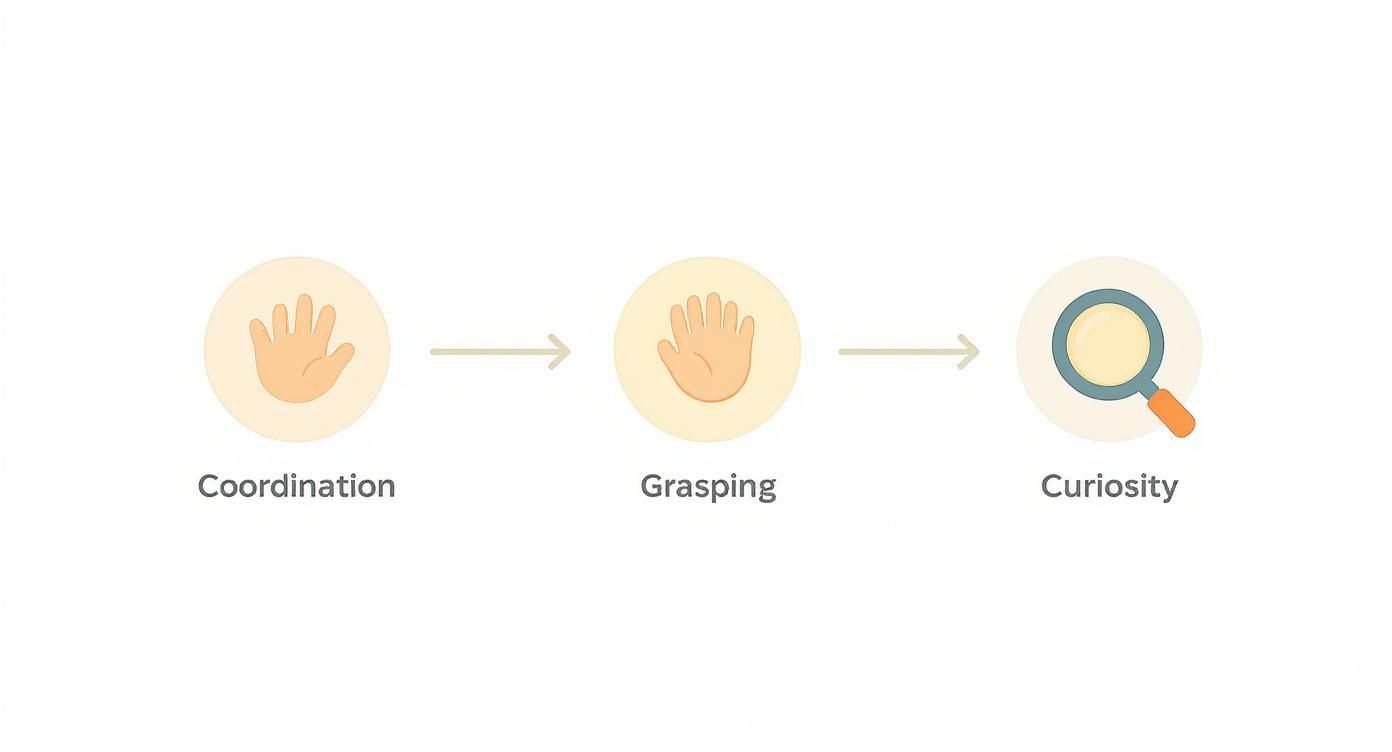
As you can see, it's a beautiful cycle. Their natural curiosity makes them want to grasp things, which in turn builds their coordination. It’s a powerful loop of learning.
Toys for Motor Skill Mastery
Motor skills are all about movement, and at six months, your little one is working on two big categories. They're strengthening their gross motor skills (using large muscles for things like sitting up and rolling over) and refining their fine motor skills (using the small muscles in their hands to grasp and manipulate objects).
- Stacking Rings: A classic for a reason! Simple plastic or wooden rings are the perfect size for little hands to get a grip on. Reaching for them, grabbing them, and just trying to get them on the post is a fantastic workout for their hand-eye coordination.
- Soft Balls: A lightweight, textured ball is brilliant for encouraging your baby to reach out, push, and even make their first moves towards crawling. Rolling a ball back and forth with them also introduces the lovely social dance of taking turns.
- Activity Gyms: These are fantastic for encouraging reaching and batting while your baby lies on their back. When it's tummy time, they offer something interesting to focus on, motivating them to push up and build that all-important core strength.
These simple toys are instrumental in building the physical confidence your baby needs to tackle their next big moves. For a closer look, check out our guide on how specific baby toys improve fine motor skills.
Igniting the Senses
Your baby learns about their world by touching it, hearing it, seeing it, and, of course, tasting it! Sensory toys are designed to give them rich, multi-layered experiences that help their brain sort and process all this new information.
The best sensory toys for this age are the ones that pack a variety of textures and sounds into a single object. This encourages them to explore and keeps their curious mind captivated for longer.
A few excellent choices include:
- Crinkle Books: These soft, fabric books are a feast for the senses. They combine high-contrast images with that satisfying crunchy sound and different textures, like silky tags or fuzzy patches.
- Textured Teethers: Since pretty much everything ends up in their mouth, teethers made from safe materials like food-grade silicone are a must. The ones with various nubs and ridges provide both sweet relief for sore gums and valuable sensory input.
- Rattles and Shakers: A lightweight rattle that's easy to grip helps your baby make a huge connection: their action (shaking) causes a result (sound).
These experiences are absolutely crucial for sensory development, helping your baby make sense of the world one crinkle, rattle, and chew at a time.
Sparking Early Cognitive Growth
Cognitive toys are the ones that get your baby thinking. They help them understand big ideas like cause and effect, problem-solving, and object permanence (the idea that things still exist even when you can't see them).
Simple puzzles with big, chunky knobs are a brilliant start. At first, your baby will probably just love pulling the pieces out, but that's the very first step to understanding shapes and how they fit into a space. Activity centres with buttons that light up or play music when pressed are perfect for teaching cause and effect. They learn very quickly, "If I do this, then that happens."
This is the very beginning of logical thinking, and the right toys can make these foundational lessons both fun and incredibly effective. By choosing a thoughtful mix of toys, you’re not just filling a toy box; you’re curating a powerful toolkit for growth.
Prioritising Safety in Your Toy Selection
As a parent, you know a toy's most important job is to be completely safe for your curious little one. Around the six-month mark, babies enter that wonderful (and slightly chaotic) "everything goes in the mouth" phase. Suddenly, ensuring every single plaything is secure becomes your top priority.
This guide is designed to give you the confidence to assess toy safety yourself, so you can have total peace of mind during playtime.
This intense focus on safety is a massive driver in the toy market. The UK toy industry is worth around £2 billion, and the biggest slice of that pie is toys for infants, toddlers, and preschoolers. Within this huge category, safety is the number one concern for parents and retailers alike, who consistently put non-toxic materials and rigorous testing first. This trend really underscores just how crucial safe, age-appropriate toys for 6-month-old babies are. For more expert advice, healthychildren.org offers great insights on what to look for in a toy.
Decoding Safety Labels
When you're browsing the toy aisle, it's easy to get overwhelmed by labels that sound good but are a bit confusing. Learning what they actually mean is the first step towards making a truly safe choice. These aren't just marketing fluff; they represent specific standards designed to protect your baby.
Here are the key ones to keep an eye out for:
- CE/UKCA Mark: This is your baseline guarantee. It shows the toy meets the essential safety requirements for sale in the UK and Europe. If a toy doesn't have this, don't buy it.
- BPA-Free: Bisphenol A (BPA) is a chemical that used to be common in plastics. The "BPA-free" label confirms the toy is made without it—absolutely vital for teethers and anything else destined for a good chew.
- Non-Toxic: This label means the materials, paints, and finishes used on the toy won't harm your child if they lick or mouth it. Always look for this on brightly coloured wooden or plastic toys.
Performing Hands-On Safety Checks
Labels are important, but you are your baby's best line of defence. A quick, hands-on inspection of any toy—whether it's brand new or a hand-me-down—can catch potential dangers that a label might miss. Trust your instincts.
The most reliable safety tool you have is your own two hands. A simple physical check can often spot a hazard that slipped through the manufacturing process, ensuring every playtime is a safe one.
Before you hand over a new toy, run through this quick checklist:
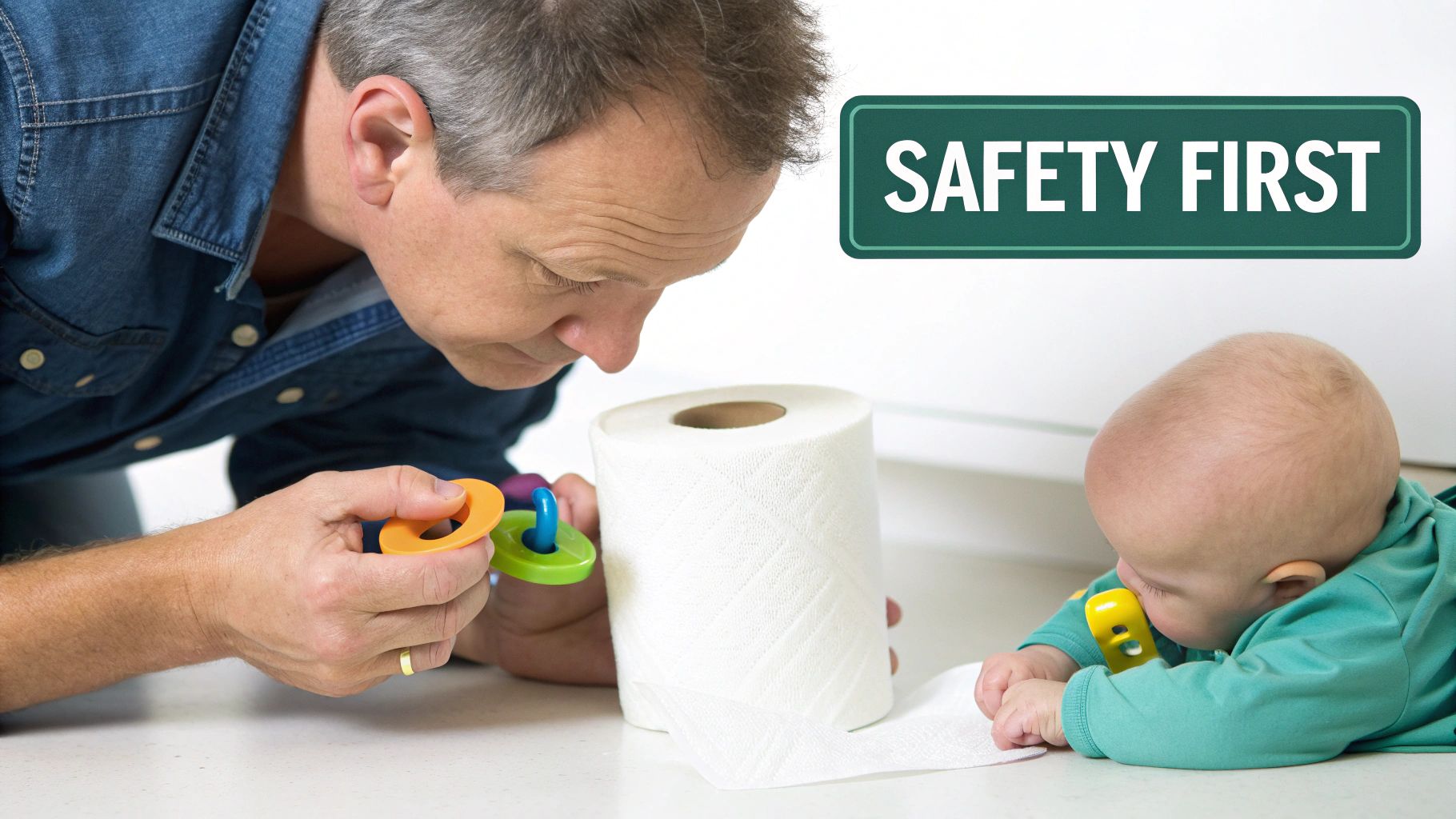
- Check for Small Parts: The 'toilet paper roll test' is a classic for a reason. If a toy, or any piece that could break off, fits completely inside a standard toilet roll tube, it’s a choking hazard for a baby.
- Inspect the Construction: Give the toy a good squeeze. Does it feel solid and durable? Check for sturdy seams on soft toys and robust construction on plastic or wooden ones. Anything that feels flimsy or like it could shatter under pressure is a no-go.
- Feel for Sharp Edges: Run your fingers along all the edges, corners, and surfaces. Everything should be smooth and rounded. Avoid anything with sharp points or rough patches that could cause splinters.
- Look for Loose Bits: Gently tug on any attached parts like ribbons, buttons, or the eyes on a stuffed animal. They need to be securely fastened. Also, watch out for long strings or cords (over 22 cm), as they can pose a strangulation risk.
By combining a solid understanding of safety labels with these practical, hands-on checks, you can create a truly secure play environment. This two-step approach gives you the confidence to know that every toy your baby explores is not just fun, but fundamentally safe.
Choosing Sustainable and Educational Toys
These days, parents are thinking more carefully about their choices than ever before. That mindfulness is making its way straight into the toy box, with a growing desire for toys that are not only brilliant for learning but also gentle on the planet. The best toys for 6 month old babies are now doing double duty: supporting their development while also reflecting a family’s values.
This shift towards thoughtful buying is having a big impact on the toy market. Infant and preschool toys are already the biggest slice of the UK’s massive £11 billion toy industry. But within that, we're seeing huge growth in products that introduce STEM concepts and a real focus on sustainability. More and more, UK shoppers are looking for toys made from eco-friendly, non-toxic materials—and for good reason, especially when it comes to babies who explore everything with their mouths. If you're curious, you can explore more about these market trends and see how modern parenting is changing the game.
The Benefits of Natural Materials
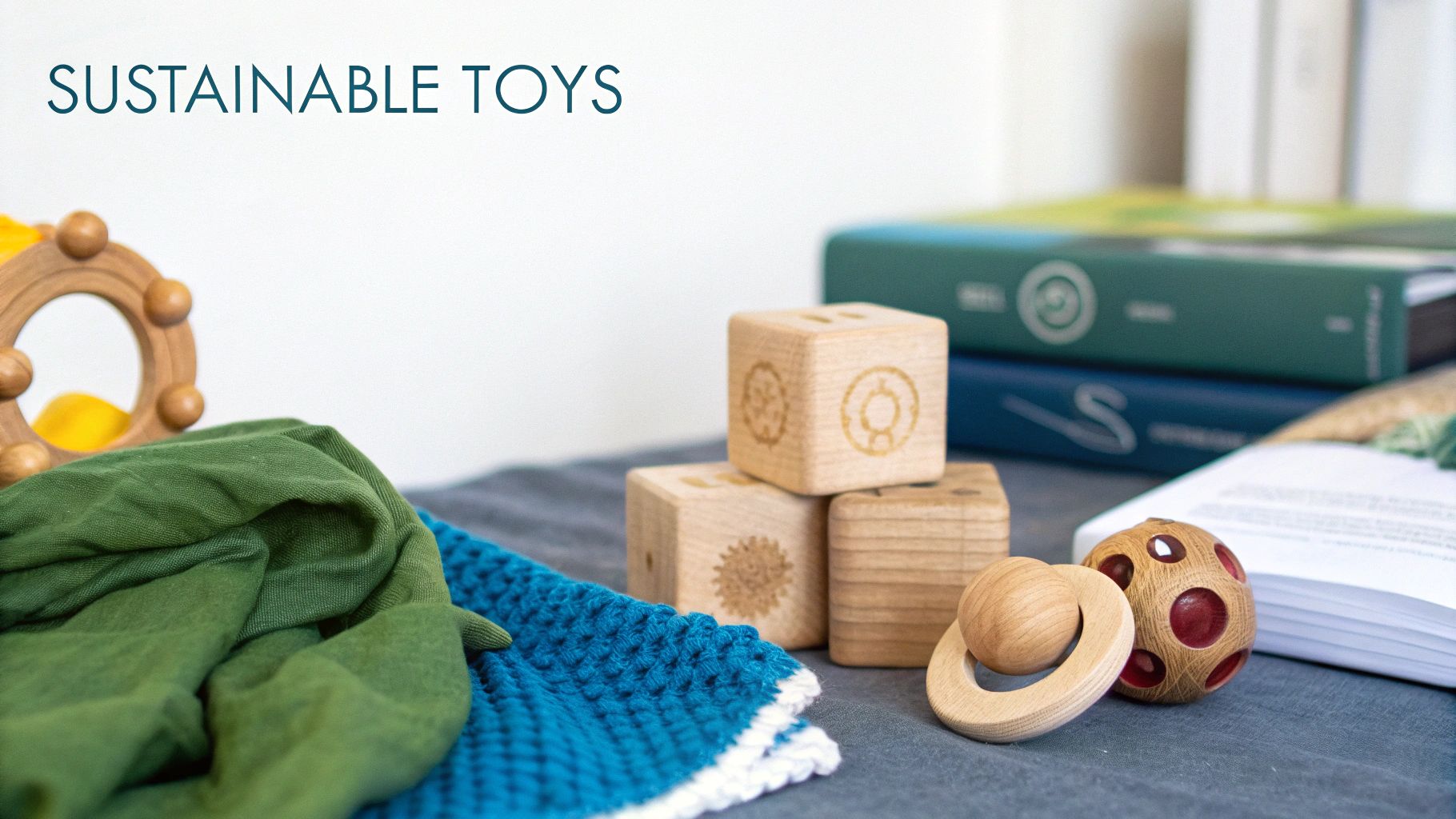
There’s something special about toys made from natural materials. They offer a much richer sensory experience than their plastic counterparts. While plastic can feel a bit uniform and cold, natural materials bring a wonderful variety of textures, temperatures, and even subtle scents to playtime.
- Wood: Classic wooden toys are built to last. They have a satisfying weight and texture that feels just right in little hands, and their smooth, warm surface provides a lovely tactile experience.
- Organic Cotton: For any soft toys, comforters, or taggy blankets, you can’t go wrong with organic cotton. It’s grown without harsh chemicals, making it incredibly gentle on a baby’s sensitive skin and completely safe for the inevitable chewing and mouthing.
- Natural Rubber: Sourced from the sap of rubber trees, this is a fantastic material for teethers. It’s bouncy, durable, and gives just the right amount of resistance for sore gums—all while being a planet-friendly choice.
These materials do more than just make good toys; they connect your baby to the natural world from the very start. They create a calming, grounding playtime experience with simple, beautiful objects that truly engage the senses.
Toys That Build Tomorrow's Skills
Beyond the materials they’re made from, the educational value of toys is getting smarter, even for babies as young as six months. Toy designers are now cleverly weaving foundational concepts into simple playthings, laying the groundwork for future learning in science, technology, engineering, and maths (STEM).
A simple wooden toy that makes a sound when a lever is pulled is more than just entertainment. It's your baby's first physics lesson, teaching them that their actions have a direct and predictable reaction.
This focus on early learning doesn’t mean you need complex electronic gadgets. Not at all. It’s about smart design embedded in simple, open-ended toys. A set of nesting cups, for instance, isn't just for stacking. It’s a baby’s first real exploration of spatial awareness, size comparison, and problem-solving.
Every time your baby figures out how to fit one cup inside another, they’re making a huge cognitive leap. In the same way, toys that involve simple cause-and-effect—like a ball that disappears and then reappears—are playfully introducing the crucial concept of object permanence.
By choosing these thoughtfully designed items, you’re investing in more than just a toy. You’re picking a tool that nurtures your baby's developing mind, sparks their curiosity, and builds the foundational skills they’ll rely on for years to come. It's a wonderful fusion of sustainable values and truly smart, developmental play.
How to Play With Your Six-Month-Old
You can have the most wonderful toy in the world, but it won’t come in a box. It’s you. An engaged and present parent can turn even the simplest object into a powerful tool for connection and learning. This is where the real magic of playtime happens.
Your active involvement is the secret ingredient. When you get down on the floor with your baby, you’re doing so much more than just keeping them occupied. You're building their brain, strengthening your bond, and showing them how their world works in the most meaningful way possible.
Narrate Their World
One of the best things you can do for early language skills is to become your baby's personal storyteller. As they play, just describe what you see them doing. This running commentary helps them link words to actions and objects, building a solid foundation for communication.
Think of yourself as a sportscaster for their playtime adventures.
- "You've grabbed the red ring! Wow, what a strong grip you have."
- "Listen to that! You shook the rattle and it made such a loud noise!"
- "You're pushing the soft yellow ball. Look, it's rolling away from you!"
This simple act of narration doesn't require any special skills, just your focused attention. It shows your baby that you're interested in their discoveries and validates their efforts, which is a fantastic confidence booster. This is just one of many brilliant activities for a 6 month old that nurtures their developing mind.
Make Tummy Time More Engaging
We all know tummy time is essential for strengthening the neck, shoulder, and core muscles needed for big milestones like sitting up and crawling. The problem? Lots of babies aren't exactly fans. The right toy can completely change this dynamic, turning what feels like a chore into a fun challenge.
Try placing a captivating toy just beyond their immediate reach. This little bit of motivation encourages them to push up, pivot, and stretch, building crucial strength while they’re focused on a goal.
A well-placed toy during tummy time acts as the perfect personal trainer. It provides the incentive your baby needs to push through the hard work, strengthening key muscles while they are focused on play.
A wobble toy that sways when nudged, a colourful board book propped open, or a baby-safe mirror are all fantastic choices. Your presence on the floor next to them, cheering on their efforts, makes all the difference.
Master the Classics
Some games have been passed down for generations for a very good reason—they are perfectly tuned to a baby’s developing mind. At six months, your little one is just beginning to understand the concept of object permanence, the idea that things still exist even when they can’t be seen.
Playing these simple games directly supports this massive cognitive leap:
- Peek-a-Boo: The ultimate game for this age. Whether you use your hands, a muslin cloth, or a soft blanket, the act of hiding and revealing your face is pure joy. That look of delight when you reappear reinforces the idea that you haven't really gone away.
- Hide the Toy: Take a favourite rattle or cuddly toy and partially hide it under a blanket while your baby is watching. Encourage them to find it. This simple search-and-find mission is a fun, hands-on lesson in object permanence.
- Passing Back and Forth: Sit with your baby and gently roll a soft ball between you. This simple activity is a brilliant introduction to turn-taking and social interaction. It also helps them practise tracking objects with their eyes and reaching with purpose.
These interactions show how your participation elevates playtime into a rich developmental experience. It proves that the connection you build during these moments is far more valuable than the number of toys for 6 month old babies in the toy box.
Here is the rewritten section, crafted to sound human-written and natural, with the expertise of a seasoned parent or child development specialist.
Common Mistakes to Avoid When Buying Toys
Walking down the toy aisle can be overwhelming. Bright colours and bold claims shout from every shelf, and it’s all too easy to fall into a few common traps when picking out toys for 6 month old babies. A little bit of know-how, though, can help you choose toys that will genuinely help your little one learn and grow, instead of just adding to the clutter in the corner.
One of the biggest mistakes I see parents make is buying toys that are either too advanced or far too simple. A complex puzzle meant for a 12-month-old might seem like a great way to challenge your baby, but for a 6-month-old, it’s more likely to end in frustration. On the flip side, a simple newborn rattle probably won’t hold their interest for very long. You're looking for that sweet spot: a toy that presents a gentle challenge, nudging them to try something new without getting discouraged.
Resisting Overstimulation
It's tempting to grab those flashy electronic toys with all the lights and sounds. They're designed to catch your eye, after all. But for a six-month-old whose brain is already working overtime to make sense of the world, that constant sensory barrage can be completely overwhelming.
Worse yet, these toys often do all the work, leaving your baby to just sit and watch. It turns playtime into a passive experience.
Honestly, simple, open-ended toys are almost always better. They encourage your baby to be the one in charge, sparking their imagination and letting those little problem-solving skills begin to blossom.
This isn’t to say all electronic toys are bad. The trick is to look for ones that need your baby's input. A button that plays a song only when pushed is fantastic for teaching cause-and-effect, which is a huge cognitive leap at this age.
The Problem with Toy Clutter
Before you know it, you can find yourself buried under a mountain of plastic. But when it comes to toys, more is definitely not better. Facing too many choices at once can overwhelm a baby, making it hard for them to focus on any one thing for more than a few seconds. A cluttered play area often leads to a short attention span, as they bounce from one toy to the next without really exploring what any of them can do.
A much better approach is to try a toy rotation system. It's simpler than it sounds.
- Pick a small selection: Just keep a handful of good-quality, age-appropriate toys out at a time.
- Store the rest: Pop the others in a box, out of sight.
- Swap them out: Every week or two, switch a few toys out. The ones you bring back will feel brand new to your baby.
This little system keeps playtime feeling fresh and exciting. It gives your baby the chance to dive deep and discover all the different ways they can play with a single object. By sidestepping these common pitfalls, you can create a play space that truly supports your baby's incredible journey of discovery.
Frequently Asked Questions
When it comes to picking toys for your little one, it’s completely normal to have a few questions. Let's tackle some of the common things parents wonder about when choosing toys for their six-month-old.
How Many Toys Does a 6-Month-Old Really Need?
It's tempting to want to give them everything, but honestly, less is more at this age. A small, thoughtfully chosen collection of about five to eight toys is perfect. The goal is to cover different bases—something for their little hands to grip, something to stimulate their senses, and something to get their minds working. Any more than that can just be overwhelming.
A great tip is to try toy rotation. Just keep a few toys out at a time and swap them every week or so. You'll be amazed at how a toy they ignored last week suddenly becomes their new favourite. It keeps things interesting and helps them explore each item in a much deeper way.
Are Second-Hand Toys Safe for My Baby?
Used toys can be a fantastic, budget-friendly choice, as long as safety is your number one priority. Before you hand any pre-loved toy to your baby, give it a proper MOT. Check it over carefully for any cracks, peeling paint, or bits that could come loose. If you spot anything that looks even slightly risky, it's best to steer clear.
Toys made from solid wood or hard plastic are usually your safest bet for second-hand finds because you can give them a thorough clean and disinfection. Soft toys are a bit trickier, as they can harbour germs if they can't be washed on a hot cycle. It's also a smart idea to quickly search the toy's name online to check it hasn't been recalled for any safety issues.
A well-inspected, clean second-hand toy can be a wonderful addition to your collection. The key is to apply the same rigorous safety checks you would for a brand-new item.
Should I Avoid All Electronic Toys?
Not at all, but it’s about choosing the right ones. The best electronic toys are the ones that get your baby involved, not just watching a light show. Think of a toy that plays a fun sound only after your baby has pushed a button—that’s a brilliant way for them to learn about cause and effect.
What you want to avoid are the overly flashy toys that do all the work themselves, playing music and lighting up without any input from your baby. These can be really overstimulating and don't leave much room for imagination. If you do go for an electronic toy, look for one with a volume control and treat it as a fun extra, not a replacement for good old-fashioned play.
When Is a Good Time to Introduce Books?
Honestly, you can start right away! At six months old, babies are fascinated by soft fabric or chunky board books. They love exploring them with their hands and mouths, so look for ones with different textures to feel and bold, high-contrast pictures.
Reading at this stage isn't about following a story from start to finish. It’s all about creating a positive, cuddly experience. Let your baby hold the book, turn the pages (with your help!), and even have a good chew on the corner. By pointing at the pictures and naming what you see, you’re laying the groundwork for language and nurturing a love of books that will hopefully last a lifetime.
Ready to give your baby the perfect developmental tools without the guesswork? The Grow With Me subscription box delivers a curated kit of beautiful, age-appropriate wooden and sensory toys right to your door every two months. Discover your first play kit today at https://shop.growwithmesubscriptionbox.co.uk.