
A Parent's Guide: toys 6-12 months for safe, engaging play
The best toys for 6-12 month olds are the ones that keep pace with their incredible developmental spurts. Think stacking cups, shape sorters, textured sensory balls, and activity cubes. These aren't just for keeping them busy; they are fundamental tools that help them master crucial new skills, like the delicate pincer grasp or the mind-bending concept of object permanence.
The Developmental Magic of Play from 6 to 12 Months
Welcome to one of the most exciting stages of your baby's first year. Between six and twelve months, your little one goes from being a relatively stationary observer to a full-on explorer, picking up new abilities at a dizzying pace. Every toy becomes their first tool for figuring out how the world works, transforming a simple play session into a powerful learning opportunity.
This period is a whirlwind of physical progress. Your baby is likely mastering sitting up on their own, starting to crawl, and might even be pulling themselves up to stand. Their hand-eye coordination is also taking a huge leap forward, moving beyond a clumsy whole-hand grab to the much finer pincer grasp—that clever ability to pick up small items between their thumb and forefinger.
Cognitive Leaps and Purposeful Play
It's not just their bodies that are growing; their minds are firing on all cylinders. One of the biggest cognitive milestones of this stage is the dawning of object permanence. This is the game-changing realisation that things still exist even when they're out of sight. It’s the reason a simple game of peekaboo suddenly becomes the most hilarious and fascinating thing in the world. You can read more about how to nurture this skill in our deep dive into what object permanence is.
Toys that encourage purposeful play are perfect for supporting these milestones. For example:
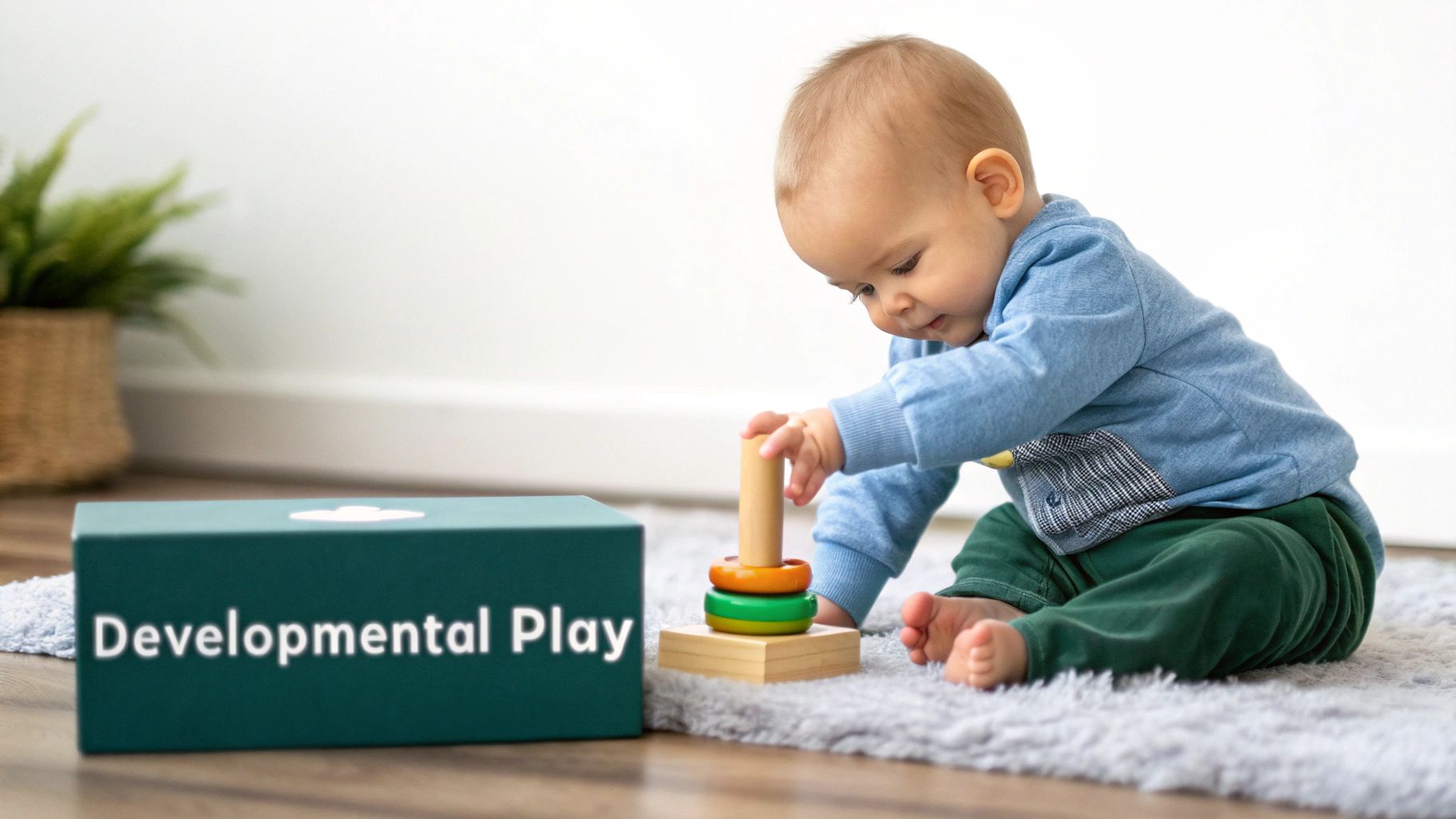
- Stacking rings are a brilliant introduction to cause and effect (and the joy of knocking things over!).
- Shape sorters lay the groundwork for problem-solving and understanding spatial relationships.
- Textured balls give their sensory system a workout and encourage them to reach, grasp, and crawl.
It’s clear that parents recognise the importance of this stage. The UK baby toys market, which includes toys for this age group, was valued at an impressive £1.03 billion. This figure shows just how invested parents are in providing toys that do more than just entertain—they want tools that actively support their baby's development.
A well-chosen toy is more than just entertainment; it's a carefully designed instrument for growth. It meets your baby where they are developmentally and provides the right challenge to help them build new skills, one joyful discovery at a time.
Ultimately, the right toys for 6-12 months help build crucial foundations in motor control, sensory processing, and cognitive reasoning. They set the stage for a lifetime of learning, all through the simple, powerful act of play.
Choosing the Best Toys for Each Growth Spurt
As your baby races towards their first birthday, their play needs seem to change in the blink of an eye. What was utterly captivating at six months is often old news by nine months. This isn't your baby being fussy; it's a sign of their brain and body developing at an astonishing pace. The key to choosing the right toys for the 6-12 month period is to match them to what your little one is working on right now, keeping them happily challenged without getting frustrated.
It helps to think of this time as two distinct mini-stages. In the first half, they're all about mastering their newfound stability and exploring everything with their hands and mouth. The second half is a whirlwind of movement and figuring out how things fit together.
Toys for the Seated Explorer (6-8 Months)
Around the six to eight-month mark, most babies have cracked the code for sitting up on their own. This is a massive milestone! It frees up their hands to finally reach, grab, and get a proper look at things from a whole new perspective. Their world has suddenly opened up, and their toys should reflect that.
The name of the game here is sensory exploration and building those crucial fine motor skills. Babies this age are learning a ton through touch and, let's be honest, taste. Everything ends up in their mouth, so safety is paramount.
Great toys for this stage include:
- Activity Cubes: These are brilliant all-rounders. They’re packed with different textures, sounds, and simple little gadgets on each side that keep curious hands and minds engaged.
- Textured Sensory Balls: Simple but effective. They're easy for little hands to grip, perfectly safe for a good chew, and have interesting textures that encourage reaching and passing from one hand to the other.
- Soft Crinkle Books: These are a feast for the senses. They combine bright, engaging colours with different fabrics to feel and that wonderfully satisfying crinkly sound babies just can't get enough of.
At this point, a toy's main job is to provide a rich sensory experience. You're looking for things with varied textures, interesting sounds, and safe-to-mouth surfaces that encourage your baby to use their hands in new, more coordinated ways.
Toys for the Mover and Shaker (9-12 Months)
As you get closer to that first birthday cake, your baby becomes a tiny dynamo. They're probably crawling at full tilt, pulling themselves up on everything, and maybe even "cruising" along the sofa. With all this new mobility comes a readiness for toys that support bigger movements and more complex thinking.
You'll notice their play becomes more purposeful. They're not just exploring an object anymore; they're trying to figure out what it does. This is where toys that introduce cause-and-effect and simple problem-solving really start to shine.
Excellent choices for this more advanced stage include:
- Stacking Rings: A classic for good reason! Stacking helps to fine-tune hand-eye coordination and plants the first seeds of understanding size, order, and patterns.
- Simple Shape Sorters: Think of these as a baby's first puzzle. They introduce early ideas about spatial awareness as your little one works out how to get the right shape into the right hole.
- Sturdy Push Walkers: For any baby who is pulling up and keen to get going, a good, weighted push walker provides the stability they need to build confidence and take those first wobbly steps.
It's no surprise that the infant and preschool toy category—which includes essentials like sensory plush toys and shape sorters—holds the largest market share in the UK's toy industry. This trend is fuelled by parents wanting educational toys that are both fun and help build those foundational skills. You can discover more insights about the UK toy market trends and see just how much educational play is shaping the industry.
Your Non-Negotiable Guide to Toy Safety
Nothing is more important than your little one’s safety, especially during that delightful phase where their main method of exploration is putting absolutely everything into their mouth. Choosing safe toys for 6-12 months isn't about dialling down the fun; it’s about creating a secure space for them to discover the world without any risks. Let's walk through what you need to know to feel confident about every toy that comes through your door.
When it comes to materials, simpler is almost always better. Think natural materials like solid wood (just make sure it’s finished with non-toxic, water-based paints) and food-grade silicone. These are brilliant choices because they’re durable, a doddle to clean, and free from nasty chemicals like BPA, phthalates, and PVC that can lurk in cheaper plastics. If you're curious, you can find out more about the best teething toys for babies, which are usually made from these exact same safe materials.
Spotting Potential Hazards
At this age, the biggest danger by far is choking. There’s a really simple trick that works wonders: the toilet paper roll test. If any toy, or any piece of a toy, can fit completely through a standard cardboard toilet paper roll, it’s a definite no-go for your baby.
Beyond the size test, give every toy a good once-over for solid construction.
- No Small Parts: Look for any buttons, beads, or other bits and bobs that could break off and become a hazard.
- Secure Seams: For soft toys, give the seams a gentle tug to make sure they're tightly stitched and not likely to come apart.
- No Long Cords: Any strings or cords should be shorter than 12 inches to avoid any risk of entanglement.
This timeline gives you a great visual for how toys can safely become more complex as your baby develops from a curious sitter into a little explorer on the move.
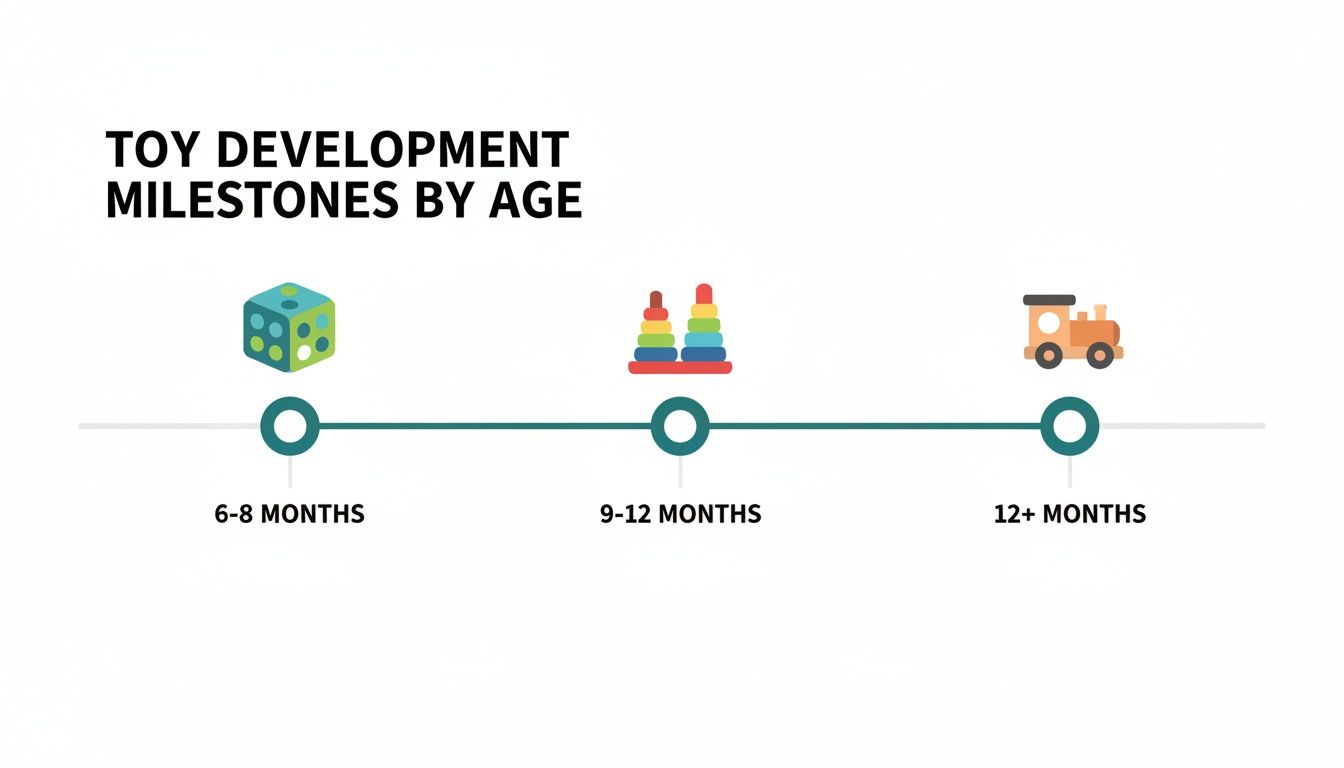
As your baby gets better at moving and using their hands, the toys they play with can get a bit more intricate, but those safety rules always come first.
Understanding Safety Labels
When you're shopping in the UK, keep an eye out for the UKCA (UK Conformity Assessed) marking. This is your seal of approval, confirming that the toy meets our strict safety standards. It’s the manufacturer's way of saying they’ve done their homework and the product meets all the necessary safety, health, and environmental requirements.
A safe play environment is about more than just the toys. It’s about creating an entire space where your baby can grow and explore with complete peace of mind.
Building that secure foundation involves looking at everything in your child's room. For example, considering things like safe window treatments for nurseries is just as important. By checking materials, testing for size, and looking for official safety markings, you can build a collection of toys that is both wonderfully engaging and completely safe.
Creative Ways to Play with Your 6-12 Month Old
Having the right toys for 6-12 months olds is one thing, but the real magic happens when you get down on the floor and play with them. It’s that shared experience that transforms a simple toy into a powerful tool for learning and connection. You really don't need complicated setups—just a little imagination can turn any moment into a fantastic developmental opportunity.
These simple play ideas are designed to be quick, easy, and super effective. Each one focuses on skills your baby is busy mastering, using common toys to boost their motor skills, sensory processing, and little growing mind.
Simple Play Scenarios to Start Today
Here are a few activities you can try with your little one right away, broken down by what you need, what you do, and what they’re learning.
1. Tower Tumble
- Setup: Grab a set of soft or wooden stacking blocks and find a clear spot on the floor.
- Engagement: Slowly build a little tower, maybe three or four blocks high, chatting about what you're doing. Then, give a big smile and let your baby knock it all down with a gentle nudge. Make a big deal of the crash! Celebrate with a cheer and then build it up all over again.
- Skill Nurtured: This is a brilliant first lesson in cause and effect. Your baby quickly learns that their action (the push!) creates a very fun and predictable reaction (the tumble!).
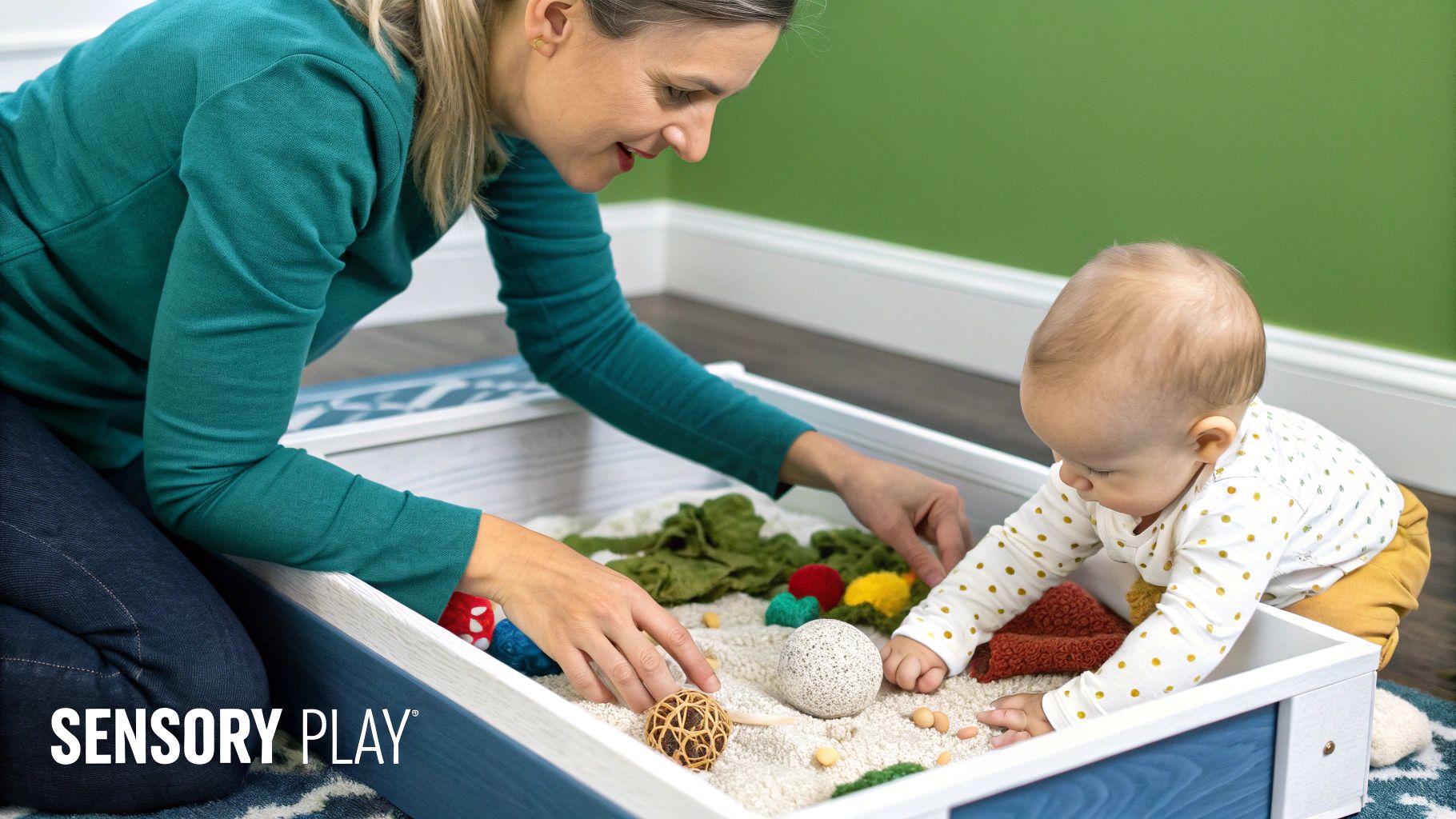
2. Sensory Bin Discovery
- Setup: Find a shallow, baby-safe container and fill it with things like large, smooth pasta shapes, colourful pom-poms, or even a bit of water with a few bath toys. Just remember to always supervise them closely.
- Engagement: Sit with your baby and just let them dig in. Guide their hands, show them how to scoop and pour, and talk about how the different materials feel.
- Skill Nurtured: This is a fantastic activity for tactile exploration and sensory development, sparking their curiosity and honing their fine motor control. If you're looking for more inspiration, you can find some wonderful sensory play ideas for babies here.
Playtime is your baby's work, and you are their favourite coworker. Your engagement, encouragement, and shared laughter are the most important ingredients for turning a simple activity into a rich learning experience.
Advancing Play as They Grow
As your baby inches closer to their first birthday, their play will naturally become more interactive. They’re starting to understand sequences and get a real kick out of games that involve a bit of back-and-forth.
3. Roll and Return
- Setup: Sit opposite your baby on the floor with a soft, textured ball between you.
- Engagement: Gently roll the ball towards them and encourage them to push it back. It might take a few tries! Use simple, encouraging words like "roll to mummy" or "your turn."
- Skill Nurtured: This simple game is huge for developing an understanding of social turn-taking, which is a cornerstone of communication. It also works on their gross motor skills and hand-eye coordination.
4. Story Time Exploration
- Setup: Pick out a sturdy board book with bright, simple pictures.
- Engagement: Settle your baby on your lap and point to the pictures as you read. Don’t be afraid to use funny voices for the different characters! Let them touch and feel the pages as you go.
- Skill Nurtured: Reading aloud is one of the best things you can do to boost language development and introduce new words. Beyond just being a fun activity, the Benefits of Reading Aloud to Children are immense, helping to strengthen their cognitive skills and your special bond.
A Smart Parent's Guide to Buying Baby Toys
Walking into the baby toy aisle can feel a bit much, can't it? Shelves are overflowing, online shops are endless, and it’s easy to feel overwhelmed. How do you find toys that are genuinely great for your baby without turning your living room into a plastic mountain?
The secret isn’t about buying everything. It's about building a thoughtful, curated collection of toys for 6-12 months olds that will actually help them learn and grow, all while staying within your budget. Think of yourself as a curator of your baby’s first little library of play, where every single item has a purpose.
Where to Find the Best Toys
When it comes to shopping, you’ve got a few options, and each has its perks. Heading to a high-street shop means you can get your hands on a toy, feel the quality, and check it’s sturdy and safe before you buy. Online retailers, of course, offer a massive selection and the sheer convenience of having it all delivered to your door.
Then there’s a third way: curated subscription services. A service like Grow With Me takes all the guesswork out of it. They deliver a box of perfectly stage-appropriate toys, chosen by experts to match exactly where your baby is at developmentally. It’s a fantastic solution for busy parents who want to provide the best without spending hours scrolling and researching. It also cleverly manages toy clutter, introducing fresh, engaging items just as your baby is ready for a new challenge.
Choosing where to buy from is really about what works for your family. Whether you love an in-person browse or the simplicity of a curated box, the goal is to be intentional with what you bring into your home.
It seems UK parents are on the right track, with recent trends showing a real focus on toys that boost physical and sensory skills. With the average toy price sitting around £13.43, and the £10-£20 bracket accounting for a third of all sales, it’s clear you don’t need to break the bank. This budget-friendly sweet spot is exactly where you’ll find some of the best developmental toys 6-12 months olds will get hours of fun from. You can read more about how UK parents are prioritising creativity and learning in toy purchases and see how your instincts align.
Making Smart Investment Choices
To build a toy collection that really works hard for you and your baby, keep these simple ideas in mind:
- Prioritise Quality Over Quantity: Honestly, a handful of well-made, open-ended toys is worth so much more than a pile of flimsy plastic they’ll get bored of in a week. Look for things that are built to last and have a timeless feel.
- Think Long-Term: Before you buy, ask yourself: will this still be interesting in three months? Toys like classic wooden blocks, stacking cups, and simple shape sorters are brilliant because they grow with your child, offering new ways to play as their skills blossom.
- Embrace Toy Rotation: This is a game-changer. Keep just a small selection of toys out at a time and store the rest away. Every week or two, swap them over. Old toys suddenly feel brand new, which keeps your baby engaged and your play area calm and tidy.
By being mindful about what you choose, you’re not just buying toys—you’re investing in the best tools for your child’s incredible journey of discovery.
Got Questions About Toys for 6–12 Month-Olds? We've Got Answers
It’s completely normal to have questions when you’re trying to pick the right toys for your baby. This 6–12 month window is an explosion of growth, and you want to do everything you can to support it. Let’s tackle some of the most common worries and queries that pop up for parents, so you can feel confident you’re making the best choices for your little one.
We've pulled together advice from child development experts and parents who've been there to help clear up the confusion, from toy overload to safety concerns.
How Many Toys Does a 6–12 Month-Old Really Need?
When it comes to your baby’s toy box, less is genuinely more. A small, thoughtfully chosen collection of 5–8 high-quality, open-ended toys will do far more for their development than a room full of plastic that just overstimulates them. Too many options can be overwhelming, causing a baby to flit between toys without ever really engaging.
The trick is to focus on variety to cover all the key developmental areas. A brilliant little starter collection could look something like this:
- A set of stacking cups or rings to get those fine motor skills working.
- A simple shape sorter to kickstart their problem-solving brain.
- A few textured sensory balls for tactile feedback and practising that all-important grasp.
- A handful of sturdy board books to lay the foundations for language.
A great tip is to rotate these toys every week or so. By putting some away and bringing them out again later, they feel brand new and exciting. It encourages your baby to explore them in different ways and keeps toy fatigue at bay – for both of you!
Are Wooden Toys Actually Better Than Plastic Ones?
This is a classic debate, and honestly, both materials can be great. High-quality wooden toys do have some lovely advantages, especially for this age group. They’re incredibly durable, naturally resist bacteria, and offer a rich sensory experience with their unique weight, texture, and even smell. Plus, they’re a more sustainable choice if that’s important to your family.
That said, you don’t need to rule out plastic completely. Good-quality, BPA-free plastic is a fantastic choice for things like bath toys or items that need more complex designs. The most important thing isn't wood versus plastic, but ensuring the toy is well-made, non-toxic, and completely safe for your baby to explore with their hands and mouth.
My Baby Puts Everything in Their Mouth. Is This Safe?
Yes, absolutely! It might seem like they’re trying to eat everything in sight, but this is a vital and completely normal part of how babies learn. Their mouths are packed with sensory receptors, making them a primary tool for figuring out the world around them. Your job is simply to make sure their environment is safe for this mouthing phase.
"Mouthing toys is a fundamental part of sensory development. It helps babies learn about different shapes, textures, and properties of objects. The key is to provide items that are specifically designed and approved for this type of exploration."
To guarantee safety, here’s a foolproof trick: choose toys that are too large to fit through a cardboard toilet paper roll. If it doesn’t fit through the tube, it’s not a choking hazard. Always give toys a regular check for wear and tear, like loose bits or chipping paint, and clean them often with a gentle, baby-safe cleaner.
When Should We Introduce Electronic Toys with Lights and Sounds?
For the 6–12 month stage, it's generally best to stick with passive, child-powered toys. The kind of toys that need your baby to do something—stack, push, sort, or build—are brilliant for developing their cognitive skills, problem-solving abilities, and fine motor control. They learn cause and effect in a very real, tangible way.
Electronic toys that put on a show with flashing lights and sounds can sometimes be overstimulating for a young baby’s developing brain. If you do decide to introduce them, think of them as an occasional treat rather than a playtime staple. Make sure they’re balanced with plenty of classic, open-ended toys 6–12 months olds thrive with, like blocks, balls, and simple puzzles that encourage them to use their own growing imagination.
Ready to take the guesswork out of finding the perfect stage-based toys? Grow With Me delivers expertly curated play kits right to your door, filled with beautiful, safe, and developmentally appropriate toys that grow with your baby. Explore our subscription boxes today and give your little one the gift of purposeful play.