

How to Play With a Newborn A Guide to Early Development
Wondering how to play with a newborn? Let me tell you a little secret: you are their favourite toy. That’s it. In these first few weeks, real, meaningful play isn’t about flashy gadgets or a strict routine. It’s all about your gentle touch, the calming sound of your voice, and your loving gaze.
These simple, everyday moments are the most powerful tools you have for nurturing your baby’s rapidly developing brain.
Why You Are the Best Toy Your Newborn Will Ever Have

It’s easy to feel the pressure to "do enough" for your baby's development. Many new parents think they need special toys or equipment right from the get-go. But the truth is, during the newborn stage, the most profound learning happens through the simple connection they have with you.
Honestly, your face is the most fascinating thing in their entire world. Your voice is the most comforting sound they’ll ever hear. Every time you smile, sing a little tune, or softly stroke their cheek, you're engaging in a powerful form of play. These interactions are laying the groundwork for all future learning.
The Power of a Simple Response
This idea of responsive interaction is absolutely central to a baby's growth. When you tune in and respond to your newborn's cues—maybe making eye contact when they stare up at you, or cooing back when they make a tiny sound—you're doing so much more than just bonding. You're actually building vital neural pathways in their brain.
These little back-and-forth moments teach your baby the very first lessons in communication and trust. They quickly learn that their actions get a response from you, which helps them feel safe, seen, and secure. This is the very beginning of a concept known as sustained shared thinking, a collaborative back-and-forth that boosts cognitive development.
The real magic of newborn play is in its simplicity. You don't need a room overflowing with toys; you just need to be present and responsive. Your baby is hardwired to learn directly from you.
Here in the UK, health visitors and other professionals strongly encourage this kind of simple, responsive play from day one. It’s well-understood that babies benefit most from face-to-face interaction, gentle chatter, and loving touch as their primary forms of play.
Grasping how these tiny interactions contribute to your newborn's growth is key. They truly form the foundation for all early learning and development. The best part? You already have everything you need to give your baby the most amazing start in life.
Simple Play Ideas for Your Newborn’s Awake Windows
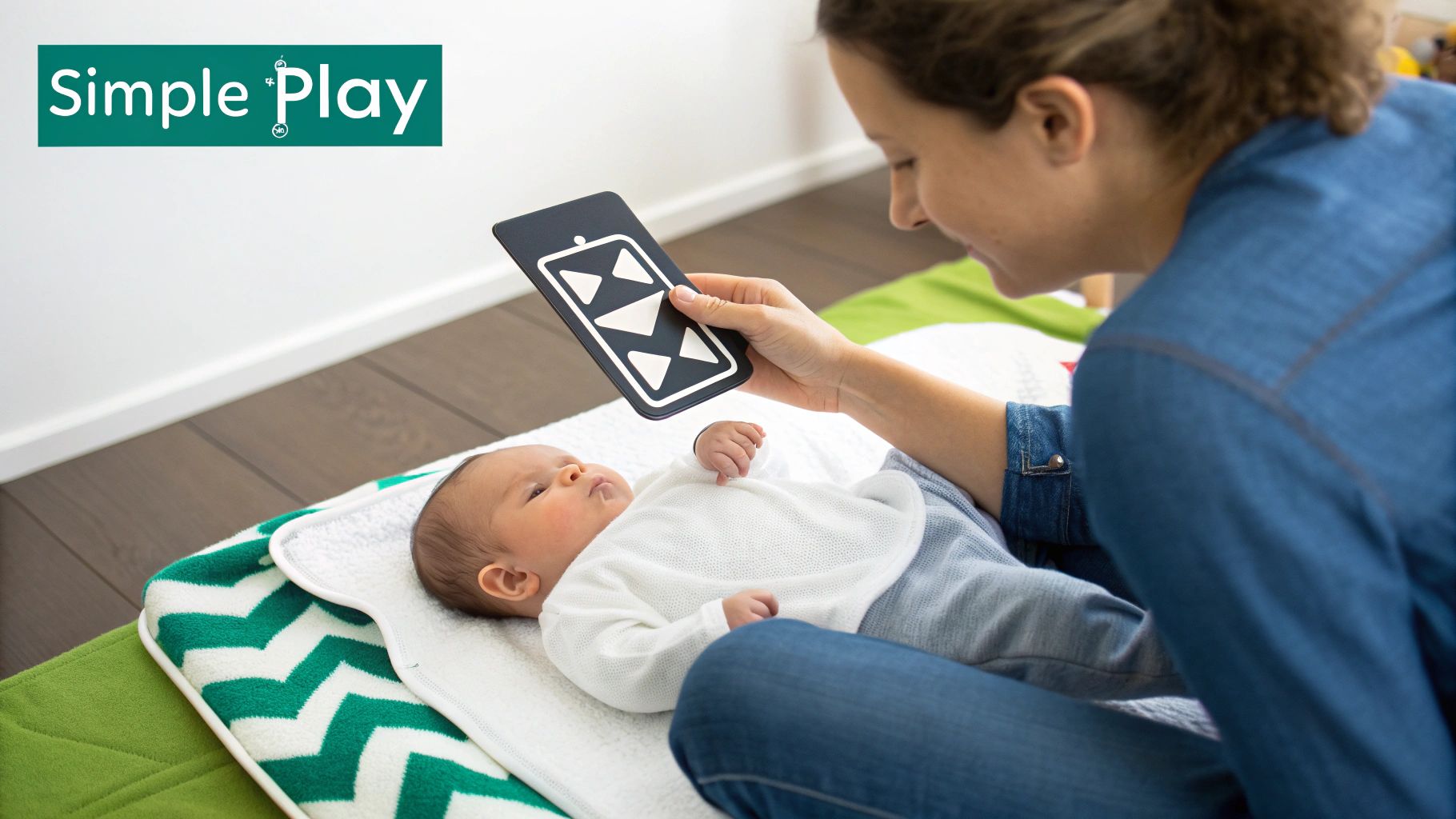
When you’ve got a newborn, their ‘awake windows’ feel incredibly precious and fleeting—often lasting just 45 to 60 minutes. It’s easy to feel pressured to fill every moment with elaborate activities, but the truth is, simple, focused interactions are what your baby needs most.
Think of playtime not as a performance, but as a series of small, meaningful conversations. The goal isn't to entertain, but to connect. You don't need a detailed lesson plan; just being present is more than enough. In fact, you're probably already doing it! Everyday moments like nappy changes, feeding, and getting them dressed are perfect opportunities to build a playful connection and introduce them to the world.
Engaging Your Baby’s Senses
A newborn's senses are just starting to make sense of everything around them. Their vision is still quite blurry, which is why high-contrast black-and-white images are so captivating. Their hearing, however, is beautifully attuned to your voice, and their sense of touch is incredibly receptive. A great starting point is to focus on just one sense at a time to avoid them feeling overwhelmed.
You could start with some simple visual tracking. Find a high-contrast flashcard or even a simple, brightly coloured object and hold it about 20–30 cm from their face. Move it slowly from one side to the other and watch as their eyes work to follow it. It might seem basic, but this little game is a brilliant workout for their eye muscles and helps build crucial focusing skills.
Next, you can explore the wonderful world of touch. During a nappy change, gently bicycle their legs while you hum a little tune. As you do, talk them through it: “Here are your lovely little feet!” Try stroking their tummy with a soft muslin cloth and then contrast it with the warmth of your hand.
Parent Tip: You really don't need a basket full of specific toys. Everyday objects offer incredible sensory experiences. The texture of your favourite soft jumper, the cool feel of a windowpane, or the warmth of a towel after a bath are all powerful and engaging for your newborn.
Sound and Movement Activities
To your baby, your voice is the most fascinating and comforting sound in the world. Having simple ‘chats’ is a beautiful way to play. When your baby makes a tiny coo or gurgle, just respond in a gentle, sing-song tone. This simple back-and-forth is the very first step in learning the rhythm of conversation.
Gentle movement is another fantastic way to connect. While holding your baby securely, you can sway slowly from side to side or rock gently in a chair. These soothing motions stimulate their vestibular system, which is the control centre for balance and spatial awareness.
Here are a few more easy ideas you can try during an awake window:
- A Simple Tour: Carry your baby around the house, pausing to look at different things. Describe what you see, pointing out shapes and light—like the brightness coming from a window or the dark outline of a picture frame on the wall.
- Mirror Time: Hold your baby in front of a safe mirror. They won't realise they're looking at themselves yet, but they’ll be fascinated by the face looking back! Smile and talk to their reflection to make it an interactive game.
- Texture Exploration: Gather a few items with different textures—a silky scarf, a soft teddy bear, a smooth wooden block. Gently brush each one against their hands or the soles of their feet, describing the feeling as you go. "This is so soft," or "This feels smooth and cool."
Newborn Play Activities by Developmental Benefit
To help you get started, here’s a quick-reference guide that matches simple activities with the developmental areas they support. It’s a great way to see just how much good you’re doing with even the simplest of interactions.
| Activity | Primary Sense Stimulated | Key Developmental Benefit |
|---|---|---|
| High-Contrast Cards | Vision | Strengthens eye muscles, improves focus and tracking. |
| Gentle Singing/Talking | Hearing | Encourages language development and bonding. |
| Skin-to-Skin Cuddles | Touch | Regulates heart rate, promotes bonding and security. |
| Baby Massage | Touch | Soothes, improves body awareness, aids digestion. |
| Swaying/Rocking | Vestibular (Balance) | Develops spatial awareness and sense of balance. |
| Mirror Play | Vision | Stimulates social and emotional development. |
Remember, these are just starting points. The most important thing is to watch your baby and respond to what they seem to enjoy.
If you’re keen to explore more, you can discover a wealth of other engaging activities in our guide to sensory play ideas for babies, which is packed with inspiration for every stage. Ultimately, the best play is short, sweet, and completely in tune with your baby's unique cues.
Making Tummy Time a Positive Experience
Let's be honest, the phrase "tummy time" can strike fear into the hearts of new parents. We hear how vital it is for building those crucial neck, back, and shoulder muscles, but the reality often involves a screaming baby who looks utterly miserable.
The good news? It doesn’t have to be a battle. The secret is to completely reframe what you think tummy time is. It’s not about plopping your baby on a play mat and hoping for the best. It’s about creating short, sweet, playful moments that just happen to take place on their tummy. This gentle approach builds strength without the stress.
Start Small and Be Patient
For a brand-new baby, even 30–60 seconds of tummy time is a serious workout. One of the most common pitfalls is trying to go for too long, too soon, which just creates a negative association for everyone involved. Think little and often—aim for several brief sessions throughout the day instead of one marathon.
Timing is everything. Try it when your baby is calm, fed (but not just fed), and awake. A happy baby is a receptive baby. The second they start to get fussy, that's your signal to stop. Scoop them up for a cuddle and try again later. This is all about building positive reinforcement, not endurance.
If you're looking for a more detailed guide, our post on when to start tummy time breaks it all down for you.
Remember, some of the best tummy time doesn't even happen on the floor. Lying your baby on your chest while you’re reclined on the sofa is a fantastic, comforting way to do it. They get all the muscle-building benefits, plus the reassuring sound of your heartbeat and a close-up view of your face.
Keep It Interesting and Fun
Getting your baby engaged is the key to turning tummy time from a chore into a game. The most powerful tool you have is you! Get right down on the floor with them, face-to-face. Your presence is incredibly reassuring and makes the whole experience feel like a fun interaction rather than a lonely task.
A little bit of support can also work wonders. A small, rolled-up muslin or a special tummy time pillow placed under their chest can give them just enough of a lift to make it easier for them to raise their head and look around.
Here are a few simple tricks I’ve found work wonders:
- Bring out the high-contrast toys. A black-and-white board book or a toy with bold patterns placed just in front of them is brilliant for encouraging them to lift their head and focus their developing eyesight.
- Use your voice. You are your baby’s favourite sound. Chat away to them, sing a silly song, or make some playful noises. It’s a great distraction and helps them connect the activity with your comforting presence.
- Add a mirror. Place a baby-safe mirror in front of them. While they won't realise they're looking at themselves, the movement in the reflection is absolutely captivating for a tiny baby.
Learning to Read Your Baby’s Play Cues
Knowing what to play with your newborn is only half the story. The real secret is learning when to play and, just as importantly, when to stop. Think of it like becoming a detective, learning the unique language your baby uses to tell you what they’re feeling.
This skill is all about paying close attention to their subtle signals. Are they loving this, or is it all getting a bit much?
When your baby is happy and ready to engage, the signs are usually pretty clear. You might see their eyes get wide and bright, locking onto your face or a toy. Their little body will seem relaxed, with soft, gentle movements in their arms and legs. Those lovely little coos and gurgles? That’s the sound of a baby who’s having a great time.
Spotting Signs of Overstimulation
On the flip side, it’s worth remembering that newborns have a very low threshold for stimulation. Their brand-new nervous systems can get overloaded in a flash, but they have surprisingly clear ways of telling you they’ve had enough. Learning to spot these “I need a break” signals is what keeps playtime positive and fun.
Many people think crying is the first sign of distress, but it's usually the last resort. The real goal is to tune into the earlier whispers before they turn into full-blown tears. Responding to these subtle cues builds a profound sense of trust and security.
Here are some common signs that your baby is feeling overstimulated:
- Looking Away: Does your baby turn their head or pointedly avoid eye contact? This is their number one way of saying, “This is too much for me right now.”
- Frantic Movements: Look for jerky, tense movements in their arms and legs. Clenched fists or an arched back are also classic signs of stress, a world away from the smooth wiggles of a happy baby.
- Facial Cues: A wrinkled forehead, a grimace, or even repeated yawning can all signal that they’re feeling overwhelmed and are trying to wind down.
- Hiccups or Sneezing: Sometimes, an overstimulated nervous system shows up in physical ways, like a sudden bout of hiccups, sneezes, or even a bit of spit-up.
By noticing these early cues and giving your baby a break, you’re sending a powerful message: "I see you, I hear you, and I understand what you need." This responsive care is the absolute foundation of a secure, loving attachment.
This infographic is a handy guide for deciding how to respond, whether your baby is happy or starting to get fussy during an activity like tummy time.
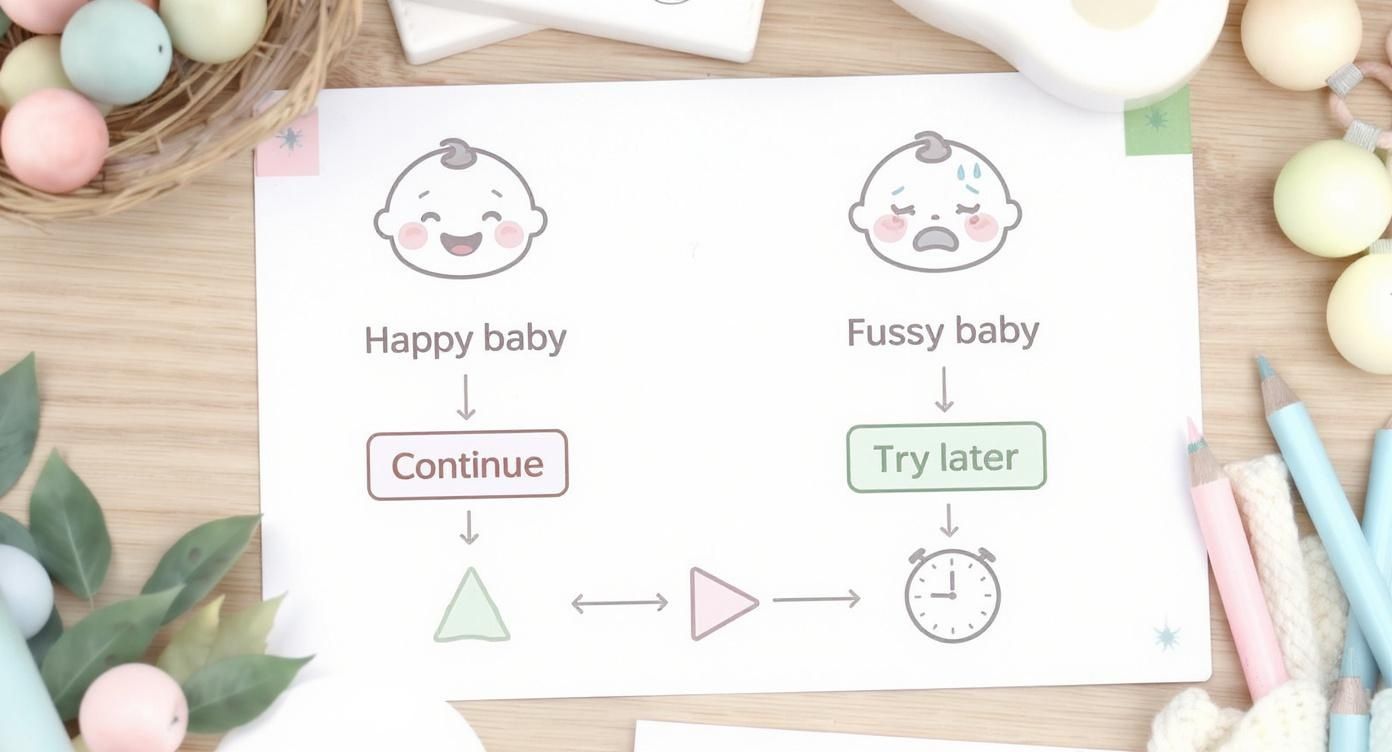
The key takeaway is simple: always follow your baby's lead. Keep going when they’re content and enjoying themselves, but press pause the moment they show you they need a rest.
Guidance from the NHS and Public Health England consistently highlights that this kind of responsive, face-to-face interaction is how newborns learn best. Simple things like talking, singing, and making eye contact are powerful tools for developing their communication and social skills from day one. You can discover more about how these early interactions shape long-term child development outcomes on GOV.UK.
Weaving Play into Your Daily Newborn Rhythm
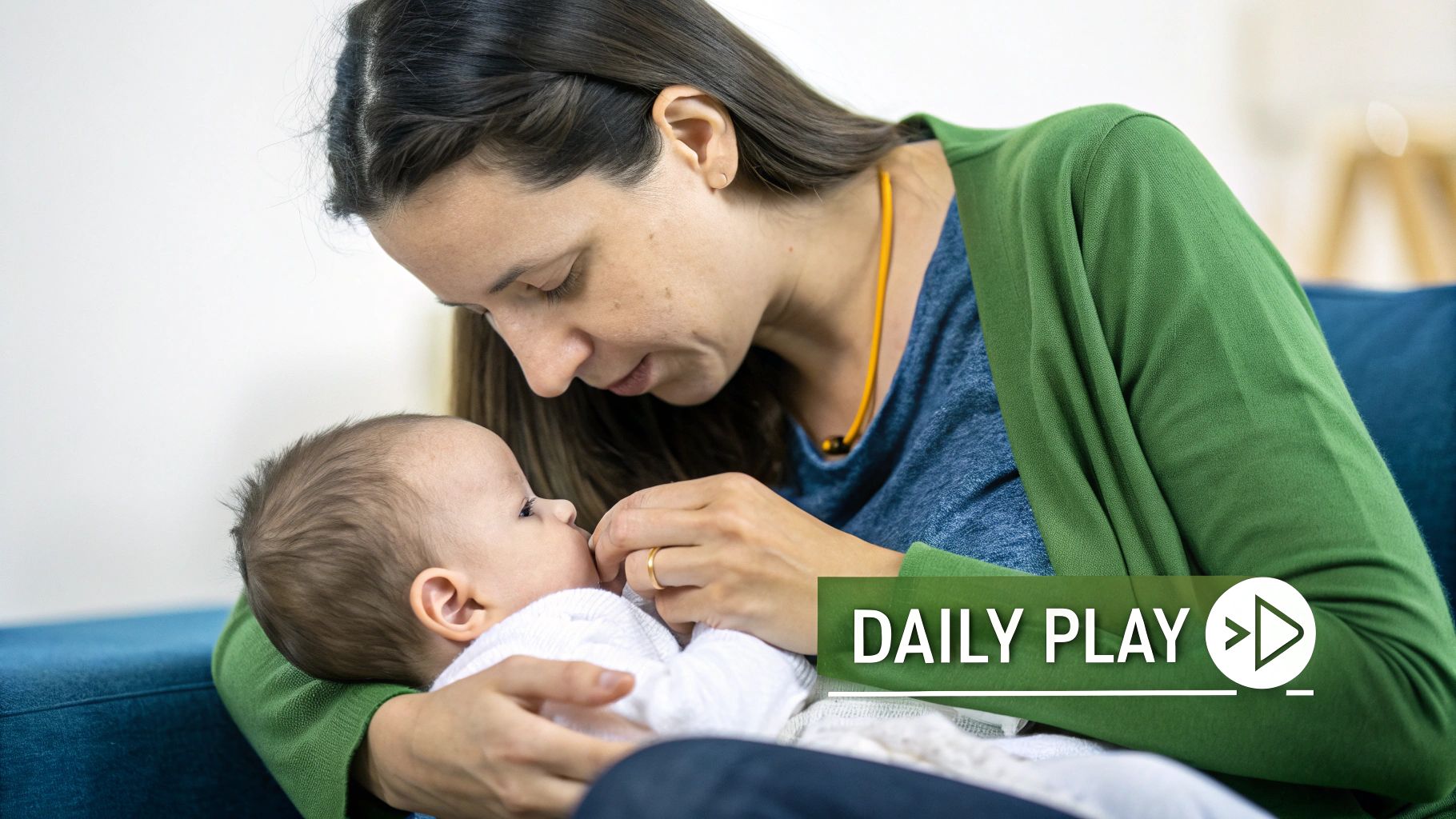
When you’ve just brought a newborn home, trying to stick to a rigid schedule can feel impossible, not to mention stressful. A much gentler approach is to think in terms of a 'rhythm' rather than a routine. This mindset shift helps you spot opportunities to naturally weave tiny, meaningful moments of play into your day.
The goal isn't to block out an hour for dedicated playtime. It's about recognising those little windows that pop up between feeds, naps, and nappy changes. Sprinkling these brief, loving interactions throughout the day is incredibly powerful for your baby's development.
Knowing how to play with a newborn is really more about mindset than a timetable. It's about seeing the potential for connection in every moment you share.
Your Five-Minute Play Recipes
Here are a few simple 'play recipes' perfect for those short but sweet moments when your baby is calm and alert. The best part? They require no special equipment—just you.
- During a Nappy Change: As you’re changing them, gently bicycle their legs while singing a soft song. You can also blow soft raspberries on their tummy to get a giggle, mixing touch and sound in a wonderfully joyful way.
- While Waiting for a Bottle to Warm: This is a great time to hold your baby in front of a mirror. Talk to their reflection and your own, pointing out their eyes, nose, and mouth. Newborns find the visual stimulation of faces absolutely fascinating.
- Post-Feed Cuddle: When your baby is snuggled up against you, gently stroke their tiny fingers and palms. Hum a low, calming tune right next to their ear. This simple act is wonderfully soothing and provides beautiful sensory input.
The real magic of these micro-play sessions is how they add up. A few minutes here and a few minutes there create a day rich with connection and stimulation, all without the pressure of a formal 'playtime'.
Your Ten-Minute Play Recipes
When you find yourself with a slightly longer window, you can string a few simple activities together. I've always found the best time for this is right after a bath, when baby is relaxed, warm, and content.
A post-bath session is a perfect example. You could start by laying your baby on a warm, soft towel for a minute or two of tummy time. Get down on the floor with them, face-to-face, chatting and smiling. This makes the whole experience feel safe and connected, not like a chore.
Afterward, scoop them up for a gentle baby massage with some baby-safe lotion. As you do it, talk them through what you’re doing: “Now I’m rubbing your little legs… and here are your tiny toes!” This combination of strength-building and soothing touch is a beautiful way to wind down.
Another lovely idea is to create a mini sensory tour around your home.
- Start by carrying your baby to a window. Describe the light filtering in or the shapes of the trees outside.
- Next, wander into another room and let them gently feel the texture of a soft blanket or a smooth wooden picture frame.
- Finish with a quiet cuddle in a rocking chair, swaying gently from side to side. This simple motion is great for stimulating their vestibular system (their sense of balance).
This rhythm-based approach takes the pressure off. It reframes play as what it should be: a natural, joyful extension of the love and care you’re already pouring into your little one every single day.
Common Questions About Playing With Your Newborn
Even with all the expert advice out there, it’s completely natural to have questions when it comes to playing with your newborn. This stage is so fleeting and precious, and you just want to get it right. Let's walk through some of the most common worries to help you feel more confident.
The simple truth is, if you're worrying about it, you're already doing a fantastic job. Your love and attention are what matter most.
Am I Doing Enough Play With My Newborn?
This is probably the number one question on every new parent’s mind. With an endless stream of information online, it’s so easy to feel like you should be doing more. The simple, reassuring answer is yes, you are almost certainly doing enough.
Newborns have incredibly short awake windows – sometimes as little as 45 minutes at a time. Play isn’t about cramming structured activities into every single one of those moments. It's all about quality over quantity. A few minutes of eye contact and gentle cooing during a nappy change, or humming a soft tune while you cuddle, are perfect examples of high-quality play.
Your presence is the most powerful developmental tool. The simple, loving interactions you have every day—cuddling, talking, and responding to their needs—are exactly what your baby needs to thrive.
What Are the Best Toys for a Newborn?
Honestly, in these first few months, the best 'toys' aren't toys at all. Your face, your voice, and your gentle touch are far more fascinating to your baby than any gadget ever could be. They are learning about the world through their senses, and you are their favourite sensory experience.
When you do feel ready to introduce a few simple items, think about things that appeal to their developing senses.
- High-contrast images: Black and white flashcards or board books are brilliant. A newborn's vision is still quite blurry, and these bold patterns are much easier for them to focus on.
- Soft textures: A silky scarf or a soft muslin cloth gently brushed against their skin provides lovely tactile stimulation they can really respond to.
- Gentle sounds: A soft rattle or a crinkly toy can be introduced for very short bursts to engage their hearing without being too much.
You really don't need a room full of equipment. As you celebrate this special time, you might even find joy in more traditional keepsakes, like creating a beautiful baby announcement cross stitch.
How Long Should Play Sessions Last?
For a brand-new baby, less is definitely more. Their tiny nervous systems are still developing and can get overwhelmed in a flash. Aim for short and sweet play sessions that last just 5–10 minutes at a time.
The key is to watch your baby, not the clock. If they start looking away, getting fussy, or making jerky movements, that's their way of telling you they’ve had enough fun for now. It’s always best to end on a positive note, before they get overwhelmed. That way, playtime remains a happy and connecting experience for both of you.
Here at Grow With Me, we know that figuring out your baby's development can feel like a lot. Our curated play kits take the guesswork out of playtime by delivering stage-based, high-quality toys right to your door. Each kit also includes handy description cards to guide you, helping you make every moment meaningful.
Explore our subscription boxes and start your play journey with confidence