
Building blocks for babies: Safe, fun ways to boost early development
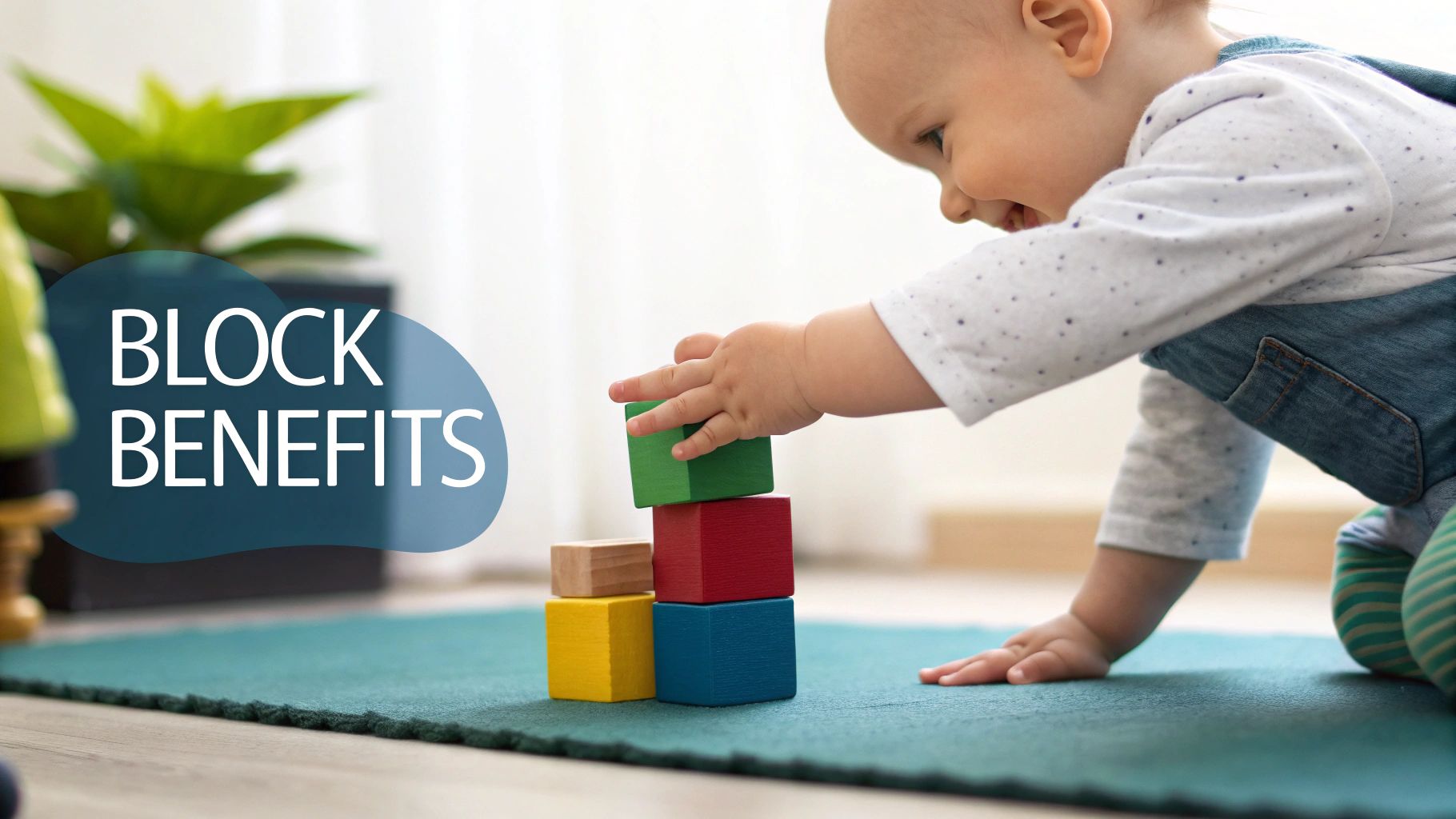
Building blocks aren’t just toys—they’re the first challenge gym for tiny hands and curious minds. Early block play fires up finger strength, hones coordination and sparks problem-solving instincts.
When babies reach for a block, they’re not only stacking—they’re experimenting with balance, gravity and cause and effect.
H2: Why Building Blocks Matter
That moment when a tower wobbles and falls is pure discovery. As little ones grasp and release, they build the muscle control needed for self-feeding and, later on, pencil writing. This tactile exploration also lays the groundwork for more complex tasks.
Key benefits include:
- Fine Motor Skills: Strengthened by every pinch and release, preparing tiny hands for spoons and crayons.
- Cognitive Wiring: Sorting shapes and colours ignites early pattern recognition and logical thinking.
- Language Development: Narrating “stack” and “crash” weaves new words into a baby’s vocabulary.
- Social Interaction: Sharing and trading blocks teaches patience, cooperation and turn-taking.
“Block play is a hands-on way for babies to conduct experiments on gravity and balance,” says child development expert Dr Sarah Evans.
Before we dive deeper, here’s a snapshot of how blocks boost development:
Overview of Building Blocks Benefits
| Category | Benefit | Key Takeaway |
|---|---|---|
| Motor Skills | Strengthens hand and wrist control | Builds foundation for writing feeds |
| Cognitive Growth | Encourages pattern and shape recognition | Fuels problem-solving abilities |
| Communication | Expands vocabulary through play narration | Enhances listening and speaking |
| Emotional Bonding | Promotes cooperative play | Nurtures social and emotional skills |
This table highlights the core areas where block play really shines, showing both developmental wins and safety pointers.
H3: Safety And Selection Reminders
Always opt for blocks without tiny pieces to eliminate choking risks. Choose rounded edges and non-toxic, bite-safe finishes that meet UK toy standards. Look for easy-clean surfaces—ideal when teething leads to a sudden chewing phase.
H3: Why Subscription Removes The Guesswork
Finding the right block set for each growth stage can feel like a research marathon for busy parents. A Grow With Me subscription brings age-matched kits straight to your door, complete with cards explaining each block’s purpose.
- Curated Growth Path: Blocks designed for specific motor and cognitive milestones.
- Time-Saving Convenience: No more scouring toy aisles or vetting safety certifications.
- Guided Play Prompts: Insightful cards suggesting progression activities and safety tips.
Over time, this stage-based approach keeps play fresh and developmentally on point—so your child moves ahead with confidence and curiosity.
Invest in building blocks now, and you’re setting the stage for tomorrow’s confident learner.
Understanding Building Blocks For Babies
Simple blocks might look unassuming, but for tiny explorers they’re pure magic. Each vibrant cube invites little fingers to discover different textures and weigh up its heft.
This blend of surface and colour awakens the senses and sparks genuine curiosity.
- Strengthens fine motor skills as babies grasp and release
- Reinforces eye–hand coordination with every swipe or grab
- Introduces balance concepts through stacking and tipping
- Boosts problem-solving as infants learn to predict what happens when blocks collide
For example, a six-month-old batting blocks isn’t just play—it’s an introduction to cause and effect. Over time, that simple knock-down game lays the groundwork for more complex stacking challenges.
Sensory And Motor Foundations
By pinching block edges, babies develop the pincer grip that will one day help them feed themselves or hold a crayon. As they explore size and shape differences, they sharpen visual discrimination skills.
- Tactile feedback builds neural pathways essential for future handwriting
- Grasp–release cycles strengthen wrist and arm muscles
Cognitive Growth Through Play
When little ones attempt to build towers, they’re unwitting scientists at work. As they add one cube and then another, they observe how balance shifts—and learn to anticipate when the tower might tumble.
Guidance from the NHS and leading charities highlights clear milestone activities: infants start lifting their heads around three months, and by six months are ready to reach, grasp and explore. For a deeper dive into sensorimotor milestones, visit the government website.
Blocks are the first building bricks of a baby’s mind and body growth.
Real World Block Examples
Around nine months, a baby might bat blocks across a soft surface, honing precision and strength at the same time. By twelve months, stacking two cubes can become a flash of pride: that first wobbly tower is a milestone worth celebrating.
| Stage | Action | Skill |
|---|---|---|
| Three Months | Lifting head | Neck control |
| Six Months | Grasping blocks | Hand–eye coordination |
Language And Social Benefits
Blocks can easily turn into storytelling tools. As you name shapes, colours and movements—“stack”, “crash”, “topple”—you layer language onto their play.
- Saying “stack” and “crash” connects motion with words
- Inviting caregivers to join simple building games sparks social interaction and confidence
Why Blocks Matter
Understanding the “why” behind block play transforms random stacking into intentional learning moments. This insight helps caregivers choose sets that align perfectly with an infant’s current abilities.
A stage-based subscription like Grow With Me takes the guesswork away. Each kit arrives timed to a specific developmental window and includes clear play ideas:
- Curated sets that evolve with your baby’s skills
- Monthly deliveries to keep interest high
- Guidance cards explaining each block’s purpose and suggested activities
With this approach, every colourful cube continues to challenge and delight little minds.
Building A Sturdy Foundation
Imagine each cube as a brick in your baby’s development house. Just like mortar holds bricks together, repetition cements new skills until they become second nature. And when towers tumble? That’s a safe moment to learn resilience.
- Rebuilding after a collapse teaches persistence
- Designing new structures ignites creativity alongside physical growth
Subscription Simplifies Selection
Choosing blocks can feel overwhelming, but stage-based services like Grow With Me clear the clutter.
- Monthly kits that match your baby’s evolving milestones
- Simple instructions guiding parents through each play session
- Over 80% natural materials for safety and sustainability
In short, a subscription means every block in your home supports growth—and builds confidence.
Benefits Of Blocks By Age And Stage
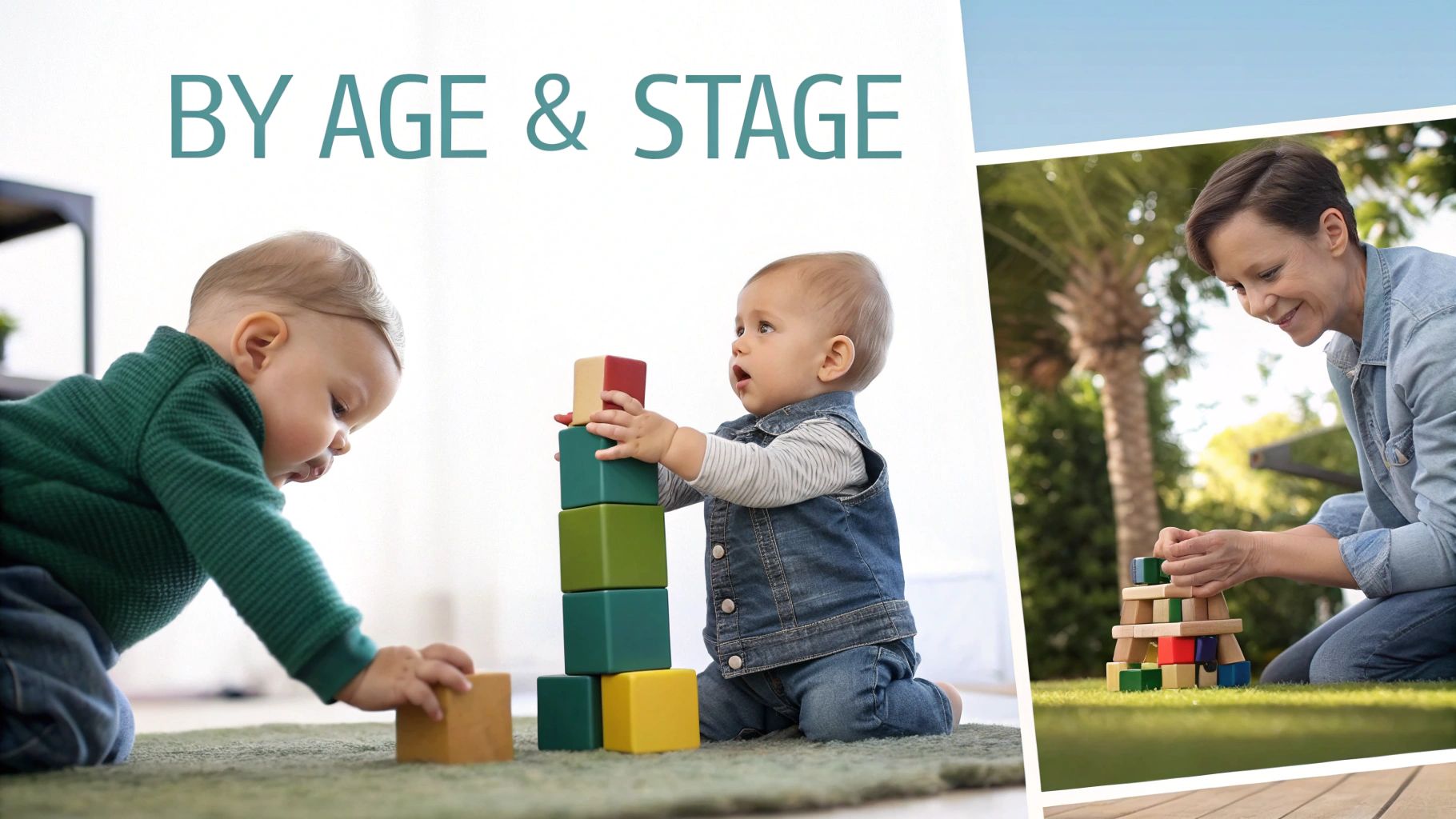
Block play evolves just like a tailored exercise routine for tiny hands and growing brains. From that first curious swipe to teaming up with playmates, each stage brings fresh challenges and big rewards.
Three To Nine Months
As little ones near three months, they start batting at toys to test cause and effect. By six months, foam blocks sharpen hand-eye coordination and strengthen those first grasping fingers.
- Head Lift & Grasp at three months
- Swipe Experiments around six months
- Single Block Stack by nine months
These simple steps lay the groundwork for more advanced building later on.
Twelve To Eighteen Months
Around a year old, wobbly two-block towers become a thrilling milestone. Naming each colour or motion boosts budding vocabularies, too.
- Colour sorting with two blocks
- Pattern play using three cubes
- Copying simple shapes drawn on paper
Sprinkling in everyday words—like “red block” or “stack higher”—encourages language alongside motor skills.
Eighteen Months And Beyond
Once toddlers hit 18 months, they often team up to create bigger structures. It’s a wonderful time for negotiation, collaboration and social learning.
“Blocks become tools for social learning and vocabulary growth, forming shared experiences.”
- Building simple bridges together
- Alternating colours to form patterns
Caregivers will notice growing confidence as children assign roles and solve design puzzles together.
Across England, 80.4% of children aged two to two and a half years hit expected milestones in communication, motor skills, problem-solving and social interaction in 2023–2024. Read more about these development outcomes at two years in this report.
Tips To Track Progress
- Keep a Milestone Journal to jot down new skills
- Photograph each week’s tallest stack
- Use playful prompts like “Can you build it taller?”
When progress slows, introduce fresh shapes or vivid colours to spark renewed interest.
Next Skill Targets
- Stack four to five blocks by 24 months
- Construct simple houses and bridges
- Invite toddlers to narrate their play
A stage-based subscription like Grow With Me removes the guesswork. Monthly kits arrive just as your child is ready, complete with clear activity cards explaining each block’s purpose. That means less clutter, higher engagement and more time for you to enjoy the magic of play—every single session.
Safety And Material Considerations
Choosing building blocks for tiny hands is all about peace of mind. Safety sits at the heart of every decision, whether you’re browsing online or in-store. After all, a well-crafted toy should survive curious tugs and enthusiastic throws without posing any risks.
UK paediatric experts rely on RCPCH–WHO Growth Charts to match toy dimensions with each stage of a child’s development. These charts plot length, weight and head circumference for 0–4-year-olds, helping you steer clear of choking hazards. Learn more about these growth benchmarks from RCPCH–WHO Growth Charts.
- Rounded Edges to minimise bumps and scrapes
- Non-Toxic Finishes free from lead and harmful chemicals
- Appropriate Sizing for tiny grips and mouths
- Washable Surfaces that resist mould and bacteria
Checking Certifications And Labelling
Before you add any new set to the nursery shelf, scan the packaging for the CE mark and the BS EN 71 British toy safety standards. These labels guarantee independent testing for mechanical strength, chemical safety and flammability.
Take a moment to study the age recommendation and warnings about small parts. That extra glance could prevent a choking incident when teeth are just beginning to emerge.
Always verify certifications before adding toys to a baby’s play area
Cleaning And Sterilisation Tips
A quick wipe-down after each session keeps germs at bay. For wooden and plastic blocks, use a mild, diluted detergent and a soft cloth.
Foam blocks can usually go in a gentle machine wash or be spot-cleaned by hand. Just remember to air dry them completely to avoid damp odours and mould growth.
Numbered Steps For Cleaning
- Remove loose debris with a soft cloth
- Apply a baby-safe cleaning solution
- Rinse thoroughly if the material allows
- Air dry in a well-ventilated spot
Comparing Material Options
Every material brings its own feel and safety profile. By understanding these subtleties, you can tailor your selection to your baby’s developmental stage.
- Wooden Blocks deliver sturdy, tactile surfaces but need non-toxic sealants
- Plastic Blocks sparkle with bright colours and simple wipe-clean care; look for BPA-free labels
- Soft Foam Blocks cushion tumbles and delight early explorers who love to mouth everything
| Material | Safety Feature | Cleaning Tip |
|---|---|---|
| Wooden | Durable grain, non-toxic lacquers | Wipe with damp cloth |
| Plastic | BPA-free, smooth edges | Dishwasher safe or wipe down |
| Soft Foam | Soft, chew-resistant, lightweight | Machine wash in laundry bag |
Subscription services like Grow With Me take the guesswork out of safe play. Each delivery arrives with age-appropriate, certified blocks and clear care instructions, ensuring you never worry about size, material or readiness.
Best Practices For Safe Play
- Store blocks in a dry, well-lit area
- Discard any broken or chipped pieces immediately
- Rotate sets to keep little minds engaged
- Always supervise toddlers during block play
By following these simple steps, you’ll create a secure environment where your baby can explore, learn and grow with confidence.
Comparing Block Materials
Choosing the right blocks at each developmental stage makes a real difference in your baby’s play and learning. Wooden, plastic and soft foam blocks each bring unique strengths—from sturdy stacking to gentle squeezes.
Here’s how five core factors shape your decision:
- Durability measures how long blocks resist wear, bumps and teething marks.
- Safety focuses on non-toxicity, smooth edges and baby-proof design.
- Sensory Feedback captures texture, weight and temperature cues that spark curiosity.
- Cleaning reflects how easily you can wash or sanitise pieces after play.
- Price reveals the investment needed for quality materials and craftsmanship.
Key Comparison Criteria
These five factors act like stepping stones, guiding you through choices that match your child’s skills and interests. You’ll trade off toughness, cost and tactile reward as your baby grows from mouth-explorer to mini-architect.
Here’s a quick side-by-side glance at the three block materials:
Comparison of Block Materials
| Material | Durability | Safety | Sensory Feedback | Cleaning | Price |
|---|---|---|---|---|---|
| Wooden | High with proper care | Non-toxic finish, rounded edges | Grainy feel, warm weight | Wipe clean | £££ |
| Plastic | Very high | BPA-free, smooth surfaces | Slick texture, bright colours | Dishwasher safe | ££ |
| Soft Foam | Medium | Chew-safe foam, soft edges | Cushioned feel, lightweight | Machine washable | £ |
As this table shows, wood stands out for its rich tactile signals but comes at a higher price. Plastic scores top marks for durability and quick clean-ups. And foam wins hearts with gentle edges and affordability.
Material Safety Highlights
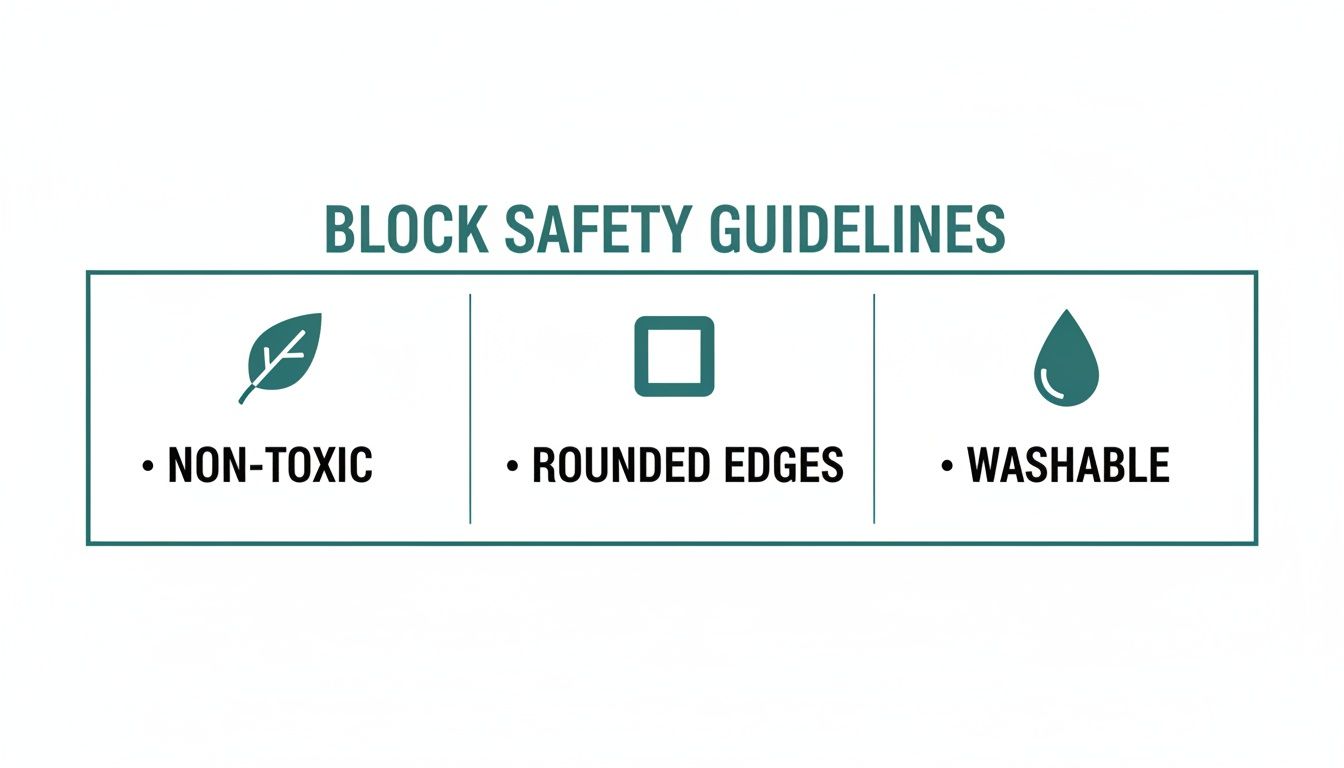
Safety is non-negotiable in those first stacking experiments. Look for:
- Icons signalling non-toxic coatings, rounded corners and easy-wash surfaces.
- A solid finish that won’t chip or splinter under pressure.
- Chew-friendly design when teething starts to rule the nursery.
Foam Block Benefits
Soft foam blocks shine during those early months when everything goes straight to the mouth. They:
- Absorb tumbles and cushion every squeeze.
- Mute the clatter that comes with hard blocks.
- Encourage sensory play without worry of sharp corners.
Despite medium durability, foam’s low price and chew-safe surfaces make it a go-to for babies aged three to nine months.
You might be interested in our guide on wooden educational toys for more insight into care and craftsmanship.
Selecting Materials Over Time
A smart block collection evolves with your child:
- 3–9 months: Start with foam for mouthing safety and texture exploration.
- 9–12 months: Introduce wooden blocks to boost stacking skills and fine motor play.
- 12+ months: Add plastic pieces to spark colour learning and speed up tidy-ups.
“Rotating materials supports varied stimulation and keeps block play fresh across developmental windows.”
As skills grow, mix wood, plastic and foam to balance durability, cost and tactile joy. For busy families, a stage-based subscription like Grow With Me Subscription Box delivers the perfect block mix right when your baby is ready to explore new textures and challenges.
Choosing Age Appropriate Sets And Subscription Options
Selecting building blocks can feel like navigating a toy shop labyrinth. With shapes ranging from chunky foam cubes to sleek wooden bricks, it’s easy to get lost. Yet, a few guiding principles can turn that maze into a clear path.
When you match a set’s features to your child’s abilities, play becomes both safe and rewarding. Think of it like choosing between a small toolkit and a full workshop—piece count, complexity and safety matter most.
- Piece Count Determines Engagement: 4–8 chunky blocks help tiny hands master stacking without frustration.
- Complexity Level Sets The Challenge: Soft foam cubes suit newborns, while multi-part kits inspire older infants.
- Safety Standards Are Non-Negotiable: Always check for BS EN 71 certification and smooth, non-toxic finishes.
Such a framework makes it simple to zero in on sets that match your baby’s stage. You’ll avoid impulse buys and focus on developmental value.
Tips For Choosing Quality Sets
Here are a few pointers to help you pick reliable sets that stand up to teething and playtime:
- Look for chunky handles or ridges so little fists can grip blocks confidently.
- Scan consumer reviews for real-world feedback on durability.
- Prioritise easy-clean, mould-resistant materials that stay hygienic.
- Combine textures—smooth wood, soft foam and fabric—to enrich sensory exploration.
These tips narrow your focus to the most dependable, baby-safe options.
Identifying Key Milestones
Building blocks naturally dovetail with babies’ growth spurts. Picture each stage as laying bricks in a small tower of skills.
By 3 Months, infants lift their heads and swat at hanging toys, learning cause and effect. By 6 Months, pincer grasp emerges and they mouth everything in reach. At 9 Months, stacking two or three cubes becomes their favourite challenge.
- Age 3–6 Months: Start with jumbo, lightweight blocks that roll and wobble safely.
- Age 6–12 Months: Introduce medium wooden cubes for initial towers and simple sorting.
- Age 12–18 Months: Bring in interlocking plastic or foam pieces to explore patterns.
- Age 18+ Months: Add vibrant themed kits that invite storytelling and cooperative play.
Regularly updating their blocks keeps each play session on-point and engaging. You’ll watch them master new skills with every swap.
Subscription Options And Ongoing Curation
Rather than hunting for safe, age-appropriate kits, imagine a monthly parcel arriving like clockwork. That’s the perk of a stage-based subscription.
Sarah, a busy mum of one-year-old Liam, found her evenings suddenly belonged to playtime—not browsing toy aisles. Each box arrived with clear cards explaining how every block supports fine motor skills, language development and cognitive growth.
“Grow With Me took the guesswork out of toy shopping, so I focused on playing together,” says Sarah.
| Option | Convenience | Cost Efficiency | Variety |
|---|---|---|---|
| One-off Purchase | High initial search | Varies | Static |
| Subscription | Delivered monthly | Predictable | Evolving with stages |
Learn more about UK baby subscription options in our comprehensive guide to baby subscription boxes.
Benefits Of Stage Based Play Delivery
Stage-based subscriptions do more than simplify deliveries; they map every piece to your child’s current needs. Here’s how they effortlessly support learning:
- Curated kits arrive aligned with motor and cognitive milestones.
- Every set meets BS EN 71 and other UK safety regulations.
- Instruction cards offer fresh play ideas and next-step challenges.
- Flexible plans adapt as routines and skills evolve.
By automating the match between toys and developmental stages, caregivers enjoy consistent learning benefits and lasting engagement. It’s play that truly grows with your baby.
Combine a clear decision tree with a stage-based subscription, and you always deliver the right challenge. Watch your little builder stack new abilities, one block at a time.
Play Ideas And Progression Activities
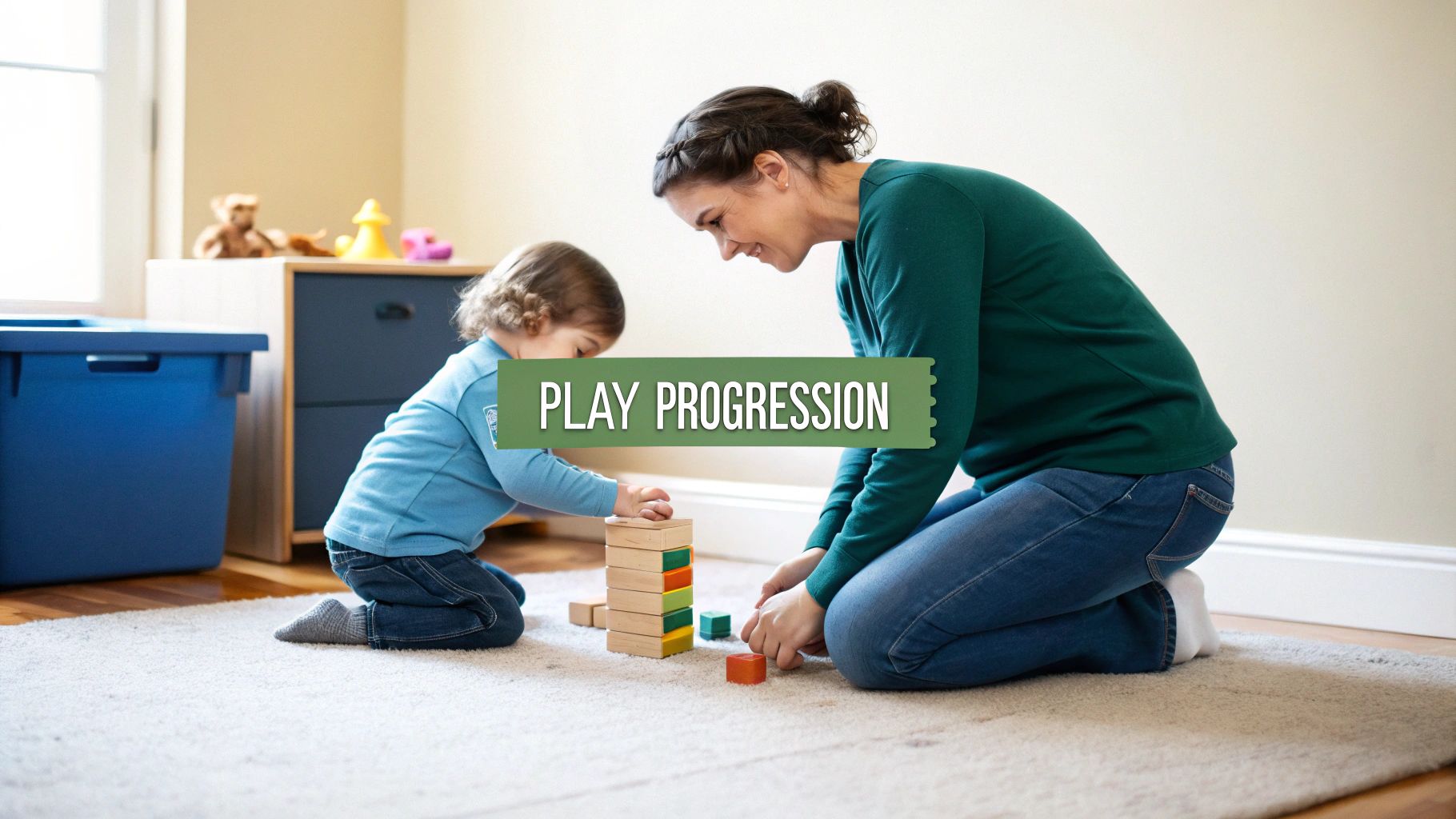
As soon as your baby’s block set arrives, you’ll notice a spark of curiosity. Those bright cubes instantly become a tiny gym for gripping, tapping and stacking.
We often start with gentle prompts before letting little ones explore on their own. This balance of guidance and free play drives motor, cognitive and early language development.
Simple Reach And Stack Games
In the early months, it’s all about reach, grasp and release. Imagine your baby batting soft foam cubes like they’re building a miniature skyscraper.
- Place 2–3 chunky blocks within arm’s length to encourage swipes and taps.
- Hold one block upright, let go slowly and watch them copy the motion.
- Applaud every successful stack—positive feedback fuels persistence.
These activities help 3–6 Months olds master eye–hand coordination and develop wrist control.
Learn more about foundational motor skills in our guide on fine motor skills in infants.
Colour Sorting And Pattern Matching
Around 6–9 Months, adding colours and patterns takes play to the next level. Simple wooden blocks painted in primary hues turn into sorting tools.
- Offer a basket of red, blue and yellow cubes and invite grouping by colour.
- Lay out a red–blue–red sequence and encourage your baby to copy it.
- Narrate each colour as you stack, weaving in new words and concepts.
Colour sorting acts like a vocabulary-building exercise, linking names with objects.
These steps sharpen visual discrimination and lay the groundwork for logical thinking.
Story Building Towers
By 9–12 Months, towers can become playful story props. Suddenly, each block has a personality.
- Choose blocks of different shapes and sizes as characters.
- Give the “tall block” a heroic role and the “small cube” a sidekick part.
- Build scenes together, describing how “the hero climbs to the top.”
When your toddler knocks the tower down, they learn cause and effect—and enjoy a shared laugh.
Progressive Play Roadmap
| Age Stage | Focus Activity | Key Skill |
|---|---|---|
| 3–6 Months | Reach and Stack Basics | Eye–Hand Coordination |
| 6–9 Months | Colour Sorting | Visual Discrimination |
| 9–12 Months | Pattern Matching | Problem Solving |
| 12–18 Months | Story Building Towers | Language & Creativity |
Swapping in new challenges keeps interest high and skills growing. Mix guided games with free exploration to nurture both confidence and independence.
Tips For Guided And Free Play
Structured tasks give babies clear goals, while open-ended play invites self-discovery. Striking the right mix keeps every session fresh.
- Guided Play uses simple prompts to scaffold stacking and sorting, building success in small steps.
- Free Exploration lets your little one experiment with shapes, textures and movements at their own pace.
- Weekly Rotation swaps in new block shapes or colours, sparking curiosity all over again.
Free play is where curiosity meets creativity, leading to unique problem solving.
For example, a 15-month-old might recreate their favourite tower and add toy animals as new characters. Keep a photo journal or jot down milestones to celebrate each breakthrough. At 18 months, rotate themes—perhaps a farm or a jungle—encouraging social play and imaginative design thinking.
Grow With Me delivers curated building block kits matched to each developmental stage for hands-on growth.
Subscribe now at Grow With Me for monthly play deliveries.