

Fun Activities Gross Motor Skills to Help Your Child Thrive
Gross motor skills are all about the big movements – think sitting, crawling, walking, and eventually, that determined sprint across the park. The good news is you don’t need a mountain of expensive gear to nurture this development. It’s all about creating moments of joyful, intentional play that build a powerful foundation for a lifetime of movement.
Why Gross Motor Skills Are a Big Deal
So, what’s really going on when your baby masters their first roll, or your toddler suddenly takes off running? It all comes down to gross motor skills. These are the fundamental abilities that use the large muscles in the arms, legs, and torso, giving children control over their bodies for those major movements we all celebrate.
From the very beginning, these skills are crucial. They’re what allow a newborn to lift their head during tummy time, a six-month-old to balance while reaching for a toy, and a toddler to navigate a playground with an incredible sense of confidence. This physical journey is deeply connected to their growing independence and self-esteem.
More Than Just Movement
Mastering gross motor skills is about so much more than just physical strength; it's a cornerstone of your child’s entire development. When a child learns to crawl or walk, their whole world opens up. This new perspective fuels their curiosity and kick-starts cognitive growth. They’re suddenly solving little problems ("How do I get around this cushion?") and figuring out spatial relationships on their own.
This physical progression has a knock-on effect in other areas, too:
- Social and Emotional Growth: Successfully climbing a small slide or kicking a ball is a huge confidence booster. Playing games like chasing bubbles or dancing with friends teaches cooperation and how to take turns.
- Fine Motor Development: It might sound surprising, but the core strength built from big movements helps stabilise the body. This makes it much easier for a child to sit still and focus on intricate tasks like drawing or stacking blocks.
- Independence: As they master walking, running, and climbing, children can explore their world more freely. This fosters a sense of autonomy that’s absolutely vital for their emotional well-being.
The journey of developing these skills is a beautiful, step-by-step process. This timeline gives a great overview of the typical progression, from rolling right through to running.
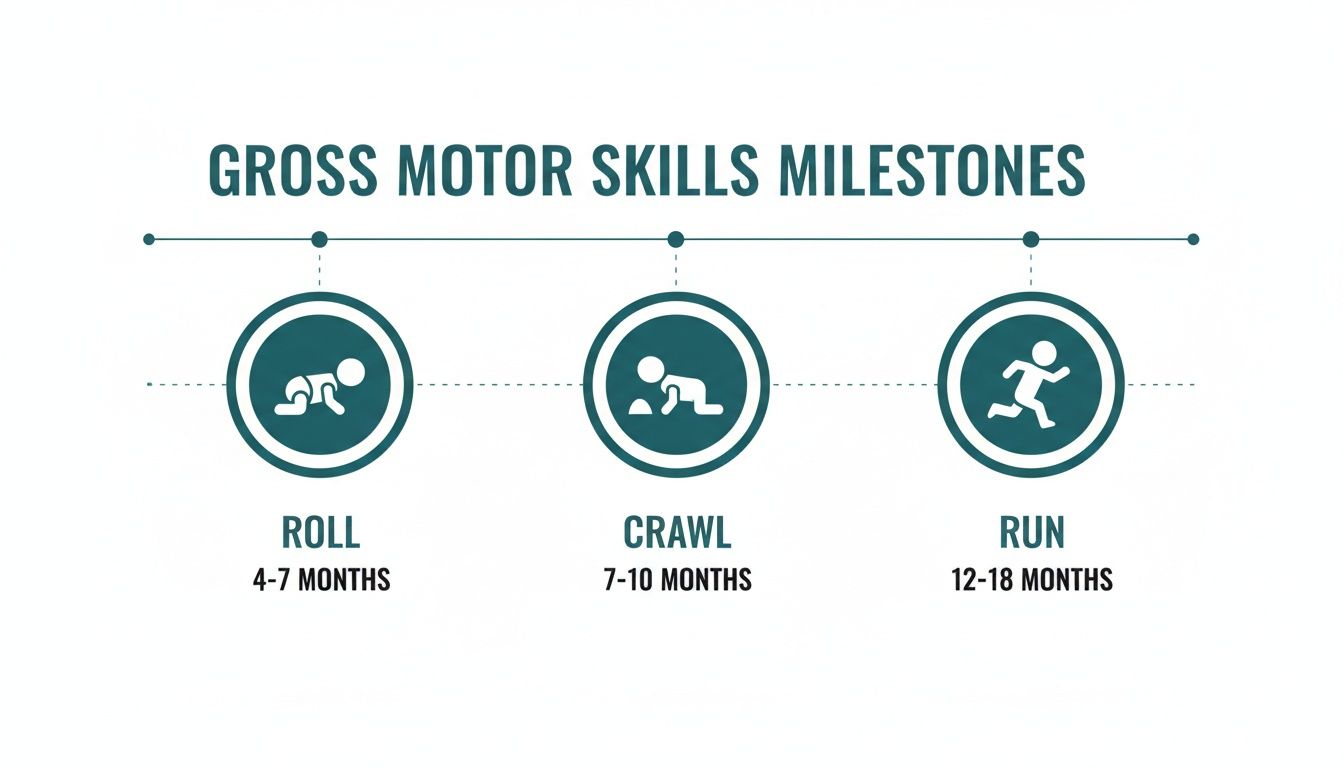
As you can see, each milestone builds on the one before it, creating a solid foundation for all the complex movements to come.
The UK Picture and Creating Safe Spaces
Here in the UK, supporting this development is a key part of early years education. Recent government statistics show that 81.4% of children in England aged 2 to 2½ reached a good level of development across all key areas, including gross motor skills. This really underscores how important it is to provide consistent opportunities for active play.
I’ve learned over the years that creating a safe and encouraging environment is the single most important thing we can do. It's not about pushing milestones, but about giving them the freedom and the right tools to explore movement joyfully and at their own pace.
A safe space, whether it's indoors or out, is an invitation for little ones to explore. For outdoor fun, a consistent, soft surface can make all the difference. To minimise scrapes and maximise playtime, some families opt for a safer artificial turf playground, which provides a brilliant, clean surface for all sorts of activities.
Once you understand why these skills matter so much, you can truly support your child’s incredible journey of movement.
Building Core Strength in Newborns: 0-6 Months
In those first six months, your baby is doing some seriously impressive work laying the groundwork for every movement to come. It might not look like much, but every little wiggle, stretch, and head lift is building crucial strength in their neck, back, and core. These early activities for gross motor skills aren't about a workout routine; they’re about gentle, playful interactions that make your baby feel secure and loved.
Think of this period as building the frame of a house before you can put up the walls. That strong core is what will eventually support sitting, crawling, and walking, and it all begins right here on the play mat.
Making Tummy Time a Positive Experience
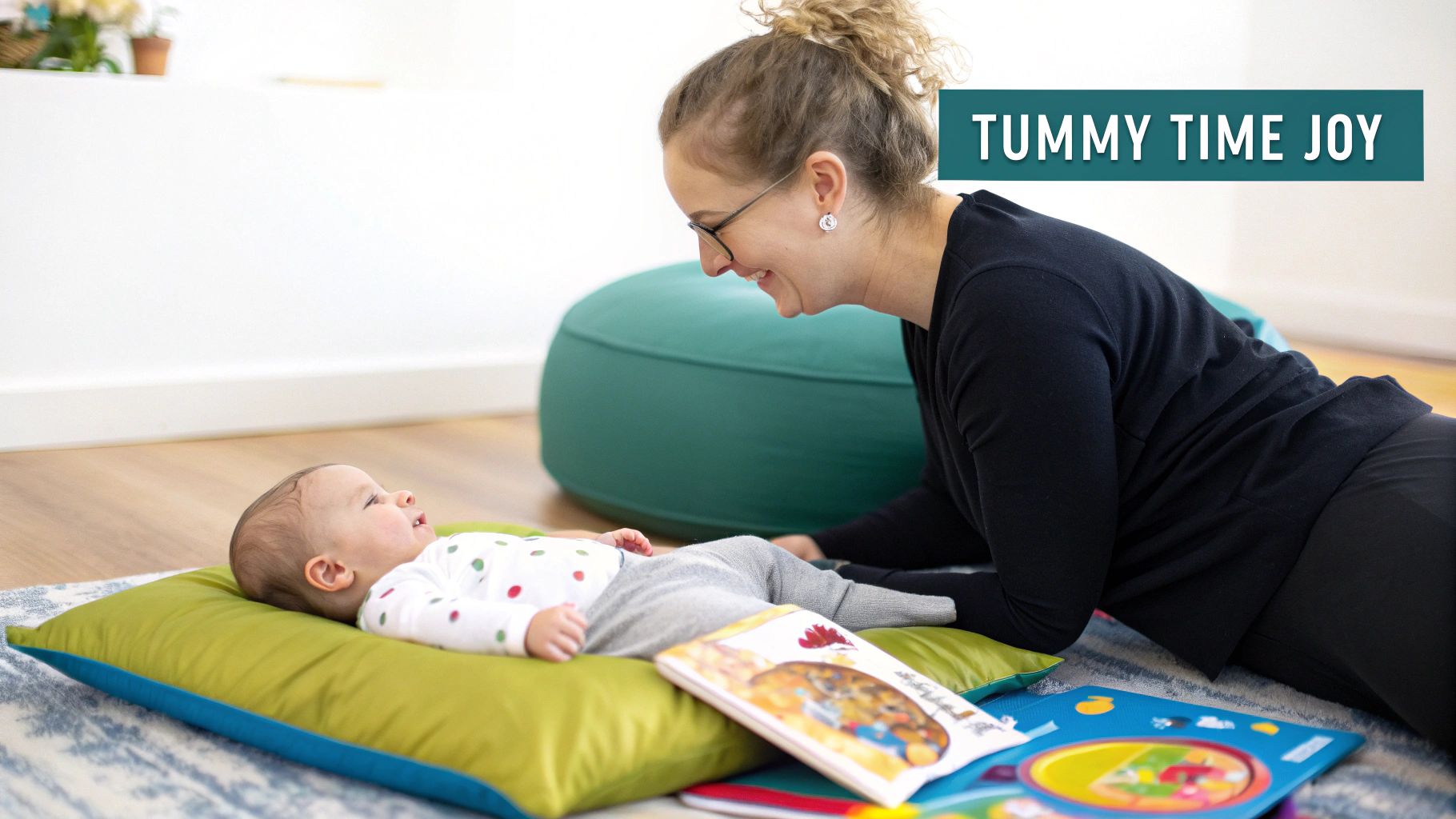
Tummy time is the absolute cornerstone of motor development for newborns, but let's be honest, many babies aren't its biggest fan at first. The secret is to make it a positive, engaging experience, not a daily battle.
Start with tiny sessions—I'm talking just a minute or two at a time, but several times a day. You can always build up from there. A great little trick is to place a rolled-up towel under their chest and arms for a bit of extra support, which can make a world of difference to their comfort. Get right down on the floor with them, face-to-face. Your presence is reassuring and turns it into a lovely bonding moment. Most parents I know find the sweet spot for tummy time is when their baby is awake, alert, and happy, often right after a nappy change.
One of the biggest mistakes I see is parents trying to push for a long tummy time session. It’s far better to have five happy, one-minute sessions than one stressful five-minute one. We're aiming for a positive association with the position.
To really get their attention, use something visually stimulating like the high-contrast toys or colourful board books from a Grow With Me kit. Place them just in front of your baby to encourage them to lift and turn their head, which does wonders for strengthening those vital neck muscles. Before you know it, they'll start pushing up on their forearms—a massive achievement! For a deeper dive, you can learn more about when to start tummy time in our detailed guide.
Gentle Exercises to Encourage Coordination
Beyond tummy time, you can weave other simple movements into your day-to-day routine. They just feel like play, but they’re powerfully effective for your newborn’s gross motor skill development.
- Assisted Rolling: With your baby lying on their back, gently guide one of their legs over the other. This little nudge encourages their body to follow and helps them get a feel for the motion of rolling, all while building the core muscles they'll need to do it on their own later.
- 'Bicycle Legs': While they're on their back, softly hold their legs and move them in a slow, circular bicycling motion. It’s a simple game that works on developing coordination between their hips, knees, and ankles.
- Tracking and Reaching: Dangle a soft, safe toy above them as they lie on their back. Move it slowly from side to side, encouraging them to follow it with their eyes. Eventually, they’ll start to reach for it, which is fantastic for building arm and shoulder strength.
Safety and Progression Tips
A quick but important reminder: always make sure these activities happen on a firm, flat, and safe surface, like a play mat on the floor. And never, ever leave your baby unattended, especially during tummy time.
As your baby's neck and core strength grow, you can start to mix things up. During tummy time, try placing toys just a little bit further away to encourage a pivot or a reach. With assisted rolling, you can gradually reduce how much help you give, letting them take the lead. Just remember, every baby hits these milestones at their own unique pace. The key is consistent, gentle, and playful encouragement that celebrates every tiny step forward.
Encouraging Movement for Sitters and Crawlers 6-12 Months
This is where the real fun begins. Between six and twelve months, your baby goes from being a fairly stationary little observer to a full-blown mobile adventurer. It's a massive transformation! As they master sitting up and start figuring out this whole crawling business, their world suddenly gets a lot bigger. Your job now is to be the chief cheerleader and safety officer for their newfound freedom.
This stage is less about structured 'exercise' and more about creating a home environment that just begs to be explored. You're setting the stage for their first great expeditions, turning the living room into a landscape of discovery. These playful activities build the strength, coordination, and confidence they need for that next huge milestone: walking.
Creating a Crawler's Paradise
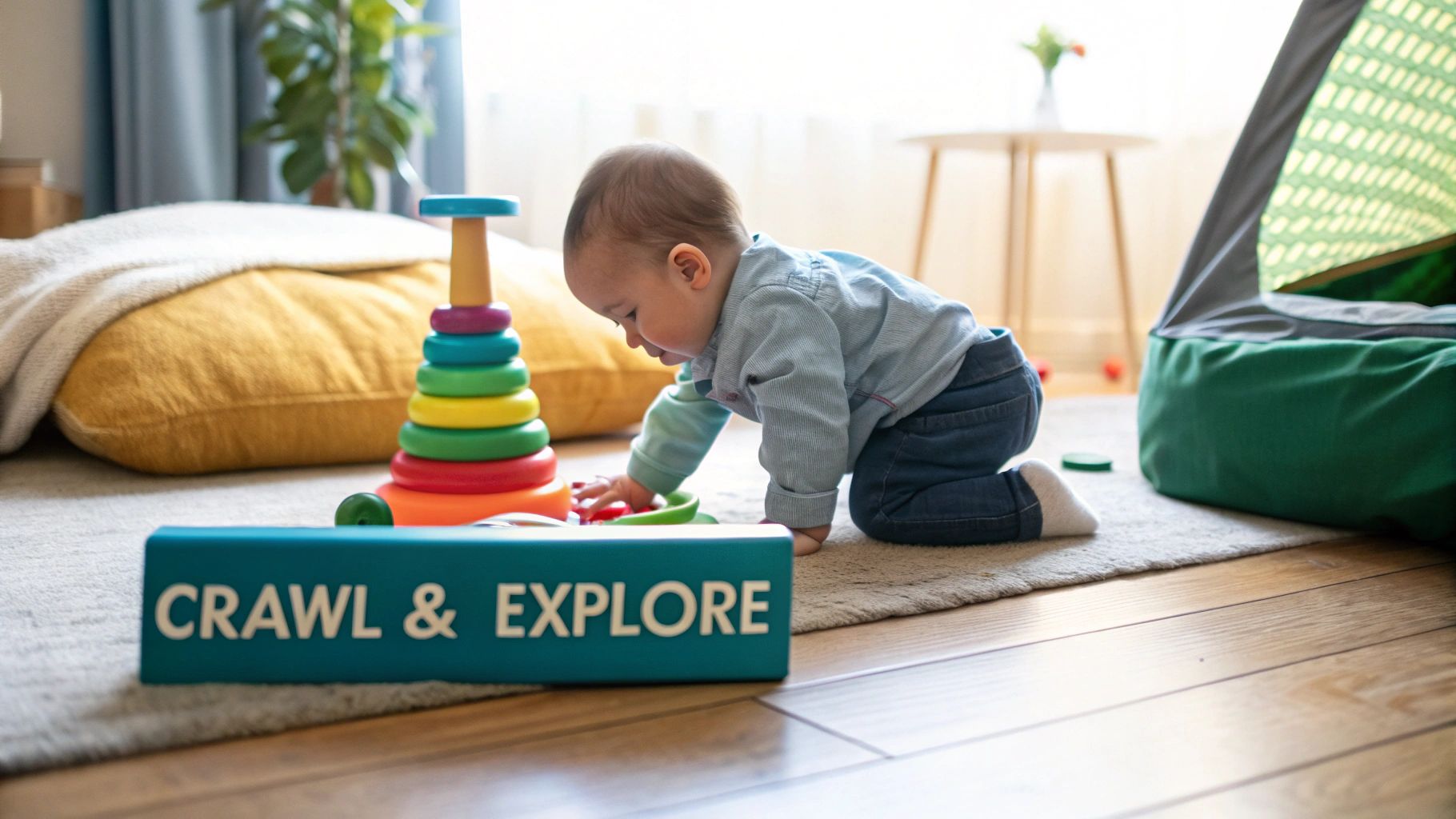
As soon as you spot those first signs of wanting to move, you can use simple things around the house to spark their motivation. A few firm cushions or sofa pillows on the floor can become a gentle 'mountain range' for them to conquer. Pop a favourite toy on the other side and just watch as their little brain works out how to get to it.
This mini obstacle course is fantastic because it encourages them to push up with their arms, rock on their hands and knees, and eventually launch themselves forward. It’s an amazing all-in-one workout for their arms, legs, and core. Plus, the different textures and heights add a great sensory element, making it all feel like a game. Just remember to start small to build up their confidence.
Your baby isn't just learning to move their body; they're learning how to plan a movement and execute it. This is a huge cognitive leap that happens when they figure out how to get from point A to point B to retrieve a toy.
Once they get the hang of it, a play tunnel can be a brilliant next step. Crawling through a tunnel helps them develop spatial awareness and body control in a really fun, contained way. These are the foundational skills for more complex movements down the line. To understand more about the different stages, have a look at our guide on what age babies crawl.
From Sitting to Standing
While crawling often takes centre stage, don't overlook the importance of seated play. Sitting up on their own takes a surprising amount of core strength and balance. You can help them build these skills by simply rolling a ball back and forth or placing toys just out of their immediate reach so they have to stretch.
Here are a few simple ways to support their balance and the transition to standing:
- Seated Reaching: While your baby is sitting, place an engaging toy, like the sturdy wooden stacking rings from a Grow With Me kit, slightly to their side. This encourages that little twist and reach, which is fantastic for strengthening core muscles and improving balance.
- Pulling Up: Sturdy, low furniture is your best friend here (think coffee tables with corner protectors). Place a really tempting toy on top to motivate them to pull themselves up to a standing position. This is a serious power-move for their leg and arm muscles.
- Cruising Practice: Once they can pull themselves up, they'll soon start "cruising"—shuffling sideways while holding onto furniture. A push-along toy, like a wooden walker, is brilliant for this stage. It offers just enough support to give them the confidence to try out those first tentative steps, with you right there beside them.
Baby-Proofing for a Mobile Explorer
Of course, this exciting new mobility comes with a critical new job for you: baby-proofing. The best way to do this is to get right down on your hands and knees and see the world from their perspective. What looks interesting? What could be dangerous?
Your essential checklist should include:
- Covering all electrical outlets.
- Securing heavy furniture (like bookshelves and chests of drawers) to the wall.
- Installing safety gates at the top and bottom of stairs.
- Moving cleaning supplies, medicines, and any small objects that could be choking hazards up high into locked cabinets.
- Tidying away loose cords and cables.
Creating a safe space isn't just about preventing accidents; it allows your child to explore freely without you constantly having to say "no". This freedom is vital for their development. Remember to cheer on every wobbly attempt and triumphant crawl. Every movement is a huge win, but every baby has their own timeline. The goal is progress, not perfection.
Boosting Confidence for Early Walkers: 1-2 Years
There's nothing quite like watching your little one take those first wobbly steps. It’s a huge milestone! But once that initial lurch forward is conquered, the real work begins. The journey from one to two years is all about building the balance, coordination, and sheer confidence they need to become steady on their feet. Expect a lot of wobbly walks and tumbles—every single one is a vital lesson.
This stage is about turning tentative steps into confident strides. The trick is to create a safe and encouraging space where practice feels like the best game in the world. Your role naturally shifts from being their physical support to being their biggest cheerleader.
From Wobbles to Walking
One of the easiest—and most fun—ways to build walking confidence is to simply put on some music. An impromptu dance party in the living room encourages your toddler to shift their weight, bend their knees, and balance in a really dynamic way. They get a fantastic coordination workout without even realising it.
A gentle game of ‘follow the leader’ also works wonders. Start by just walking in a straight line and having them toddle after you. Once they get a bit more stable, you can add small challenges, like walking in a circle or taking big, exaggerated "giant steps". These simple games teach them how to control their bodies and change direction, a surprisingly complex skill at this age.
The goal isn't just walking; it's about helping them understand how their body moves through space. Every stumble is a piece of feedback that their brain uses to refine balance and coordination for the next attempt.
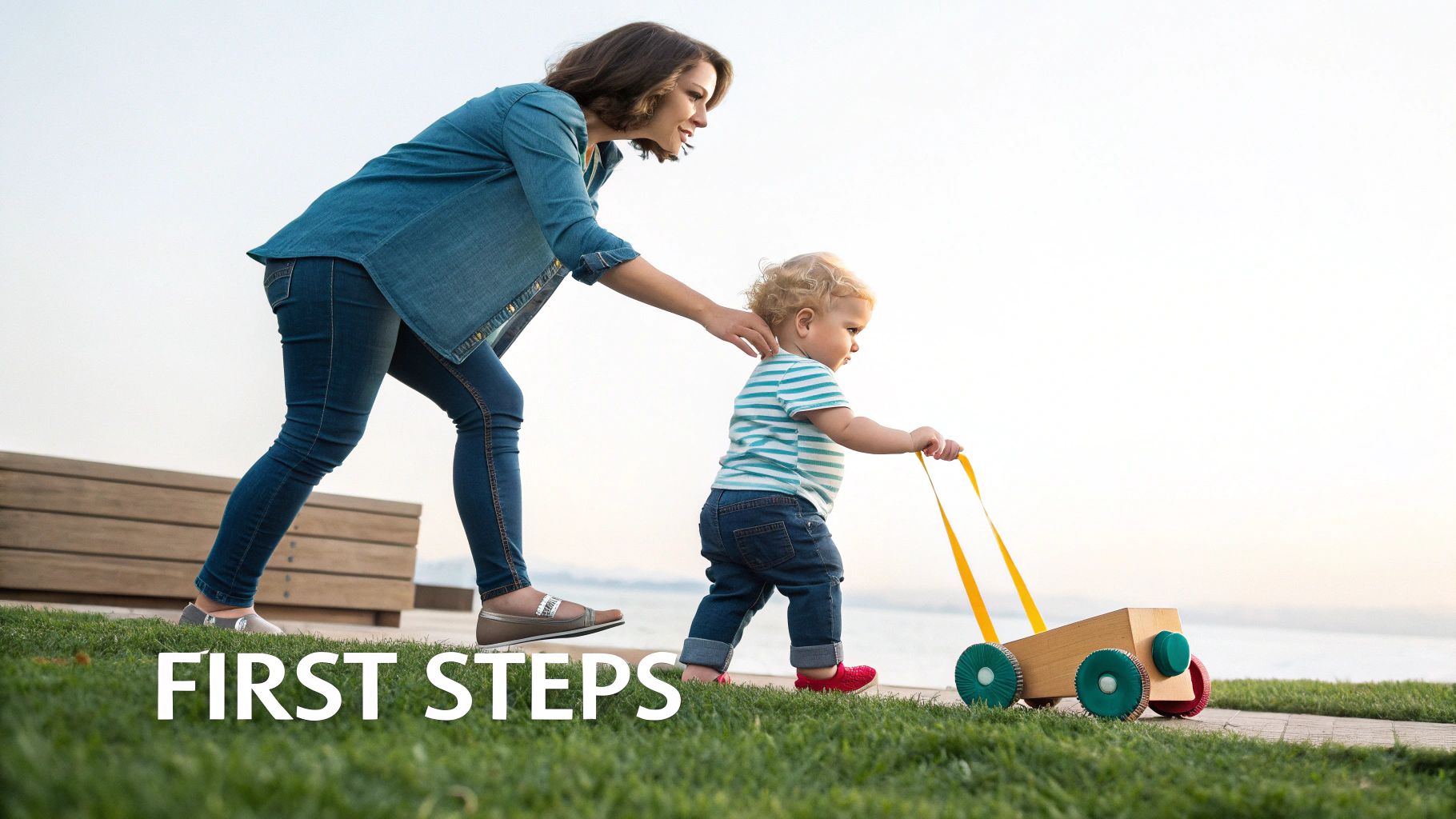
A classic pull-along toy can be a brilliant little companion for an early walker. It naturally encourages them to look forward with purpose, rather than down at their feet. Pulling something behind them actually helps to stabilise their torso and improves their overall balance as they move.
Adding Safe and Fun Challenges
When your toddler is walking with a bit more certainty, you can start introducing gentle challenges to refine their skills. This isn't about setting up a high-stakes obstacle course, but simply adding more variety to their movement.
A powerful way to do this is by walking on different surfaces. Let them feel the soft grass at the park, the slightly unstable texture of a sandy beach, or the plush give of a thick rug at home. Every new texture sends different signals to their brain, helping them learn to instinctively adjust their balance and foot placement.
Here are a few more ideas I’ve seen work really well:
- Gentle Ball Play: Grab a large, soft ball. At first, just rolling it back and forth is great. Soon, you can encourage a little kick. That action requires them to balance on one leg for a split second—a fantastic skill-builder for their core strength.
- Bubble Chasing: Honestly, who doesn’t love chasing bubbles? This activity is brilliant because it encourages running, stopping, starting, and changing direction, all while they're completely lost in the fun of it.
- Indoor "Hills": Use sofa cushions or pillows to create small, soft mounds on the floor for them to walk over. It’s a great way for them to practise navigating uneven terrain in a totally safe and controlled environment.
Creating a Confident Explorer
Making sure your little one has a safe space to practise is absolutely key. Clear the main walking areas of clutter and make sure any sharp furniture corners are covered. A clear runway gives them the confidence to really go for it without the fear of tripping.
It’s also reassuring to know that most children get the hang of these skills right on schedule. Official statistics for England in 2018/19 showed that an impressive 93.5% of children aged 2 to 2½ years achieved or exceeded the expected level in gross motor skills. This really shows how powerful everyday play and exploration are. You can review the full report and find out more about child development outcomes.
Ultimately, the most important thing you can offer is your calm and positive energy. When they fall, a quick cuddle and an encouraging "up you get!" teaches them resilience. By celebrating their efforts, not just their successes, you’ll be nurturing a confident, capable explorer who is ready to take on the world, one steady step at a time.
Refining Skills for Energetic Toddlers 2-3 Years
Once your toddler gets steady on their feet, the world basically becomes their personal adventure park. The phase between two and three is an explosion of energy and a real desire to test what their little bodies can do. This is when our focus on activities for gross motor skills shifts from just building basic strength to fine-tuning their coordination, balance, and more complex movements. It's all about channelling that incredible enthusiasm into fun that builds real skills.
And let’s be honest, while tiring them out before a nap is a fantastic bonus, there's so much more happening here. Every jump, throw, and climb is a complex workout for their brain and body. They're figuring out how to plan their actions, judge distances, and solve physical puzzles on the fly, which lays the groundwork for physical confidence later on.
Channelling That Boundless Energy
At this age, play gets a lot more ambitious. Simple walking quickly turns into running, marching, and stomping around the living room. It’s the perfect time to bring in games that challenge them to use their bodies in new and exciting ways, moving beyond just getting from A to B.
A classic game of 'Simon Says' is absolutely brilliant for this stage. Use big, clear instructions like, "Simon says, jump like a frog!" or "Simon says, stretch up to the sky!" It’s a simple game, but it’s doing so much – helping them listen, process instructions, and then translate those words into specific physical actions. That’s a huge cognitive and motor skill leap.
Another fantastic idea is to build an indoor fort with some blankets and cushions. The simple act of crawling through their homemade tunnel or clambering over a "mountain" of pillows is an incredible workout for their core muscles and sharpens their spatial awareness. They have to figure out how to manoeuvre their body to fit through the space—a great little problem-solving challenge.
Developing Advanced Coordination and Balance
As toddlers get more sure of themselves, you can start introducing activities that ask for a bit more precision and control. This is where they really begin to refine the skills that will eventually help them ride a scooter or catch a ball.
Here are a few targeted activities you can try:
- Beanbag Toss: Set up a laundry basket or a large cardboard box. Show your toddler how to toss soft beanbags (or even just rolled-up socks) into the target. This simple game is wonderful for developing hand-eye coordination and the very beginnings of an overarm throw.
- Balance Beam Fun: You don't need any special equipment for this one. A line of masking tape on the floor or the straight edge of a rug instantly becomes a "balance beam." Encourage them to walk along the line, trying to place one foot in front of the other. It’s a powerful and completely safe way to boost their balance.
- Jumping Practice: Learning to jump with both feet leaving the ground at the same time is a major milestone. Start by holding their hands and jumping together. You can also place something small and flat on the floor, like a colourful placemat, and encourage them to "jump over the puddle."
This stage is all about repetition and celebrating the effort, not the result. They might not get the beanbag in the basket the first 20 times, but every single attempt is strengthening neural pathways and building muscle memory. Your enthusiastic encouragement is the most important tool you have.
Recent data really brings home how important these play opportunities are. A concerning drop in 2022/23 saw only 92.8% of two-year-olds in England at or above expected gross motor skills levels, which was a slight decrease from the previous year. This dip happened alongside wider developmental declines, suggesting that post-pandemic shifts may have impacted chances for active play. You can discover more about these child development statistics and see why fostering this kind of play is more crucial than ever.
The toys in the later-stage Grow With Me kits are often designed with these developing skills in mind. They might feature items like larger building blocks that require lifting and careful placement, or puzzles with bigger pieces that challenge both fine and gross motor control. For even more inspiration, have a look at our guide on the best learning toys for 2-3 year olds. By providing the right challenges in a fun, playful way, you empower your energetic toddler to master their movements with joy and confidence.
Common Questions About Gross Motor Development
Watching your little one grow is incredible, but it's also a journey that can spark a lot of questions. Am I doing enough? Are they on the right track? These are thoughts every parent has. Let's walk through some of the most common queries we hear from parents just like you.
My Child Seems Behind on Milestones. What Should I Do?
First, take a deep breath. It’s so easy to get caught up in developmental charts, but they are just guides, not rigid timetables. Every single child follows their own unique timeline. A slight variation is completely normal and usually no cause for alarm.
The best thing you can do is simply keep providing plenty of opportunities for them to move and play. Continuing with the age-appropriate activities for gross motor skills we've talked about gives them the consistent, gentle encouragement they need to build confidence and strength.
That said, you know your child best. Always trust your instincts. If you have a nagging feeling something isn’t quite right, or you notice they're losing skills they once had, it’s always a good idea to chat with your health visitor or GP. They can offer a professional perspective and personalised guidance.
How Can I Encourage Gross Motor Skills in a Small Flat?
You really don't need a huge house or a big garden to help your child thrive. It’s all about being clever with the space you have.
Look for ways to maximise your indoor area, even if it’s just for short bursts of time. Pushing the coffee table to the side can instantly create a perfect "movement zone."
- Pillow Mountains: Use cushions, pillows, and sofa bolsters to create a soft, low landscape. It’s perfect for them to practise crawling over and navigating around.
- Active Indoor Games: Think about games that involve big movements. Stretching up high like a giraffe, balancing on one leg like a flamingo, or just having a silly dance party are fantastic.
- Fold-Away Fun: A pop-up play tunnel is a brilliant investment for small spaces. It offers a fantastic crawling and coordination challenge but folds down flat for easy storage.
Even something as simple as asking them to carry a big, lightweight teddy bear from one room to another is a great way to build their core strength and coordination.
Are Expensive Toys Necessary for This Development?
Absolutely not! While brilliant, well-designed toys can certainly add to the fun, many of the most effective gross motor activities use things you already have around the house—or nothing at all.
An empty cardboard box is a blank canvas for the imagination; it can be a fort to climb into or a tunnel to wriggle through. A simple line of masking tape on the floor becomes a balance beam they can practise walking along. Your time, attention, and encouragement are the most valuable tools you have.
That’s where a service like Grow With Me really shines. It's not about having expensive things; it’s about the convenience of having expertly chosen, developmentally-perfect tools arrive right when your child needs them, taking all the guesswork out of it for you.
How Much Physical Activity Does My Toddler Need?
The NHS has some clear guidance on this. They recommend that once children are confidently walking, they should get at least 180 minutes (3 hours) of physical activity spread throughout the day.
This doesn't mean three hours of structured "exercise." It’s the total of all their active time—running around at the park, dancing to music at home, walking to the shops, and playing in the garden.
Speaking of gardens, parents often worry about creating a safe outdoor space. Looking into natural crabgrass killer methods safe for kids can give you peace of mind that your lawn is a great place for them to play. The ultimate goal is just to keep them moving and avoid long stretches of sitting still.
At Grow With Me, we're all about making developmental play simple, effective, and joyful. Our curated kits deliver the perfect, age-appropriate tools to support every milestone, straight to your door. Explore our subscription boxes today and give your child the gift of purposeful play.