
8 month baby toys: Top Picks for Safe, Stimulating Play
The best 8 month baby toys aren't just about keeping them busy; they're about matching their incredible burst of energy as they shift from being a passive observer to a hands-on explorer. At this age, toys that encourage sitting, grasping, and figuring out cause and effect are their most important learning tools. Think textured sensory balls, soft stacking blocks, and little activity centres that reward their curiosity.
Your 8-Month-Old's New World of Play
Welcome to one of the most exciting stages yet! At eight months old, your baby is hitting new milestones almost daily. They’re probably sitting up like a pro, reaching for things with real intention, and maybe even on the move—whether that’s crawling, scooting, or pulling themselves up on the furniture. This newfound freedom opens up a whole new world for them to explore.
It’s also a time of huge cognitive leaps. Your baby is starting to connect the dots, realising their actions make things happen—a little concept we call cause and effect. They're also beginning to understand that things still exist even when they're out of sight. That's object permanence, and it's a massive step in their development. You can learn more about how to support this crucial milestone by understanding what is object permanence.
Turning Playtime into Learning Time
The right toys are the perfect partners for these big developmental strides. They’re much more than just a bit of fun; they are the very things your baby uses to build their brain and strengthen their body.
- Fine Motor Skills: Toys with buttons to push or dials to turn are fantastic for helping them practise their pincer grasp—that delicate skill they'll need for picking up tiny objects.
- Cognitive Growth: Simple shape sorters or stacking rings get their little minds working, introducing them to early problem-solving and the concepts of size and shape.
- Sensory Exploration: Toys that offer different textures, make interesting sounds, or feature bright colours are brilliant for stimulating their senses, which is a key way babies learn about the world around them.
It’s no surprise that parents are increasingly looking for toys that do more than just entertain. In fact, the UK baby toys market was valued at USD 16.8 billion in 2025 and is projected to reach USD 27.5 billion by 2031, which just shows how much we value these early learning tools.
As you create this wonderfully stimulating play environment, you might also find some inspiring nursery wall decor ideas to make their space even more engaging.
How Play Builds Your Baby's Brain
At eight months old, your baby's brain is a whirlwind of activity. New connections are firing up at an astonishing rate, and every single interaction is helping to shape their future learning. When they shake a rattle or topple a stack of soft blocks, it’s not just simple play—it's foundational work. The right 8 month baby toys aren't just for fun; they are the tools your baby uses for this incredible construction project.
Think of each toy as a specialist tradesperson helping to build their "brain house." Some toys pour the concrete foundation of how the world works, while others put up the framing for physical coordination and movement.
The Spark of Cause and Effect
One of the most exciting lightbulb moments around this age is the dawning realisation of cause and effect. Your baby is figuring out, "Hey, if I do this, then that happens!" This is a monumental discovery, laying the groundwork for all future problem-solving and logical thought.
When your little one shakes a rattle and hears it jingle, or pushes a button on a toy and sees a light pop on, they're essentially running their first science experiments. They're learning they have influence over their surroundings, which is a huge confidence booster that fuels their natural curiosity.
Cause and effect is the bedrock of learning. It teaches babies that their actions have predictable outcomes, empowering them to explore with purpose and intention.
Building Skills with Little Hands
Those tiny hands are getting more skilful by the day. Your baby is graduating from clumsy swipes to more deliberate grasping, twisting, and pulling. This is where toys that challenge their dexterity just a little bit really shine.
- Fine Motor Skills: These are all about the small, precise movements in their hands and fingers. Pushing buttons, turning a dial, or picking up a soft block with that emerging pincer grasp all help to strengthen these crucial muscles and refine hand-eye coordination.
- Gross Motor Skills: These involve the big muscle groups. Something as simple as a soft, lightweight ball that encourages them to crawl after it is perfect for building strength in their arms, legs, and core—all essential preparation for the walking adventures to come.
This diagram helps show how these different kinds of play all connect back to your baby's development.
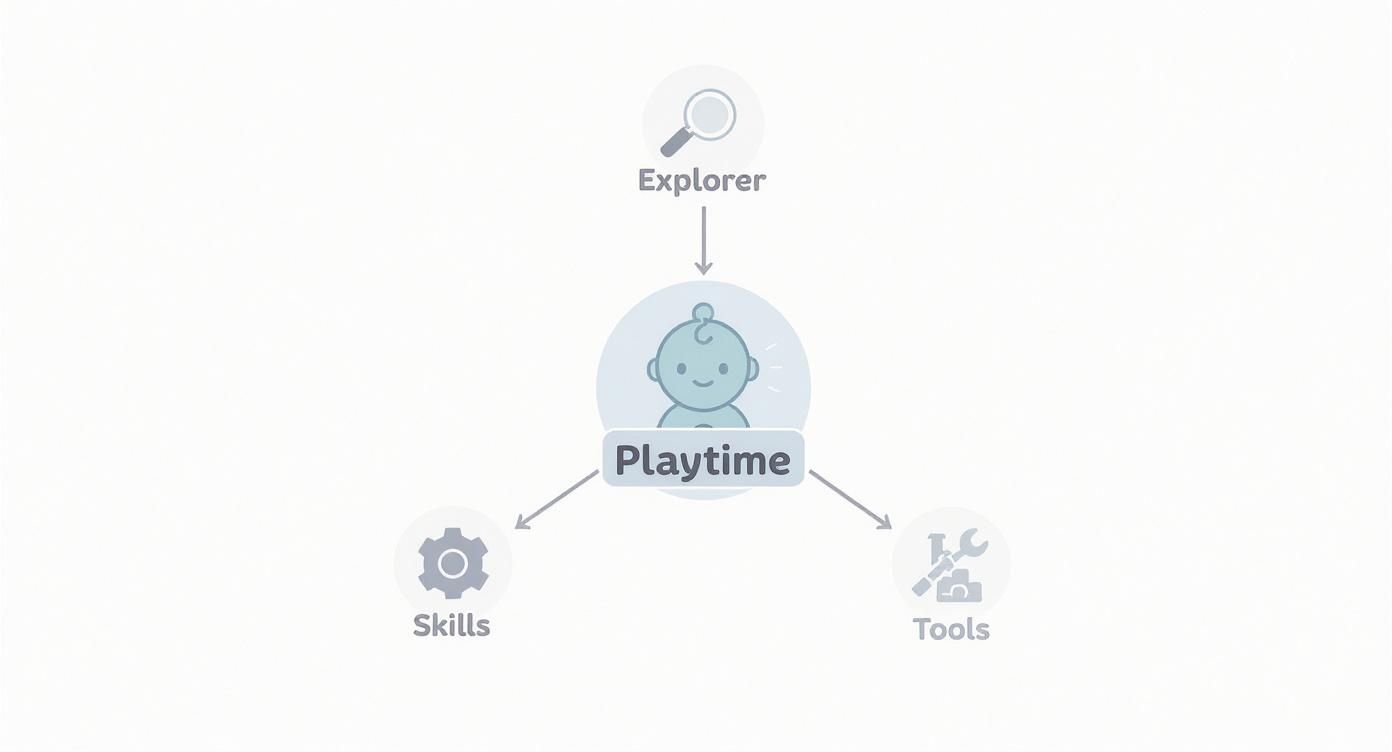
You can see how playtime acts as a central hub, branching out into active exploration, skill-building, and using toys as vital learning tools.
A Feast for the Senses
Sensory exploration is still one of the main ways your eight-month-old gets to know their world. It’s all about touch, sound, and, yes, taste! Toys with different textures, gentle sounds, and chew-safe surfaces provide a rich sensory diet that helps their brain sort and categorise new information.
Feeling a bumpy ball, a smooth wooden ring, or a crinkly fabric book helps them build a mental library of sensations.
To give you a clearer picture, here’s a quick guide matching key developmental areas with the toys that support them.
Matching Toys to Your 8 Month Old's Skills
| Developmental Skill | Why It Matters at 8 Months | Toy Examples |
|---|---|---|
| Cause & Effect | They are learning their actions can make things happen, which is key for problem-solving. | Rattles, activity cubes with buttons, pop-up toys. |
| Fine Motor Skills | The pincer grasp is developing, allowing them to pick up smaller objects. | Stacking rings, soft blocks, toys with dials or switches. |
| Gross Motor Skills | They're building strength for crawling, pulling up, and eventually walking. | Soft balls, crawl tunnels, push-along toys. |
| Oral Exploration | Mouthing toys helps them learn about texture and shape while soothing gums. | Teething rings, silicone toys, soft fabric animals. |
| Object Permanence | They're starting to understand that things still exist even when they can't see them. | Peek-a-boo toys, lift-the-flap books, hiding a toy under a blanket. |
This table is just a starting point, of course. The best toys are often the ones that can be used in lots of different ways as your baby grows and discovers new skills.
Don't forget the power of books, either. Sharing simple stories builds language skills and introduces them to the magic of reading. Classics like early learning books like 'Brown Bear, Brown Bear, What Do You See?' are perfect for this age, with their repetitive rhymes and bold, engaging illustrations that help build those crucial brain connections.
A Parent's Checklist for Safe and Engaging Toys
At eight months old, your baby’s primary method for investigating anything new is to put it straight into their mouth. This makes your number one priority safety. Choosing the right 8 month baby toys isn't just about finding something with bright colours or fun sounds; it's about making sure every single item is secure enough for your little one's very hands-on (and mouth-on!) approach to discovery.
Think of this as your personal safety filter. This simple checklist will help you confidently assess any toy, whether you're browsing in a shop or sorting through a box of beloved hand-me-downs, so playtime can be fun and worry-free.
Materials and Construction
First things first: take a close look at what a toy is made of and how it’s put together. Babies this age are masters at testing a toy's limits with their gums and tiny-but-mighty grip, so a sturdy build is absolutely essential.
Here’s what to look for:
- Non-Toxic Materials: Since you know it’s going to be chewed on, always opt for toys made from BPA-free plastics, food-grade silicone, or natural wood finished with non-toxic paints. This gives you complete peace of mind.
- Durable Build: Give the toy a gentle tug and a good squeeze. Does it feel solid? Check for any flimsy parts that feel like they could snap off under pressure. For soft toys, make sure the seams are stitched tightly and feel secure.
- Smooth Surfaces: Run your fingers over the entire toy. You're feeling for any sharp edges, splinters, or rough patches that could scratch delicate skin or gums.
Size and Choking Hazards
This is one of the most critical safety checks you can do. Your eight-month-old's instinct is to pop everything into their mouth, which makes small objects a major risk.
An easy trick is the toilet roll test. If a toy, or any piece that could come off it, fits completely inside a standard toilet roll tube, it’s too small for your baby and poses a serious choking hazard. This is especially true for things like buttons, beads, or any small component that could potentially detach.
A safe toy is one you don't have to worry about. Before giving any new toy to your baby, give it a thorough once-over for loose parts, sharp edges, and potential hazards. Your vigilance is their best protection.
Sensory Safety
While sensory stimulation is brilliant for your baby’s development, it’s also important to make sure it’s not overwhelming. An eight-month-old’s sensory system is still maturing, so what seems exciting to us can sometimes be far too much for them to handle.
- Sound Levels: Toys that make noise should be pleasant and gentle, not loud or jarring. A good rule of thumb is if it sounds too loud for you, it’s definitely too loud for your baby’s sensitive ears.
- Lights and Visuals: Flashing lights should be soft and slow, not rapid or intense. Overly stimulating lights can easily lead to a fussy, overwhelmed baby.
Keeping these simple points in mind will help you build a collection of toys that are not only fantastic for development but also completely safe for your curious explorer. If you'd like to dive deeper into creating a stimulating play environment, you might find our guide on sensory toys for babies really helpful.
Top Picks for 8 Month Baby Toys
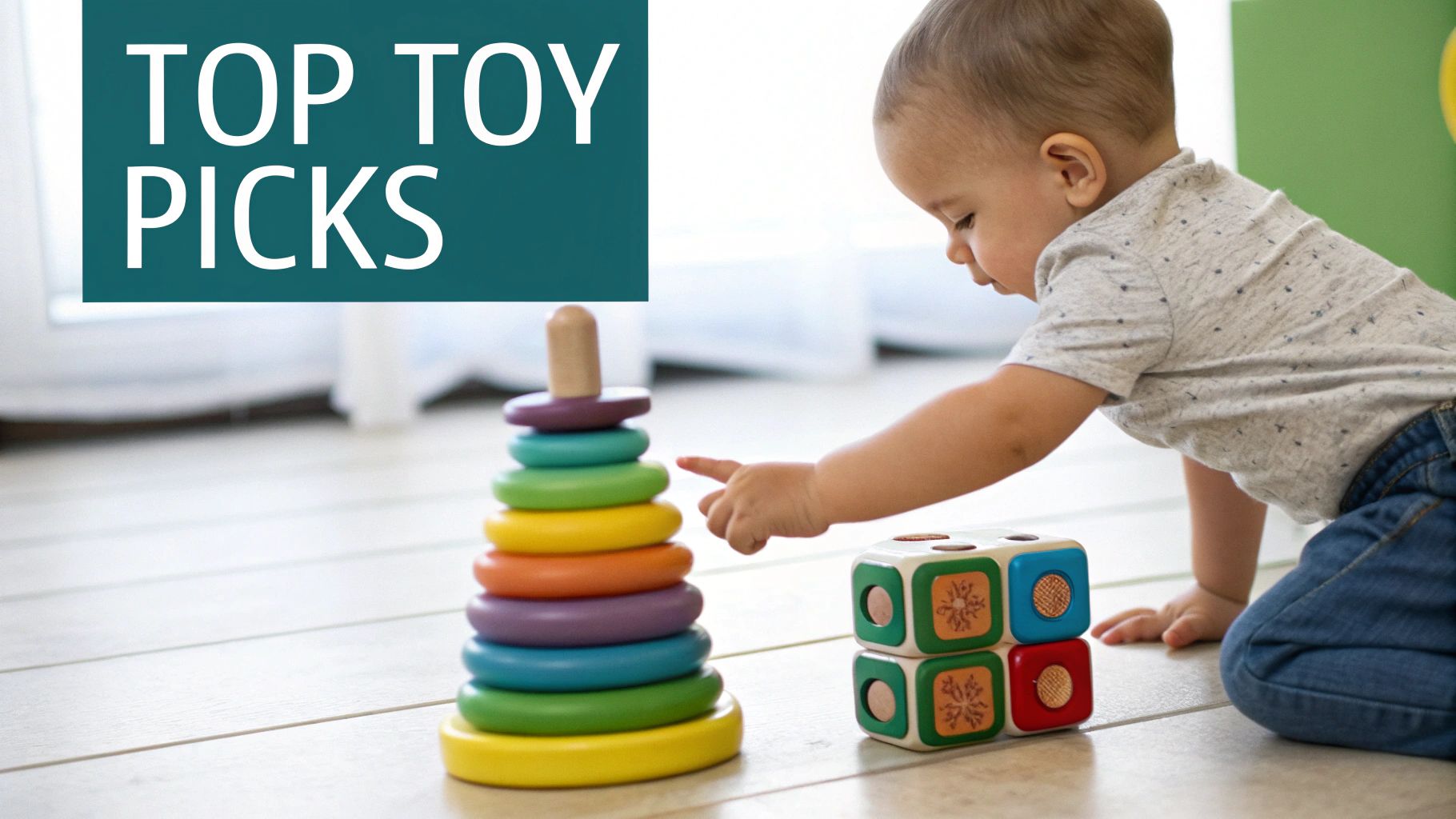
Alright, we’ve covered the amazing developmental leaps your baby is making and how to keep them safe during playtime. Now for the fun part: which toys should you actually bring home? These classic 8 month baby toys are favourites for a very good reason—they’re perfectly tuned to what your baby can do right now and what they’re desperate to learn next. Think of each one as a little powerhouse for learning through play.
Stacking Rings and Soft Blocks
You really can’t go wrong with a set of stacking rings. It’s a timeless classic because the simple act of trying to place a ring over the central post is a huge and satisfying challenge for a baby who is just mastering their hand-eye coordination. They’re also getting their first lessons in size, order, and how different objects fit together.
Soft, lightweight blocks are another must-have. While building a tall tower is still a little way off, your 8-month-old will have a brilliant time grasping them, banging them together to make a noise, and—their absolute favourite—gleefully knocking over any small tower you build for them. That simple knock-over game is a fantastic lesson in cause and effect!
These foundational toys are so valued that the UK toy market reached an impressive £3.9 billion by August 2025. With an average toy price of just £13.43 in late 2024, it shows that many of these developmental essentials are wonderfully affordable. You can discover more about the UK toy market on circana.com.
Activity Cubes and Shape Sorters
An activity cube is like a mini playground for tiny, curious hands. With different activities on each side—spinning gears, sliding beads, little doors to open and close—it’s an all-in-one station for developing those crucial fine motor skills.
Every push, pull, and twist helps strengthen the small muscles in their hands and fingers, laying the groundwork for more complex tasks down the line. It also beautifully reinforces that concept of cause and effect when they push a button and are rewarded with a sound or light.
Shape sorters, meanwhile, introduce the very first ideas of problem-solving. Your baby probably won’t be matching the shapes correctly just yet, but they will absolutely love exploring the blocks, mouthing them, and trying to poke them through the different holes. It’s a fantastic toy that will grow with them over the coming months as their skills blossom.
Parenting Tip: Don't get caught up in whether your baby is using a toy 'correctly' right now. Exploration is the real goal. The simple act of handling a shape block or spinning a gear is valuable developmental work in itself.
Toy Comparison for Your 8 Month Old
To help you decide, here’s a quick comparison of our top recommendations. This table shows which skills each toy targets and what you can typically expect to pay in the UK.
| Toy Type | Primary Skills Developed | Typical Price Range (£) |
|---|---|---|
| Stacking Rings | Hand-eye coordination, size recognition, fine motor skills | £10 - £20 |
| Soft Blocks | Grasping, cause and effect, sensory exploration | £12 - £25 |
| Activity Cube | Fine motor skills, problem-solving, cause and effect | £20 - £40 |
| Shape Sorter | Problem-solving, shape recognition, hand-eye coordination | £15 - £30 |
| Sensory Balls | Tactile stimulation, gross motor skills (crawling) | £8 - £18 |
| Teething Toys | Oral motor skills, soothing, grasping | £5 - £15 |
As you can see, you don't need to spend a fortune to get high-quality toys that pack a developmental punch. A couple of well-chosen items can provide endless opportunities for learning.
Sensory and Teething Toys
At this age, a baby's sense of touch is firing on all cylinders. Sensory balls with different textures—bumps, ridges, soft spikes—are perfect for giving them rich tactile feedback as they roll, squeeze, and inevitably mouth them. They’re also great for encouraging movement; a gently rolled ball can be just the motivation a new crawler needs to set off on an adventure.
And since everything still goes directly into their mouth, a good set of teething toys is non-negotiable. Look for high-quality options made from materials like food-grade silicone or natural rubber. The best ones are designed to be easy for little hands to grip, providing much-needed relief for sore gums while also being an interesting object to explore. Many of these toys are brilliant for developing hand strength and coordination, and you can explore more ideas in our guide on baby toys for fine motor skills.
Smart Play Strategies and Toy Organisation
Having a wonderful collection of 8 month baby toys is a brilliant start, but how you present them can make all the difference. Thoughtful organisation and a few simple strategies can transform a good toy into a fantastic learning tool, keeping your little one curious and engaged rather than overwhelmed.
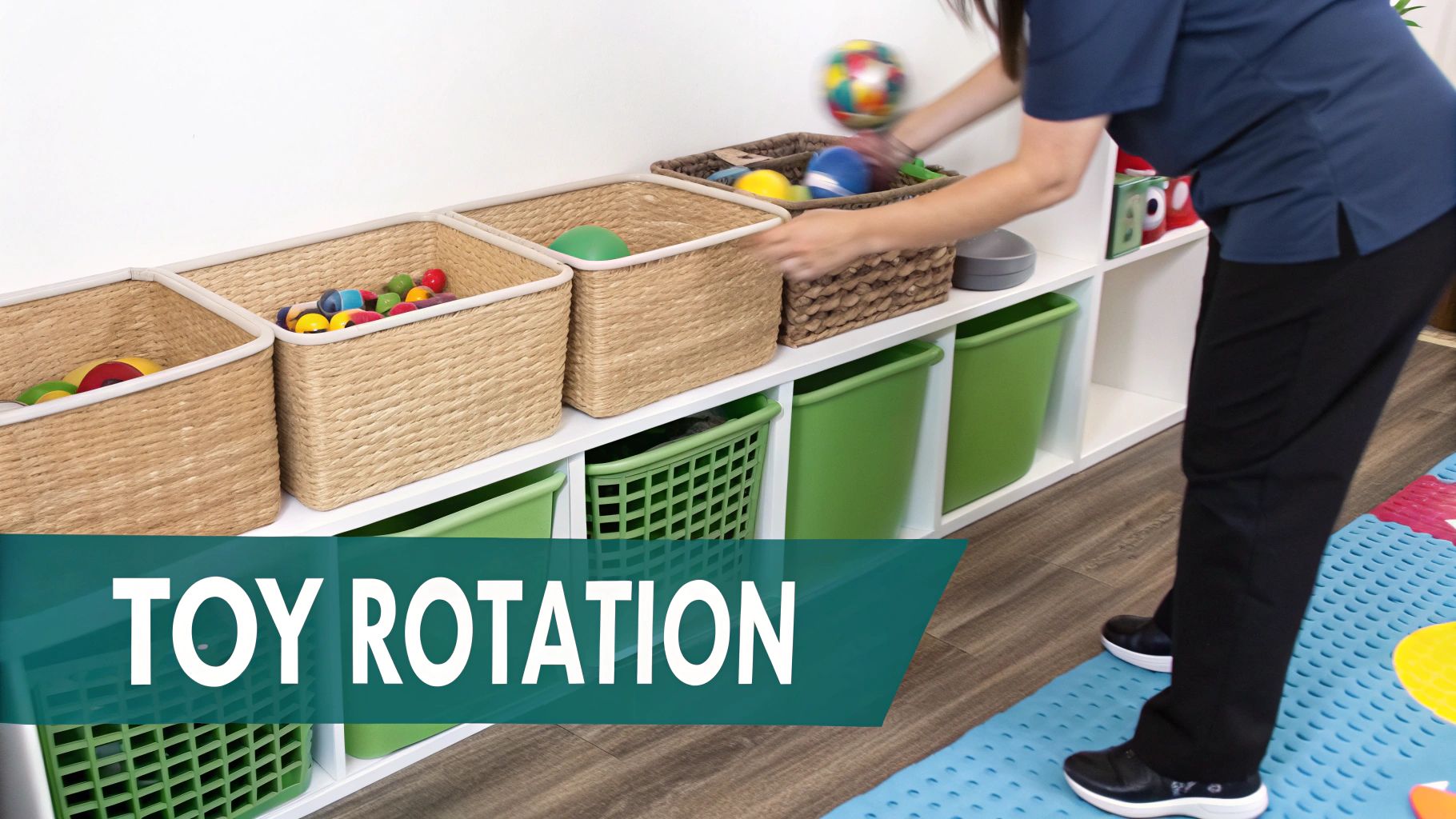
One of the best-kept secrets of experienced parents is toy rotation. Instead of leaving every toy out all the time, keep the majority packed away. Each week, bring out a small, curated selection and watch as your baby explores them with renewed focus. When you swap them for a different set a week later, the old toys feel completely new again. It’s a simple trick that works wonders.
Creating an Accessible Play Space
Your eight-month-old is beginning to have their own ideas about what they want to do. Setting up their play area to be accessible empowers them to make choices and fosters a budding sense of independence. The key is low, open storage that puts them in the driver's seat.
Here’s how to create an inviting space:
- Low Baskets and Bins: Pop a few toys in woven baskets or shallow fabric bins on the floor. This lets your baby see what’s inside and easily grab whatever catches their interest.
- A Sturdy Low Shelf: A low shelf—firmly anchored to the wall, of course—is perfect for displaying a handful of toys. It encourages them to practise pulling up to a stand to reach for something, which is a fantastic boost for their gross motor skills.
This kind of setup does more than just reduce clutter. It introduces the very first concepts of organisation and choice, turning their corner of the room into their own personal discovery zone.
The goal isn't just a tidy room; it's about creating a 'yes' space. When toys are within your baby's reach, they are empowered to follow their curiosity, which is the very foundation of self-directed learning.
Simple Activities and Essential Cleaning
Alongside independent play, simple games you do together are brilliant for strengthening your bond. A classic game of peekaboo with a favourite toy is always a winner. Just hide it under a soft blanket, ask "Where did it go?", and reveal it with a big smile. It’s a fun, gentle way to reinforce the concept of object permanence.
Naturally, with everything going straight into their mouth, keeping toys clean is non-negotiable. A regular cleaning routine keeps germs at bay, ensuring their play environment is hygienic for their next big adventure.
Quick Cleaning Tips:
- Hard Plastic & Silicone: These are the easiest. A quick wash in warm, soapy water or a trip through the top rack of the dishwasher will do the trick.
- Wooden Toys: Simply wipe them down with a damp cloth. A mild solution of water and vinegar works well. Never soak wooden toys, as it can cause the wood to swell and warp.
- Fabric & Soft Toys: Always check the label first, but most can be popped in the washing machine on a gentle cycle.
By pairing a clever toy rotation system with an accessible play area and a solid cleaning routine, you’re creating an environment that is stimulating, safe, and gets the absolute most out of every single toy.
Got Questions About Toys for Your 8-Month-Old?
As you watch your little one grow, it's natural to have questions pop up. You want to give them the best, and sometimes that means getting a bit of reassurance. Let's tackle some of the most common things parents wonder about when it comes to toys for this busy age.
We're here to help you swap any playtime uncertainty for pure, joyful connection.
How Many Toys Does My Baby Actually Need?
It’s so easy to fall into the "more is better" trap, but honestly, the opposite is usually true. For an eight-month-old, a well-chosen collection of around 6-8 versatile toys is much more beneficial than a playroom bursting at the seams. Too many options can be overwhelming for a baby, causing them to hop from one thing to the next without ever really getting stuck in.
Think quality, not quantity. Focus on open-ended toys that can be explored in different ways, like a simple set of soft blocks or some colourful stacking rings. The real magic happens when you start a toy rotation—just swap out a few toys every week or so. It's a brilliant way to keep things feeling fresh and exciting.
What’s the Deal with Electronic Toys?
Electronic toys with all the bells and whistles can certainly grab a baby's attention, but it pays to be selective. The best ones are interactive, where your baby's action creates a direct reaction. A toy that makes a specific sound when a button is pushed, for example, is a fantastic way to teach the basics of cause and effect.
On the other hand, try to steer clear of toys that are just passive entertainment—the ones that put on a constant light-and-sound show. These can be a bit overstimulating and don't leave much room for your baby’s own imagination to take flight. Often, the simplest, classic toys offer the biggest developmental bang because they invite your baby to be the one making the magic happen.
The best toys are 90% baby and 10% toy. Look for items that encourage your little one to be an active participant in their play, rather than a passive observer.
My Baby Puts Everything in Their Mouth. Is That Okay?
Absolutely! This isn’t just normal; it’s a vital part of how your baby learns about their world. Their mouth is full of nerve endings, making it a super-powered tool for figuring out different textures, shapes, and sizes. Your role is simply to make sure this oral exploration is done safely.
Always choose toys made from non-toxic, food-grade materials. Look for labels like "BPA-free," "100% food-grade silicone," or toys made from natural, untreated wood. It’s also a good habit to give all their toys a quick once-over regularly, checking for any wear and tear to make sure no small bits could break off and become a choking risk.
Are Expensive “Educational” Toys Worth It?
Not always. A hefty price tag doesn't guarantee a toy is better for development. Some of the best learning happens with the most ordinary objects—a wooden spoon and a saucepan can teach rhythm and sound just as effectively as a flashy toy drum kit!
That being said, well-designed developmental toys are often created by experts with specific milestones in mind. They tend to use durable, baby-safe materials that have been properly tested. A balanced approach is often best. Invest in a few high-quality staples and mix them in with safe, everyday household items. At the end of the day, it's the interaction and creative play that truly matter, not the cost of the toy.
Ready to take the guesswork out of finding the perfect toys for your baby’s developmental stage? The Grow With Me subscription delivers expertly curated play kits right to your door, filled with beautiful, stage-based toys that are ready for discovery. Explore our play kits and start your subscription today.