
Your Guide to 21 Months Old Milestones
Welcome to the amazing world of your 21-month-old! This is a truly special time, a period of incredible discovery and growth where you'll see huge leaps in their abilities. The major 21-month-old milestones often include a blossoming vocabulary of around 50 words, more confident running and jumping, and the first real signs of them navigating big, complex feelings.
Your 21-Month-Old's World of Wonder
Right now, your toddler is a whirlwind of new skills, transforming right before your eyes. It’s important to remember that this stage is less about hitting every single milestone on a strict schedule and more about celebrating their unique and individual journey. Think of developmental markers as friendly guideposts, not a rigid checklist to be ticked off. Knowing what to look for can help you feel more confident and prepared to support them every step of the way.
One of the best things you can do is simply play. Joyful, everyday play is the most powerful tool for nurturing their growth. Building block towers, scribbling with chunky crayons, and chasing bubbles aren't just fun activities; they are the foundations of physical coordination, problem-solving skills, and emotional expression. This guide will give you a clear roadmap of what to look for and how you can support their development in these simple, everyday moments.
The diagram below gives a great snapshot of the three key areas of development at this age: words, movement, and feelings.
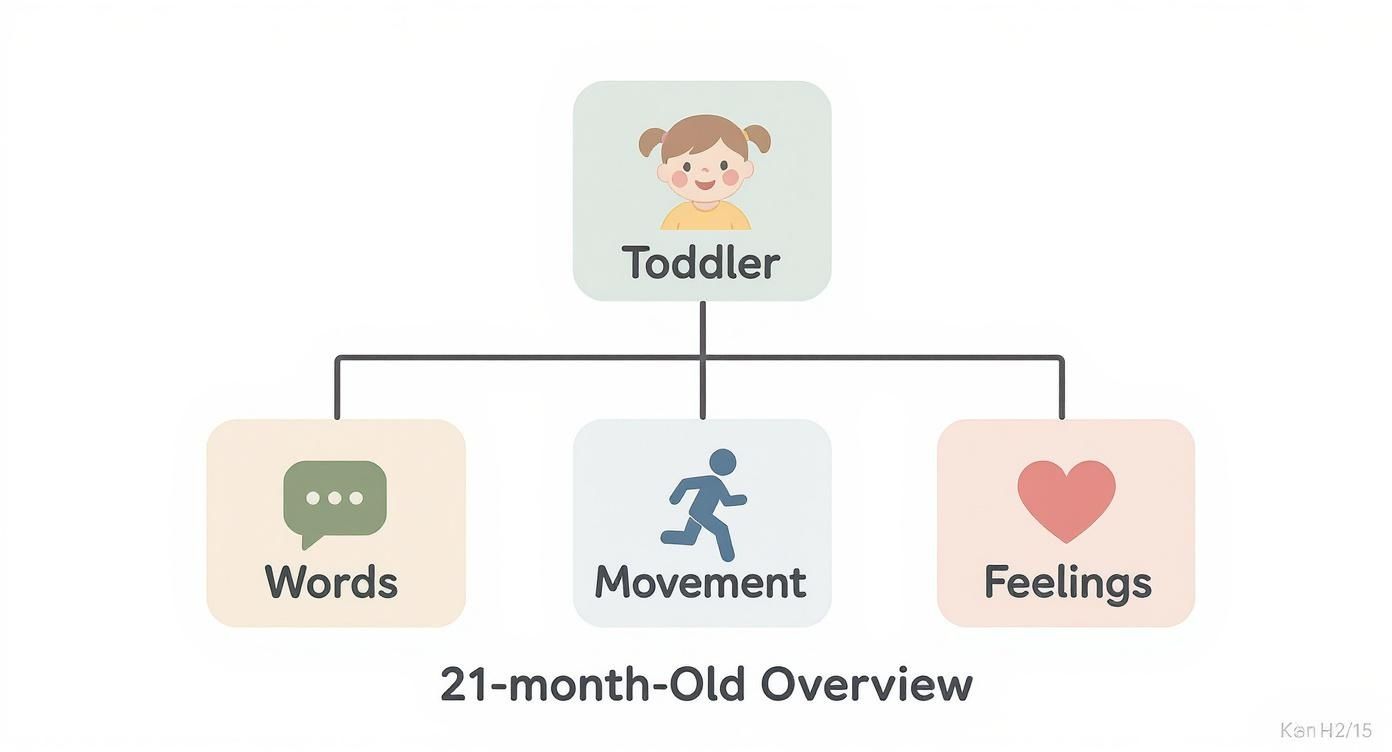
As you can see, language, motor skills, and emotional awareness are all beautifully interconnected. As your little one learns new words, they can better express their feelings and direct their movements with more purpose.
To give you a clearer picture, here’s a quick summary of what you might be noticing around this age.
21-Month-Old Milestones at a Glance
| Developmental Area | What to Look For |
|---|---|
| Gross Motor Skills | Running more confidently, starting to jump with both feet, walking up stairs holding on. |
| Fine Motor Skills | Building a tower of 4-6 blocks, scribbling with a crayon, turning pages in a book. |
| Language & Communication | Using a vocabulary of up to 50 words, starting to use two-word phrases ("more milk"). |
| Cognitive Skills | Pointing to body parts when asked, starting to sort shapes and colours, engaging in pretend play. |
| Social & Emotional | Showing more independence, having big feelings (tantrums), showing affection to familiar people. |
This table serves as a helpful guide, but remember that every child develops at their own pace.
Physical and Language Benchmarks
Physical growth continues at a steady pace. At 21 months old, toddlers in the UK generally weigh about 11.3 kg (24.9 pounds) for girls and 11.6 kg (25.5 pounds) for boys. At the same time, their language development is often exploding. Many toddlers will know approximately 50 words and start stringing them together into simple two-word phrases like "mummy hug" or "daddy go."
This phase is all about empowering your little one through exploration and play. As they investigate their ever-expanding world, it's a great time to start understanding the importance of early childhood education and the impact of these early experiences.
If you’d like a broader perspective on your child’s progress and what these stages mean, you might find it helpful to read our guide on https://shop.growwithmesubscriptionbox.co.uk/blogs/blog/what-are-developmental-milestones and why they matter so much.
From Wobbly Runs to Stacking Blocks: Your Toddler's Physical World
At 21 months, it’s all about movement. Your little one is a whirlwind of energy, constantly on the go and figuring out what their body can do. This is a time of huge leaps in both gross motor skills (the big stuff, like running and climbing) and fine motor skills (the small, fiddly stuff, like using their hands).
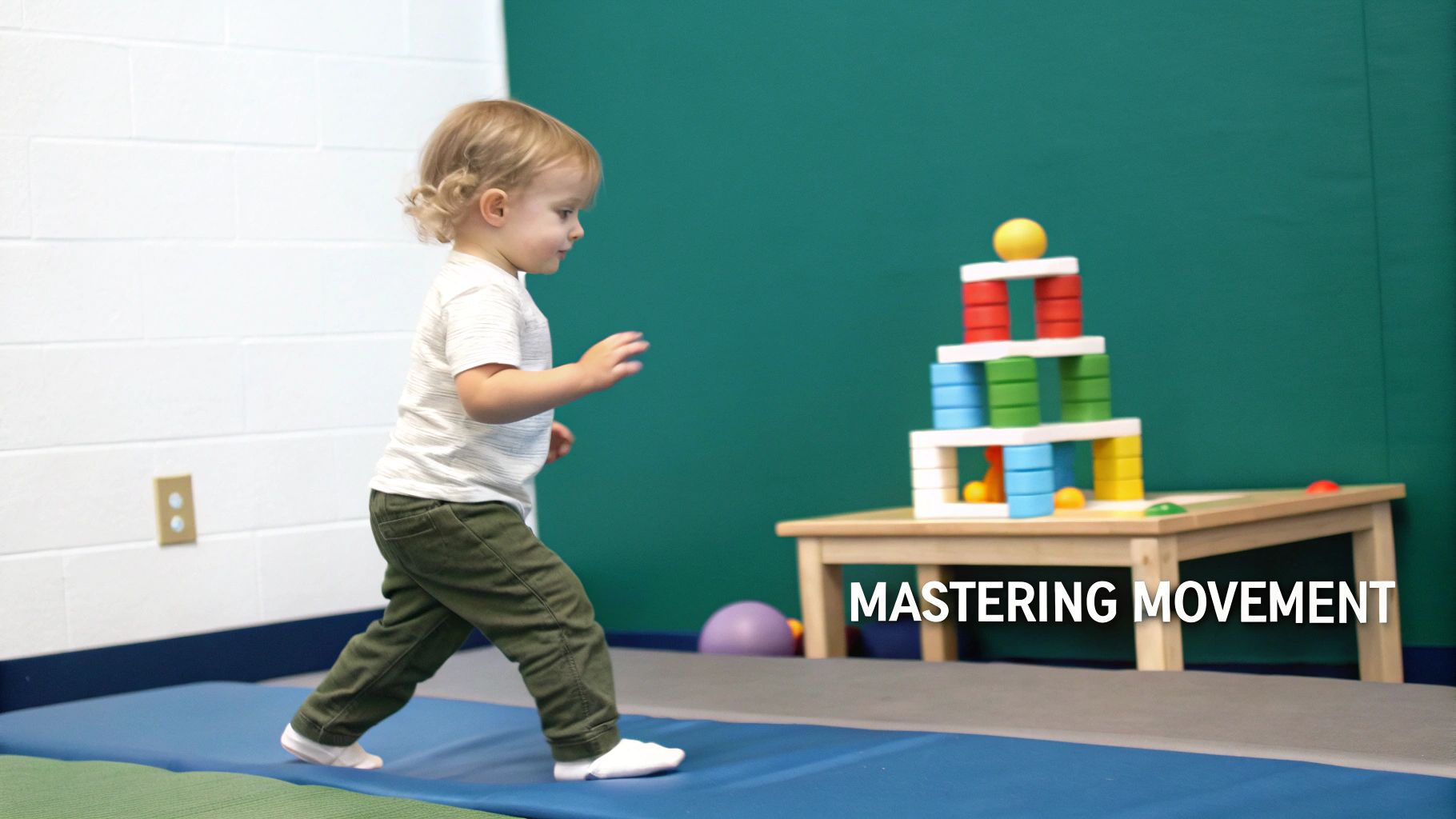
Think of it this way: their once-wobbly walk is quickly graduating to a more determined, if still slightly clumsy, run. This new need for speed is all part of them building confidence, strength, and balance.
Big Body Movements Take Centre Stage
You'll probably see your toddler’s coordination getting better by the day. They might now be able to kick a big, light ball across the garden, or squat down with surprising stability to get a closer look at a ladybird on the pavement. These aren’t just random bits of play; every squat and kick is practice for more complex skills.
This is a really important window for physical development. Toddlers in the UK are often starting to run, stand on their tiptoes, and kick a ball with a bit more purpose. Many are also learning to throw or catch a ball with their whole body. You can learn more about the range of 21-month-old milestones on huckleberrycare.com.
Try turning your living room into a landscape for adventure. A simple obstacle course made from cushions and pillows is a fantastic way to encourage climbing and balancing in a safe, fun environment.
Fine-Tuning Hand-Eye Coordination
While the big movements are easy to spot, what’s happening with their hands is just as incredible. These small, precise actions show their hand-eye coordination and problem-solving skills clicking into place. It’s the difference between accidentally knocking over a tower and carefully placing one more block right on top.
You’ll see these skills popping up in all sorts of activities:
- Building Upwards: That block tower might be getting taller! Many 21-month-olds can stack a tower of four, five, or even six blocks before it all comes tumbling down. This takes serious concentration.
- Making Their Mark: Scribbling with a chunky crayon is often a favourite pastime. They’re learning how to hold a tool and make deliberate marks on paper.
- Turning the Pages: They may now have the dexterity to turn the pages of a sturdy board book one at a time, instead of in one big clump.
These small wins are laying the foundation for bigger skills down the line, like writing and using cutlery. The toys in the Grow With Me kits are specifically designed to support this delicate work, with puzzles and stacking toys that challenge their growing coordination in a playful way.
The Toddler Language Explosion
Just as your toddler's physical world is expanding, their inner world of thoughts and words is going through its own spectacular transformation. Around 21 months, many toddlers hit what's often called the 'language explosion'. It can feel like their ability to communicate blossoms overnight. It's a truly thrilling time, where you really see their little personality start to shine through their words.
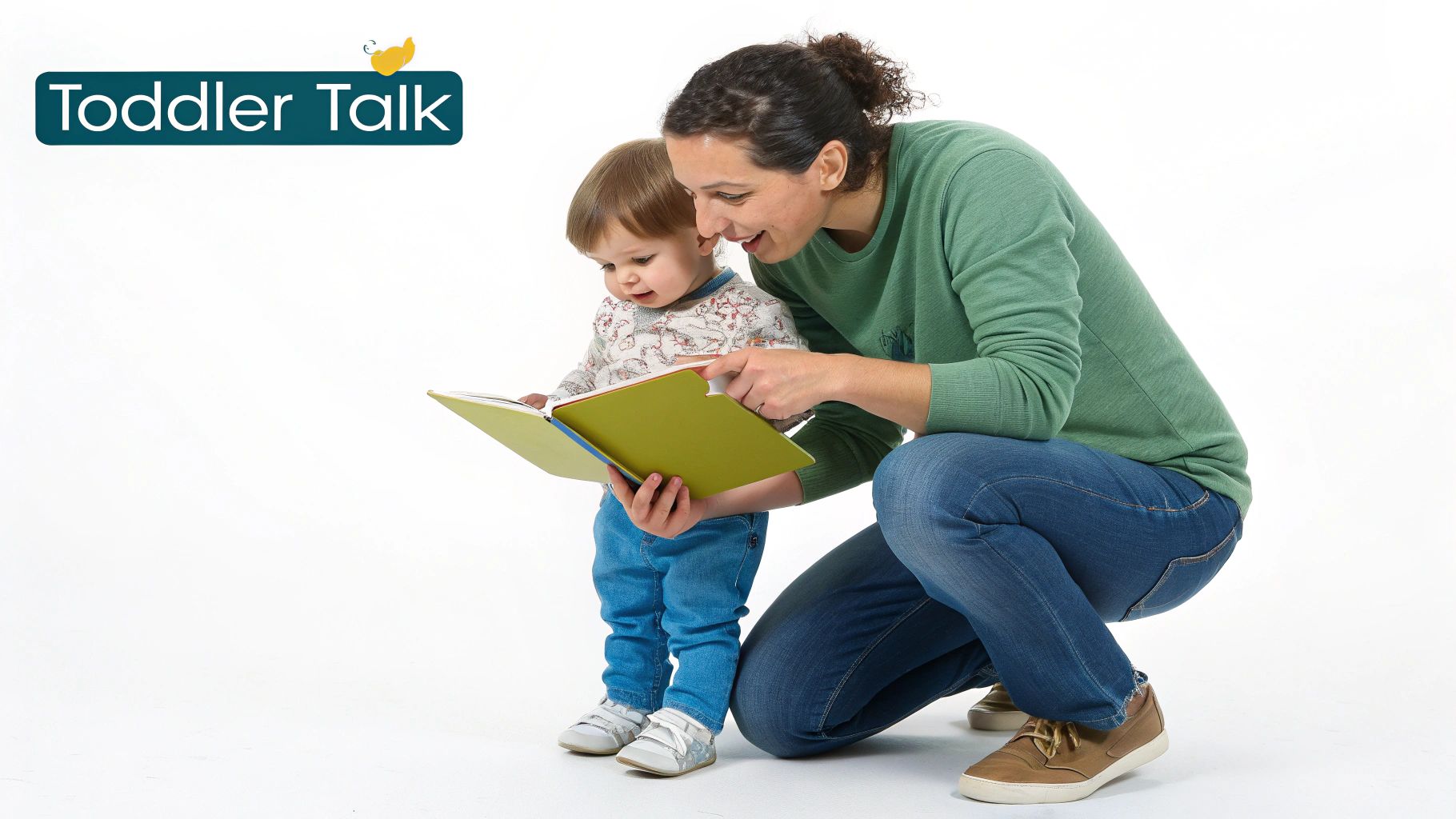
You might suddenly notice their vocabulary growing at a rapid pace. They’ll likely start moving beyond single words to stringing together simple but powerful two-word phrases. Hearing "More juice," "daddy car," or "my teddy" for the first time are huge moments. These aren't just words; they're huge cognitive leaps, showing they grasp how words connect to form actual ideas. This is a brilliant part of the 21-month-old milestones for communication.
From Words to Sentences
This stage is all about a rapid increase in both expressive language (the words they can say) and receptive language (the words and instructions they can understand). UK toddlers at this age often have a vocabulary shooting up from 50 to 100 words. On top of this, they're starting to form those simple two-word sentences and are getting much better at following simple instructions, a massive jump from where they were in their first year.
You’ll often find their understanding outpaces their ability to speak. You see this in action when you ask them to "get your shoes," and they toddle off to find them, even if they can't quite say the word "shoes" perfectly yet.
Key Takeaway: Talk, talk, and talk some more! Simply narrating your day is one of the most powerful things you can do. Saying things like, "Now Mummy is putting the red socks in the drawer," builds their vocabulary and helps them connect words to the world around them.
The Dawn of Problem-Solving and Pretend Play
Cognitively, your 21-month-old is really starting to connect the dots. They're beginning to get their heads around cause and effect—if they push a button, a toy lights up. This is the very foundation of problem-solving.
This is also the magical age where pretend play truly comes alive. You might catch them:
- Mimicking your daily routines: 'Chatting' on a toy phone or trying to 'sweep' the floor with a little broom.
- Caring for their toys: Giving a doll a drink from a cup or tucking a teddy bear into bed.
- Simple role-playing: Pretending to be a cat by crawling and meowing, or making 'vroom vroom' noises with a toy car.
This isn't just cute; it's a critical cognitive milestone. Pretend play is how they process their world, start to understand social roles, and even develop empathy. The right toys can be the spark for all this imagination, which is why the Grow With Me kits include items that encourage open-ended, creative play. For more inspiration, have a look at our guide on fun language development activities for toddlers.
Navigating Big Feelings and Social Growth
It’s not just their bodies and brains that are growing at a dizzying pace—your 21-month-old’s emotional world is also expanding in incredible ways. They are starting to properly realise they are their own person, separate from you, which often kicks off a fierce (and wonderful) desire for independence. This is the age of "I do it!"
This blossoming independence can feel a bit contradictory, though. At the same time they're pushing you away to put their own shoes on, separation anxiety can make a surprise comeback. One minute they’re a whirlwind of self-sufficiency, the next they’re clinging to your leg for dear life. This emotional tug-of-war is a completely normal and essential part of them figuring out who they are, while still needing the safety of your presence.
Understanding How Toddlers Play Together
When you watch your toddler with other children, you might notice something interesting. They often engage in what experts call parallel play. This is where they play alongside their friends, maybe using similar toys, but not directly with them.
Think of it like two artists working in the same studio. They’re aware of each other, might glance over to see what the other is up to, but are ultimately absorbed in their own creations. This is a crucial first step towards interactive, cooperative play. It’s how they first learn to navigate social situations and feel comfortable around their peers.
It can feel like you’re in the thick of the “Terrible Twos” long before your little one even turns two! These unpredictable mood swings are common because toddlers are learning new skills that allow for greater independence while, at the same time, also starting to understand that they’re a separate individual from you (which can be scary).
Strategies for Emotional Support
Riding this emotional rollercoaster with your toddler takes a whole lot of patience and empathy. When those big feelings erupt into a tantrum, it’s usually a sign of frustration. They have a clear idea of what they want, but they just don't have the words to express it or the physical skills to do it themselves just yet.
To help you navigate these moments, we’ve put together some practical tips for handling common toddler behaviours and supporting their emotional growth.
Supporting Your 21-Month-Old's Emotional Growth
| Common Behaviour | Supportive Parenting Strategy |
|---|---|
| Pushing for independence ("I do it!") | Offer simple, manageable choices. "Do you want the red cup or the blue cup?" This satisfies their need for control in a safe way. |
| Tantrums from frustration | Name the feeling for them. "You feel very cross because we have to leave the park. I understand." This validates their emotion and helps them build an emotional vocabulary. |
| Difficulty sharing or taking turns | Practise with simple games. Rolling a ball back and forth or taking turns adding a block to a tower introduces the concept of cooperation in a fun, low-pressure setting. |
| Separation anxiety reappears | Keep goodbyes short, sweet, and consistent. A predictable routine helps them feel secure, knowing you will always come back. |
The goal isn't to stop big feelings from happening, but to be a calm, loving guide who helps your toddler navigate them. The play kits from Grow With Me are brilliant for this, as they often include toys perfect for practising turn-taking, helping you weave these crucial social skills right into your daily playtime.
Simple Activities to Nurture Development
Knowing what the typical 21-month-old milestones are is one thing, but figuring out how to support them through simple, everyday fun is where the magic really happens. You honestly don't need a mountain of complicated toys or a rigid schedule. The trick is to turn your daily routine into a playful learning experience—that’s the most powerful way to nurture their growing skills. Often, the best activities are the simplest ones, using things you already have around the house.
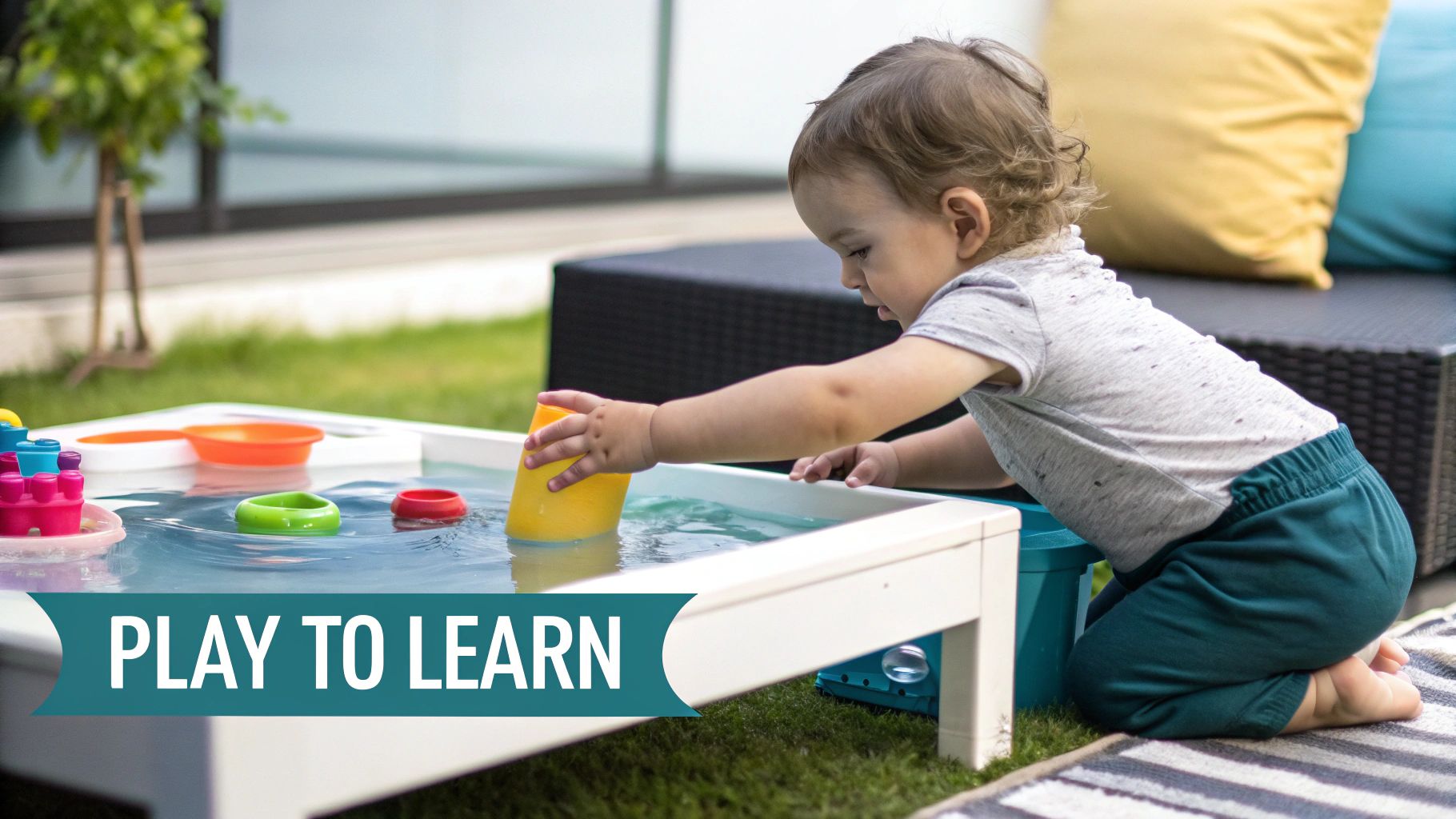
These little moments of play are the foundations for everything, from physical coordination to learning how to manage their big feelings. Let’s dive into some easy, engaging ideas for each area of development.
For Motor Skills Mastery
To help those little legs and hands get stronger and more coordinated, the key is to get them moving.
- Pillow Obstacle Course: This is a living room classic. Build a mini-course with cushions to clamber over, blankets to crawl under, and maybe a line of masking tape on the floor to practise balancing. It’s fantastic for building gross motor skills, balance, and body awareness.
- Tower Tumble: Stacking blocks never gets old, and for good reason! It’s a brilliant way to refine hand-eye coordination and teach that all-important lesson in cause and effect. See if they can build a tower of five or six blocks before it all comes crashing down in a fit of giggles.
- Posting and Sorting: Find an old container, cut a slot in the lid, and give your toddler coins, large buttons (always supervised!), or pasta shapes to post through. This simple action is an absolute powerhouse for developing their pincer grasp—a crucial step in fine motor skills development.
For Language Growth
That language explosion you’re seeing needs constant fuel! Your best tools are simply chatting, singing, and reading together.
One of the most effective things you can do is just narrate your day. As you’re making lunch, talk about what you’re doing: "I'm cutting the yellow banana," or "Let's put your red cup on the table." This helps them connect words to real-world objects and actions in a natural way.
Singing nursery rhymes with actions, like 'Incy Wincy Spider', is also a great way to help them link words with movements. When you’re reading, don’t feel you have to stick to the script. Point to the pictures and ask questions like, "Where's the doggy?" to really get their comprehension skills firing.
For Sensory and Cognitive Play
Toddlers learn about their world by engaging all their senses. This kind of sensory play is also a huge boost for their cognitive growth, as it encourages them to explore, experiment, and solve little problems.
- Water Wonders: You can never go wrong with water play. Just fill a basin or a tray with a shallow bit of water and add some cups, spoons, and sponges. This simple setup can keep a toddler captivated for ages while teaching them early concepts like empty and full.
- Dough Delights: Play-dough is fantastic for strengthening all those tiny hand muscles they’ll need for writing later on. Squishing, rolling, and poking the dough is also a wonderfully calming sensory experience for them.
- Nature Tray: On your next walk, collect a few interesting leaves, sticks, and flowers. Pop them in a tray at home and just let your toddler explore the different textures. It’s a lovely way to connect them to the natural world and stimulate their sense of touch.
Getting out and about can also provide a wealth of new things to see, hear, and touch. Looking for inspiration for fun family days out can be a great way to find new sensory experiences to share.
When to Check In with a Professional
It's so important to remember that every toddler has their own unique timeline. Think of milestones less as a strict checklist and more as a general guide. Development isn't a race, and a little variation is completely normal.
That said, your parental intuition is one of the most powerful tools you have. If you have that nagging feeling that something might be off, it's always worth getting a second opinion. It’s not about looking for problems, but about being proactive.
Think of it as simply checking in. A quick chat with your GP or health visitor can provide valuable reassurance or, if needed, open the door to resources that will help your little one flourish.
Spotting Potential Red Flags
While every child develops at their own pace, there are a few things to keep an eye out for. These aren't reasons to panic, but gentle nudges that it might be time for a conversation about your toddler's 21-month-old milestones.
Consider reaching out for a professional opinion if you notice your toddler consistently:
- Isn't walking on their own yet.
- Doesn't seem to hear you when you call their name or struggles to follow very simple instructions.
- Has a vocabulary of fewer than six to fifteen words and isn’t trying to copy new words they hear.
- Doesn't point at things to show you something they find interesting.
- Shows little interest in copying your actions during play, like pretending to stir a pot or brush a doll's hair.
Your gut instinct is a huge part of parenting. If you're worried about your child's development, please don't hesitate to speak with your health visitor or GP. They are there to listen, answer your questions, and can arrange for a developmental screening if it seems helpful.
Who to Contact and What to Expect
If you do have any concerns, your health visitor or GP is your best first port of call. They understand child development inside and out and can listen to your observations in a supportive, non-judgemental way.
They’ll likely ask you a few questions about what you're seeing at home. From there, they might reassure you that all is well, or they may suggest a more formal developmental assessment. Whatever the outcome, taking that step is a positive move towards getting your child the right support to thrive.
Answering Your Top 21-Month-Old Questions
Just when you think you've got this toddler thing figured out, 21 months arrives with a whole new set of questions. From sudden sleep strikes to battles over broccoli, let's get into some of the most common worries parents have at this wonderfully chaotic stage.
How Much Sleep Should a 21-Month-Old Get?
At this age, most toddlers do best with around 12-14 hours of total sleep every 24 hours. That usually looks like one good afternoon nap lasting 2-3 hours, plus a solid 10-12 hours of kip overnight.
If bedtime has suddenly become a battleground, don't panic. It could be anything from a classic case of separation anxiety kicking in, or they might just need a little more time awake and playing before they're ready to wind down for the night.
What’s the Best Way to Deal With Tantrums?
As frustrating as they are, tantrums are a completely normal—and even healthy—part of toddler development. Think of it this way: their big feelings and strong opinions have massively outpaced their ability to talk about them. That frustration has to go somewhere, and it often comes out as a full-blown meltdown.
The real secret is to be the calm, steady anchor in their emotional storm. Get down on their level and acknowledge the feeling ("I can see you're so cross that it's time to leave the park"), but don't give in to the demand. It shows them you understand, while still holding a kind and firm boundary.
Help! My Toddler Has Become a Picky Eater!
Welcome to the club! A sudden refusal of once-loved foods is a classic toddler move. It’s often less about the food itself and more about them discovering their own independence and the power of the word "no." The best thing you can do is take the pressure off yourself and them.
Here are a few things to try:
- Offer small choices: Let them feel in control by asking things like, "Would you like peas or carrots with your chicken tonight?"
- Include a 'safe' food: Always put something on their plate that you know they usually enjoy, alongside anything new you're introducing.
- Zoom out: Instead of worrying about a single meal, look at the variety and balance of what they've eaten over the whole week. You’ll probably find it’s not as bad as you think.
Grow With Me kits are designed by experts to turn everyday play into a powerhouse for learning, with toys that support every single milestone. Explore our age-appropriate subscription boxes at https://shop.growwithmesubscriptionbox.co.uk.