

When Do Babies Start Teething A UK Parent's Complete Guide
It's the big question every new parent asks: when do babies start teething? While the textbook answer is around six months old, that's really just an average. The truth is, there’s a huge, perfectly normal range.
Some babies might flash a toothy grin as early as three or four months, while others will happily keep you waiting until after their first birthday. Both are completely fine!
Your Baby's Teething Timeline
It helps to think of teething less as a single event and more as a gradual developmental journey. Every child follows their own unique schedule, just like they do with learning to roll over or crawl. This process actually starts long before you see a single tooth, with buds forming under the gums while they're still in the womb.
The journey from a gummy smile to a full set of primary teeth is definitely a marathon, not a sprint. Knowing this can help ease any worries you might have if your little one seems ahead or behind the curve. For example, the average age for the first tooth in the UK is about seven months, but the range is massive. Genetics play a big part, so if you or your partner got your teeth early or late, your baby might too.
This timeline gives you a simple visual guide to what you might expect in that first year.
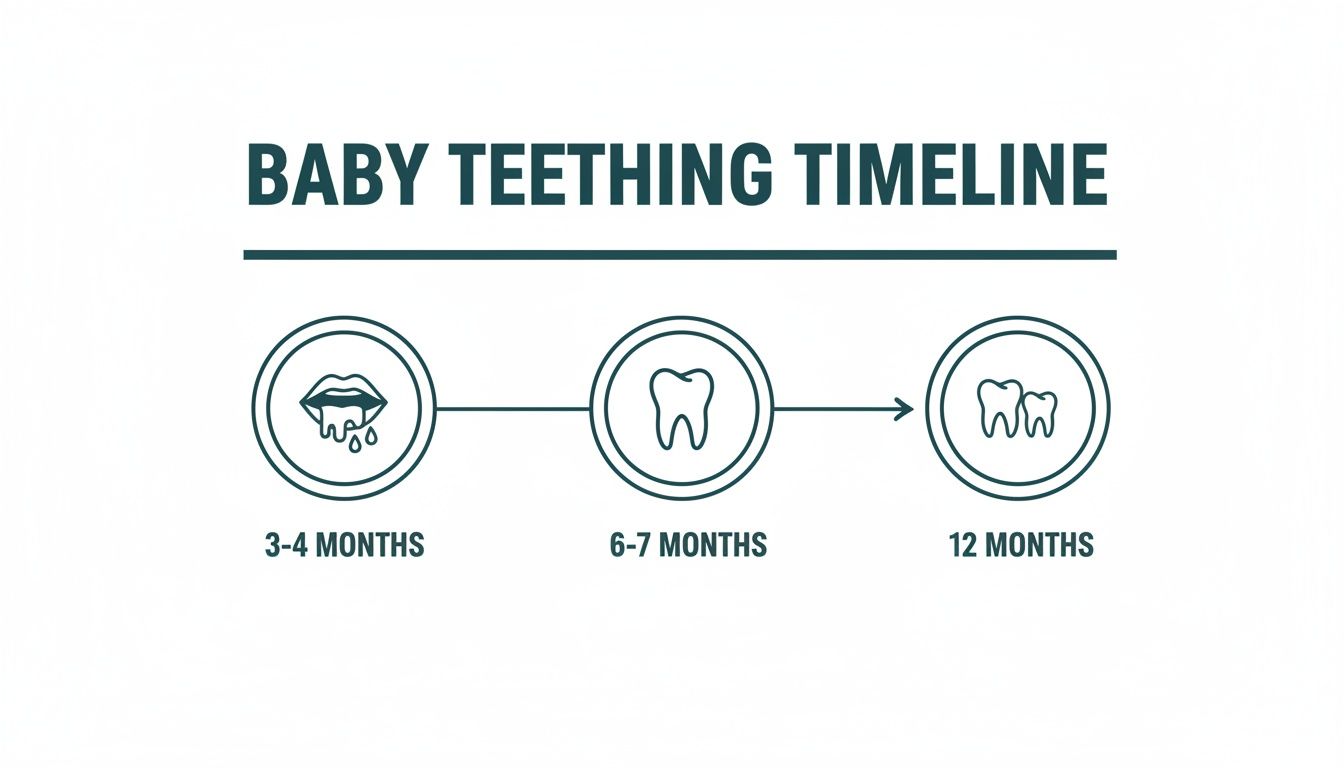
As you can see, the classic signs of teething—like a serious increase in drool—often show up months before the first tooth actually cuts through the gum.
What Does A Normal Teething Schedule Look Like?
While every baby is different, there is a general pattern that most tend to follow. Typically, the first teeth to arrive are the bottom two in the front (the lower central incisors), followed a bit later by their counterparts on top.
This table provides a general guide to when you can expect different baby teeth to appear, helping you track your little one's progress.
Your Baby's Teething Timeline At A Glance
| Type of Tooth | Typical Age of Appearance (Months) | Location |
|---|---|---|
| Central Incisors | 6-12 | Bottom and then top front teeth |
| Lateral Incisors | 9-16 | The teeth on either side of the front teeth |
| First Molars | 13-19 | Back teeth used for grinding |
| Canines | 16-23 | The sharp, pointed teeth |
| Second Molars | 23-33 | The very back teeth |
Remember, this is just a rough guide! A few months' variation either side of these averages is completely normal.
Teething is one of the earliest and most noticeable developmental milestones. It’s a clear physical sign that your baby is growing and their body is preparing for new experiences, like eating solid foods.
It’s helpful to view teething as just one piece of a much bigger developmental puzzle. As you navigate this stage, you might find it reassuring to learn more about understanding childhood development milestones in a broader context.
You can also get a better sense of how all these stages fit together by checking out our guide on https://shop.growwithmesubscriptionbox.co.uk/blogs/blog/what-are-developmental-milestones. This bigger picture can provide much-needed peace of mind, helping you see that your baby’s individual timeline is just right for them.
Decoding The Signs Of A Teething Baby
Is your usually cheerful baby suddenly irritable and drooling waterfalls? You've likely just entered the teething zone. Figuring out when do babies start teething often begins with becoming a symptom detective. While every baby writes their own rulebook, there are several classic clues that a tiny tooth is on its way.

The most famous sign, of course, is the drooling. You might be genuinely shocked at just how much saliva your little one can produce. This isn't just for show; it's the body's natural way of lubricating and soothing those tender gums. My best advice? Stock up on bibs to keep their clothes and skin dry.
Alongside the drool, you'll almost certainly notice an intense urge to chew on everything. Suddenly, their own fists, your fingers, and even the remote control are fair game. This isn't just a quirky new habit; it's your baby's clever way of applying counter-pressure to their gums, which brings real relief from the ache of a tooth pushing through.
The More Subtle Teething Symptoms
Beyond the obvious, teething can show up in ways that might seem completely unrelated at first. Learning to spot these more subtle indicators helps you connect the dots and offer the right comfort when they need it most.
For many parents, disturbed sleep is the first real sign that a tooth is imminent. A baby who was previously sleeping like a dream might start waking more frequently at night or taking frustratingly short naps. It makes sense, really—the discomfort doesn't just switch off at bedtime and can feel much more intense without daytime distractions.
You may also see a change in their feeding habits. Some babies will fuss or refuse the breast or bottle because the sucking motion actually increases the pressure on their sore gums. On the other hand, some babies want to nurse or feed more often, finding the act itself a huge source of comfort and closeness.
Here are a few more subtle clues to watch for:
- Ear Pulling and Cheek Rubbing: The nerves in the gums, ears, and cheeks are all interconnected. Pain from an emerging molar, for example, can radiate outwards, causing your baby to pull at their ears or rub their face to try and soothe the ache.
- A "Teething Rash": That constant drooling can lead to a mild rash or chapped skin on their chin, neck, and chest. Gently wiping their face with a soft cloth and applying a simple barrier cream can do wonders to protect their delicate skin.
- Visible Gum Changes: If you manage to get a peek inside their mouth, you might see that their gums look swollen, red, or even slightly bruised where a tooth is about to pop through. Sometimes you can even see a little white bump just under the surface.
It’s a common misconception that teething causes high fevers or serious illness. While a very slight rise in temperature can sometimes happen, a proper fever usually signals an unrelated infection, which babies are naturally prone to at this age anyway.
What Is Not A Sign Of Teething
Knowing what to look for is important, but it's just as crucial to recognise symptoms that are not caused by teething. Chalking everything up to a new tooth can sometimes mean we overlook a genuine illness that needs a doctor's attention.
A high temperature (over 38°C), for instance, is not a normal teething symptom. While their cheeks might feel a bit warm, a true fever suggests your baby is fighting off a bug. Similarly, things like vomiting or diarrhoea aren't caused by teething. If your baby is experiencing these issues, it's always best to consult your GP or call NHS 111 for advice.
Here's a quick reference to help you tell the difference:
| Symptom | Likely Teething? | What It Could Be Instead |
|---|---|---|
| Excessive Drooling | Yes | Normal developmental phase |
| Irritability/Fussiness | Yes | Growth spurt, tiredness, hunger |
| High Fever (>38°C) | No | Viral or bacterial infection |
| Diarrhoea or Vomiting | No | Stomach bug or other illness |
| Widespread Rash | No | Allergy, viral illness, or skin condition |
| Inconsolable Crying | Unlikely | Ear infection, colic, or other pain |
Ultimately, trust your parental instincts. If your baby seems genuinely unwell or their symptoms feel severe, don't ever hesitate to seek professional medical advice. Being able to distinguish normal teething discomfort from the signs of illness will give you the confidence to provide the right care at the right time.
Safe And Effective Ways To Soothe Your Teething Baby
When you realise a new tooth is the source of your baby's discomfort, your first instinct is to make it better. The good news? Some of the most effective ways to soothe those sore gums are also the simplest. You don't need a cupboard full of expensive gadgets; a few trusted techniques can bring a world of relief to your little one.
It helps to know why certain things work, as it lets you pick the best approach for that particular moment. Most strategies fall into one of three camps: applying gentle pressure, using a cooling sensation to numb the gums, or simply distracting your baby from the ache.
Comforting Counter-Pressure
Ever wondered why teething babies chew on everything in sight? It’s because the pressure feels good. It provides a satisfying counter-force against the tooth that's pushing its way up. You can offer this relief in several safe and simple ways.
- Gum Massage: First, wash your hands thoroughly. Then, use a clean finger to gently but firmly rub your baby’s gums in a circular motion. This simple act of touch can be incredibly calming and provides immediate, targeted relief.
- Safe Teething Toys: A high-quality teething toy is a parent's best friend. Look for ones made from firm, food-grade silicone or natural rubber that are easy for tiny hands to grasp. A textured surface can provide extra sensory feedback for those sore gums.
- A Clean, Damp Flannel: Sometimes, the oldest tricks are the best. A clean flannel, slightly dampened with cool water and offered for your baby to chew on, provides both gentle pressure and a bit of cooling relief.
When choosing what to offer, safety is everything. Make sure any item is too large to be swallowed and has no small parts that could break off. For a deeper dive, you can explore our detailed guide on the best teething toys for babies, which covers safe materials and what to look for at different stages.
Cooling And Numbing Relief
Cold is a natural and effective way to reduce inflammation and numb sore gums. Think of it like a cold compress on a bruise; a chilled item can help bring down the swelling in your baby's mouth and offer a welcome break from the pain.
The key here is chilled, not frozen. Anything frozen solid can be too hard for delicate gums and might even cause bruising. Instead, just pop a teething ring or a damp flannel in the fridge for about 15-20 minutes before giving it to your baby.
Here are a few safe cooling ideas to try:
- Refrigerated Teething Rings: A solid silicone teether placed in the fridge is perfect. It's best to avoid the liquid-filled types, as they can sometimes leak or break if chewed too aggressively.
- Chilled Foods (for older babies): If your baby has started solids, you can offer chilled snacks. Cold cucumber sticks (always supervised), a mesh feeder with a piece of cool melon, or a spoonful of cold, unsweetened apple purée can feel wonderful on their gums.
It's worth noting that, according to UK NHS guidance, it is important to avoid over-the-counter teething gels that contain the anaesthetic benzocaine. They are not recommended for young children due to potential safety concerns.
The Power Of Distraction
Never underestimate the power of a change of scenery. Teething pain can feel much more intense when a baby is bored, tired, or just focused on the discomfort. Sometimes, the best remedy isn't a teether at all, but a brand-new activity.
A warm, relaxing bath can work wonders to shift their mood and soothe their body. You could also try putting on some favourite music for a gentle dance, reading a colourful board book together, or simply taking a walk outside. The new sights, sounds, and sensations can be enough to take their mind off their gums, even if just for a little while.
Ultimately, your most powerful tools are extra cuddles, patience, and comfort. This phase will pass, and simply being there to offer love and reassurance is often the most soothing remedy of all. If the pain seems severe or your baby is inconsolable, paracetamol or ibuprofen formulated for infants can be used—but always follow the dosage instructions and check with your pharmacist or GP if you are unsure.
Building The Foundation For A Healthy Smile
A healthy smile starts long before you see a full set of pearly whites. While your immediate priority is soothing your baby’s teething pain, this is also the perfect time to start laying the groundwork for their long-term oral health. The habits you introduce now, even before that first tooth makes an appearance, are the building blocks for a lifetime of healthy smiles.
This might sound like a big job, but it really begins with small, simple steps. Think of it like preparing the soil in a garden before you plant the first seeds. By creating a healthy environment from the start, you give those new teeth the best possible chance to thrive.
Caring For Gums Before The First Tooth
Even when your baby just has that adorable gummy smile, you can kick off a gentle and beneficial oral care routine. This not only keeps their mouth clean but also gets them used to the sensation, making the eventual switch to a toothbrush a whole lot easier.
Try to gently wipe your baby’s gums at least once a day. After their last feed or during bath time are perfect opportunities. Just use a clean, damp flannel or a soft piece of muslin wrapped around your finger to gently rub their upper and lower gums. This simple action clears away any milk residue and introduces a routine they will quickly come to find comforting.
The First Tooth Arrives: Now What?
That moment a tiny white speck finally cuts through the gum is a massive milestone! It’s also your cue to upgrade the routine by bringing in a toothbrush and toothpaste. This is a crucial step in preventing tooth decay right from the word go.
According to UK NHS guidance, you should start brushing your baby’s teeth twice a day as soon as the first one pops through. For babies and toddlers up to three years old, you only need a tiny smear of fluoride toothpaste—about the size of a single grain of rice. This small amount gives them vital protection without them swallowing too much.
Establishing a consistent brushing routine is one of the most impactful things you can do for your child's future dental health. It sets a precedent that looking after your teeth is a normal, non-negotiable part of the day, just like getting dressed.
As those first teeth emerge, getting into good habits is essential for their long-term dental health. You can find more comprehensive advice on how to improve oral hygiene in this detailed guide.
Making Toothbrushing A Positive Experience
Of course, knowing you should brush your baby's teeth and actually getting it done with a wriggly, protesting little one are two very different things. Many babies resist at first, but with a bit of creativity and a lot of patience, you can make it a positive and even fun part of the day.
Here are a few practical tips to turn toothbrushing from a battle into a game:
- Choose the Right Tools: Use a baby toothbrush with a tiny head and super-soft bristles. It can also help to let them hold a spare one to give them a sense of control while you do the actual brushing.
- Make It Fun: Sing a special "toothbrushing song" that lasts for about two minutes. You could also make silly faces in the mirror together or pretend to "chase the sugar bugs" away from their teeth.
- Brush Together: Let your baby see you brushing your own teeth. Little ones love to copy what their parents do, and this shows them it's a normal and important activity for everyone in the family.
- Find the Right Position: For a young baby, it’s often easiest to sit them on your lap, facing away from you, with their head resting against your chest. This gives you a great view and helps them feel safe and secure.
Consistency is your greatest ally here. Even on those really tired evenings, sticking to the routine reinforces its importance. By starting early and keeping it positive, you’re doing more than just cleaning their teeth—you’re building the foundation for a healthy smile that will last a lifetime.
Of course, here is the rewritten section with a more natural, human-expert tone.
Knowing When to See a Doctor or Dentist
Teething is a completely normal, if sometimes uncomfortable, part of your baby’s development. But as a parent, it’s easy to worry when your little one seems out of sorts. How can you tell if it’s just a pesky tooth or something more serious?
Most of the time, the classic teething signs—grizzliness, red cheeks, and lots of drool—are nothing to fret about. However, if your baby develops a high fever, has persistent diarrhoea, or is crying in a way that just can’t be soothed, it’s time to seek some professional advice. A quick call to your GP or NHS 111 can make all the difference.
Here are the key red flags to look out for:
- A temperature that climbs above 38°C and doesn’t come down with the usual care.
- Diarrhoea that continues for more than 24 hours, especially if they are also vomiting.
- Unusual lethargy, a rash that isn’t just from drool, or any difficulty breathing.
- Crying that feels different—a high-pitched or continuous wail that cuddles, feeding, or a cool teether just won’t touch.
Your parent instinct is a powerful tool. If you feel in your gut that something isn’t right, don’t hesitate to get it checked out. It’s always better to be reassured.
Symptoms That Warrant Action
Let’s be clear about when to pick up the phone. It’s definitely time to act if you notice:
- A fever over 38°C that isn't responding to a cool cloth or a dose of infant paracetamol.
- Persistent diarrhoea that lasts longer than a day, as it can lead to dehydration.
- Inconsolable crying that continues no matter what you try—feeding, teething toys, or a comforting hug.
- A visible skin rash that goes beyond the mild irritation you might see around their mouth from dribbling.
- Any changes in their breathing or other signs of infection, like pus around the gums.
For any non-urgent concerns, NHS 111 is a fantastic resource for getting advice on what to do at home and what to monitor.
The First Dental Check-Up
While you’re navigating the ups and downs of teething, it’s also the perfect time to think about that first trip to the dentist. The NHS recommends booking your baby’s first check-up by their first birthday. Getting them in early helps spot any potential issues before they become problems and gives you a chance to get some expert, age-appropriate advice.
Most UK dentists suggest bringing your baby in either when their first little tooth pops through or by the time they turn one. It’s less about a full-on dental procedure and more about getting your child used to the sights and sounds of the clinic, which can really help reduce anxiety down the line.
That initial visit is usually just a quick look inside their mouth, followed by some simple tips on cleaning. Your dentist will show you how to use a tiny, rice-grain-sized smear of fluoride toothpaste and demonstrate the best way to gently brush those brand-new teeth.
This is where familiar toys can be a lifesaver. Stage-based play kits, like the Grow With Me boxes, often include teethers designed for specific developmental stages. Having a familiar texture to hold onto can be incredibly soothing for a baby during that first check-up, making the whole experience feel a lot less strange.
“A gentle introduction to oral care and dental visits sets children up for a lifetime of healthy habits,” a paediatric dentist advises.
It can be really helpful to keep a little teething diary. Just jot down the dates when teeth appear, any symptoms your baby has, and what remedies seemed to work. This simple record makes it much easier to give clear, accurate details if you do need to speak to a professional.
When you call your GP or NHS 111, be ready to share:
- When the symptoms started and if there’s a pattern to them.
- The highest temperature you’ve recorded.
- Any medication or home remedies you’ve already tried.
The scale of childhood dental issues in the UK is quite surprising. According to a government report, tooth extractions among children cost approximately £50.5 million between 2015 and 2016 alone, with £7.8 million of that spent on children under five. The same report highlights that breastfeeding for up to 12 months can help reduce the risk of tooth decay (Read the full findings).
Never feel like you’re being a bother by calling for reassurance. Staying informed and trusting your gut can prevent a small issue from turning into a big one. When in doubt, professional advice is always just a click or a call away.
Frequently Asked Questions About Baby Teething
When you're in the thick of teething, a hundred questions can pop into your head. Here are some quick, clear answers to the things parents most often ask, giving you the practical advice you need, right when you need it.
Can Teething Cause A Fever In Babies?
This is a classic question, and the answer isn't a simple yes or no. Teething can sometimes cause a very slight rise in your baby's temperature, but it will not cause a high fever (anything over 38°C).
If your little one has a proper temperature, it’s almost certainly a sign that they're fighting off an unrelated bug or infection. It's so important not to write off a real fever as "just teething," because you could miss an illness that needs a doctor's attention. When in doubt, always contact your GP or NHS 111 if you're worried about a high temperature.
How Long Does Each Tooth Take To Come Through?
Honestly, there’s no set schedule for this. It can vary wildly from one tooth to the next, and every baby is different. For some lucky parents, a new tooth seems to pop up overnight with hardly any fuss.
For many others, though, it’s a much longer process. You might see teething signs like endless drooling and grumpiness that come and go for a week or more before that little white tip finally cuts through the gum. The most intense discomfort usually hits in the few days right before the tooth erupts.
Are Amber Teething Necklaces Safe To Use?
In a word, no. Health authorities in the UK, including the NHS, strongly advise against using amber teething necklaces.
They pose very real strangulation and choking hazards, which are serious risks for babies and toddlers. On top of that, there's absolutely no scientific evidence to back up the claim that they release any kind of pain-relieving substance. It’s always best to stick with safer, proven alternatives.
When it comes to your baby's safety, sticking to medically approved advice is non-negotiable. Opt for chilled teething rings (never frozen solid), a gentle gum massage with a clean finger, or safe toys designed specifically for chewing.
Which Teeth Are The Most Painful For Babies?
While any new tooth can be a source of misery, many parents find that the molars are the absolute worst. This is mainly down to their size and shape.
Because molars have such a large, flat surface, they put a lot more pressure on the gums as they push through, often causing more prolonged soreness. The first incisors can also be quite a shock to the system, as it's your baby's very first experience with this strange sensation. But remember, every child's pain threshold is different. For new parents finding their feet, our guide to first-time mum essentials has plenty of practical tips for this stage and beyond.
At Grow With Me, our stage-based play kits often include safe, high-quality teethers made from natural materials, perfectly designed to soothe sore gums while supporting your baby's development. Discover how our curated boxes can help you through the teething phase and beyond at https://shop.growwithmesubscriptionbox.co.uk.