

A Guide to Interactive Toys for 1 Year Olds
When we talk about interactive toys for a one-year-old, we're talking about playthings that respond directly to what your child does. They create a powerful cause-and-effect learning loop that is absolutely fascinating for little ones. Think of it as the toy having a sort of 'conversation' with your toddler; they push a button, and the toy lights up or makes a sound, inviting them to do it all over again.
What Makes a Toy Truly Interactive?
Ever wondered what makes a toy genuinely ‘interactive’ for a one-year-old? It isn't just about flashy lights or a handful of electronic sounds. Real interactivity is all about a toy’s ability to respond to your child’s natural curiosity, turning their simple prods and pokes into brilliant little learning moments.
Let's take a classic wooden block. It's a fantastic toy, no doubt, but it's passive. It just sits there until your child decides to pick it up or stack it. Now, contrast that with an interactive shape sorter. When your child finally manages to push the star shape through the correct hole, it might reward them with a cheerful tune or a soft, glowing light. That immediate feedback is the secret sauce.
This kind of responsive play creates a simple but incredibly profound learning loop: Action → Reaction → Repetition.
- Action: Your child does something simple, like pressing a big button or placing a ring on a stacking post.
- Reaction: The toy responds with sensory feedback—a sound, a light, a jingle, or a little movement.
- Repetition: This rewarding feedback makes your child want to repeat the action, which is how they practise and master a new skill.
This "conversation" between your child and their toy is what sparks curiosity and lays the groundwork for all sorts of cognitive and motor skill development. These toys aren't just for keeping them busy; they are fundamental tools for nurturing a toddler's rapidly developing brain.
To help you spot a great interactive toy, here’s a quick summary of the key features to look for.
Key Features of Interactive Toys for 1 Year Olds
| Feature | Why It's Important for Development | Toy Example |
|---|---|---|
| Cause-and-Effect Response | Teaches that actions have consequences, building a sense of control and understanding. | A ball-drop toy that plays a tune when the ball reaches the bottom. |
| Multi-Sensory Feedback | Engages sight, sound, and touch to strengthen neural connections in the brain. | A soft, cuddly animal that sings and has light-up cheeks when hugged. |
| Simple, Obvious Actions | Designed for little hands and developing motor skills, preventing frustration. | Large, easy-to-press buttons on an activity table. |
| Encourages Repetition | Repetition is how toddlers learn and master skills, reinforcing memory and coordination. | A stacking toy where each ring makes a different sound when placed. |
Ultimately, a good interactive toy makes learning feel like a fun and rewarding game, not a chore.
The Power of Responsive Play
This simple cause-and-effect cycle is one of the most foundational concepts a one-year-old can learn. It teaches them that their actions have a direct impact on the world around them, building an early sense of agency and confidence. It's their very first step in figuring out how things work.
As parents have come to realise these benefits, the demand for truly developmental toys has grown. In fact, the UK baby toys market was valued at approximately USD 821.5 million in 2024 and is expected to almost double by 2035, driven by a greater awareness of developmental benefits. You can read more about the growth of the UK baby toys market.
An interactive toy transforms playtime from a monologue into a dialogue. It ‘listens’ to your child's actions and responds, making them an active participant in their own learning journey rather than a passive observer.
Choosing the right interactive toys for 1 year olds means finding tools that perfectly match their current developmental stage. For younger babies, this interactivity might be even simpler. You can discover more about this in our guide to interactive toys for babies. By understanding this core principle of responsive play, you'll be able to make much more informed choices that genuinely support your child’s growth.
Choosing Toys for Your 1-Year-Old's Milestones
Picking out the right interactive toys for a one-year-old isn't about grabbing the most popular thing off the shelf. It’s about tuning into your child's unique developmental journey. At this age, they're hitting new milestones at a truly incredible pace, and the perfect toy is one that meets them right where they are, giving them just enough of a challenge to encourage that next big leap.
When you start thinking this way, toy shopping transforms from a guessing game into a far more meaningful process. You stop seeing just a colourful box and start seeing a tool for growth. This milestone-led approach helps you understand the 'why' behind each plaything, making sure your choices are perfectly timed to support your little one. To get a better handle on these crucial stages, our guide on what developmental milestones are is a great place to start.
Supporting Fine Motor Skills
Around their first birthday, your toddler is busy mastering the pincer grasp—that delicate, tricky skill of picking up small objects between their thumb and forefinger. It might seem small, but it’s a huge step on the road to writing and feeding themselves.
This is where interactive toys with knobs to turn, switches to flick, and chunky puzzle pieces to grip really shine. An activity cube, for instance, is a fantastic workout for fine motor skills. Every side presents a new challenge, whether it’s spinning a dial, sliding a bead along a wire, or pushing a big button to make a sound. These simple actions are brilliant for building hand-eye coordination and dexterity in those tiny fingers.
- Look For: Toys that encourage pushing, turning, and grasping.
- Examples: Activity cubes, large-knob puzzles, and stacking rings.
Building Gross Motor Confidence
That wobbly journey from cruising along the furniture to taking those first brave, independent steps is a monumental milestone. Toys that get your little one moving are key to building the strength, balance, and confidence they need to start walking.
A classic pull-along toy can be a brilliant companion for a new walker. It gives them a reason to toddle forward, and the satisfying clatter it makes as it follows them is a delightful reward for their efforts. In the same way, a sturdy push walker offers physical support while they're still finding their footing. These toys help turn wobbly attempts into confident strides, strengthening all their major muscle groups along the way.
A well-chosen toy acts like a personal trainer for your toddler’s development. It identifies a skill they're working on—like balance or problem-solving—and creates a fun, engaging workout to help them master it.
Nurturing Cognitive Leaps
Cognitively, your one-year-old’s brain is a hive of activity, making incredible new connections every single day. They're just beginning to wrap their heads around complex ideas like object permanence (the idea that something still exists even when they can't see it) and early problem-solving.
This diagram shows how interactive toys support both these core cognitive skills and their motor development at the same time.
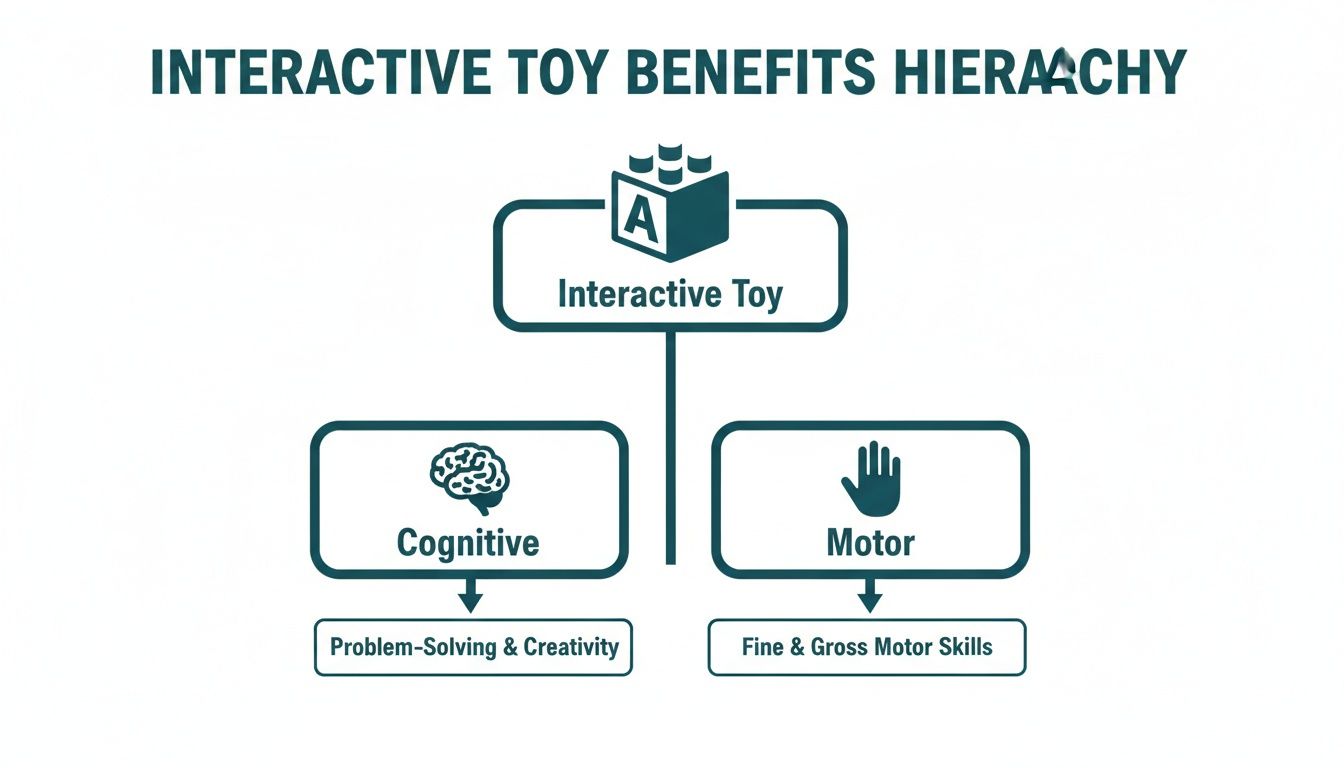
As you can see, a single toy can build cognitive and motor abilities simultaneously, creating a really rich learning experience. Things like shape sorters and simple puzzles are perfect for this stage. They challenge your child to think, experiment, and remember. That moment of triumph when they finally slot the star into the star-shaped hole is a huge victory, reinforcing logical thinking and spatial awareness—the very building blocks for all future learning.
How Interactive Toys Foster Early Learning
It’s easy to see the flashing lights and cheerful sounds of an interactive toy and think it’s just a fun distraction. But there’s so much more going on under the surface. These toys are cleverly designed to turn playtime into a powerful learning experience, introducing your one-year-old to foundational ideas like colours, numbers, and cause-and-effect in a way that feels like pure discovery.
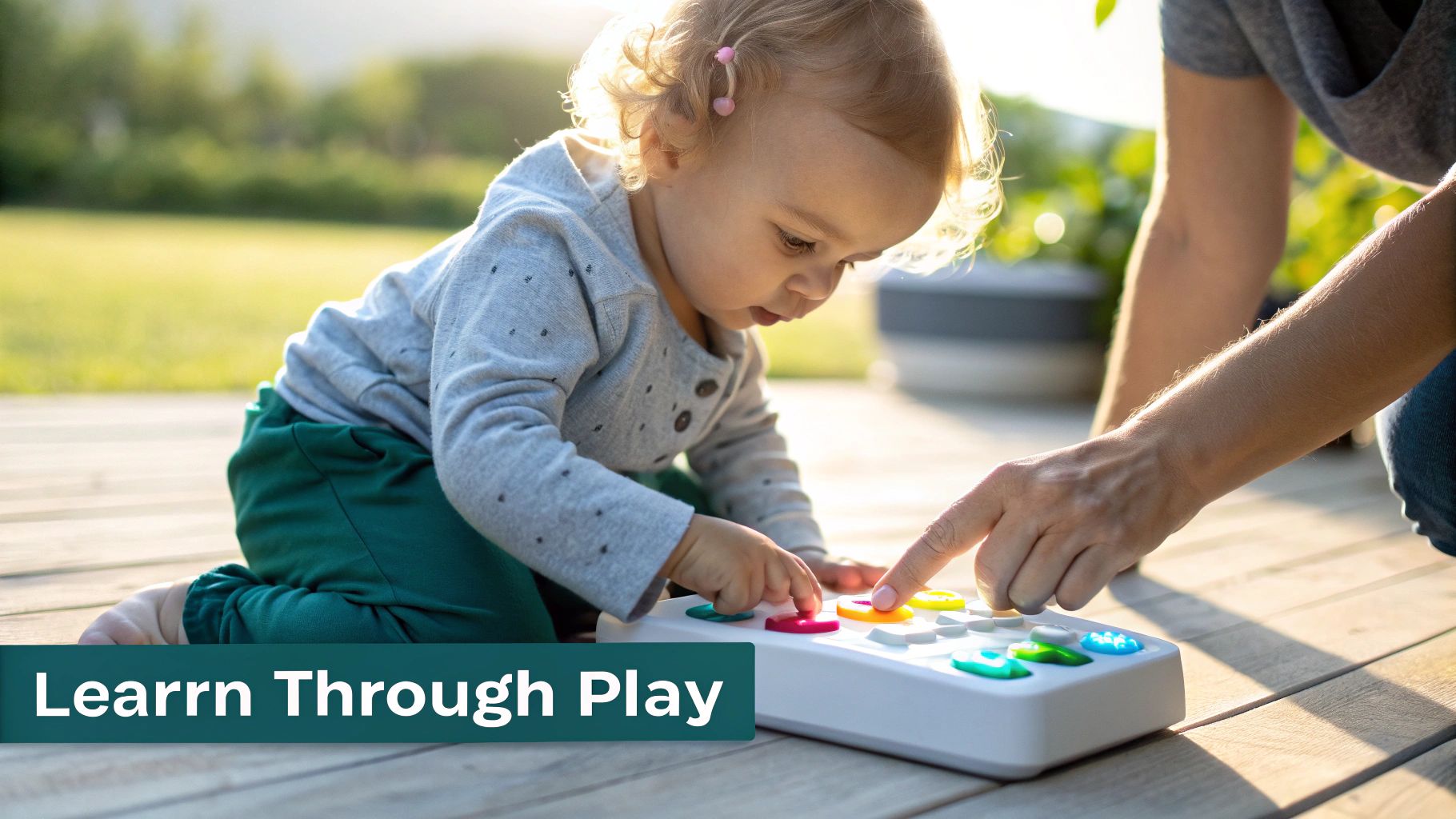
Think about it: when your toddler presses a button and a cow suddenly "moos," they're making a direct connection. They realise their action caused that specific sound. This simple feedback loop is the absolute bedrock of early learning, shifting play from a passive activity into an active, engaging lesson.
The Role of Multi-Sensory Stimulation
At this age, a child’s brain is growing at an incredible pace, and sensory input is the fuel for that growth. The best interactive toys for 1-year-olds are multi-sensory, engaging their sight, sound, and touch all at once. This rich, layered experience helps build and strengthen the neural pathways that form the framework for all future learning.
It's a bit like comparing a standard picture book to an interactive one with textured patches to feel and sounds that play on each page. The layering of information makes the experience far more memorable and impactful. A toy that lights up, plays a tune, and has different textures to explore does exactly the same thing, introducing the building blocks of language and reasoning through multiple senses.
A great interactive toy doesn't just entertain; it teaches your child to become an active participant in their own learning. Each sound and light is a reward that encourages them to explore, experiment, and try again.
It's no surprise that parents are increasingly seeking out toys that cleverly blend fun with learning. In 2023, the UK educational toys market—which includes these vital playthings—generated revenues of around USD 4,050.1 million and is expected to grow significantly by 2030. This trend is driven by parents who want innovative toys to support their child's early development. You can read more about the educational toy market on grandviewresearch.com.
Creating a Balanced Play Diet
While feature-packed interactive toys are brilliant for structured learning, it's vital to create a balanced "play diet." This just means mixing these engaging electronic toys with classic, open-ended ones like wooden blocks or stacking rings. This variety ensures your child gets the best of both worlds: guided learning and unstructured creativity.
A healthy play diet might look something like this:
- Structured Play: Using an electronic activity centre to learn about animal sounds and colours.
- Creative Play: Building a wobbly tower with simple wooden blocks, which nurtures imagination and problem-solving skills.
- Motor Skill Practice: Pushing a simple pull-along toy to build confidence while walking.
This approach gives your little one a well-rounded developmental experience. It lets them learn specific concepts from their interactive toys while also giving them the freedom to explore their own creativity and physical abilities with simpler, more traditional playthings.
Your Checklist for Safe and Durable Toys
Walking down the toy aisle can feel like running a gauntlet. With so many bright and noisy options, how do you pick something that’s not only fun but also genuinely safe and built to last? It's all about knowing what to look for. With a few simple checks, you can feel confident that you're choosing the best for your one-year-old, giving you total peace of mind when they're deep in play.
First things first: materials matter. At this age, absolutely everything ends up in their mouth, so prioritising non-toxic materials is non-negotiable. Always look for toys clearly labelled as BPA-free, particularly with plastics. If you're opting for wooden toys, check that they're finished with non-toxic, water-based paints. These simple choices are your first line of defence against harmful chemicals.
Decoding Safety Marks and Choking Hazards
In the UK, the quickest way to vet a toy is to look for the safety marks. The UKCA mark (you might still see the older CE mark on some stock) is your best friend here. It’s a declaration from the manufacturer that the toy meets all UK safety standards. Think of it as a safety passport – it means the toy has been properly assessed before it even hits the shelf.
Next up is my favourite low-tech safety hack: the 'toilet roll tube test'.
- The Rule: If a toy, or any part that could break off, can fit completely inside a standard toilet roll tube, it's a potential choking hazard for a child under three.
- How to Check: Try this before you buy, and make it a regular habit at home. Give any buttons, wheels, or googly eyes a good tug to ensure they're securely attached and won't be pulled loose by a determined toddler.
It sounds almost too simple, but it’s one of the most effective ways to spot a dangerous toy.
Built to Last Through Toddler Play
Durability is just as important as the materials themselves. Let’s be honest, a one-year-old’s idea of 'playing' can look a lot like a crash test. They drop, throw, and bang things with impressive enthusiasm. You need toys that can take a beating without cracking into sharp pieces or splintering. Look for solid wood or thick, high-quality plastic.
A well-made toy is more than just a toy; it's a long-term investment in play. It not only keeps your child safe from broken parts but also offers better value and creates less waste. The best ones often become treasured hand-me-downs.
The UK toy market, valued at around USD 13.95 billion in 2024, is heavily regulated, which is great news for parents. This means manufacturers are pushed to create robust, safe designs for the youngest age groups. When businesses sell these toys, they rely on specialized shipping for kids' products to ensure these well-made items arrive without damage.
Here's a quick reference guide to help you check toys at a glance, whether you're in a shop or checking items at home.
Toy Safety and Material Quick-Check Guide
| Safety Check | What to Look For | Reasoning |
|---|---|---|
| Material Labels | "BPA-free," "non-toxic paint," "phthalate-free" on packaging. | Prevents exposure to harmful chemicals, as one-year-olds explore everything with their mouths. |
| Small Parts | Use the toilet roll tube test. Check for securely attached components like eyes, buttons, and wheels. | Small pieces are a primary choking hazard for children under three. |
| Surface and Edges | Smooth, rounded edges. No sharp points or splinters, especially on wooden toys. | Prevents cuts, scrapes, and splinters during enthusiastic play. |
| Construction Quality | Solid wood or thick, durable plastic. Seams should be tight with no gaps. | A sturdy toy won't break into dangerous, sharp pieces when dropped or thrown. |
| Safety Marks (UK) | The UKCA mark (or CE mark) clearly visible on the toy or its packaging. | Confirms the product has been assessed and complies with UK safety regulations. |
| Cleanability | Non-porous, easily wipeable surfaces. Avoid toys with lots of tiny crevices. | Hygienic play is safe play. Easy-to-clean toys prevent the build-up of germs. |
Keep these points in mind, and you'll become a pro at spotting toys that are ready for anything your toddler can throw at them.
Finally, a quick practical tip: think about how easy it is to clean. One-year-olds are messy! Toys that can be wiped down in seconds or even dunked in soapy water are a lifesaver. Look for simple, smooth surfaces where germs can't hide. It's a small detail that makes a huge difference in keeping playtime both fun and hygienic.
Bringing Play to Life in Your Daily Routine
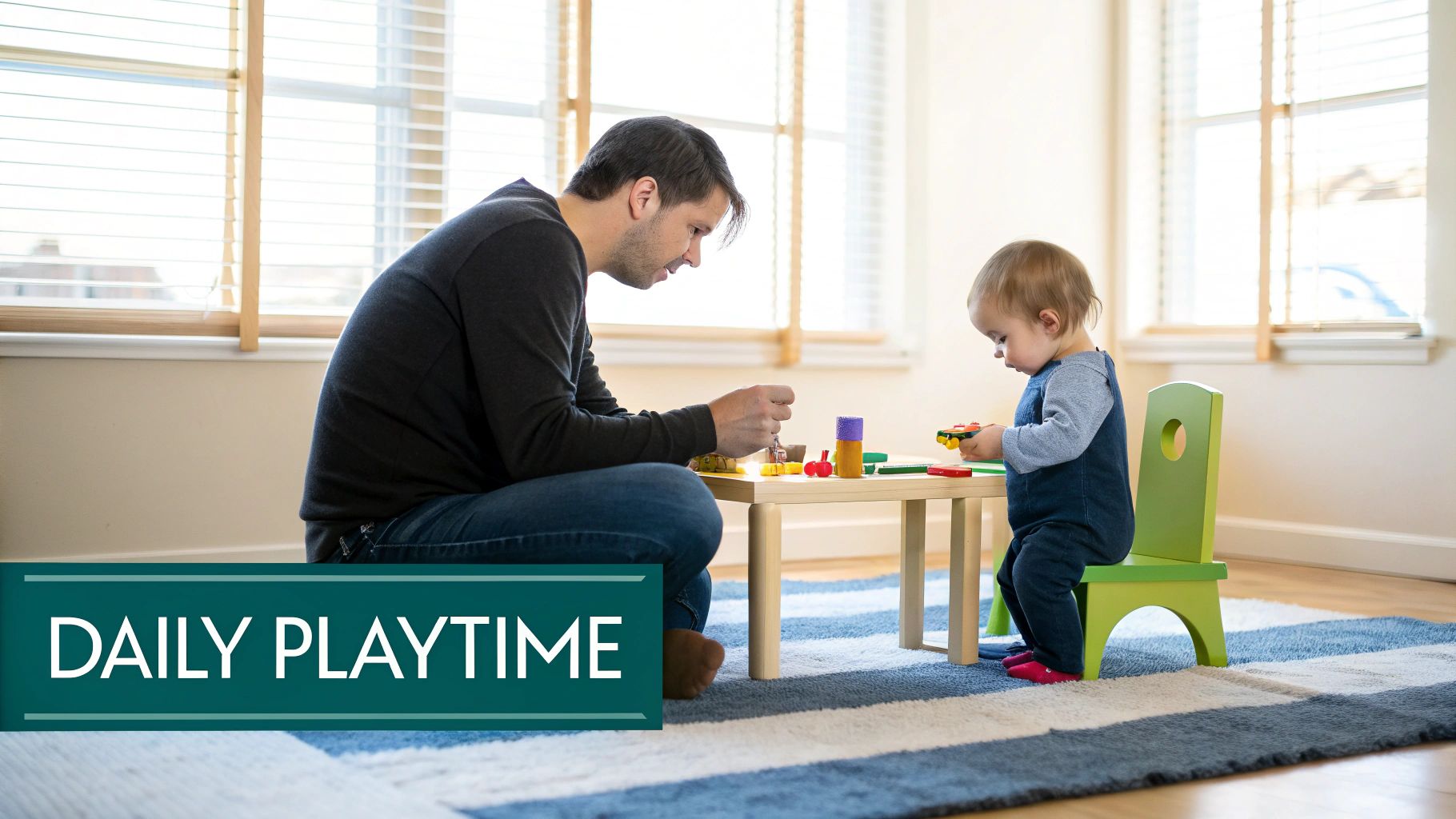
Having the right toys is one thing, but the real magic happens when you weave them into the rhythm of your day. It doesn't have to be a big, complicated production. It’s all about spotting those small windows of opportunity and turning them into moments of connection and discovery.
Think of it as sprinkling a bit of fun into everyday tasks. A musical toy can make a wriggly nappy change feel more like a dance party. Introducing a shape sorter for a few minutes after lunch can offer some quiet, focused time, helping your little one wind down while they get to grips with their motor skills.
Your involvement is the special sauce. When you get down on the floor with them, narrating what they’re doing or celebrating their little victories, you’re more than just a playmate. You’re their first and most trusted teacher.
The Power of Toy Rotation
One of the simplest yet most effective tricks in the parenting playbook is toy rotation. The idea is straightforward: instead of having every toy out at once, you offer a small, curated selection and switch it up every week or so.
This works wonders. First, it stops your child from feeling overwhelmed by too many choices, which often leads to them just flitting from one thing to the next without really engaging. Second, it keeps everything feeling fresh. A toy that’s been tucked away for a week can feel brand new when it reappears, sparking a whole new wave of curiosity.
Toy rotation is like creating a mini-museum exhibit in your living room. By carefully curating what's on display, you encourage deeper exploration and make old favourites feel new again, maximising engagement without buying more things.
Building a Simple Play Routine
A gentle rhythm to your day can help your one-year-old feel secure and know what's coming next. Here’s a rough idea of how you could fold interactive play into your daily flow.
- Morning (After Breakfast): This is often peak energy time, perfect for getting those little legs moving. Break out a push walker or a pull-along toy to encourage walking and build confidence.
- Midday (Before Nap): Time for something a bit quieter and more focused. An activity cube or a chunky puzzle is great for working on fine motor skills and problem-solving, helping them calm their bodies before sleep.
- Afternoon (Post-Nap Snack): A brilliant slot for sensory or creative play. Introduce a simple xylophone or a textured board book to awaken their senses.
- Evening (Before Bath): Wind down with gentle, shared activities. Cuddling up with an interactive book or stacking soft blocks together is a lovely, calming way to end the day.
This isn’t a rigid schedule, just a flexible guide. The real goal is to create predictable moments for purposeful play, making learning a natural and joyful part of your life together.
How Toy Subscription Boxes Enhance Play
Choosing the right interactive toys for a one-year-old can feel like a full-time job. Just when you’ve found something they absolutely adore, they sprout a new skill and are suddenly ready for a completely fresh challenge. This is where a stage-based toy subscription box can be an absolute game-changer for busy parents.
Think of a subscription service less like a replacement for your own thoughtful toy choices, and more like an expert-led partner in your child's play journey. These services take all the guesswork out of the equation. They deliver a beautifully curated set of high-quality, developmentally-spot-on toys right to your door, precisely when your little one is ready for them.
Taking the Guesswork Out of Growth
One of the biggest hurdles is simply keeping up with your child's lightning-fast development. A toy that captivated them last month might be a bit too simple now, while the next-level challenge might still be a touch too tricky. Subscription boxes are designed by child development experts who live and breathe these timelines.
Each box is carefully assembled to match a specific developmental window. This ensures the contents provide that perfect "just right" level of challenge to nurture emerging skills, from fine motor coordination to early problem-solving. Aligning with these milestones means you’re always offering toys that are engaging and supportive, rather than frustrating or boring. It’s like having a child development specialist personally pick out your child’s next set of play tools.
A toy subscription box is like a developmental roadmap delivered to your doorstep. Each delivery introduces new concepts and challenges at the ideal time, ensuring your child's playthings grow with them, not behind them.
This curated approach also introduces you to fantastic, high-quality brands you might never have discovered on your own. Many services make a point of prioritising toys made from sustainable, natural materials, helping you build a collection that’s not only educational but also safe and eco-conscious.
A Smarter Way to Play
Beyond the expert curation, subscription boxes offer several practical perks that modern parents really appreciate. For a start, they are a brilliant solution for managing household clutter. Instead of accumulating a mountain of toys that are quickly outgrown, you receive a manageable, targeted selection that keeps your play space feeling calm and organised.
This model also saves you precious time you would otherwise spend researching, shopping, and comparing endless options online. Here’s a quick look at why they work so well:
- Perfectly Timed: Toys arrive right on cue with specific developmental stages, ensuring they are always relevant and engaging.
- Reduced Clutter: A curated selection prevents that overwhelming build-up of unused toys in your home.
- Time-Saving Convenience: It cuts out hours of research and shopping, freeing you up to spend more quality time actually playing with your child.
- Expert-Led Curation: Selections are made by people who truly understand child development, giving you confidence in every toy.
- Discovery of New Brands: Introduces families to high-quality, often sustainable toy brands they might not find otherwise.
For parents in the UK looking for a way to simplify and enrich their child's playtime, exploring a toddler subscription box in the UK can be a fantastic next step. These services are a smart, supportive tool, helping you provide the very best developmental experiences for your one-year-old without the added stress.
Your Questions, Answered
Stepping into the world of toddler toys can feel a bit overwhelming. You're not just picking out something fun; you're choosing the very tools that will help your little one learn and grow. Let's tackle some of the most common questions parents ask.
How Many Interactive Toys Does My 1-Year-Old Really Need?
It's a classic case of quality over quantity. Honestly, you can forget about trying to find a "magic number" of toys. An overflowing toy box often leads to an overstimulated child who can't focus on any single thing for long.
Aim for a thoughtfully curated collection of 3 to 5 high-quality interactive toys that cover different developmental areas. Think of it like this:
- One for fine motor skills (like a classic shape sorter)
- One for building confidence with movement (like a sturdy push-along walker)
- One for stimulating the senses (like a simple musical toy)
A brilliant way to keep things fresh is to try a toy rotation. Just tuck a few toys away for a week or two and then swap them back in. This simple trick makes old toys feel brand new again and encourages your child to dive deeper into play.
Are Electronic Toys Bad for a 1-Year-Old's Development?
This is a big one, and the answer isn't a simple yes or no. Electronic toys themselves aren't the enemy; it's all about balance and how your child interacts with them. The best ones get your child to do something, not just sit back and watch.
For example, a toy that makes a cow sound when your toddler presses the picture of a cow is teaching a fantastic lesson in cause and effect. On the other hand, a toy that just plays a long song with flashing lights doesn't ask much of them. The trick is to mix these well-designed electronic toys with plenty of open-ended, screen-free classics like wooden blocks and stacking rings.
An interactive toy should be part of a two-way conversation. If the toy is doing all the "talking" and your child is just a spectator, the learning potential shrinks. The goal is to find toys that invite your child to act, think, and respond.
When Should I Bring in More Complicated Toys?
Your child is the best guide here. The simplest and most effective strategy is to just watch them play. Every child's developmental journey is unique, so there’s no need to rush. Follow their lead.
You'll start to see clear signs when they've outgrown a toy. Is that three-piece puzzle they used to struggle with now a piece of cake? Do they solve it in seconds, looking bored? That's your cue. It might be time to introduce a puzzle with a few more pieces or a toy that requires two or three steps to trigger a fun reaction. When their current toys stop being a satisfying challenge, you know they're ready for the next step up.
Ready to take the guesswork out of finding the perfect stage-based toys? The play kits from Grow With Me are expertly curated to match your child's developmental milestones, delivering exactly what they need, right when they need it.
Explore our subscription boxes and start your play journey today!