
Unlocking Baby Vision with High Contrast Images
High-contrast images are visual tools that use starkly different colours to create clear, distinct patterns. Think bold black lines on a crisp white background. For a newborn whose eyesight is still a work in progress, these simple, uncluttered images are far easier to make out than pictures filled with complex shapes and subtle colours.
Why Your Newborn Loves High Contrast Images
Ever notice how your baby might stare intently at a simple black and white pattern, yet seem completely uninterested in that pastel-coloured teddy bear? It’s not that they have a preference for monochrome décor; it's all about their developing biology.
When your baby is born, their world is a beautiful, blurry place.
Imagine looking through a camera that’s completely out of focus. You can’t see fine details, but you can make out bold shapes and strong lines where light and dark meet. That’s a pretty good approximation of what your newborn is experiencing. The cells in their retinas – the rods and cones that process light and colour – are still maturing.
Because of this, they can't really distinguish between subtle shades. Pastels all just blend into a fuzzy haze. But the dramatic difference between black and white? That sends the strongest possible signal to their brain. These powerful signals are exactly what their developing visual system needs, helping to:
- Stimulate the Optic Nerve: The intense contrast gets the optic nerve firing, building a stronger, faster connection between your baby's eyes and their brain.
- Strengthen Eye Muscles: Focusing on these clear images gives the tiny muscles in their eyes a much-needed workout, helping them learn to coordinate and track objects.
- Build Concentration: High-contrast images are captivating! They grab a baby's attention and help them practise focusing for longer periods—a skill that's fundamental for all future learning.
This timeline gives you a great snapshot of how a baby's vision sharpens over the first few months, showing just why that initial high-contrast input is so critical.
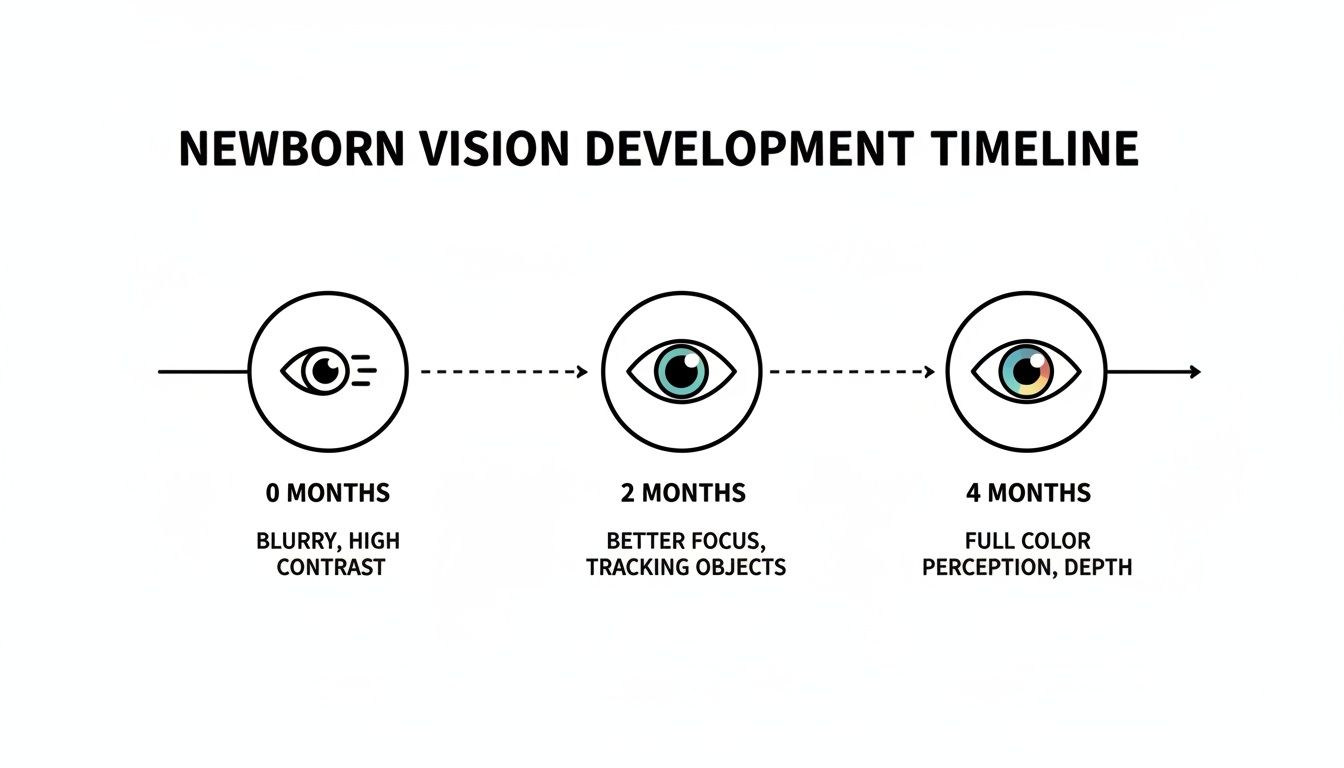
As you can see, their journey from a blurry, black-and-white world to one filled with sharp detail and colour is rapid. Giving them the right kind of visual stimulation at each stage makes all the difference.
How Simple Shapes Build a Complex Brain
Looking at these images does more than just strengthen the eyes; it actively builds your baby’s brain. Every time your little one focuses on a high-contrast card, they’re creating and reinforcing neural pathways that are essential for visual processing. This isn’t just about seeing—it’s about their brain learning how to see.
By providing your baby with high contrast images, you are giving their developing brain the exact input it craves. It’s a simple yet powerful way to support cognitive growth from the very first days.
This early visual work is foundational. It teaches the brain and eyes to work together as a team, laying the groundwork for more advanced skills down the road, like depth perception, recognising faces and objects, and developing hand-eye coordination. It’s amazing to think that simple black and white patterns are the building blocks for a lifetime of seeing and understanding our vibrant, colourful world.
Seeing the World Through Your Baby's Eyes
Ever tried to watch a film with the colour and contrast turned way down? That’s a pretty good picture of what your newborn sees. Their world isn't the sharp, vibrant place you and I know; it's more like a soft-focus dream, where only the boldest, simplest shapes manage to stand out.
This is all down to how their eyes are developing. The special cells responsible for vision, the rods and cones, are still a work in progress. It's the cones that handle colour and sharp detail, and they just need a bit more time to mature. It's why a fancy, detailed toy might get completely ignored, while a simple black and white pattern is utterly captivating.
Finding Your Baby's Focal Point
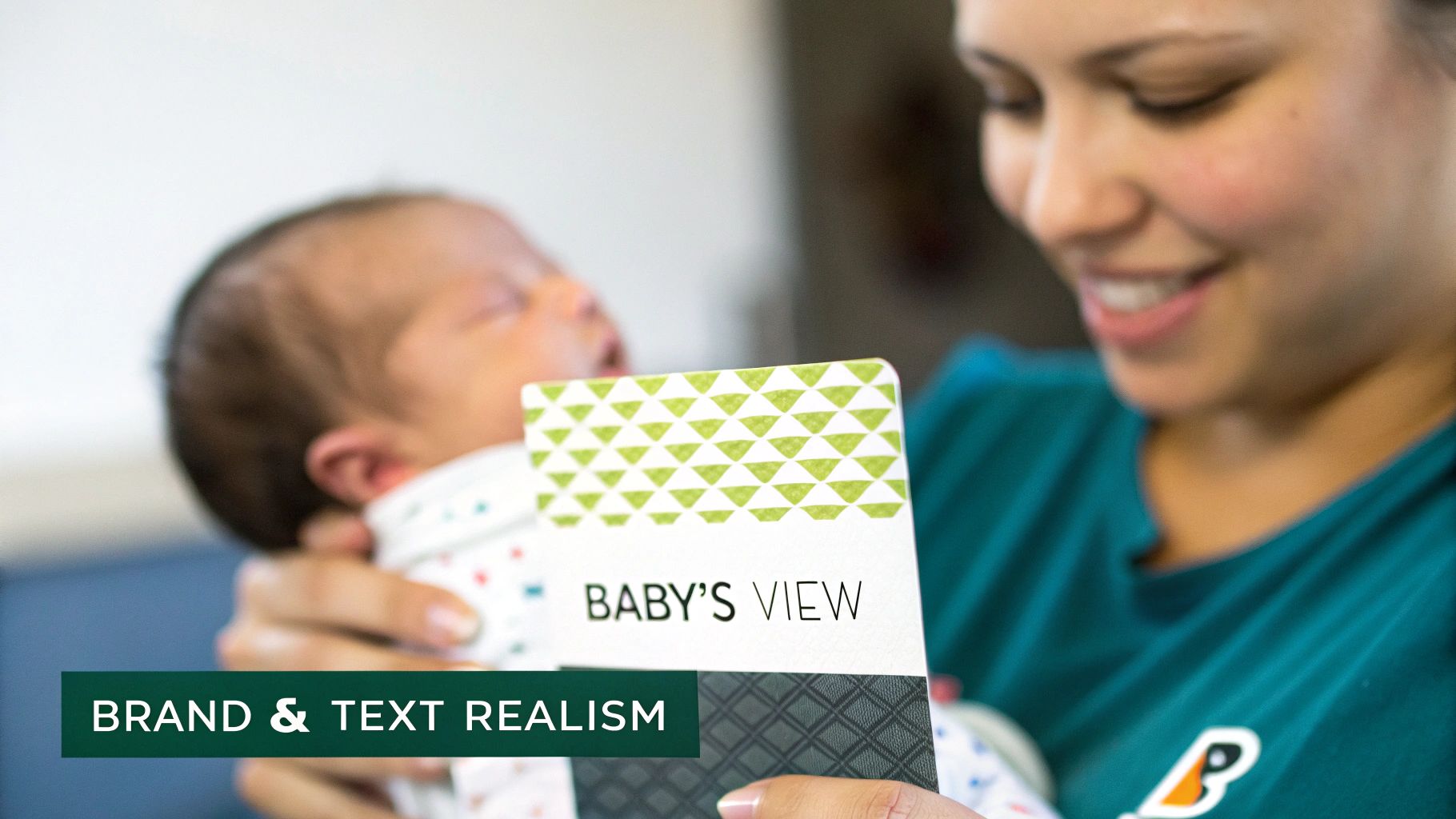
In those first few weeks, a baby’s vision is also limited to a very close range. They can see most clearly about 8 to 12 inches away from their face. It’s no coincidence that this is roughly the distance between your face and theirs when you're holding them for a feed or a cuddle. Nature has a clever way of ensuring they can focus on the most important thing in their world: you.
Placing high-contrast images within this sweet spot is a brilliant way to engage them. It gives their developing brain clear, simple information it can actually process. This encourages them to work their eye muscles and build concentration without getting overloaded. You’re not just showing them a picture; you’re giving them a visual stimulus that’s perfectly tuned to what their brain is ready to receive.
This idea of improving visual clarity has been around for a long time. Think about the move from old black-and-white TV to colour. When BBC2 introduced its PAL colour system back in 1967, the improved contrast made everything on screen pop, completely changing how people watched television. It's a similar leap for your baby's brain.
The Power of Black, White, and Red
Because their cones are still developing, newborns see the world mostly in black, white, and shades of grey. The stark difference between black and white sends a really strong, clear signal to their brain, helping it start to wire up and make sense of what it's seeing.
Providing the right kind of visual input helps build a stronger connection between you and your baby. It shows them you understand their world and are meeting them where they are, developmentally.
As their vision gets better over the first few months, the first primary colour they’ll properly distinguish is usually red. This explains why so many great high-contrast baby toys mix bold black and white patterns with pops of bright red.
To really get why these images are so powerful, it helps to have a broader understanding of sensory play and the huge part it plays in development. By giving your baby these specific visual tools, you’re supporting one of the most vital parts of their early learning journey.
Simple Ways to Use High Contrast Cards and Toys
So, you know why high-contrast images are fantastic for your baby's developing brain. But how do you actually use them day-to-day? This is where the real fun begins, and the great news is, you don’t need any complicated setups or fancy equipment. It’s all about weaving these simple, powerful tools into the little moments you already share.
Think of it as creating small, joyful opportunities for discovery that feel completely natural.
Making Tummy Time a Visual Adventure
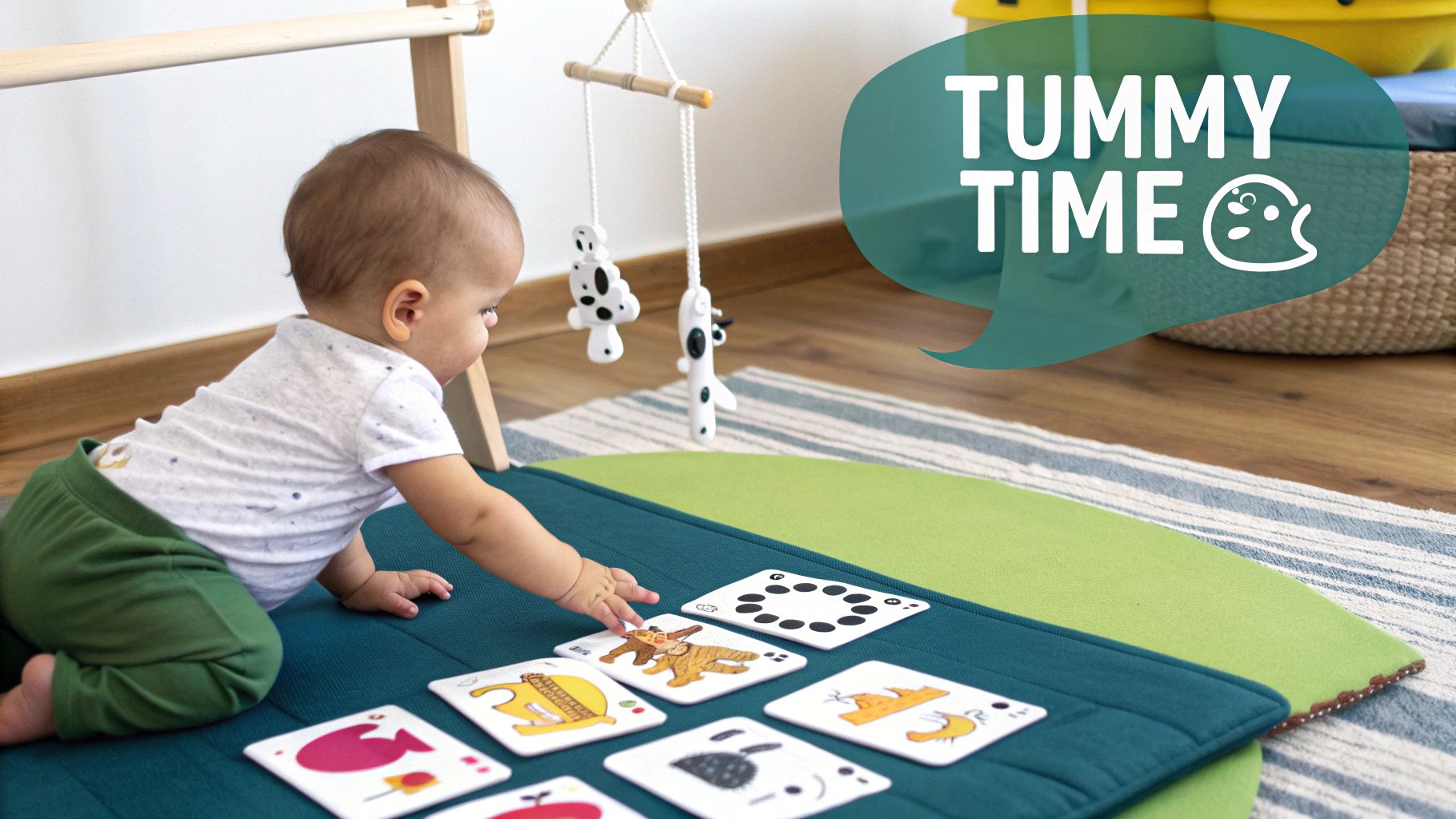
Let’s be honest, tummy time isn’t always a baby’s favourite activity. High-contrast images can be a game-changer here, turning a challenging exercise into an exciting sensory experience. Instead of leaving your little one staring at the carpet, give them something captivating to look at.
- Create a Mini Gallery: Prop a few cards up in a semi-circle around your baby, about 8-12 inches away. This simple setup encourages them to lift their head and look from side to side, building crucial neck and shoulder strength while they explore the patterns.
- Encourage Tracking: Hold one card in front of their face and slowly move it from left to right. This helps them practise following an object with their eyes, which is brilliant for strengthening their eye muscles and building focus.
Engaging Beyond the Playmat
Opportunities for visual stimulation are everywhere, not just during playtime. By placing high-contrast images in clever spots around the house, you can capture your baby's attention during routine activities and help stretch their concentration span.
Taping a card to the wall by the changing table can make nappy changes a moment of calm focus. You could also stick one to the side of their bassinet for them to gaze at when they’re awake and quiet. It’s an easy win for incorporating learning into your daily rhythm. For more inspiration on using visual aids, you might find some great ideas by exploring the wider world of sensory toys for babies.
The goal isn’t to constantly bombard your baby with stimulation. It's about offering engaging, age-appropriate visual input during short, frequent intervals throughout the day to support their natural developmental pace.
Using Mobiles and Play Gyms
Hanging high-contrast toys from a play gym or mobile is a fantastic way to develop more advanced visual skills. As the toys gently sway and spin, they encourage your baby to track objects in multiple directions, not just side-to-side. This helps lay the groundwork for depth perception.
This kind of dynamic play is a vital first step towards building hand-eye coordination. Soon enough, you’ll see your baby starting to reach out and bat at those fascinating shapes dangling above them.
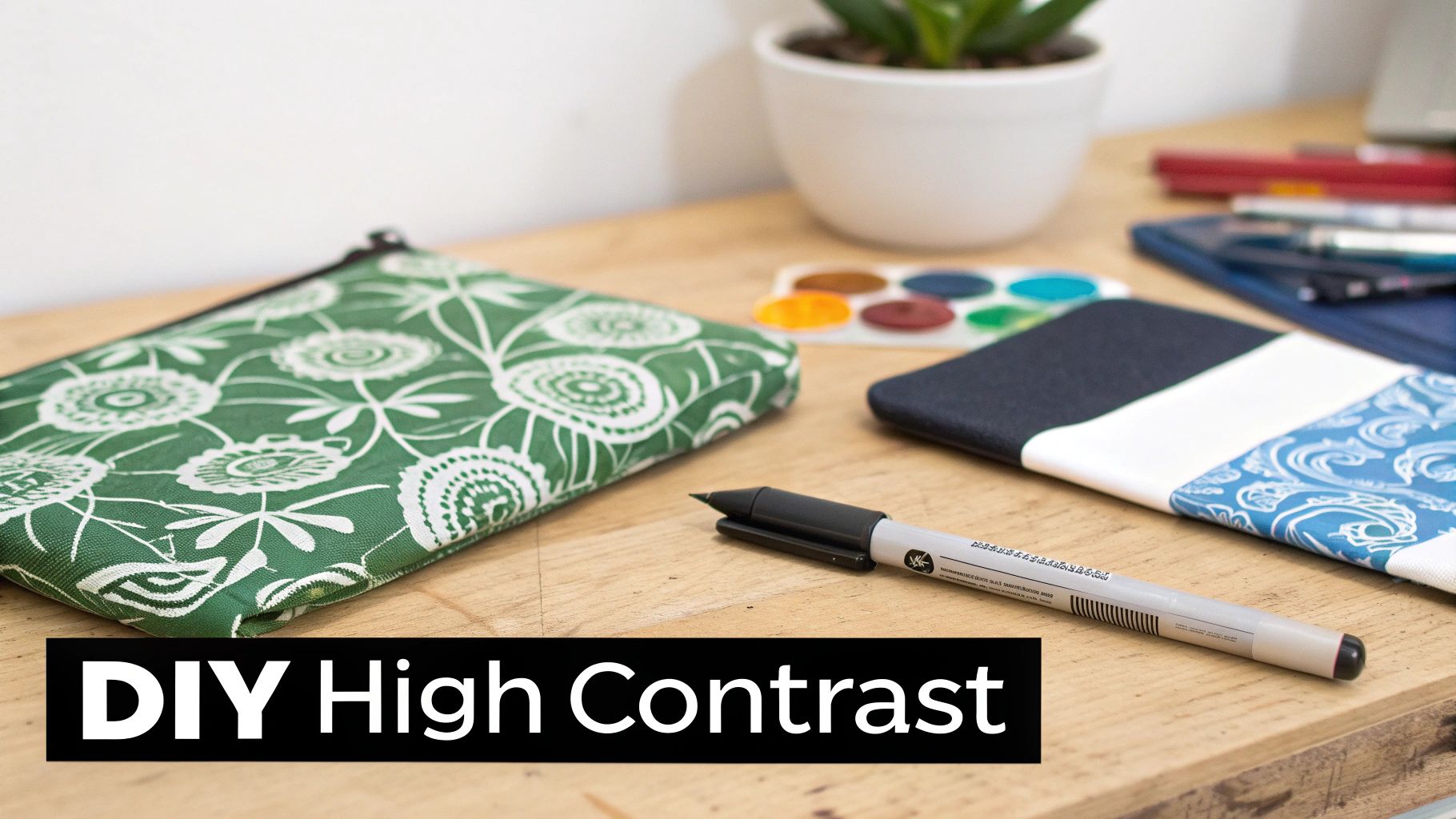
Creating Your Own High Contrast Images Safely
You don't need a big budget to give your baby fantastic visual stimulation. In fact, you can create some really effective high-contrast images right at home, adding a personal touch to their early development. The trick is to pair your creativity with a sharp focus on safety, making sure every little interaction is both fun and completely secure.
The simplest patterns are often the best. Try drawing bold black stripes, checkerboards, or basic geometric shapes like circles and triangles on a plain white card. Animal silhouettes are another great choice you can either draw yourself or find online to print. If you want to get creative with colours later on, understanding powerful color combinations with black can help you make images that really pop.
Prioritising Safety in Your DIY Projects
Getting creative is wonderful, but your baby’s safety always has to be the top priority. Little ones explore the world with their hands and, of course, their mouths, so anything you create needs to be tough and totally non-toxic.
For your own peace of mind, stick to these key safety rules:
- Use Non-Toxic Materials: Always opt for non-toxic markers, inks, and paper. Double-check that anything you use is certified as baby-safe.
- No Choking Hazards: Make sure your cards are big enough that they can't be swallowed. Steer clear of adding small, fiddly bits like googly eyes, buttons, or ribbons that could come loose.
- Secure the Edges: Babies have surprisingly strong little hands! Laminating your cards makes them more durable and tear-proof. Just make sure the laminated edges are smooth, not sharp, and are properly sealed so your baby can't chew off any bits of plastic.
The safest bet is to create items that are for looking at, not for your baby to play with on their own. Always supervise when your baby is using any homemade toys or cards to make sure they're being used safely.
This careful approach means you can craft engaging and effective learning tools without any stress. These homemade cards are a brilliant starting point for visual play. As your child gets older, this foundation helps them move on to more structured learning tools; you can read more about using flash cards for the alphabet when the time comes. By taking these simple precautions, you can confidently support your baby’s visual development with materials made with love.
When to Introduce Colour to Your Baby
While the striking simplicity of black and white is the perfect starting point for your newborn's visual journey, their world will soon begin to fill with colour. Knowing exactly when to bring in more vibrant shades helps you support this next exciting developmental stage without overwhelming their maturing senses.
For the first couple of months, stick with monochrome. It’s what their brand-new eyes can process best. Then, around two to three months of age, most babies start to see bold, primary colours. The very first one they can usually make out is red, which is why you’ll often see it paired with black and white in toys designed for this age.
This transition doesn't happen overnight. It’s a gradual process as the cone cells in their retinas continue to develop. Think of it not as replacing black and white, but as enriching their visual diet.
Signs Your Baby Is Ready for More Colour
You can watch for subtle cues that your baby’s vision is advancing and they're ready for a more complex visual menu. These little signs show their brain is getting much better at processing what they see.
Keep an eye out for these developments:
- Improved Tracking: They can follow an object much more smoothly, not just from side-to-side but up and down as well.
- Longer Focus: You'll notice they can stare at a toy or your face for longer stretches of time.
- Reaching for Objects: They start batting at or reaching for things, which shows their depth perception and hand-eye coordination are kicking in.
When you start spotting these changes, it's the perfect time to introduce items that mix those familiar high-contrast patterns with a splash of primary colour.
The trick to a smooth transition is to layer new things onto what's already familiar. A toy with both black-and-white stripes and a bright red spot gives them a visual anchor while gently encouraging their eyes to process colour.
This approach keeps them engaged without being overstimulating. A fantastic way to do this is with books designed specifically for this stage of development. You can explore some of the best board books for babies to find titles that skilfully combine high contrast with early colours.
By gradually adding bold, simple colours like red, blue, and yellow to their playtime, you’re supporting their incredible journey into a much more vibrant and visually rich world.
Common Questions About High Contrast Images
As you start exploring the world of high-contrast images with your baby, it's completely normal to have a few questions. Parents often ask me about the best timing, how long to use them for, and how to do it safely. Let's walk through some of the most common queries so you can feel confident and enjoy this wonderful developmental tool.
How Long Should My Baby Look at the Cards?
This is probably the number one question I get asked! The good news is there's no magic number. It’s all about quality over quantity. Aim for a few minutes of happy, focused interaction a couple of times a day.
The best time is whenever your baby is calm, alert, and ready to play. You’ll know they’ve had enough when they start to get a bit fussy, turn their head away, or even just close their eyes. That’s their way of saying, "Okay, I'm done for now!" Think of it as joyful discovery, not a scheduled task.
When Is It Time to Move On From Black and White?
Another frequent question is when to pack the black and white cards away. Honestly, there's no strict cut-off point. While they offer the biggest bang for their buck in the first few months (from 0-4 months), many babies continue to find comfort and fun in those bold, familiar patterns long after.
Around the four to six-month mark, you'll likely notice your baby becoming interested in a wider variety of things. This is a great time to start introducing more complex patterns and vibrant colours alongside the high-contrast ones. Just follow your baby’s lead—they’ll show you when they’re ready for the next step.
Are high-contrast images safe for my baby's eyes?
Absolutely. Not only are they safe, but they're incredibly beneficial for strengthening your baby's vision. Babies have a brilliant built-in defence mechanism: they simply look away when they feel overstimulated.
As long as you’re using the cards for gentle, interactive play and paying attention to your baby’s cues, you can be sure you're giving them a brilliant and perfectly safe learning experience. It's a fantastic way to support their amazing journey of seeing the world.
At Grow With Me, we're all about making developmental play simple and full of joy. Our curated kits come packed with age-appropriate, high-contrast materials designed to fascinate your baby and support their visual development right from the start. Take a look at our Grow With Me subscription boxes to see how we can help.