

8 Fun and Developmental Activities With a 6 Month Old in 2025
At six months, your baby is on the cusp of major developmental leaps. They are more aware, interactive, and ready to explore the world with newfound curiosity. This is the perfect time to introduce engaging, purposeful play that supports their growing brain and body. Finding meaningful activities with a 6 month old can feel overwhelming, but it's simpler than you think.
This guide provides a curated list of eight age-appropriate activities designed not just to entertain, but to foster crucial cognitive, motor, and sensory skills. We move beyond the obvious to offer practical, actionable ideas for you and your baby. For each activity, we will detail what to do, explain the developmental benefits, and provide key safety considerations. You will also find simple variations to suit different skill levels.
We will show you how to transform everyday playtime into a powerful tool for connection and development. Learn how to use simple household items or toys from a play kit to enrich every moment. These shared experiences will help your little one build a strong foundation for the exciting milestones just around the corner. Get ready to discover new ways to play, learn, and grow together.
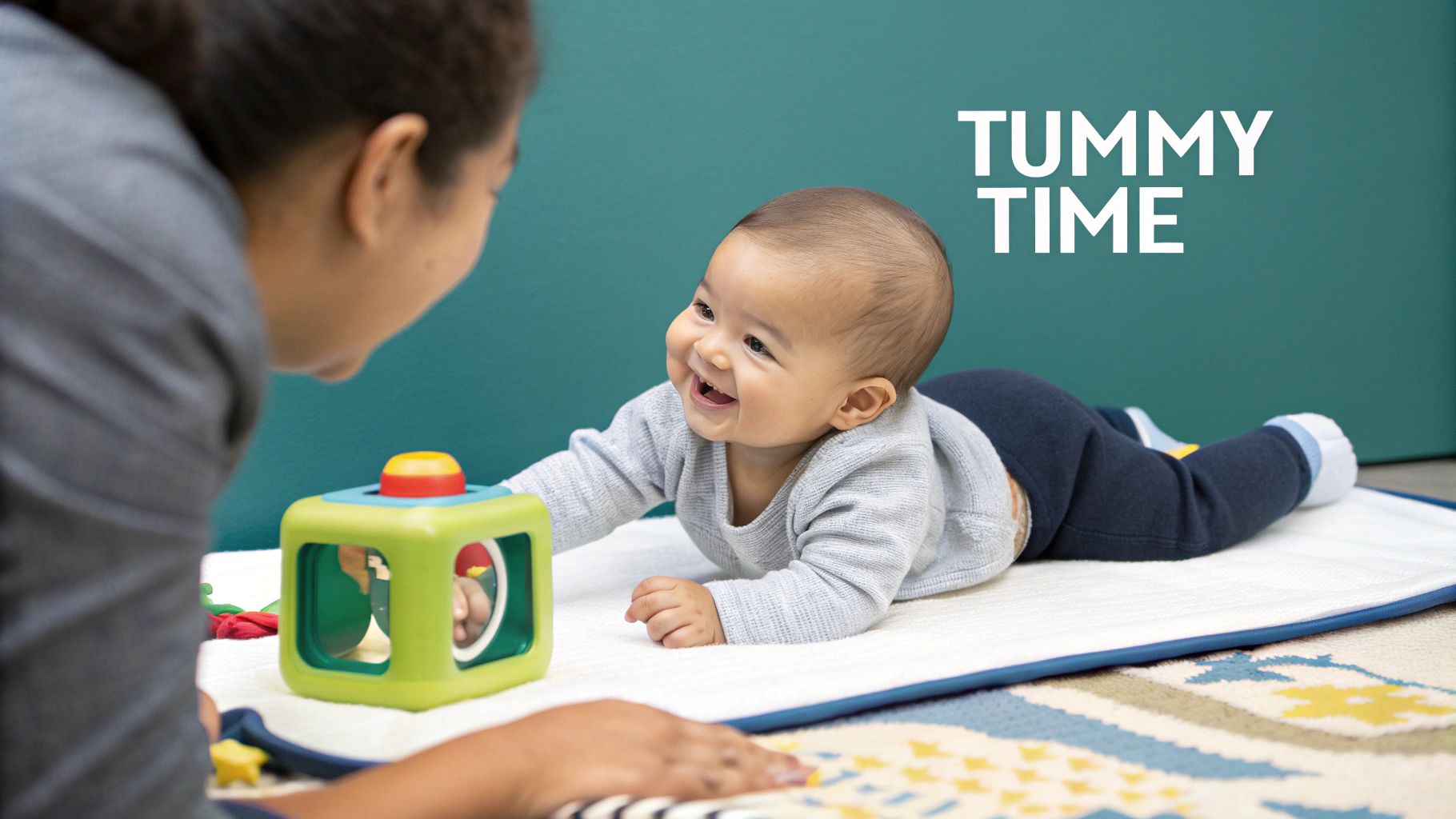
1. Tummy Time with Interactive Play
By six months, tummy time evolves from a simple neck-strengthening exercise into a dynamic, interactive playtime. This activity involves placing your baby on their stomach on a safe, comfortable surface and engaging them with toys and your presence. It's a foundational activity for building the core, neck, and shoulder muscles necessary for future milestones like rolling, sitting up, and crawling.
Why It's a Great Activity at 6 Months
At this age, many babies can push up on their hands, lift their chests off the floor, and may even start pivoting or attempting to move forward. Interactive tummy time capitalises on these emerging skills, turning a developmental necessity into an exciting game. It strengthens their entire posterior chain, improves head control, and helps prevent flat spots on the back of their head (plagiocephaly).
Key Insight: Tummy time is no longer just about endurance; it's about exploration. Your 6-month-old is now a more active participant, ready to reach, grasp, and interact with their environment from a new perspective.
How to Make Tummy Time Engaging
Make the floor a stimulating environment. Ensure the surface is comfortable and safe; you can explore a guide to the a personalized blanket for baby to find options that combine cosiness with safety standards.
- Toy Reach: Place colourful, textured toys just beyond their grasp to encourage stretching and pivoting. The Grow With Me Spinning Drum is excellent for this, as its sound and motion motivate your baby to reach out and touch it.
- Mirror Play: Position a baby-safe mirror in front of them. Babies are fascinated by reflections, and seeing their own face will encourage them to lift their head and chest for a better view.
- Get on Their Level: Lie on your stomach facing your baby. Sing songs, make silly faces, and talk to them. Your presence is the most engaging toy they have.
- Sensory Books: Prop open a high-contrast or textured board book for them to look at and touch.
Safety and Success Tips:
- Always supervise tummy time.
- Aim for several short sessions throughout the day (5-10 minutes each) rather than one long one.
- Avoid this activity immediately after a feed to prevent discomfort.
For a deeper dive into establishing a routine, learn more about the foundations of tummy time.
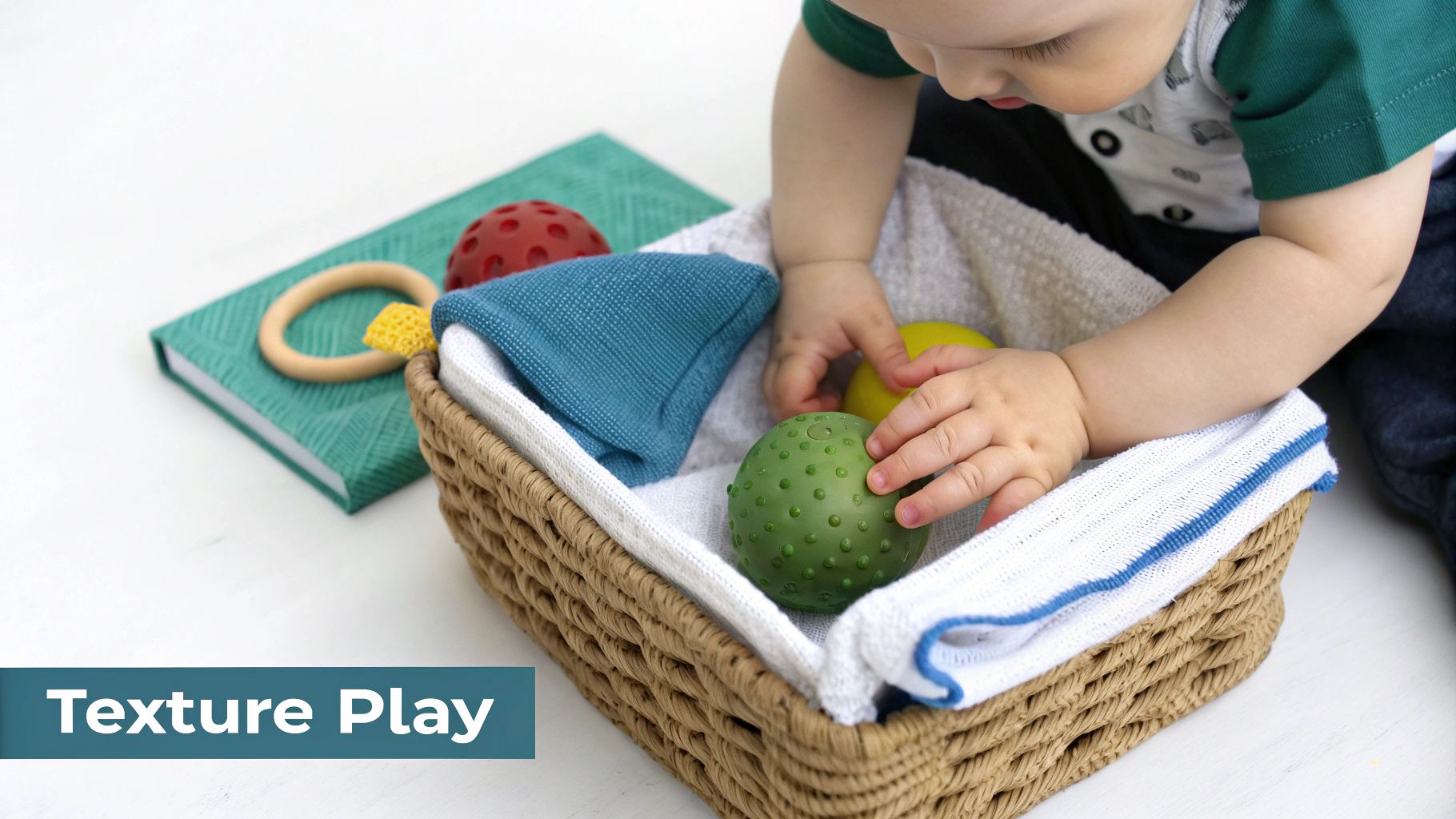
2. Sensory Exploration with Texture Play
At six months, your baby’s world is a tactile wonderland waiting to be discovered. Sensory exploration involves providing your baby with a variety of safe, textured materials to touch, hold, and mouth. This activity is crucial for brain development, as it helps build nerve connections in the brain's pathways and encourages the development of fine motor skills and hand-eye coordination.
Why It's a Great Activity at 6 Months
Your 6-month-old has likely mastered the art of grabbing and bringing objects to their mouth, which is their primary method for learning about the world. Introducing different textures capitalises on this instinct, turning simple play into a rich learning experience. It supports cognitive growth by helping them understand concepts like soft, hard, smooth, and rough, and it can also have a calming effect.
Key Insight: Mouthing is a key part of sensory learning at this age. Providing a variety of safe, clean, and interesting textures helps your baby make sense of their environment through both touch and taste.
How to Make Texture Play Engaging
Create a simple sensory basket or area with a few carefully chosen items. The goal is to offer variety without overwhelming them. You can find more inspiration with these sensory play ideas for babies.
- Create a Texture Basket: Fill a small, shallow basket with items like a soft flannel, a crinkly piece of paper, a smooth wooden spoon, and a bumpy silicone teether. Let your baby sit supported and explore the items at their own pace.
- Fabric Books: Soft cloth books with different materials like satin, corduroy, and faux fur are perfect. The Grow With Me high-contrast soft book often includes varied textures for this purpose.
- Textured Balls: Offer balls with different surfaces - some smooth, some spiky, some soft. This encourages grasping and transferring objects from one hand to the other.
- Cool and Warm: Provide a teething ring that has been safely cooled in the fridge alongside a room-temperature wooden toy. This contrast introduces the concept of temperature.
Safety and Success Tips:
- Always supervise texture play, especially since items will go into your baby’s mouth.
- Ensure all objects are large enough to not be a choking hazard (larger than a toilet paper roll in diameter).
- Regularly clean and sanitise all sensory items.
- Observe your baby’s reactions and rotate items to keep the activity fresh and exciting.
3. Singing and Music Play
Engaging your baby with music and song is a powerful way to connect and stimulate their developing brain. This activity involves singing to your baby, playing different types of music, and using simple instruments to explore rhythm and sound together. It's a joyful, bonding experience that lays a strong foundation for language, emotional intelligence, and cognitive skills.
Why It's a Great Activity at 6 Months
At six months, a baby’s auditory system is rapidly maturing. They can recognise familiar voices and melodies, turn their heads towards sounds, and may even start to babble or coo in response to music. Singing and music play taps directly into these developing skills, helping them to discern different tones, rhythms, and speech patterns, which are crucial precursors to language acquisition.
Key Insight: Music is more than just entertainment; it's a form of communication. For a 6-month-old, the emotional tone of your singing and the rhythm of a song convey meaning and security long before they understand the words.
How to Make Music Play Engaging
Creating a musical environment is simple and doesn't require any special talent or equipment. Your voice is your baby’s favourite instrument, and your enthusiasm is what makes it fun. For a soothing ambiance during quieter music play, a baby breathing light music sleep aid instrument can introduce gentle sounds and calming visual stimulation.
- Action Songs: Use songs with hand movements like 'If You're Happy and You Know It' or 'The Wheels on the Bus'. The combination of sound and motion helps your baby connect words to actions.
- Gentle Movement: Hold your baby and sway, bounce, or dance gently to different types of music. This helps them physically feel the rhythm and adds a sensory dimension to the experience.
- Homemade Instruments: You don't need fancy toys. A wooden spoon on a pot, a container filled with rice, or a set of jingle bells can make for fantastic, baby-safe percussion instruments.
- Repetition is Key: Don't worry about variety. Babies thrive on repetition, as it helps them learn and provides a sense of comfort and predictability. Singing the same lullaby or nursery rhyme daily reinforces their learning.
Safety and Success Tips:
- Always supervise your baby when using homemade or toy instruments to ensure no small parts pose a choking hazard.
- Pay attention to your baby’s cues; if they seem overstimulated or tired, switch to a calmer tune or activity.
- Sing in a high-pitched, expressive tone (parentese), as research shows babies are more attentive to it.
4. Water Play and Bath Time Exploration
For a six-month-old, bath time is far more than just a way to get clean; it’s a multi-sensory playground. This activity involves using bath time or dedicated shallow water play sessions to let your baby safely experience the unique sensations of water. It's a fantastic opportunity for them to build confidence, explore physics in a hands-on way, and enjoy a calming yet stimulating experience.
Why It's a Great Activity at 6 Months
At six months, your baby has more control over their body and is fascinated by cause and effect. Splashing, kicking, and watching toys float and bob are thrilling discoveries. Water play stimulates their sense of touch, sight, and sound. The feeling of water on their skin and the gentle resistance it provides is excellent for developing body awareness and strengthening their muscles in a supportive, low-gravity environment.
Key Insight: Water play transforms a daily routine into a rich learning opportunity. Your baby isn't just splashing; they are conducting their first science experiments about volume, buoyancy, and temperature.
How to Make Water Play Engaging
Turn the bathtub into a safe and exciting laboratory of fun. With your baby securely supported, introduce simple activities that engage their curiosity.
- Floating Friends: Offer a variety of safe, floating toys. The Grow With Me bath books are perfect as they can be submerged without damage and provide colourful images for your baby to focus on.
- Pour and Splash: Use small, baby-safe cups or containers to gently pour water over their legs and tummy. Let them try to hold the cups and feel the water run through their fingers.
- Bubble Fun: A small amount of gentle, baby-safe bubble bath can add a new textural dimension to playtime. Let them touch and pop the bubbles.
- Sing and Splash: Sing bath-time songs like "Row, Row, Row Your Boat" or "Splish, Splash, I Was Taking a Bath" to make it an interactive, joyful routine.
Safety and Success Tips:
- Never, ever leave a baby unattended in or near water, not even for a second.
- Check the water temperature before placing your baby in; it should be warm, not hot, around 37-38°C.
- Keep bath time relatively short (5-10 minutes) to prevent your baby from getting chilled.
- Have all supplies, including towels and a clean nappy, within arm's reach before you begin.
5. Object Permanence Games and Peek-a-Boo
Simple games like peek-a-boo are far more than just a way to elicit adorable giggles; they are powerful tools for your baby's cognitive development. These activities teach object permanence, the crucial understanding that things still exist even when they can no longer be seen. For a 6-month-old, this is a mind-bending new concept that you can introduce through playful, repetitive interactions.
Why It's a Great Activity at 6 Months
Around the six-month mark, babies are just beginning to grasp the idea of object permanence. Before this stage, "out of sight, out of mind" is a literal reality. Introducing these games now helps build foundational cognitive skills, strengthens memory, and can even ease separation anxiety later on by teaching them that you always come back, even when you disappear for a moment.
Key Insight: These games are your baby's first introduction to abstract thought. By revealing a hidden toy or your own face, you are showing them that the world is predictable and that things can be trusted to remain even when they are hidden from view.
How to Make Object Permanence Engaging
Turn this developmental lesson into a delightful game of hide-and-seek. The key is repetition and an enthusiastic reaction to keep your baby captivated.
- Classic Peek-a-Boo: Start with the basics. Cover your face with your hands and then reveal it with an excited "Peek-a-boo!" Your baby will be fascinated by your disappearance and reappearance.
- Hide the Toy: Take a favourite toy, like a colourful rattle, and partially hide it under a muslin cloth or blanket while your baby is watching. Encourage them to find it. As they get better, you can hide it completely.
- Peek-a-Boo Books: Use lift-the-flap books where characters or objects are hidden behind flaps. This allows your baby to be in control of the "reveal," which is highly rewarding for them.
- Blanket Fun: Lie next to your baby and gently pull a light blanket over your head, then pop out with a smile. The exaggerated movement and surprise make this version particularly exciting.
Safety and Success Tips:
- Always use lightweight, breathable materials like a muslin cloth if covering a toy or yourself.
- Keep the mood light and playful; watch your baby's cues and stop if they seem distressed or overstimulated.
- Celebrate every discovery with cheers and praise to build their confidence.
To better understand the science behind this milestone, you can explore more about what object permanence is and why it's so vital for your baby's learning journey.
6. Reading Picture Books Together
Sharing a picture book with your baby is one of the most powerful and intimate activities with a 6 month old. This activity involves sitting together and exploring age-appropriate books, focusing on bright colours, simple images, and different textures. It’s a foundational practice for nurturing early literacy skills, strengthening your bond, and introducing your baby to the wonderful world of stories and language.

Why It's a Great Activity at 6 Months
At six months, a baby's vision has improved dramatically, allowing them to appreciate vibrant colours and high-contrast images. They are also developing their sense of touch and are curious about different textures. Reading together stimulates these developing senses, builds listening skills, and helps them begin to associate sounds with pictures and objects, a crucial step in language development.
Key Insight: At this age, reading isn't about following a plot; it's a multi-sensory experience. The goal is to make books a source of comfort, fun, and discovery, creating positive associations that last a lifetime.
How to Make Reading Engaging
Turn story time into an interactive adventure. Sit with your baby on your lap so they can see the book and your face, making it a shared experience.
- Choose the Right Books: Opt for sturdy board books, soft cloth books, or textured 'touch-and-feel' books that can withstand grabbing and even a little mouthing. The Grow With Me book selections often include high-contrast and sensory options perfect for this stage.
- Use Your Voice: Vary your tone and use animated voices for different characters or sounds. Your baby will be captivated by the rhythm and emotion in your voice, even if they don't understand the words.
- Point and Name: As you read, point to the pictures and name what you see. For example, "Look at the big, red ball!" This helps build their vocabulary and object recognition.
- Let Them Explore: Allow your baby to touch the pages, pat the pictures, and explore the book with their hands. This hands-on interaction is a key part of their learning process.
Safety and Success Tips:
- Always supervise to ensure your baby doesn't tear off and swallow pieces of a paper book.
- Keep reading sessions short and sweet (2-5 minutes is plenty) and stop if your baby seems fussy or uninterested.
- Don't worry about reading every word on the page; simply talking about the pictures is just as valuable.
7. Rolling and Movement Play
At six months, your baby is on the cusp of major mobility milestones. Rolling and movement play involves creating a safe and encouraging environment where you can support their efforts to roll, sit, and explore how their body moves. This isn't about training, but rather about turning their natural developmental urges into a fun and interactive game.
Why It's a Great Activity at 6 Months
By this age, many babies have mastered rolling from their tummy to their back and are now working on the more challenging back-to-tummy roll. These movements are crucial for developing core strength, coordination, and body awareness, which are the building blocks for sitting, crawling, and eventually walking. Purposeful movement play helps strengthen these connections between their brain and body.
Key Insight: Movement is your baby's first language of exploration. By supporting their rolls and supported sits, you are helping them build the physical confidence and strength they need to engage with the world in new, exciting ways.
How to Make Movement Play Engaging
Your goal is to be a supportive coach, not a director. Create an inviting space that motivates them to move independently, celebrating every wiggle and wobble.
- Toy Temptation: Place an engaging toy, like the Grow With Me colourful sensory ball, just to their side while they are on their back. This encourages them to reach across their body and initiate a roll.
- Supported Sitting Practice: Let your baby practise sitting by placing them between your legs as you sit on the floor, offering full support. You can also use pillows to prop them up for short, supervised periods.
- Gentle Bouncing: Sit them on your knee, holding them securely, and gently bounce or rock them. This stimulates their vestibular system, which is key for balance.
- Soft Obstacle Course: Create a simple "course" with pillows or rolled-up blankets for them to navigate during tummy time, encouraging them to push up and pivot around the soft barriers.
Safety and Success Tips:
- Always supervise closely during movement play, especially around pillows.
- Ensure the play area is on a soft surface, like a play mat, and is clear of hazards.
- Never force your baby into a position they aren't ready for; follow their cues and pace.
- Celebrate their efforts with enthusiastic praise and smiles to build their confidence.
8. Outdoor Nature Exploration and Sensory Walks
Taking your baby outside for a nature walk is a simple yet powerful way to engage all of their developing senses. This activity involves exploring natural environments, like a local park or garden, allowing your little one to experience the sights, sounds, smells, and textures of the world around them from the safety of their pram or your arms. It's a wonderful way to introduce them to new stimuli in a calm and gentle manner.

Why It's a Great Activity at 6 Months
At six months, a baby’s vision has improved dramatically, allowing them to perceive depth and a wider range of colours. They are also becoming more aware of different sounds and textures. An outdoor walk provides a feast for the senses that isn't overwhelming. The natural light helps regulate their sleep-wake cycles, and the fresh air is beneficial for both baby and parent, making it one of the most refreshing activities with a 6 month old you can do.
Key Insight: A simple walk is a complex sensory lesson for your baby. The rustling leaves, the changing light through the trees, and the feel of a gentle breeze are all brand-new, fascinating experiences that support cognitive development.
How to Make Nature Walks Engaging
Turn your walk into an interactive tour of the natural world. Your role as a narrator is key to making connections and building early language skills.
- Narrate the Scenery: Talk about what you see and hear. Say things like, "Look at the big, green tree!" or "Can you hear the birds singing?" This helps your baby associate words with objects and sounds.
- Safe Touch: Find a soft, clean patch of grass and let them feel it with their hands and feet. Safely let them touch a large, smooth leaf or the rough bark of a tree under close supervision.
- Sound Scape: Pause for a moment and just listen. Point out the sound of the wind, a distant dog barking, or children playing. This hones their listening skills and attention.
- Vary the Location: Explore different places. A walk through a forest offers different stimuli than a visit to a botanical garden with vibrant flowers or a gentle stroll along a quiet beach.
Safety and Success Tips:
- Always protect your baby's delicate skin. Consult your paediatrician about baby-safe sunscreen and use hats and protective clothing.
- Dress your baby in appropriate layers for the weather, making it easy to add or remove clothing as needed.
- Choose times with moderate temperatures, avoiding the peak sun hours between 10 a.m. and 4 p.m. where possible.
- Be mindful of overstimulation. If your baby seems fussy or overwhelmed, it might be time to head home.
Comparison of 8 Activities for 6-Month-Olds
| Activity | 🔄 Complexity | ⚡ Resources & Time | 📊 Expected outcomes | 💡 Ideal use cases | ⭐ Key advantages |
|---|---|---|---|---|---|
| Tummy Time with Interactive Play | Moderate — needs supervision and parent engagement | Low equipment; short sessions (10–15 min, 2–3×/day) | Stronger neck/shoulder/core; easier transition to crawling | Daily motor practice and bonding moments (not after feeding) | Strengthens muscles, prevents flat head; good parent‑child bonding — ⭐⭐⭐⭐⭐ |
| Sensory Exploration with Texture Play | Low–Moderate — careful item selection and monitoring | Inexpensive household items; variable session lengths | Improved tactile discrimination, fine motor skills, sensory integration | Teething, focused sensory sessions, introducing new textures | Stimulates multiple senses; adaptable and low cost — ⭐⭐⭐⭐ |
| Singing and Music Play | Very low — minimal setup; depends on caregiver comfort | No equipment; flexible short bursts anytime | Early auditory processing, language precursors, emotional bonding | Calm routines, transitions, social interaction | Free, accessible, supports language and soothing — ⭐⭐⭐⭐ |
| Water Play and Bath Time Exploration | Moderate–High — high safety vigilance required | Bath space, temperature control; short sessions (5–10 min) | Water confidence, multi‑sensory input, relaxation | Bath routines, soothing or tactile exploration | Calming and enjoyable; multi‑sensory stimulation — ⭐⭐⭐⭐ |
| Object Permanence Games and Peek‑a‑Boo | Low — simple to implement and repeat | No equipment; very short, repeatable rounds | Cognitive gains (object permanence, memory, anticipation) | Playtime during alert, happy windows | Promotes cognition and joy; free and adaptable — ⭐⭐⭐⭐ |
| Reading Picture Books Together | Low — choose age‑appropriate books, engage patiently | Books (board/high‑contrast); short reads (2–5 min) | Early literacy, vocabulary, visual attention | Quiet time, pre‑nap/bed routines, library visits | Builds reading habits and language; calming — ⭐⭐⭐⭐⭐ |
| Rolling and Movement Play | Moderate — needs safe space and active support | Soft mat, supervision; variable practice sessions | Gross motor skills, balance, milestone progression | Milestone practice, supervised physical play | Essential for motor development and confidence — ⭐⭐⭐⭐⭐ |
| Outdoor Nature Exploration and Sensory Walks | Low–Moderate — requires planning for weather/gear | Stroller/carrier, sun/insect protection; flexible duration | Broad sensory exposure, vitamin D, calming effects | Daily walks, fresh‑air breaks, varied sensory outings | Free, varied sensory input; benefits caregiver and baby — ⭐⭐⭐⭐ |
Building a Foundation Through Play
As we've explored, the world of a six-month-old is a whirlwind of discovery, and you are their most important guide. The eight activities detailed in this article, from interactive tummy time to sensory walks in nature, are more than just ways to pass the time. They represent a powerful toolkit for nurturing your baby’s rapidly developing brain, body, and emotional well-being. Each giggle during peek-a-boo, every splash in the bath, and each moment spent turning the pages of a book together are crucial building blocks for a lifetime of learning.
The true magic lies not in the complexity of the activity, but in the consistency and connection you foster. Integrating these simple yet impactful moments into your daily rhythm creates a predictable and stimulating environment where your little one feels safe to explore. These early experiences are laying the groundwork for everything from motor skills and language acquisition to problem-solving and social-emotional intelligence. You are teaching them that learning is fun, that their world is fascinating, and that you are their secure base to return to after every new adventure.
Key Takeaways for Meaningful Play
Remember that at six months, the process is far more important than the outcome. Your baby isn't trying to master a skill; they are simply experiencing, experimenting, and absorbing information through their senses.
Your most valuable takeaways should be:
- Be Present and Responsive: Your focused attention is the most engaging "toy" your baby has. Tune into their cues, notice what captures their interest, and respond to their babbles and movements. This back-and-forth interaction, known as serve and return, is fundamental to brain development.
- Follow Your Baby's Lead: Some days, your baby might be fascinated by the crinkle of a sensory toy, while on others, they may only want to babble and sing with you. Let their curiosity guide your play sessions, ensuring the experience remains joyful and pressure-free.
- Safety is Paramount: As your baby becomes more mobile and curious, always ensure their play environment is safe. Supervise them closely, especially during water play and with any small objects, and regularly check toys for any potential hazards.
- Embrace Repetition: Repeating songs, games, and activities is not boring for your baby. It helps them learn patterns, build expectations, and strengthen neural connections. Familiarity breeds confidence at this tender age.
By embracing these simple principles, you transform everyday routines into rich learning opportunities. You are not just playing; you are building a strong, secure attachment and fostering a deep love of discovery that will serve your child for years to come. Enjoy this fleeting, wonderful stage of growth and connection.
Ready to take the guesswork out of playtime? The Grow With Me play kits deliver stage-based, expert-designed toys right to your door, perfectly complementing all the activities with a 6 month old we’ve discussed. Discover how our curated tools can support your baby's development by visiting Grow With Me today.