

Guide to activities 6 month old: Early Learning Milestones
Welcome to the exciting world of your six-month-old! This half-year mark is a magical time filled with major developmental leaps. Your baby is rapidly becoming more aware, interactive, and mobile, transforming from a passive newborn into an active little explorer. But how can you best support this incredible growth and curiosity? The answer is simple: purposeful play.
This guide provides a comprehensive roundup of enriching activities for a 6 month old, moving beyond generic advice to give you practical, actionable ideas. We've organised these activities to target key developmental areas, from sensory exploration and motor skills to language and social-emotional growth. Each suggestion is designed for quick setup and maximum benefit, helping you make the most of your time together.
Inside, you will find specific ways to stimulate their senses, strengthen their developing muscles, and nurture their budding personality, all through the joy of play. We'll explore everything from advanced tummy time and sensory play to engaging games that teach object permanence and cause-and-effect. For parents in the UK, we'll also show how simple items from a 'Grow With Me' style play kit can seamlessly fit into these routines, making developmental play both easy and effective. Let’s dive in.
1. Tummy Time
Tummy time is a fundamental supervised activity where your baby lies on their stomach while awake. This simple position is a powerhouse for development, strengthening the neck, shoulder, back, and core muscles essential for future motor skills like rolling, sitting up, and eventually crawling. It's a key activity for a 6 month old, helping to prevent the development of flat spots on the back of their head (positional plagiocephaly).
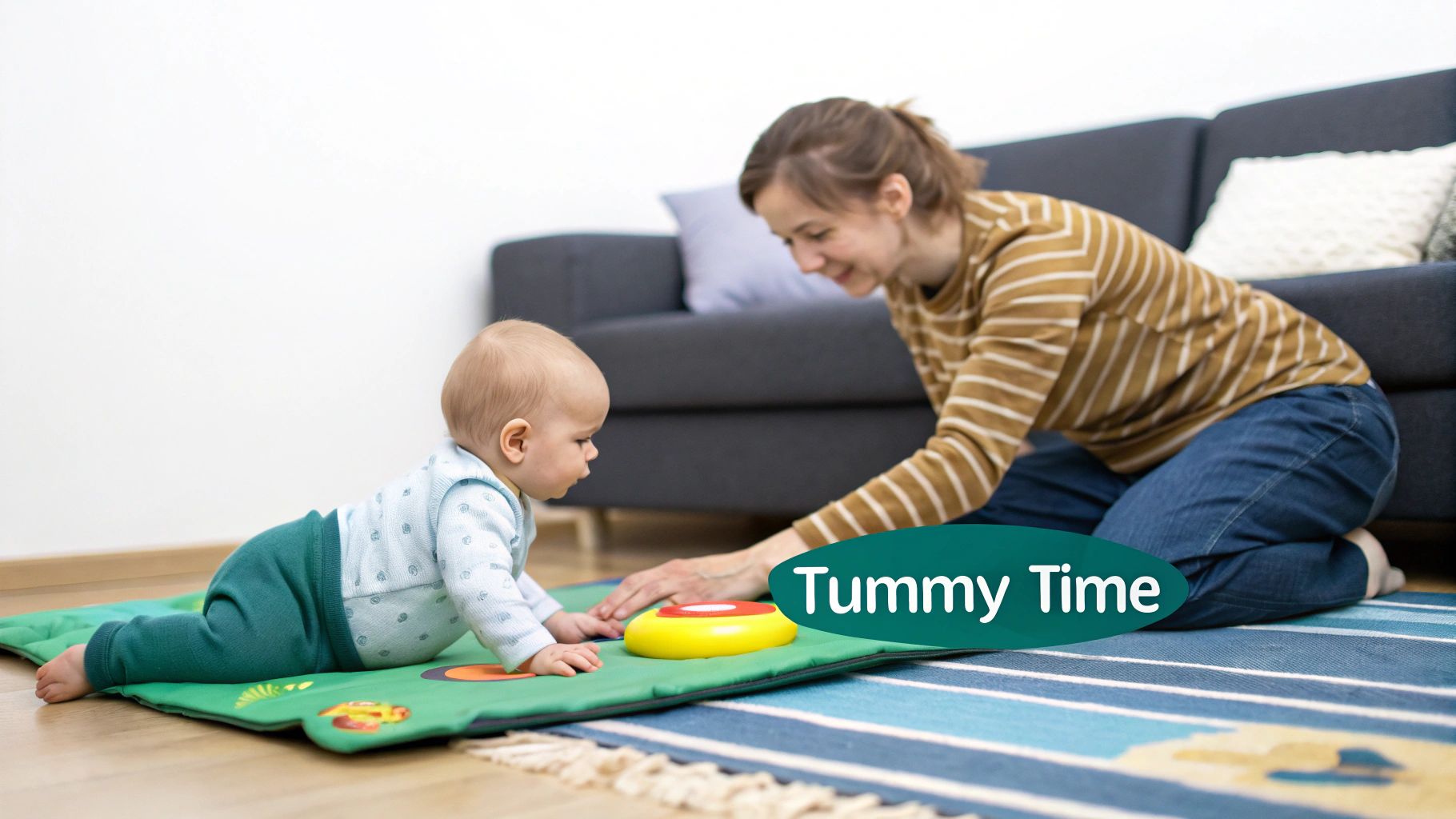
By six months, your baby is likely becoming a tummy time pro, able to push up on their hands and look around. The goal is to accumulate around 20-30 minutes of tummy time throughout the day, broken into shorter, more manageable sessions.
How to Make Tummy Time Engaging
- Get on their level: Lie on the floor facing your baby. Sing songs, make silly faces, and talk to them to make it a fun, interactive experience. Your presence is the most engaging toy.
- Use motivating toys: Place a baby-safe mirror or a colourful, high-contrast toy just within their reach to encourage them to lift their head and pivot their body. To make tummy time even more stimulating and enjoyable, explore options for choosing the best tummy time toy for your baby.
- Change the scenery: Try doing tummy time on different textures, like a soft blanket, a play mat, or even across your lap. A change of view can make all the difference.
Safety and Success Tips
Consistency is key. Aim for short sessions of 3-5 minutes several times a day, perhaps after a nappy change or a nap when your baby is content. Always ensure the surface is flat and firm, and never leave your baby unattended. If your baby gets fussy, it's okay to stop and try again later. For more guidance on integrating this into your routine, you can discover more about when to start tummy time and its benefits.
2. Sensory Exploration with Textured Objects
Sensory exploration involves providing your baby with safe objects of various textures, such as silicone, rubber, different fabrics, and smooth wood, to touch, hold, and mouth. This activity is a cornerstone for learning at six months, as your baby is actively using their senses, particularly touch, to understand the world. It stimulates tactile development, hones fine motor skills as they grasp objects, and introduces early cause-and-effect concepts.
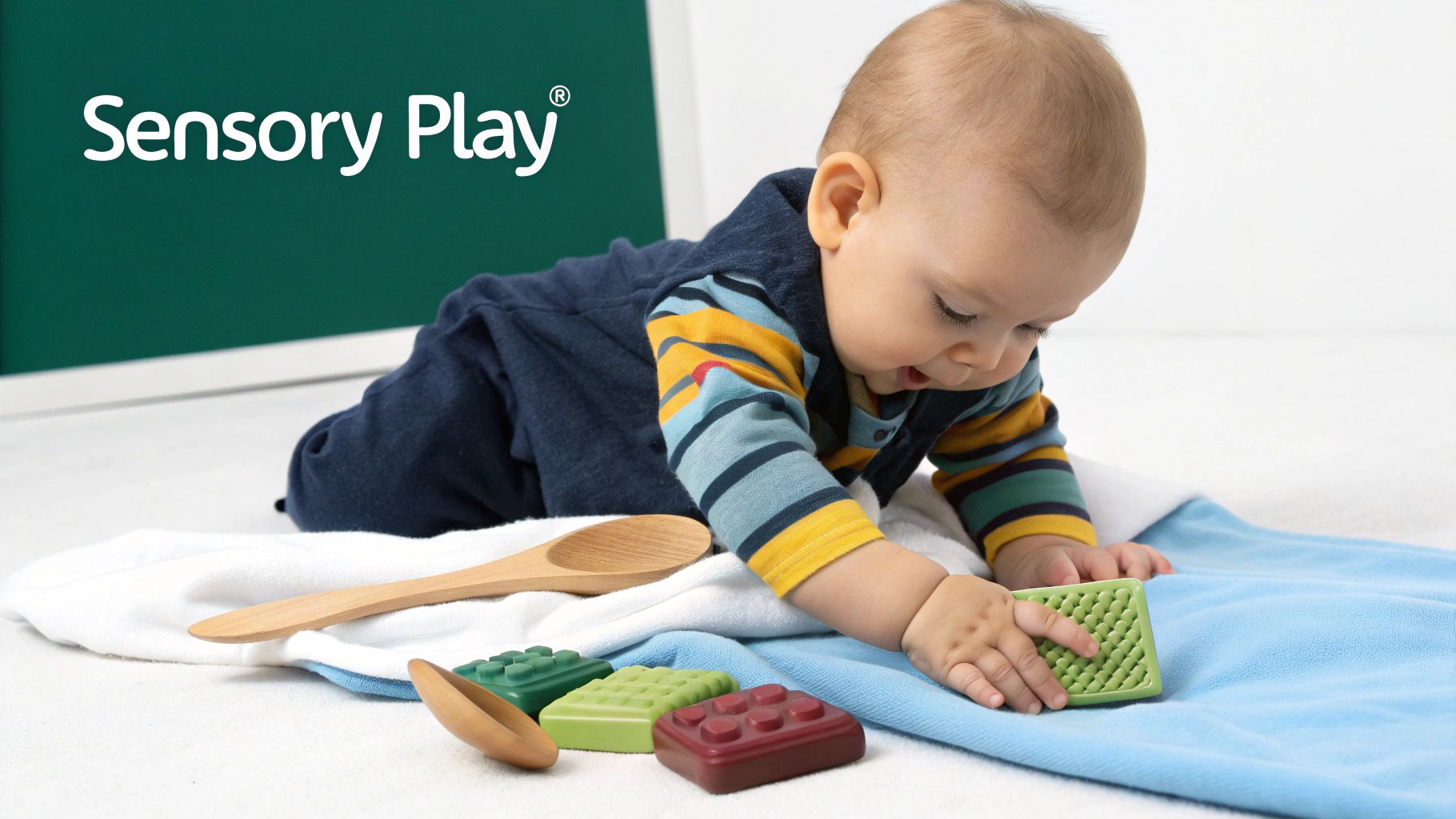
At this age, a baby's hands and mouth are their primary tools for investigation. Offering a curated selection of textures helps build neural connections in their brain, supporting cognitive growth. This type of play doesn't require complex setups; it's about giving them access to a variety of safe, stimulating materials during their floor time.
How to Make Sensory Exploration Engaging
- Create a texture basket: Gather a small collection of safe items like a silicone teether, a soft fabric square, a crinkly toy, and a smooth wooden spoon. Present them in a shallow basket or on a play mat for your baby to discover.
- Vary the materials: Introduce objects of different weights, shapes, and temperatures (like a cool, water-filled teether). This variety challenges their developing sensory perception and grasping skills.
- Narrate their experience: Talk to your baby as they play. Use descriptive words like, "That feels soft," or "The wooden ring is smooth." This helps build their vocabulary and connects words to tactile feelings.
Safety and Success Tips
Always ensure any object given to your baby is clean, too large to be a choking hazard, and free from small parts that could break off. Rotate the items every few days to keep the experience new and exciting. Supervise your baby at all times during this activity to ensure they are playing safely. For more inspiration, you can discover a wealth of sensory play ideas for babies to expand your routine.
3. Baby-Directed Music and Movement
Baby-directed music and movement involves engaging your baby with songs, rhythm, and gentle motion. At six months, babies are becoming more attuned to sounds, melodies, and patterns. This activity is a fantastic way to stimulate their auditory senses while also supporting vestibular development (the sense of balance) as you move and dance together, making it a perfect activity for a 6 month old.
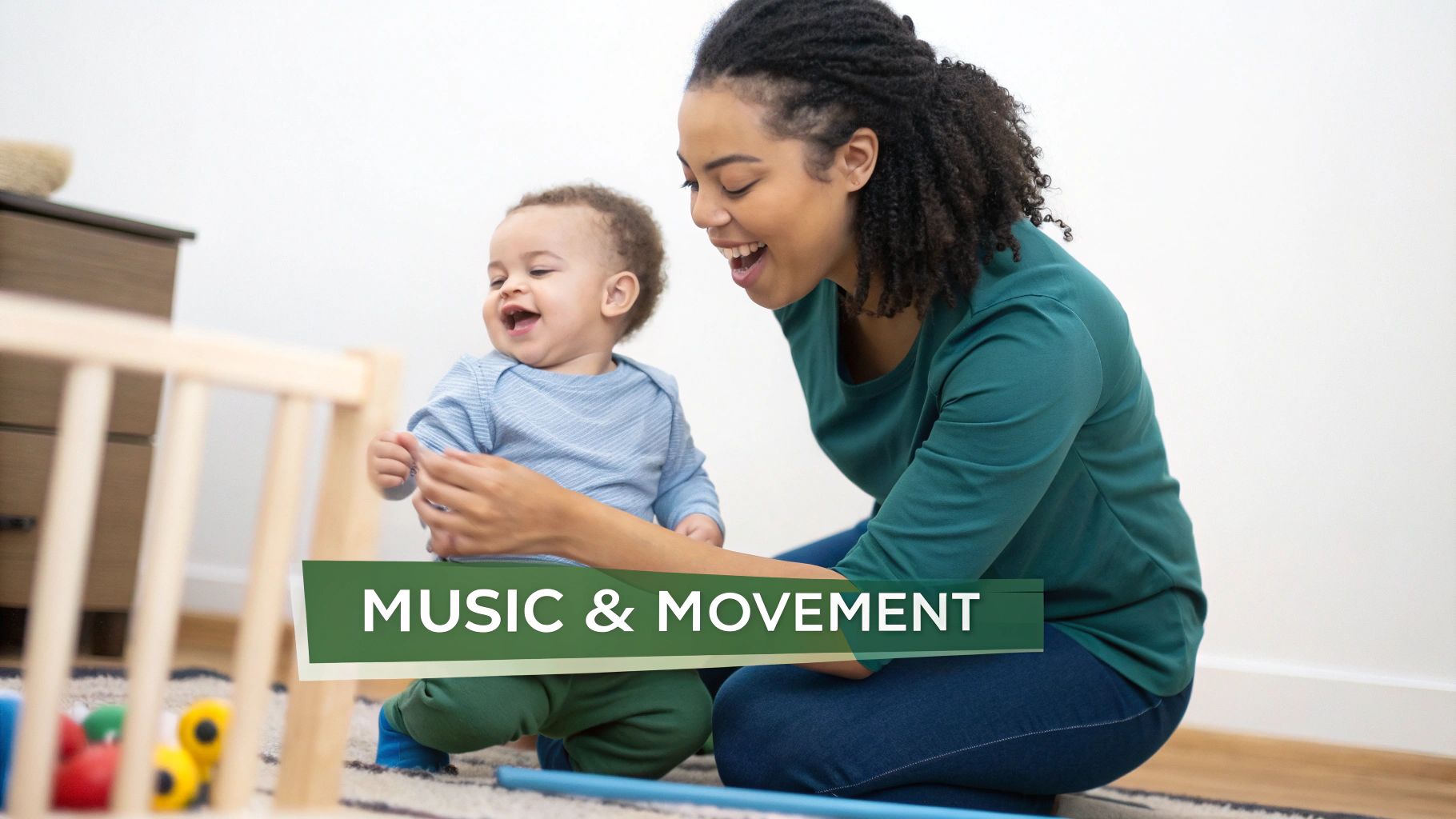
This interaction goes beyond just listening; it's about feeling the rhythm and connecting with you. The combination of sound, movement, and close physical contact helps foster a strong emotional bond and introduces the foundational elements of language and communication. It's a joyful way to share a special moment while boosting their brain development.
How to Make Music and Movement Engaging
- Sing classic nursery rhymes: Repetitive and simple songs like 'Twinkle, Twinkle, Little Star' or 'Row, Row, Row Your Boat' are easy for your baby to recognise and predict. Use hand actions to make it even more interactive.
- Dance together: Hold your baby securely and gently sway, bounce, or dance to different types of music. Vary the tempo from slow and calming to upbeat and energetic to match or guide their mood.
- Introduce simple instruments: Let your baby hold and shake a soft rattle, a toy maraca, or a small tambourine. This introduces the concept of cause and effect as they create their own sounds.
Safety and Success Tips
Keep movements gentle and supportive, always ensuring your baby's head and neck are secure. Choose a clear, safe space to move around in. Pay attention to your baby's cues; if they seem overstimulated or tired, switch to a calmer tune or a quiet cuddle. The goal is connection and fun, so follow their lead and enjoy making music together.
4. Object Permanence Games (Peek-a-Boo Variations)
Object permanence is the understanding that objects and people continue to exist even when they cannot be seen, heard, or otherwise sensed. At six months, your baby is just beginning to grasp this crucial cognitive concept, making peek-a-boo and other hiding games some of the most beneficial and fun activities for a 6 month old. These simple games are not just about getting a giggle; they lay the foundation for memory development and reduce separation anxiety.
By playing games that involve disappearing and reappearing, you are teaching your baby a fundamental rule about how the world works. This predictability builds their sense of security and trust while also sparking their curiosity and problem-solving skills. These activities also strengthen the social and emotional bond between you and your little one through shared joy and interaction.
How to Play Object Permanence Games
- Classic Peek-a-Boo: The simplest version is often the best. Cover your face with your hands and then reveal it with an excited "Peek-a-boo!" Your exaggerated expressions and happy tone are key to keeping them engaged.
- Hide a Toy: Show your baby a favourite colourful toy, then partially hide it under a small, lightweight blanket or a muslin cloth. Encourage them to find it, celebrating with them when they pull the blanket away.
- Peek from Behind Furniture: Use a sofa or a doorway to hide yourself completely and then pop out to surprise your baby. This larger-scale version adds an element of anticipation and excitement.
Safety and Success Tips
Start with partial hiding, so your baby can still see part of the toy or your face. This helps them learn the game without feeling frustrated. As they begin to understand, you can move to complete concealment. Play these games when your baby is alert and happy, such as after a feed or a nap. Vary the objects and hiding spots to keep it interesting. For a deeper dive into this developmental milestone, you can find out more about what is object permanence and why it matters.
5. Water Play and Bath Time Activities
Water play, especially during bath time, is a fantastic sensory activity for your 6 month old. It’s a supervised exploration where your baby can splash, pour, and interact with water-resistant toys. This simple activity transforms a daily routine into a rich learning environment, helping to build your baby's confidence in the water while stimulating their senses of touch and sound.
At six months, most babies are sitting with support, making bath time an ideal opportunity for interactive play. The water's gentle resistance helps to strengthen their core muscles, and the cause-and-effect of splashing introduces early scientific concepts. This is a key sensory experience and one of the most enjoyable activities for a 6 month old.
How to Make Water Play Engaging
- Introduce floating friends: Use a variety of floating toys, cups, and containers. Your baby will be fascinated by objects that bob and float, and you can show them how to scoop and pour water.
- Create gentle splashes: Encourage your baby to kick their legs and pat the water with their hands. The sound and sensation of splashing is a source of great amusement and learning.
- Sing bath time songs: Make bath time a joyful ritual by singing songs like "Row, Row, Row Your Boat" or "Five Little Ducks." Your voice adds a comforting and engaging element to the experience.
Safety and Success Tips
Never, ever leave your baby unattended near water, not even for a second. Ensure the water temperature is comfortably warm, between 37-38°C (98.6-100.4°F). Use a non-slip mat in the tub to prevent accidents. Keep initial sessions short, around 5-10 minutes, to prevent your baby from getting chilled or overstimulated. Beyond just play, bath time also presents an opportunity to address skin concerns, and insights into natural eczema treatment for babies can be valuable for parents.
6. Mirror Play and Self-Recognition Activities
Mirror play is a captivating activity where your baby interacts with their own reflection in a baby-safe mirror. This simple yet profound experience is fantastic for cognitive development, as your baby begins to understand cause and effect by watching their movements mirrored back at them. It’s one of the most engaging activities for a 6 month old, laying the groundwork for self-awareness and social-emotional growth as they explore their own fascinating face.
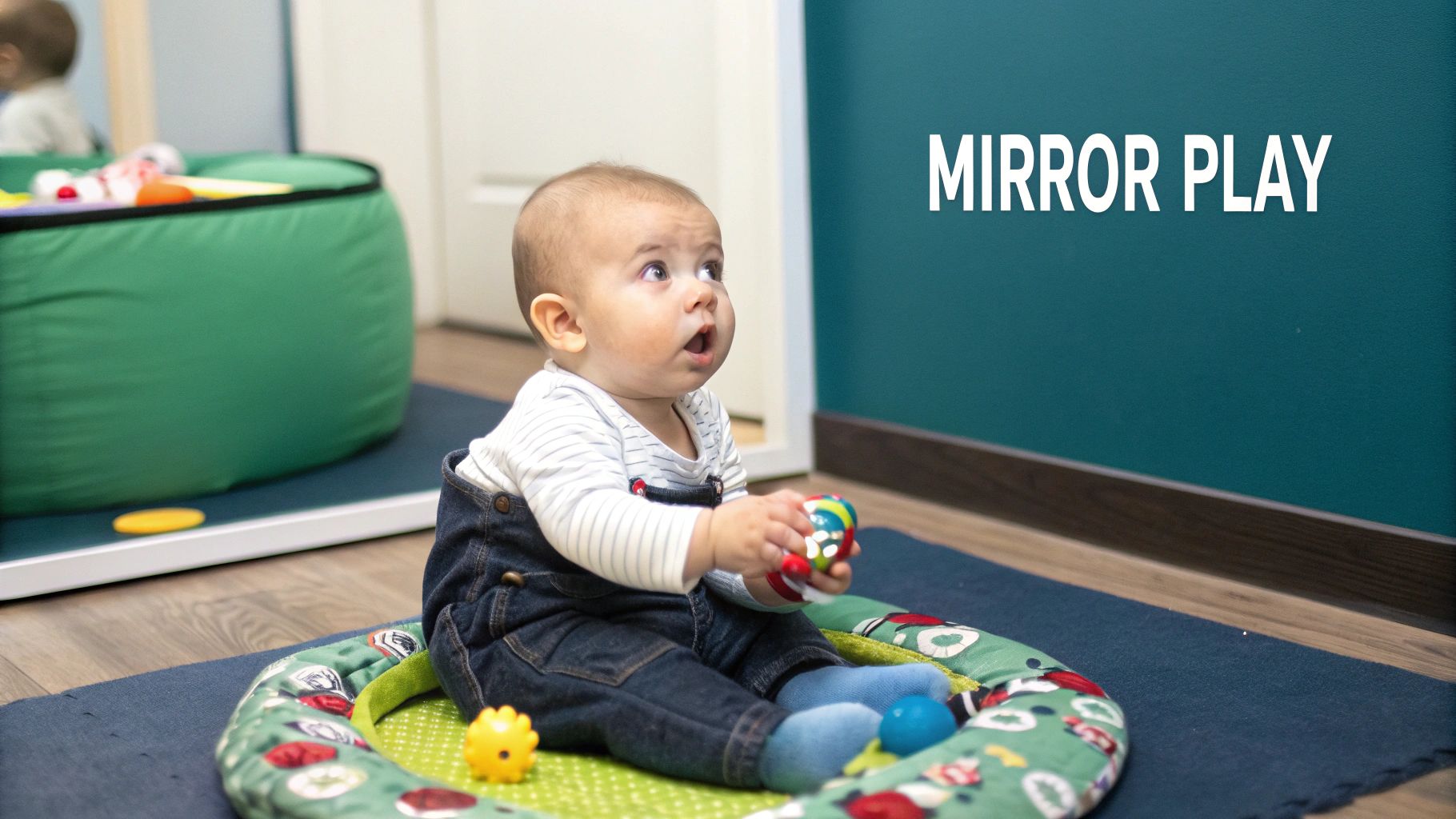
At six months, babies are captivated by faces, and their own is no exception. While they won't yet realise the reflection is themselves, they will be fascinated by the "other baby" who mimics their every move. This interaction helps to stimulate their vision, track movements, and encourages them to reach, pat, and babble at their reflection.
How to Make Mirror Play Engaging
- Make funny faces: Sit with your baby in front of the mirror and make exaggerated expressions like smiling, sticking your tongue out, or raising your eyebrows. This encourages them to study facial features and emotions.
- Point and name: Gently touch your baby's nose and say "nose," then point to their reflection's nose. Do the same for their eyes, mouth, and hair to build early vocabulary and body awareness.
- Use during tummy time: Placing a mirror just in front of your baby during tummy time can motivate them to lift their head and chest higher, strengthening crucial muscles while keeping them happily entertained.
Safety and Success Tips
Always use an unbreakable, baby-safe acrylic mirror and ensure it is securely fastened to a wall, play gym, or the floor to prevent it from tipping over. Introduce mirror play when your baby is alert and content. Combining this activity with singing songs or talking enthusiastically makes it a wonderful bonding experience that supports your baby’s growing sense of self.
7. Cause-and-Effect Toy Play
Cause-and-effect toy play involves engaging your baby with items that produce an immediate and clear reaction to their actions. At six months, babies are beginning to understand that their movements can influence their environment, a foundational cognitive milestone. Toys that light up, make a sound, or move when pushed, shaken, or squeezed help solidify this crucial learning.
This type of play is more than just entertainment; it's a powerful tool for cognitive development. It teaches babies about problem-solving and encourages active exploration. By discovering that pressing a button makes music play, your little one learns they can make things happen, which builds confidence and curiosity. This is one of the most intellectually stimulating activities for a 6 month old.
How to Make Cause-and-Effect Play Engaging
- Model the action: Show your baby how the toy works first. Press the button and say, "Look! When I press this, it makes a fun sound!" Your demonstration provides a clear link between the action and the reaction.
- Vary the feedback: Choose toys that offer different sensory feedback. A toy that combines lights, sounds, and movement provides a richer learning experience and holds their attention for longer.
- Rotate the selection: Keep a few cause-and-effect toys on hand and rotate them every few days. This maintains the novelty and keeps your baby interested in exploring how each new toy works.
Safety and Success Tips
Provide your baby with plenty of uninterrupted time to explore these toys independently. It's during this focused, hands-on play that the real learning happens. Choose age-appropriate toys that are sturdy and free from small parts that could pose a choking hazard. If the toy is electronic, look for options with an adjustable volume setting to protect your baby’s hearing and your own sanity. Always supervise playtime to ensure a safe and positive experience.
8. Rolling and Reaching Practice
Rolling and Reaching Practice involves creating structured opportunities for your baby to master rolling from their back to their tummy and reaching for objects. At six months, babies are honing their bilateral coordination and building the core strength needed for these significant motor milestones. These activities are foundational, developing the motor planning, balance, and muscle control that pave the way for sitting up and crawling.
By this age, your baby may be rolling one way but needs encouragement for the other, or they might be reaching with both hands but need to practice stretching further. Deliberate practice helps them connect cause and effect, as they learn that a specific movement gets them closer to a desired toy. This is a crucial step in their journey towards independent mobility.
How to Encourage Rolling and Reaching
- Strategic Toy Placement: Place a favourite high-contrast toy or a crinkly book just beyond their immediate grasp. This slight challenge motivates them to shift their weight, pivot, and stretch, which often leads to a roll.
- Gentle Support: If your baby is trying to roll but gets a bit stuck, you can gently guide their hip over to help them complete the motion. A small, rolled-up towel placed under one side can also provide the initial momentum they need.
- Create a 'Reaching Zone': In a safe, clear floor space, arrange a few stimulating toys in an arc around your baby. This encourages them to reach in different directions, building strength and coordination on both sides of their body.
Safety and Success Tips
Ensure the play area is spacious and completely free of hazards, with a soft surface like a thick playmat or blanket. The key is to motivate, not frustrate, so place toys just far enough to encourage effort. Celebrate every attempt with cheers and praise to make it a positive experience. Always supervise closely to ensure they are safe as they explore these new movements.
8-Activity Comparison for 6-Month-Olds
| Activity | Implementation Complexity 🔄 | Resources & Setup ⚡ | Expected Outcomes & Ideal Use Cases ⭐📊 | Key Advantages ⭐ | Quick Tips 💡 |
|---|---|---|---|---|---|
| Tummy Time | 🔄🔄 Moderate — needs constant supervision and short sessions | ⚡⚡ Low — play mat, small toys | ⭐⭐⭐⭐ Improves neck/shoulder/core strength; prevents plagiocephaly. Use during awake, alert periods (after changes/feeds). 📊 | Encourages motor milestones; free and easy to combine with interaction | Start 3–5 min multiple times, use toys at eye level, caregiver at baby’s level |
| Sensory Exploration with Textured Objects | 🔄🔄 Low–Moderate — supervision for safety and rotation | ⚡⚡ Low — household or simple purchased textured items | ⭐⭐⭐ Enhances tactile development, grip strength, early cause-effect. Best for independent exploration and teething relief. 📊 | Cheap, promotes fine motor skills, soothes teething | Rotate toys, include safe natural materials, supervise to avoid choking |
| Baby-Directed Music and Movement | 🔄🔄 Low — requires caregiver engagement and energy | ⚡⚡ Very low — voice, simple rattles, playlist | ⭐⭐⭐⭐ Develops auditory processing, language precursors, vestibular control. Ideal for bonding, calming, or energetic play. 📊 | Strengthens attachment; mood regulation; no special equipment | Use repetitive songs, gentle bouncing/swaying, vary pitch and tempo |
| Object Permanence Games (Peek-a-Boo Variations) | 🔄🔄 Low — simple actions but needs repetition | ⚡⚡ Minimal — hands, cloths, small toys | ⭐⭐⭐ Accelerates memory and anticipation; good during alert, social play windows. 📊 | Boosts cognitive development and social interaction; no equipment | Start with partial hiding, use exaggerated expressions, let baby initiate |
| Water Play and Bath Time Activities | 🔄🔄🔄 Moderate — safety-critical, time-limited sessions | ⚡⚡ Low — bath, warm water, floating toys, non-slip mat | ⭐⭐⭐ Improves sensory awareness and water comfort; ideal as part of daily routine (short sessions). 📊 | Relaxing, integrates into routine, accessible to most families | Keep temp 90–100°F (32–37°C), 5–10 min initially, never leave unattended |
| Mirror Play and Self-Recognition Activities | 🔄 Low — simple setup but must secure mirror | ⚡⚡ Low — baby-safe mirror or play mat with mirror | ⭐⭐⭐ Promotes self-awareness and facial recognition; best when baby is alert and curious. 📊 | Low-cost, encourages independent engagement and expression | Use unbreakable mirrors, angle at eye level, point out features and make faces |
| Cause-and-Effect Toy Play | 🔄🔄 Low — set-up simple; monitor stimulation levels | ⚡⚡ Moderate — toys with sounds/lights, batteries may be needed | ⭐⭐⭐⭐ Teaches cause-effect, motivates motor actions, supports problem solving. Ideal for focused play sessions. 📊 | High engagement, clear feedback, supports coordination | Choose adjustable volume, model actions first, rotate toys to avoid boredom |
| Rolling and Reaching Practice | 🔄🔄🔄 Moderate — needs space, safety setup, caregiver time | ⚡⚡ Low — open floor, toys, rolled towels or mats | ⭐⭐⭐⭐ Builds rolling transitions, core strength, bilateral coordination; use during supervised floor play. 📊 | Directly supports milestones toward crawling; minimal equipment | Place toys just out of reach, use soft surfaces, supervise and celebrate attempts |
The Joy of Play: Your Next Steps in Baby's First Year
As we've explored, the world of a six-month-old is a whirlwind of discovery, and your role as a play partner is absolutely central to their development. From the determined pushes during tummy time to the delighted squeals of a game of peek-a-boo, each interaction is a building block for their future. These moments are far more than just ways to pass the time; they are the very foundation of learning, connection, and confidence.
The activities detailed in this guide, from sensory exploration with different textures to understanding object permanence, are not a checklist to be completed. Instead, think of them as a flexible menu of opportunities. The goal isn't perfection but presence. Your engaged, responsive participation is the magic ingredient that transforms a simple activity into a powerful developmental experience.
Key Takeaways for Your Six-Month-Old's Playtime
Remember that at this pivotal age, play is the primary language of learning. The most impactful takeaways from our deep dive into activities for your 6 month old revolve around a few core principles:
- Follow Your Baby's Lead: The most successful play sessions happen when you tune into your baby's unique cues. Notice what captures their interest, how long their attention lasts, and when they signal they are tired or overstimulated. This responsive approach builds trust and makes learning feel joyful, not forced.
- Safety is Paramount: As your baby becomes more mobile and curious, creating a safe play environment is crucial. Always supervise playtime, especially with water or small objects, and ensure all toys are age-appropriate and in good condition.
- Consistency Over Complexity: You don't need elaborate setups or expensive gadgets. Simple, consistent daily interactions, like narrating your actions, playing with a mirror, or enjoying some floor time, create a rich learning environment that fosters security and cognitive growth.
- Celebrate the Small Wins: Every new skill, whether it's the first time they successfully roll over to grab a toy or the moment they look for a hidden object, is a monumental achievement. Acknowledging these milestones with encouragement and praise builds their self-esteem and motivates them to keep exploring.
Putting It All Together: Your Path Forward
Moving forward, the key is to integrate these principles into your daily rhythm. See everyday routines, like bath time or nappy changes, as chances for connection and play. By focusing on the developmental domains we've covered - sensory, motor, language, and social-emotional - you can ensure you're providing a well-rounded and stimulating experience.
The journey through your baby's first year is a rapid and remarkable one. The brain-building power of these simple yet effective activities for a 6 month old cannot be overstated. By embracing your role as your baby’s first and most important playmate, you are not just helping them hit developmental milestones; you are nurturing a curious, confident, and happy little person, strengthening a bond that will last a lifetime.
Ready to simplify developmental play without the guesswork? The Grow With Me play kits deliver expertly curated, stage-based toys and guidance straight to your door, ensuring you always have the perfect tools for your baby's evolving needs. Discover how we make enriching playtime easy and fun at Grow With Me.